Years ago, I spent my days standing on top of double-decker sightseeing buses in New York City. I held a microphone, pointed out the Empire State Building, and watched thousands of tourists rush through my city. They all had a tight schedule. They all wanted to see everything in a single day. And they all looked completely exhausted.
When I finally quit that job, left the 9-to-5 grind behind, and started traveling the world on my own, I promised myself I would never travel like that. I waited tables for months to save up enough cash so I could take my time. I wanted to see the real world, not just a blurry version of it through a bus window.
That is the exact mindset you need when you start looking at a map of the Emerald Isle.
If you are dreaming about the Best road trips in Ireland, you probably have a vision in your head. You picture empty green hills, dramatic cliffs, and a cozy pub with a roaring fire. You can have all of that. But it requires the right plan. Driving here is an adventure. It takes confidence, a bit of humor, and a willingness to embrace the unexpected.
To help you plan a trip that actually feels like a vacation, I am sharing the six biggest mistakes travelers make when driving in Ireland—and exactly how to avoid them.
Mistake 1: Trying to Drive the Entire Island in One Week
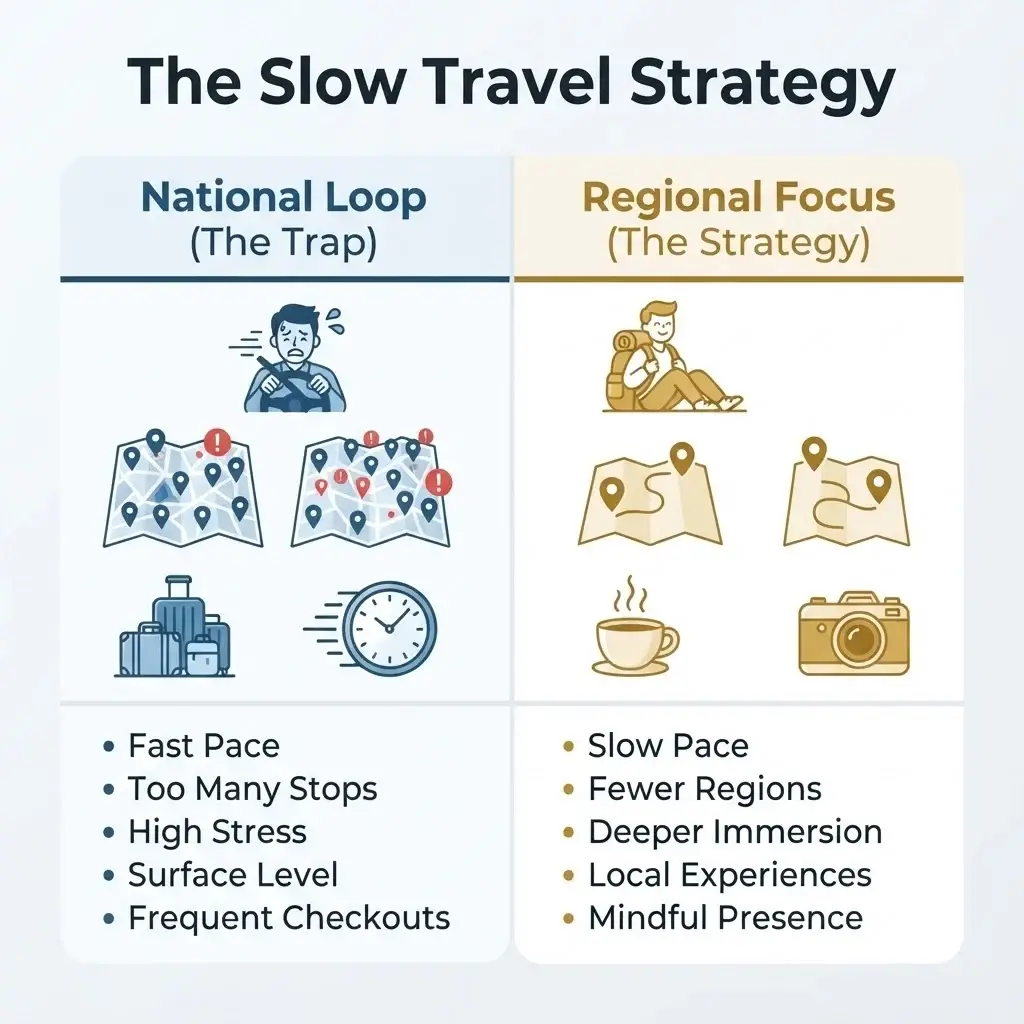
This is the number one trap. You look at a map of Ireland and think, “It is so small! I can do the whole coast in a week.”
No, you cannot.
Ireland might look small on a map, but the roads are winding, the towns are filled with distractions, and the speed limits are often wildly optimistic. If you try to drive the entire Wild Atlantic Way (which is over 1,500 miles long) in seven days, you will spend your entire trip trapped inside your rental car. You will be stressed, tired, and cranky.
How to Navigate Your Route
Pick one or two regions and stick to them. If you only have a week, focus just on the Southwest. Drive the Dingle Peninsula and the Beara Peninsula. Skip the massive loops that require four hours of driving every single day.
If you want a great overview of the different regions, I often tell first-time visitors to check out the destination overview on Lonely Planet to get a feel for the different counties before plotting a route on Google Maps.
When mapping your daily drive, always add 30 percent more time than your GPS tells you. If Google Maps says a drive will take two hours, plan for three. You will want to stop to take photos, wait for a herd of sheep to cross the road, or turn around because you missed a tiny road sign hidden behind a bush.
Emma’s Insider Secret
Skip the famous Ring of Kerry and drive the Beara Peninsula instead. The Ring of Kerry is stunning, but it is packed with giant tour buses. The Beara Peninsula is just south of it. It is wilder, quieter, and the roads are too narrow for the big buses. You will have the scenery almost entirely to yourself.
Culinary Tip: Slow Down for the Seafood
Because you are driving less, you now have time for a real lunch. When you are in the Southwest, stop in the town of Kinsale. Find a pub near the water and order a bowl of seafood chowder with a thick slice of homemade brown bread. The bread is dense, slightly sweet, and smothered in rich Kerrygold butter. It is the ultimate driving fuel.
Mistake 2: Underestimating the Rural Roads (and the Sheep)
Driving in Ireland is not like driving on an American highway. Yes, you have to drive on the left side of the road. But that is actually the easy part. Your brain adjusts to that within a few hours.
The hard part is the size of the roads.
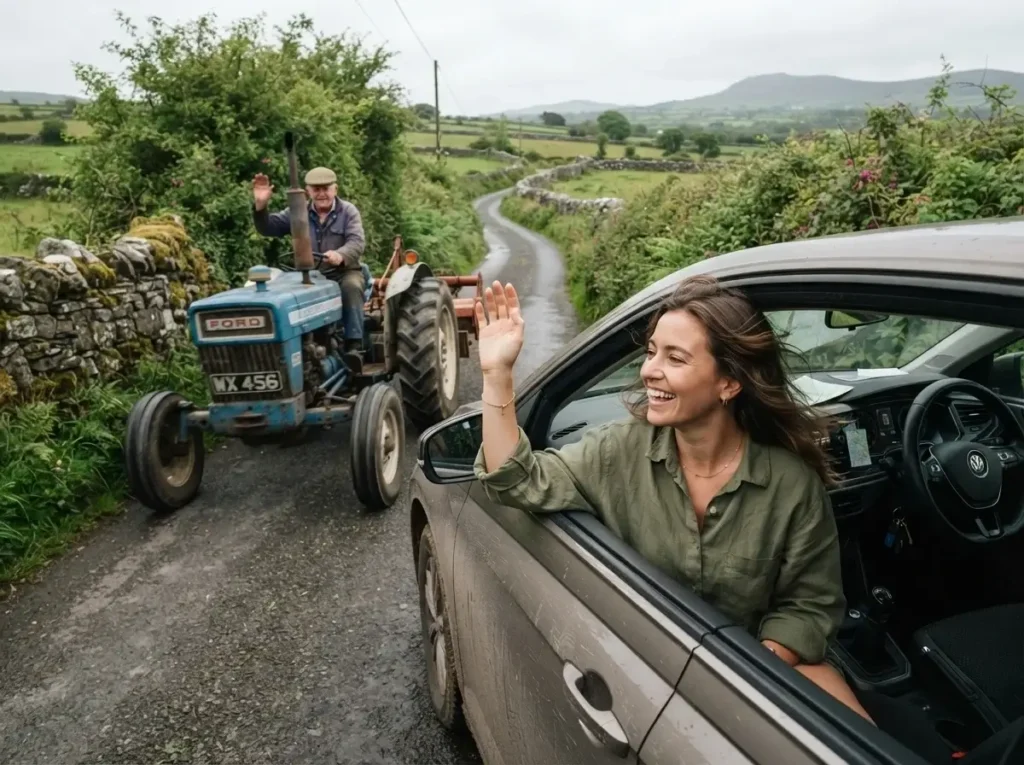
Once you get off the main motorways, the roads shrink. You will find yourself on single-lane roads with two-way traffic. There are no shoulders. There are just stone walls or thick green hedges right against the edge of the pavement.
How to Navigate the “L” and “R” Roads
Irish roads are labeled with letters. “M” means Motorway (fast, modern highways). “N” means National roads (good, wide roads). “R” means Regional roads (getting narrower). “L” means Local roads.
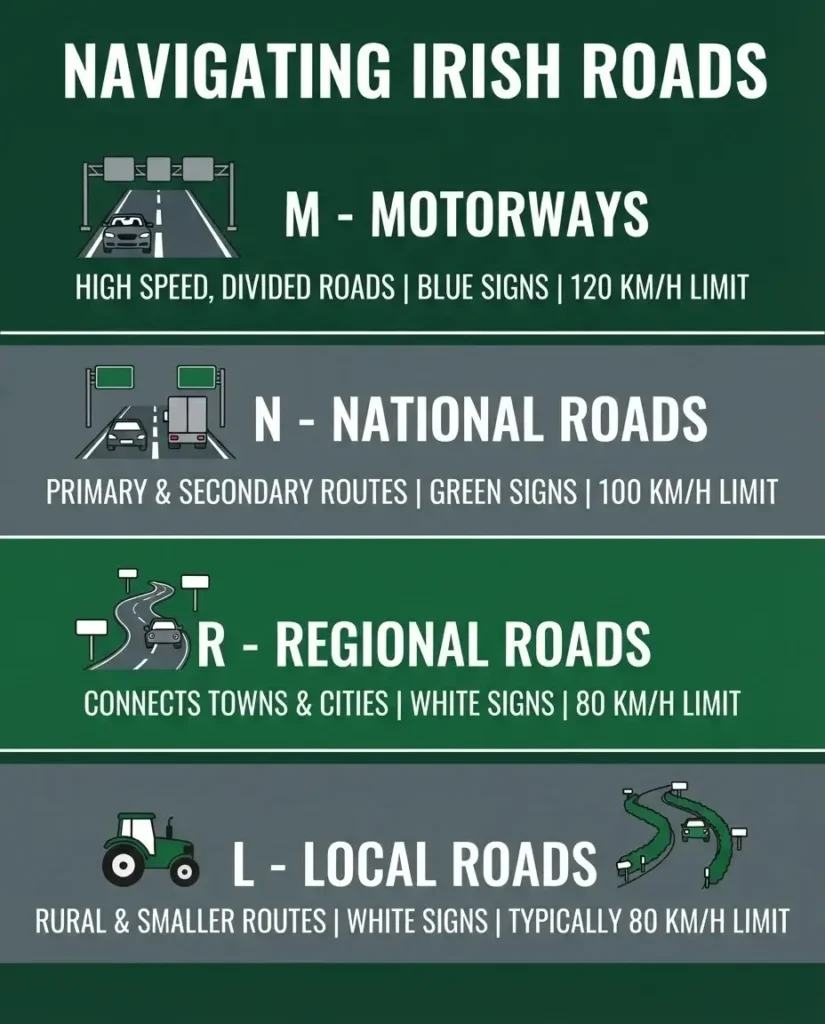
When you are on an “L” road, you are in the real countryside. If you meet a tractor or a delivery truck coming the other way, one of you has to pull over into a tiny passing spot.
If you are worried about the unexpected costs of a flat tire or a scraped bumper on these tiny roads, it is always a smart idea to look into insurance guidance and traveler safety options from World Nomads before you pick up your rental car.
Always rent the smallest car you can comfortably fit your luggage into. Do not rent a massive SUV. A compact car will save you from holding your breath every time another car passes you. Also, pay for the full insurance coverage from the rental company. The peace of mind is worth every single penny.
Emma’s Insider Secret
Watch out for the “magic hedges.” In the summer, the bushes on the side of the road grow fast. Locals call them magic hedges because they completely hide the stone walls hiding just inches inside the leaves. Do not hug the left side of the road too closely, or you will scrape your mirror right off.
Culinary Tip: The Petrol Station Deli
When you are driving the deep rural roads, you won’t always find a fancy restaurant. But you will find local petrol (gas) stations. Do not ignore them. Irish gas stations have incredible deli counters. Walk in, grab a freshly baked sausage roll, and order a cup of strong Barry’s tea. It is cheap, fast, and surprisingly delicious.
Mistake 3: Skipping the North
Many travelers land in Dublin, rent a car, and head straight south. They completely ignore Northern Ireland. This is a massive mistake. Northern Ireland is part of the United Kingdom, but it shares the same island and has some of the most dramatic coastal driving in the world.
If you are putting together a list of the Best road trips in Ireland, the Causeway Coastal Route in the north has to be on it. It hugs the edge of the sea, taking you past ruined castles, deep glens, and incredible ocean cliffs.
How to Navigate the Border Crossing
Driving from the Republic of Ireland into Northern Ireland is easy. There is no hard border, no physical checkpoints, and no stopping. The only way you know you have crossed the border is that the speed limit signs switch from kilometers per hour to miles per hour.
Because you are crossing from the Republic of Ireland into the UK, it is highly recommended that you check the entry requirements and safety information provided by the US Department of State to make sure you have the right travel documents just in case.
Emma’s Insider Secret
When you drive the Causeway Coastal Route, pull over at the Carrick-a-Rede Rope Bridge. It is a tiny, terrifying bridge made of rope and wood that connects the mainland to a tiny island. Fishermen built it hundreds of years ago. Walking across it while the ocean crashes below is the best kind of scary.
Culinary Tip: The Belfast Bap
When you are in the north, head to St. George’s Market in Belfast. Find a food stall selling a “Belfast Bap.” It is a massive, crusty bread roll filled with crispy bacon, sausage, fried eggs, and black pudding. It is messy, heavy, and the best breakfast you will have on your entire trip. Wash it down with a splash of local Bushmills whiskey later that night.
Mistake 4: Missing the Boat (Ignoring the Offshore Islands)
When you drive the coast, you will constantly look out at the ocean and see rocky islands in the distance. Most people just take a picture from the driver’s seat and keep moving.
Do not do this. Getting off the mainland and taking a ferry to an island is where the real magic happens. The islands move at an even slower pace than the rest of the country. This is where you hear the Irish language spoken openly in the streets and where the modern world feels very far away.
How to Navigate the Ferries
If you want to visit the Aran Islands, you can catch a ferry from Doolin or Rossaveel. You leave your rental car on the mainland. Once you get to the island, you can rent a bicycle to explore. Biking between the ancient stone walls on Inis Mór is a memory you will keep forever.
If you are traveling in the summer, you have to plan ahead for the Skellig Islands. You absolutely must spend an afternoon walking the steep, rocky steps of this incredible UNESCO World Heritage listed geological wonder because it feels like stepping onto another planet. But be warned: the small boats that go there only take a few people each day.
Emma’s Insider Secret
If you book a boat to Skellig Michael, understand that the trip is entirely dependent on the weather. If the ocean is too rough, the boats will not go. Always build a buffer day into your itinerary. If your boat gets canceled on Tuesday, you want to be able to try again on Wednesday.
Culinary Tip: Crab Claws in Garlic Butter
When you get back to the mainland after a cold boat ride, you need something warm. Look for a pub serving fresh crab claws. They are usually caught that exact morning. They come swimming in a pool of hot garlic butter with a side of crusty bread for dipping.
Mistake 5: Sticking Strictly to the Big Name Cliffs
Everyone knows about the Cliffs of Moher. They are famous for a reason. They drop straight down into the wild ocean and look like a scene from a movie.
But because they are so famous, they are heavily managed. You have to pay for a large parking lot. You have to walk on paved paths behind stone barriers. You are surrounded by hundreds of other people with selfie sticks. It is beautiful, but it can feel a little bit like a theme park.
How to Navigate the High Cliffs
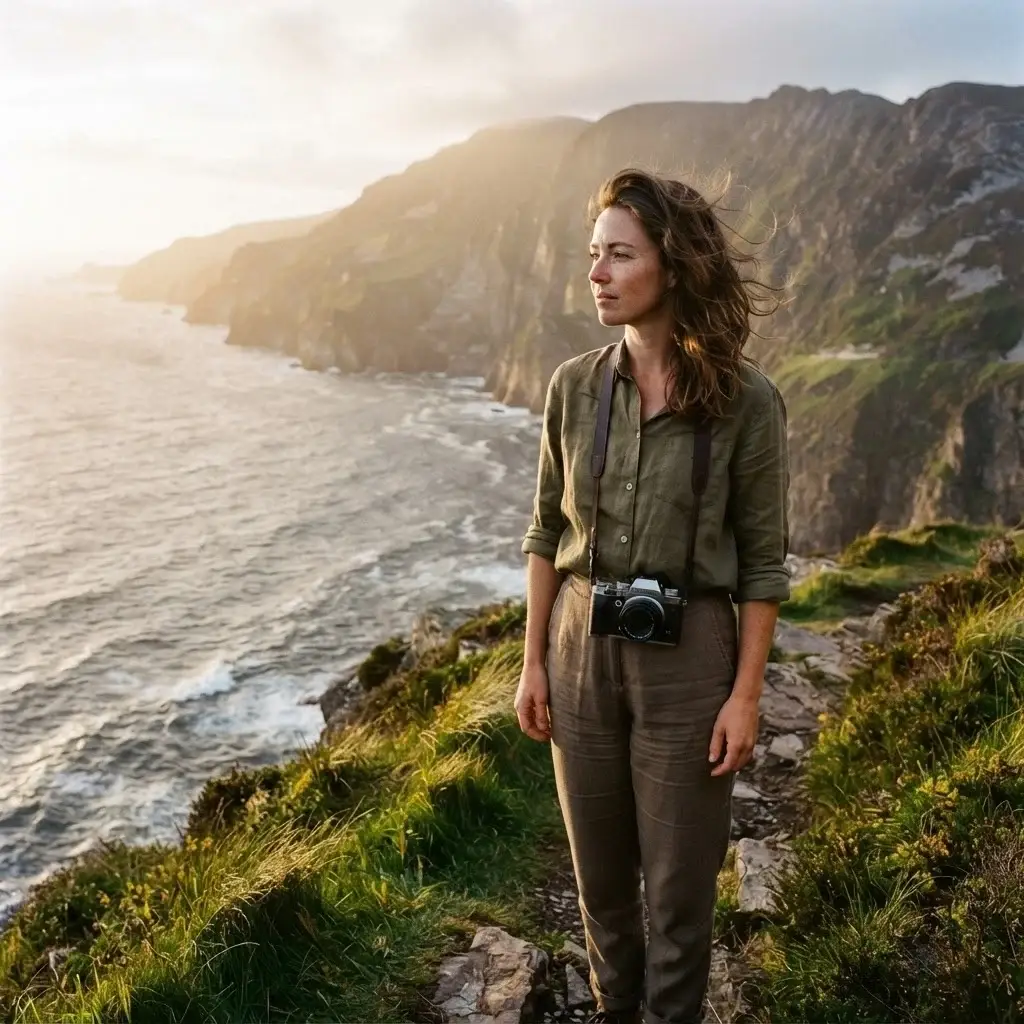
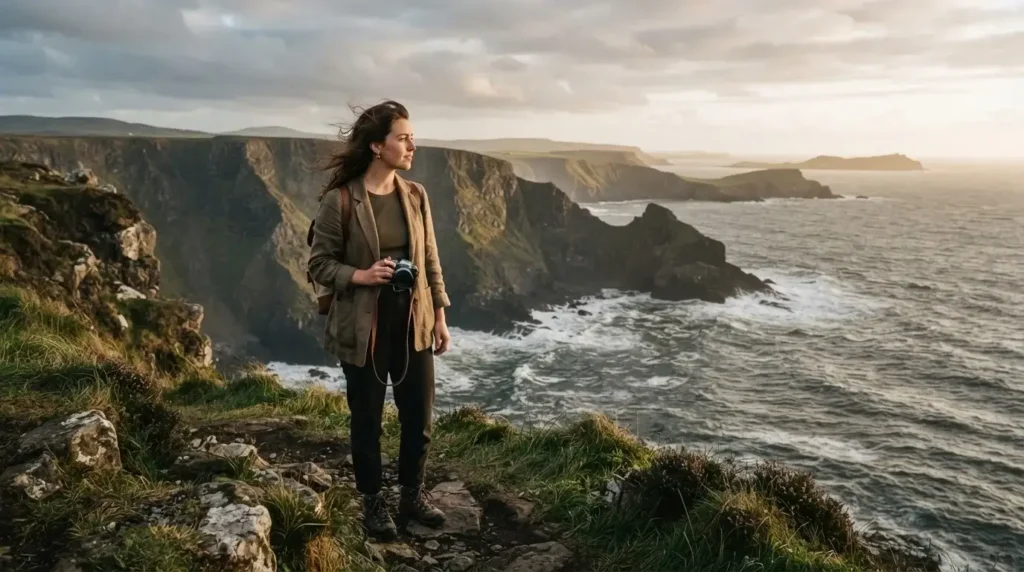
If you want that raw, wind-in-your-hair, edge-of-the-world feeling, drive north to County Donegal. Navigate your car to the Slieve League Cliffs.
These cliffs are actually nearly three times higher than the Cliffs of Moher. Because they are way up in the northwest corner of the island, most tourists never make the drive. You can park your car, walk up the dirt trails, and stand looking out at the endless Atlantic Ocean with just a few sheep for company.
Emma’s Insider Secret
If you really want to see the Cliffs of Moher, do not go at noon. The parking lot will be full of tour buses that drove over from Dublin for the day. Instead, go at 8:00 AM right when they open, or go late in the evening around 7:00 PM (during the summer when the sun sets very late). You will get the golden hour light, and the crowds will be gone.
Culinary Tip: Donegal Catch
When you are up in Donegal, the seafood is as fresh as it gets. Order the local fish and chips. The fish is usually haddock or cod, fried in a light, crispy batter made with local beer. Cover your chips in malt vinegar and salt, sit on a bench near the harbor, and eat with your fingers.
Mistake 6: Not Planning for the Weather (The “Four Seasons in a Day” Rule)
When I used to teach English abroad, I met a lot of backpackers who traveled with just a pair of jeans and a light sweater. That works in a lot of places. It does not work in Ireland.
The weather here is a living, breathing thing. You can wake up to bright sunshine, drive into a thick fog by noon, get hit with sideways rain at two o’clock, and see a beautiful rainbow by four.
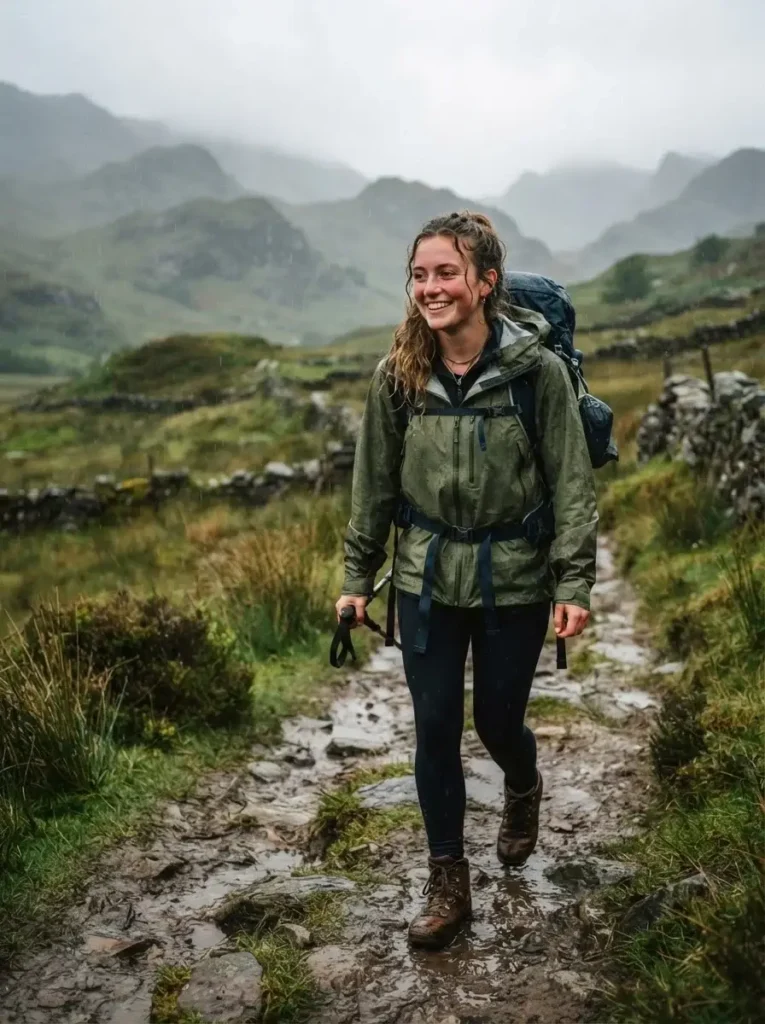
If you do not pack for this, you will be miserable. You will stay inside your car instead of walking the trails.
How to Navigate the Irish Weather
Layering is your only defense. Bring a real, high-quality waterproof rain jacket. Not a light windbreaker. A real rain jacket. Bring waterproof boots. Leave your white canvas sneakers at home; they will be ruined by the mud within a day.
When driving, the weather can change the road conditions fast. A sunny coastal road can suddenly become covered in a thick sea mist. When this happens, slow down. Turn on your fog lights. Do not panic. Just take your time.
Emma’s Insider Secret
Embrace the rain. Do not let a rainy afternoon ruin your plans. The landscape actually looks more dramatic and beautiful when the sky is dark and moody. The green grass pops against the gray clouds. Put on your rain gear, go for a wet hike, and earn your pint at the pub later.
Culinary Tip: The Perfect Irish Stew
There is a specific feeling of being cold and slightly damp to the bone after a long walk in the Irish rain. The only cure for this is traditional Irish stew. It is a simple dish made of lamb, potatoes, carrots, and onions, slow-cooked for hours in a rich broth. Eat it next to a peat fire in a local pub while traditional music plays in the corner. It is, without a doubt, the best feeling in the world.
Planning your trip should not feel like a chore. It should feel like the first step of an incredible adventure. If you avoid overpacking your schedule, respect the rural roads, and stay open to the unexpected surprises that pop up along the way, you will have the time of your life.
Stop waiting for the absolute perfect time to go. Book the flight. Rent the small car. Pack your best rain jacket. The world rewards the brave, and the roads in Ireland are waiting for you.