
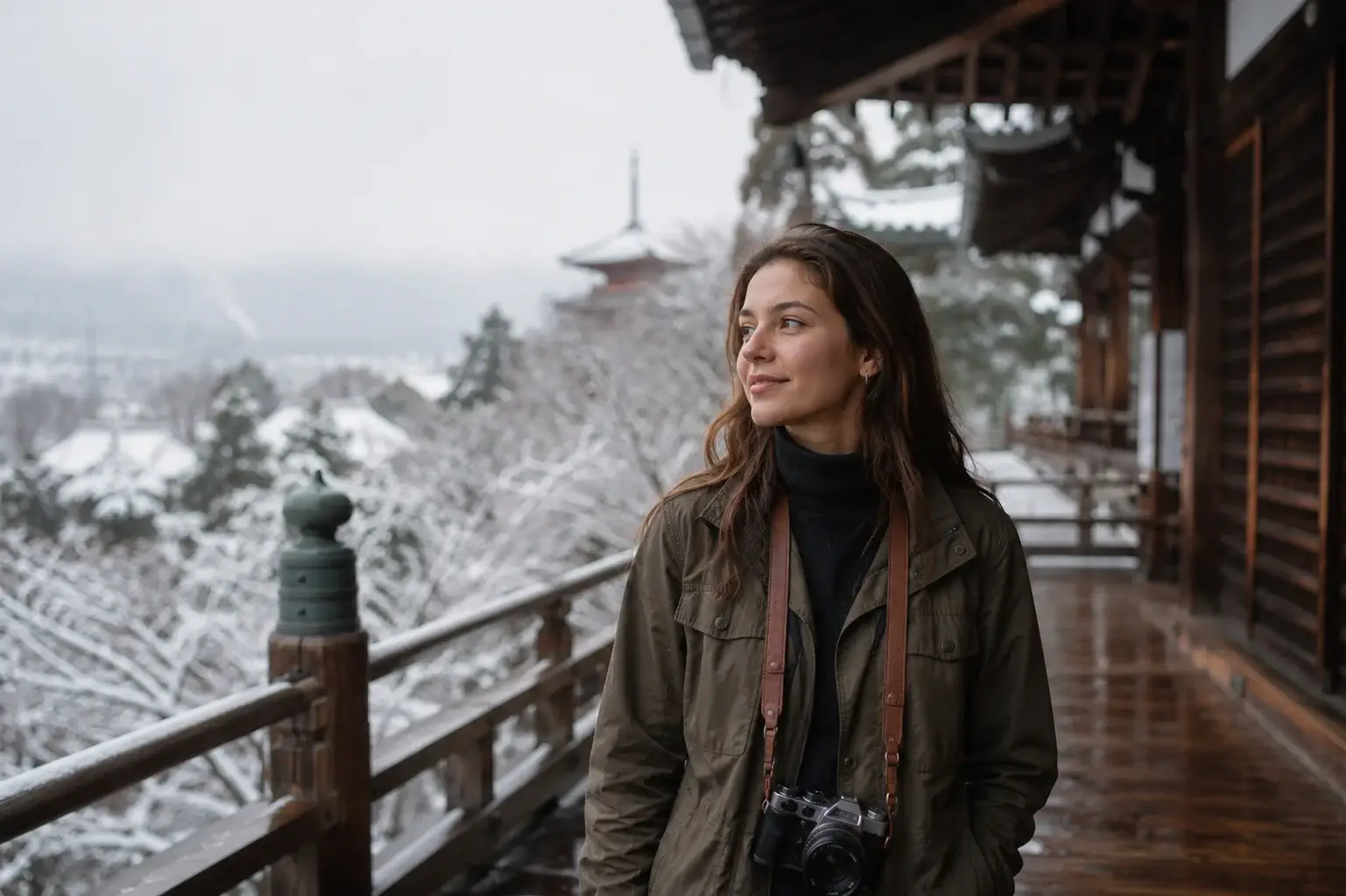
I still remember my first winter trip after I left my rigid 9-to-5 corporate grind. I was heading to Europe, and my anxiety was through the roof. Coming from New York, I knew how cold winter could get, but packing for a stationary life in a heated apartment is entirely different from packing your life into a single bag to move between trains, hostels, and cobblestone streets. Out of pure fear of freezing, I stuffed my suitcase with three massive, heavy sweaters, two bulky coats, and pairs of shoes I never even wore.
By day three, lifting that bag up the stairs of a metro station felt like a punishment. My shoulders ached, I was sweating from the physical strain, and I felt completely disconnected from the adventure around me. I looked like a walking pile of laundry, not an explorer.
That trip taught me a lesson I will never forget: heavy bags steal your freedom. Over the years, from working as a certified sightseeing guide in the freezing winters of New York City to backpacking solo through high-altitude regions, I developed a system. I realized that you do not need a massive suitcase to stay safe and warm in freezing weather. You just need to understand how fabrics work together.
Learning how to pack smart for winter travel is the ultimate way to build your solo travel confidence. When your load is light, you can say yes to unexpected walks, hop onto local buses without stress, and focus on the beautiful culture around you instead of your aching back. Let us break down exactly how to do it, step by step, without any fluff or unrealistic expectations.
The Core Philosophy: Why Weight Matters in the Cold
When you are planning your first big winter adventure, it is easy to let fear run the show. You think about freezing winds, snowstorms, and wet feet. Your brain tells you to pack more just in case. But overpacking actually makes winter travel harder and less safe.
Freedom of Movement and Solo Safety
When you travel solo, you are your own safety net. You have to carry your own bags, check your own maps, and stay aware of your surroundings. If you are struggling with a huge, 50-pound suitcase, you become a target for scammers, and you lose your agility. If a train platform changes at the last minute, or if you need to walk ten blocks to your hostel because a local taxi feels unsafe, a light backpack makes all the difference.
During my time waitressing to save every single penny for my travels, I learned to value efficiency. Every item in my life had to serve a purpose. The same rule applies to your winter bag. A light bag means you can navigate crowded spaces with your head up, keeping your eyes on the street names and your hands free to grab a handrail or check your phone.
The Psychology of Leaving Things Behind
We often pack our anxieties. We pack that fourth pair of pants because we worry we might spill something. In winter, nobody sees your pants anyway—they see your coat! You can wear the same base layers and pants for days without anyone noticing or care.
Choosing to travel light is an exercise in personal growth. It forces you to trust that you can handle small challenges, like doing a quick sink wash in your room, rather than carrying a mobile wardrobe. The world rewards courage and simplicity. When you let go of the extra gear, you open up space for real, spontaneous experiences.
The Three-Layer Rule That Saves Your Bag Space
This is the golden rule of winter travel. If you master this system, you can easily fit all your winter gear into a standard carry-on backpack. You do not stay warm by wearing one massive, thick item.
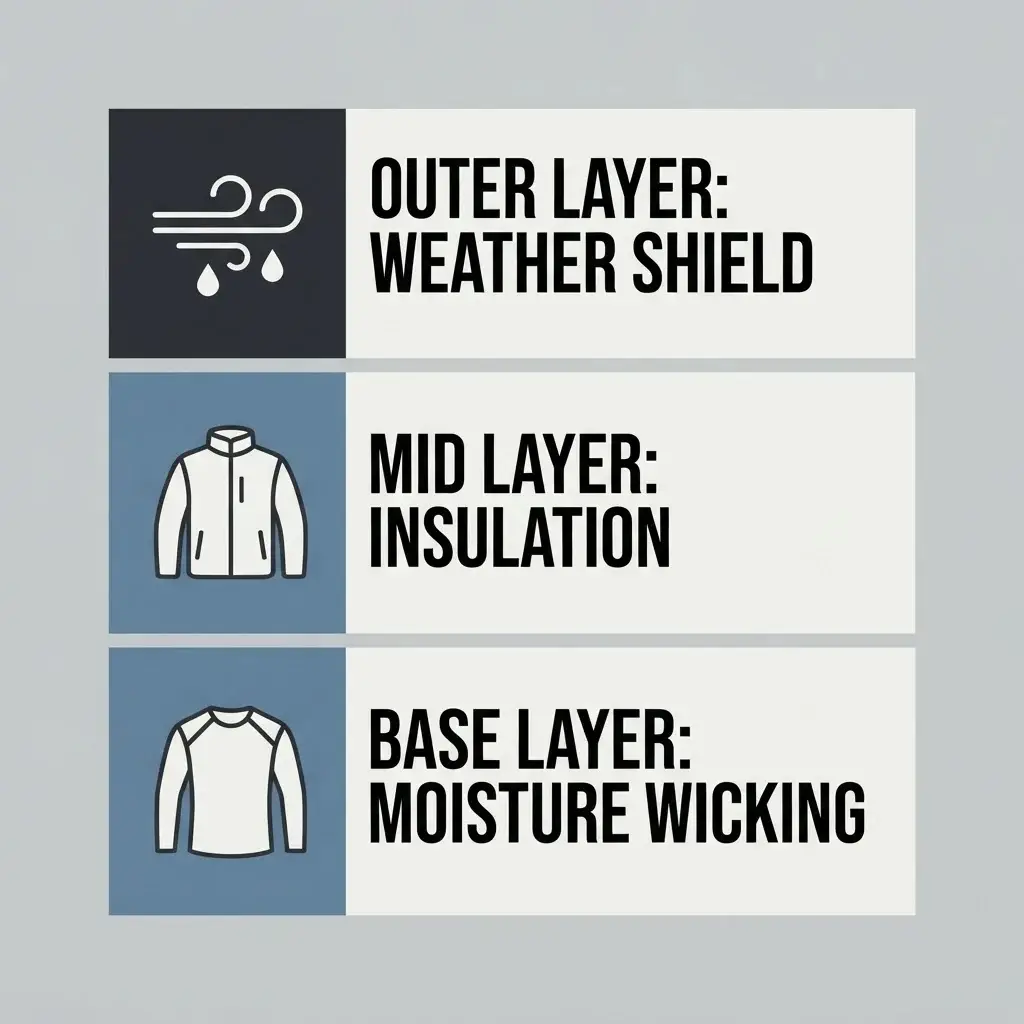
You stay warm by trapping air between thin layers of clothing.
1. The Base Layer: Your Second Skin
The base layer is the most important piece of the puzzle. Its job is to sit tight against your skin and pull sweat away from your body. If you sweat while walking up a hill or running for a train, and that sweat sits on your skin, you will freeze the moment you stop moving.
- What to buy: Look for high-quality Merino wool or synthetic polyester thermals. Merino wool is a natural miracle fabric. It keeps you warm, breathes well, and naturally resists odors. You can wear a good merino wool top for three or four days of heavy walking without it smelling bad.
- What to avoid: Never use cotton as a base layer. Cotton holds onto water like a sponge. Once it gets wet from sweat or snow, it stays wet, drops your body temperature, and makes you miserable.
2. The Mid Layer: Trapping the Heat
The mid layer goes over your thermals. Its job is to catch the warm air your body creates and hold it close to you. This is your main defense against the cold.
- The best options: A thin, packable down jacket or a high-quality lightweight fleece jacket. Down jackets are amazing because they compress down into the size of a water bottle, leaving tons of room in your pack.
- How to wear it: Make sure this layer fits comfortably over your thermals but is not so loose that cold air drafts can blow up through the bottom hem.
3. The Outer Layer: Your Weather Shield
The outer layer is your shell. It does not need to be heavily insulated if your mid layer is doing its job. Instead, it must stop the wind, rain, and snow from getting inside.
- What to look for: A windproof, waterproof jacket with a good hood. If the wind cannot pierce your jacket, your body heat stays trapped safely inside your mid layer.
- The practical bonus: By keeping this layer separate from your insulation, you can wear just the shell if it rains on a warmer day, or just the insulation when it is cold but dry. It gives you three outfits in one.
Fabric Science: What to Wear and What to Avoid
To truly understand how to pack smart for winter travel, you have to look at the tags on your clothes. Different fibers behave completely differently under cold and wet conditions.
The Magic of Merino Wool and Down
I used to think wool was always itchy and heavy because of old sweaters I wore as a kid. But modern merino wool is incredibly soft, light, and thin. It is worth investing in two good merino tops rather than five cheap synthetic shirts.
Packable down (the fluffy under-feathers of ducks or geese) offers the highest warmth-to-weight ratio available. Synthetic insulation options have gotten very good too, and they have a major benefit: they still keep you warm even if they happen to get completely soaked by rain.
The Danger of Cotton and Heavy Knits
When I worked as a tour guide in New York, I would see tourists arriving in thick, chunky cotton cable-knit sweaters. By midday, after walking miles through the city, they were shivering.
Cotton draws heat away from your skin when wet. Heavy, chunky acrylic knits look cozy in photos, but they let the wind blow right through them, and they take up half a suitcase by themselves. Leave them at home.
The Ultimate Smart Winter Packing List
Here is the exact breakdown of what goes into my carry-on bag for a two-week winter trip to any cold climate. This list keeps me comfortable in temperatures dropping well below freezing.
Clothing Layers
- 2 Merino Wool Base Layer Tops: One to wear, one to air out or wash.
- 1 Base Layer Bottom (Leggings/Thermals): Perfect to wear under your regular pants on freezing days.
- 1 Packable Down Jacket: Your main mid layer.
- 1 Waterproof Outer Shell: Your shield against rain and snow.
- 2 Pairs of Pants: Durable synthetic travel pants or slim jeans. Synthetic blends dry much faster if you get caught in a flurry.
- 2 Lightweight Sweaters or Fleeces: For casual days or extra layering options.
Footwear and Extremities
- 1 Pair of Waterproof Boots: Wear these on the plane so they do not take up space in your bag. They must have deep rubber soles for grip on icy pavement.
- 1 Pair of Light Sneakers: For wearing inside your accommodation or on dry, warmer days.
- 4 Pairs of Wool Socks: Thick wool socks keep your toes alive.
- 1 Warm Beanie: Make sure it covers your ears completely.
- 1 Pair of Windproof Gloves: Touchscreen-compatible gloves are a lifesaver when you need to use navigation apps outside.
- 1 Scarf or Neck Gaiter: A neck gaiter is smaller, lighter, and stops the wind better than a massive wool scarf.
Footwear Strategies: Keeping Toes Warm and Dry
If your feet get cold or wet, your trip is effectively ruined. You will not want to walk through historic streets or stand in line for a local market if your toes feel like blocks of ice.
Choosing the Right Travel Boot
Your winter boots do not need to look like heavy mountaineering gear, but they do need to be functional. Look for a boot that is treated with a waterproof membrane. Before you leave, you can test them at home by stepping into a shallow puddle.
The sole is just as important as the upper fabric. Smooth leather or flat plastic soles will cause you to slip and fall on patches of black ice. You want deep, rubber grooves that bite into the snow. When I am preparing for any rugged environment or unpredictable weather, I always check the safety ratings and global security advisories on the US Department of State Travel Website to ensure I am completely ready for the local conditions before I step off the plane.
The Sock Trick
Do not pack ten pairs of cheap socks. Pack four pairs of high-quality merino wool socks designed for hiking. Wool socks cushion your feet, prevent blisters during long days of urban exploration, and keep their insulating properties even if your boots leak a little bit.
Insider Tip: If your feet get cold easily, do not cram two pairs of socks into your boots. If your boots become too tight, it cuts off the blood circulation to your toes, making your feet even colder. Your feet need a tiny bit of air space inside the shoe to stay warm.
Capsule Wardrobe: How to Mix, Match, and Stay Stylish
You do not have to sacrifice personal style to pack light. The key to looking good while living out of a small backpack is creating a cohesive color palette.
Choosing a Neutral Color Base
Stick to a simple color theme: black, gray, navy, or olive green. When all your tops match all your bottoms, you can create dozens of different outfits from just a few items.
For example, a black merino wool base layer looks like a classic, sleek turtleneck when worn on its own in a local cafe. You can throw your lightweight sweater over it for dinner, or put your down jacket on top for a long walk through a park.
Accessories as Style Changers
Since your outer coat will be in almost every photo you take outside, use your small accessories to change up your look. Packing a bright red beanie or a patterned scarf takes up almost zero space in your bag, but it completely changes the look of your outfit in pictures. It is an easy way to feel fresh without adding weight to your shoulders.
Packing Techniques: Maximizing Every Inch of Space
How you put things into your bag is just as important as what you choose to bring. If you just throw your clothes in a pile, your bag will burst at the seams.
The Rolling Method vs. Compression Cubes
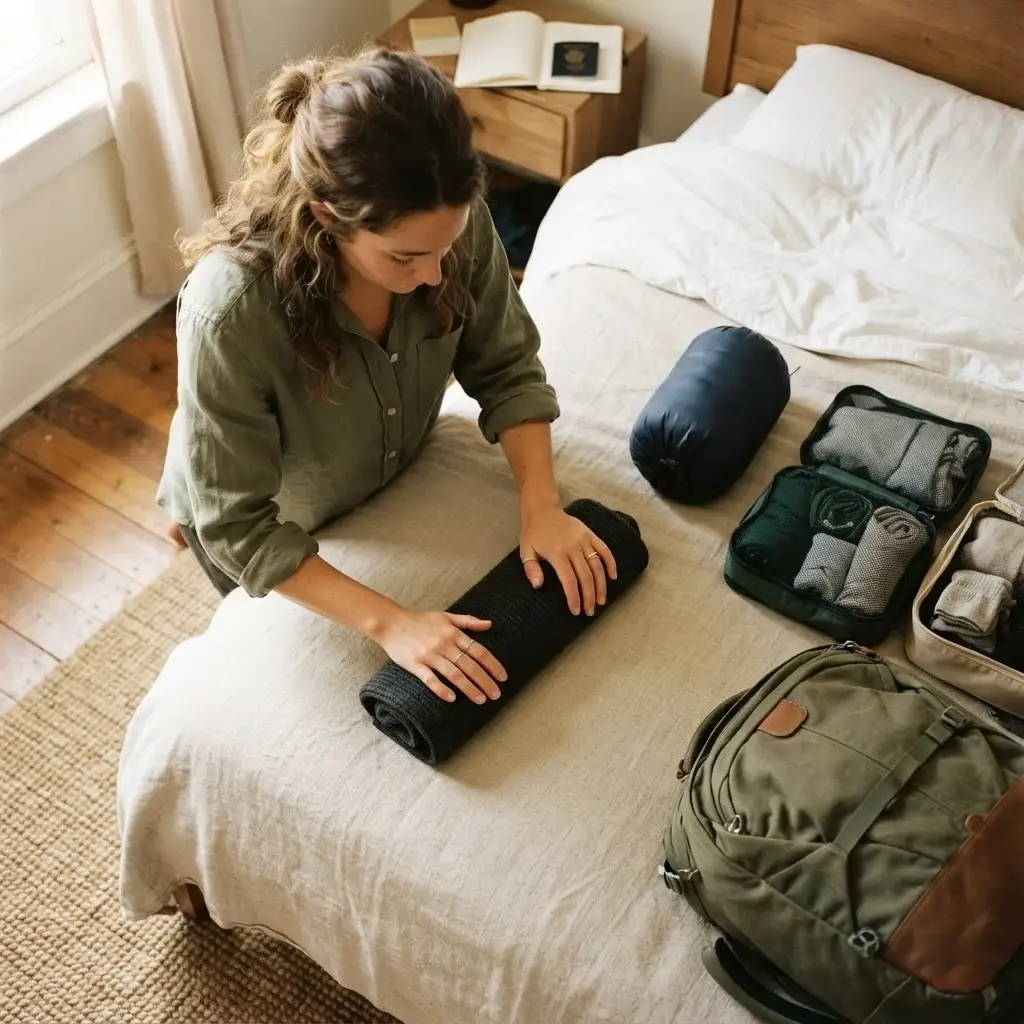
Do not fold your clothes; roll them tightly. Rolling removes the extra air pockets between layers and prevents deep wrinkles.
For winter travel, compression packing cubes are your absolute best friend. These are fabric zippered bags with an extra zipper designed to squeeze out all the excess air. You can put your two sweaters and your down jacket into one cube, zip it shut, use the compression zipper, and watch the volume shrink by half. It feels like magic.
Utilizing Dead Space
Look for hidden spaces inside your gear. Your waterproof boots are giant hollow zones. Do not leave them empty! Stuff your socks, underwear, or charging cables deep into the toes of your boots before placing the boots into your bag.
Always pack your heaviest items close to your back panel. If you put heavy boots or a heavy camera bag at the very bottom or the outer edge of your backpack, it pulls the weight away from your body, straining your lower back and making the bag feel twice as heavy as it actually is.
Navigating Winter Locations: Real-World Scenarios
Let us look at how this packing system works in the real world. Winter looks different depending on where you go, and your daily routine will change based on the local culture.
Exploring Northern European Cities
Imagine you are walking through the historic streets of Edinburgh or Munich. The outside air is freezing, but every time you step into a historic museum, a cozy bookstore, or a local train, the indoor heating is blasting at full power.
If you are wearing one massive fur coat over a simple t-shirt, you will be trapped. You will either freeze outside or sweat inside.

But with our three-layer system, you simply unzip your outer shell and packable down jacket when you walk inside, slip them into your daypack, and sit comfortably in your merino base layer.
When it is time for lunch, look for small, traditional basement pubs or taverns. In Germany or Scotland, ordering a hot, rich beef stew or a bowl of traditional potato soup is the absolute best way to warm your core. Combine that food with a hot local tea, and you will have the energy to walk for another four hours.
Exploring Frozen Temples in Kyoto, Japan
Winter in Kyoto is crisp, quiet, and stunningly beautiful. The crowds are gone, and you can see the traditional wooden architecture without thousands of people in your way. However, temple exploration requires unique packing preparation.
When you enter traditional Japanese temples, you must remove your shoes at the door and walk along polished wooden floors in your socks. Those floors can feel like blocks of ice. This is exactly why you packed your thickest merino wool socks!
After a morning of exploring cold temples, look for a local ramen shop. Order a steaming bowl of tonkotsu or miso ramen. Sitting at a quiet wooden counter, listening to the chefs work, and eating hot noodles is a deeply authentic cultural experience that you can only truly appreciate when you have earned it after a long walk in the cold. To make sure you navigate these cultural sites with total respect, I always recommend reading through the entry guides and cultural etiquette rules found on the Lonely Planet Destination Guide for Japan before finalizing your daily itinerary.
Health, Safety, and Insurance in Cold Climates
Traveling in the winter requires a little extra attention to your body and your surroundings. Slipping on ice or getting a bad cold can quickly interrupt your plans if you are not prepared.
Skincare and Hydration
Cold wind strips moisture from your skin fast. Always pack a small, travel-sized tube of heavy face cream and a high-quality lip balm. Put these in your pocket, not your main bag, so you can apply them throughout the day.
It is also easy to forget to drink water when it is cold because you are not sweating noticeably like you would in a tropical climate. Carry a lightweight, insulated water bottle. You can fill it with hot water or herbal tea in the morning at your hostel, giving you a warm object to hold against your chest and hot hydration throughout the day.
Navigating Local Health Advisories
Before you take off on any global journey, it is critical to look into local health realities. Cold weather can sometimes worsen regional seasonal bugs, and knowing what care is available is vital for your solo confidence. I make it a strict rule to check the latest medical guidance and travel health notices on the CDC Travelers’ Health Page to see if there are any specific winter health alerts or vaccine recommendations for my destination.
Why Quality Insurance Matters
Winter weather causes travel delays. Flights get canceled due to snowstorms, trains get delayed by ice on the tracks, and luggage sometimes gets lost in the chaotic holiday travel seasons.
Do not let a weather delay break your budget or ruin your spirit. Getting a solid insurance plan gives you the peace of mind to sit back, order a hot coffee, and wait out the storm safely. For transparent coverage that understands independent adventure, I always check the specialized policies available on the World Nomads Travel Insurance Site to make sure my gear and medical needs are covered if a winter storm throws a wrench into my plans.
Step-by-Step Packing Timeline
To prevent that last-minute panic where you start throwing random, heavy items into your suitcase, use this simple chronological checklist.
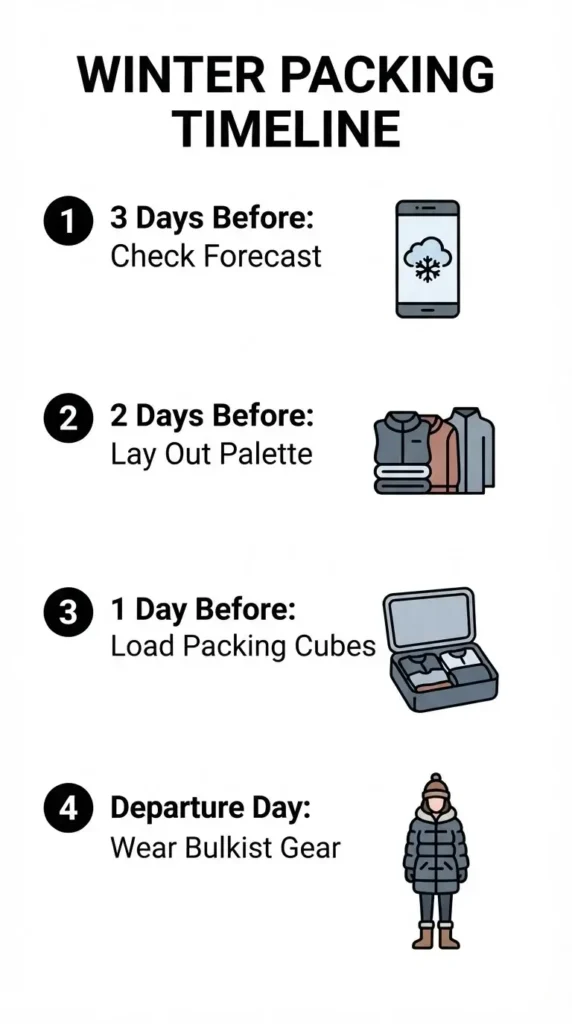
1.Check the Real-Time Forecast:3 Days Before Departure.
Look at the actual high and low temperatures for your specific city. Do not guess. If it is raining instead of snowing, you know to prioritize your waterproof outer shell over extra insulation.
2.Lay Out Your Base Palette:2 Days Before Departure.
Lay every clothing item flat on your bed. Verify that every single top matches every single bottom. If an item only works with one specific outfit, remove it immediately.
3.Load the Packing Cubes:1 Day Before Departure.
Roll your thermals, pants, and sweaters tightly. Place them into your compression cubes and zip them down. Squeeze the air out gently to protect the zippers.
4.Prepare Your Plane Outfit:Day of Departure.
Pull out your bulkiest boots, your heaviest sweater, and your outer jacket. Wear these directly onto the plane. This clears massive amounts of weight and physical volume from your main backpack.
Gear Maintenance: Keeping Your Kit Alive on the Road
Once you have invested in a few high-quality winter pieces, you want to make sure they last for years of travel. Proper care on the road keeps your gear performing at its highest level.
Drying Your Layers Properly
When you arrive at your room after a long day of walking through snow or light rain, do not leave your jacket or boots draped in a dark corner or stuffed in your bag. Hang up your outer shell and down jacket immediately on hangers to let the air circulate around them.
If your boots are damp inside from a long day of exploring, pull out the removable insoles and set them near (but not directly on top of) a heater radiator.
Warning: Placing wet leather or synthetic boots directly flat against a blazing hot radiator can melt the glue holding the soles together or crack the fabric. Let them dry naturally by stuffing them with dry newspaper or clean paper towels to draw the moisture out safely from the inside.
Washing Wool in a Hostel Sink
You do not need a washing machine to keep your merino wool fresh. If a base layer finally needs a wash after several days of hard use, fill your room sink with lukewarm water and a tiny drop of mild shampoo or body wash.
Gently swirl the garment in the water for a minute. Do not wring or twist wool aggressively, as this stretches the delicate fibers out of shape. Rinse it thoroughly with clean water, lay it flat on a dry towel, roll the towel up like a burrito to squeeze out the excess water, and then hang it flat to dry overnight. Because merino wool is so breathable, it will be completely dry and ready for adventure by the time you wake up.
Overcoming the Fear of the Cold
It is completely normal to feel a little bit intimidated by the thought of traveling through a freezing country alone. We naturally crave warmth and safety. But some of my absolute favorite travel memories happened in the dead of winter.
I think about watching the steam rise off a fresh bowl of street food in a quiet alley, walking through a silent, snow-covered forest without another soul in sight, and feeling the deep, powerful sense of pride that comes from realizing I can navigate a frozen world all on my own.
When you learn how to pack smart for winter travel, you stop viewing the cold as an enemy. Instead, it becomes a beautiful backdrop for personal growth, deep cultural immersion, and unforgettable adventures. Pack light, trust the process, and take that first step. The world is waiting for you, no matter the season.