
When I walked away from my gray corporate office cubicle back in New York, I bought a single 40-liter backpack. I was terrified. I sat on my bedroom floor surrounded by four different pairs of shoes, wondering how on earth I was going to fit them into a tiny nylon bag alongside my clothes, my laptop, and my hopes for a new life.
During my time working as a certified sightseeing guide in New York City, I regularly walked twelve miles a day on concrete sidewalks. I learned the hard way that the wrong shoes can utterly ruin an experience. But when I transitioned into a life of full-time solo travel—backpacking across Europe, living with a host family in Ghana, and teaching English in Thailand—I learned an even bigger lesson: heavy shoes pack poorly, and overpacking them is the fastest way to drain your physical energy on the road.
If you are currently looking at your open suitcase and feeling overwhelmed, take a deep breath. You do not need a massive, heavy suitcase to explore the world. Mastering the art of packing shoes for travel without wasting space is your ticket to moving freely, confidently, and comfortably through any destination. Let us break down exactly how to do it, step by step, without leaving your favorite pair behind or crushing your gear.
The golden rule of three: Choosing the right footwear layout
Before we even look at the inside of your suitcase, we have to talk about curation. The secret to packing shoes for travel without wasting space is simple: do not pack more than three pairs of shoes. In fact, if you can manage it, two pairs is the absolute sweet spot for lightweight independent travel.
When you bring too many pairs of shoes, you are not just losing space; you are adding dead weight to your back or your shoulders. When I was saving up money for my first big solo trips by waitressing double shifts in Albany, I wore out cheap sneakers every few months. That taught me the value of quality, multi-functional gear. Every single shoe you allow into your bag must serve at least two distinct purposes.
The Anchor: Your heavy walking shoe
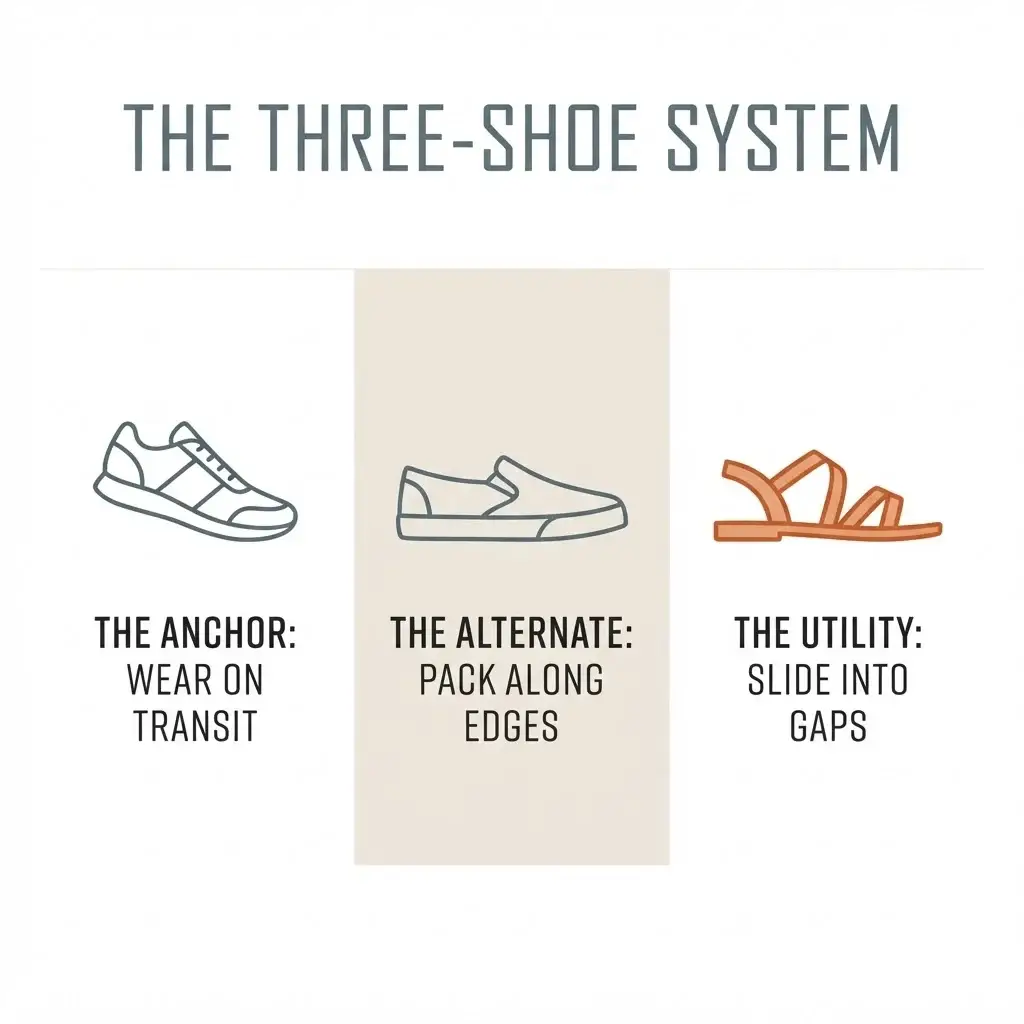
This is the shoe that stays on your feet during transit days. It should be your most supportive, broken-in pair of footwear. Think of it as your primary vehicle for exploration. It could be a sturdy pair of trail running shoes, clean-cut leather sneakers, or lightweight blundstone-style boots. Because it is the heaviest and bulkiest item, you will wear it on planes, buses, and trains to save maximum internal luggage space.
The Versatile Alternate: Your day-to-day cultural shoe
This pair goes inside your bag. It needs to be lightweight, relatively flat, and stylish enough to wear to a nice dinner, yet comfortable enough for an afternoon museum stroll. For men, this might be a canvas slip-on or a lightweight loafer. For women, a supportive leather ballet flat, an ankle boot, or a minimalist sneaker works perfectly.
The Utility Choice: Sandals or water-friendly footwear
Whether you are navigating communal hostel showers in Berlin or walking across hot sand on a beach, you need something water-resistant and incredibly compact. A slim pair of rubber flip-flops or minimalist strapped sandals take up almost zero vertical space and can slide into the thinnest gaps of your luggage.
Step-by-step methods for packing shoes for travel without wasting space
Now let us get into the mechanical engineering of your bag. Shoes are awkwardly shaped, inherently dirty, and rigid. If you just toss them into the middle of your suitcase, they create strange air pockets that swallow up valuable real estate. We want to treat our footwear like puzzle pieces.
1. The “Toe-to-Heel” nesting method
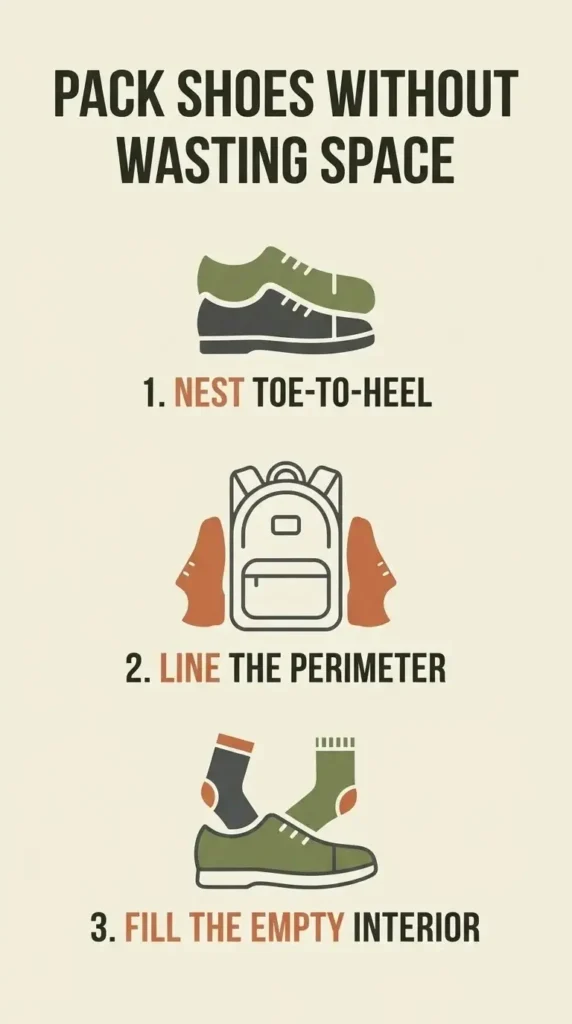
Never pack your shoes facing the same direction side-by-side. Instead, lay them flat on their sides or soles, and nest them so the toe of one shoe sits next to the heel of the other. This forms a neat, uniform rectangular shape that sits perfectly against the flat walls of your suitcase or the bottom spine of your backpack.
2. The perimeter placement strategy
The heavy structured frame of your suitcase or backpack is the safest place for rigid footwear. Place your nested shoes along the perimeter walls of your bag. By lining the bottom or sides of your luggage with your shoes, you create a protective barrier for your fragile items—like electronics or toiletries—which can then be packed safely in the center.
3. Turning shoes into storage containers
The inside of a shoe is completely empty air. When you are packing shoes for travel without wasting space, you must treat the interior of each shoe as an extra pocket.
- Socks: Roll up your socks tightly and stuff them deep into the toe box of your shoes. This keeps your socks organized and prevents the leather or canvas of your shoe from getting crushed and creased.
- Tech cords: Wrap your phone chargers, USB cables, and camera batteries in small plastic bags and tuck them into your shoes.
- Underwear: Tightly rolled undergarments fit beautifully inside sneakers.
Keeping things clean: Hygiene hacks for shoe packing
The biggest hesitation most travelers have when packing footwear next to their clean clothes is the dirt factor. You have been walking through dusty markets, damp cobblestones, and city streets. You do not want that street grime transferring onto your crisp white shirts.
Shower caps as shoe covers
Instead of buying expensive, bulky shoe cubes, use the free plastic shower caps you find in hotel bathrooms. Slip the elastic band of the shower cap over the sole of your nested shoes. It acts as a perfectly lightweight, form-fitting shield that keeps dirt contained without adding even a millimeter of extra fabric thickness to your bag.
Upcycled grocery bags
If you do not have a shower cap, a standard lightweight plastic grocery bag works just as well. Wrap each shoe individually, compress the air out, and tie it loosely. This separate wrapping method gives you more flexibility because you can tuck individual shoes into separate corners of your bag rather than keeping them locked together as a bulky pair.
Emma’s Insider Secret: To prevent your bag from smelling like a locker room after weeks of heavy walking, place a dry, unused dryer sheet or a small mesh sachet filled with baking soda inside each shoe before you pack it away. It absorbs moisture and keeps everything smelling fresh.
Real-world destination testing: Packing for different climates
To understand how this looks in practice, let us look at three distinct regions where I have lived and traveled. The shoes you need will change based on where you go, but the space-saving principles stay exactly the same.
The Southeast Asia layout: Thailand exploration
When I was teaching English in rural Thailand, my daily routine involved constant movement. In places like Bangkok, Chiang Mai, and the southern islands, the climate is hot, humid, and punctuated by sudden tropical downpours. Furthermore, cultural etiquette requires you to remove your shoes before entering homes, schools, and sacred Buddhist temples.
When visiting the stunning historic ruins of the ancient capital, you will want to consult the official UNESCO World Heritage cultural preservation guidelines to understand the deep history of these sacred sites, which often demand respectful dress codes from head to toe. For daily transport, downloading the local ride-sharing application is highly efficient; checking the Grab official app overview page will show you exactly how to safely secure affordable car or motorcycle rides across hectic cities like Bangkok without getting overcharged by rogue drivers.
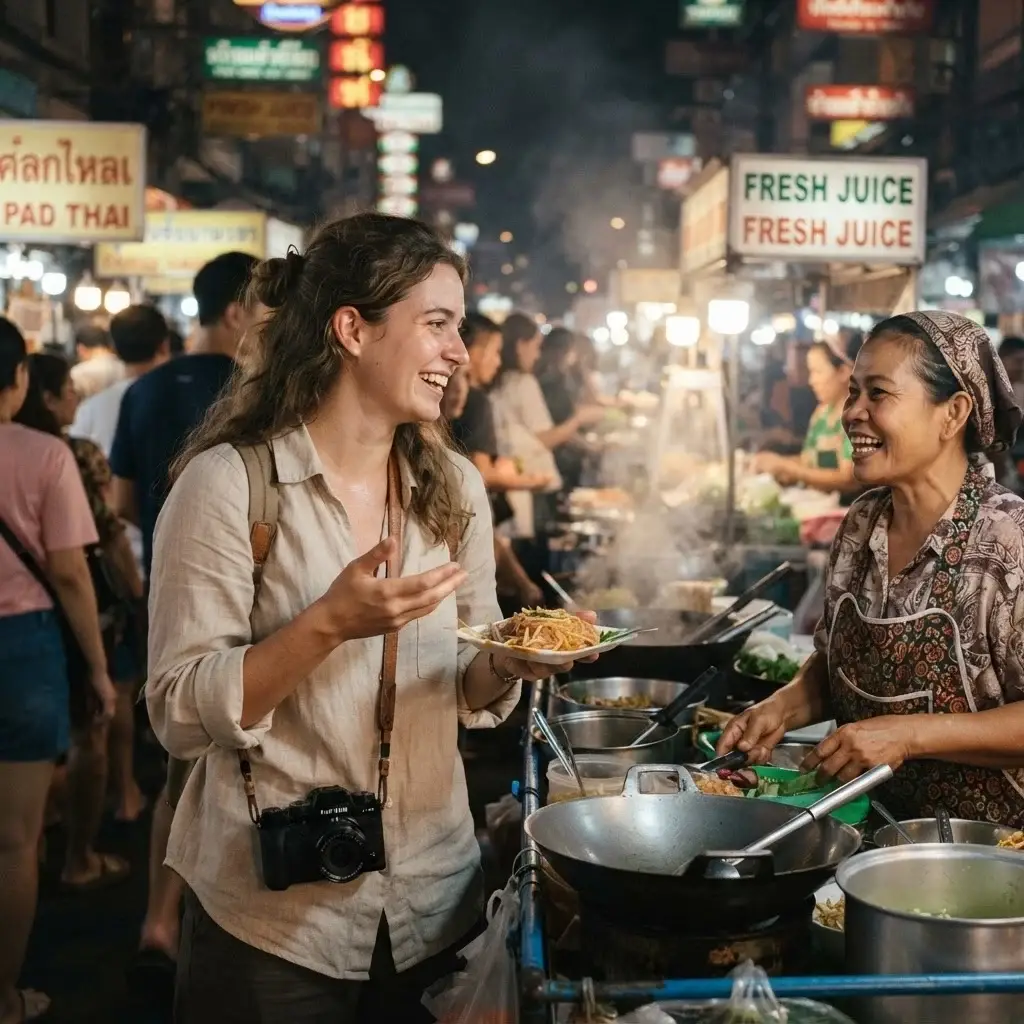
- What to eat while exploring: Don’t miss out on grabbing a hot plate of Pad Kra Prow (holy basil stir-fry with minced pork) from a street vendor near the Chiang Mai night bazaar. Eat where the locals line up!
- Navigation Tip: When exploring Bangkok, skip the road traffic entirely. Use the clean, air-conditioned BTS Skytrain system or take the cheap public orange-flag express boats along the Chao Phraya River.
The Western Europe layout: Cobblestones and city walks
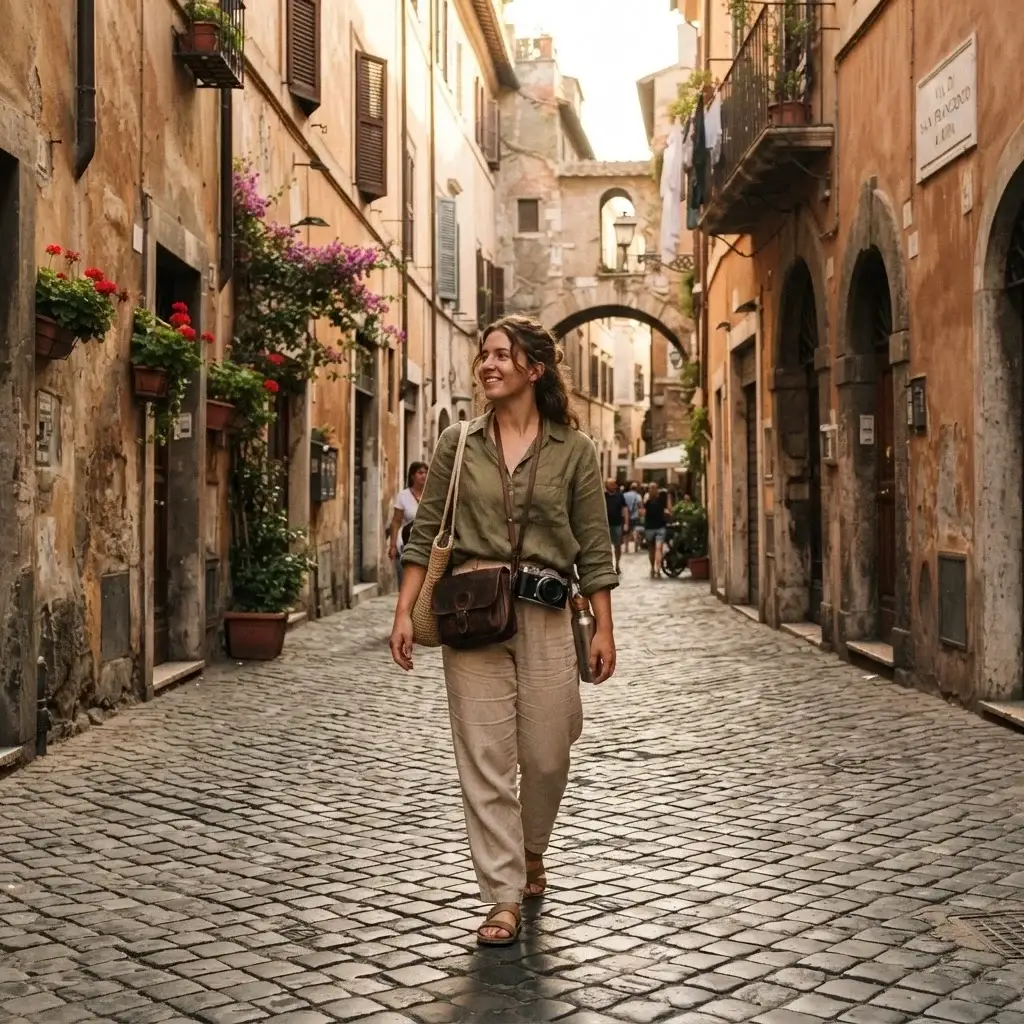
Backpacking solo through European capitals like Rome, Paris, and Berlin involves immense amounts of walking on historic, uneven surfaces. Cobblestones are notoriously brutal on thin-soled shoes and can cause painful blisters within hours.
- The Footwear Choice: For this trip, your worn shoe must be a high-quality, cushioned walking sneaker with excellent arch support. Your packed shoe should be an elegant, minimalist leather sneaker or flat that lets you blend in with the fashionable locals when you sit down at a bistro.
- Safety and Health Preparation: Before setting off on an intense walking tour through busy European city centers, it is always smart to verify current health notices and food safety suggestions by reading the CDC Travelers’ Health advisory site so you know how to stay healthy and active on the road.
- What to eat while exploring: In Rome’s classic Trastevere neighborhood, wander down the alleyways to find a tiny friggitoria and order supplì—deep-fried risotto balls stuffed with gooey mozzarella.
- Navigation Tip: European cities are designed for trains. Download the Eurail app to manage your transit, and always use official city transit apps (like BVG in Berlin) to buy day passes for buses and subways directly on your phone.
The West Africa layout: Ghana rural and urban tracks
Living with a wonderful host family in Ghana taught me how to prepare for dusty red-clay roads, bustling urban market chaos, and warm coastal humidity.
- The Footwear Choice: Here, your heavy worn shoe should be a breathable trail runner with deep tread to handle unpaved paths. Inside your bag, pack a pair of sturdy, comfortable leather sandals that can handle both the heat and casual evening gatherings.
- Official Entry Requirements: Traveling to West Africa requires careful logistical planning regarding paperwork, vaccinations, and security updates. You should always read the US Department of State Travel international entry requirements page to secure your tourist visa and understand current travel advisories well before booking your flight.
- What to eat while exploring: Seek out a local open-air chop bar in Accra and try a steaming bowl of Jollof rice served with grilled chicken and fried plantains (called kelewele).
- Navigation Tip: In Ghana, the ultimate local experience is riding a trotro—shared minibus transit. They are incredibly cheap and go everywhere. Just go to the local station, call out your destination, and the friendly conductors will point you to the right van.
Common mistakes that waste massive luggage space
To truly master packing shoes for travel without wasting space, we must eliminate the common habits that quietly fill up our suitcases with useless bulk.
Bringing “Just In Case” shoes
The biggest space killer is the phrase, “But what if I go to an ultra-fancy club?” or “What if it snows unexpectedly?” Unless that event is locked into your itinerary, do not pack for hypothetical scenarios. If an unexpected event happens, you can almost always buy a cheap local solution or adapt the versatile shoes you already have with you.
Using rigid, heavy shoe boxes
Never, under any circumstances, pack a cardboard shoe box or a thick plastic heavy-duty shoe container inside your luggage. They are rigid rectangles that refuse to mold to the contours of your bag, creating massive zones of completely wasted space around them. Stick to soft, pliable wrappers like shower caps or grocery bags.
Packing heavy leather boots inside the bag
If you absolutely must travel with heavy winter boots or chunky doc martens, they should never see the inside of your suitcase. Even if it is a warm day when you depart, wear them through airport security and onto the plane. You can easily slip them off under your seat once the flight takes off to stay comfortable.
Building travel confidence from the feet up
When you learn how to handle packing shoes for travel without wasting space, something incredible happens: your anxiety about travel starts to shrink. You realize that you do not need to carry your entire bedroom on your back to feel safe and prepared in a foreign country.
When I first stood at JFK airport with my light 40-liter backpack, I felt vulnerable. But as soon as I landed on the ground and realized I could walk for miles to my hostel without my shoulders aching, that vulnerability turned into pure, unadulterated confidence. Packing light is not about deprivation; it is about empowerment.
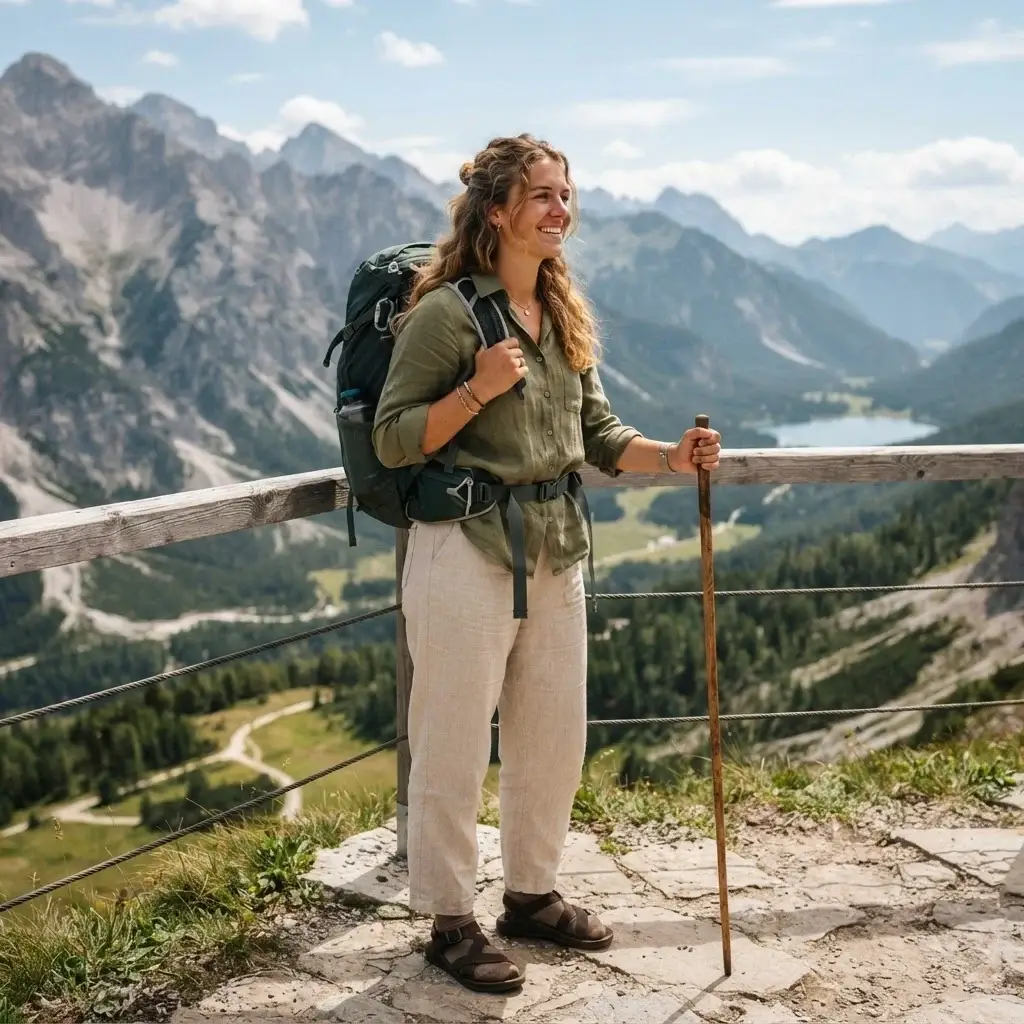
It gives you the physical freedom to say “yes” to unexpected adventures, whether that means running to catch an old wooden train in Thailand or walking down a beautiful, winding dirt path in West Africa.
Pack smart, protect your footwear, keep your bag light, and step forward into your next journey with your eyes wide open to the beauty of the world.