
Best travel essentials for every trip: Pack light, go far

I still remember the crushing weight of my backpack the first time I landed in Europe. I was twenty-two, terrified, and convinced that the secret to solo travel survival lay in bringing everything I owned. I had packed extra shoes I never wore, a massive hair dryer, and enough emergency supplies to stock a small pharmacy. Within three days of hauling that monster up five-flight staircases in Paris and squeezing through narrow train doors in Munich, I felt utterly defeated. My shoulders were bruised, my energy was drained, and I was too busy managing my stuff to actually look at the world around me.
That trip was the turning point. Years later, after quitting my soul-crushing 9-to-5 office cubicle, working long hours as a New York City sightseeing guide, and waitressing on weekends to fund my wanderlust, I learned a hard truth. Security does not live at the bottom of a heavy suitcase. Real freedom on the road comes from packing light. When you carry less, you lower your stress, eliminate baggage fees, and blend into the local environment. Most importantly, you build the confidence to handle unexpected changes.
Choosing the right gear is not about buying expensive luxury items. It is about selecting intentional, reliable tools that serve multiple purposes. Whether you are prepping for your very first solo trip across Southeast Asia or planning a slow-travel month in a small European village, this is my exhaustive, field-tested list of the best travel essentials for every trip.
1. The Core Luggage System: Your Mobile Home
Your choice of bag sets the tone for your entire journey. If your bag is too big, you will fill it with things you do not need. If it is uncomfortable, every transit day will feel like a punishment. I always recommend a carry-on-sized travel backpack over a rolling suitcase, especially for solo adventures.
The Main Travel Backpack
A 40-liter to 45-liter backpack is the sweet spot for light travel. Look for a pack with a full-panel zip, which opens like a suitcase rather than a traditional top-loading hiking pack. This design prevents you from having to dump out all your clothes just to find one clean pair of socks. Ensure the bag features a robust, padded hip belt. A good hip belt transfers up to eighty percent of the bag’s weight from your delicate shoulders to your stronger hips and legs.
When you are navigating the packed subway stations of Tokyo or walking along cobblestone paths in Prague, a sleek backpack keeps your hands free to check maps or hold a local snack. You can easily step over curbs, climb stairs, and bypass the long lines at airport baggage carousels.
Compression Packing Cubes
Packing cubes are non-negotiable organization tools. They act like drawers for your backpack. Instead of a chaotic explosion of fabric, your gear stays divided into neat compartments.
I prefer compression packing cubes made from ultra-lightweight ripstop nylon. These cubes feature a secondary zipper system that squeezes out excess air, shrinking your clothes down by up to forty percent. Use one cube for tops, one for bottoms, and a separate breathable mesh cube for undergarments. This layout means you can unpack your entire room in under ten seconds and repack just as fast when it is time to catch an early morning bus.
The Packable Daypack
Never sightsee with your main travel backpack. Instead, tuck a lightweight, packable daypack into your main bag. These small packs fold down into the size of an apple but expand into a fifteen-liter backpack once unfolded.
Use your daypack for daily explorations to hold your water bottle, a light jacket, and local maps. Look for one made from water-resistant fabric with deep mesh side pockets to secure items quickly. When I taught English in Thailand, this small bag accompanied me on weekend scooter trips and afternoon market runs, keeping my daily necessities secure without adding bulk to my living quarters.
2. Smart Clothing and Layering Systems
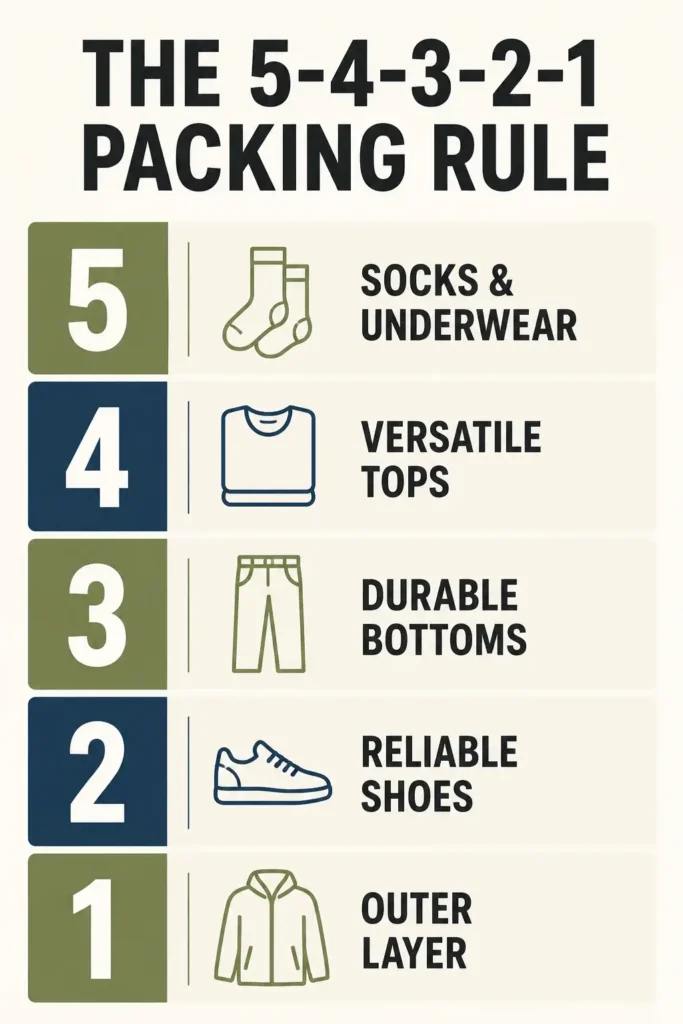
The secret to packing light is choosing versatile clothes that you can layer, wash by hand, and dry quickly overnight in a hostel bathroom. Forget the rule of packing a unique outfit for every calendar day. Instead, pack for one single week, regardless of how long your actual trip lasts.
Technical Fabrics vs. Heavy Cotton
Heavy cotton takes days to dry and holds onto sweat and odors. Swap it out for merino wool or high-quality synthetic blends. Merino wool is a natural wonder fabric for travelers. It regulates your body temperature in both hot and cold climates, wicks moisture away from your skin, and resists odors naturally.
You can wear a high-quality merino wool shirt multiple times before it needs a wash.
When choosing colors, stick to a cohesive, neutral palette like black, grey, navy, and olive. Every top should match every bottom in your bag. This approach lets you mix and match to create dozen of unique outfit combinations out of just a few core pieces.
Footwear: The Foundation of Your Journey
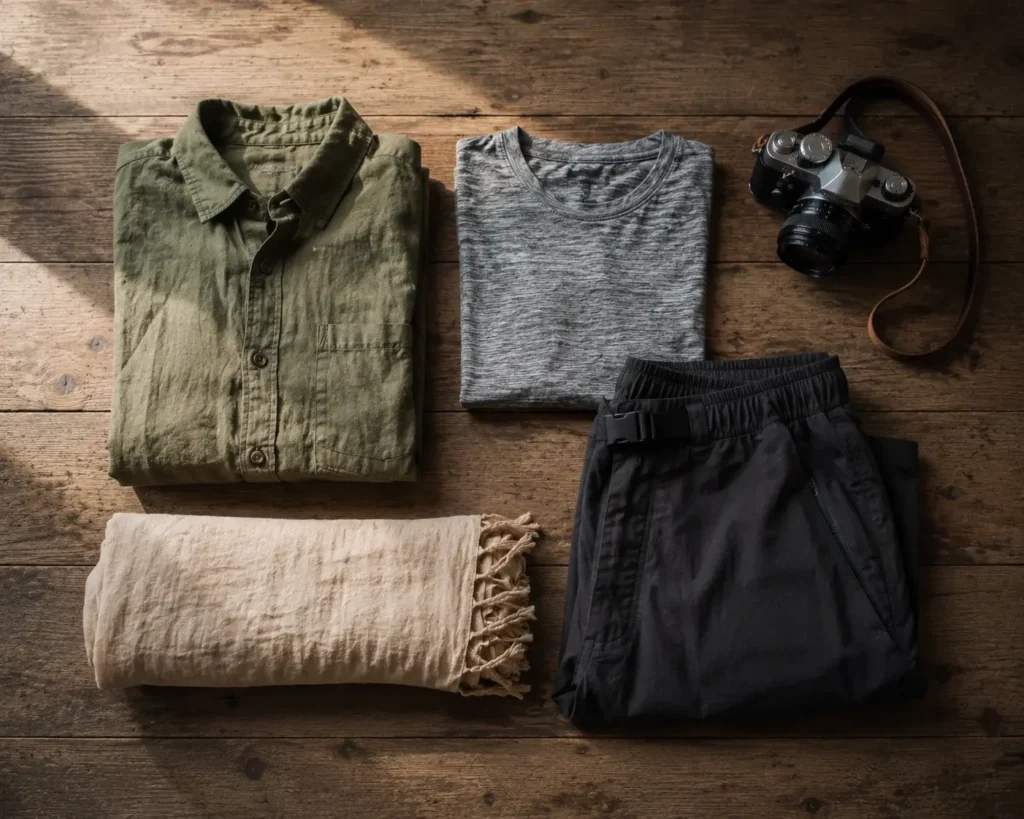
Bad shoes can ruin a brilliant trip in a single afternoon. Blisters and sore arches will keep you stuck in your room instead of exploring local neighborhoods. Limit yourself to two pairs of shoes maximum: one pair of supportive, broken-in walking sneakers and one pair of low-profile, comfortable sandals or lifestyle shoes.
Wear your heaviest sneakers on the plane to save space in your bag. Your main shoes should feature durable rubber outsoles with deep treading to handle slick stone steps, uneven dirt trails, and miles of city pavement. Never bring brand-new shoes on a trip; wear them around your hometown for at least a month beforehand to ensure there are no painful friction points.
3. The Digital Footprint: Travel Tech & Electronics
As a solo traveler, your electronics are more than just entertainment; they are your connection to safety, navigation, and digital resources. Keeping your tech organized, protected, and fully powered is an absolute priority on the road.
Power Bank (External Battery)
A dead phone screen is a major safety hazard when you are trying to find your accommodation in an unfamiliar city at midnight. A high-capacity, ten-thousand milliamp-hour power bank is an essential lifesaver. This size provides roughly two to three full charges for a modern smartphone while remaining compact enough to slip into your pocket.
Look for a power bank that features Power Delivery technology for rapid charging. Keep this battery in your daypack whenever you leave your room, especially on long transit days where wall outlets are unavailable.
International Universal Travel Adapter
Different countries use wildly different wall plug shapes and voltage standards. Instead of carrying a confusing handful of single-country plugs, invest in an all-in-one universal travel adapter.
Select an adapter that includes built-in sliding plugs for the United States, United Kingdom, Europe, and Australia. The best modern options also feature multiple integrated USB and USB-C ports on the side. This setup allows you to charge your phone, your camera, and your power bank simultaneously from a single wall outlet, which is incredibly useful in old hostel rooms or vintage train compartments with limited plugs.
Noise-Canceling Earbuds
Long flights, noisy bus engines, and loud hostel roommates can easily disrupt your sleep cycle. Rest is crucial for keeping your energy up and your mind sharp while traveling. A compact pair of wireless noise-canceling earbuds can turn a chaotic environment into a quiet sanctuary. Use them to listen to calming music, download offline audiobooks, or block out ambient drone sounds during overnight transit.
4. Health, Hygiene, and Comfort Items
Staying healthy on the road requires a proactive approach. A small, well-stocked personal care kit allows you to treat minor ailments quickly before they turn into major trip disruptions.
Solid Toiletries over Liquids
Liquid toiletries are heavy, prone to leaking all over your clothes, and subject to strict airport security limitations. Transitioning to solid toiletries is a total game-changer for minimalist packers.
- Solid Shampoo and Conditioner Bars: These look like small bars of soap, last for dozens of washes, and can be tucked into tiny breathable travel cases.
- Solid Deodorant and Toothpaste Tablets: Chewable toothpaste tabs eliminate the plastic tube completely and never count against your liquid limits.
- Solid Sunscreen Sticks: Easy to apply on the go without making your hands greasy or leaking in your daypack.
The Compact Travel First-Aid Kit
Do not buy a massive, pre-made first-aid kit filled with bulky items you will never use. Instead, build a tiny, custom kit inside a small waterproof pouch. Focus on the essentials:
- Pain Relief and Anti-inflammatory Medication: Ibuprofen or acetaminophen for headaches and muscle soreness after long walking days.
- Rehydration Salts: Vital for recovering quickly from heat exhaustion or unexpected stomach bugs.
- Blister Bandages: Hydrocolloid bandages act like a second skin, stopping pain instantly and speeding up healing.
- Antihistamines: For sudden allergic reactions to new foods, dust, or environmental triggers.
For deeper destination-specific health advice and up-to-date vaccine requirements, I always cross-reference my packing list with the official CDC Travelers Health guidelines before departing on any international journey.
5. Security Gear: Protecting Your Peace of Mind
Safety on the road is largely about preparation and common-sense habits. You do not need to travel in fear, but you should use reliable security gear to protect your irreplaceable valuables and documents.
High-Quality Luggage Locks
Always secure your bag zippers when leaving your luggage in a hostel locker, a hotel baggage room, or while navigating crowded transit hubs. A flexible cable lock certified by the TSA is much more versatile than a rigid shackle lock. The flexible steel loop can easily thread through irregular zipper pulls, locking multiple compartments together or securing your entire bag to a fixed pipe inside a train compartment during overnight journeys.
RFID-Blocking Money Belt or Neck Stash
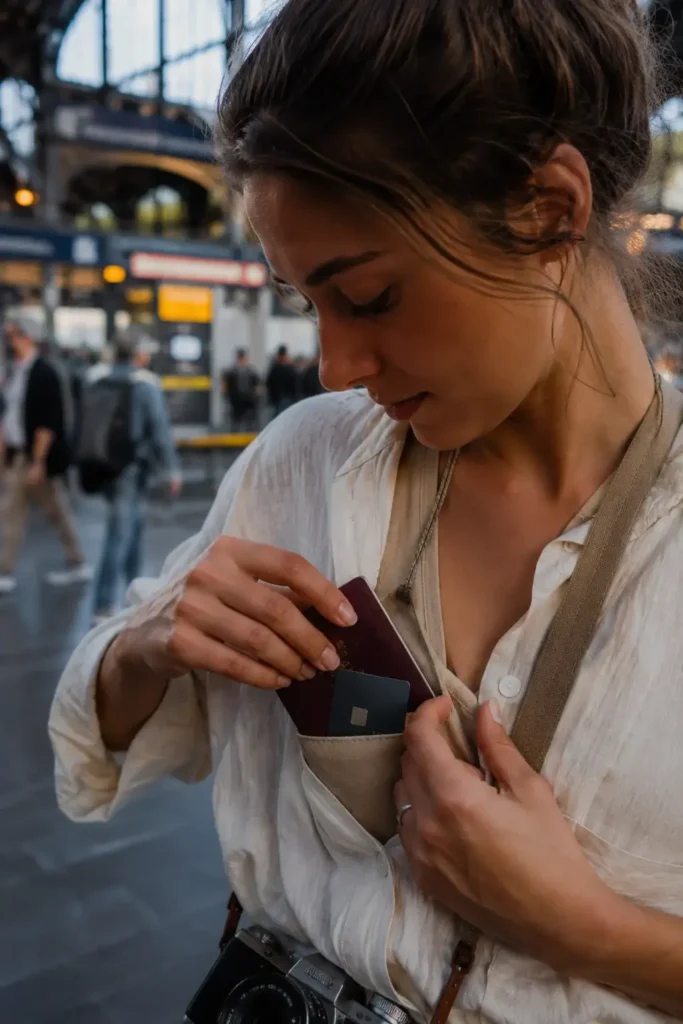
Pickpocketing is a crime of opportunity that target distracted tourists in busy areas like street markets or train stations. Keep your daily spending money and a local transit card easily accessible in your pocket, but store your core valuables deeper.
A slim, breathable neck stash or flat money belt worn underneath your shirt is perfect for carrying your passport, backup credit cards, and emergency cash reserves. This keeps your most critical items completely out of sight and out of reach from opportunistic hands.
6. Document Organization and Financial Backups
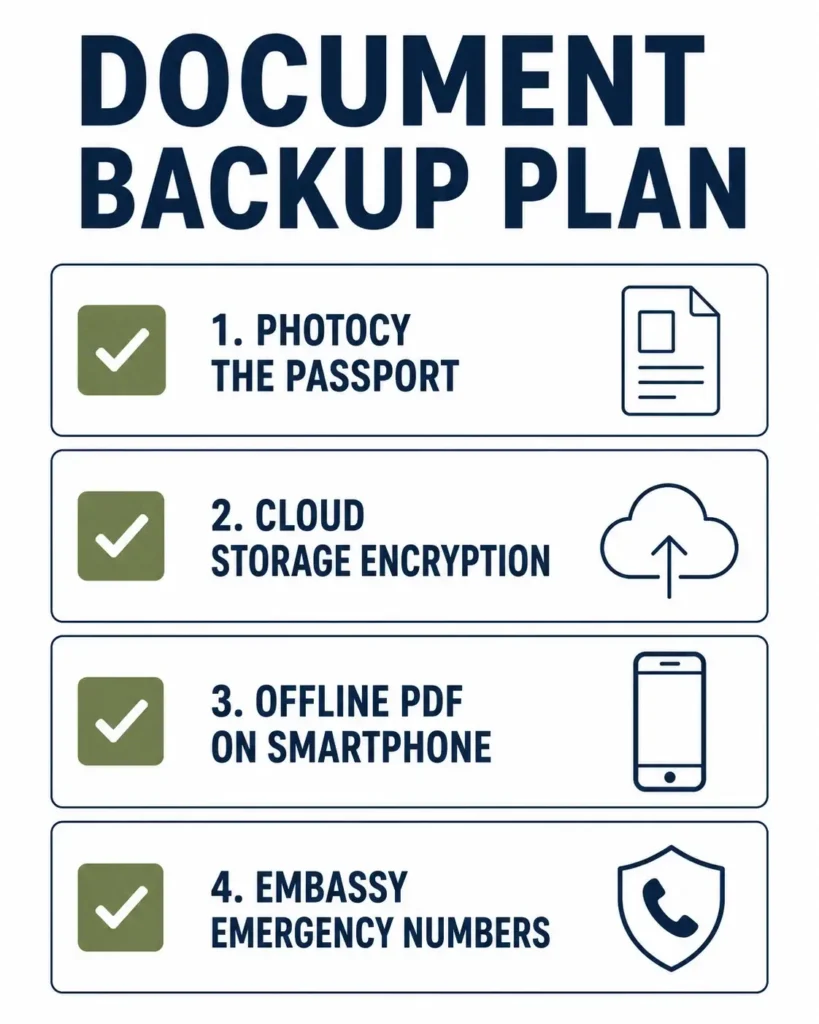
Losing your physical documents can bring an adventure to an immediate halt. Managing your administrative paperwork properly ensures you can recover quickly from lost or stolen gear.
The Travel Document Organizer
Keep all your physical documents organized in a single, water-resistant zippered pouch. This includes your passport, physical visa printouts, international vaccination certificates, and printed travel insurance details.
Before you book any flights or board international trains, it is smart to review official entry rules and safety ratings. You can check current entry requirements and regional security levels by visiting the US Department of State Travel site, which provides updated travel advisories for every nation.
Financial Redundancy Strategy
Never travel with only one debit or credit card. If an automated teller machine eats your card or your bank locks your account due to suspected unusual foreign activity, you need an immediate backup.
Travel with at least two different cards from separate banking institutions, and split them up. Keep your primary card in your wallet for daily use, and leave the backup card locked securely inside your accommodation. Look for cards that offer zero foreign transaction fees and refund international ATM cash withdrawal fees to keep your budget on track.
7. Crucial On-the-Ground Navigation Apps
Your smartphone is the ultimate travel tool, but it is only as good as the applications you download before your trip begins. Having the right digital tools downloaded onto your phone allows you to navigate foreign cities smoothly without feeling stressed.
Offline Mapping Applications
Do not rely on having a continuous, high-speed cellular data connection when you land in a new country. Download the offline map data for your destination city via Google Maps or Maps.me while you are still connected to your home internet. This feature allows your phone’s internal GPS to pinpoint your exact physical location, show street names, and provide walking directions even when your phone is completely disconnected from cellular service or roaming networks.
Ride-Hailing and Local Transit Apps
Taking a traditional taxi directly from an airport terminal or train station can sometimes expose new travelers to overcharging or language barriers. Using local ride-hailing applications provides transparent, upfront pricing and locked-in routes.
For example, if you find yourself exploring Southeast Asia, you can learn how the app works by visiting the Grab official traveler platform to understand safety features, cashless payments, and vehicle choices. Having these local transit systems set up on your phone beforehand eliminates stressful bartering sessions and ensures a reliable, trackable ride straight to your guesthouse door.
8. Practical Solo Travel Essentials for Cultural Exploration
To truly experience a destination, you must step away from tourist centers and immerse yourself in local rhythms. Packing a few specific cultural tools helps you navigate new societies respectfully and comfortably.
A Lightweight Cotton Sarong or Scarf
A high-quality cotton sarong is arguably the most versatile piece of fabric a traveler can pack. It takes up almost zero space but serves dozens of unique purposes:
- Cultural Modesty Covering: Many temples, churches, and historic sites require visitors to cover their shoulders and knees before entering. A scarf quickly transforms into an appropriate wrap.
- Travel Towel or Blanket: Perfect for chilly bus rides, long airport layovers, or spontaneous picnics in a local park.
- Sun Protection: Drape it over your neck and shoulders during hot afternoon walking tours.
Eco-Friendly Reusable Utensils and Tote Bags
Exploring local night markets and trying street food is one of the best parts of travel. Bringing a small set of reusable bamboo utensils and a compact nylon tote bag helps reduce single-use plastic waste on the go. Tucking a reusable tote into your pocket means you are always prepared to carry fresh tropical fruits, bakery items, or local souvenirs without needing plastic bags.
9. Destination Case Studies: Putting the Gear to the Test
To see how this minimalist gear kit functions in the real world, let us look at two distinct global destinations where packing light changes how you experience the local culture.
Case Study 1: Slow Travel in Chiang Mai, Thailand
Chiang Mai is an incredible hub for solo travelers, filled with ancient temples, night markets, and mountain trails. When packing for northern Thailand, your focus should be on heat management and cultural respect.
When wandering through the historic old city, you will want your hands free to grab local street food like Khao Soi—a rich, coconut curry noodle soup with crispy noodles on top.
Navigating the local transportation system here is an adventure in itself. You will often ride in a Songthaew, which is a red pickup truck converted into a shared taxi with two benches in the back. Having a small, carry-on-sized backpack means you can easily slide into the back of a crowded red truck without blocking other passengers or paying extra fees for bulky luggage.
To ensure you understand local customs, religious holidays, and proper temple etiquette before arrival, look over the comprehensive cultural guides provided on the Tourism Authority of Thailand site to plan your visits respectfully.
Case Study 2: Historical Exploration in Rome, Italy
Rome is a paradise of history, art, and food, but its historic streets are notoriously tough on heavy luggage. Hauling a massive rolling suitcase over historic cobblestones or trying to fit it onto a packed city bus is incredibly stressful.
With a lightweight 40-liter backpack, you can walk straight from the central train station to your accommodation, stopping along the way to grab a fresh slice of Pizza al Taglio or a scoop of pistachio gelato. Your supportive walking shoes are absolutely essential here as you explore historical landmarks.

For example, when spending an afternoon walking across the ancient stone pathways of the historic city center, you can discover detailed histories of the preservation projects by browsing the official UNESCO World Heritage center pages for insights on the Colosseum and Roman Forum. Packing light allows you to stay mobile, bypass long luggage storage lines, and focus on the incredible history surrounding you.
10. Final Packing Rules: The One-In, One-Out Method
Before you pull your zippers shut and head out the door, lay all your selected gear out on your bed. Look at every single item and ask yourself: “Will I use this every week, or am I packing it just in case?” If the answer is “just in case,” leave it at home. You can buy soap, basic clothing items, and simple medicines almost anywhere in the world.
Adopt the One-In, One-Out Method during your journey. If you purchase a beautiful local textile shirt or a handmade souvenir, you must donate an old piece of clothing from your bag to keep your luggage weight consistent. This discipline prevents your bag from slowly expanding during your trip, ensuring your journey home is just as easy and stress-free as your departure.
11. Protecting Your Trip: The Ultimate Essential
You can pack the most advanced technical clothing and the most efficient power banks, but the absolute most critical travel essential you can carry is financial protection against unexpected medical emergencies or trip cancellations. Travel insurance provides a vital safety net when things do not go as planned.
Whether it is a sudden medical issue in a remote area, a canceled flight connection, or stolen camera gear, having a reliable policy gives you the confidence to navigate challenges safely. To understand different coverage levels and safety protections for your itinerary, explore the customizable plans and travel safety overviews available on the World Nomads Travel Insurance platform to find a policy that fits your specific style of adventure.
Step Out with Confidence
Packing light is a learned skill that requires practice and a shift in perspective. It forces you to let go of your fears and trust that you can handle the world with just what is on your back. When you reduce the physical weight you carry, you open up mental space for curiosity, spontaneous adventures, and authentic human connections.
Stop waiting for the perfect moment or the perfect set of luxury gear. Grab a reliable backpack, pack the true essentials, and take that first step. The world rewards courage, and your next great story is waiting just around the bend.