
I still remember the absolute panic I felt when I landed in Bangkok for my very first solo teaching gig. I had just spent months waitressing extra shifts back in New York to save up every dollar I could. I quit my rigid corporate office desk job, packed everything I owned into one giant, heavy suitcase, and boarded a flight across the world. When I finally checked into my tiny guest house near the bustling streets of Sukhumvit, I unzipped my bag.
It was a total disaster.
My crisp linen shirts, cotton dresses, and teaching outfits looked like they had been chewed up and spat out. I did not own a travel iron, the guest house did not have one, and I felt completely overwhelmed. I sat on the edge of the bed and thought, “If I cannot even handle packing my clothes correctly, how am I going to survive traveling the world alone?”
That messy suitcase felt like a physical manifestation of all my fears. But over the last several years—working as a licensed sightseeing guide in New York City, backpacking solo across Europe, living with a host family in Ghana, and trekking through rural China—I transformed packing from a stressful chore into a science.
I learned that learning how to pack clothes wrinkle-free is not a luxury skill. It is a fundamental piece of building your confidence as a solo traveler. When you know exactly how to open your backpack or suitcase and find crisp, clean, ready-to-wear clothing, a massive wave of trip-planning anxiety simply melts away. You do not need expensive gadgets, and you do not need five-star hotel services. You just need a solid, practical strategy.
Let us dive deep into every single method, material, and insider secret I have picked up on the road so you can pack like a seasoned pro.
The Core Physics of Wrinkles: Why Fabric Creases on the Road
To beat the wrinkles, you have to understand exactly what causes them. Fabric creases happen because of two main factors: friction and moisture. When your clothes are jammed tightly inside a dark bag, the fibers rub against each other. As your suitcase gets tossed onto airport conveyor belts, loaded into the cargo hold of an airplane, or bumped along the back of a local bus, that friction locks creases into place.
Moisture makes it even worse. If you pack a shirt that is even slightly damp from the laundry, or if you are traveling through a hot, humid region, the moisture relaxes the chemical bonds in the fabric fibers.
As the clothes press together under pressure, those bonds reset into messy, bent shapes.
When I worked as a tour guide in New York, I would watch visitors arrive looking exhausted and rumpled. They often made the mistake of overpacking thick, heavy fabrics that trap heat and moisture. By understanding how weight distribution and air pressure affect your bag, you can prevent these forces from ruining your clothes before you even reach your destination.
Fabric Selection: Your First Line of Defense
The easiest way to keep your clothes looking great is to choose fabrics that naturally resist wrinkling. Before I buy any new piece of clothing for my travels, I do the “squeeze test.” I grab a bunch of the fabric in my fist, squeeze it tightly for ten seconds, and let it go. If it stays deeply creased, it stays on the store rack.
Best Fabrics for Wrinkle-Free Travel
- Merino Wool: This is my absolute favorite material for solo travel. It is incredibly breathable, regulates your body temperature in hot and cold climates, resists odors for days, and naturally snaps back into shape without a single crease.
- Nylon and Polyester Blends: High-quality synthetic blends are lightweight, dry incredibly fast, and are highly resistant to wrinkling under heavy pressure.
- Tencel and Modal: These eco-friendly fabrics are made from wood pulp. They feel as soft as silk, drape beautifully, and handle packing incredibly well.
- Knits and Jerseys: Look for cotton items that are knitted rather than woven. T-shirt jersey material stretches and relaxes naturally, making it highly forgiving inside a backpack.
Fabrics to Avoid on the Road
- Pure Linen: While linen keeps you cool in hot weather, it wrinkles if you even look at it wrong. Unless you love the heavily crinkled, lived-in look, leave pure linen at home.
- 100% Lightweight Cotton: Traditional woven cotton shirts hold onto moisture and retain deep creases easily when compressed under weight.
The Rolling Method: Step-by-Step for Casual Gear
Most people grow up folding their clothes into flat squares. While that works perfectly for a stationary dresser drawer at home, it is one of the worst ways to pack a travel bag. Flat folding creates sharp, intentional folds that turn into permanent lines under the heavy pressure of a suitcase.
Instead, we use the rolling method. Rolling eliminates sharp folds, reduces the friction between individual garments, and maximizes every single square inch of your packing space. Here is exactly how to do it for different types of casual gear.
How to Roll T-Shirts and Tops
- Lay the shirt completely flat on a clean surface, like a bed or a table. Smooth out any visible wrinkles with the palms of your hands.
- Fold the bottom two inches of the shirt inside out, creating a small, even cuff all the way around the bottom hem.
- Fold the left sleeve and one-third of the shirt body over toward the center. Repeat this step with the right sleeve and the right side. You should now have a long, narrow rectangle.
- Smooth the fabric again from the collar down to the bottom cuff.
- Starting firmly at the collar, roll the shirt down tightly like a sleeping bag. Keep the edges aligned as you roll.
- Once you reach the bottom, grab the inside-out cuff you made in step two and tuck it back over the entire roll. This locks the roll into a neat, secure bundle that will not unravel inside your bag.
How to Roll Shorts, Jeans, and Pants
- Lay your pants or shorts flat and smooth out the pockets so they do not bunch up inside.
- Fold the pants in half lengthwise, placing one leg directly on top of the other leg.
- Tuck the crotch seam inward slightly to create a clean, straight line down the entire length of the garment.
- Starting from the top waistband, roll the pants down firmly and tightly all the way to the ankle cuffs.
The Bundle Wrapping Method: The Secret for Tailored Clothes
If you need to travel with nice button-down shirts, tailored blouses, dresses, or light jackets, the rolling method can sometimes cause minor spiraled creases. For these trickier items, seasoned travelers use a technique called bundle wrapping.
Bundle wrapping works by wrapping your delicate garments tightly around a central “core” object, such as a packed pouch of underwear or a soft sweater. Because the clothes are wrapped in continuous, sweeping curves around a soft center, there are absolutely no sharp folds or pressure points to cause creases.
Step-by-Step Guide to Building a Bundle
- Prepare your core: Pack a small, rectangular zippered pouch full of soft items like socks, underwear, or t-shirts. This pouch should be firm but yielding.
- Lay out the outer layer: Place a lightweight jacket or your heaviest button-down shirt flat on your bed, face down. Let the sleeves extend straight out to the sides.
- Layer the remaining clothes: Lay your next item—perhaps a delicate dress or a second shirt—directly on top of the first piece, but rotate it 180 degrees. The collar of the second shirt should point in the opposite direction of the first shirt’s collar.
- Place the core: Position your packed core pouch right in the middle of the layered clothing stack.
- Begin wrapping: Take the bottom hem of the top shirt and fold it smoothly up and over the core. Then, take the sleeves of that same shirt and wrap them horizontally around the core, smoothing the fabric as you pull.
- Continue with the outer layers: Work your way outward through the stack. Fold the next garment’s hem and sleeves over the inner bundle. Continue until every piece of clothing is smoothly wrapped around the central core.
When you finish, you will have a neat, cushioned bundle. Place this bundle in the dead center of your suitcase, surrounded by other items to keep it from shifting around during your flight.
The Magic of Packing Cubes: Organization Meets Compression
If you have never used packing cubes before, prepare to have your mind completely blown. When I was saving up money waitressing in New York, I thought packing cubes were a waste of cash. I figured plastic shopping bags did the same thing. I was completely wrong.
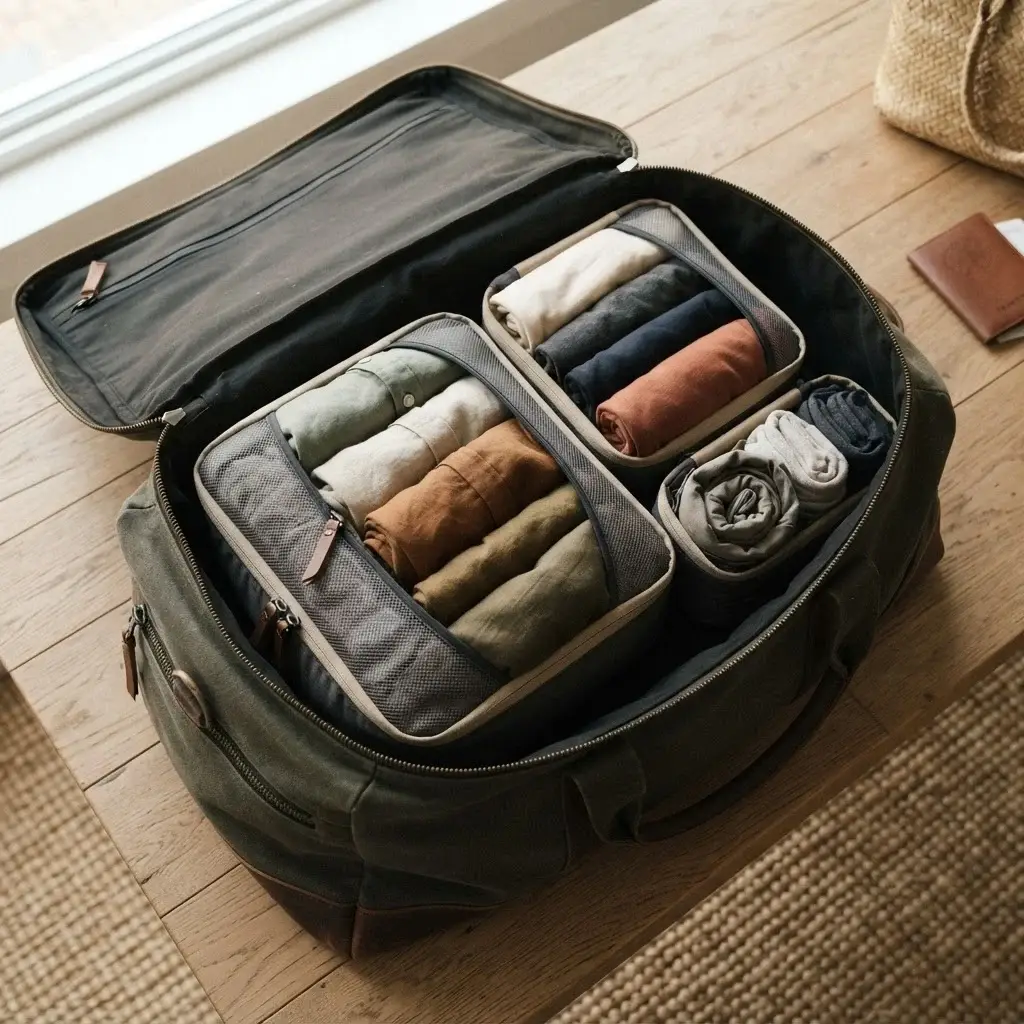
Packing cubes are small fabric containers that act like portable dresser drawers for your suitcase. They keep your rolled or bundled clothes completely locked into place, preventing them from shifting, rubbing against each other, and wrinkling during transit.
How to Maximize Your Packing Cubes
- Group by category: Use one small cube for underwear and socks, a medium cube for tops, and a larger cube for bottoms. This means you never have to tear apart your entire suitcase to find one clean shirt.
- Do not overstuff: Compression packing cubes are amazing for saving space, but if you pack them until the zippers are screaming, the extreme pressure will mash your clothes together and cause deep wrinkles. Pack them until they are comfortably full, but still have a bit of give.
- Use the vertical file method: Instead of stacking your rolled clothes on top of each other inside the cube, stand them up vertically next to each other. When you open the cube, you can see every single item instantly without digging.
Plastic Dry Cleaning Bags: The Ultimate Friction Shield
This is one of my absolute best insider secrets for keeping highly delicate clothes entirely wrinkle-free, and it costs virtually nothing. Go to your local dry cleaner or look in your closet for those thin, clear plastic bags that come over formal wear.
When you fold a nice dress, a silk blouse, or a button-down shirt, slide it inside a plastic dry cleaning bag first. Then, fold or roll the item as you normally would.
The science behind this is incredibly simple: plastic reduces surface friction to zero. When your suitcase bounces around, the plastic slides smoothly against itself instead of the fabric fibers rubbing against each other. Any movement or pressure is absorbed by the plastic shield, leaving your clothes underneath perfectly smooth and intact.
Advanced Packing Architecture: How to Properly Layer a Suitcase
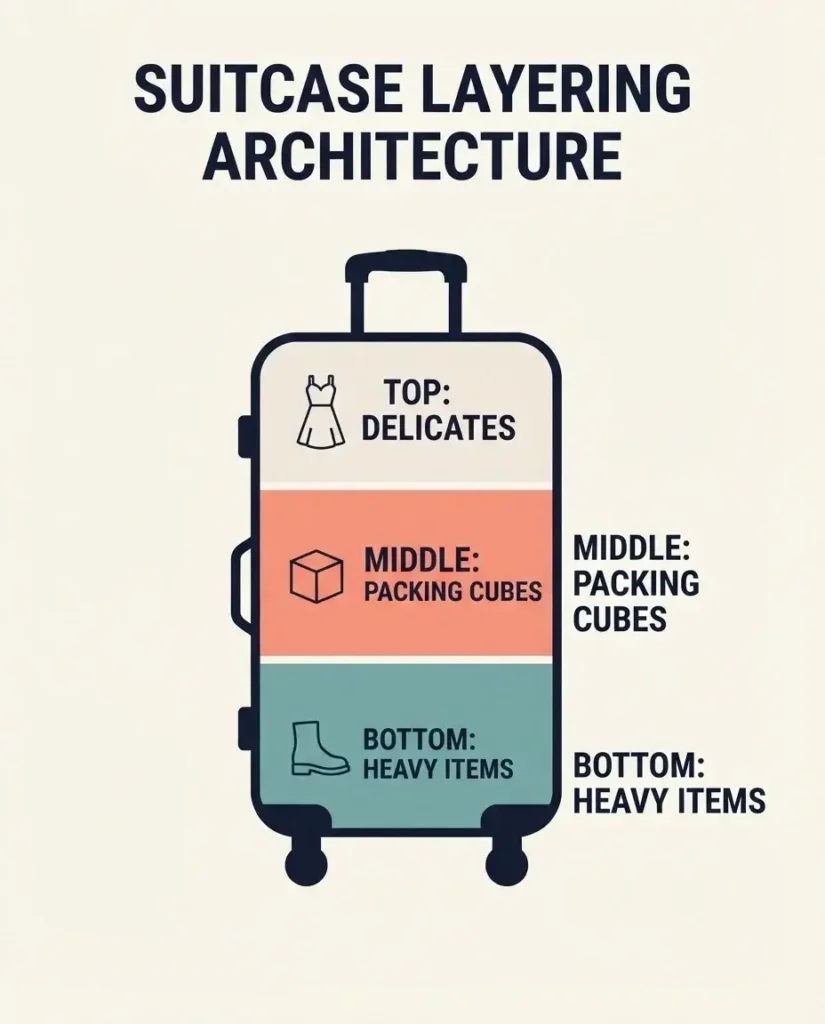
How you arrange items inside your bag matters just as much as how you fold them. If you throw everything in randomly, gravity and movement will push your heavy items down, crushing your delicate clothes at the bottom of the bag. I learned this lesson the hard way while navigating train stations across Europe.
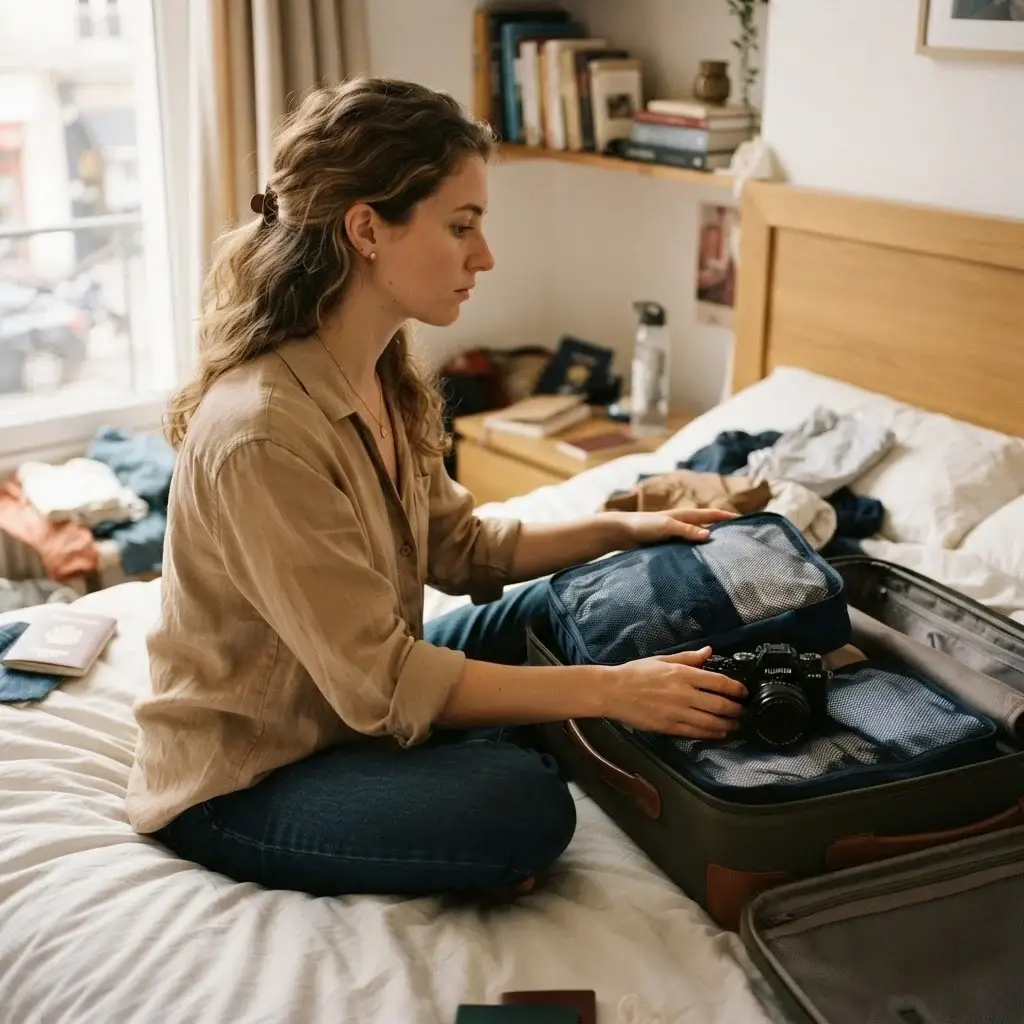
Always think of your suitcase or backpack as a building that needs a solid foundation.
The Golden Rules of Bag Layering
- Put heavy items at the bottom: Place your shoes, heavy boots, toiletry kits, and bulky jackets at the very bottom of your bag, right next to the wheels. This keeps the heaviest weight from sliding down and flattening everything else when your suitcase is standing upright.
- Fill the gaps: Tuck small, un-rollable items like socks, chargers, or a lightweight rain jacket into the empty spaces between the wheel wells or around the edges of the bag.
- Place packing cubes in the middle: Arrange your medium-weight packing cubes filled with rolled jeans, shorts, and t-shirts securely in the center layer of the suitcase.
- Keep delicate bundles on top: Place your bundle-wrapped formal clothes or items wrapped in dry cleaning bags at the very top of the main compartment. This ensures they experience the absolute minimum amount of pressure throughout your journey.
What to Do Upon Arrival: The First 15 Minutes in Your Room
No matter how perfectly you learn how to pack clothes wrinkle-free, keeping your items compressed inside a zipped bag for a ten-hour flight will take a toll. The true secret to crisp travel clothing is what you do the moment you walk into your accommodation.
Do not drop your bag on the floor and head straight out to explore. Take just fifteen minutes to tend to your wardrobe. It will save you a massive amount of time and frustration later.
The Shower Steam Trick
This is the ultimate savior for budget solo travelers staying in modest guest houses or hostels without access to an iron.
- Take your slightly wrinkled shirts, dresses, or pants out of your bag immediately.
- Hang them on sturdy hangers and place them on the back of the bathroom door or on the shower curtain rod.
- Turn the shower on to its hottest temperature setting and close the bathroom door completely, creating a tight, sealed sauna environment.
- Let the room fill with thick steam for 10 to 15 minutes. The hot moisture will naturally relax the fabric fibers and cause the wrinkles to drop out entirely under the weight of the garment.
- Gently tug the bottom hems of the clothes to help smooth out any stubborn lines, then hang them up in the main room near an open window to air-dry completely before you wear them.
Gravity and Shaking
If you do not have access to a hot shower, simply grab each garment by the shoulders or waistband and give it a series of sharp, vigorous snaps in the air. Hang them up immediately in an area with good airflow. Often, just letting a high-quality fabric hang freely for a few hours allows gravity to naturally pull the minor packing creases right out of the material.
Emergency Wrinkle Removal When You Have No Iron
Sometimes you wake up, realize you are late to catch a local bus or meet a new friend for a food tour, and your favorite shirt is covered in deep creases. Do not panic. There are several clever, makeshift ways to fix your clothes using standard items you can find in almost any basic room.
The Damp Towel Press
Find a clean, slightly damp towel from your bathroom. Lay your wrinkled garment completely flat on a hard surface like a table or desk. Place the damp towel directly over the creased areas of the clothing. Press down firmly with your flat palms, smoothing and pushing outward from the center. Remove the towel and let the garment air dry for five minutes. The combination of moisture and flat pressure works wonders on light cotton shirts.
The Hot Hairdryer Method
Most modern host families, homestays, and budget hotels provide a basic hairdryer. Hang your wrinkled garment up and lightly mist the creased areas with a tiny bit of clean water from a sink or spray bottle until it is just barely damp. Turn the hairdryer onto its highest heat setting and hold it about six inches away from the fabric.
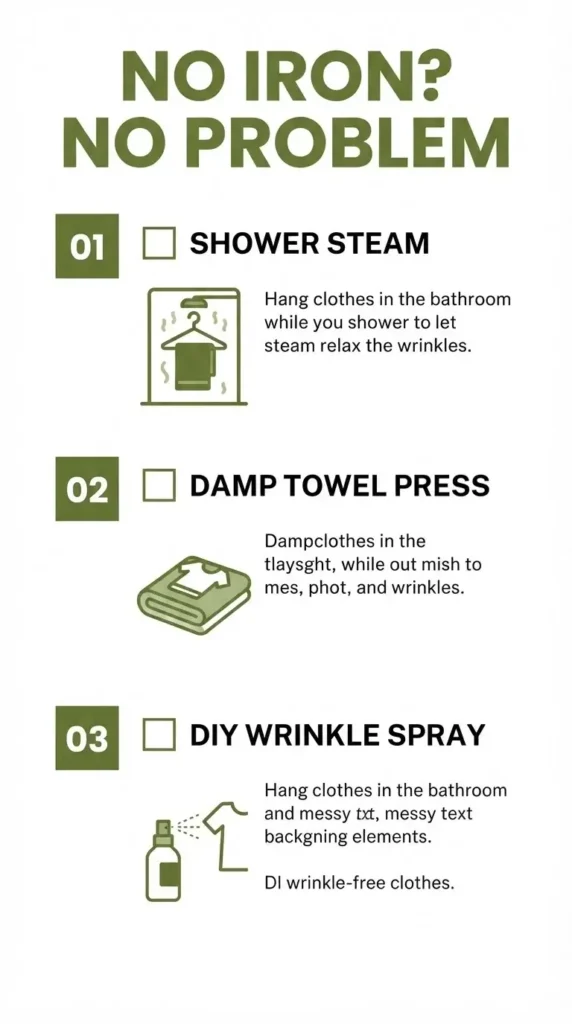
Direct the hot air down the length of the clothing while gently pulling the bottom hem taut with your free hand. Watch the wrinkles disappear before your eyes.
The DIY Travel Wrinkle Release Spray
You do not need to buy expensive, chemical-heavy wrinkle release sprays at the store. You can make an incredibly effective, TSA-approved version right in your room using simple ingredients.
Buy a small, empty two-ounce plastic spray bottle. Fill it almost to the top with clean water, then add a teaspoon of standard hair conditioner or a few drops of rubbing alcohol. Shake the bottle vigorously until the mixture is fully combined.
When you need to un-wrinkle a shirt, mist this solution lightly over the fabric. The conditioner naturally lubricates the twisted fibers, allowing them to relax and flatten out smoothly when you give the garment a quick tug.
Cultural Context: Why Looking Neat Matters for Meaningful Adventure
When I transitioned away from my comfortable New York life to travel long-term, my travel philosophy shifted completely. I quickly realized that travel is not about collecting passport stamps or taking flashy photos for social media. It is about deep cultural understanding, building human connections, and showing genuine respect for the local communities that open their doors to us.
How you present yourself to the world plays a massive role in those interactions. In many cultures across Southeast Asia, Europe, and Latin America, clothing choices and neatness are viewed as a direct sign of respect. Arriving at a local family’s home, a neighborhood market, or a sacred site in heavily stained, wrinkled, or sloppy clothing can inadvertently signal that you do not care about their community’s standards.
When I was living with my wonderful host family in a small town in Ghana, I noticed that despite challenges with water accessibility, my host mother took immense pride in keeping her family’s clothing perfectly clean and pressed. By taking the extra time to care for my own wardrobe, I was able to show her that I respected her home, her values, and her lifestyle.
Looking put-together also works wonders for your solo travel safety and confidence. When you step off a long, exhausting bus ride into a brand-new city looking organized and neat, you do not instantly project the image of a vulnerable, overwhelmed tourist. You look like someone who is capable, collected, and completely in control of their journey.
Putting It Into Practice: Exploring Dinajpur
To see how these packing strategies play out in the real world, let us look at a practical travel scenario. Imagine you are planning a meaningful journey to explore the historic architecture and vibrant culture of Dinajpur, a beautiful district located in northern Bangladesh.
This region is famous for its breathtaking archaeological treasures, massive historic water tanks, and incredible local food.
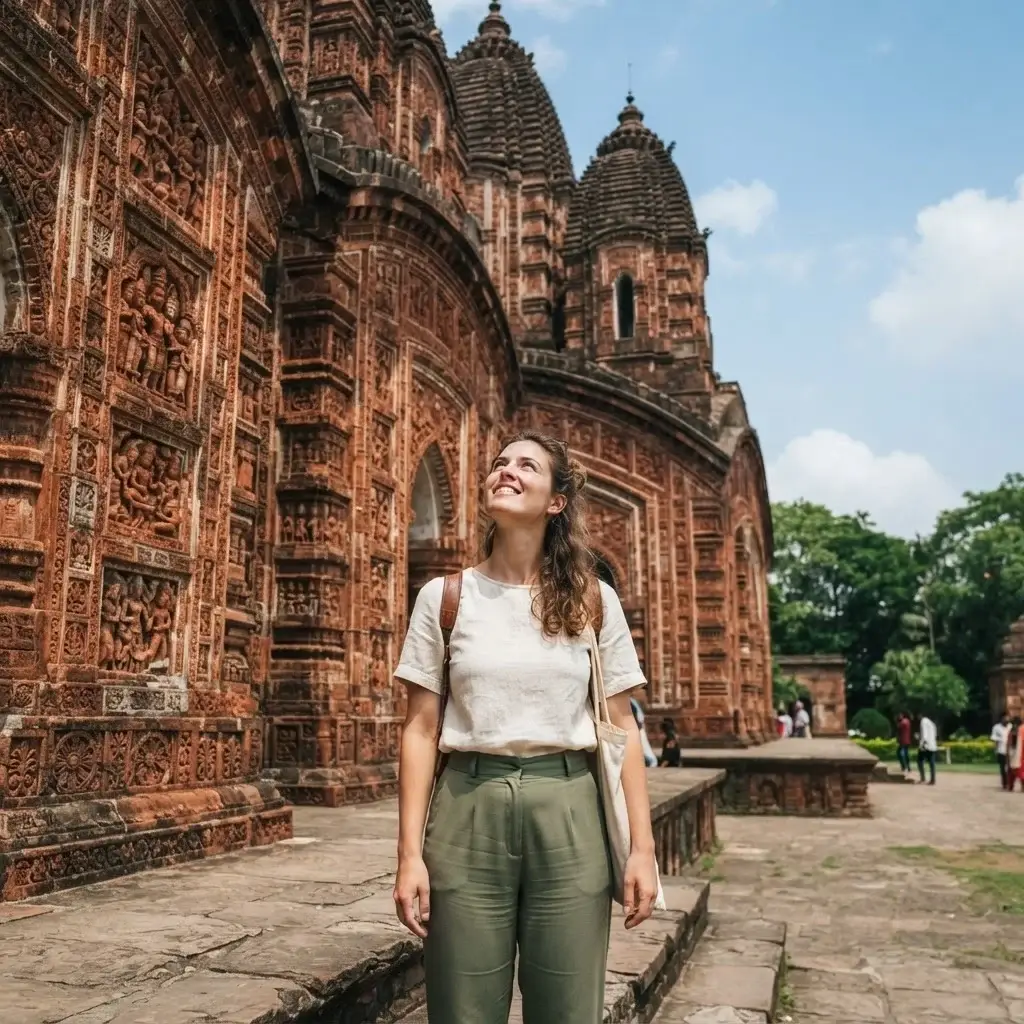
But it also experiences hot, humid weather that can instantly turn a poorly packed suitcase into a wrinkled mess. Here is exactly how to navigate this incredible sub-location while keeping your wardrobe pristine.
Navigating the Historic Sites of Dinajpur
When you arrive in Dinajpur, your very first stop should be the magnificent Kantajew Temple, a stunning 18th-century brick structure covered in thousands of intricate terracotta plaques depicting epic historical tales.
To get there from the main town center, walk over to the local transport hub near the main road and hire an auto-rickshaw, locally known as a CNG. The temple sits about 12 kilometers north of the town. Always negotiate the fare with the driver before you step inside the vehicle to keep things transparent.
Because this is an active place of cultural worship, it is highly important to dress respectfully. Choose a lightweight, breathable cotton-jersey top and loose pants that cover your shoulders and knees. By using the rolling method and a lightweight packing cube, you can pull these items straight from your bag perfectly wrinkle-free, ensuring you look appropriate and respectful the moment you step onto the temple grounds.
After exploring the temple, have your driver take you to the nearby Nayabad Mosque, built by the very same master architectural artisans in 1793. To fully immerse yourself in the local culture, take a break at a small roadside stall to enjoy a traditional meal of Kataribhog rice—a famous, highly aromatic local rice variety unique to this district—paired with a rich, slow-simmered duck curry.
Where to Stay and Managing Your Wardrobe
For a safe, comfortable, and authentic stay, book a room at a local guesthouse near the Dinajpur Rajbari, an ancient, sprawling palace ruin located just northeast of the main town. When you check into your room after a long, humid journey, your clothes will likely have absorbed some environmental moisture.
Do not let them sit compressed inside your bag. Immediately unpack your rolled garments and hang them up near the ceiling fan or open window. If the humidity has caused minor creases, use the DIY wrinkle release spray method or the hot hairdryer trick using the amenities available in your guesthouse. Within minutes, your clothes will be completely smooth, fresh, and ready for another day of solo exploration.
Embracing the Journey: Bumps, Mistakes, and Growth
At the end of the day, remember one of my absolute core travel beliefs: mistakes, surprises, and unexpected challenges are often the most memorable and beautiful parts of any journey.
If you get caught in a sudden tropical downpour while exploring a new city, or if your backpack gets soaked on the roof of a local bus, your clothes are going to get wrinkled. And that is completely okay.
Learning how to pack clothes wrinkle-free is an incredible tool that helps you minimize trip-planning stress, build your practical self-reliance, and show deep respect for the local cultures you visit. But it is not about achieving flawless, unattainable perfection.
The real magic of travel happens when you step entirely outside of your comfort zone with an open heart, a curious mind, and the quiet confidence that you can handle whatever challenges the road throws your way. So pack your bag, lock in your strategies, stop waiting for the “perfect moment,” and step out to explore this beautiful world.