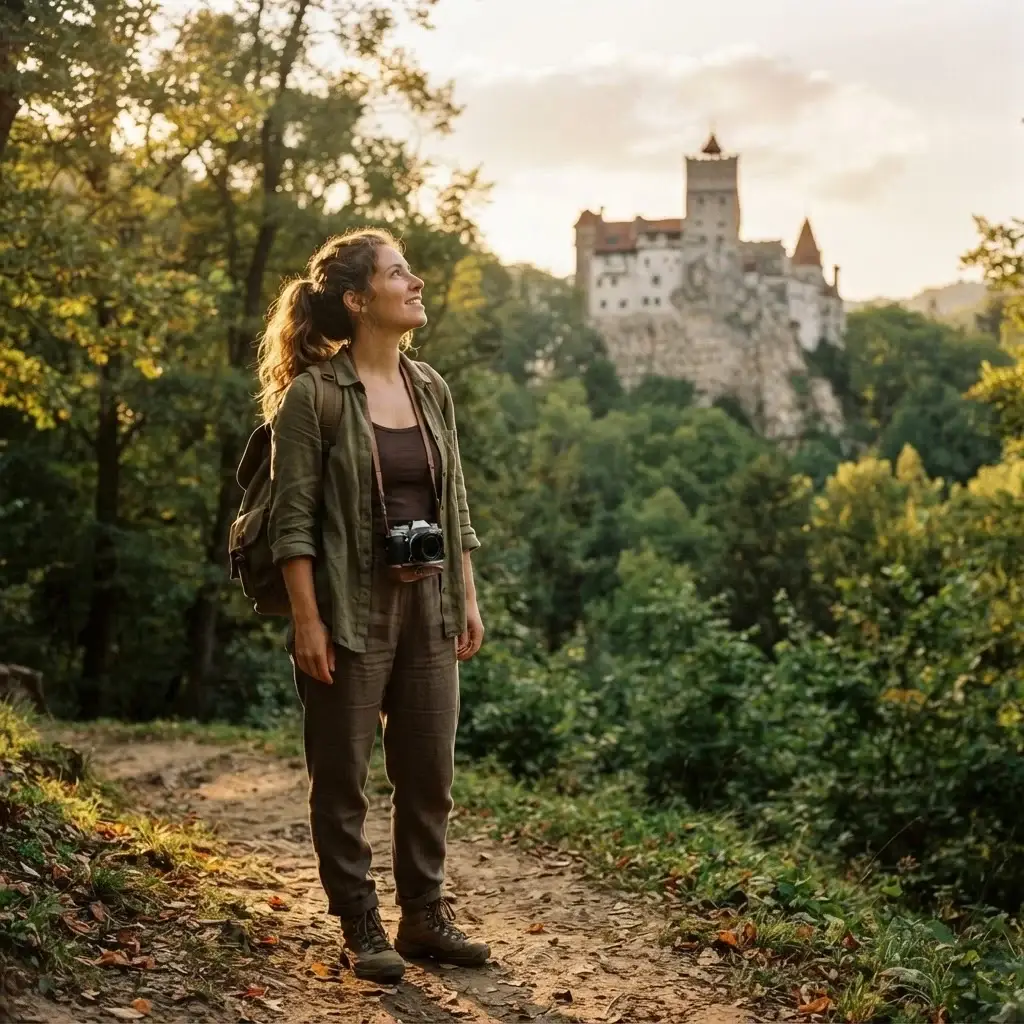
The first time I stood inside a centuries-old fortress, I wasn’t in Eastern Europe at all. I was climbing a section of the Great Wall in China, breathless, sweating through my shirt, wondering how people built something so enormous with so little of what we consider modern equipment. That feeling never left me. Old stone has a way of humbling you. It reminds you that people have been solving problems, defending their homes, and building beautiful, strange, impressive things for a very long time.
Eastern Europe holds some of the most dramatic examples of that instinct anywhere in the world. Between the Carpathian Mountains, the Baltic coastline, and the Danube River, this region built layer upon layer of fortresses, palaces, and defensive walls shaped by Ottoman advances, Habsburg rule, Teutonic knights, and Saxon settlers. If you’ve been quietly dreaming about a trip built around history instead of Instagram-famous beaches, this is where I’d point you. But I also know the hesitation that comes with a trip like this, because I’ve felt it myself standing at a train station in a country where I couldn’t read a single sign. So let’s work through this practically, region by region, the way I’d plan it myself.
Why Eastern Europe’s Castles and Forts Deserve a Spot on Your Map
Western Europe gets most of the castle spotlight, but Eastern Europe often has the more layered story. Many of these sites sat on contested borders for centuries, which means a single fortress might show Gothic foundations, Ottoman-era repairs, and later Habsburg renovations all in one structure. That complexity is part of what makes visiting so rewarding. You’re not just looking at a pretty building, you’re reading centuries of shifting power in the stonework itself.
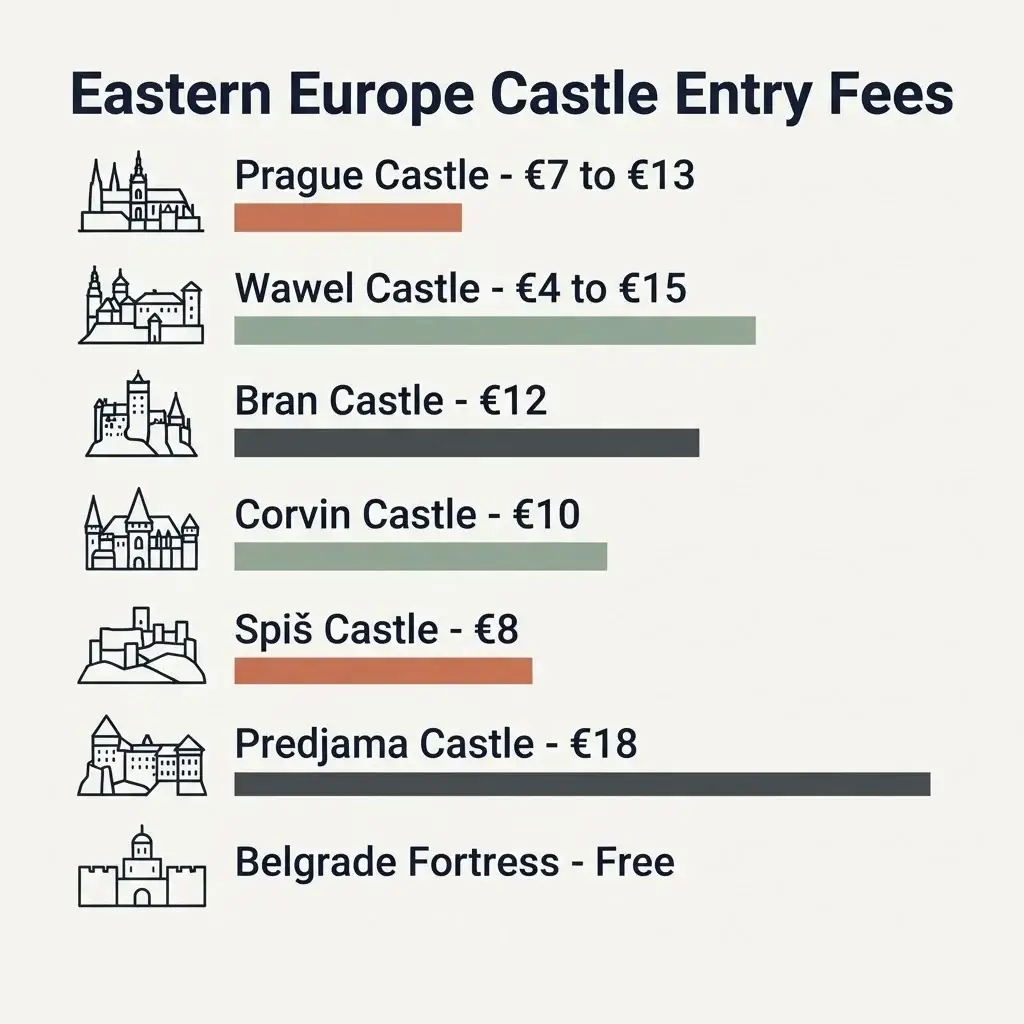
There’s also a practical upside. Entry fees across this region tend to run noticeably lower than comparable sites in France, Italy, or the UK, often somewhere between three and fifteen euros depending on the site and season. Crowds are generally thinner too, outside of peak summer months and the handful of sites tied to Dracula folklore. If you’re someone who wants meaningful travel without a luxury-level budget, this region delivers real depth for relatively little money.
Get the Practical Side Sorted First
Before falling in love with any single castle, it helps to understand how you’ll actually move through the region, because that shapes everything else about your trip.
Getting Between Countries and Cities
Eastern Europe’s rail network is genuinely one of its strengths. Trains connect most major cities affordably, and border crossings within the EU portion of the region are simple. One major update worth knowing if you’re planning a Balkans-inclusive route: Romania and Bulgaria became full members of the Schengen Area with land border checks lifted as of January 1, 2025, which means overland travel between Hungary, Romania, and neighboring Schengen countries no longer involves the passport stops it used to. Serbia sits outside both the EU and Schengen, so if your route includes Belgrade, expect a passport check at that border, though it’s typically quick for most passport holders.
When I backpacked solo across Europe years ago, I learned to always have a rough backup plan for train delays, because they happen more often in this part of the continent than schedules suggest. Building a buffer day between major stops saved me more than once, and I’d recommend the same here.
Budgeting for Castle Hopping
Most individual castle entry fees fall somewhere between three and fifteen euros, with a few standout sites like Prague Castle’s paid circuit running closer to twenty to thirty euros depending on which areas you include. Belgrade Fortress, since it functions as a public park, remains free. If you’re visiting several sites in one city, look for combined tickets, which several castle museums offer and which usually save a meaningful percentage compared to buying separately.
Solo Travel Safety and Confidence Notes
Eastern Europe as a whole ranks as one of the safer regions for solo travelers, including women traveling alone. That said, safety isn’t just about crime statistics, it’s about feeling capable of handling logistics in an unfamiliar place. My advice, learned the hard way during my own solo trips, is to always download offline maps before you arrive somewhere with unreliable signal, and to book your first night’s accommodation before you land so you’re not navigating a new city exhausted and directionless. Confidence in a place like this comes from small wins stacking up, not from having everything figured out on day one.
Central Europe’s Iconic Castles: Prague and Kraków
This is where most first-time visitors to the region start, and for good reason. Both cities are walkable, well-connected, and home to castles that anchor the entire skyline.
Prague Castle, Czech Republic
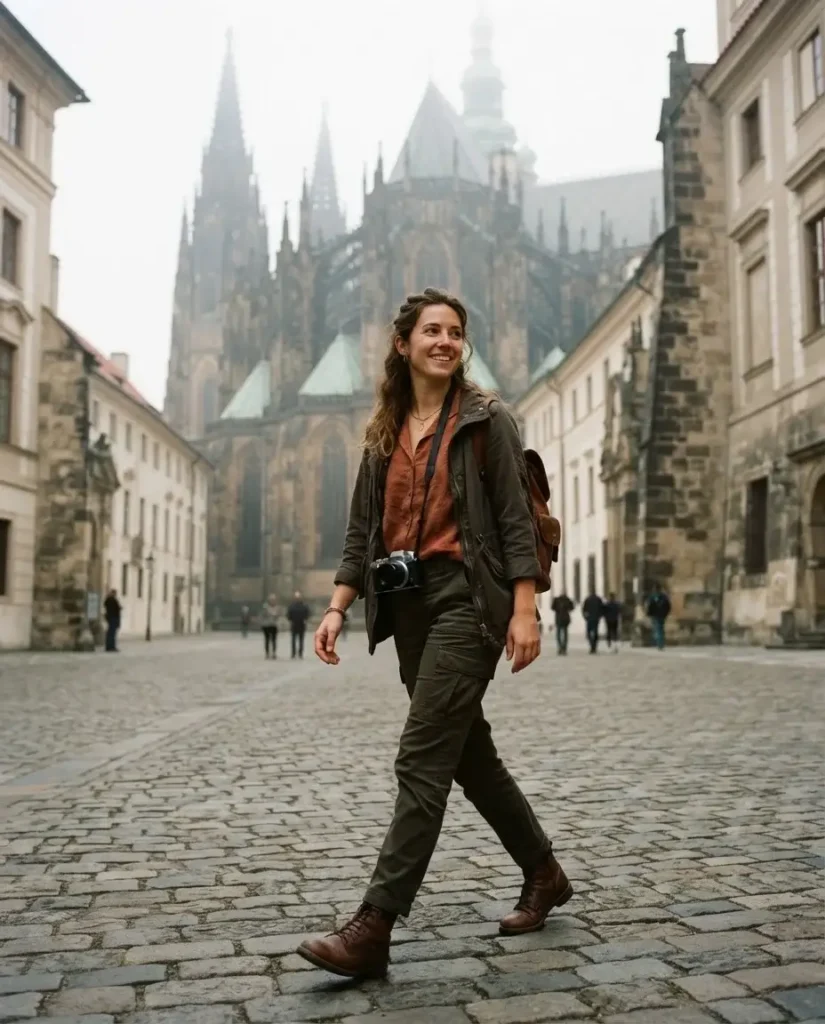
Prague Castle holds the title of largest ancient castle complex in the world, and it’s less a single building than an entire walled city within a city, including a cathedral, a palace, and several courtyards. The grounds themselves are free to wander, generally open from early morning until around 10 p.m. in warmer months, while the paid historical areas keep shorter hours, closer to 9 a.m. to 5 p.m. If you want to go deeper than the free areas, I’d suggest checking the official Prague Castle visitor information before you go, since ticket circuits and included sites shift depending on the season. Arrive early if you can. The views over the Vltava River and the Charles Bridge from up here are worth the climb, and they’re dramatically quieter before the tour groups arrive around mid-morning.
Wawel Castle, Kraków, Poland
Wawel sits on a limestone hill above the Vistula River and functioned as the residence of Polish kings for centuries. It’s currently the most visited art museum in Poland, which tells you something about how seriously locals take this site. The complex separates its exhibitions into different ticketed sections, including the State Rooms, the Royal Private Apartments, and the Crown Treasury, so it’s worth deciding in advance which parts matter most to you rather than trying to see everything in one rushed pass. The official Wawel Royal Castle site lists current hours, which run Tuesday through Sunday, and breaks down each ticket type clearly. Don’t skip the legend of the Wawel Dragon while you’re there, it’s a fun bit of local folklore that gives the hill even more personality.
Malbork Castle, Poland
If you have extra time in northern Poland, Malbork is worth the detour. It’s recognized by UNESCO as the largest brick castle in the world, built by the Teutonic Order starting in the 13th century, and it’s genuinely one of the most complete medieval fortress complexes still standing anywhere in Europe. The scale is hard to grasp from photos alone, you really do need to walk it to understand how self-contained this fortress once was.
Transylvania’s Legendary Fortresses: Romania
Romania rewards travelers who go beyond the Dracula headlines, though I understand why that story pulls people in first.
Bran Castle
Bran is the castle most associated with Dracula folklore, though the historical connection is looser than the marketing suggests. Bram Stoker never actually visited Romania, and the real historical figure often tied to the Dracula legend, Vlad the Impaler, likely never lived here, though he may have passed through the area. What Bran actually offers is a striking hilltop silhouette and genuinely interesting rooms once used by Queen Marie of Romania in the early 20th century. It’s open daily, with hours generally running from 9 a.m. to 6 p.m. depending on the season, and Mondays opening later around noon. The official Bran Castle site keeps current hours and ticket pricing, which is worth checking since they shift with the seasons.
Corvin Castle
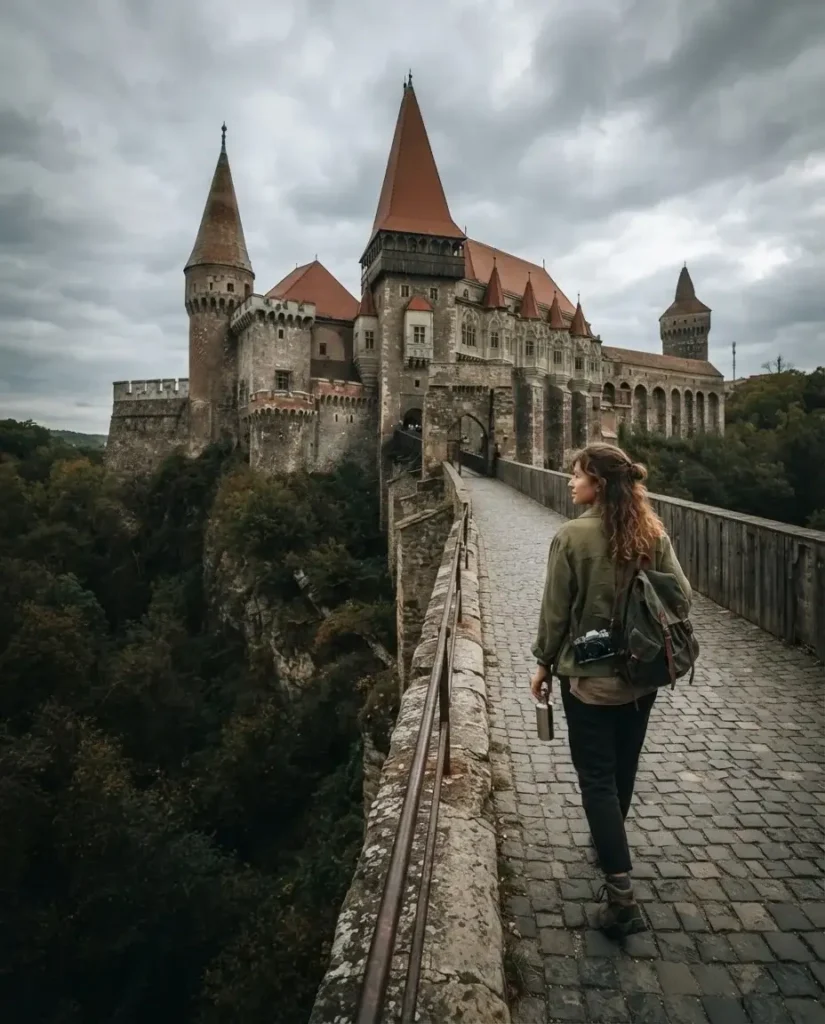
Also called Hunyadi Castle, this Gothic-Renaissance fortress in Hunedoara is, in my honest opinion based on how consistently travelers rave about it, one of the most visually striking castles in the entire region. It sits on a rocky outcrop surrounded by a deep ravine, connected by a stone bridge that makes the approach dramatic before you even step inside. Hours shift seasonally, generally 9 a.m. to 5 p.m. in colder months and extending into the evening during summer.
Sighișoara Citadel
Unlike the standalone castles above, Sighișoara is an entire inhabited medieval town, recognized by UNESCO as one of the finest surviving fortified towns built by Transylvanian Saxons. Cobblestone streets wind between colorful merchant houses, and the whole citadel is compact enough to explore fully in a few hours. You can read more about its history and preservation on the UNESCO World Heritage listing for Sighișoara, which explains why this particular site earned recognition when so many other fortified towns didn’t survive intact.
Slovakia’s Hilltop Giant and Slovenia’s Cliffside Wonder
These two countries often get skipped on a first Eastern Europe trip, which is a shame, because they hold two of the most physically dramatic sites on this entire list.
Spiš Castle, Slovakia
Spiš ranks among the largest castle complexes in Central Europe, and its ruins sprawl across a hilltop with commanding views in every direction. It earned UNESCO recognition back in 1993, and the UNESCO listing for Spiš Castle describes it as one of the largest ensembles of medieval military, political, and religious buildings anywhere in the region. There’s minimal shade up there, so bring water and sun protection if you’re visiting in summer, and wear shoes with real grip, since much of the ground is uneven stone and gravel.
Predjama Castle, Slovenia
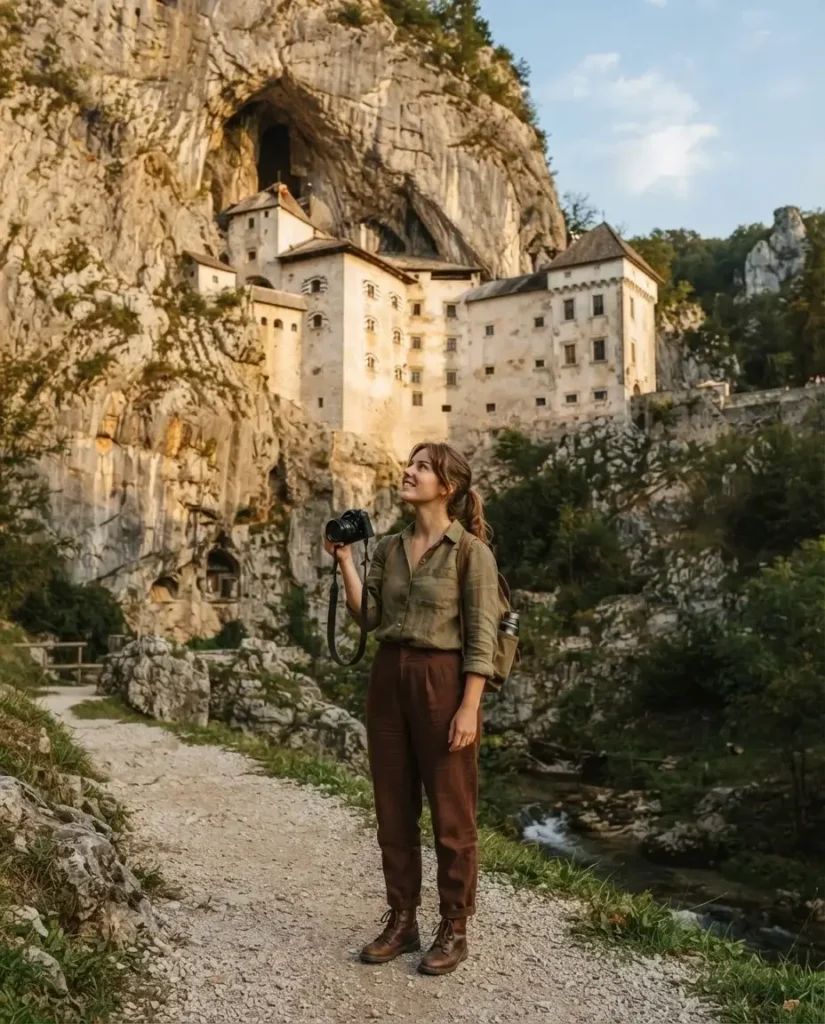
This is the castle that tends to stop people mid-scroll, because it’s built directly into the mouth of a cliffside cave, half fortress and half geological wonder. It’s open year round, and it pairs naturally with a same-day visit to nearby Postojna Cave, one of Europe’s most famous cave systems. The official Predjama Castle visitor page lists current tour timetables, which matter here since some interior areas are only accessible during scheduled tour slots rather than freely at any hour.
The Balkans’ Layered History: Belgrade Fortress, Serbia
Kalemegdan, as locals call Belgrade Fortress, sits at the point where the Sava and Danube rivers meet, and its layered walls reflect nearly two thousand years of shifting rule, from Roman outposts to Ottoman and Austro-Hungarian control. What I appreciate most about this site, based on how it’s described by people who’ve spent real time there, is that it functions as a genuine public park rather than a roped-off museum piece. Locals jog through it, families picnic on the grass, and the fortress walls double as one of the best sunset viewpoints in the city, all completely free. The official Belgrade Fortress site outlines the layout of the Upper and Lower Town sections, which helps you plan a route since the grounds are large enough to wander for hours without a map.
Building a Realistic Itinerary
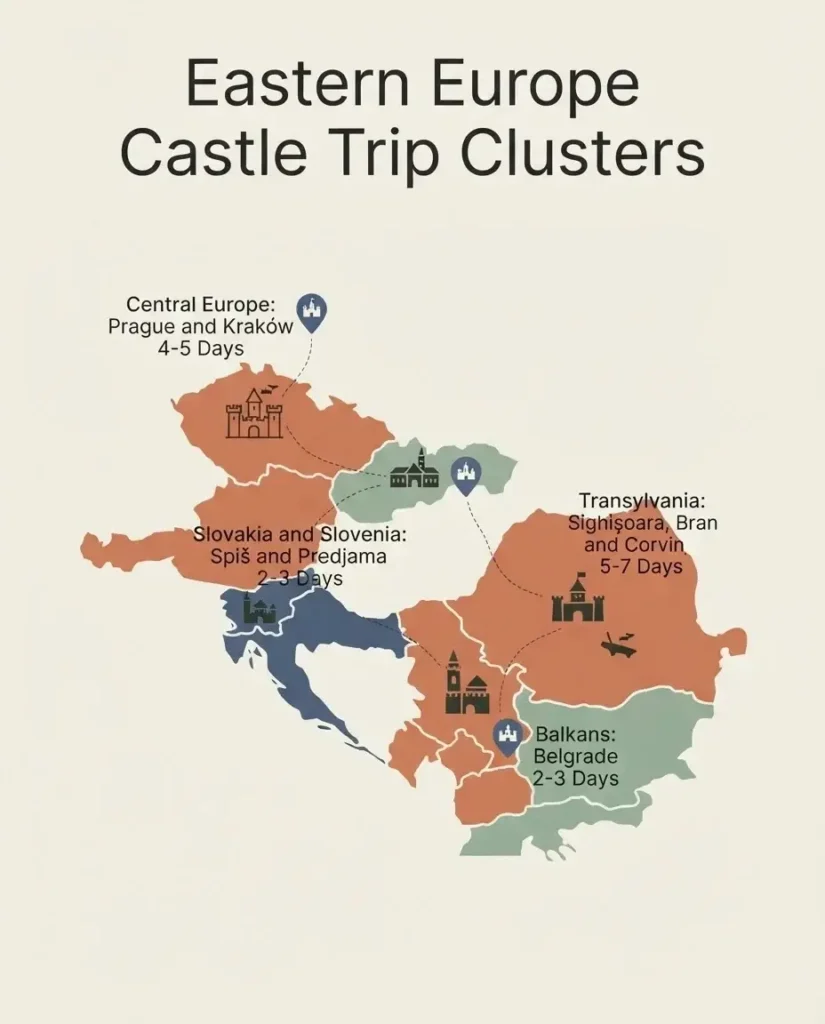
If I were stringing these together myself, I’d think in clusters rather than trying to zigzag the whole region in one trip. Prague and Kraków pair naturally as a Central Europe leg, roughly four to five days including a day trip to Malbork if you have extra time. Transylvania works well as its own five to seven day loop, moving between Sighișoara, Bran, and Corvin by train or rented car, since public transit between smaller Romanian towns can be slower than you’d expect. Slovakia and Slovenia make sense as a shorter add-on, two to three days, often tacked onto a Vienna or Budapest itinerary since both connect well by train. Belgrade works best as a standalone few days or an extension from Romania, keeping in mind the border check since Serbia sits outside Schengen.
A full castle-focused trip covering multiple countries realistically needs at least two to three weeks if you want time to actually absorb each place rather than rushing through. If you only have one week, I’d pick one cluster, either Central Europe or Transylvania, rather than trying to sample everything shallowly. That’s a lesson I learned the hard way backpacking solo through Europe, where I once tried to see too many cities in too little time and came home more exhausted than inspired.
What Nobody Tells You About Visiting These Sites
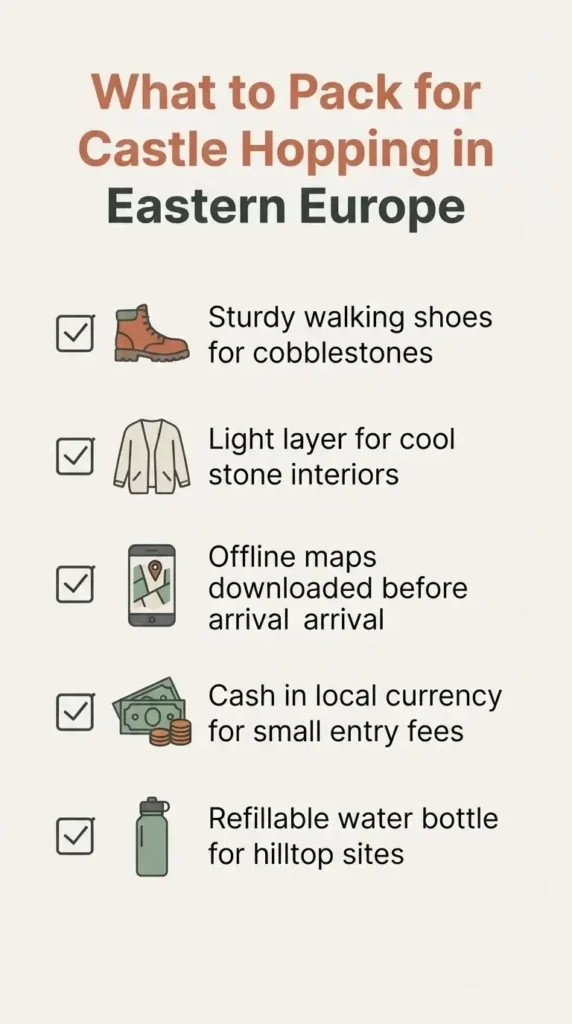
A few practical realities rarely make it into the glossy photo roundups. Cobblestones and uneven stone floors are everywhere, so leave the cute sandals at home and pack real walking shoes with support. Stone interiors stay cool even in summer, so bring a light layer even on hot days, since the temperature drop inside thick castle walls can genuinely surprise you. Photography rules vary by site, some allow flash-free photos throughout, others restrict cameras in specific rooms holding original artifacts or artwork, so it’s worth checking signage rather than assuming. And if you’re chasing the Dracula connection specifically, go in with realistic expectations, Bran Castle is beautiful and worth visiting, but the historical ties to the legend are far looser than the marketing implies.
What These Fortresses Actually Teach You
There’s a reason I keep coming back to old stone structures wherever I travel. Standing inside something built centuries before you existed puts your own worries into perspective. When I lived with a family in Ghana, I learned that the most meaningful travel moments rarely come from checking a site off a list, they come from slowing down enough to actually understand the story behind it. The same is true here. Rushing through six castles in three days will leave you with photos and exhaustion. Spending real time in even three of these places, reading the plaques, asking questions, sitting somewhere quiet within the walls, will leave you with something closer to understanding.
Eastern Europe’s castles and forts aren’t just backdrops for a good photo, though you’ll get plenty of those too. They’re proof that people have always found ways to protect what mattered to them, adapt under pressure, and build something lasting even in uncertain times. That’s not a bad thing to carry with you the next time you’re standing at the edge of your own comfort zone, deciding whether to book the trip or keep waiting for a better moment. Spoiler: the better moment is just you, deciding to go.