Best Lavender Fields in Europe: A First-Timer’s Planning Guide

There’s a photo almost everyone has saved somewhere. Rows of purple running to the horizon, a lone stone farmhouse, maybe a bicycle leaned against a wall. For a lot of us, that image is the whole reason we start googling lavender fields at all. I get it. I’ve stared at those pictures too, back when I was working flexible jobs to fund my next trip and daydreaming was free.
Here’s the honest part nobody tells you first: those fields are real, they are every bit as beautiful as the photos, and they are also on a tight, unforgiving schedule. Show up two weeks late and you might find brown stubble where the purple used to be. So this guide is built to solve the real problem behind the daydream, which is when to go, where to go, and how to actually get there on your own. I’ll walk you through the best regions across Europe, the timing that makes or breaks the trip, and the practical stuff I wish someone had spelled out for me.
First, the one thing that decides everything: timing
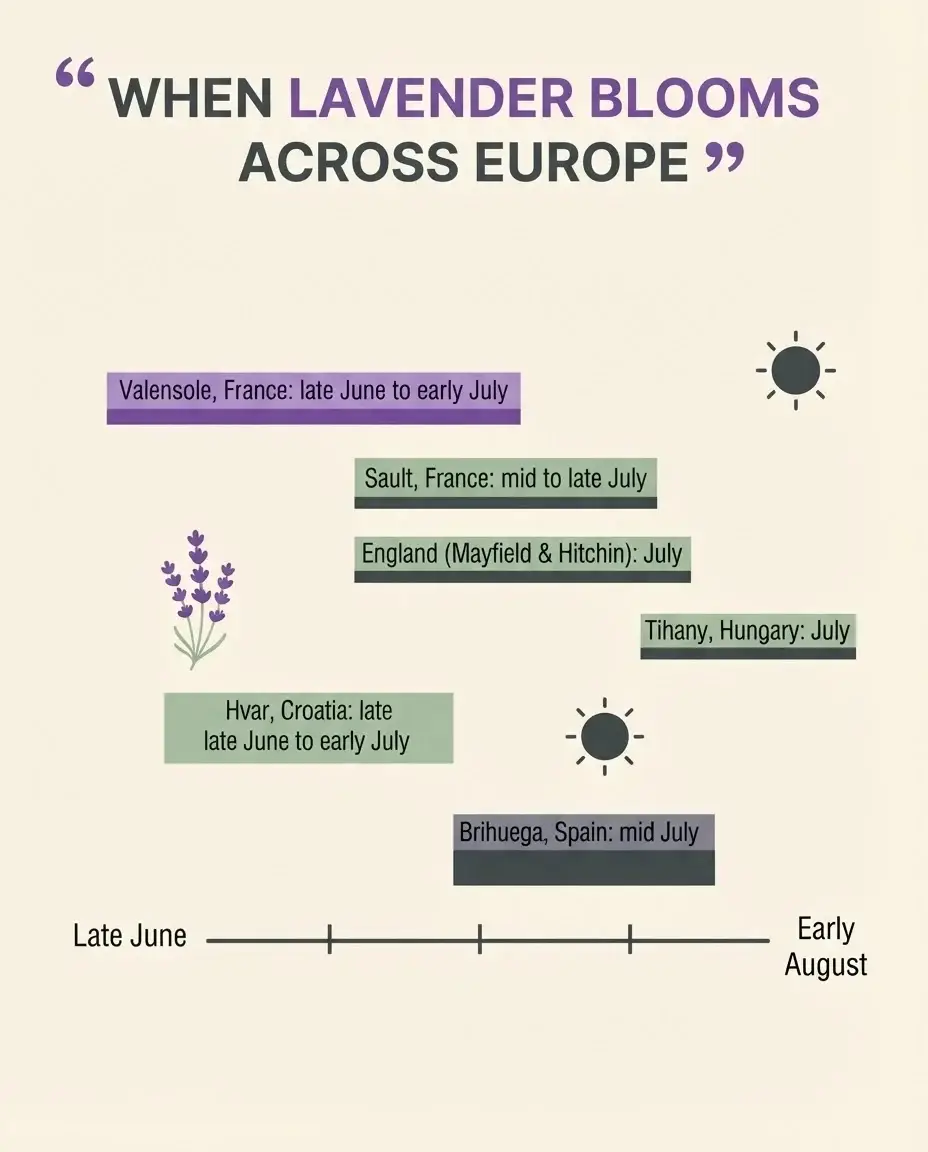
Lavender is not a “whenever you get around to it” flower. It blooms, it peaks, and then it gets harvested, often within days of hitting its most photogenic point. If you remember nothing else, remember that the sweet spot across most of Europe is roughly late June through July.
But it varies by altitude, and this is where people get burned. Lower plateaus warm up faster and bloom earlier. Higher-altitude fields run a couple of weeks behind. In Provence, the famous Valensole plateau tends to peak from late June into the first week of July, while the higher village of Sault often peaks in mid to late July. That gap is actually great news for you as a planner. If your dates are locked, you can pick the region that matches your dates instead of forcing your dates to match one region.
One more distinction worth knowing so you’re not disappointed. A lot of what you’ll photograph is technically lavandin, a hardier hybrid grown for oil, not the finer “true” lavender used in perfume. Lavandin grows in those dense, cinematic long rows. True lavender is patchier and shorter. Both are gorgeous. I only mention it so you know why some fields look like a manicured carpet and others look wilder. If you want the cultural and agricultural backstory, France has actually pushed for these historic lavender landscapes to gain heritage recognition, and you can see how the country frames its living rural landscapes through examples like the UNESCO-listed Causses and Cévennes cultural landscape, which celebrates exactly this kind of centuries-old relationship between people and the land.
Provence, France: the one everybody pictures (and why it earns it)
Let’s start where you’re already imagining. Provence is the heart of European lavender for a reason, and if it’s your first lavender trip, it’s the safest bet for sheer scale and atmosphere. But “Provence” is not one place. It’s a few distinct zones, and choosing between them is most of the game.
Valensole Plateau: the postcard
Valensole is the wide-open, endless-rows image in your head. Flat plateau, big sky, lavender stretching until it meets fields of sunflowers. It’s stunning at sunrise and sunset, when the light goes gold and the crowds thin out. Peak here is usually late June to early July.
The catch is honesty time: Valensole is genuinely hard to reach without a car. There’s no tidy train station in the fields. Most car-free travelers base themselves in Aix-en-Provence or Manosque and then rely on a seasonal bus, an organized day tour, or a taxi to actually get out to the plateau. If you’re a confident solo traveler who’s comfortable renting a car, this is one of the times I’d say do it, because a car turns a stressful logistics puzzle into a relaxed morning of pulling over wherever the light looks best. If you don’t drive, book a small-group tour and let someone else handle the plateau.
Abbaye de Sénanque: the famous abbey shot
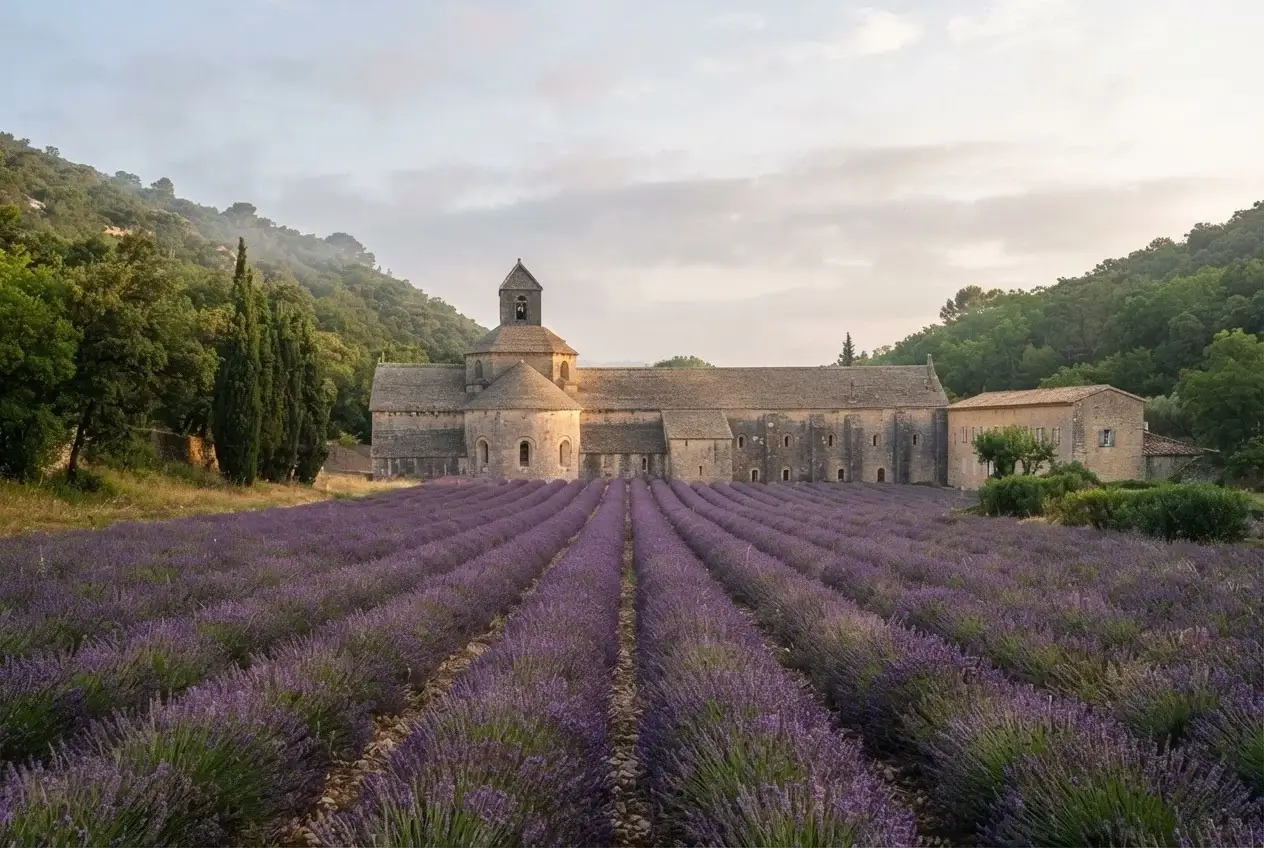
That image of lavender rows leading toward an ancient stone abbey? That’s the Abbaye Notre-Dame de Sénanque, near Gordes in the Luberon. It’s a working Cistercian monastery, and monks still live and pray there. You can tour the abbey itself, and the current entry runs about 8 euros for adults with reduced rates for students and children, according to the abbey’s official visitor page.
Now the part that trips people up. You are not allowed to walk into the lavender rows in front of the abbey. The community keeps them closed off to protect the monks’ harvest. You photograph from the roadside viewpoint, which is exactly where that iconic shot comes from anyway. Go early. This is one of the most photographed spots in France, and by late morning in July it’s shoulder to shoulder. Treat it as a quiet, respectful stop, not a photoshoot set.
Sault: the calmer, higher alternative
If your travel dates fall in mid to late July, or if the idea of crowds makes you tense, Sault is my kind of recommendation. It sits higher on the slopes near Mont Ventoux, so it blooms later and feels noticeably more relaxed. The fields here mix with the smell of the whole valley, and the village has a slower, more local rhythm.
Sault also anchors one of the region’s best cultural events. The town throws a huge lavender festival every August 15, with a Provençal parade, a lavender-cutting championship, and producer markets, and you can check the timing and the other regional celebrations on the official Provence tourism board’s lavender festival page. The Valensole festival, by contrast, lands on the third Sunday of July and marks the start of the harvest. Pinning your trip to a festival date is a smart move if you want the culture alongside the color.
What to eat while you’re there
Provence rewards slow eating, which fits how I like to travel anyway. Look for a proper Provençal market and load up on tapenade, fresh goat cheese, ripe tomatoes, and a baguette for a field-side picnic. Try the local honey, often lavender honey, which is the honest, edible souvenir. And yes, lavender shows up in ice cream and shortbread in the tourist villages. It’s touristy, it’s also genuinely nice once.
England: lavender within reach of London
Here’s what most Provence-obsessed guides skip. If you’re short on time, on a tighter budget, or you just want lavender without an international rail puzzle, England has beautiful farms a short hop from London. This is the option I’d point a nervous first-timer toward, because you can do it as a low-stakes day trip and build your confidence.
Mayfield Lavender in Banstead, Surrey, is roughly an hour from central London and open daily through the summer season. It’s a certified organic farm with a café and shop, and it’s set up to be easy for visitors, which is exactly what you want when you’re testing the waters solo. A bit further out, Hitchin Lavender in Hertfordshire is a ticketed, cut-your-own experience where you can walk the rows with a bag and take home what you pick, which is a lovely, hands-on afternoon.
English lavender peaks a little later and shorter than Provence, generally across July, and weather swings the timing more than you’d like, so check the farm’s own social feeds before you commit to a date. What you trade in scale, you gain in simplicity. No car rental abroad, no language barrier, and you’re back in the city for dinner.
Hungary: Tihany and the shores of Lake Balaton
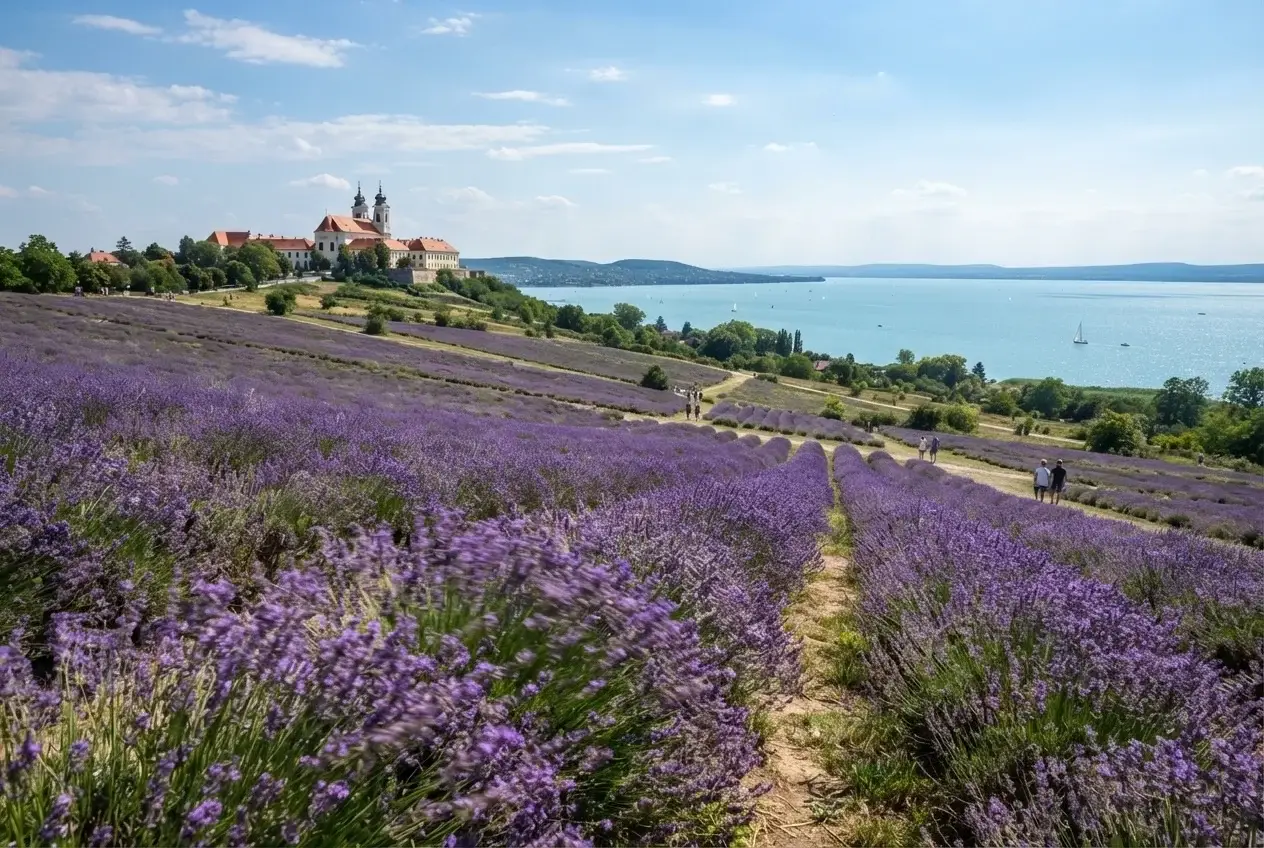
For something that still feels like a discovery, Hungary’s Tihany peninsula on Lake Balaton is a genuinely lovely lavender destination that costs far less than France. The fields ripple across a volcanic peninsula above Central Europe’s largest lake, with a baroque abbey crowning the hill. It blooms in July and comes with a whole festival culture around the harvest.
Tihany even has a modern lavender distillery and visitor center where you can learn how the oil is made and buy trademarked local products, and you can plan a visit through the Lavender House Tihany visitor centre. If you want an outside read on how to structure a couple of days there beyond just the fields, this Michelin Guide feature on 48 hours in Tihany is a solid, non-salesy overview of the peninsula. From what solo travelers consistently report, Balaton is easygoing and welcoming, with the lake giving you swimming, wine villages, and ferry rides to fill out a trip that isn’t only about flowers.
Croatia: the lavender island of Hvar
If your dream trip mixes purple fields with turquoise sea, Croatia’s island of Hvar is the answer. Hvar was once the lavender capital of Dalmatia, and although production shrank over the decades, the fields around the old village of Velo Grablje still bloom into that sprawling purple carpet in late June and early July. There’s an annual lavender festival, and gentle guided walks connect the fields to the old stone village.
Here’s the honest framing, since I haven’t wandered these particular rows myself: what makes Hvar special isn’t the scale, it’s the combination. You get lavender, olive groves, sea views, and a slow island pace all in one short walk. If you’re already dreaming of the Adriatic and want lavender as a bonus rather than the whole point, Hvar is the smart pairing. Go early in the season here, because the coastal heat pushes the bloom and the harvest earlier than you’d expect.
Spain: Brihuega, an easy escape from Madrid
Spain surprises people. The town of Brihuega, about ninety minutes northeast of Madrid, has become one of the most striking lavender destinations in Europe, with vast commercial fields that turn the countryside violet in July. Its now-famous festival features sunset concerts held right in the blooming fields, with attendees dressed in white, and you can find the dates and details on the official Brihuega lavender festival site.
For a solo traveler based in Madrid, this is a beautiful, doable day or overnight trip that doesn’t require crossing borders or renting a car if you catch an organized transfer. The bloom peaks mid-July, timed with the festival, so this is one where the event and the color line up almost perfectly. Book the concert tickets early, because they sell fast once photos start circulating each summer.
How to actually plan this as a solo traveler
Let me pull the practical threads together, because a beautiful field you can’t reach isn’t a plan, it’s a wish.
Pick your dates first, then pick your region. If you’re locked into late June, lean Valensole, Hvar, or English farms. If you’re free in mid-July, Sault, Brihuega, and Tihany open up. Trying to force one specific field into the wrong week is the single most common mistake I see.
Be realistic about cars. Provence’s best plateaus reward drivers and punish the carless. If you don’t drive, either base yourself somewhere with organized tours or choose a destination built for visitors, like the English farms or Brihuega with a transfer. There’s no shame in a guided day tour when the alternative is a stressful taxi negotiation in a language you don’t speak. I taught English in Thailand and backpacked Europe solo, and I still happily hand off logistics to a local guide when it saves my sanity.
Go early in the day. Every truly famous spot, Sénanque especially, is calm and golden at 8am and a crowded scrum by noon. Morning light is better, temperatures are kinder, and you’ll actually hear the bees instead of other tourists.
Respect the rows. This matters more every year. These are working farms and, in Sénanque’s case, a monastery’s livelihood. Don’t trample into private rows for a photo, don’t pick from fields that aren’t cut-your-own, and follow the posted rules. The reason some fields are now fenced off is that visitors ruined them for the people who farm them. Being a good guest keeps these places open for the next dreamer.
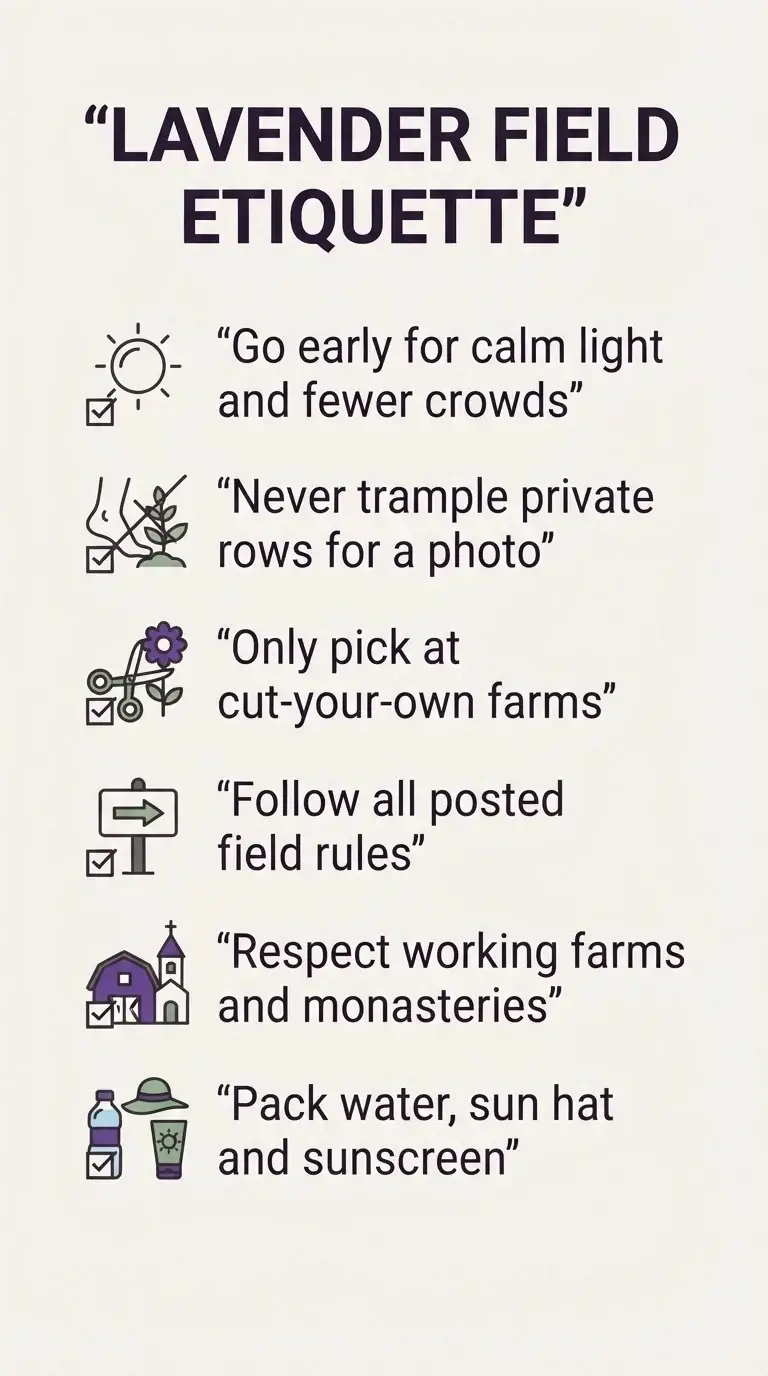
Pack for sun and wind. Open plateaus have zero shade. Bring water, sunscreen, a hat, and layers, because a Provençal or Balaton morning can be cool before it turns hot.
Standing in a lavender field for the first time is one of those moments that lands exactly as you hoped, which doesn’t happen as often in travel as we pretend. The scent, the hum, the color you didn’t quite believe was real. You don’t need the perfect trip or the perfect camera. You need the right two-week window and the courage to book it. Pick your region, lock your dates, and go stand in the purple. It’ll be there waiting, but only for a little while each year, which is exactly what makes it worth the effort.