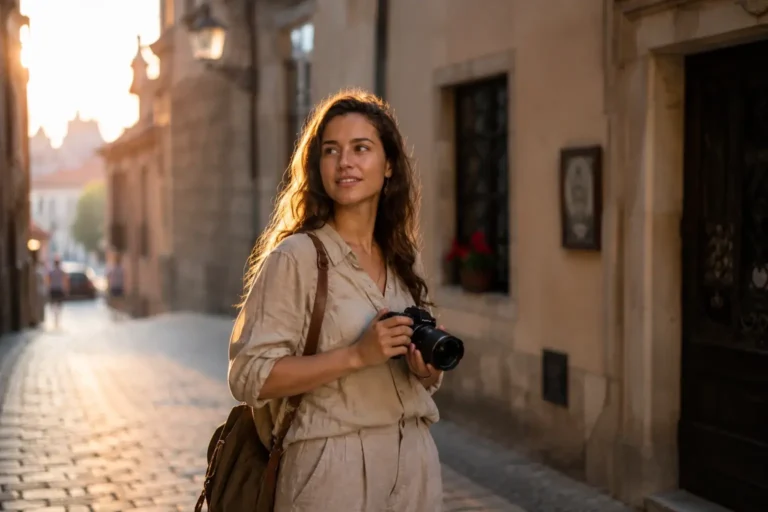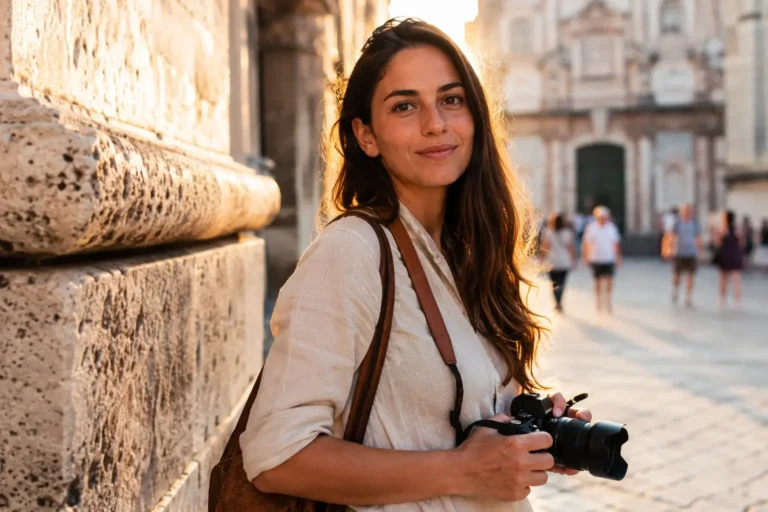

I still remember my first winter trip to Europe. I was terrified of freezing.
I grew up in New York, so I knew what cold felt like. But living in a cold city and traveling in a cold city are two very different things. When you live there, you can run inside your warm apartment. When you travel, you spend eight to ten hours a day walking outside, exploring streets, and standing in line for museums.
Because I was so afraid of the cold, I packed entirely wrong. I shoved three massive, heavy sweaters into an oversized suitcase. I brought a giant parka that took up half my bag. By the time I reached the train station in Prague, my suitcase was so heavy I could barely lift it up the stairs. I was sweating through my clothes while dragging my bags, but shivering the moment I stopped moving. It was miserable.
Later on, when I left my traditional office job to travel full-time, I knew I had to figure this out. I spent years working flexible jobs, from waitressing to save up money, to working as a New York sightseeing guide, standing in freezing temperatures for hours. I learned exactly how to dress for extreme cold without feeling like a walking marshmallow.
You do not need a huge suitcase to stay warm. You just need the right items. Today, I want to share my complete guide to cold weather travel packing essentials. This guide will help you pack in a carry-on, stay perfectly warm, and feel confident stepping out into the snow.
The Art of Layering: Your Winter Travel Secret
The biggest mistake new travelers make is relying on one giant, heavy coat.
A massive coat is terrible for travel. First, it takes up too much space. Second, it does not give you any options. If you wear a huge coat and a regular shirt, you will freeze outside. But the moment you walk into a heated cafe or a warm museum, you will start sweating immediately.
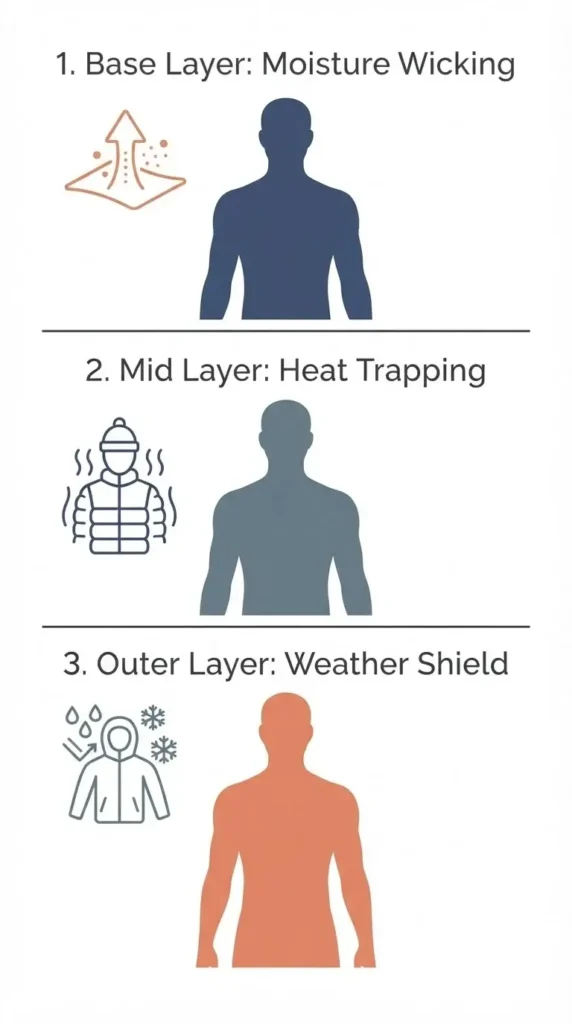
The secret to cold weather travel packing essentials is layering. You need three distinct layers. When you layer correctly, warm air gets trapped between the fabrics, creating a bubble of heat around your body.
Base Layers: The Foundation of Warmth
Your base layer is the clothing that touches your skin. Its main job is not actually to keep you warm. Its job is to pull sweat away from your body.
If you sweat, and that sweat stays on your skin in freezing temperatures, you will feel a deep, bone-chilling cold that you cannot shake. This is why you must avoid cotton. Cotton acts like a sponge. It absorbs sweat and stays wet.
Instead, you want Merino wool. Merino wool is a miracle fabric for travelers. It is incredibly soft, very thin, and naturally fights odors. You can wear a Merino wool long-sleeve shirt three or four days in a row without washing it, and it will not smell.
I usually pack three long-sleeve Merino wool tops and two pairs of Merino wool thermal bottoms. They pack down so small they take up almost no room in my bag.
If you are allergic to wool, look for high-quality synthetic thermal layers. They also dry fast and pull sweat away from your skin.
Mid Layers: Trapping the Heat
The mid layer is where your actual warmth comes from. This layer goes over your base layer and under your coat.
The best mid layer is a thin down jacket, often called a down sweater. Down feathers are amazing because they trap tons of body heat but can be squished down to the size of a grapefruit. You can buy packable down jackets that come with their own tiny bags.
If you prefer not to wear down, a high-quality fleece jacket or an alpaca wool sweater works beautifully. Fleece is lightweight and very warm, though it does not compress quite as small as down.
I usually pack two mid layers. I bring one packable down jacket and one nice, warm sweater. This gives me options. If it is just a little chilly, I wear the sweater. If it is very cold, I wear the down jacket.
Outer Layers: Shielding from the Elements
Your outer layer is your shield. It stops the wind, the rain, and the snow.
When I was a New York sightseeing guide, standing on double-decker buses in February, I learned that cold air is not the real enemy. The wind is the enemy. Wind will cut right through a thick wool coat if it does not have a protective lining.
You need a coat that blocks the wind and stops water. Look for a lightweight, waterproof shell or a sleek, insulated windproof parka. You do not need a coat made for climbing Mount Everest. You just need a solid, wind-blocking outer layer.
Because you have your base layer pulling sweat away and your mid layer trapping your body heat, your outer coat can actually be quite thin. This is the magic of layering. It allows you to move freely, take photos, and sit comfortably on a train without feeling stuffed into your clothes.
When I look up trip details online, I always try to check the wind chill factor. Winter storms can disrupt flights, so looking at alerts from the US Department of State Travel helps me stay prepared for any sudden changes in weather or travel safety rules.
Bottoms: Keeping Your Legs Toasty Without the Bulk
People spend so much time thinking about coats that they completely forget about their legs. Walking around all day in thin pants is a guaranteed way to freeze.
Jeans are the worst pants you can pack for winter travel. Denim provides zero insulation. Worse, if denim gets wet from snow or rain, it stays wet for hours, making you freezing cold.
Thermal Leggings and Tights
If you want to wear skirts or dresses during your trip, fleece-lined tights are your best friend. From the outside, they look like normal sheer tights. But on the inside, they are lined with soft, warm fleece.
You can also wear thin thermal leggings under your regular travel pants. This instantly turns a pair of spring pants into winter pants. I always pack at least two pairs of thermal leggings. I even wear them as pajamas if my hotel room is drafty.
Travel Pants for Cold Climates
For outer pants, look for softshell travel pants. These are made from flexible, water-resistant material. They stretch when you walk, they block the wind, and they dry very quickly if you get caught in a snow shower.
Corduroy pants are also a great choice for city travel. They are thicker than denim, they look very stylish in European cities, and they trap heat well.
I usually pack one pair of softshell pants for outdoor exploring and one pair of nice corduroy pants or thick trousers for going out to dinner.
Footwear: The Most Important Choice You Will Make
If your feet are cold, your entire body will be cold. There is no way around it.
When you travel, you are on your feet all day. Walking around historic sites listed by UNESCO World Heritage means spending hours on freezing stone streets, so good boots are non-negotiable. Cobblestones get icy, museum floors are cold, and you will walk far more than you expect.
Waterproof Boots
Do not bring rain boots. Rubber rain boots offer no insulation and will turn your feet into blocks of ice.
Instead, bring leather or synthetic waterproof winter boots. They should have a thick rubber sole. The thicker the sole, the farther your foot is from the freezing ground.
Make sure the boots have good traction. Slipping on an icy sidewalk can ruin your trip. I always buy boots that have deep grooves on the bottom.
Never pack a brand new pair of boots. You must break them in before your trip. Wear them around your house, to the grocery store, and on long walks for at least two weeks before you leave.
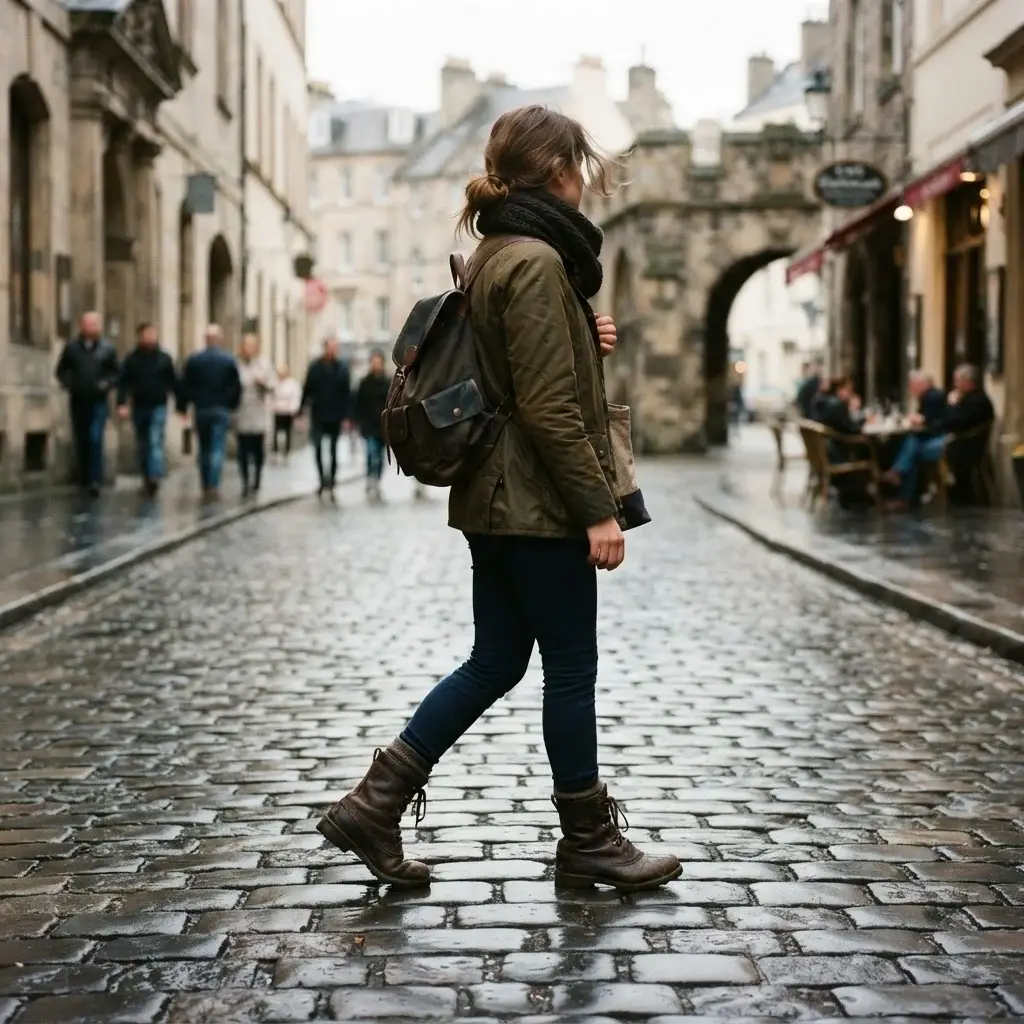
Blisters are terrible, but blisters in freezing weather are a nightmare.
Socks That Actually Work
Just like your base layer, your socks must not be cotton. If your feet sweat in cotton socks, the sweat will freeze, and your toes will go numb.
You need Merino wool socks. Wool regulates your foot temperature. It keeps them warm when it is freezing outside, but stops them from getting too hot when you are on a heated train.
I pack four pairs of medium-weight Merino wool socks. If it gets incredibly cold, I will layer a very thin pair of wool socks under a thicker pair.
Insoles for Extra Insulation
Here is one of my favorite cold weather travel packing essentials: wool insoles.
If your boots are not quite warm enough, you can buy cheap inserts made of sheepskin or thick wool. You slip them inside your boots, and they add a massive layer of warmth right under your foot. They take up zero space in your luggage because they are already inside your shoes.
Accessories: Small Items, Massive Warmth
Accessories are the most important part of your packing list. They take up almost no room in your bag, but they make a huge difference in how you feel.
You lose a lot of heat from your head, neck, and hands. Covering these areas is critical.
Hats, Beanies, and Headbands
A good winter hat should cover your ears completely. I prefer a soft, wool beanie. It packs flat in my pocket when I am not wearing it.
If you do not like wearing hats because they flatten your hair, pack a thick, fleece-lined ear warmer or headband. As long as your ears are covered, you will feel much warmer.
Gloves and Mittens
Gloves are tricky. Thin gloves let the cold in, but thick gloves make it impossible to use your phone.
My solution is to pack two pairs. I bring one pair of thin, touchscreen-friendly liner gloves. I wear these when I need to look at my phone maps or take a picture. Then, I bring a pair of thick, insulated mittens. Mittens are much warmer than gloves because your fingers share body heat. I wear the mittens over the thin gloves.
Scarves and Neck Gaiters
A scarf seals the gap between your coat and your neck. Without a scarf, cold wind will blow right down your back.
I love oversized blanket scarves. They are incredibly versatile. You can wrap them around your neck outside, use them as a blanket on the cold airplane, or drape them over your shoulders like a shawl when you go out to dinner.
If you want something smaller, a fleece neck gaiter (also called a buff) is amazing. You pull it over your head, and it stays securely around your neck. You can even pull it up over your nose when the wind is biting.
Packing Strategies to Fit Everything in a Carry-On
People always ask me how I manage to pack for winter trips using only a carry-on bag. It is entirely possible, but you have to be strategic.
When I was teaching English in Thailand, packing light was easy. A few dresses and some sandals took up no room. But when I started taking winter trips to northern Japan and Scandinavia, I had to learn new packing rules.
The Wear-It-On-The-Plane Rule
The golden rule of winter travel is this: you must wear your biggest, heaviest items on the airplane.
Never pack your winter boots in your suitcase. They will take up half the space. Wear them on the plane. Once you are in your seat, you can take them off and put on some warm socks.
Do not pack your heavy winter coat. Carry it on your arm, or wear it onto the plane and stuff it into the overhead bin. Wear your bulkiest sweater during the flight.
By wearing your boots, coat, and thickest sweater on your travel day, your suitcase will only need to hold your thin base layers, extra socks, and lighter clothing.
Compression Cubes and Rolling Methods
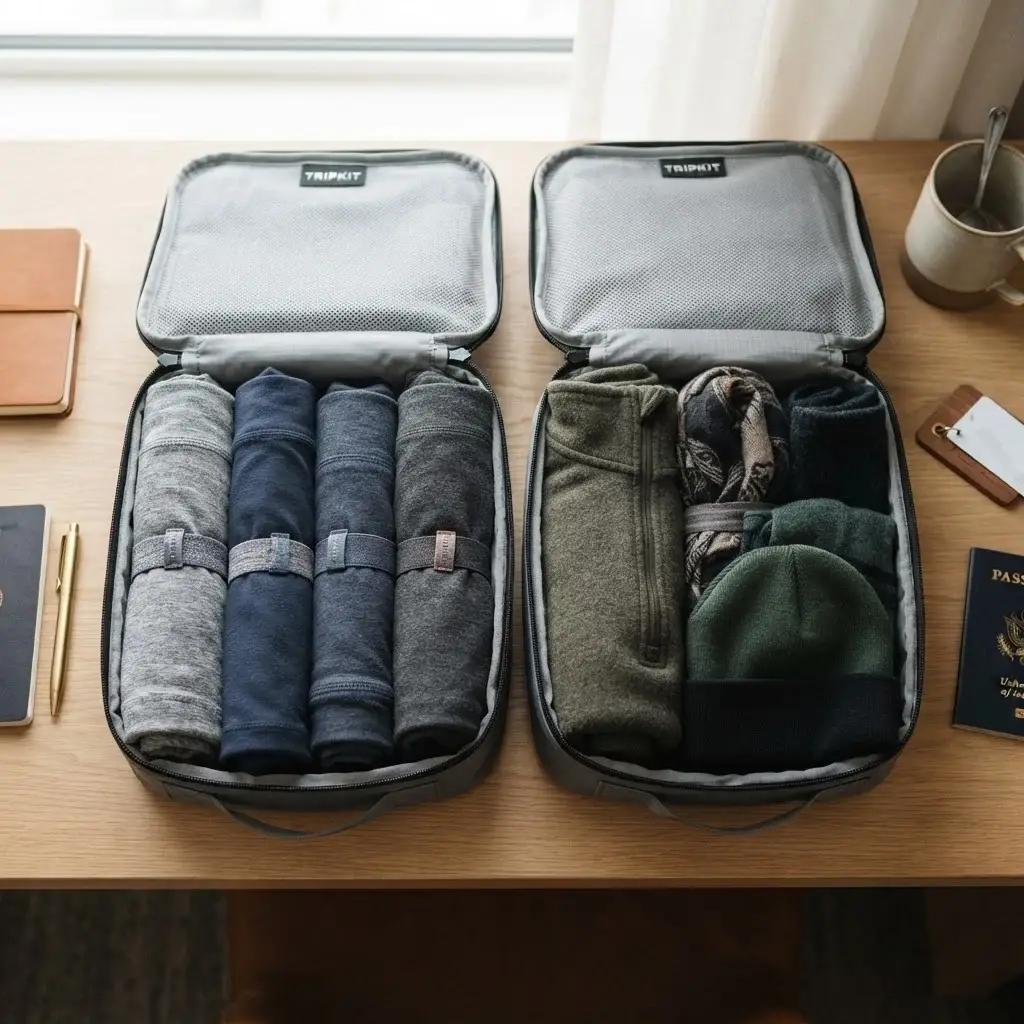
Packing cubes are great, but for winter travel, compression packing cubes are life-changing.
Compression cubes have a second zipper that squeezes all the extra air out of your clothes. They are perfect for bulky items like fleece jackets and thick pants.
Always roll your clothes instead of folding them. Rolling prevents deep wrinkles and allows you to squeeze items into the small corners of your suitcase. Roll your socks and stuff them inside your extra pair of shoes to save even more space.
Cold Weather Travel Health and Safety
Traveling in winter requires a little extra care for your body. The cold affects you in ways you might not expect.
Skincare in Freezing Climates
Cold air is incredibly dry. It will pull all the moisture out of your skin and lips.
You must pack a heavy, rich face moisturizer. Apply it every morning before you go outside, and every night before bed. Pack a high-quality lip balm and keep it in your coat pocket.
Do not forget sunscreen! Snow reflects the sun perfectly. You can easily get a sunburn on your face while skiing or hiking in the snow.
Cold air dries out your body faster than you realize, so checking the destination health advisories from CDC Travelers’ Health is a smart move before you pack to make sure you have the right basic medical supplies for the region.
Safety on the Ice
Walking in winter cities means dealing with ice. Take slow, short steps. Do not rush.
Since icy sidewalks and winter activities carry a bit more risk, I always read through the winter sports safety guidance from World Nomads Travel Insurance before heading out so I know exactly what to do if I take a bad fall. Knowing you are prepared helps build your confidence.
When I was planning a trip to a really snowy region, reading the expert destination guides on Lonely Planet helped me understand exactly how cold it would get and what kind of ice traction cleats I needed for my boots.
Staying Warm from the Inside Out: What to Eat and Drink
One of the most authentic ways to experience a new culture in the winter is through their food. You cannot just rely on your clothes to keep you warm. You need to warm up from the inside.
When you are walking outside and start to feel the chill setting in, do not just push through it. Stop. Find a local cafe.
In Switzerland, sitting down for a pot of hot cheese fondue will warm your entire body. In Japan, ducking into a tiny noodle shop for a steaming bowl of ramen is the perfect winter remedy. Even when I visited the northern mountains of Thailand during their cooler season, a spicy bowl of Khao Soi was exactly what I needed to heat up.
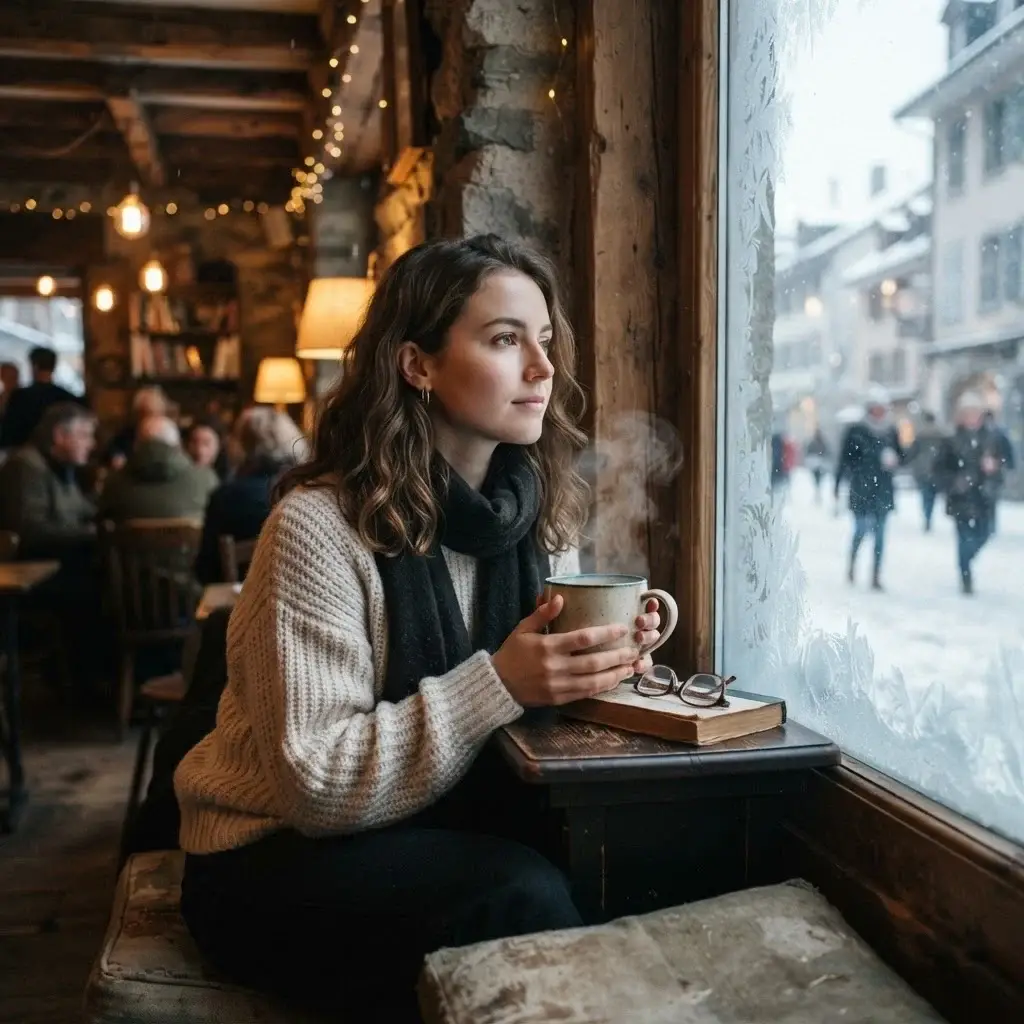
Drink plenty of hot tea, hot chocolate, or local warm ciders. These breaks are not a waste of travel time. They are exactly what slow travel is all about. Sitting in a window seat of a cozy cafe, holding a hot mug, and watching the snow fall on a foreign street is often the best memory you will make on your trip.
My Personal Cold Weather Travel Packing Essentials List
To make things easy for you, here is the exact checklist I use when I pack for a winter adventure:
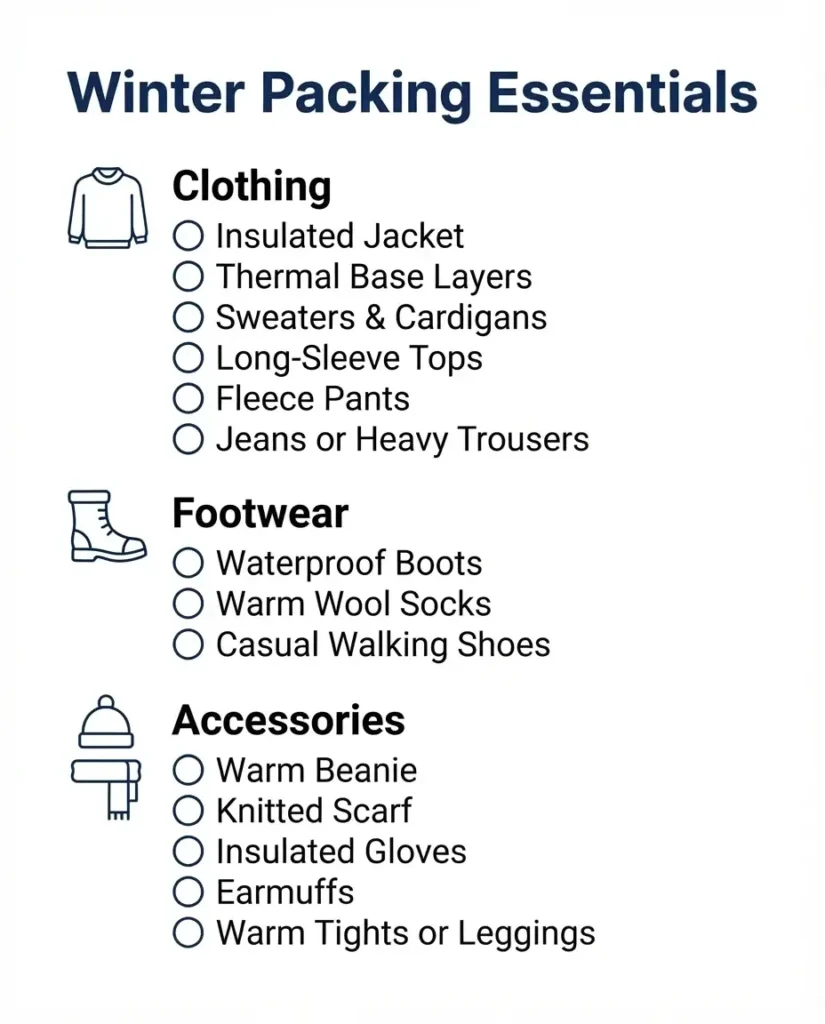
- 1 Waterproof, wind-blocking outer coat (worn on the plane)
- 1 Packable down jacket (mid layer)
- 1 Warm wool or fleece sweater (worn on the plane)
- 3 Merino wool long-sleeve base layers
- 2 Pairs of Merino wool thermal leggings
- 1 Pair of softshell travel pants
- 1 Pair of nice corduroy or thick trousers
- 1 Pair of waterproof winter boots (worn on the plane)
- 1 Pair of lightweight, comfortable shoes (for inside the hotel or dry days)
- 4 Pairs of Merino wool socks
- 1 Wool beanie or fleece headband
- 1 Scarf or fleece neck gaiter
- 1 Pair of thin touchscreen gloves
- 1 Pair of thick insulated mittens
- 1 Heavy face moisturizer and lip balm
- Compression packing cubes
Your Next Adventure Awaits
Packing for cold weather does not have to be stressful. It is completely possible to travel light, stay incredibly warm, and look great while doing it.
Do not let the fear of freezing keep you at home. Winter travel offers some of the most beautiful, peaceful, and authentic experiences you can have. The crowds are gone, the cities look magical under the snow, and the locals are often much more relaxed and welcoming.
Gather your cold weather travel packing essentials, roll them into your carry-on, and take that trip. The world is waiting for you, and I promise, you are going to be perfectly warm.