Solo in the Countryside: Villages That Actually Deliver Peace

There is a specific kind of tired that no city trip fixes. It’s not physical exhaustion. It’s more like a low hum of noise that you carry around and forget to put down. I know it well. Working as a sightseeing guide in New York City, I spent years surrounded by sirens, schedules, and the constant forward push of urban life. Even on my days off, the city moved whether I was ready or not.
The first time I understood what a village could do for a person, I was somewhere in rural Europe, backpacking solo with no firm agenda. I sat outside a stone building with a coffee I didn’t pay much for and watched exactly nothing happen for forty minutes. And I felt better than I had in months.
That’s what the right village does. It gives you back your pace.
But here’s what most travel articles get wrong about countryside village getaways: not every charming village actually delivers on the “peaceful” promise. Some are stunning in photos and absolute chaos in July. Some are easy to fall in love with in theory and genuinely hard to get to without a car. Some feel lonely rather than restorative if you arrive without context.
This guide is about the ones that actually work, what makes them work, and how to plan a village escape that leaves you genuinely restored rather than just Instagram-satisfied.
Why Villages Beat Cities for Certain Kinds of Travel
Before we get into specific destinations, let me say something I believe deeply after years of moving between fast-travel and slow-travel modes: choosing a village over a city is not settling for less. It is often choosing more.
More time in one place. More conversations that go somewhere. More meals that were made by someone who grew the ingredients nearby. More mornings where the only sound is birds and the only agenda is your own curiosity.
Solo travelers especially benefit from the rhythm of village life. When you slow down in a small place, you stop being anonymous. The woman at the bakery recognizes you on day two. The owner of the guesthouse gives you local advice that no travel blog has. You start to understand a place rather than just photograph it. That shift is hard to describe until you’ve felt it, but once you have, it’s hard to go back to rushing.
The villages in this guide are chosen for three things: genuine peace (meaning they have quiet hours, not just quiet marketing), practical solo-travel logistics, and the quality of the slow experience they offer.
The Cotswolds, England: Stone Villages and Morning Walks
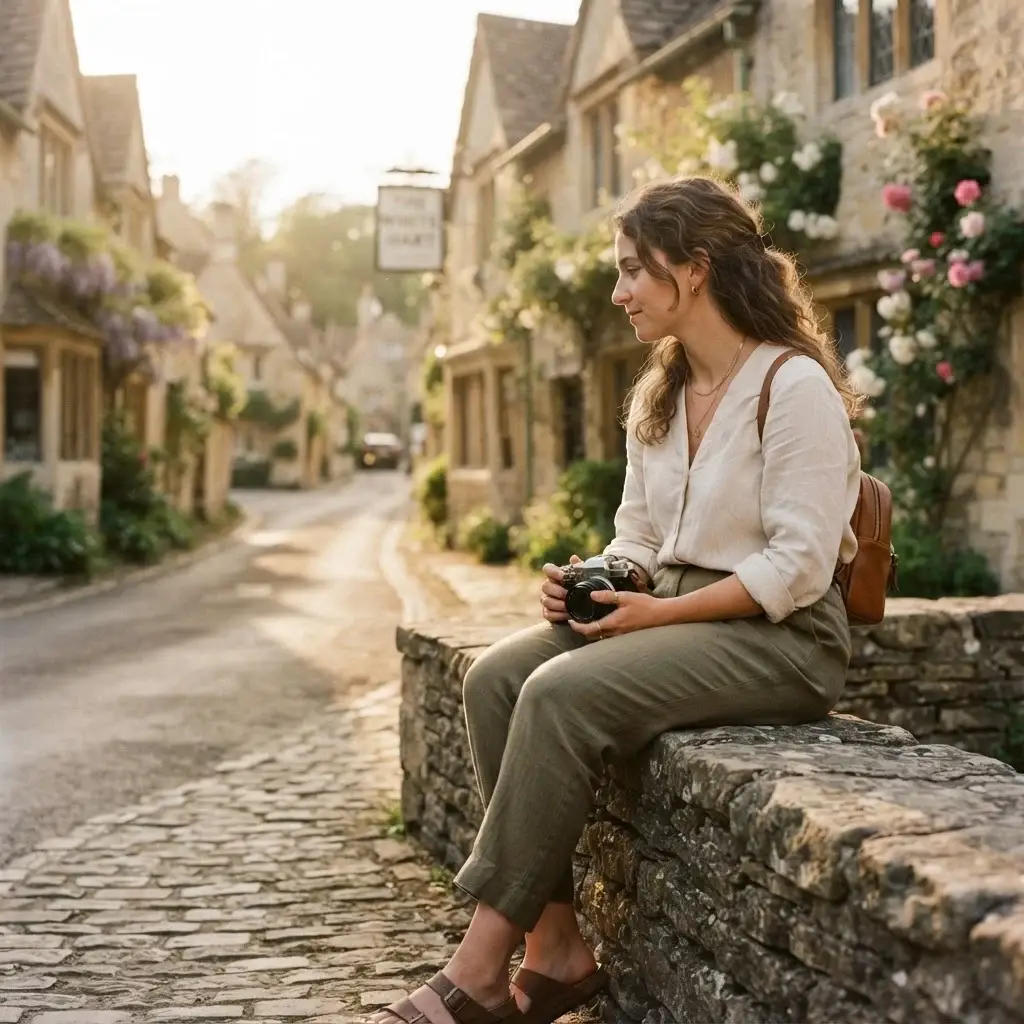
If you grew up dreaming of honey-colored stone cottages along a quiet river, the Cotswolds is the real version of that dream. Stretching across nearly 800 square miles of English countryside, this National Landscape in central England contains some of the most well-preserved medieval villages in the world.
The most important thing to understand about the Cotswolds is that not all of it is equally peaceful. Some villages, like Bourton-on-the-Water, earn the nickname “the Venice of the Cotswolds” but also pull enormous coach-tour crowds on summer afternoons. If you want peace, the timing is everything. Arrive early on a weekday morning, before 9am, and you will have the Low Slaughter footpaths and the Bibury duck pond almost entirely to yourself. Stay until the late afternoon, and the coaches are gone again.
The villages I’d prioritize for genuine quiet are Castle Combe, Chipping Campden, Stow-on-the-Wold, and the Slaughters (Upper and Lower). These are connected enough to visit as a cluster but tranquil enough to sit outside with a pint and feel like the world has slowed.
For solo travelers who do not drive, the logistics are manageable. Moreton-in-Marsh is your best rail hub, with direct services from London Paddington on Great Western Railway. From there, the Pulhams 801 bus connects to Stow-on-the-Wold in about 20 minutes, Bourton-on-the-Water in about 30 minutes, and Chipping Norton in roughly the same. The official Cotswolds tourism guide has detailed routes and combinations to help you plan a car-free village circuit.
What to eat here: proper English pub lunches are the move. Think steak and ale pie, ploughman’s boards, and local real ales in low-beamed rooms with fireplaces. Chipping Campden’s Eight Bells Inn and Stow-on-the-Wold’s Queen’s Head are the kinds of pubs that make you understand why the British take their pub culture seriously. Cream teas (scone, clotted cream, jam, and a pot of tea) are non-negotiable, and you’ll find them in almost every village tearoom. Budget roughly 12 to 18 pounds for a pub lunch and around 8 to 12 pounds for a cream tea.
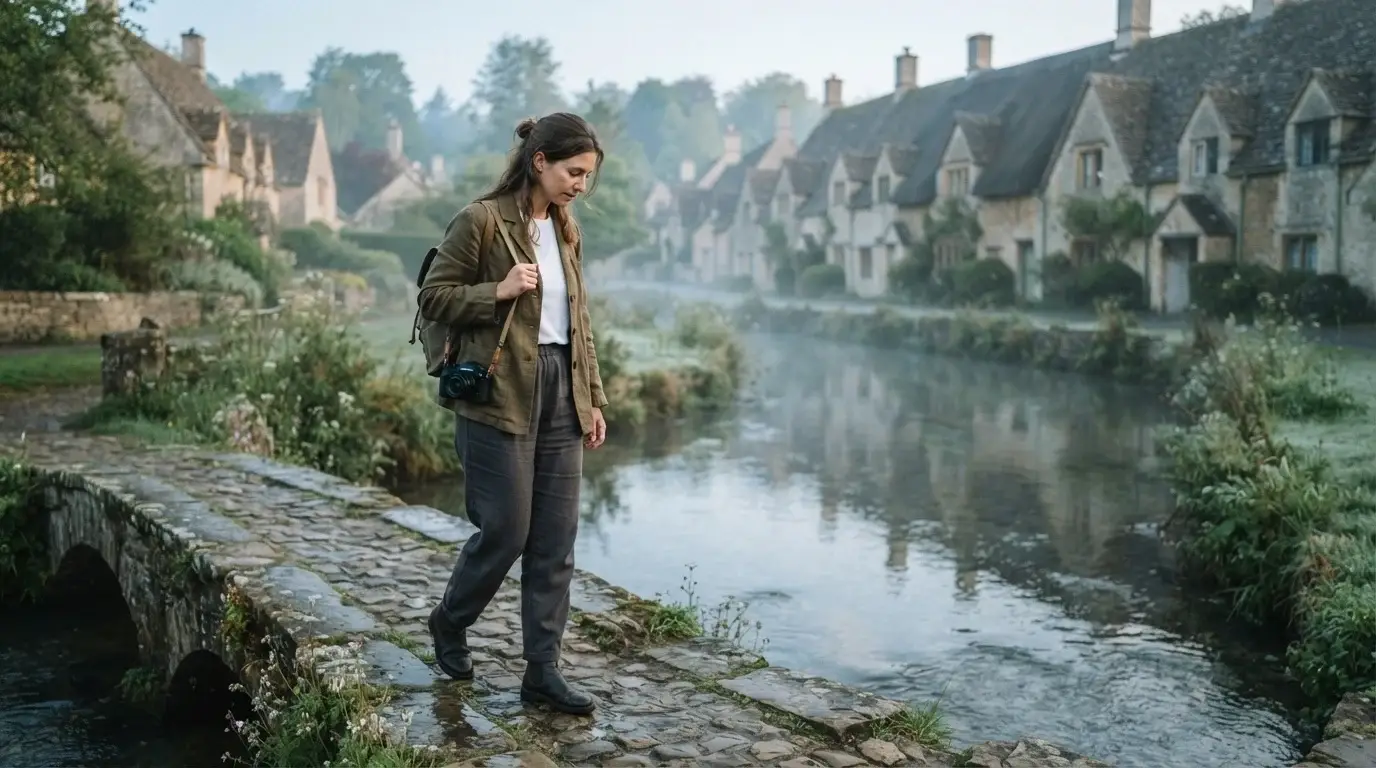
The Cotswolds National Landscape covers nearly 800 square miles of walking trails, and the Cotswolds National Landscape website has downloadable walking route maps and seasonal trail conditions, which is incredibly useful for planning solo walks between villages.
Best time to go: April to June for wildflowers and manageable crowds. October for golden autumn light and crisp air. Avoid school holiday periods in July and August if peace is your priority.
Cinque Terre, Italy: The Coastal Villages Everyone Talks About (and How to Actually Enjoy Them)
Cinque Terre is one of the most photographed places in Europe, and yes, parts of it are overcrowded in summer. But here’s the thing: the five villages of the Italian Riviera sit on cliffs above the Ligurian Sea, connected by hiking trails that dramatically reduce the crowds the further you walk from the train station platforms.
The five villages are Monterosso al Mare, Vernazza, Corniglia, Manarola, and Riomaggiore. The honest breakdown is this: Monterosso is the biggest and has the beach, Vernazza is arguably the most beautiful, Corniglia sits highest on the cliff and requires a long staircase climb from the train station (which filters out many casual visitors), Manarola is romantic and colorful, and Riomaggiore is where many travelers stay, as it is the most connected to La Spezia.
If you are choosing one village to base yourself in for a slow-travel stay, I’d suggest Vernazza or Corniglia. Both reward the traveler who lingers. Vernazza has a small harbor where local fishermen still work and a castle ruin above the village where the view at sunset is worth every flight and train it took to get there. Corniglia, being harder to reach, is noticeably quieter in the evenings when the day-trippers have left.
The hiking trails here are genuinely one of Italy’s great experiences. The Cinque Terre National Park’s official trekking card page shows current prices clearly: the adult one-day trekking card runs 10 euros in standard season and 15 euros during high season. That covers access to the Blue Trail between Monterosso and Corniglia and the Via dell’Amore path, plus the park bus services and free Wi-Fi at park hotspots. Buy it online or at any of the park infopoints at the railway stations.
What to eat here: fresh anchovies (acciughe), trofie al pesto (Ligurian pasta with basil pesto using local Ligurian basil, which has a distinctly softer flavor than Genovese basil), focaccia di Recco, and the local white wine, Sciacchetra, a dessert wine that is slightly sweet and deeply local. Do not eat at any restaurant where a person stands outside trying to wave you in from the street. Walk up a staircase, find the trattoria that looks like nobody put effort into its exterior, and eat there.
Best time to go: Late September and October see significantly lower crowds with warm enough weather to hike comfortably. May and early June are also excellent. Avoid July and August on weekends entirely if peace is the goal.
Hallstatt, Austria: The UNESCO Village That Earns Its Reputation
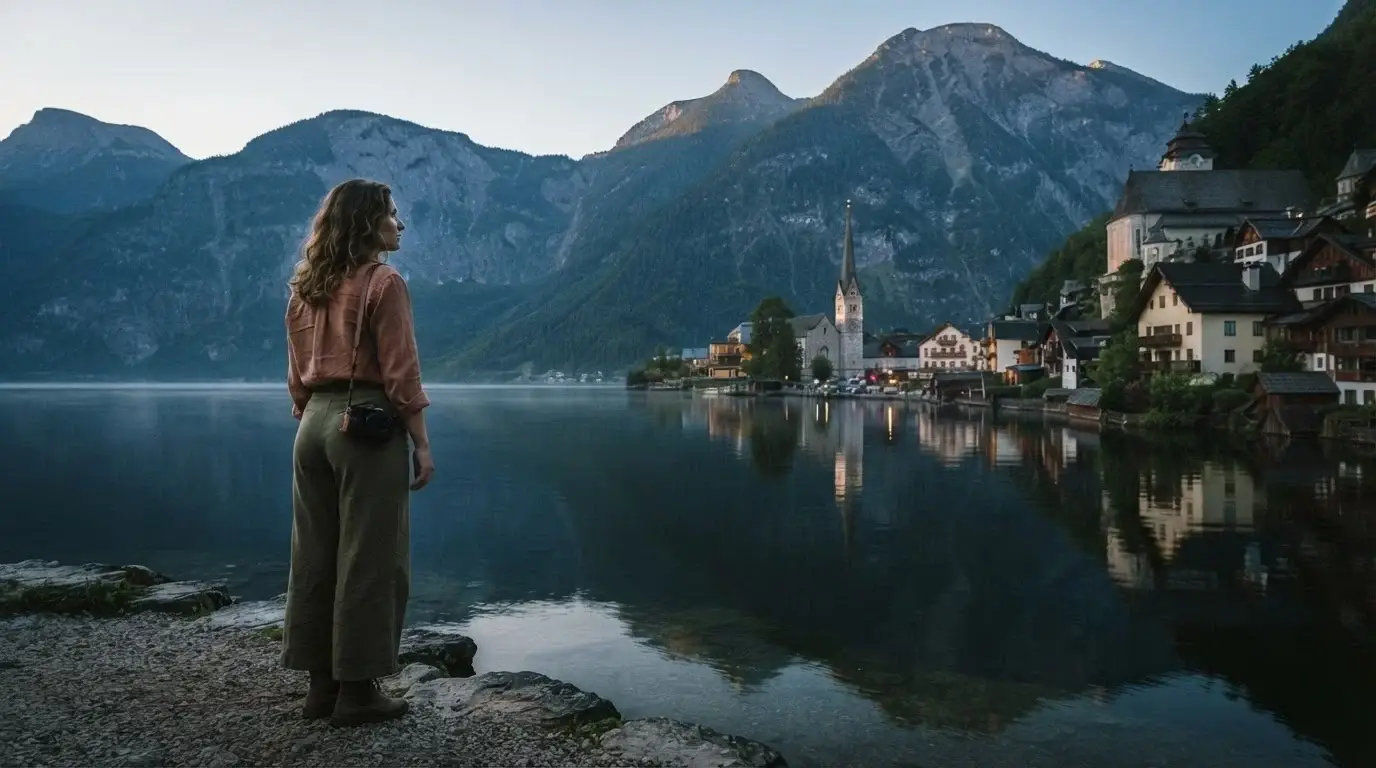
There is a reason Hallstatt appears in seemingly every “beautiful village” article ever written, and that reason is legitimate. The village sits on the western shore of the Hallstattsee, a deep glacial lake in the Salzkammergut region of Austria, with mountains rising sharply on every side. It is strikingly beautiful in a way that photographs actually undersell because no image captures the physical sensation of standing between water and mountain in absolute quiet.
Hallstatt is part of the UNESCO World Heritage listing for the Hallstatt-Dachstein/Salzkammergut Cultural Landscape, a designation it has held since 1997, and the heritage context here is genuinely interesting: Hallstatt is home to the world’s oldest salt mine, which has been in operation for over 7,000 years and can be visited on a guided tour. This is not a tourist gimmick. It’s one of the most fascinating archaeological sites in Central Europe.
The reality check: Hallstatt gets enormous tourist traffic, particularly from day-trippers arriving on cruise boats and coaches. The way to experience it the way it was meant to be experienced is to stay overnight. Once the day visitors leave on the last boat, the village becomes something else entirely. The lakeside promenade, the narrow streets between old wooden buildings, the views from the Catholic Charnel House above the village, these are best at 7am and after 6pm. Plan at least two nights, ideally three.
Getting there without a car: from Salzburg, take the train to Attnang-Puchheim or Obertraun-Dachsteinhöhlen, then connect to Hallstatt by ferry or train. The journey takes about 2.5 to 3 hours. The ferry across the lake from the Hallstatt train station is part of the experience and costs just a few euros. From Vienna, it is about four hours by a combination of train and ferry.
What to eat: Austrian mountain food applies here. Think Kaiserschmarrn (a thick fluffy pancake torn into pieces and served with plum compote), Tafelspitz (boiled beef with horseradish), freshwater fish fresh from the lake, and dark bread with local butter. The lakeside restaurants offer trout and char that were swimming that morning, which is a very different experience from most fish dishes. Budget around 20 to 35 euros for dinner at a proper sit-down lakeside restaurant.
Best time to go: May, June, and September are the sweet spots. Winter is magical if you can handle the cold, with snow on the rooftops and almost no crowds. Late July and August are beautiful but congested.
Shirakawa-go, Japan: A Village That Feels Completely Outside of Time
From what solo travelers consistently report about Shirakawa-go, arriving here in winter feels like stepping into a black-and-white woodblock print that somehow turned into a real place. The village sits in a mountain valley in Gifu Prefecture in central Japan, and its defining visual element is the gasshozukuri farmhouses, massive thatched-roof structures built at steep angles to shed heavy snowfall. These are not decorative. They have been standing and functioning for centuries.
Shirakawa-go, along with the nearby Gokayama villages, holds UNESCO World Heritage status and was named one of Forbes’ 50 Most Beautiful Villages in the world in 2025. According to Japan’s official tourism page for Shirakawa-go, the villages have existed since the 11th century and have sustained traditional social systems and lifestyle customs continuously through the present day. Many of the farmhouses are still occupied, which gives the village a living quality that museum-style preservation can rarely replicate.
The practical reality: Shirakawa-go is accessible by highway bus from Nagoya (about 2.5 hours), Kanazawa (about 1.25 hours), or Toyama (about 50 minutes). Buses are the recommended option, especially in winter when mountain roads can be genuinely dangerous for self-drivers. The village itself is easily walkable, and the main lookout point above the settlement, the Shiroyama viewpoint, takes about a 20-minute walk up from the village center and offers the panoramic view you’ve seen in every photograph.
Staying in a gassho-zukuri farmhouse as a guesthouse (minshuku) is one of the most immersive overnight experiences in all of Japan. Rates typically run around 10,000 to 15,000 yen per person per night with dinner and breakfast included, which works out to roughly 65 to 100 US dollars. The meals are traditional: mountain vegetables, miso soup, local river fish, rice, and seasonal ingredients. Book months in advance for winter stays, particularly during the illumination events in January and February when the villages are lit with soft lights against the snow.
What makes Shirakawa-go special for solo travelers is not just the scenery. It is the sense of complete immersion in a way of life that has survived because the community chose to preserve it. You are not in a theme park. You are in a village where people still live, which you can feel.
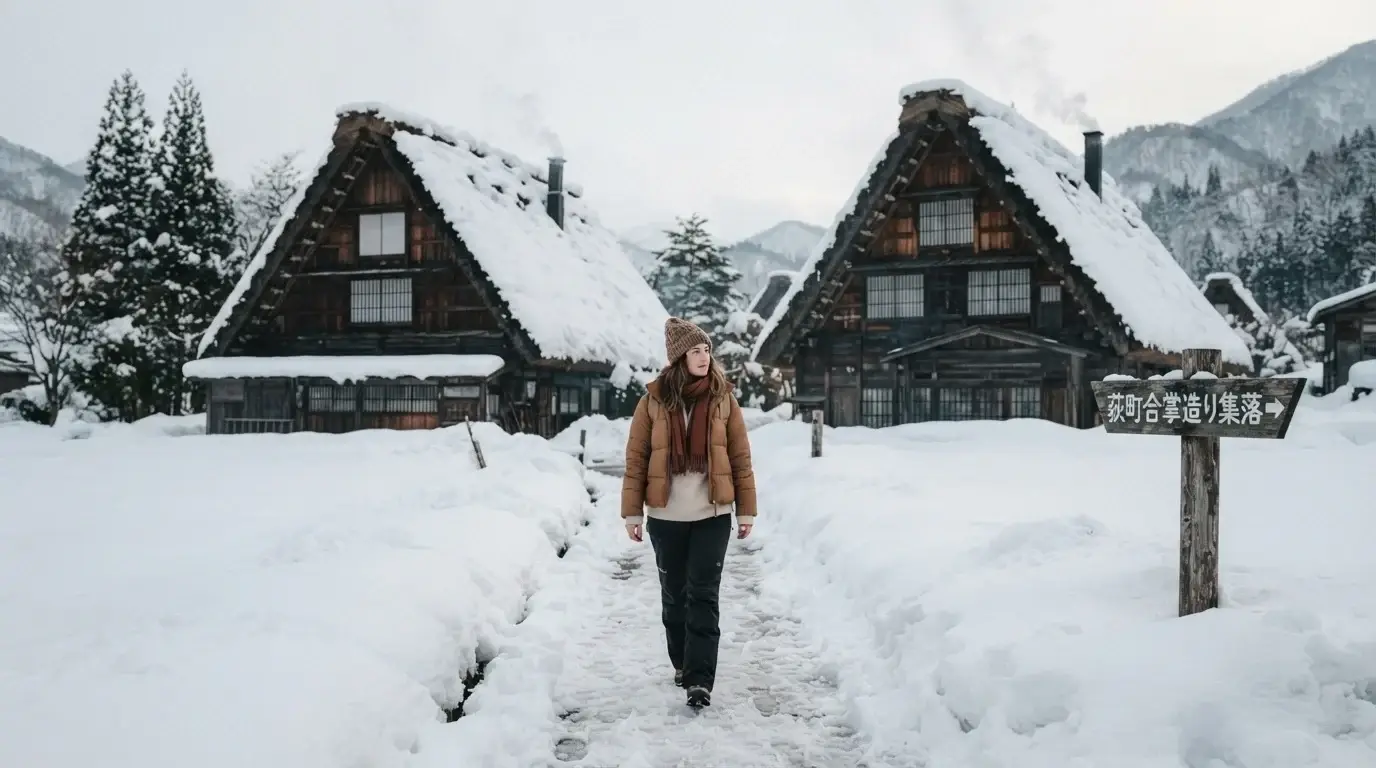
Best time to go: Winter (January to February) for snow and the illumination events. Late April for cherry blossoms against the thatched roofs. Avoid Golden Week (late April to early May) when crowds spike significantly across all of Japan.
Monsaraz, Portugal: Stone Walls, Starlight, and a Lake That Goes On Forever
Portugal’s Alentejo region is one of the most underestimated places in all of Europe. Rolling plains, cork oak forests, ancient stone villages perched on hilltops, and food that does not rush. Monsaraz is the jewel of it all.
The village sits inside medieval walls on a hilltop in the eastern Alentejo, at an elevation that puts you above the horizon in every direction. Below stretches the Alqueva Lake, the largest artificial lake in Western Europe, reflecting the sky in a way that makes the landscape feel borderless. The village itself is tiny. A single main street, a castle at one end, a church, a handful of restaurants and small guesthouses, and maybe 800 permanent residents. That’s it. And it is exactly enough.
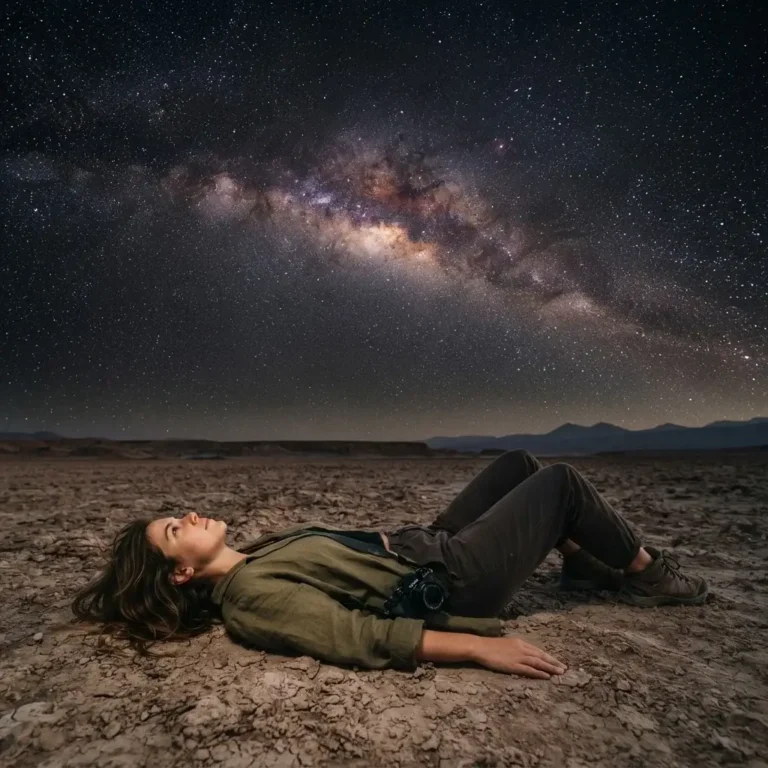
What Monsaraz offers that very few European villages can is true darkness at night. The Alqueva region has been designated a Starlight Tourism Destination because of its exceptionally low light pollution. On a clear night, the Milky Way is visible with the naked eye, which is not something most people who grew up in cities ever experience. It is the kind of sight that resets something in your brain.
The Visit Alentejo official tourism site covers Monsaraz and the broader region thoroughly, including local gastronomy, walking routes, and accommodation options. The Alentejo is known for slow food in the most literal sense: the region produces outstanding red wines, sharp sheep’s milk cheese (queijo de Azeitao or the local Serpa), black pork (porco preto) raised on acorn and oak, and açorda, a rustic bread-based soup with olive oil, coriander, garlic, and egg that sounds simple and tastes extraordinary.
Getting to Monsaraz without a car is possible but requires planning. The nearest city is Evora, which is reachable by bus from Lisbon in about 1.5 to 2 hours. From Evora, you can take a taxi or arrange a transfer to Monsaraz (roughly 30 to 45 minutes). There is no regular bus service directly to the village, so either renting a car in Evora or booking a transfer in advance is the practical path.
What to eat: the aforementioned açorda, migas (a similar bread-based side dish often served with meat), and anything that says “porco preto” on the menu. Alentejo wines are world-class and consistently underpriced relative to their quality. A bottle of excellent local red at a village restaurant will rarely cost more than 15 euros.
Best time to go: Spring (March to May) when the plains are green and wildflowers are out, and September to October for warm days and cool evenings. Summer is hot (often above 40 degrees Celsius in July and August) and should be approached with appropriate preparation.
Eguisheim, Alsace, France: The Village That Smells Like Wine and Woodsmoke
Alsace is a region that has spent centuries being passed between Germany and France, which means it ended up with the food philosophy of both and the architectural identity of neither. The half-timbered villages along the Route des Vins d’Alsace (Alsace Wine Route) look more like fairy tales than postcards, with flower-draped window boxes, cobblestone lanes, and wine caves in every other building.
Of all the Alsace villages, Eguisheim is the one I keep coming back to in my research and recommendations. Recognized by France’s national list of “Les Plus Beaux Villages de France” (Most Beautiful Villages of France), Eguisheim is organized in concentric circles around a central octagonal square, a layout that dates from medieval urban planning and creates the disorienting, pleasant sensation of walking in an endless loop of beauty. The population sits around 1,700, making it intimate without feeling isolated. The Strasbourg tourism board lists Eguisheim prominently among the most beautiful villages in Alsace, along with Riquewihr, Ribeauville, and Kaysersberg, all of which are within easy reach and worth a half-day each.
Getting there: Colmar is the nearest city (about 10 minutes by bus or taxi) and is itself a very beautiful town with good rail connections to Strasbourg, Basel, and Paris. From Colmar you can easily reach Eguisheim and several other wine route villages by local bus or bicycle (the flat Rhine plain makes cycling genuinely easy). Strasbourg is about 45 minutes by train from Colmar and has excellent connections to Paris by TGV in about 1 hour and 45 minutes.
What to eat and drink: Riesling and Gewurztraminer are the local wines, served in small stemmed glasses in almost every cave and restaurant. Tarte flambee (flammekueche in Alsatian dialect) is the iconic thin-crust flatbread with creme fraiche, onions, and smoked bacon and it costs around 10 to 14 euros. Choucroute garnie (sauerkraut with various sausages and pork) is richer and heartier, a full meal in one plate. Kougelhopf, a light yeast cake with almonds and dried fruit baked in a distinctive ring mold, is the dessert of the region and served in slices at most bakeries for just a couple of euros.
Best time to go: Late September to early November for the vendanges (harvest season), when the vines turn gold and the wine caves are open for tastings. December is also remarkable for the Alsace Christmas markets, which are among the oldest and most atmospheric in Europe. July and August are busy but manageable because the region is large enough to absorb tourists without feeling crushed.
How to Choose the Right Village for You
Reading about six different places is one thing. Knowing which one to actually book is another. Here is a quick framework I use when recommending villages to other solo travelers.
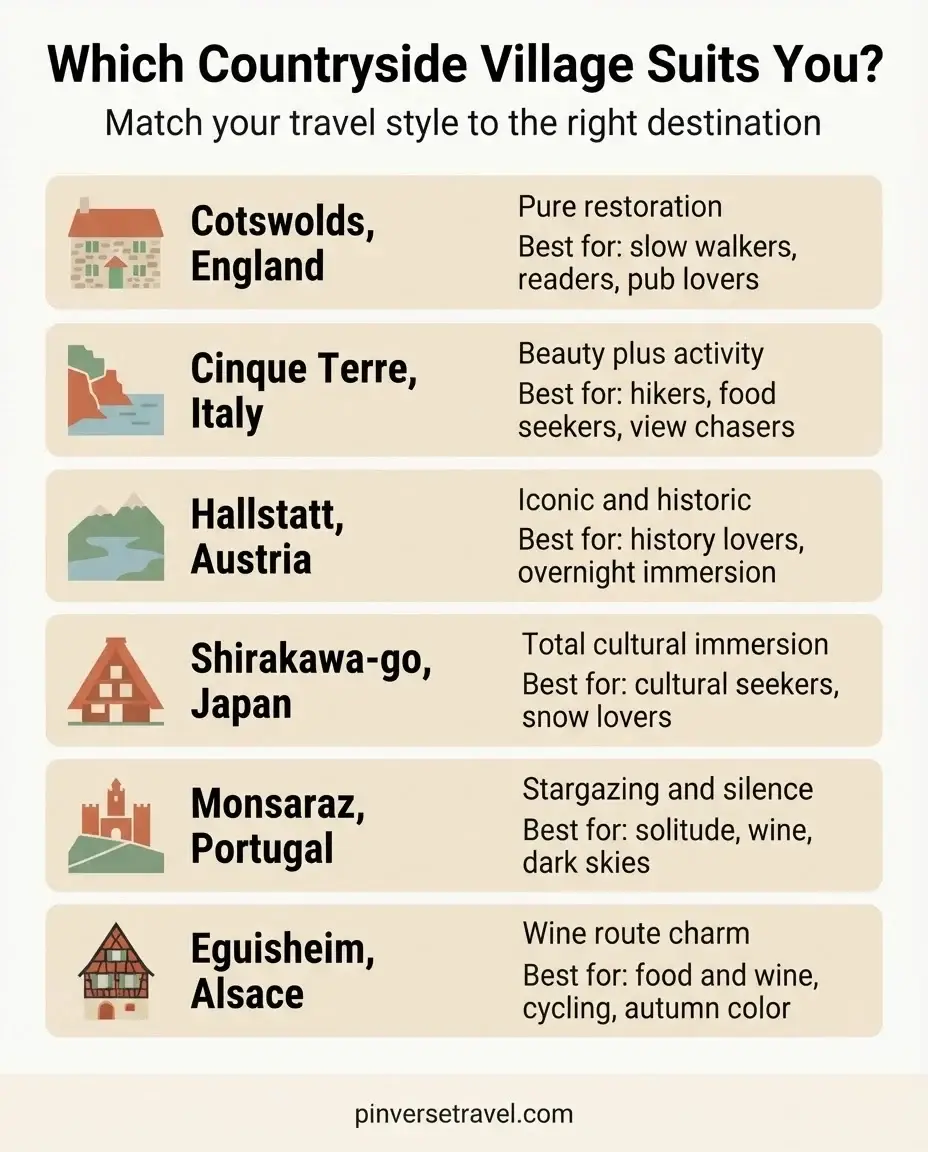
If you want pure restoration and nothing on your agenda, Monsaraz or the Cotswolds are your best bet. Both have almost no nightlife, no pressure, and days that can be filled entirely with walking, reading, and eating well. If you want the combination of beauty, activity, and a sense of achievement (hiking, exploring, discovering), Cinque Terre and Alsace offer that rhythm more naturally. If you want total cultural immersion and to feel genuinely somewhere else, somewhere that operates by a completely different set of assumptions than your home culture, Shirakawa-go is the answer. And if you want the postcard beauty alongside a genuinely interesting historical layer that goes beyond “old buildings,” Hallstatt and Monsaraz both deliver on that front.
One honest piece of advice across all of these: spend at least two nights, ideally three. One night in a village is a visit. Two nights is the beginning of an experience. Three nights is when the place starts to feel like somewhere you actually know.
The Practical Principles That Make Village Travel Work
Arrive early, stay late. Every village on this list is best in the early morning before day-trippers arrive and in the late afternoon after they leave. If you are staying overnight, you already have the advantage.
Book accommodation ahead in small villages. There are fewer beds than in cities. In Hallstatt, some accommodations book out six months in advance for peak winter dates. In Shirakawa-go farmhouses, three to four months is typical for popular winter periods. Do not leave this to the last minute.
Bring local cash. Small villages, particularly in rural Portugal, Japan, and parts of Austria, may not have reliable card payment at every small restaurant or market stall. Having cash in the local currency as a backup saves stress.
Slow your phone down too. The temptation to photograph everything is real, and I am not immune to it. But I have found that capping myself to a few genuine photographs each day and then putting the phone away forces me to actually see where I am. Villages reward presence more than any other type of destination.
Talk to the people who run your accommodation. In a guesthouse in Eguisheim, a small hotel in Monsaraz, or a farmhouse in Shirakawa-go, the owner typically knows things about the local area that no travel blog does. Ask them where they eat, what time the light is best, and whether there is a local event happening. Some of the best recommendations I have ever acted on came from a five-minute conversation with someone who actually lives where I was visiting.
A Final Thought
The search for a peaceful getaway is really a search for a version of yourself that isn’t running. Villages offer that, the genuine ones do, but only if you let yourself slow down enough to receive what they’re offering.
I left a structured life once because I realized the schedule was moving faster than my actual experience of living. The villages I’ve studied and explored through the lens of slow travel have consistently confirmed what I felt even back in those early solo backpacking days in Europe: the smaller the place, the larger the experience.
Pick one. Go slower than feels comfortable. And let the village show you what it has to offer.