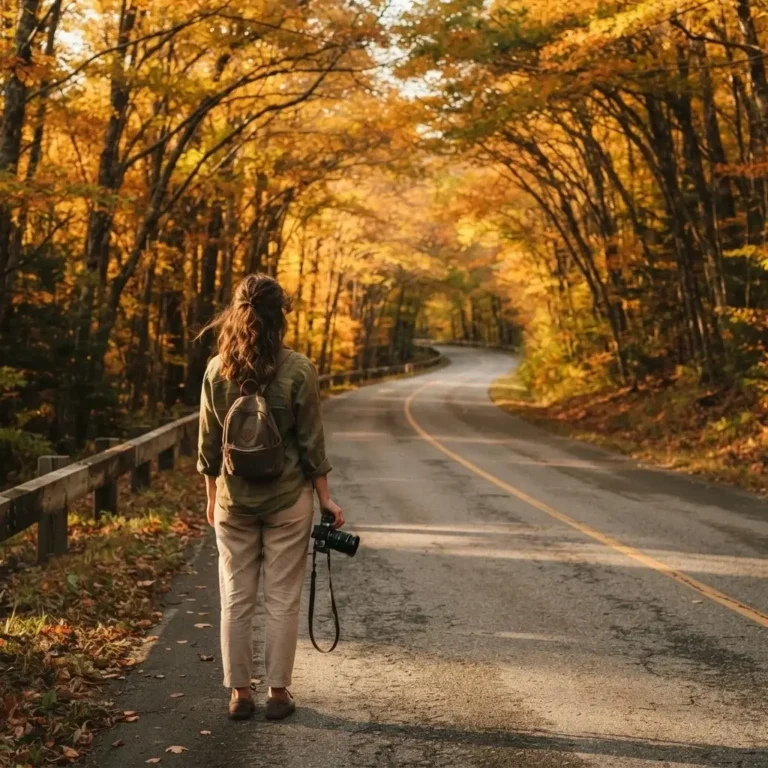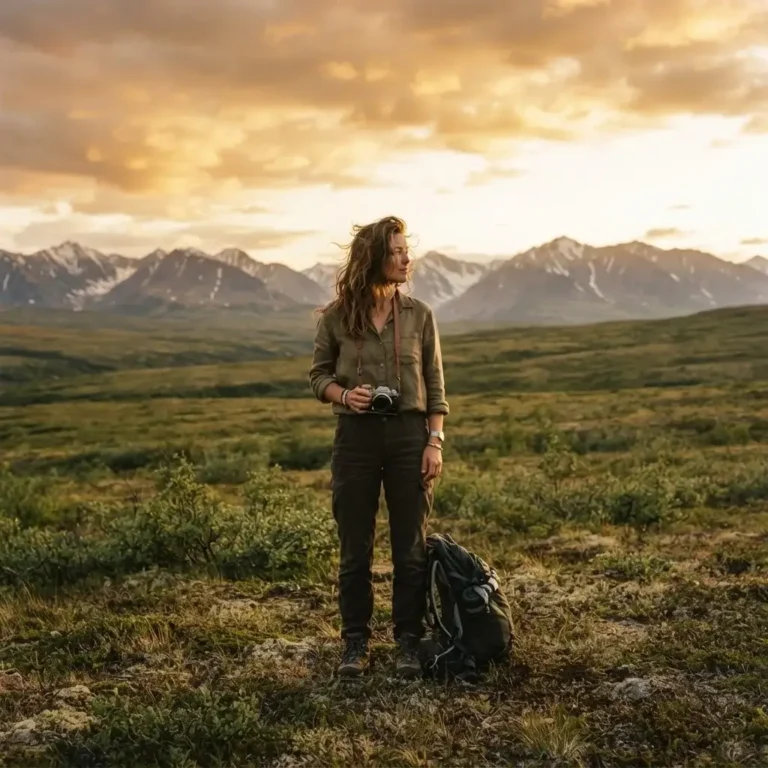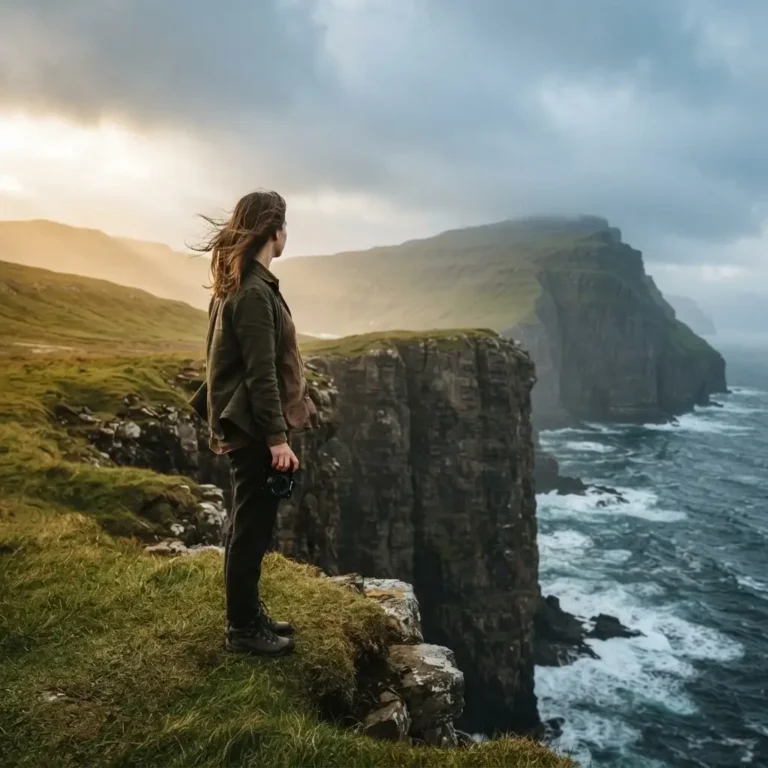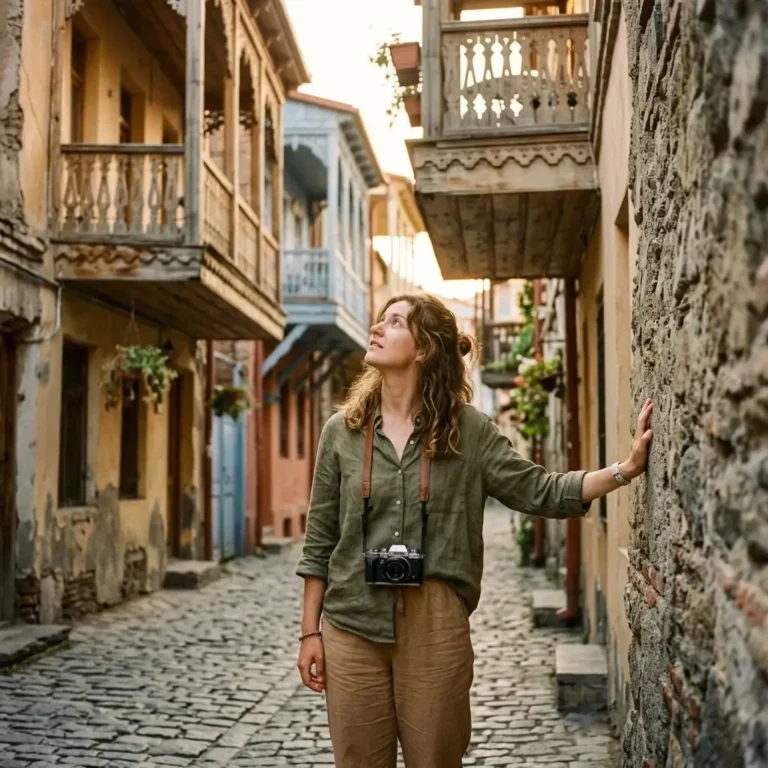
Off-Grid Overland Travel: Routes That Will Change You

There is a particular kind of trip that never quite leaves you. Not a weekend getaway, not a highlight-hopping tour, and certainly not a beach holiday where the biggest decision is which poolside chair to claim. I’m talking about overland travel. The kind where you cross country lines by land, sleep in places that don’t have TripAdvisor ratings, eat food you can’t name in the local language, and watch the terrain change so slowly and so completely that you feel the distance in your body.
I didn’t grow up calling it “overlanding.” I just knew that when I backpacked solo across Europe, I didn’t want to fly between cities. I wanted the train, the overnight bus, the slow ferry. I wanted the journey to be the thing, not just the destination. That instinct has never left me, and if you’re reading this, I think it’s already alive in you too.
This piece is for the person who keeps thinking about a real overland trip but hasn’t done it yet. Maybe you’ve read about the Trans-Siberian Railway. Maybe you’ve seen a photo of a sunrise over the Namibian savanna and felt something shift. Maybe you’re just tired of the kind of travel that feels like consumption, and you want something that feels more like living. Whatever brought you here, let’s talk about what overland travel actually is, which routes are worth your time, and how to start without it feeling completely overwhelming.
What “Overland Travel” Actually Means
Here’s the first thing to clear up, because the word “overlanding” has been claimed by the vehicle modification community in a big way. Search it online and you’ll see lifted trucks, rooftop tents, and serious 4WD gear. That’s one version of it, and it’s a legitimate and wonderful one. But overland travel in the broader, older sense simply means traveling between places by land, as continuously as possible, rather than flying over everything.
An overland traveler might take a sleeper train across Russia, a shared minibus through Central Asia, a local bus through East Africa, or a ferry across the Caspian Sea. They might book a hostel or sleep under the stars. The common thread is the refusal to skip the in-between. You cross borders by land. You watch the landscapes change. You sit next to real people going about their real lives.
This matters because it fundamentally changes the experience. When you fly from London to Tashkent, you arrive. When you travel overland from Istanbul through Georgia, Azerbaijan, and across the Caspian into Central Asia, you arrive, but you also understand how you got there. The distance is felt, not just calculated.
Why Off-Grid Routes Hit Different
Most travel today is deeply networked. You book online, you navigate by smartphone, you ping your location in real time, and you stay connected almost everywhere. Off-grid overland travel breaks all of that, at least partially. And the breaking is the point.
Solo travelers who have done overland journeys through remote regions consistently report the same thing: the absence of constant connectivity forces you into the present moment in a way that nothing else quite does. When you’re on a slow train through Siberia with no signal for hours, you look out the window. You think. You talk to the person next to you. You read the book you’ve been meaning to read for two years. You remember that you were a whole person before your phone.
There’s also the practical reality that going off-grid means going where most tourists don’t go. That means more genuine interactions, more authentic experiences, lower costs, and the feeling that you’ve actually gone somewhere, not just been somewhere.
For anyone serious about planning this kind of trip, the resource I always point people toward is the Responsible Travel overland tour route guide, which gives a solid global overview of the world’s major overland corridors and helps you understand the scale of each one before committing.
The Four Routes Worth Knowing
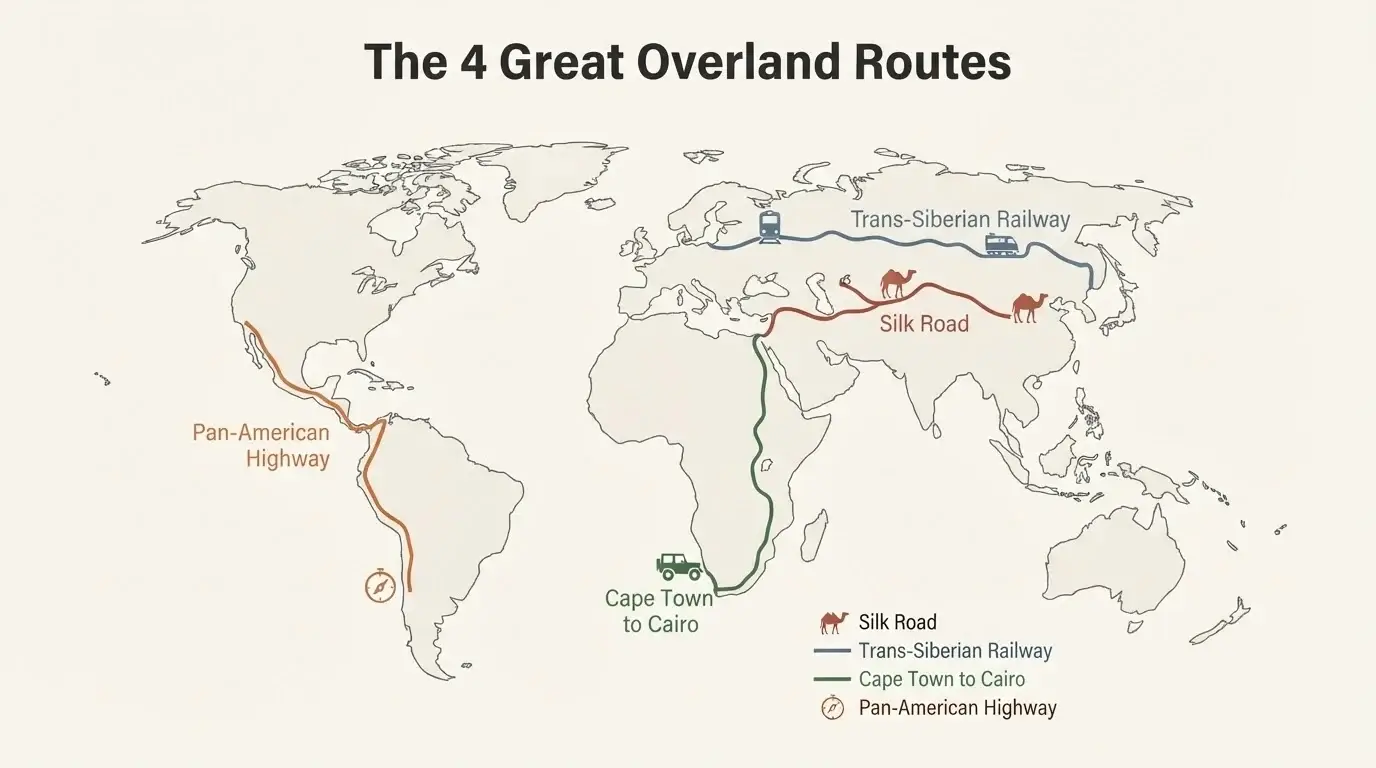
There are overland routes on every continent. But four of them stand out as the ones that come up again and again in serious overland travel conversations, each for different reasons. Here’s a practical, honest look at each.
The Silk Road: Central Asia’s Ancient Spine
If there is one overland corridor that has genuinely changed how many independent travelers see the world, it’s the Silk Road through Central Asia. The term covers a network of ancient trade routes stretching from China through Kazakhstan, Kyrgyzstan, Uzbekistan, Tajikistan, Turkmenistan, Iran, and into the Caucasus. Today’s overlanders follow a version of those same routes, and the journey is staggering.
The Chang’an-Tianshan corridor, which threads through China, Kazakhstan, and Kyrgyzstan, is a UNESCO World Heritage Site covering 33 individual heritage sites, from ancient palace complexes and Buddhist cave temples to vast desert trade settlements and the remnants of the Great Wall. Traveling through this region is not like visiting a museum. You are crossing living terrain that has been shaped by 2,000 years of movement, trade, and cultural exchange.

From a practical standpoint, this route is best tackled with real preparation. Visas vary significantly by country: Kyrgyzstan and Kazakhstan now offer visa-free access to many nationalities, while Uzbekistan’s e-visa process has become much more streamlined. Turkmenistan remains the most complex, generally requiring a transit visa or organized tour. The best single resource I’ve found for navigating all of this is Caravanistan’s Silk Road planning guide, which Lonely Planet has called a “peerless online travel guide to the region.” It covers visas, border crossings, transport options, and safety country by country, and it’s free.
The food along this corridor is one of its great undersung pleasures. In Uzbekistan, the plov (a rich rice dish cooked with lamb, carrots, and chickpeas) is some of the best comfort food you’ll find anywhere. In Kyrgyzstan, grab a bowl of shurpa soup in a yurt camp or a plate of beshbarmak, the national dish of boiled meat and flat noodles, eaten with your hands around a communal table. In Kazakhstan, try the fermented mare’s milk called kumis if you’re feeling brave. It tastes exactly as interesting as it sounds.
The ideal season is late spring through early autumn. Summers in the lower Uzbek plains get brutally hot, so many overland travelers time their route to hit the mountains of Kyrgyzstan and Tajikistan in July and August, where the high-altitude Pamir Highway and the shores of Song-Kol lake offer some of the most dramatic scenery on Earth.
The Trans-Siberian Railway: Slow Travel at Its Most Extreme
The Trans-Siberian is not just a train journey. It is one of the world’s great exercises in simply sitting with distance. The full route from Moscow to Vladivostok covers 9,259 kilometers, takes roughly six to seven days without stopping, and passes through eight time zones. Most overlanders build in stops along the way, spending time in Yekaterinburg, Irkutsk, and the shoreline of Lake Baikal, the world’s deepest freshwater lake.
There are three main routes. The classic Trans-Siberian goes east from Moscow to Vladivostok. The Trans-Mongolian branches south through Ulaanbaatar and into Beijing. The Trans-Manchurian takes a different cut through northeastern China. Each offers a different cultural layer, and most serious travelers combine segments rather than just riding one line start to finish.
Tickets are bookable up to 45 days in advance, and for independent travel, the site poezda.net handles Russian rail bookings in English. Budget roughly $800 to $1,200 for the full Moscow-Vladivostok tickets across several train segments, depending on your compartment class. A platzkart (third-class open berth) is the cheapest option and also, if you’re open to it, the most socially interesting one. You share a long open carriage with fellow passengers, and conversations tend to happen whether you plan for them or not.
Pack food for the longer legs. Train station vendors sell smoked fish, bread, instant noodles, and pickled vegetables along the route. Locals traveling with you will likely offer to share their food, which is one of those small, unprompted acts of generosity that you don’t plan for but never forget.
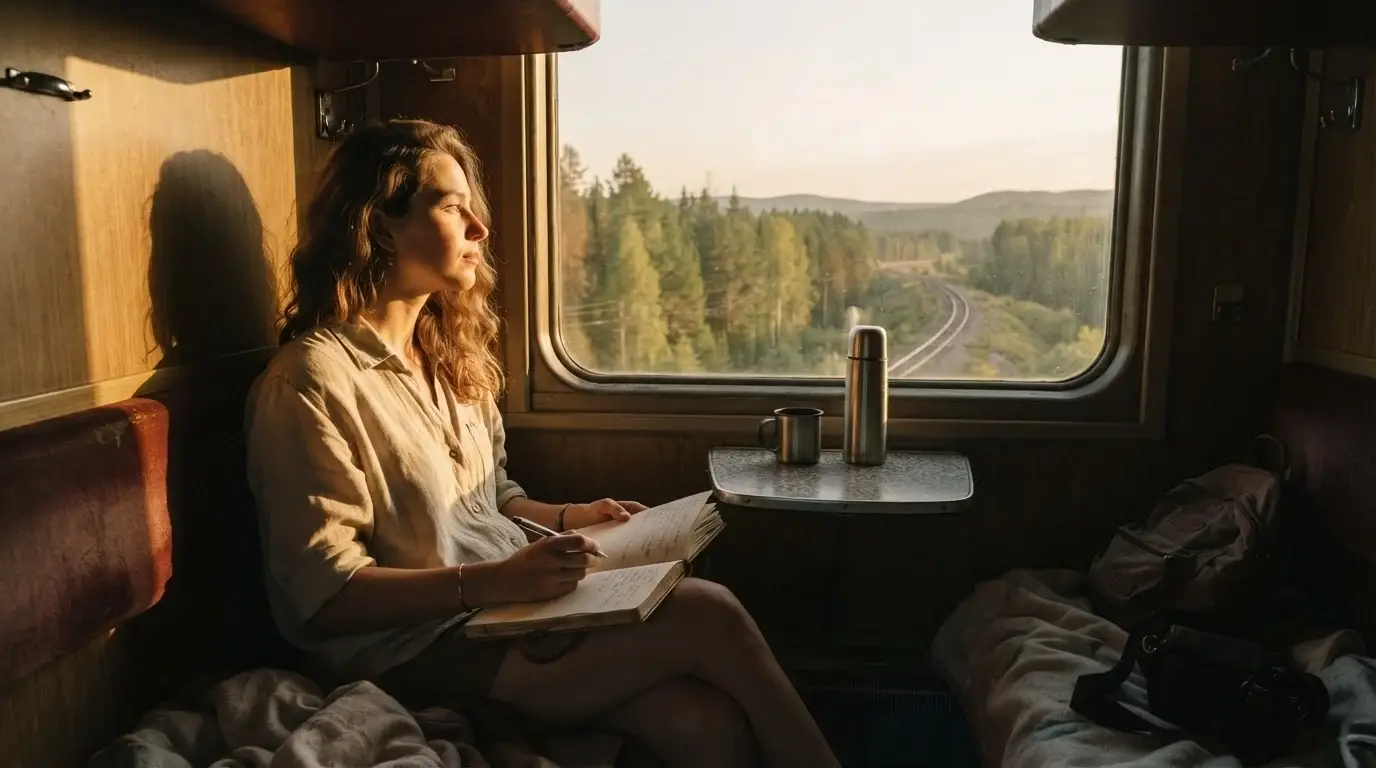
The best time to ride is late May through September, when daylight is long and stopovers like Lake Baikal are accessible without extreme winter conditions. If you’re booking stops, Irkutsk is the practical gateway for Baikal, and Listvyanka village on the lake’s southwestern shore is the most accessible starting point for hiking and boat trips.
Cape Town to Cairo: Africa’s Great North-South
This is arguably the most famous overland route in the world, and for good reason. The eastern African corridor from Cape Town to Cairo runs through roughly eight countries: South Africa, Botswana or Eswatini, Zambia, Tanzania, Kenya, Ethiopia, Sudan, and Egypt. It covers somewhere around 10,000 kilometers depending on your exact route choices, and it takes most independent overlanders between four and eight months to complete properly.
Solo travelers on tight budgets complete sections of this route by local bus, shared minibus (called matatus in Kenya, or dala dalas in Tanzania), and occasionally by boat on Lake Victoria. Others join overland truck tours for certain sections, which are popular particularly in East Africa where logistics and safety require more coordination.
The food story on this route alone is worth the trip. In South Africa, you’ll start with a braai (barbecue) culture built around fire and community. Zambia means nshima, the cornmeal staple eaten with stewed greens, beans, or relish. Tanzania’s coastal region gives you pilau rice spiced with cumin and cinnamon, and street food that reflects centuries of Indian Ocean trade. In Ethiopia, you are in for a genuine revelation: injera (spongy fermented flatbread) served with various stews called wats, eaten communally from a shared platter. It is one of the most distinctive food cultures in the world, and it costs almost nothing on the local market.
The key practical reality of this route in 2025 and 2026 is that it requires current research on regional safety and border conditions, as these change. Ethiopia in particular has seen regional instability in recent years. The US State Department and Tracks4Africa both maintain updated advisories for African overland travelers.
For getting around off the beaten path in this region, offline maps are essential. Download your target countries in advance on Maps.me or OsmAnd, and pair them with a local SIM card wherever you can get one. Network coverage is surprisingly good in urban areas across East Africa, but it drops off quickly in remote stretches.
The Pan-American Highway: The World’s Longest Road
Stretching roughly 19,000 miles (over 30,000 km) from Prudhoe Bay in Alaska all the way to Ushuaia at the southern tip of Argentina, the Pan-American Highway is the longest road system in the world and passes through 14 countries. Most overland travelers don’t do the full length in one go. Many pick a section: Alaska to Mexico, Mexico through Central America, or Colombia south through the Andes to Patagonia.
The famous complication is the Darien Gap. As the Wikipedia entry on the Darien Gap explains clearly, the Pan-American Highway breaks at Yaviza, Panama, and resumes at Turbo, Colombia, with roughly 100 km of roadless jungle and wetland in between. There is no road through it, and driving a vehicle across is not feasible for most travelers. Independent overlanders without a vehicle typically take a boat or small aircraft to bridge this section, with the most common backpacker option being a combination of local boats and guides through the Darien, or booking cargo ship passage from Colon, Panama, to Cartagena, Colombia.
South America’s section of this route is spectacular for overland travelers. The Andes corridor from Colombia through Ecuador, Peru, and Bolivia, and then south into Argentina and Chile, offers some of the most varied and dramatic terrain on Earth. Budget overland travel in this region is very manageable: local buses are reliable and inexpensive across most of the continent, and accommodation ranges from affordable to extremely cheap once you move beyond major tourist hubs.
For food, Peru alone is worth the journey. The local ceviche, lomo saltado (stir-fried beef with tomatoes and chips), and the impossibly good street food around Lima’s markets set a standard that the rest of the route has to compete with. Bolivia’s salteñas (baked pastry pockets filled with stewed meat and vegetables) and Argentina’s street-corner empanadas and asado culture will keep you well fed without spending much at all.
Staying Safe When You’re Off the Grid
This is the part that stops a lot of people before they even start, and I want to address it directly. Going off-grid in a remote region is not the same as being reckless. The travelers who do this well are actually more safety-conscious than the average tourist, not less. They’ve just prepared differently.
The single most important piece of gear for any serious overland adventure in areas with limited or no cell coverage is a satellite communicator. The Garmin inReach is the gold standard, and Expedition Portal has an excellent breakdown of the best remote communication options for overland travel, including honest comparisons between devices and what each one actually offers when you’re 200 kilometers from the nearest town. The inReach runs on the Iridium satellite network for worldwide coverage, allows two-way text messaging without cellular signal, and has an SOS function that connects to a 24/7 monitoring center. For solo travelers in remote areas, it is not optional. It is the thing that lets you take calculated risks confidently.
Beyond the satellite communicator, there are a few habits that experienced overland solo travelers consistently recommend. Share your detailed itinerary with someone at home before you go, and check in regularly. Download offline maps before entering areas with poor connectivity. Carry a basic first aid kit sized for the region you’re traveling in. Learn at minimum a handful of words in the local language everywhere you go: it changes how people treat you, and it gives you a basic tool when things go sideways.
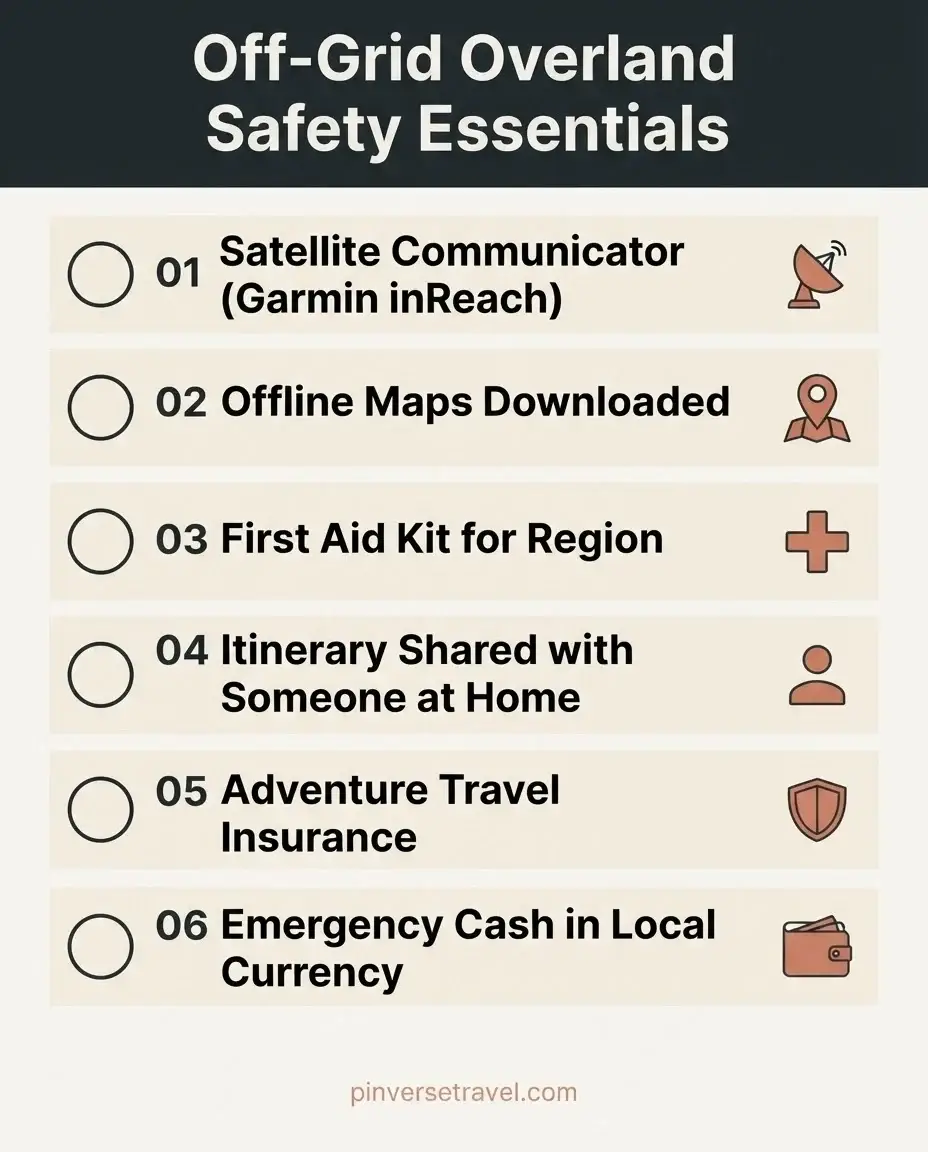
The solo traveler’s reality is this: remote doesn’t mean dangerous. It means requiring more preparation. The discomfort of not knowing exactly what’s next is part of what makes overland travel feel so alive.
The Real Budget: What This Actually Costs
One of the biggest myths about overland travel is that it requires a massive, pre-funded nest egg. That’s not true. According to research across dozens of long-distance overlanders, solo budget travelers can realistically target $1,000 to $1,500 USD per month in lower-cost regions like Central Asia, East Africa, and most of South America. The more vehicle-based or tour-dependent you go, costs rise toward $2,000 to $2,500 per month.
The big expenses are not what most people expect. Visas can add up quickly across multi-country routes: budget $50 to $150 per border crossing depending on your nationality and the countries involved. Transportation on local buses and trains is almost always far cheaper than you expect. Accommodation in hostels, guesthouses, or camping costs $5 to $20 a night across most of the regions mentioned above.

The one place where most first-time overlanders underestimate costs is the preparation phase: good gear, a solid travel insurance policy that covers remote and adventure travel, and the satellite communicator. These are upfront costs that protect everything that follows. Don’t skip them to save money.
Choosing Your First Overland Route
If you’ve never done anything like this before, the Silk Road through Uzbekistan and Kyrgyzstan is, in my view, the most approachable starting point for a solo traveler. It offers genuine remoteness and cultural depth without the logistical intensity of the full Trans-Siberian or the scale of the Pan-American. Kyrgyzstan in particular is increasingly recognized as one of the most welcoming countries for independent travelers: visa-free for most nationalities, equipped with a growing network of community-based guesthouses (yurt stays are common), and home to landscapes that are genuinely hard to believe are real.
For North American travelers who want to start without flying, the Pan-American Highway’s section from the American Southwest through Mexico and down to Guatemala is an excellent first overland experience. It’s manageable in sections, does not require extensive visa preparation, and gives you a feel for what overland travel demands before you scale up.
The best tool for finding established routes once you’ve chosen your region is Overland Trail Guides, which maintains thousands of miles of documented routes across the US, Canada, and Mexico for those starting closer to home.
What I’d encourage you to resist is the idea that your first route needs to be the biggest, most extreme version of this. Start with a section. Do three weeks in Kyrgyzstan. Do a month in Colombia and Ecuador. Take the Trans-Mongolian to Ulaanbaatar and spend two weeks there before flying home. Every good long overland adventure started with someone choosing to go a little farther than felt entirely comfortable.
The Part No One Tells You About
Somewhere in the middle of a long overland trip, something shifts. It’s hard to explain precisely, but anyone who has done it knows what I mean. The first few days are exciting. The next few are disorienting. Then comes a period of doubt, usually somewhere around week two or three, where the comfort of your regular life feels very appealing. Keep going. That period is the hinge point, and what’s on the other side of it is what makes the whole trip worth it.
Outside Online’s piece on lessons from a three-month overland journey puts this well: the most valuable lessons from overland travel are almost never the ones you planned for. They’re the mechanical breakdowns, the wrong bus, the host family who invited you for dinner and completely reframed what you thought you understood about somewhere. The gaps in the plan are where the real trip lives.
Solo travel taught me this when I was backpacking across Europe before I ever called myself a traveler. The train I missed, the city I stayed in two extra days because something felt right, the stranger who became a temporary travel companion for one perfect afternoon. None of that was on my itinerary. All of it was the point.
Off-grid overland travel amplifies this. You are less in control of what happens, which means more of it actually surprises you. And in a world where almost everything can be previewed and pre-experienced online, being genuinely surprised by a place is one of the rarest and most valuable things travel can give you.

Before You Book Anything
A few practical things to do before you finalize anything:
Research your passport’s visa situation thoroughly for every country on your chosen route. This can genuinely shape your itinerary. Some routes that look simple on a map require weeks of advance visa applications for certain nationalities.
Get travel insurance that specifically covers overland and adventure travel in remote areas, including emergency medical evacuation. Standard travel insurance policies often exclude the situations that overland travelers actually face.
Download your maps offline before you need them. Load your satellite communicator with your planned route and test the SOS function before you go.
Then book the first ticket. Not the whole trip. Just the first leg. The rest has a way of planning itself once you’re moving.
The world is wider than your usual radius. An overland route across Central Asia, down a continent, or along the world’s longest road will show you just how wide. You don’t need to do it perfectly. You just need to start.