When you close your eyes and picture Greece, what do you see? You probably see white houses with blue roofs. You see perfectly clear water. And if you have looked online lately, you probably also see a massive price tag.
Before I became a full-time traveler, I worked as a sightseeing guide in New York City. I spent my days watching tourists pay crazy prices for bad food just because they were standing in a famous spot. People would spend their whole travel budget in three days because they did not know any better. Later, when I left my strict office job to see the world, I worked as a waitress to save up cash. I had to make every single dollar stretch.
I dreamed of Greece for a long time. But I was scared. I thought I did not have enough money. I thought Greece was only for rich people on honeymoons or celebrities on big yachts. I thought solo backpackers like me had no place there.
I was completely wrong.
Once I actually bought the ticket and went, I realized something amazing. Greece is actually one of the cheapest countries in Europe if you know what to do. You do not have to spend a fortune to see the real culture. You just have to change where you look.
If you are tired of waiting for the perfect time to travel, and you want to stop letting money hold you back, you are in the right place. Figuring out how to explore Greece on a budget is easy once you learn the rules of the game. I am going to walk you through exactly how to plan your trip, where to sleep, what to eat, and how to get around without emptying your bank account.
The Truth About Greece and Your Money
Most people think Greece is expensive because they only look at two places: Mykonos and Santorini.
These two islands are famous. They are in all the movies. They are all over social media. Because they are so popular, the prices there have gone sky-high. A simple cup of coffee in Mykonos might cost you eight or nine euros. A basic hotel room can easily cost hundreds of dollars a night. If you only look at these famous spots, you will think you cannot afford the trip.
But Greece is huge. It has thousands of islands. It has a massive mainland.
If you take a ferry just one hour away from the famous spots, the prices drop like a rock. Suddenly, that same cup of coffee costs two euros. A giant plate of food costs eight euros. A great room near the beach costs thirty-five euros.
The secret to keeping your money safe is simple: you must go where the regular Greek people go. When you eat where the locals eat and sleep in the quieter towns, your daily costs shrink. You also get a much better, more authentic experience. You get to talk to real families, not just stressed-out hotel workers.
Step 1: Picking the Right Time to Go
When you go to Greece matters just as much as where you go. If you want to know how to explore Greece on a budget, you have to look closely at the calendar.
The Problem with Summer
July and August are the high season. This is when all of Europe goes on summer vacation. The islands get packed with people. The ferries sell out. The hotel owners double or triple their prices because they know people will pay it. The sun is also blazing hot, making it hard to walk around the ancient ruins. If you want to save money, try your best to avoid July and August.
The Magic of the Shoulder Season
The absolute best time to go is what we call the “shoulder season.” This means May, June, September, and October.
During these months, the weather is still beautiful. The sea is warm enough for swimming, especially in September. But the massive crowds are gone. Because there are fewer tourists, hotel prices drop by thirty to fifty percent.

You do not have to book your ferries months ahead of time. You can walk into a local taverna and find a seat right away.
What About Winter?
You can visit Greece in the winter, from November to March. It will be very cheap. However, you need to know that many of the islands shut down completely. The ferry schedules get cut way back. The beach hotels close their doors to fix things up for the next year. If you go in the winter, stick to the mainland and the big cities like Athens or Thessaloniki. They stay open all year and have a very cool, cozy local vibe.
Step 2: Planning Your Route Like a Local
If you try to see twenty islands in ten days, you will spend all your money on ferry tickets. Budget travel is slow travel. Pick a few places and stay longer.
The Famous Islands (And What to Do About Them)
If it is your lifelong dream to see the sunset in Santorini, you should go. Do not let me stop you. But do not stay there for a week. Stay for one or two nights. Take your pictures, walk the cliffs, and then get on a boat to a cheaper island. Treat the famous islands like quick stops, not your main base.
The Hidden Budget Islands
Instead of the famous spots, look for the islands where Greek families go for their holidays.
Naxos: This is the largest island in the Cyclades group. It is green, beautiful, and much cheaper than its neighbors. Naxos grows its own food, meaning the restaurants do not have to pay high shipping costs for ingredients. You can eat amazing meals here for very little money. There are huge, long beaches where you do not have to pay to sit on the sand.
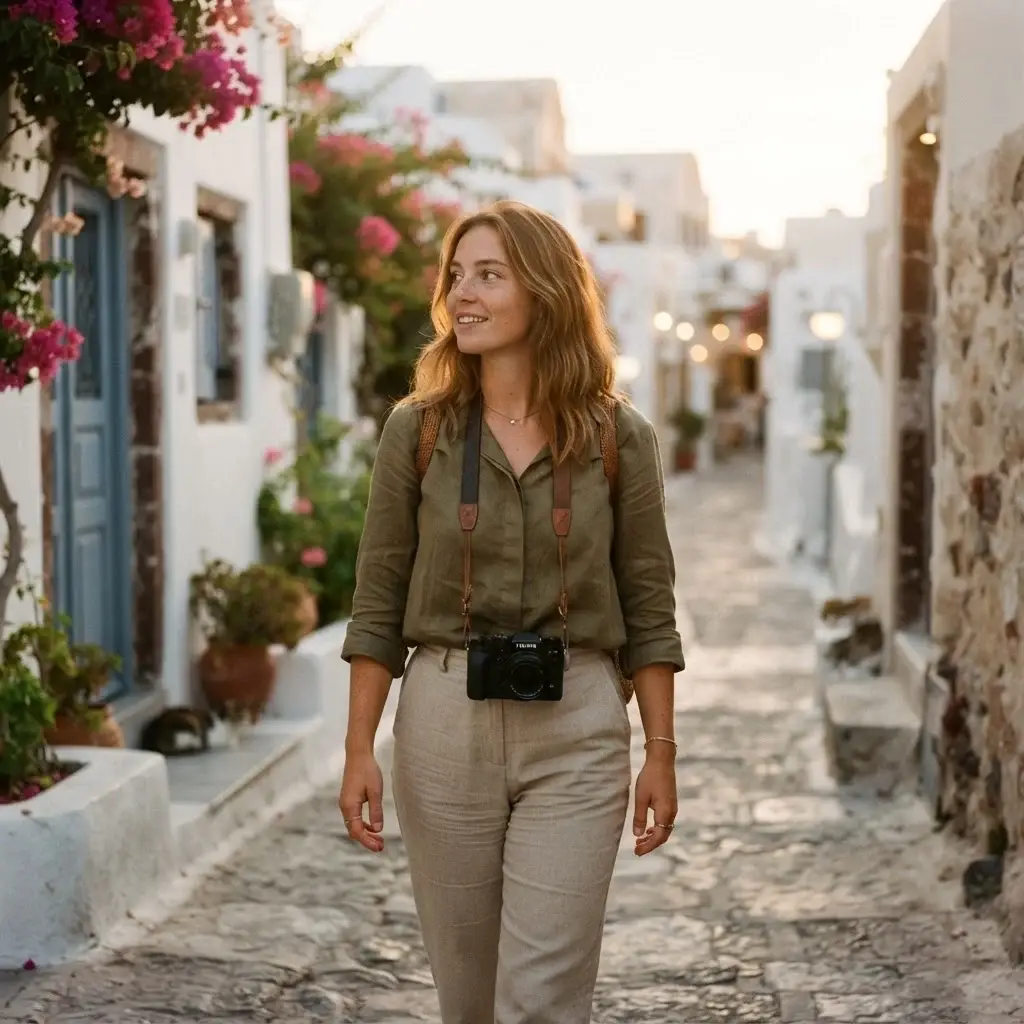
Paros: This is right next to Naxos. It has the exact same white and blue streets as Mykonos, but it costs half the price. You can wander through the tiny alleys, eat fresh fish, and take the local bus to beautiful little fishing villages.
Crete: Crete is not just an island; it feels like its own small country. Because it is so big, the prices stay low. You can hike deep gorges, visit ancient palaces, and find hidden beaches. You could easily spend a whole month in Crete and never get bored.
Do Not Ignore the Mainland
Many people fly into Athens and immediately leave for the islands. This is a huge mistake. The mainland of Greece is deeply beautiful, very cheap, and mostly ignored by standard tourists.
You can rent a cheap car or take the local bus into the Peloponnese region. Here, you will find old castles, olive farms, and completely empty beaches. If you travel further north, you will find mountains. You can spend a full day hiking around the floating monasteries of Meteora, and reading up on the official Meteora details on the UNESCO World Heritage site will show you exactly why this place is so fiercely protected. The mainland offers a deep, rich culture that feels completely untouched by the shiny tourist crowds.
Step 3: Mastering Greek Transport Without Going Broke
Getting around Greece can eat up your budget fast if you do not know the rules. You have to learn how the boats and buses work.
The Ferry System Explained
Greece has hundreds of ferries running between the islands. But not all ferries are the same.
There are fast ferries (like Seajets) and slow ferries (like Blue Star Ferries). The fast ferries look like giant speedboats. They get you there in half the time, but the tickets cost almost double.
If you are on a budget, always pick the slow, big ferries.
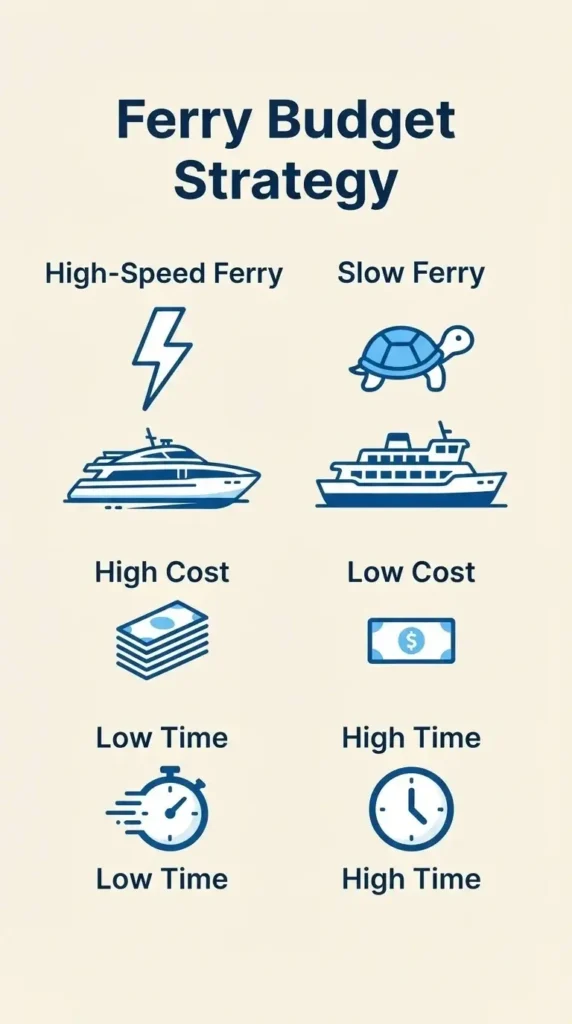
They are massive ships. You can walk around, sit outside on the deck, and watch the ocean go by. It feels like a mini-cruise. The tickets are very cheap. You just buy an “economy” ticket, which means you do not get an assigned seat. You just walk on and find a plastic chair on the deck. Bring a jacket, because the wind gets cold, and bring your own snacks so you do not have to buy expensive boat food.
Buses on the Mainland (KTEL)
If you are traveling on the mainland or moving around a big island, you will use the local bus system. In Greece, this system is called KTEL.
KTEL buses are not old, broken city buses. They are big, nice, clean coach buses with air conditioning. They go almost everywhere. You can go from Athens to a tiny mountain village for just a few euros. The bus stations can seem a little chaotic at first. Do not panic. Just walk up to the ticket window, say the name of the town you want, and hand them your cash. The drivers are usually very helpful if you ask politely.
Walking and Scooters
Once you are on an island or in a town, your own two feet are your best tool. Walking is always free. It is also the best way to find hidden spots.
If you want to go further, you can rent a scooter or an ATV. A scooter might cost you twenty to twenty-five euros a day. Only rent a scooter if you actually know how to ride one. Greek roads can be curvy and steep. If you feel nervous, just stick to the local bus. The bus on the islands usually costs less than two euros a ride.
Step 4: Where to Sleep for Cheap
When I left my office job, I had to learn how to find good beds without paying hotel prices. Greece actually makes this very easy.
The “Domatia” Secret
In Greece, you do not need to look for big hotels. Look for “Domatia.”
Domatia means “rooms” in Greek. These are small rooms rented out by local families. It is basically the original version of Airbnb. Families build an extra room or two onto their house and rent them to travelers.
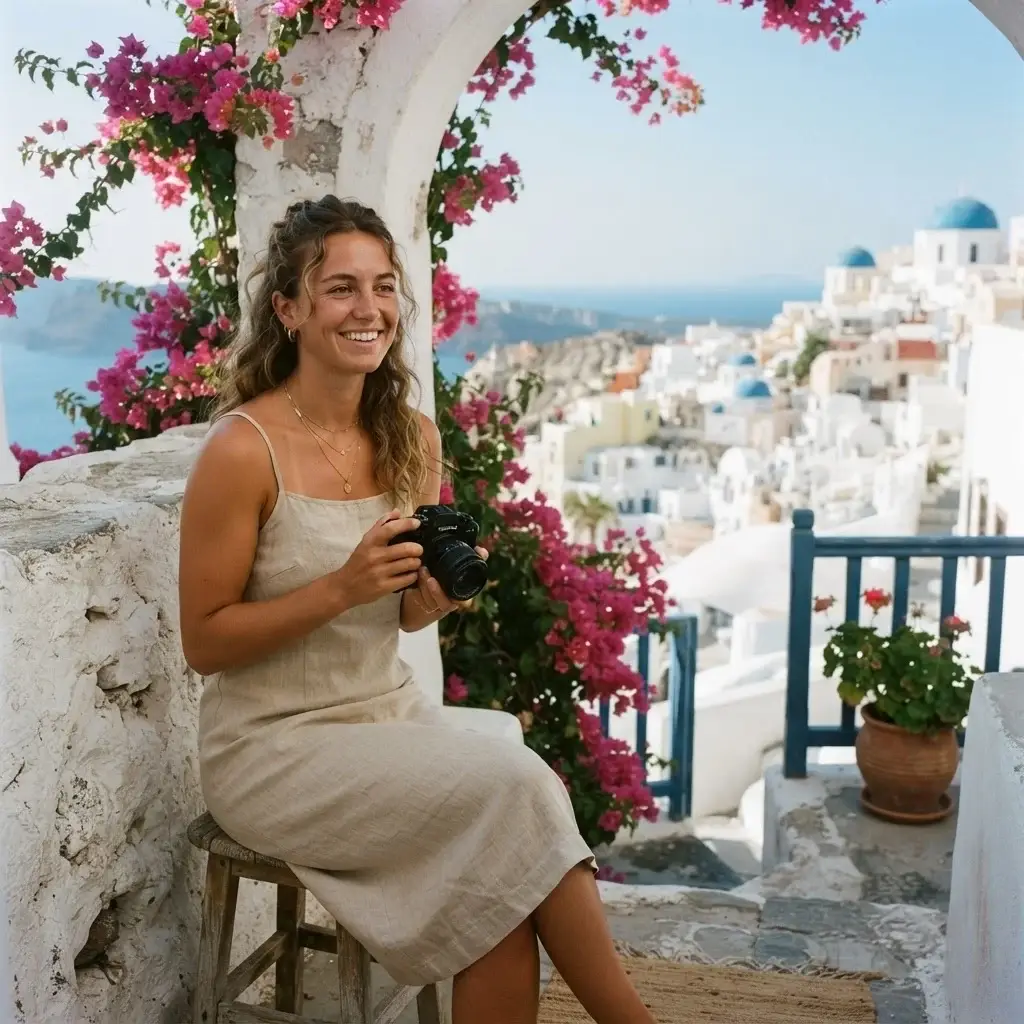
These rooms are usually very simple. You get a clean bed, a small bathroom, and maybe a tiny fridge. But they are incredibly cheap, usually between thirty and fifty euros a night. The best part is the hosts. Many times, the grandma of the house will leave fresh fruit or a slice of cake outside your door. You can find Domatia on standard booking websites, or sometimes you can just walk off the ferry and see locals holding signs that say “Rooms.” If you are feeling brave, talk to them and negotiate a price right there at the port.
Hostels
Greece has great hostels, especially in Athens and the bigger islands. A hostel bed usually costs between fifteen and twenty-five euros a night.
Hostels are amazing if you are traveling solo. They give you a built-in community. You can cook your own meals in the shared kitchen to save money. You can meet other travelers and split the cost of a rental car or a taxi. Look for hostels that have good reviews for cleanliness and security.
What to Look For in a Room
When booking cheap rooms, always check if they have air conditioning. Greek summers are hot, and a cheap room is not worth it if you cannot sleep because you are sweating. Also, look for rooms that have a small kitchenette. If you can boil water and keep food cold, you can make your own breakfast and save even more money.
Step 5: Eating Like a Greek on a Dime
Food is one of the best parts of travel. In some countries, eating out is a luxury. In Greece, you can eat amazing, fresh food every single day on a very tight budget. You just have to eat like a local.
The Power of the Bakery (Fournos)
Every town in Greece, no matter how small, has a local bakery. It is called a “Fournos.”
The bakery is the budget traveler’s best friend. In the morning, you can walk in and smell the fresh bread. You can buy a giant piece of cheese pie (tiropita) or spinach pie (spanakopita) for about two euros.
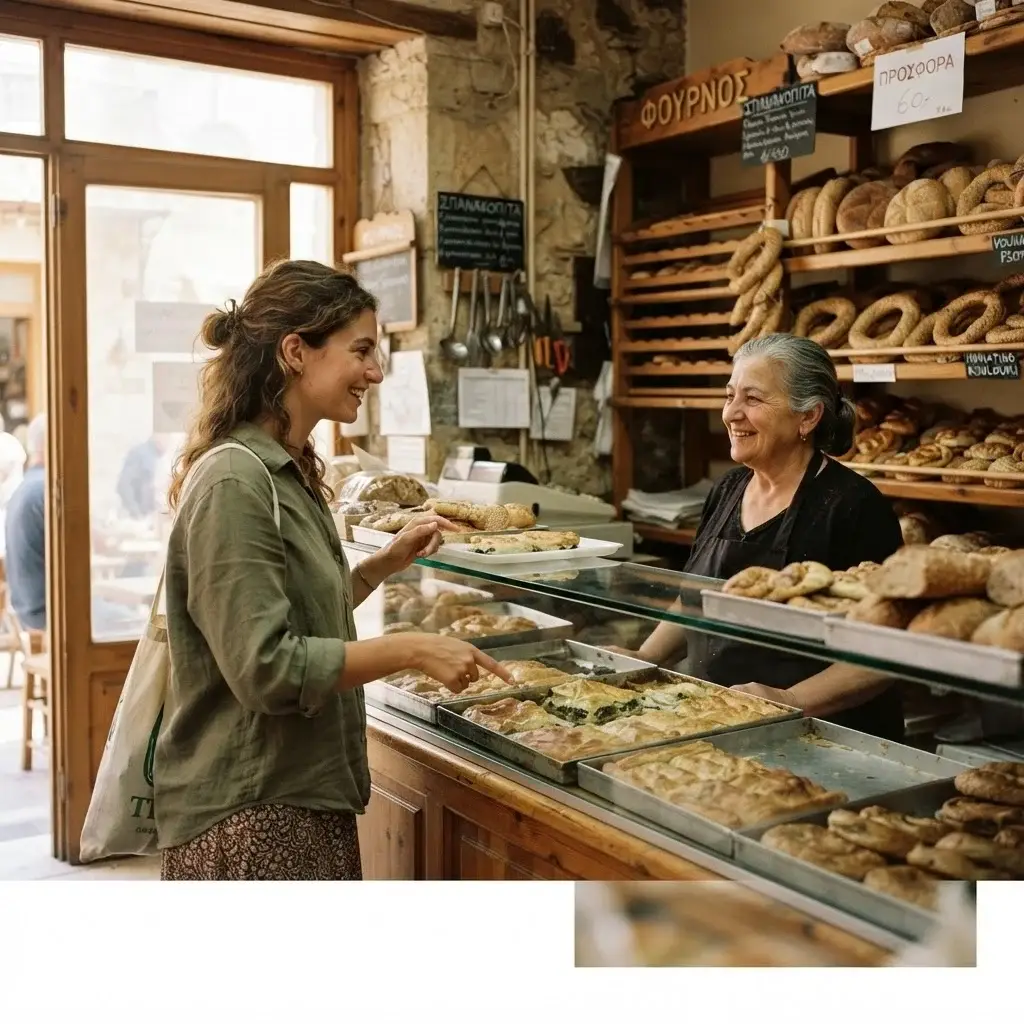
This pie is so big and heavy it will keep you full until the afternoon. You can also buy sweet breads, cookies, and cheap coffee. Skipping the hotel breakfast and going to the bakery will save you a ton of cash over a two-week trip.
Street Food: Souvlaki and Gyros
When you are hungry at lunch or late at night, look for a souvlaki shop.
A gyro is meat cooked on a spinning stick, sliced off, and stuffed into a warm, soft pita bread. They add tomatoes, onions, french fries, and a huge scoop of tzatziki sauce (yogurt and garlic). It is warm, messy, and absolutely delicious.
The best part? A gyro usually costs around three or four euros. You can buy two of them, sit on a bench looking at the sea, and have a feast for under ten dollars. Souvlaki is similar, but it is chunks of meat cooked on a tiny wooden stick. You can buy a stick of pork or chicken for two euros. This is fast food, but it is real, fresh food.
Taverna Rules
For dinner, you will want to sit down at a traditional Greek restaurant, called a taverna.
To save money at a taverna, follow the local rules. First, never sit at a restaurant that has giant pictures of the food on the menu outside. Never sit at a place where a guy is standing on the street begging you to come in. Walk away from the main tourist squares. Find a taverna down a quiet side alley where you hear people speaking Greek.
When you order, do not buy a main dish for just yourself. Greek food is meant to be shared. Order three or four cheap starters (meze) for the table. Order a giant Greek salad, some fried zucchini, some tzatziki, and maybe some meatballs. Put it all in the middle of the table and share.
Also, do not buy expensive bottled wine. Ask the waiter for the “house wine.” They will bring you a simple metal jug of local wine. Half a liter usually costs four or five euros, and it tastes great.
While you are stuffing your face with fresh tomatoes and feta cheese, it is good to know that the tap water in mainland cities is perfectly fine, though you can always double-check the health and safety tips for Greece from the CDC if you are heading to smaller, remote islands. Most tavernas will bring you a big jug of free tap water the moment you sit down. Do not pay for bottled water if you do not have to.
Step 6: Free and Cheap Things to Do
You do not need to spend money on expensive tours to have fun in Greece. The country itself is an open-air museum.
Ancient Ruins on a Budget
If you go to Athens, you have to see the Acropolis. It is famous for a reason. But buying tickets to every single ruin site in the city will add up fast.
Before you get overwhelmed by the sheer size of the capital, you can map out your days using the Athens city overview on Lonely Planet to find free walking tours and cheap neighborhoods. When you do buy tickets, ask the ticket window for the “combination ticket.” For a flat fee (around thirty euros), this ticket gets you into the Acropolis and several other major ancient sites over five days. It is much cheaper than buying them one by one.
Also, remember that in Greece, you can just walk down the street and see history. Many of the subway stations in Athens have glass walls showing ancient ruins they dug up while building the trains. You can look at 2,000-year-old pots for free just by riding the metro.
Hiking and Nature
Greece has incredible mountains and trails, and hiking is completely free.
On islands like Amorgos or Naxos, you can follow ancient donkey paths that connect the tiny villages. You walk past old stone walls, wild goats, and tiny white churches built into the rocks.
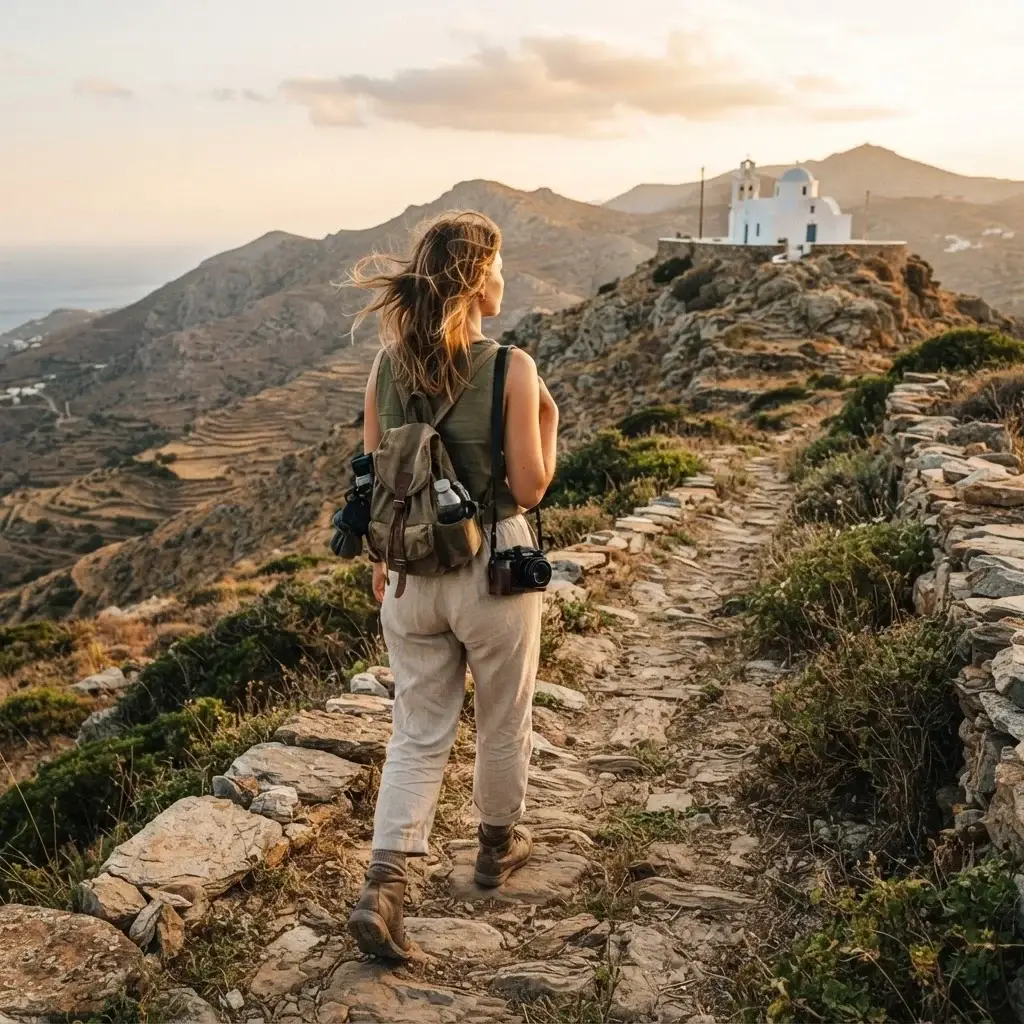
Bring plenty of water and wear good shoes. You will get to see parts of the islands that the cruise ship tourists never see.
Beaches and Sunbeds
In Greece, the sea belongs to everyone. All beaches are public by law.
Many beaches have business owners who set up fancy wooden umbrellas and padded chairs. They might try to charge you twenty or thirty euros just to sit there. You do not have to pay this. Just walk past them. Go to the empty space on the sand, lay down your own towel, and swim in the exact same beautiful blue water for free.
Step 7: Packing for a Budget
What you put in your backpack before you leave home will change how much money you spend in Greece. When I travel, my bag is small, but it is packed with tools that save me cash.
The Reusable Water Bottle
As we talked about, the tap water in Athens and many mainland spots is safe. Bring a good metal water bottle. You can fill it up at the public fountains. Buying plastic water bottles every day costs money and ruins the environment.
The Sink Washing Kit
If you travel for more than a week, you will need clean clothes. Do not pay hotel laundry fees. Bring a small bar of laundry soap and a flexible travel clothesline. You can wash your socks and t-shirts in the bathroom sink, hang them on your balcony, and the hot Greek sun will dry them in two hours.
Good Walking Shoes
This is critical. The streets in Greece are old. They are made of smooth marble, rough cobblestones, and dirt. If you wear cheap, bad shoes, your feet will hurt. When your feet hurt, you will get tired. When you get tired, you will give up and pay for expensive taxis instead of walking. Bring comfortable, supportive shoes. Your budget will thank you.
Step 8: Staying Safe and Prepared
When you are trying to figure out how to explore Greece on a budget, you might feel a little nervous. You might worry about things going wrong.
Solo Travel Confidence
Greece is incredibly safe for solo travelers. The culture is very social and welcoming. Families are always out late at night eating together. Kids play in the town squares until midnight. The biggest danger you will face is usually getting too much sun or drinking too much strong coffee.
Keep your money safe like you would in any city. Wear a cross-body bag. Do not leave your phone sitting on a cafe table. Use basic street smarts.
Paperwork and Peace of Mind
I always tell solo travelers that having backup plans gives you the guts to explore freely, which is why reading through the travel safety guides and alerts from the US Department of State is a smart move before you pack. Knowing your visa rules and having copies of your passport just makes you feel stronger.
You also want to make sure a twisted ankle on a hike does not empty your bank account, so looking into travel insurance options and safety advice from World Nomads is something I highly recommend. When you know you are covered for emergencies, you stop worrying and start actually enjoying your trip.
A Daily Budget Example
To prove to you that this is possible, here is what a normal, great day in a quieter Greek island (like Naxos or Crete) might cost you in the shoulder season:
- Bed: A private room in a basic Domatia split with a friend, or a hostel bed solo: 25 Euros.
- Breakfast: A spinach pie and a coffee from the local bakery: 4 Euros.
- Transport: A round-trip local bus ticket to a beautiful beach: 4 Euros.
- Activity: Lying on your towel, swimming, and exploring the old town: Free.
- Lunch: Two big pork gyros from a street shop: 7 Euros.
- Dinner: Sharing a big Greek salad, some fried cheese, and house wine at a local taverna: 15 Euros.
That is a total of 55 Euros a day.
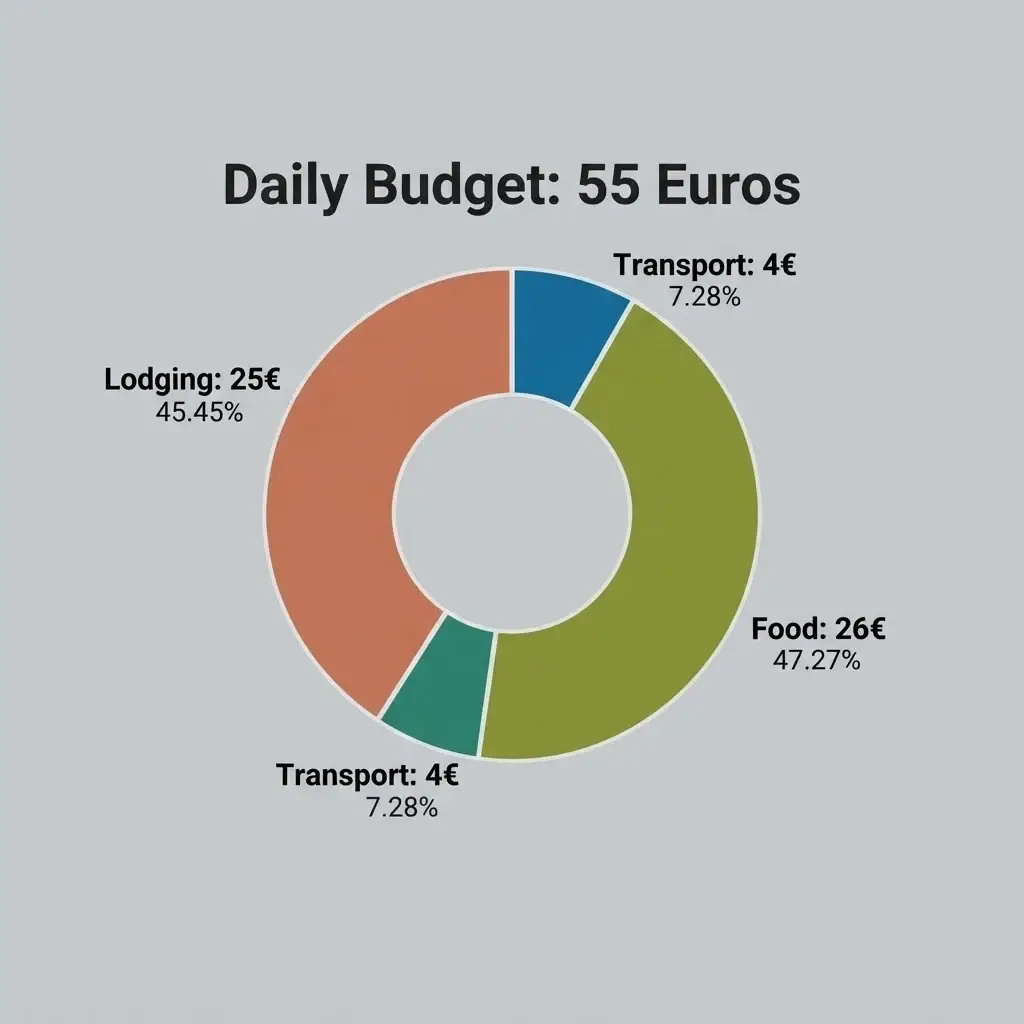
For around sixty American dollars, you get to sleep in a beautiful town, eat three amazing meals, and swim in the Mediterranean Sea. You do not have to suffer to travel cheap. You just have to travel smart.
Making the Leap
I remember exactly how it felt sitting at my office desk. I stared at the computer screen, looking at pictures of the Greek islands, thinking I would never get there. I let the fear of money hold me back for years.
I do not want you to make that same mistake.
The world is not just for the wealthy. Travel is about putting your feet on new ground. It is about trying a food you cannot pronounce. It is about getting lost in a tiny white alleyway and finding a beautiful old church. None of those things cost a fortune.
You do not need a luxury resort to find yourself. You do not need a private yacht to see the beauty of the sea. All you need is a little bit of planning, a sturdy pair of walking shoes, and the courage to finally buy the ticket.
Greece is waiting for you. It is ready to challenge you, feed you, and show you exactly what you are capable of. Stop waiting for the perfect time. Stop waiting for your bank account to look a certain way. Pack your bag, step out the door, and go see the world for yourself.