
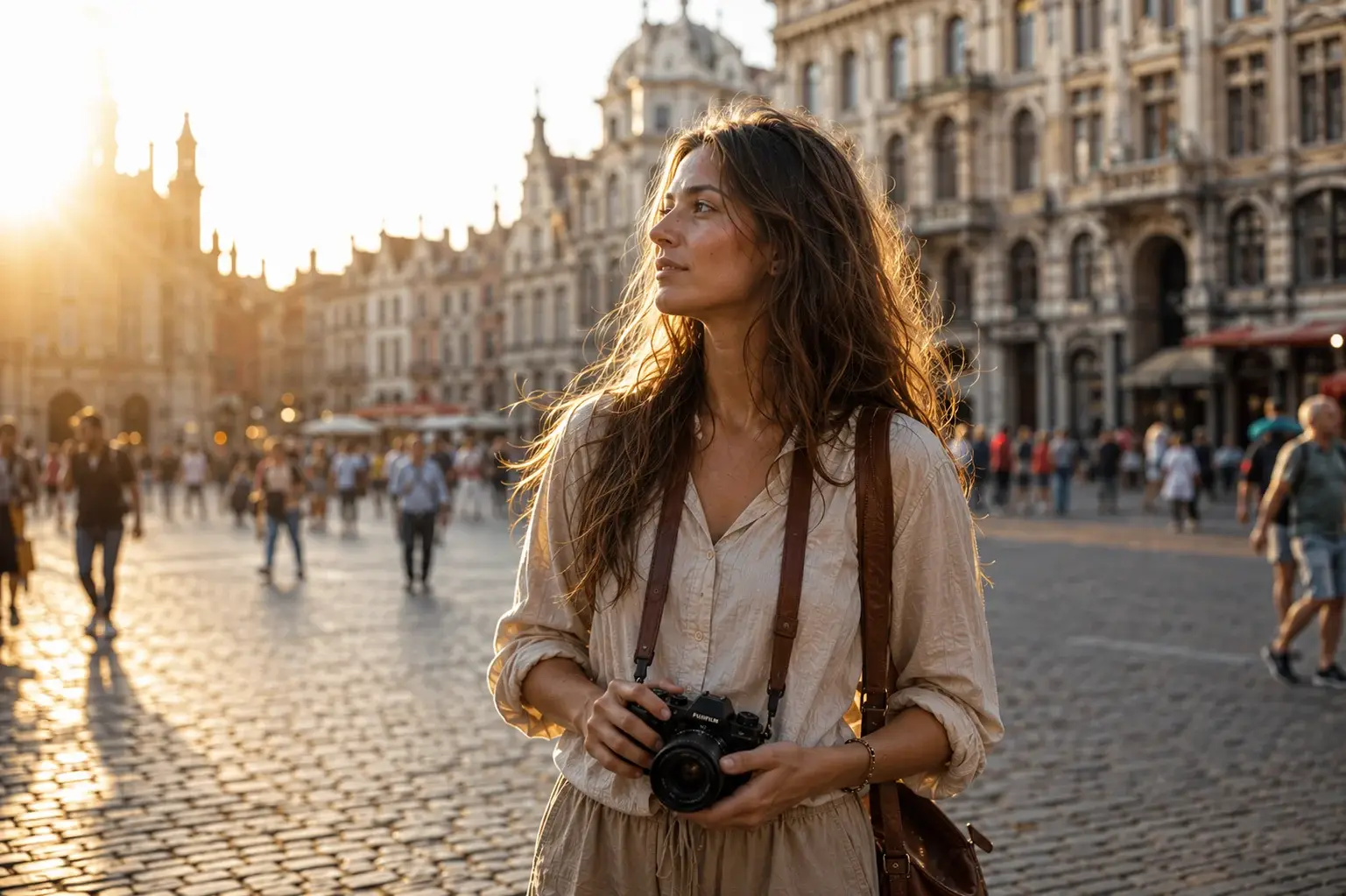
I remember the exact moment I realized my life was shrinking. I was sitting in my grey cubicle in New York, staring at a spreadsheet, counting down the days until my next two-week vacation. I had spent years thinking that travel required a massive chunk of time—weeks, months, or years—to be “worth it.” I was wrong.
When I left that office job, I realized that the most transformative experiences aren’t about the length of your stay, but the depth of your attention. You don’t need a month to understand a city. You just need 48 hours and a willingness to be present. If you have a weekend to spare, you have enough time to change your perspective. Let’s talk about how to do it without turning your trip into a frantic race.
The Mental Shift: Why 48 Hours is Enough
Most people fail to enjoy short trips because they try to cram a week’s worth of activities into two days. They walk fast, skip lunch to see one more statue, and spend their nights exhausted. That’s the tourist trap. As a solo traveler, my goal is different. I’m not there to check items off a list; I’m there to witness the heartbeat of a new place.
When you only have 48 hours, you have to be intentional. You have to edit your desires. Before you even pack your bag, you need to decide what matters to you. Is it the food? The history? The street art? You can’t do everything, and that is a relief. Once you let go of the pressure to see the “must-see” sites, you finally have the space to actually be in a city.
Step One: The Pre-Trip Foundation
Safety and organization are the best friends of a solo traveler. If you are worried about where you are going or how to get around, you won’t be able to relax. I always spend a little time checking the official safety ratings and entry requirements for my destination to make sure I understand the local environment before I land. It takes the guesswork out of arrival and lets me focus on the scenery.
Don’t just look at a map; look at the neighborhoods. I usually pick one district as my “home base” for the 48 hours. If you stay in a neighborhood that has a mix of cafes, parks, and local shops, you don’t have to spend your entire trip on a train or a bus. You can walk out your door and be in the middle of the action.
Master the Art of the “Slow Start”
My best mornings start with a lack of plans. On day one, I pick a neighborhood, walk to a local bakery, and just sit. I watch how people order their coffee. Do they stand at the bar? Do they sit for an hour? Do they read the paper? This is the secret to cultural immersion.
If you are heading to a place you aren’t familiar with, I suggest reading up on the local customs and etiquette first. For instance, if I’m planning a trip to Southeast Asia, I often look at the official destination guides and cultural etiquette to make sure I am dressed appropriately for temples and that I know the social norms. It helps me blend in, which is the best way to feel safe and respected as a solo woman.
How to Navigate Without the Stress
Transportation is where most 48-hour trips fall apart. You don’t want to spend four hours of your trip waiting for a bus. In many cities, I rely on ride-hailing apps to save time. It’s important to understand how they work in your specific destination; for example, learning how Grab works for travelers can be a massive game-changer in cities where you might otherwise get lost trying to find a local taxi or navigate a confusing rail system.
When you get to a new city, don’t just look at the big, famous sites. If you are a history lover, find one UNESCO-listed site or area that truly interests you, and spend a few hours there. But—and this is a big but—don’t spend the whole time taking photos of the monument. Sit on a bench nearby. Talk to a local vendor. Ask them what they love about their city. That interaction is worth more than a dozen selfies.
Eating Like a Local (Without the Hype)
One of the reasons I love slow travel is that it gives me time to eat properly. When you are rushing, you end up eating overpriced, pre-packaged food near the tourist attractions. When you stay in one area, you find the real spots.
Look for the places that don’t have menus in five languages. Look for the places where the line of people is mostly locals. Before I travel, I sometimes check the health and food safety advisories to see if there are specific things I should avoid in a certain region, but generally, I trust my gut and go where the people are. If a small stall has a queue of residents waiting for lunch, it’s safe, and it’s going to be delicious.
Managing Solo Travel Nerves
It is perfectly normal to feel a bit nervous when you arrive in a new city alone. When I was backpacking through Europe, I had moments where I just wanted to go back to my hostel and hide. But the beauty of a 48-hour trip is that it is a small, manageable challenge. If you get overwhelmed, remind yourself that you are only there for two days. You can do anything for 48 hours.
I often tell my readers to look into guidance on traveler safety before they go, not to scare themselves, but to empower themselves. When you know you have a plan for emergencies, you feel much more confident exploring the streets. Confidence isn’t the absence of fear; it’s the ability to take action despite it.
The 48-Hour Itinerary Framework
To keep you from wasting time, here is my personal structure for a productive, meaningful 48-hour trip:
- Arrival Day (Day 0): Land, drop bags at the hotel, find the nearest grocery store to buy water and snacks, and have a simple dinner in the neighborhood. Sleep early.
- Day 1 (The Exploration): Spend the morning in one specific historic neighborhood. Visit one primary site (like a museum or park). Lunch at a local spot. Afternoon spent wandering aimlessly—no phone, just walking. Dinner with a book.
- Day 2 (The Connection): Visit a local market in the morning to see the daily rhythm of life. Afternoon spent doing something “non-touristy”—perhaps visiting a library, a botanical garden, or just sitting in a busy plaza. Late lunch. Departure.
Why You Should Stop Waiting
I spent too many years waiting for the “perfect” time to travel. I thought I needed a big bonus at work, or a partner to come with me, or a month of leave. But the world doesn’t care about your perfect moment. It only rewards the people who show up.
Your 48-hour adventure is not “lesser than” a two-week trip. It is a concentrated dose of life. It’s a way to prove to yourself that you are capable of navigating the world on your own terms. It’s about building the muscle of independence.
Every time you land in a new place, map out your route, and find your way back to your hotel, you are getting stronger. You are learning that you don’t need a guide to tell you what is interesting. You are learning to trust your own curiosity. And that, my friend, is exactly what Pinverse Travel is all about.
Take the trip. Even if it’s just for two days. You will come back to your “real life” with a new perspective, a clearer head, and the knowledge that the world is much more accessible than you ever imagined. You have 48 hours to explore, to learn, and to grow. The city is waiting. Are you ready to step out?



