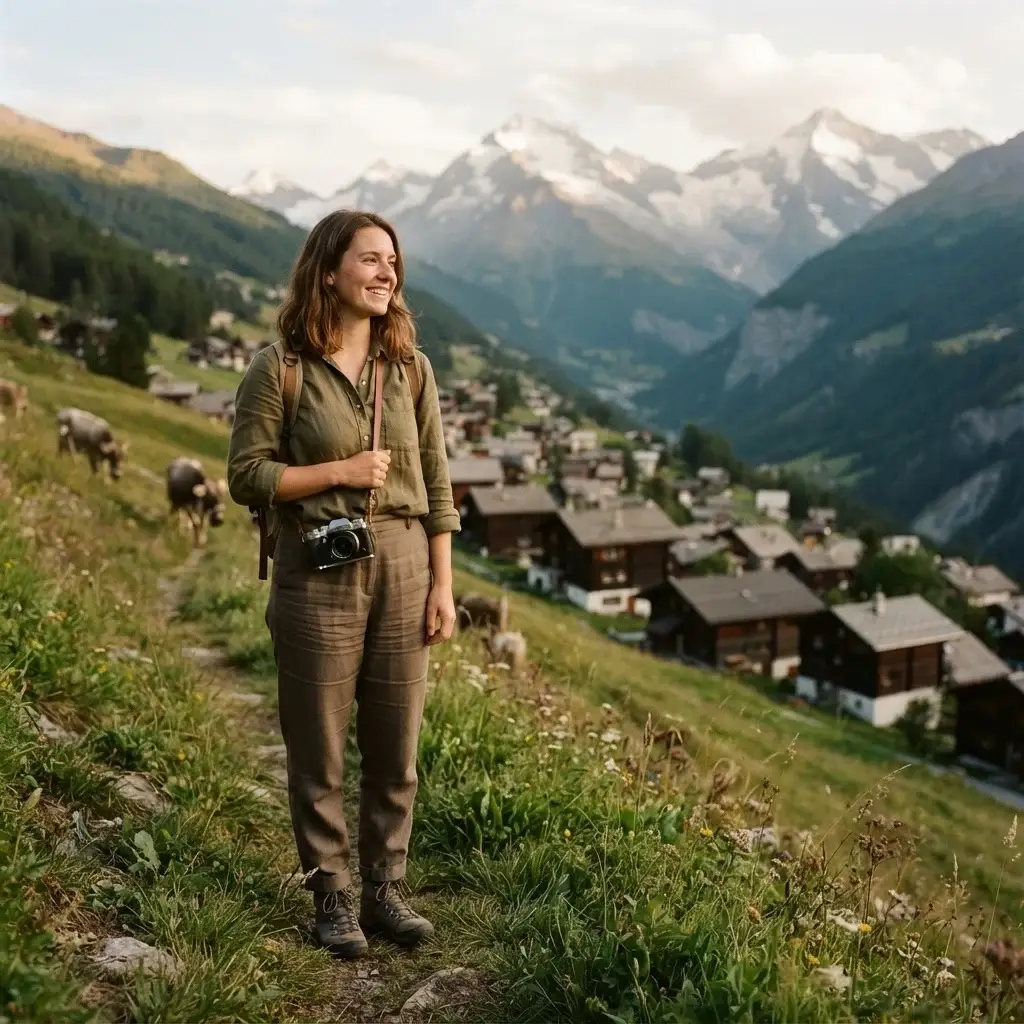
The first time most people picture the Alps, they picture a crowd. A cable car packed shoulder to shoulder, a viewing platform bristling with selfie sticks, a village square where every third shop sells the same fridge magnet. And here’s the honest thing nobody tells you: that version of the Alps is real, but it’s maybe five percent of the mountains. The other ninety-five percent is quiet.
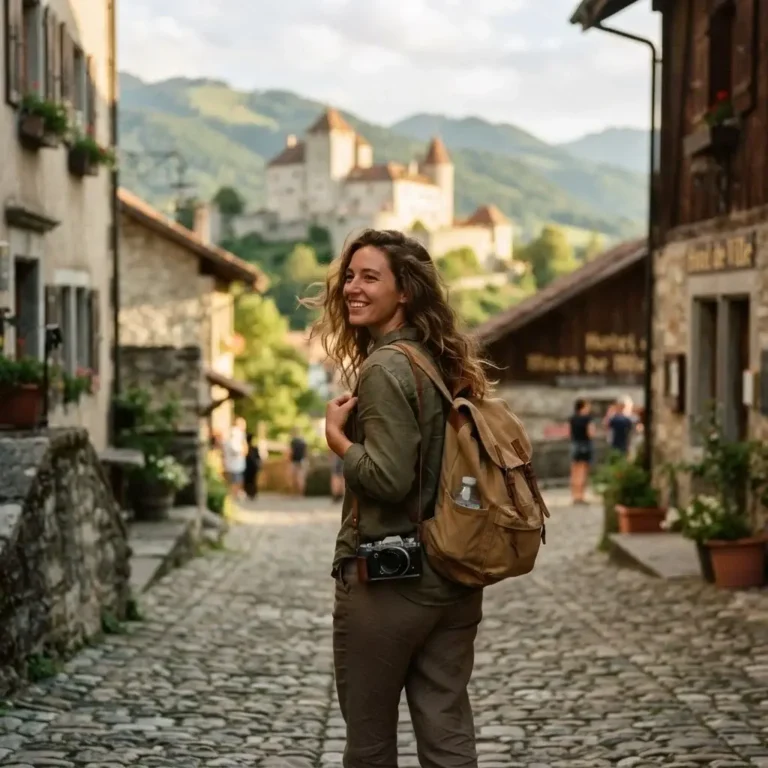
It’s a valley where the loudest sound is cowbells, a family dairy that’s been making the same cheese for two hundred years, a train so small it feels like a toy climbing into the clouds.
That quiet Alps is the one I want to help you find. And you can find it solo, without a car, without being a mountaineer, and without spending a fortune. I’ve spent years learning how to travel slowly through places most itineraries skip, from backpacking across Europe alone to hiking in China, and the lesson is always the same. The good stuff lives one valley over from the famous stuff. Let me show you how to get there.
Why “Beyond the Tourist Spots” Is a Skill, Not Luck
Going beyond the crowds isn’t about finding some secret nobody knows. It’s about making a few deliberate choices that most travelers don’t. You pick a side valley instead of the headline resort. You take the regional train two stops further than everyone else. You show up in June or late September instead of peak August. You stay two nights instead of racing through in an afternoon.
None of that requires courage you don’t already have. It requires a plan. When I left my office job years ago and started saving tip money in a shoebox to travel, I couldn’t afford the polished, guided version of anything. That “limitation” turned out to be the best travel teacher I ever had, because it forced me to learn how the local systems actually work. That’s the exact skill that unlocks the quiet Alps.
The Real Map: Four Countries, Four Different Quiet Alps
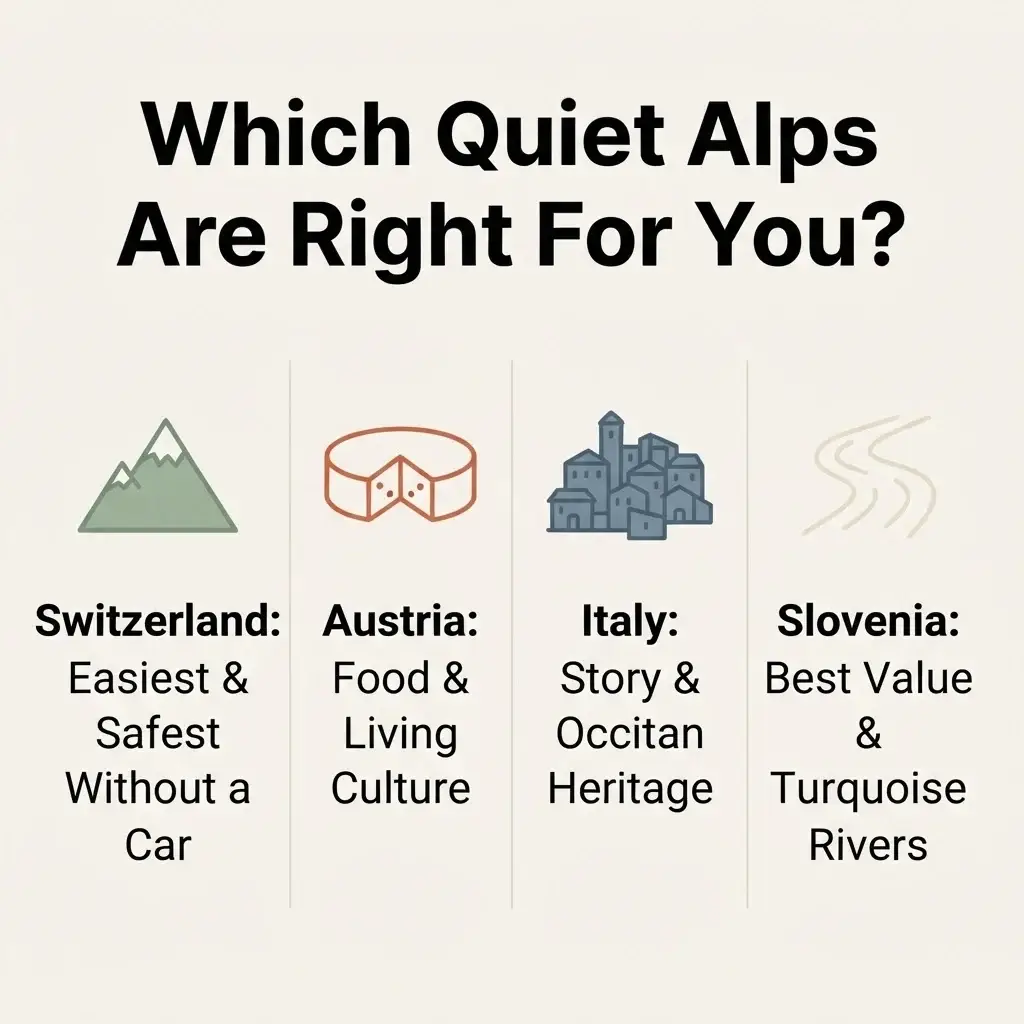
Most guides treat “the Alps” as if they mean Switzerland. But the range stretches across eight countries, and each one hides a completely different flavor of quiet. Here’s how I’d think about choosing, based on what kind of trip you actually want.
Switzerland’s Side Valleys: Quiet, Safe, and Astonishingly Easy Without a Car
If this is your first solo Alpine trip and safety and logistics are your biggest worry, start in the Swiss side valleys. Everyone piles into Zermatt and Interlaken. Almost nobody continues into the Val d’Anniviers, a Valais side valley of dark timber villages like Grimentz, St-Luc, and Zinal, with hundreds of kilometers of trails and a real lived-in feel.
The official valley tourism site at Val d’Anniviers lays out the villages, trails, and seasonal events clearly, and it’s the kind of place where you can hike all morning and pass more cows than people.
What makes Switzerland uniquely beginner-friendly for solo travel is that you genuinely do not need a car. The country’s yellow postbuses climb into valleys that feel impossibly remote, running on tidy schedules that connect straight to the trains. I always tell nervous first-timers to look at the PostBus network before writing off a village as “too hard to reach,” because nine times out of ten there’s a bus that goes right there, often timed to meet your train within minutes.
Austria’s Bregenzerwald: Where the Culture Is the Cheese
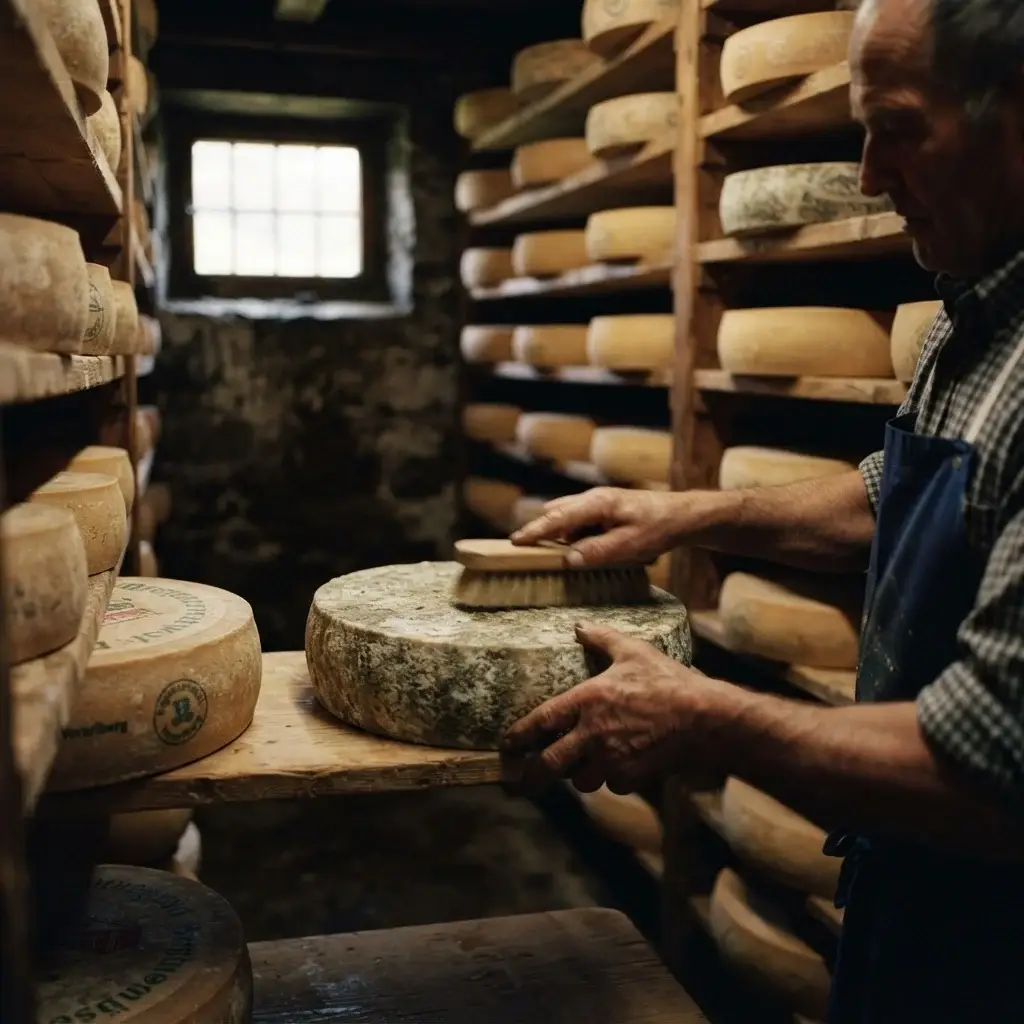
If you care more about food and living culture than dramatic peaks, go to the Bregenzerwald in Vorarlberg, western Austria. This is gentle, green, rolling Alpine country dotted with dairy farms, and the whole region is stitched together by a cheese route. You can walk or bus between farms, dairies, and inns that specialize in local cheese, following the Bregenzerwald Cheese Road as a loose, delicious itinerary. What to eat here is simple and unforgettable: Bergkäse (mountain cheese) aged in cellars, Käsknöpfle (the local cheese dumplings, Austria’s answer to mac and cheese), and fresh alp butter that ruins you for the supermarket kind forever.
Italy’s Occitan Valleys: The Alps That Speak a Language You’ve Never Heard
For travelers who love a place with a story, the Occitan Valleys of Piedmont in northwest Italy are a revelation. These southern Alpine valleys have their own language, Occitan, and a culture that feels closer to old Provence than to Rome. There’s a long-distance walking route called the Percorsi Occitani that threads through the valleys in stages, and the regional overview on Italy’s official tourism portal describes the mountain experiences of Piedmont well enough to start planning from. Eat here for the border-blur flavors: hearty polenta, mountain toma cheese, and the kind of long, unhurried lunch that reminds you why you slowed down in the first place.
Slovenia’s Soča Valley: The Julian Alps Without the Price Tag
If your budget is tight and you want turquoise rivers and jagged peaks without Swiss prices, look east to Slovenia’s Soča Valley, tucked into the Julian Alps around the town of Bovec. It sits inside Triglav National Park, Slovenia’s only national park and one of the oldest in Europe. The park’s official site at Triglav National Park is the place to check trail conditions and rules before you go, and the valley itself is a paradise for gentle riverside walks, wild swimming spots, and easy hikes that don’t demand technical skill. Slovenia is also, in my experience of researching solo destinations, one of the most relaxed and welcoming places in this whole region for a first solo trip.
How to Actually Get Around Without a Car
This is the question that stops most people, so let’s solve it plainly. The Alpine train and bus network is one of the wonders of European travel, and it reaches far more small villages than you’d guess.
In Switzerland, the core tool is the rail network plus those postbuses, and the pass most quiet-valley travelers consider is the Swiss Travel Pass. For 2026, the second-class price starts at CHF 254 for three days and rises to CHF 499 for fifteen days, covering trains, buses, and boats, plus discounts on many mountain cableways. Whether it’s worth it depends entirely on how much you’ll move around, and the clear breakdown at MySwissAlps helped me understand when a pass beats buying point-to-point tickets. My honest rule of thumb: if you’re doing slow travel and basing yourself in one valley for several nights, individual tickets often win. If you’re hopping regions, the pass earns its keep.
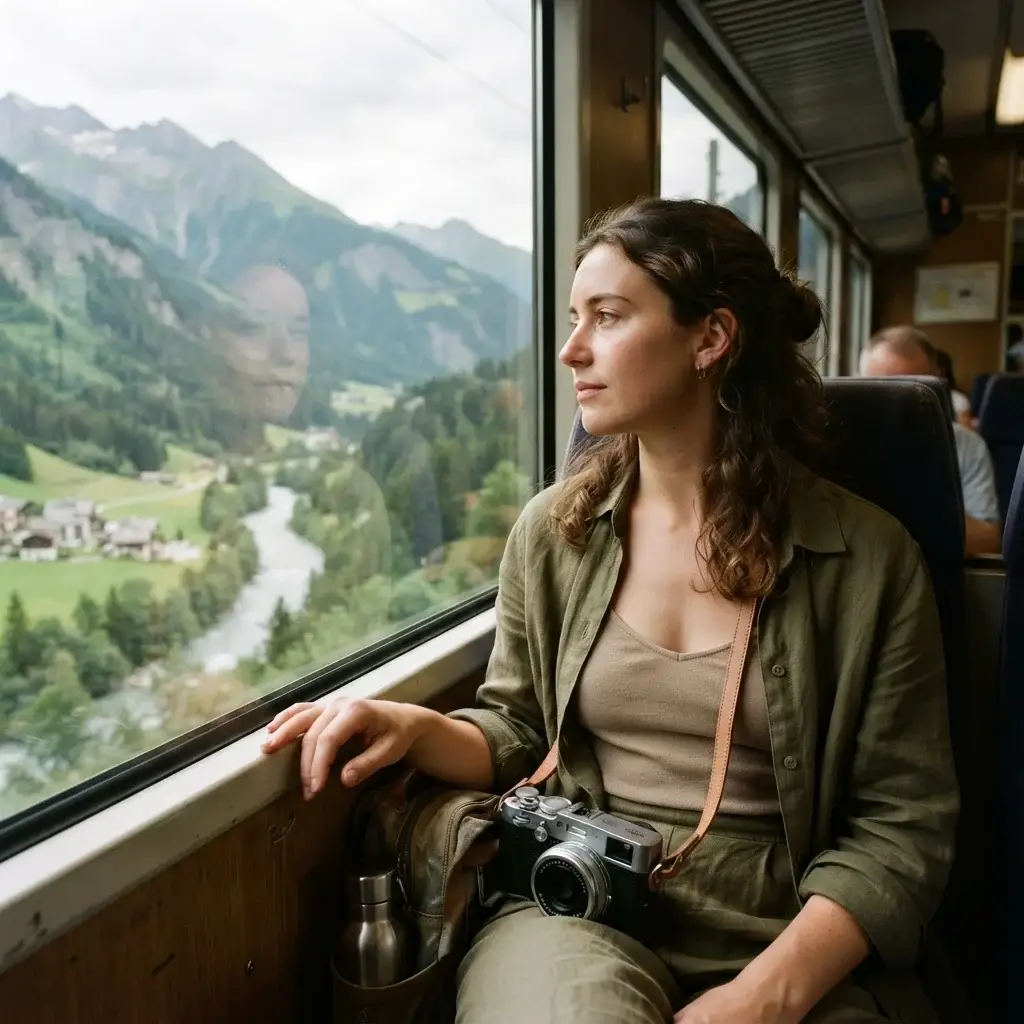
Across the wider Alps, the trick is to ride the regional trains, not just the famous scenic ones. The tiny local lines that everyone ignores are exactly the ones that drop you in villages the tour buses can’t reach. Give yourself margin between connections, screenshot your schedules in case you lose signal, and remember that in the mountains, “the last bus” is a real and firm thing. Missing it is the single most common solo-travel scramble I hear about, and it’s completely avoidable if you check return times before you set out in the morning.
Sleeping in the Mountains: The Hut System Is Your Secret Weapon
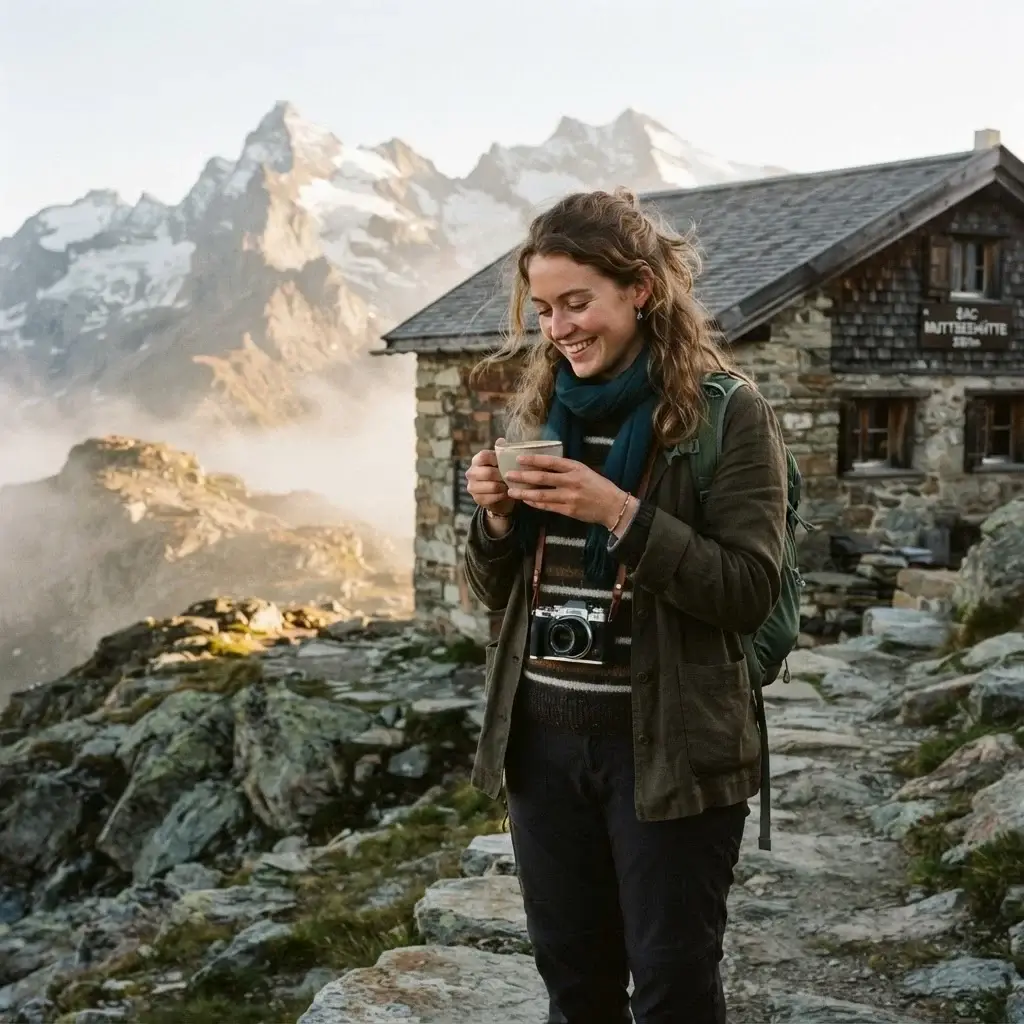
Here’s something that changed how I think about mountain travel entirely: you don’t have to choose between an expensive hotel and a tent. The Alps have a network of mountain huts, simple lodges high in the peaks where hikers eat dinner together and sleep in bunk rooms. In Switzerland, many are run by the Swiss Alpine Club, and you can browse them on the SAC route portal, which lists over a hundred and fifty huts and the routes that reach them.
A bunk typically starts around CHF 25 before the half-board dinner, which makes hut-to-hut hiking one of the best-value adventures in the region. A few things to know before you go: reserve your bed well in advance by phone, email, or the online system, because popular huts fill up; bring a sleeping bag liner and cash, since card machines are unreliable at altitude; and pack earplugs, because a bunk room full of tired hikers is a symphony. For a beginner, a single overnight to a well-traveled hut is a gentle, safe way to taste this world before committing to a multi-day traverse.
The Cultural Layer That Makes It Worth the Trip
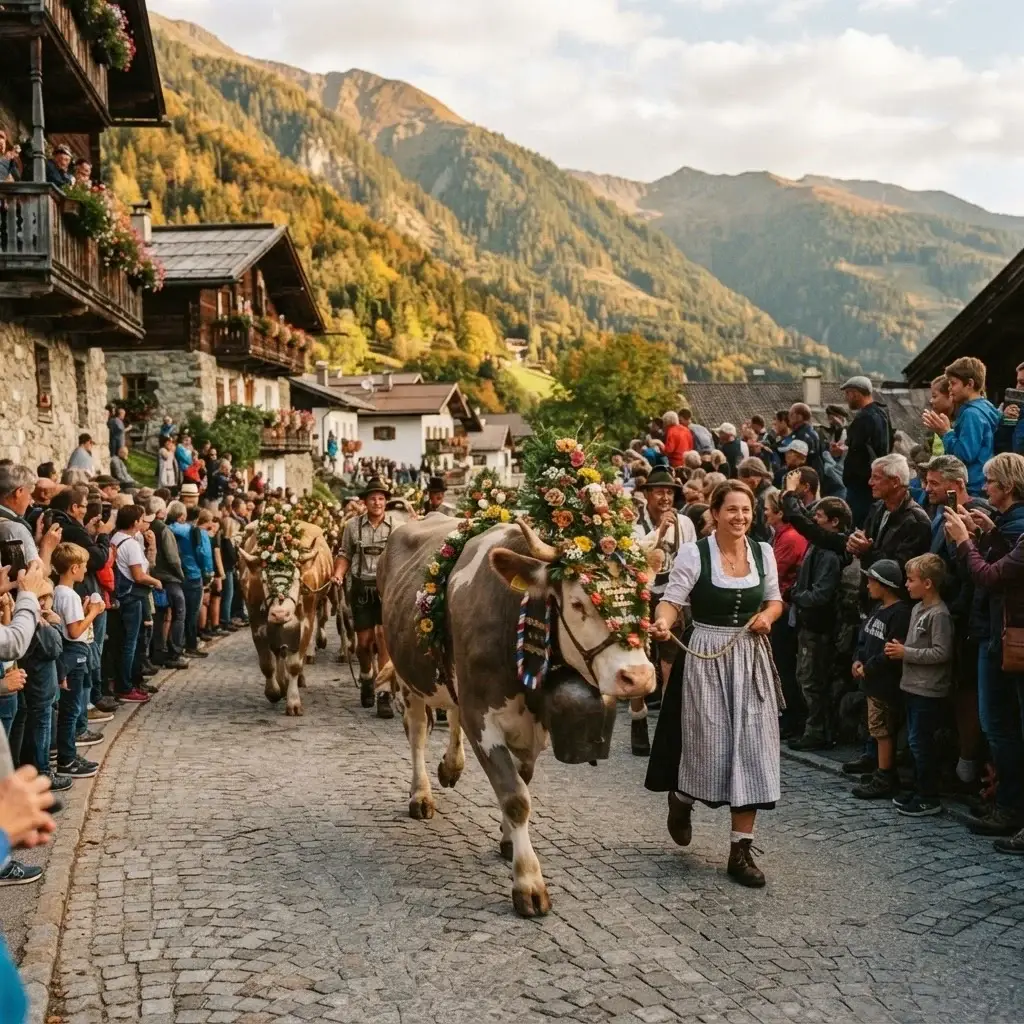
If you only chase views, one mountain starts to look like another. What makes the quiet Alps unforgettable is the living culture, and the deepest thread running through it is transhumance, the seasonal movement of livestock up to high pastures in summer and back down in autumn. It’s such a defining Alpine tradition that UNESCO added transhumance to its Intangible Cultural Heritage list in late 2023.
In practice, this means the best window to see the working Alps is the alpine pasture season, roughly May to October, when cattle graze the high meadows and cheese is made right up in the mountains. If you time a visit to late September, you may catch a cattle descent, when herds are decorated with flowers and bells and paraded back down to the valley in a genuine village celebration. It’s the kind of moment you can’t buy a ticket for, and it’s exactly what “beyond the tourist spots” is supposed to mean.
When I lived with a family in Ghana and later taught English in Thailand, the trips that stuck with me were never the sightseeing days. They were the ordinary rhythms of local life I got to witness up close. The Alps offer that too, if you slow down enough to catch it.
Is Solo Travel in the Alps Safe? Honestly, Yes, With Judgment
Let me speak plainly to the worry underneath the whole search. Solo travel in the Alpine countries is about as safe as travel gets. Switzerland, Austria, Italy, and Slovenia are stable, the public transport is reliable, and violent crime against travelers is rare. The real risks in the mountains are not people. They’re weather, altitude, and overestimating your own fitness.
So your safety plan is a mountain plan, not a stranger-danger plan. Check the forecast every morning, because Alpine weather turns fast. Start hikes early so you’re not caught out late. Tell your accommodation your route and expected return. Carry layers, water, and snacks even on short walks. Download offline maps before you lose signal, and stick to marked, well-graded trails until you know your limits. None of this is about fear. It’s about the calm competence that lets you enjoy being out there alone. Confidence in the mountains isn’t the absence of caution. It’s caution done well.
Traveling So These Places Stay Worth Visiting
There’s a quiet responsibility that comes with seeking out quiet places. The reason the famous spots feel overrun is that everyone was told to go there. So when you find a small valley, tread lightly. The eight Alpine countries actually share a treaty, the Alpine Convention, dedicated to sustainable life in the region, and its work through the Alpine Convention is a good reminder that these mountains are a living home, not a backdrop.
In practice, sustainable travel here is mostly common sense that also happens to make your trip better. Take the train instead of flying between regions. Stay in family-run guesthouses so your money reaches the village. Buy the cheese from the farm, not the airport. Spread out your visit across the shoulder seasons instead of adding to the August crush. Slow travel isn’t just gentler on a place. It’s the version that actually lets you feel it.
Entry Rules and Practical Planning for 2026
A quick but important note on paperwork, because it’s changing. If you’re a visa-exempt traveler, for example from the US, the UK, Canada, or Australia, the European Union is rolling out a new travel authorisation called ETIAS, expected to become required in the final quarter of 2026. It’s a simple online application, not a visa, but you’ll want it sorted before you fly, so check the current status on the official ETIAS page close to your travel date since the exact start is still being confirmed. Note that Switzerland is part of the Schengen area even though it isn’t in the EU, so this applies to Swiss trips too.
Beyond that, the planning basics are refreshingly simple. Most quiet Alpine trips need only a light pack, sturdy walking shoes, layers for fast weather swings, a refillable water bottle, and a European plug adapter. An eSIM keeps you connected on the trains, though I’d argue half the joy of these valleys is the stretches where you have no signal at all.
A Simple First Trip You Could Actually Book
If all of this feels like a lot, here’s the reassuring truth: you can start small. Fly into a major gateway like Zurich or Milan, take the train to a regional hub, then ride one further local line into a single quiet valley and stay three or four nights. Walk a different trail each day, eat at the same family inn until they know your order, do one gentle hut overnight if you’re feeling brave, and let yourself be bored in the best way. One valley, done slowly, will teach you more about the Alps than a checklist of ten famous peaks ever could.
That’s the whole secret to going beyond the tourist spots. Not a hidden map, not special access. Just the willingness to go one valley further, stay a little longer, and trust that the quiet places will meet you halfway. They always do. Now the only question left is which valley gets to be your first.