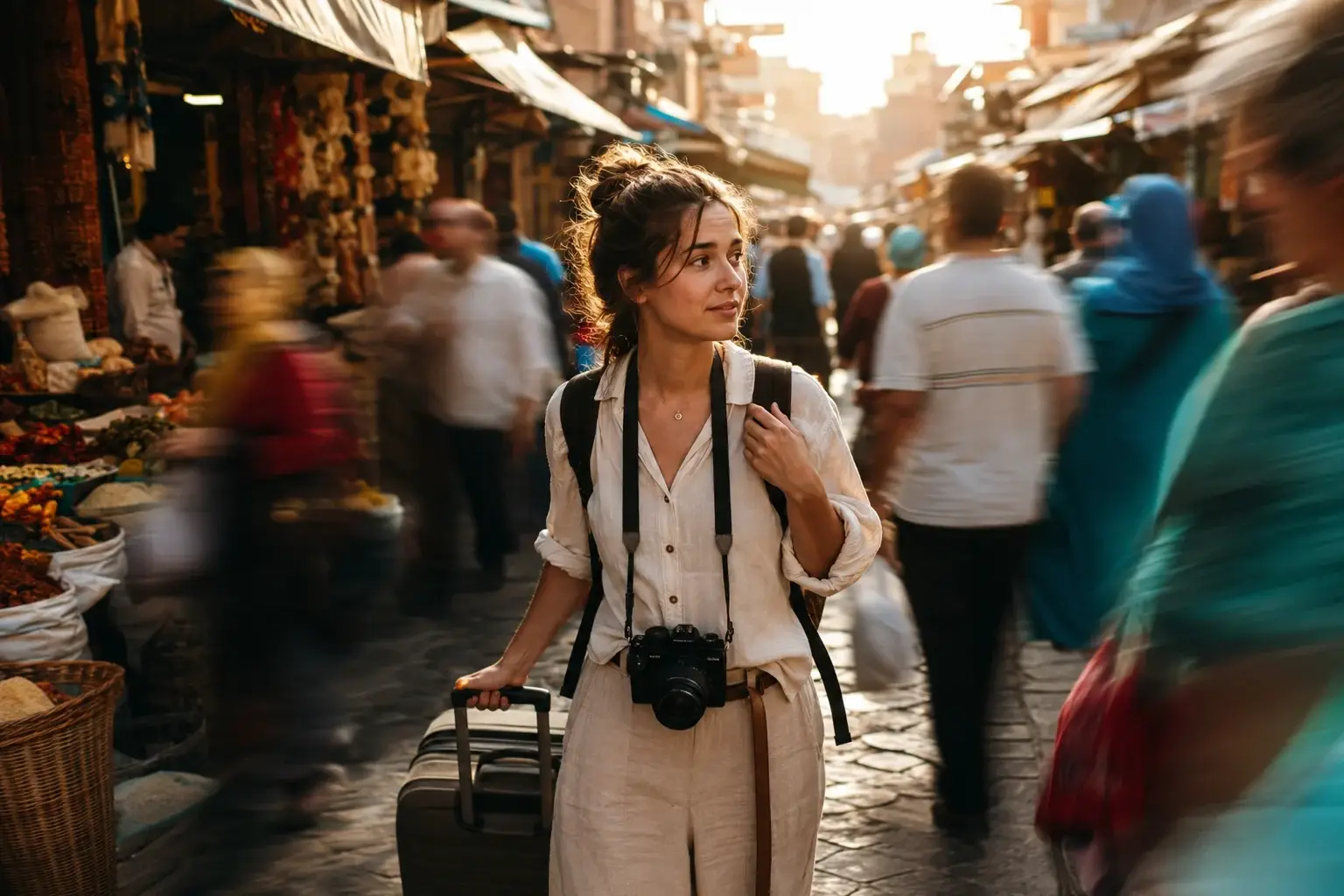
When I first started traveling, I thought I needed a different outfit for every possible scenario. I remember lugging a massive, heavy suitcase across the cobblestone streets of Rome. I was tired, I was sweating, and I felt like a pack mule rather than an explorer. I was so focused on being “prepared” that I missed the point of the journey entirely.
Years later, after living out of a backpack in China and teaching English in Thailand, I’ve learned that the secret to a great trip isn’t what you bring—it’s what you leave behind. Learning how to pack for a long trip with one suitcase is the single most liberating skill you can master as a solo traveler. It changes your entire relationship with the road. You stop worrying about your luggage and start focusing on the person sitting across from you at a local cafe.
This guide is for those of you dreaming of that life-changing adventure but feeling held back by the fear of being unprepared. You don’t need to fit your entire life into a bag. You just need the right system.
The Mental Shift: Moving Beyond the “What If”
Before we talk about clothes or gear, we need to talk about your mindset. The biggest obstacle to packing light is the “what if” game. What if I need a fancy dress? What if it rains for a week? What if I get invited to something formal?
When I left my corporate job in New York, I had to let go of the idea that I needed to be ready for every outcome. The truth is, if you forget something, you can usually buy it where you’re going. In fact, buying a local scarf in a market in Ghana or a rain poncho from a stall in Bangkok is a much better souvenir than a generic item you hauled from home.
Traveling light is about freedom. It’s about being able to jump on a bus, navigate a busy subway, or walk to your accommodation without needing a taxi. It’s about agility. When you carry your own life on your back, you are in control.
Building Your Capsule Wardrobe
The heart of packing for a long trip is the “capsule wardrobe.” This means every piece of clothing you pack should be able to work with at least three other pieces. Forget about outfits; think about components.
Stick to a neutral color palette. I usually go with black, grey, and navy. They hide stains better than white and look polished even after a long day of travel. Fabrics matter, too. Merino wool is a game-changer. It’s lightweight, moisture-wicking, and naturally odor-resistant. I’ve worn the same merino shirt for three days in a row without a single issue.
Here is my standard list for a multi-month trip:
- Three breathable t-shirts.
- One long-sleeve base layer for cooler nights.
- Two pairs of comfortable trousers—choose something that can be dressed up or down.
- One light, packable jacket.
- One set of comfortable walking shoes (wear these on the plane).
- One pair of lightweight sandals or flip-flops.
- Seven pairs of underwear and socks.
If you are heading to a place with varying weather, think in layers. You don’t need a heavy parka; you need a light thermal layer, a mid-layer, and a waterproof shell.
Essential Gear and Tech Organization
When it comes to technology, less is definitely more. I carry my laptop, my phone, and a universal power adapter. That’s it. I don’t bring extra tablets or specialized cameras unless I am on a specific creative assignment.
One of my best pieces of advice is to use packing cubes. They act like little drawers for your suitcase. I put my shirts in one, my socks and underwear in another, and my electronics in a third. It keeps everything organized so you aren’t dumping your entire bag out just to find one cable.
Before you head out, make sure you know exactly what is required for your specific destination. You can check the entry requirements and travel advisories via the US Department of State Travel portal to ensure you have your visa situation and safety precautions sorted well before you zip your bag shut.
Keeping Your Health in Check on the Road
Staying healthy while moving through new environments is a priority for every solo traveler. I’ve had my fair share of travel-induced stomach bugs—they are never fun. When I was in Thailand, I learned very quickly to be cautious about water and food sources. It is always a good idea to read up on the latest health advisories and vaccine requirements for your destination, which you can find through the CDC Travelers’ Health website before you book your ticket.
I carry a very small, lightweight medical kit. It contains a few basics: pain relievers, blister bandages (because walking is what you will do most), and some basic stomach relief medicine. Don’t go overboard; most pharmacies abroad are incredibly helpful and often carry brands you recognize or local equivalents that are even more effective.
Navigating Local Transit and Cultural Etiquette
Once you’ve mastered the art of one-bag travel, you’ll find that getting around becomes much easier. You won’t be the person blocking the aisle on a train or struggling to navigate narrow sidewalks with a giant, unwieldy suitcase.
In many parts of the world, ride-sharing apps have changed how we move. For instance, if you are traveling through Southeast Asia, learning how Grab works for travelers can be a massive relief. It removes the language barrier and the stress of haggling over taxi fares, allowing you to move from your accommodation to a local market with complete confidence.
When you arrive in a new place, take the time to learn the cultural norms. Whether you are visiting a temple in Chiang Mai or a neighborhood in New York, observation is your best tool. Dress modestly, be respectful, and always ask before taking photos. If you are curious about local traditions or festival dates, the official Tourism Authority of Thailand site offers excellent, detailed insights into how to be a guest who gives back to the culture rather than just observing it.
The Practicalities of Slow Travel
I’ve found that the best way to enjoy a long trip is to embrace “slow travel.” Instead of hitting five cities in ten days, pick one place and stay for a week or two. This drastically changes how you pack. If you have access to a washing machine (or a local laundromat), you don’t need to pack for three weeks. You only need to pack for one week and plan to do laundry occasionally.
This lifestyle is incredibly rewarding. It allows you to become a regular at a coffee shop, learn the names of the shopkeepers, and actually understand the rhythm of the city. It also keeps your bag light because you aren’t carrying gear for every possible contingency.
Safety is always at the back of our minds as solo travelers. Being prepared is not just about what you pack, but how you protect yourself and your journey. I always recommend reviewing comprehensive insurance guidance for travelers to ensure that if the unexpected happens, you are covered and can keep moving forward.
Eating Like a Local
One of the greatest joys of traveling with one bag is the ability to just walk into a local spot and grab a meal. When I’m in a new city, I look for places where the locals are eating. If a shop has plastic stools and a long line of regulars, that is where I want to be.
In my experience, you don’t need fancy restaurants to have a memorable culinary experience. My favorite meals have been bowls of soup on the side of the road in Thailand or a simple pastry in a quiet corner of a historic city. Always be open to the unknown. If the menu is in a language you don’t understand, point to what someone else is eating and smile. It’s a great way to start a conversation.
Embracing the Unexpected
Even with the best packing list, things will go wrong. You might lose a shirt, your shoes might get ruined, or you might find yourself in a climate you didn’t fully prepare for. That is okay.
The goal of your trip isn’t to be a perfect, seamless machine. It’s to grow. Every challenge you face on the road—every missed bus, every moment of confusion, every time you have to figure out how to do laundry in a new language—is building your confidence.
When you travel with one suitcase, you are forced to be intentional. You are forced to deal with what you have. This simplicity is where the growth happens. You realize you need very little to be happy, and you discover that you are much more capable than you ever thought possible.
So, don’t wait for the perfect moment. Don’t wait until you have the perfect bag. Start today. Start by planning, by researching, and by trusting yourself. The world is waiting, and you have everything you need.