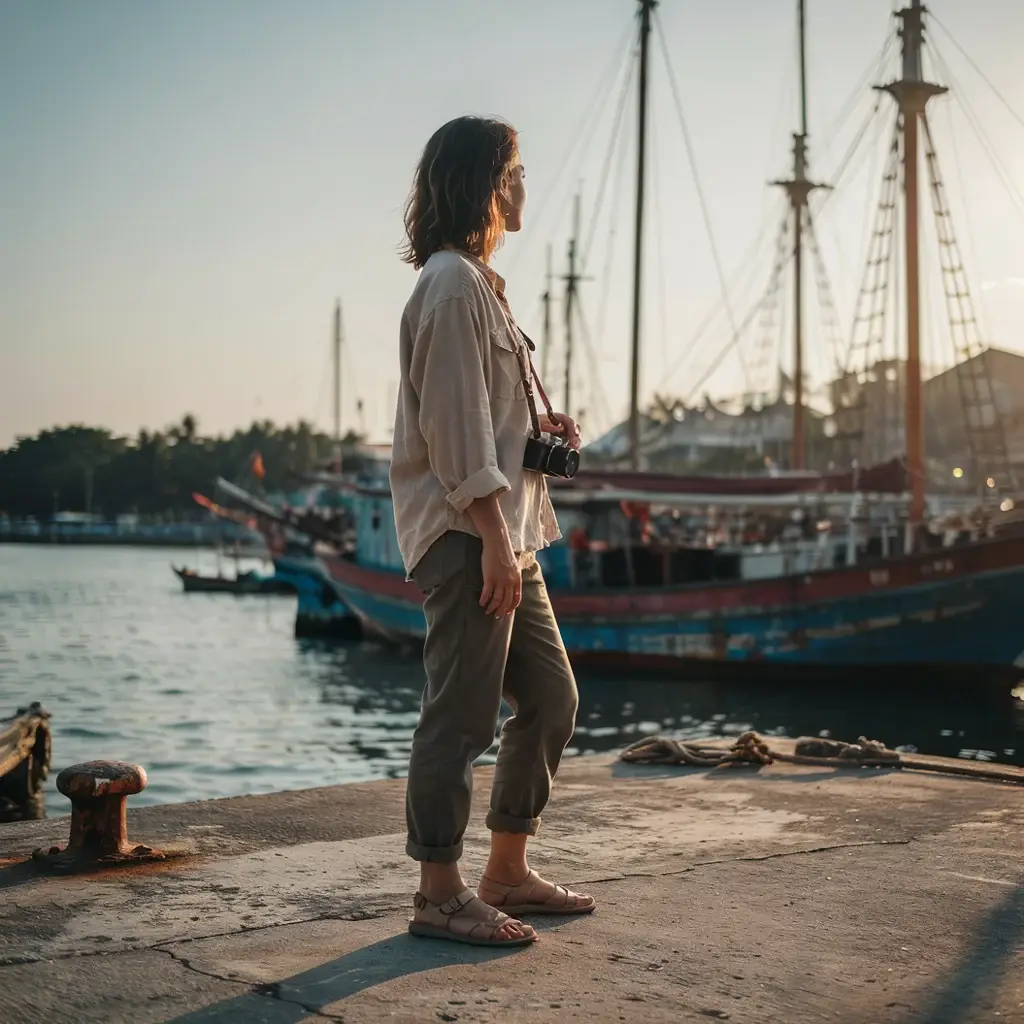
I still remember the first time I stepped out of the airport in Jakarta. The heat hit me like a warm, wet blanket. The air smelled of clove cigarettes, exhaust fumes, and sweet street food. Cars, buses, and thousands of tiny motorbikes zoomed past in every direction. It felt loud. It felt wild. For a second, I wanted to turn right around and get back on the plane.
Before I became a full-time traveler, I spent years working as a certified sightseeing guide in New York City. I thought I knew everything about big, busy cities. I thought if I could handle the chaotic crowds of Times Square on New Year’s Eve, I could handle any city on Earth. But Jakarta made me stop in my tracks. It is a massive place where over ten million people live, work, and move every single day.
Many travelers skip Jakarta completely. They treat it like a simple transit stop on their way to the beaches of Bali or the jungles of Sumatra. They read online that the traffic is bad, the city is too big, and there is nothing to see. But after spending real time here, I realized those people are missing out on something special.
Jakarta does not hide its beauty behind polished walls. It is a real, living city. It shows you its history, its struggles, and its incredible heart all at once. If you look past the traffic jams, you will find beautiful old colonial buildings, ancient wooden ships, kind people who love to share their stories, and some of the best food you will ever taste in your life.
You do not need weeks to fall in love with this place. I am going to show you how to visit Jakarta in 3 days without getting overwhelmed. This is not a rushed checklist of tourist spots. This is a realistic, step-by-step plan made for real people who want to experience the true soul of the city with absolute confidence.
Pre-Trip Essentials: Setting Your Foundation
When I decided to leave my cozy 9-to-5 office job to explore the world, I learned a very important lesson: good preparation is the secret weapon against travel anxiety. If you feel nervous about visiting a massive city like Jakarta, taking care of a few simple details before you leave home will give you peace of mind.

First, let us talk about your paperwork. You do not want to fly across the world just to get stuck at the immigration desk. Before you pack your bags, it is highly smart to look over the official entry and visa guidelines from the US Department of State Travel to see if you can get a Visa on Arrival or if you need to apply for an electronic visa before your flight lands. Taking ten minutes to check this now ensures you will not face any unexpected surprises when you arrive.
Next up is your health. Jakarta is a tropical city, which means your body will have to adjust to new weather and a brand new environment. I always recommend sitting down with a doctor or checking the destination health notices and vaccine updates on the CDC Travelers’ Health website at least a month before your journey starts. They will give you the right advice on routine shots and tips on how to keep your stomach happy while enjoying local meals.
Jakarta Travel Quick Facts:
– Currency: Indonesian Rupiah (IDR)
– Language: Bahasa Indonesia (English is common in hotels/malls)
– App to Download: Grab (for rides and food delivery)
– Water: Drink bottled or filtered water only
Money is another thing that trips people up. The local currency is the Indonesian Rupiah (IDR). The notes have a lot of zeros on them, which can look confusing at first. A meal might cost 50,000 Rupiah, which sounds like a fortune but is actually just a few dollars. I always carry some cash for street food and small markets, but major restaurants and hotels accept credit cards. Let your bank know you are traveling so they do not freeze your card when you try to buy a fresh coconut.
Finally, buy a good travel insurance policy. When I was waitressing to save every single dollar for my travel fund, insurance felt like an extra expense I did not want to pay. But after seeing friends get sick or lose their bags abroad, I never leave home without it. It lets you explore deep into the local neighborhoods knowing you are protected if something goes wrong.
The Jakarta Transit Survival Guide
To understand how to visit Jakarta in 3 days, you must understand how the city moves. Jakarta is famous for its traffic jams, which locals call macet. If you try to jump into a regular taxi during rush hour without a strategy, you will spend your short vacation staring at the brake lights of the car in front of you.
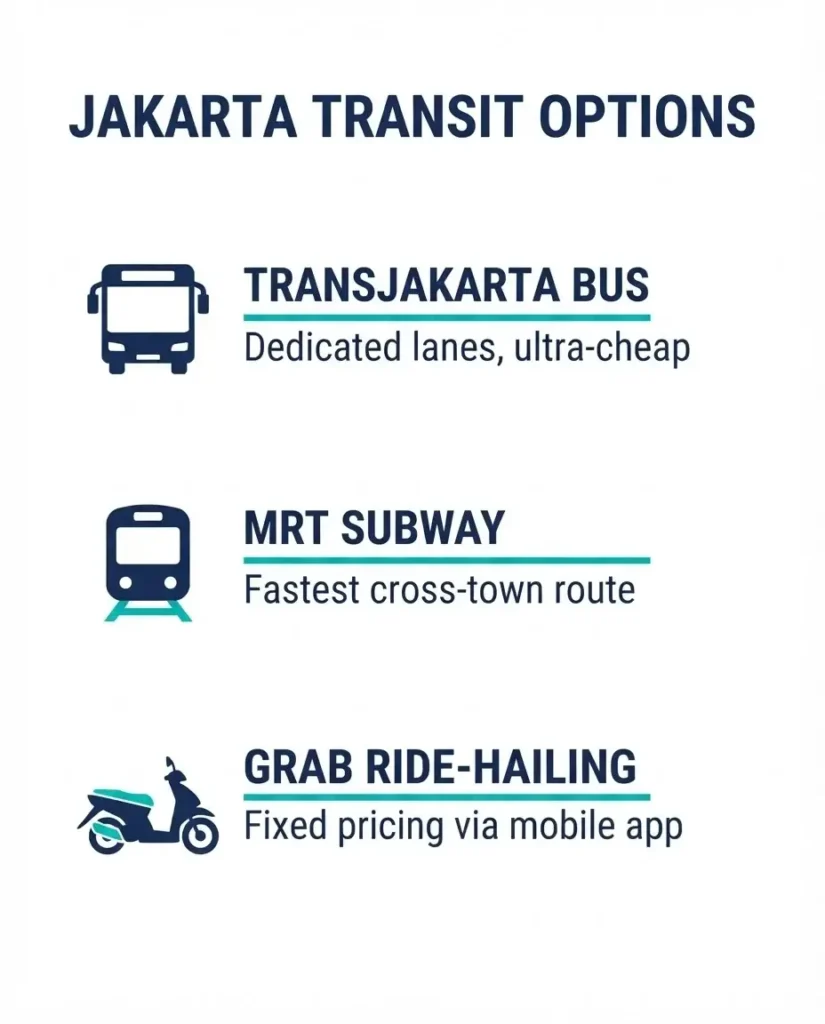
The good news is that Jakarta has built incredible new transportation options over the past few years. You just need to know how to use them.
The TransJakarta Busway
This is one of my favorite transit systems in Asia. It is a massive bus network that runs in its own dedicated lanes, separated from regular traffic by concrete barriers. While cars are stuck sitting still, the TransJakarta buses fly right past them.
To use it, you buy a reusable smart card at any station kiosk. You tap the card at the turnstile to enter the platform, and you tap out when you reach your destination. The buses are air-conditioned, incredibly cheap, and have special seating areas at the front reserved just for women, which is wonderful for solo female travelers who want some extra comfort.
The MRT (Mass Rapid Transit)
The MRT is Jakarta’s modern underground subway system. It is clean, perfectly timed, and very easy to navigate. The main line runs from the south of the city all the way up to the center near the National Monument. If your daily plans align with an MRT route, use it. It is the absolute fastest way to travel across town without worrying about the streets above.
Ride-Hailing Apps (Grab and Gojek)
When the train or bus cannot take you exactly where you want to go, ride-hailing apps are a lifesaver. Before you leave your hotel lobby, you should read through the getting started steps on the official Grab website to see how to download the app and link your payment card securely.
Using Grab lets you order a car or a motorbike ride with a fixed price shown upfront. You do not have to argue with a driver about a meter, and you do not have to worry about language barriers because your destination is typed directly into the map.
Emma’s Insider Secret: If you are traveling solo and want to save time, order a motorbike ride (called a GrabBike). The driver will provide you with a green helmet. Motorbikes can weave smoothly between stuck cars, cutting your travel time in half. It feels a bit adventurous, but it is how the locals get around!
Day 1: Historic Roots and Old Batavia (Kota Tua)
Our three-day plan starts by stepping back in time. To understand modern Jakarta, you have to see where it all began. Hundreds of years ago, this area was a major trading hub for the Dutch East India Company. They called the city Batavia. Today, this historic center is known as Kota Tua, and it feels completely different from the glass skyscrapers of the modern business districts.
Morning: Fatahillah Square and Café Batavia
Start your morning around 9:00 AM at Fatahillah Square. This is the grand stone courtyard at the center of the old town. The square is surrounded by large, white colonial buildings with grand windows and pillars.
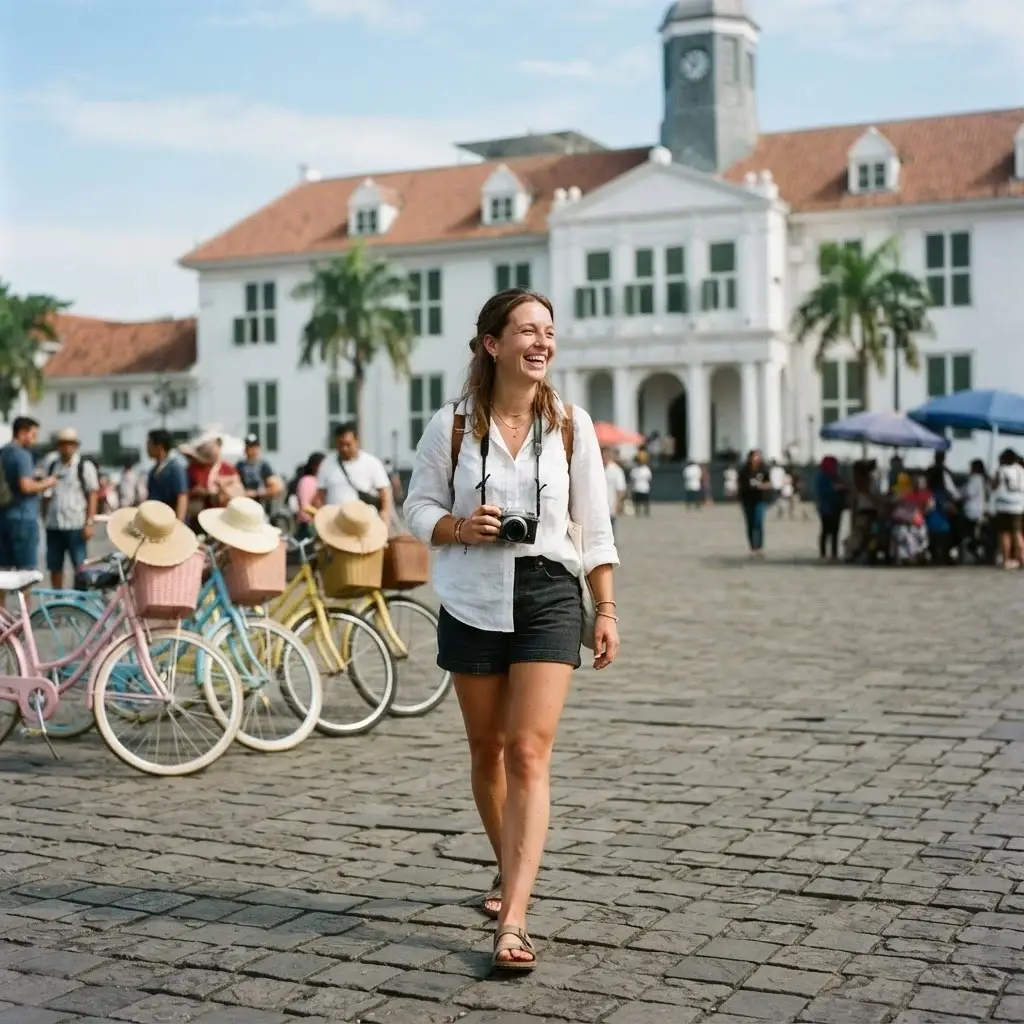
When the sun is shining, the square comes alive with locals renting bright, colorful classic bicycles with matching sun hats.
Day 1 Schedule at a Glance:
– 09:00 AM: Fatahillah Square & History Museum
– 11:30 AM: Early Lunch at Café Batavia
– 01:30 PM: Sunda Kelapa Old Port
– 04:00 PM: Glodok Chinatown Exploration
– 06:30 PM: Street Food Dinner in Glodok
Take a slow walk through the Jakarta History Museum, which sits inside the old Dutch City Hall. The rooms are filled with old maps, wooden furniture, and historic artifacts. It gives you a clear picture of how a small trading port grew into the massive capital city it is today.
Navigation Tip: Take the TransJakarta Bus Corridor 1 straight to the “Kota” terminal station. From the station exit, follow the clear underground pedestrian tunnel for a short three-minute walk right into the open square.
Culinary Stop: Once you step out of the museum, walk directly across the cobblestones to Café Batavia. This historic restaurant has been open for decades and feels like a time machine. The walls are covered in dark wood paneling, elegant vintage photographs, and large mirrors. Sit upstairs near the grand windows so you can look out over the square. Order a cold glass of Es Kopi Takkie (a traditional local iced coffee) and a plate of Gado-Gado.
What is Gado-Gado? This is a classic Indonesian dish made of blanched vegetables, boiled eggs, fried tofu, and bean cakes (called tempeh), all tossed in a rich, creamy, savory peanut sauce. It is fresh, filling, and incredibly delicious.
Afternoon: The Wooden Ships of Sunda Kelapa Port
After lunch, take a ten-minute Grab ride north to Sunda Kelapa Port. This is an active, working harbor that has been used for over five hundred years. It is home to a spectacular line of traditional Indonesian wooden sailing ships called pinisi. These massive boats are painted in bright blues, greens, and reds, and they are still used to carry timber, cement, and goods to distant islands across Indonesia.
Sunda Kelapa Visitor Information:
– Entry Fee: Around 2,500 IDR (less than 25 cents)
– Best View: Walk along the concrete dock wall
– Safety Rule: Watch your step near the heavy loading ropes
Walk slowly along the concrete dock. You will see sailors carrying heavy loads up narrow wooden planks balanced against the sides of the ships. The air smells of salt water, old wood, and diesel fuel. It is dusty, hot, and raw, but it is one of the most authentic maritime sights left in Southeast Asia.
Inside Secret: Don’t be shy if a ship captain smiles and waves at you. Many of the sailors are incredibly friendly and will happily let you climb up the wooden ladders to see the top deck of their ship for a small tip (around 20,000 IDR). It is a fantastic way to learn about their seafaring lives and snap a stunning photo of the harbor line.
Late Afternoon & Evening: Glodok (Chinatown)
As the afternoon heat begins to cool down around 4:00 PM, take a short ride south to Glodok, which is Jakarta’s historic Chinatown. This neighborhood is a beautiful maze of narrow alleys, old red-roofed temples, and traditional markets.
Start your walk at Petak Sembilan Street Market. The lanes are packed with vendors selling fresh ginger, medicinal herbs, colorful lanterns, and traditional sweets. Walk deep into the market until you find Dharma Bhakti Temple. Built in the 1600s, it is the oldest Chinese temple in the city. Step inside to see the beautiful red pillars, golden statues, and clouds of sweet-smelling incense smoke rising up to the ceiling.
Must-Try Glodok Flavors:
1. Soto Betawi (Beef soup with coconut milk broth)
2. Rujak Juhi (Spicy fruit and shredded squid salad)
3. Liang Teh (Traditional refreshing herbal cooling tea)
Culinary Stop: For dinner, head down the famous food alley called Gang Gloria. This narrow pathway is a legend among local food lovers. Look for a small stall serving Soto Betawi. This is a traditional soup made with tender beef pieces simmered in a rich broth spiced with lemongrass, galangal, and rich coconut milk. It is served with a side of warm steamed rice and crispy lime crackers. It is comforting, rich, and costs less than three dollars.
Day 2: Modern Iconography, Culture, and Contrast
On your second day, we shift our focus to the heart of modern Indonesia. Today is all about seeing how the country celebrates its hard-fought independence and how different cultures and religions live side by side in harmony.
Morning: The National Monument (Monas)
Start your morning early at 8:00 AM at Merdeka Square to beat the midday sun. Right in the center of this massive green park stands Monas, the National Monument. This is a giant 132-meter-tall stone tower topped with a gleaming bronze flame covered in real gold leaf. It was built by Indonesia’s first president to symbolize the nation’s fight for freedom.
Day 2 Schedule at a Glance:
– 08:00 AM: Monas National Monument & Museum
– 10:30 AM: Istiqlal Mosque & Jakarta Cathedral
– 01:00 PM: Traditional Lunch near Central Jakarta
– 03:00 PM: Jalan Surabaya Antique Market Walk
– 06:00 PM: Sunset and Dinner at Sarinah Mall
Walk through the underground entrance to reach the base of the monument. Inside, you will find a large, cool museum hall lined with detailed historical dioramas that show the history of Indonesia from ancient kingdoms to modern times. Afterward, take the elevator up to the outdoor viewing platform at the very top. On a clear morning, you can look out and see the entire city stretching out to the sea in the north and the mountains in the south.
Navigation Tip: Use the TransJakarta Bus and get off at the “Monas” station. The station connects directly to the park pathways via a safe underground walkway.
Mid-Morning: The Harmony of Istiqlal Mosque and Jakarta Cathedral
From Monas, take a peaceful ten-minute walk northeast to a beautiful corner of the city where two grand spiritual buildings stand directly across the street from one another.
First, visit Istiqlal Mosque.
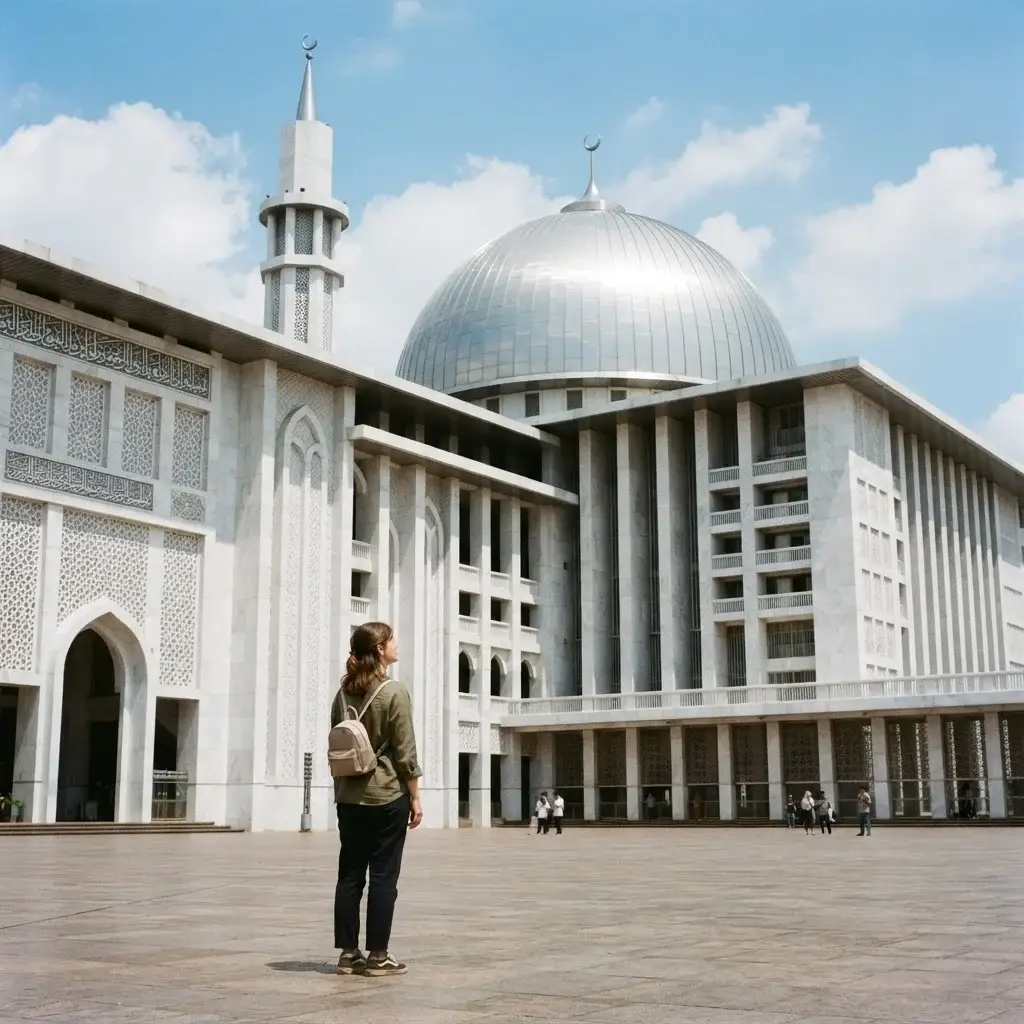
This is the largest mosque in Southeast Asia, built with shimmering white marble and stainless steel. It is so big that it can hold more than one hundred thousand people at the exact same time.
Istiqlal Mosque Visitor Rules:
– Dress Code: Shoulders and knees must be covered (robes are provided for free)
– Shoes: Must be removed before entering the main marble floor
– Guided Tours: Free tours are available at the visitor center desk
Non-Muslim visitors are welcome to enter through a special visitor center. A friendly local guide will lead you up to the grand second-floor balcony. From there, you can look down into the massive open prayer hall underneath a giant dome. The sense of scale, silence, and peace inside is absolutely breathtaking.
Once you step outside, walk right across the road to the Jakarta Cathedral. Built by the Dutch in the neo-gothic style, this beautiful church features tall, dark spires made of intricate ironwork that stand out sharply against the tropical sky. The fact that these two massive places of worship sit face-to-face and share their parking lots during major holidays is a beautiful symbol of Indonesia’s national motto: “Unity in Diversity.”
Afternoon: The Antique Treasures of Jalan Surabaya
Around 1:00 PM, grab a quick lunch of Nasi Goreng (Indonesian fried rice topped with a crispy fried egg) at a local cafe, then take a short ride south to the Menteng neighborhood to visit Jalan Surabaya. This is a quiet, tree-lined street famous for its open-air antique market that stretches for half a mile.
Jalan Surabaya Shopping Tips:
– Bartering: Friendly bargaining is expected (start at 30% below original price)
– Payment: Small vendors prefer cash notes
– What to Look For: Vintage vinyl records, old brass lamps, wooden carvings
Stroll slowly past the rows of open stalls. You will find an incredible collection of oddities: vintage porcelain plates, old brass ship compasses, classic cameras, traditional Javanese wooden puppets (wayang), and rows of old vinyl records from the 1960s. It feels like walking through an outdoor museum of everyday history. The shopkeepers are relaxed, and they love to tell you the history behind their strangest items if you show a little curiosity.
Evening: Culture and Community at Sarinah
As night falls, head over to Sarinah Mall on Thamrin Street. Do not worry—this is not a generic mall filled with global luxury brands. Sarinah is Indonesia’s very first modern skyscraper, and it has been completely transformed into a massive showcase for local artists, traditional crafts, and homegrown brands.
Walk through the upper floors to see stunning displays of Batik (traditional hand-dyed cloth pattern art) and handmade pottery from different islands.
Culinary Stop: Head to the basement food court or the open-air courtyard outside. Look for a street-food vendor making Sate Ayam (chicken skewers). The meat is grilled over open charcoal right in front of you until it is perfectly smoky, then it is covered in a sweet, velvety peanut sauce and fried shallots. Eat outside while listening to local musicians who often play live acoustic music on the steps of the plaza. It is a wonderful, safe environment to soak up the local city life.
Day 3: Contemporary Rhythms and Coastal Escape
On our final day, we explore the incredible contrasts of modern Jakarta. We will start by immersing ourselves in the diverse cultures of Indonesia’s many islands, and then we will end our trip by heading to the coast to experience how the city is expanding into the future.
Morning: The Cultural Architecture of Taman Mini Indonesia Indah (TMII)
Start your morning at 8:30 AM by taking a taxi down to Taman Mini Indonesia Indah (TMII), located in the southern part of the city. Indonesia is made up of over seventeen thousand individual islands, each with its own language, clothing, and house styles. TMII is a giant cultural park that brings all of those diverse traditions together into one single place.
Day 3 Schedule at a Glance:
– 08:30 AM: Taman Mini Indonesia Indah (TMII)
– 12:00 PM: Lunch at the Park (Traditional Betawi Food)
– 02:30 PM: Modern Art at MACAN Museum
– 05:30 PM: Seaside Sunset Walk at PIK (Pantai Indah Kapuk)
– 07:30 PM: Fresh Seafood Dinner by the Water
The highlights of the park are the full-scale traditional houses built by representatives from every single Indonesian province. Walk inside a towering Torajan house with a roof shaped like a massive boat, or see the beautifully carved wooden pavilions of Central Java.
Inside Secret: The park is huge, so do not try to walk the whole thing in the heat. Rent a small electric scooter near the main park gates or buy a ticket for the elevated cable car line. The cable car travels high above a massive man-made lake that features a perfect scale model of the Indonesian islands shaped out of earth and water below.
Culinary Stop: For lunch inside the park, look for a local restaurant serving Kerak Telor. This is the ultimate traditional street food dish of the native Betawi people of Jakarta. It is a savory omelet made from glutinous rice, duck eggs, and aromatic spices, fried in a small wok without oil until it is crispy, then topped with roasted shredded coconut and crunchy fried shallots. It is sweet, salty, smoky, and absolutely unique.
Afternoon: Modern Art at Museum MACAN
Around 2:00 PM, escape the afternoon heat by heading over to West Jakarta to visit Museum MACAN (Museum of Modern and Contemporary Art in Nusantara). This is a gorgeous, world-class art space that showcases incredible paintings, installations, and modern art pieces from top Indonesian and international artists.
The museum galleries are bright, airy, and constantly changing. It is a fantastic place to see how young Indonesian artists are using modern art to talk about identity, environment, and culture in the 21st century. It provides a wonderful contrast to the ancient history you saw on Day 1.
Museum MACAN Practical Info:
– Tickets: Best to buy online in advance on weekends
– Time Needed: About 1.5 to 2 hours
– Storage: Large backpacks must be left at the front desk for free
Evening: Seaside Sunset at Pantai Indah Kapuk (PIK)
For your final evening, take a taxi up to Pantai Indah Kapuk (PIK), located on the northern coast of the city. This is one of the newest, fastest-growing coastal developments in Jakarta. It features beautiful outdoor walking paths, manicured parks, and bridges that look out over the Java Sea.
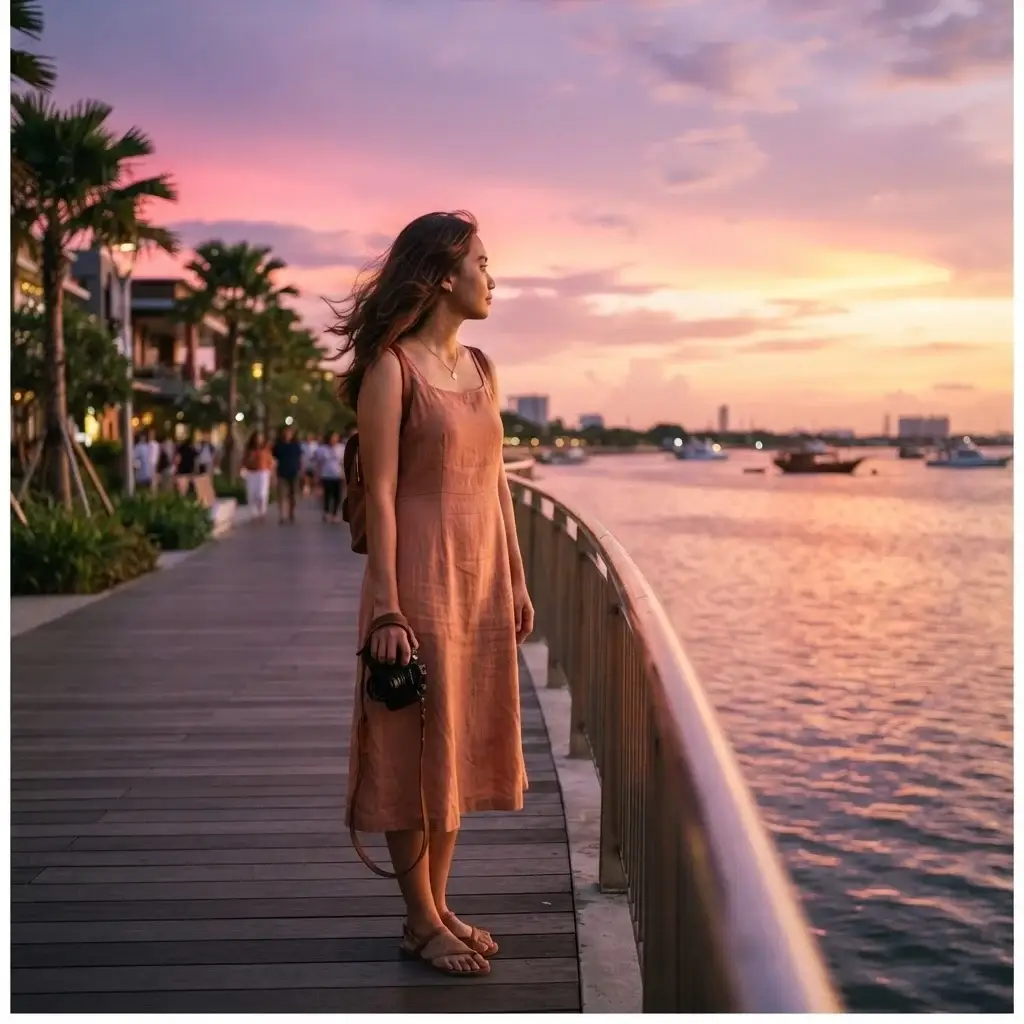
Walk along the Pantjoran PIK area, which is a beautifully designed outdoor food street filled with massive traditional Chinese gates, statues, and lanterns. As the sun begins to set around 5:30 PM, make your way over to the white sand pathways of San Antonio Promenade. Watch the sky turn a brilliant shade of orange and pink over the water while locals ride rental bicycles along the coastal seawall.
PIK Seafood Checklist:
– Choose your fish fresh from the ice displays
– Have it grilled over coconut husks (Ikan Bakar)
– Ask for a side of Sambal Matah (spicy raw shallot condiment)
Culinary Stop: End your three-day adventure with a spectacular fresh seafood feast at one of the open-air restaurants along the water. Walk up to the fresh ice displays and pick out a whole local fish. Ask them to prepare it as Ikan Bakar—traditional style, marinated in sweet soy sauce and spices, then grilled slowly over hot charcoal. Enjoy it with your bare hands alongside a plate of fresh morning glory greens and a cold glass of sweet iced tea. It is the perfect, relaxing way to toast your successful journey through the beautiful chaos of Jakarta.
Where to Stay: Safe Neighborhoods for First-Timers
When you are figuring out how to visit Jakarta in 3 days, choosing the right neighborhood for your accommodation can make a massive difference in your daily travel times. You want a central location that connects smoothly to transit lines so you do not waste your vacation stuck on the roads.
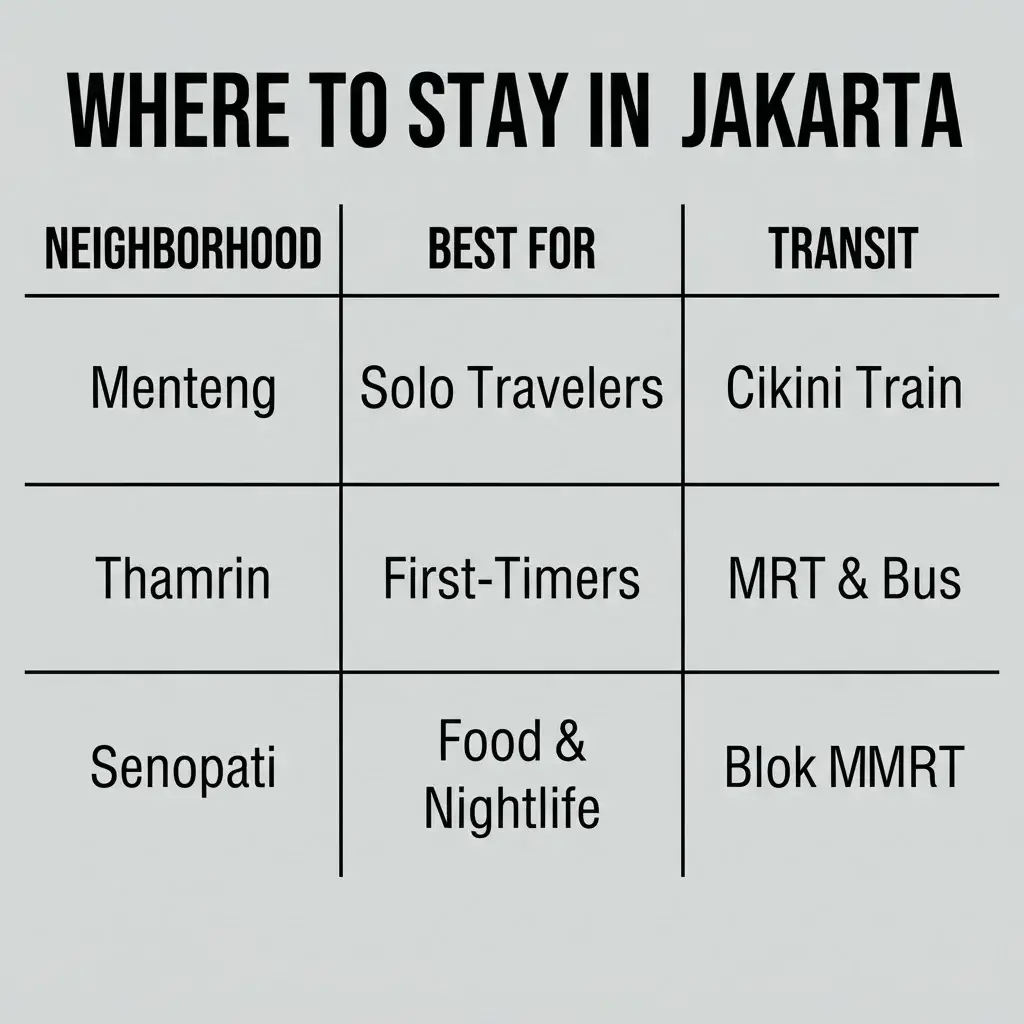
| Neighborhood | Best For | Vibe | Nearby Transit |
| Menteng / Cikini | Solo Travelers & Foodies | Quiet, historic streets, local cafes, safe sidewalks | Cikini Train Station |
| Thamrin / Central | First-Time Visitors | High-end hotels, modern skyscrapers, very clean | MRT Line & TransJakarta |
| Senopati / Kebayoran Baru | Trendy Nightlife & Cafes | Upscale residential, boutique shops, modern restaurants | Blok M MRT Station |
Menteng and Cikini
If you love character and history, I highly recommend staying in the Menteng or Cikini areas. This is a beautiful, green residential district filled with old colonial homes, tall trees, and excellent independent coffee shops. It feels much more relaxed than the rest of the city, and it has proper sidewalks which make it very easy to go for an afternoon walk. It is highly safe for solo travelers, and it has an authentic community feel.
Thamrin and Central Jakarta
If you prefer convenience and modern comforts, look for a hotel along Thamrin Street. This is the main financial avenue of the city. The hotels here are modern, towering, and offer excellent security. The biggest benefit of staying here is that you are steps away from the main MRT subway line and the central TransJakarta bus stations. It makes navigating the city incredibly fast and stress-free.
Final Thoughts: Embrace the Chaos
When I first quit my office desk job to travel full-time, I was terrified of cities like Jakarta. I thought big, loud, chaotic places would be too difficult to handle alone. But if my time traveling has taught me anything, it is that the places that scare us at first are almost always the ones that teach us the most valuable lessons.
Jakarta is a city that requires a little bit of patience and an open heart. It will not hand you its treasures on a silver platter. You have to climb into the back of a motorbike taxi, try the spicy street food soup, and strike up a conversation with the person sitting next to you at the coffee shop.
When you stop fighting the noise and start embracing the energy, you will find a city that is incredibly warm, deeply kind, and fiercely alive. Stop waiting for the perfect, sterile destination. Pack your bags, download your transit apps, and go discover the beautiful heart of Jakarta for yourself. You are completely capable of this adventure!