There is a photo you have seen so many times that it almost feels like a memory. A glowing orange slot canyon. Twin jagged peaks reflected in a perfect alpine lake. A blazing white desert that looks borrowed from another planet. You have scrolled past these images so often that you have started to assume they belong to some other category of traveler, someone with a better camera, more money, or more time.
Here is what I want to say right upfront: they don’t. These places are real, they are accessible, and with a little planning, you can stand in them yourself.
I spent years as a certified sightseeing guide in New York City, pointing tourists toward stunning viewpoints while secretly dreaming of the ones I had read about in the American West. I know what it feels like to look at a photograph and think “someday.” I also know that “someday” has a sneaky habit of never arriving unless you turn it into a plan.
This guide is that plan. I am going to walk you through the most visually stunning and photographed locations across the United States, tell you exactly what to expect when you arrive, handle the practical logistics honestly, and give you the timing, cost, and crowd reality that most travel articles quietly leave out. Whether you are planning a solo road trip through the Southwest, a first American adventure, or just trying to figure out where to go next, this is your starting point.
A Note Before We Dive In: The Instagram Version vs. The Real Version
Nearly every location on this list has been photographed millions of times. The image you see on Instagram was taken at a very specific time of day, in a very specific season, possibly from a very specific angle that required the photographer to arrive before dawn or wait until the last 20 minutes of sunlight. I am going to tell you how to get close to that experience, but I also want you to know that standing in these places in real life is better than any photo. The scale is bigger. The colors are richer. The feeling is something no camera fully captures.
Crowds are real too. I will tell you which spots require reservations now and what happens if you show up without one.
The American Southwest: Where Earth Gets Theatrical
No region of the United States concentrates more genuinely jaw-dropping scenery per square mile than the Southwest. Arizona, Utah, and New Mexico are responsible for a disproportionate number of the most-shared travel images on the internet, and there are good reasons for that.
Antelope Canyon, Arizona: The Cathedral of Light
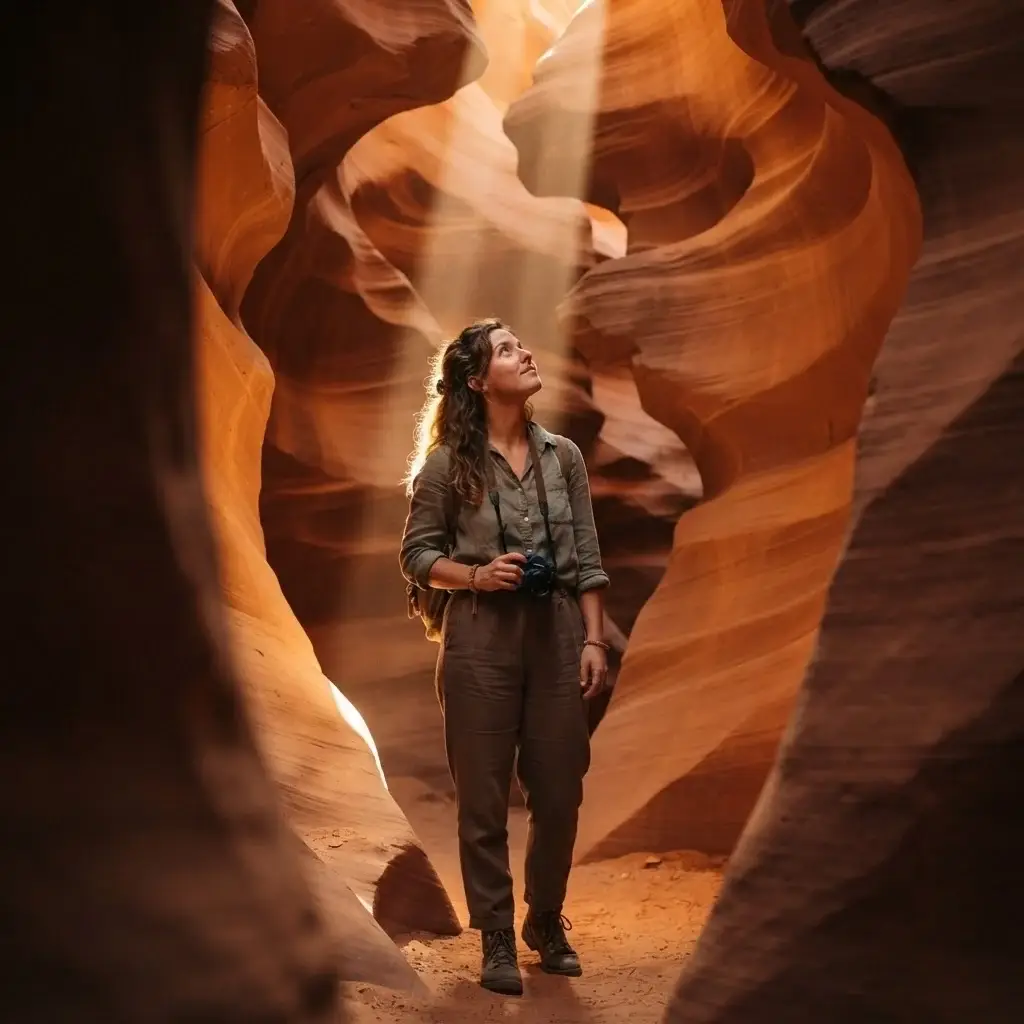
Upper Antelope Canyon is the most-photographed slot canyon on Earth. The narrow sandstone passage, carved over millions of years by flash floods, channels direct sunlight into narrow beams that illuminate the wave-like walls in shades of orange, amber, and deep rust. The shots you have seen, with those diagonal shafts of light cutting through the air, are taken during a specific window in late spring and early summer, roughly late May through early July, when the midday sun hits the canyon at the right angle.
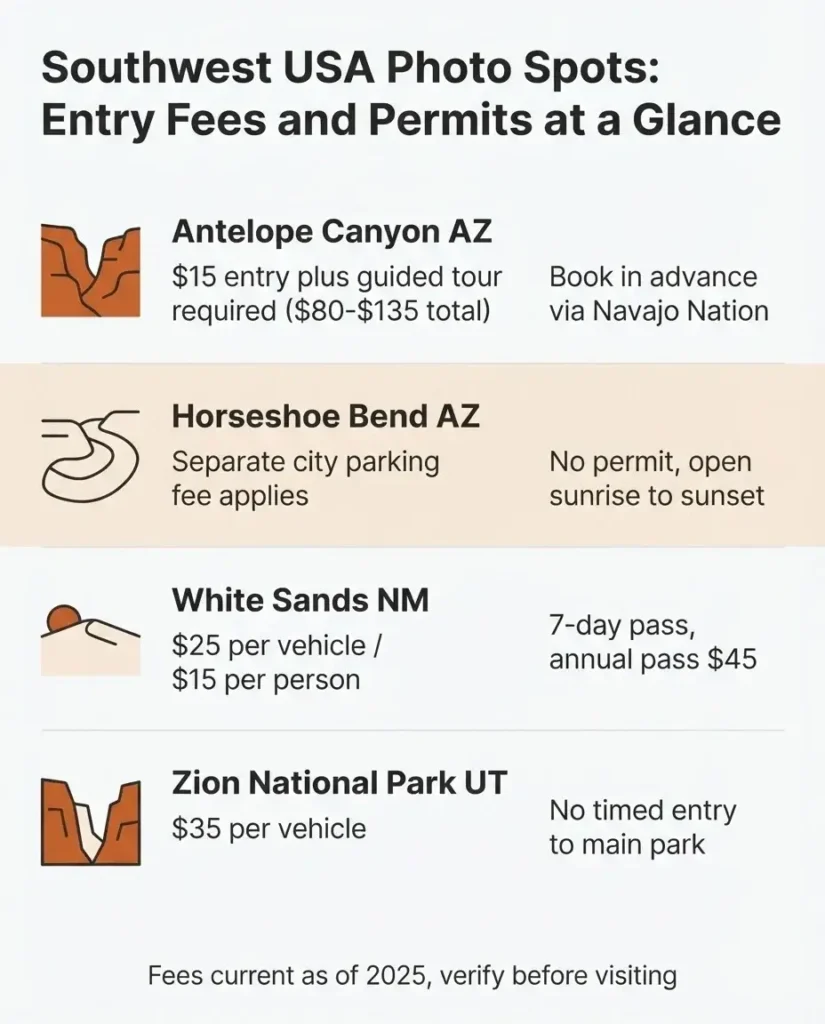
What most articles skip: Antelope Canyon sits on Navajo Nation land, and access is only permitted through a licensed Navajo-guided tour. The Navajo Nation Parks guided tour operator list is where you book your spot. The Navajo Nation entrance fee is $15 per person per day, and guided tours are an additional cost on top of that. Most full tours run between $80 and $135 total when you factor in all fees. Book several weeks in advance if you are visiting between May and September. This is not optional; tours sell out.
This is also worth sitting with a moment. You are visiting land that belongs to the Navajo people. The canyon has deep cultural significance. Go with curiosity and respect, listen to your guide, and understand that the fee and the required tour structure exist for genuinely good reasons.
Lower Antelope Canyon is slightly less dramatic for light beams but offers a more atmospheric winding passage. Some photographers prefer it for variety.
Horseshoe Bend, Arizona: The Perfect Curve
About four miles south of the town of Page, the Colorado River bends into a near-perfect horseshoe shape around a massive sandstone escarpment. The view from the overlook puts 1,000 feet of sheer canyon drop between you and the river. The photograph, taken from the rim looking straight down, is one of the most replicated travel shots in the country.
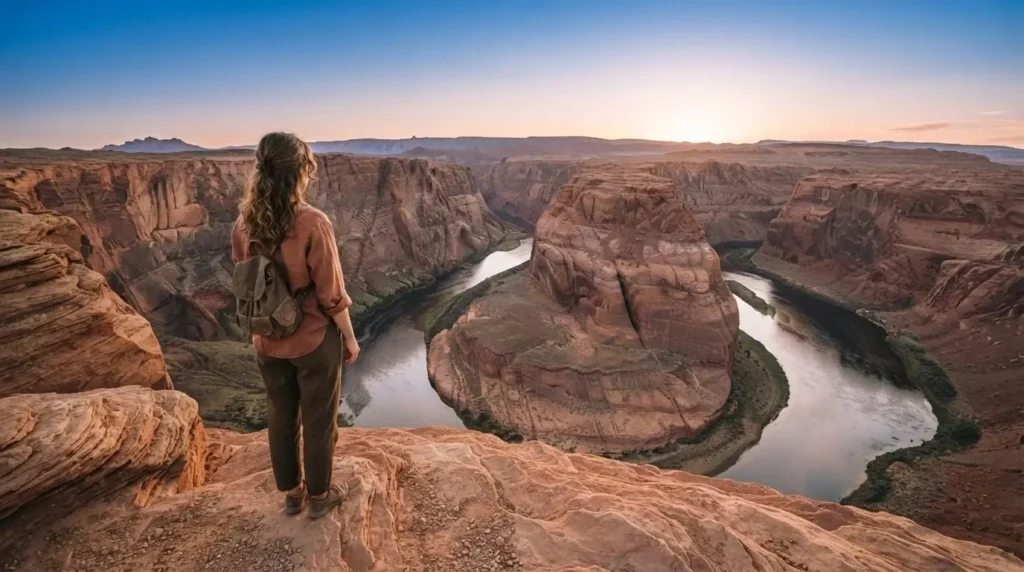
The hike is 1.5 miles round-trip on a hardened path, which means it is accessible to most fitness levels. According to the National Park Service’s Glen Canyon Recreation Area page on Horseshoe Bend, the trail is open year-round from sunrise to sunset, there are shade structures along the path but none at the overlook itself, and drones are strictly prohibited. One important detail that surprises many visitors: your America the Beautiful pass does not cover the parking fee here. The parking lot is on City of Page land, not federal land. Budget for parking separately.
Go early, before 9 AM, or arrive in the late afternoon around 4 to 5 PM. Midday light is harsh and flat. The best shots come when the canyon floor is in soft shadow and the rim catches warm directional light.
White Sands National Park, New Mexico: The Moon on Earth
Sixteen miles of gypsum sand dunes, blinding white and impossibly smooth, stretch across southern New Mexico. Photos from White Sands look like they were taken on another planet. The dunes shift constantly with the wind, meaning the landscape you photograph today is genuinely different from the one someone photographed last week.
The National Park Service fee page for White Sands lists entrance at $25 per vehicle, $15 per person on foot or bicycle. The pass is valid for seven days and an annual pass is $45.
The park sometimes closes temporarily for military testing from the adjacent White Sands Missile Range, so check current conditions before you drive out.
For photography, the hour after sunrise and the hour before sunset are exceptional. The low-angle light turns the white sand into a canvas of pale gold, lilac, and shadow. Bring polarized sunglasses and real sun protection. The reflectivity of gypsum sand is intense, and the desert sun in New Mexico is relentless.
Zion National Park, Utah: Canyon Walls That Make You Feel Small
Zion is one of the most visited national parks in the country, and for good reason. The sandstone cliffs rise up to 2,000 feet in shades of cream, rust, and deep red. The most photographed spots include the view of The Watchman from the Pa’rus Trail, the Virgin River Narrows (a slot canyon hike through ankle-to-chest-deep water), and the high overlooks of Angels Landing.
The NPS entrance fee page for Zion shows $35 per vehicle for a seven-day pass. No timed entry or reservation is needed just to enter the park. Private vehicles are not permitted in Zion Canyon itself during peak season; instead, you ride the free park shuttle. This actually works in your favor as a solo traveler, because it means you can hop on and off without worrying about parking.
The Narrows is one of the most unique photography experiences in the park: you are literally walking through the walls of a slot canyon carved by a river. Go early in the morning, rent neoprene socks and water shoes from one of the outfitters in Springdale (the gateway town), and give yourself several hours. The light at the top of the canyon walls in early morning is extraordinary.
The Mountain West: Color in Every Direction
Maroon Bells, Colorado: The Most Photographed Mountain Scene in North America
Two fourteeners (peaks over 14,000 feet) reflecting in the still waters of Maroon Lake, framed by aspens that turn blazing gold every autumn. The Maroon Bells near Aspen, Colorado, appear on more postcards, calendars, and desktop wallpapers than perhaps any other mountain scene in the country. They deserve every bit of the attention.
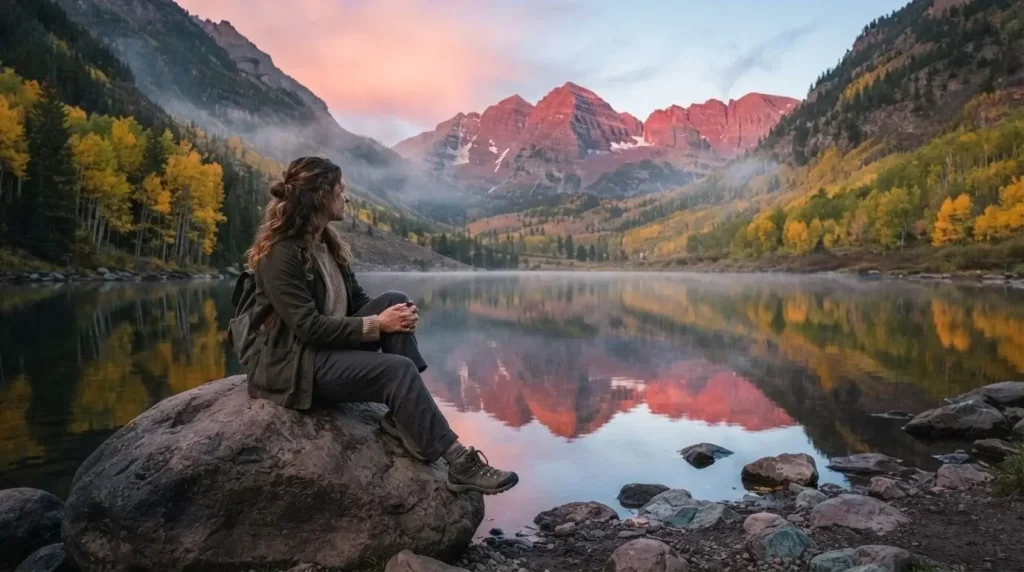
The official Visit Maroon Bells reservation site manages access from May 22 through October 18, when the road is closed to inbound private vehicles between 8 AM and 5 PM. Your two options are a shuttle ($16 adults, $10 for children 12 and under and seniors 65 and older, departing from Aspen Highlands) or a trailhead parking reservation ($10 per vehicle, arriving before 8 AM or after 5 PM). Reservations are genuinely limited and sell out early in the season, especially for autumn visits in late September when the aspens peak. Book as soon as you know your dates.
For photographers, sunrise is the target. The alpenglow on the peaks, the stillness of the lake before day-hikers arrive, and the color of the sky in those first 20 minutes after the sun clears the horizon are what makes the iconic shot possible.
Grand Prismatic Spring, Yellowstone National Park: Nature’s Most Saturated Palette
Yellowstone’s Grand Prismatic Spring is 200 to 330 feet in diameter and more than 121 feet deep, making it the largest hot spring in the United States. The colors surrounding it, deep blue at the center moving outward through turquoise, green, yellow, orange, and rust, come from heat-loving microorganisms called thermophiles that thrive at different temperatures along the spring’s edge.
The NPS page for Grand Prismatic Spring notes that parking is limited especially between 10 AM and 6 PM. Arrive early or visit outside midday. The boardwalk view from ground level is lovely but does not give you the full color perspective. For the aerial view that makes the photos so dramatic, take the short hike to the Grand Prismatic Spring Overlook via the Fairy Falls Trailhead. This is where the full rainbow of color reveals itself.
Stay on the boardwalk at all times. The thermal features at Yellowstone are genuinely dangerous, and the park takes safety seriously.
The Pacific Northwest: Drama at Every Elevation
Multnomah Falls, Oregon: Two Tiers of Falling Water
At 620 feet, Multnomah Falls is the tallest waterfall in Oregon and one of the most visited natural attractions in the entire country. It drops in two tiers through the lush Columbia River Gorge, with a stone footbridge crossing between the two falls that is itself one of the most photographed spots in the Pacific Northwest.
Here is something many articles do not mention: Multnomah Falls now requires a timed-use permit during peak season. You can book your permit through Recreation.gov’s Multnomah Falls timed entry page. Permits are required from approximately late May through early September, between 9 AM and 6 PM, and become available two days in advance at 7 AM Pacific time. If you show up without one during permitted hours, you will not be able to access the main parking area. Book two days out and set a reminder.
The most photogenic time to visit is a soft overcast morning in spring or early summer, when the surrounding forest is deeply green and the mist from the falls catches in the light. Autumn is also spectacular, when vine maple leaves turn gold along the gorge walls.
The American South: History You Can See in Every Frame
Savannah, Georgia: Where the South Slows Down Beautifully
Savannah is one of the most visually distinctive cities in the United States. Its historic district is organized around a series of moss-draped public squares shaded by ancient live oaks, with Federal and Regency-style townhouses lining every block. The city photographs beautifully in any season, but spring, when azaleas bloom in every garden and square, turns it into something almost unreasonably pretty.
The spots that come up again and again for photography are Forsyth Park (the iconic white Victorian fountain, especially in morning light), Chippewa Square, and the Cathedral Basilica of St. John the Baptist. The most dramatic photography location, though, is Wormsloe Historic Site, about six miles south of downtown. A 1.5-mile oak-canopied avenue draped in Spanish moss leads to the ruins of one of Georgia’s earliest colonial estates. Wormsloe is open daily from 9 AM to 4:45 PM, admission is $12 for adults, $9 for seniors, and $5.75 for youth ages 6 to 17,
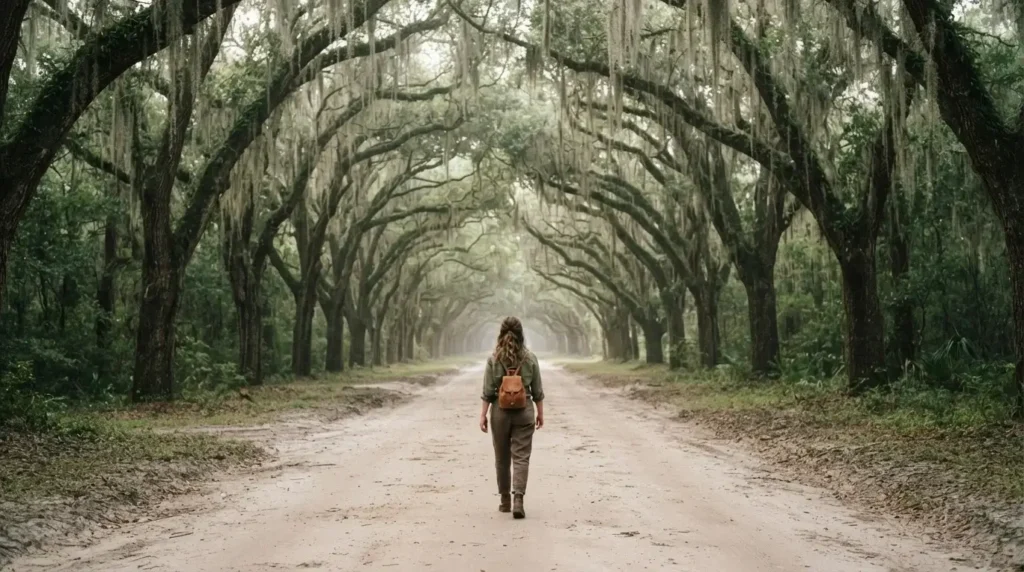
according to the Georgia State Parks Wormsloe page.
Go early on a weekday morning. The avenue is quieter, the light filters through the canopy at a low angle, and you can walk the full length without navigating around other groups. If you arrive around 9 AM on a weekday in early spring or late fall, you may genuinely have stretches of it to yourself.
The Northeast: Urban Icons That Still Earn Their Reputation
DUMBO, Brooklyn, New York: The Shot That Never Gets Old
From my years of guiding visitors around New York City, I can tell you that the question I heard most often was not about Times Square or the Empire State Building. It was, “How do I get to that spot where the bridge frames the city?” That spot is DUMBO, and the intersection of Washington Street and Water Street in Brooklyn is what they were all asking about.
Stand at that corner looking toward Manhattan, and the Manhattan Bridge frames the Empire State Building through its arches. It is one of those photographs that looks like it was staged but is entirely real. The best light is at sunrise on a clear morning, when the sky behind Manhattan turns pink and the bridge is lit from the side. Sunset also works but draws larger crowds.
DUMBO is freely accessible, there are no tickets or permits, and you can walk to it from the nearby A or C subway at High Street or the F train at York Street. As someone who grew up and worked in New York, I love that one of the city’s most iconic photo spots costs nothing and requires no planning beyond knowing which corner to stand on.
Practical Notes for Solo Travelers at Every Location
Getting great photos as a solo traveler is a genuine logistical puzzle, and I have been working on that puzzle for years.
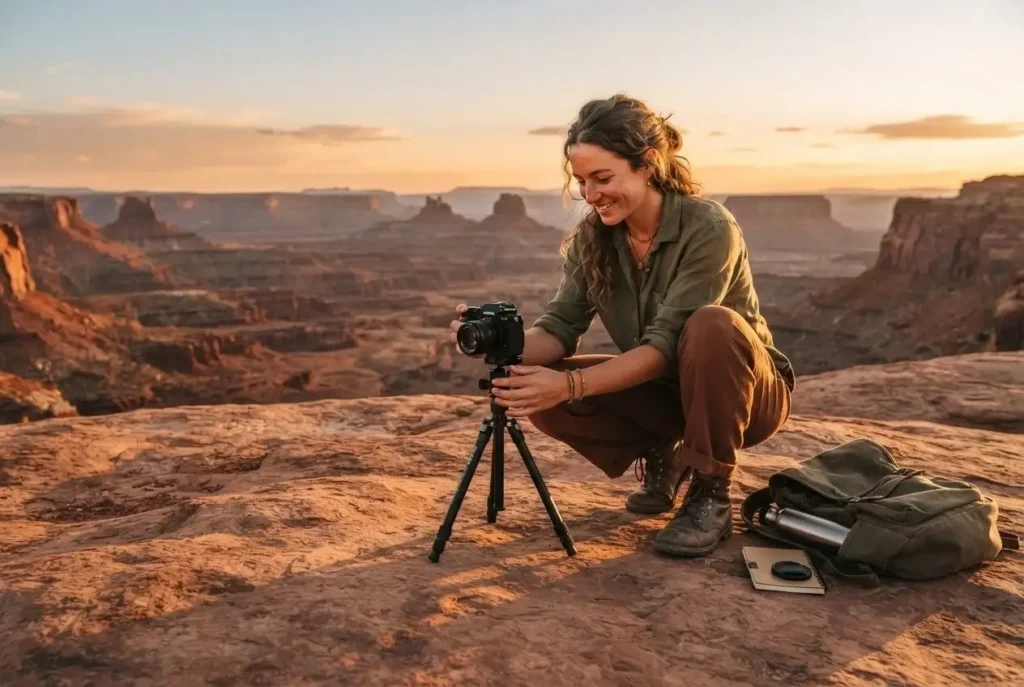
A lightweight travel tripod is one of the best investments you can make. Most modern smartphones have a self-timer and can connect to a Bluetooth shutter remote for under $10. At busy spots, asking another traveler to take your photo usually works well, especially if you offer to photograph them in return.
A few broader patterns worth knowing before you plan: the Southwest locations (Antelope Canyon, Horseshoe Bend, White Sands, Zion) cluster well together for a road trip and share the challenge of extreme heat in summer. Bring more water than you think you need. The Mountain West spots (Maroon Bells, Grand Prismatic) are best in July-September for accessibility and in late September for fall color.
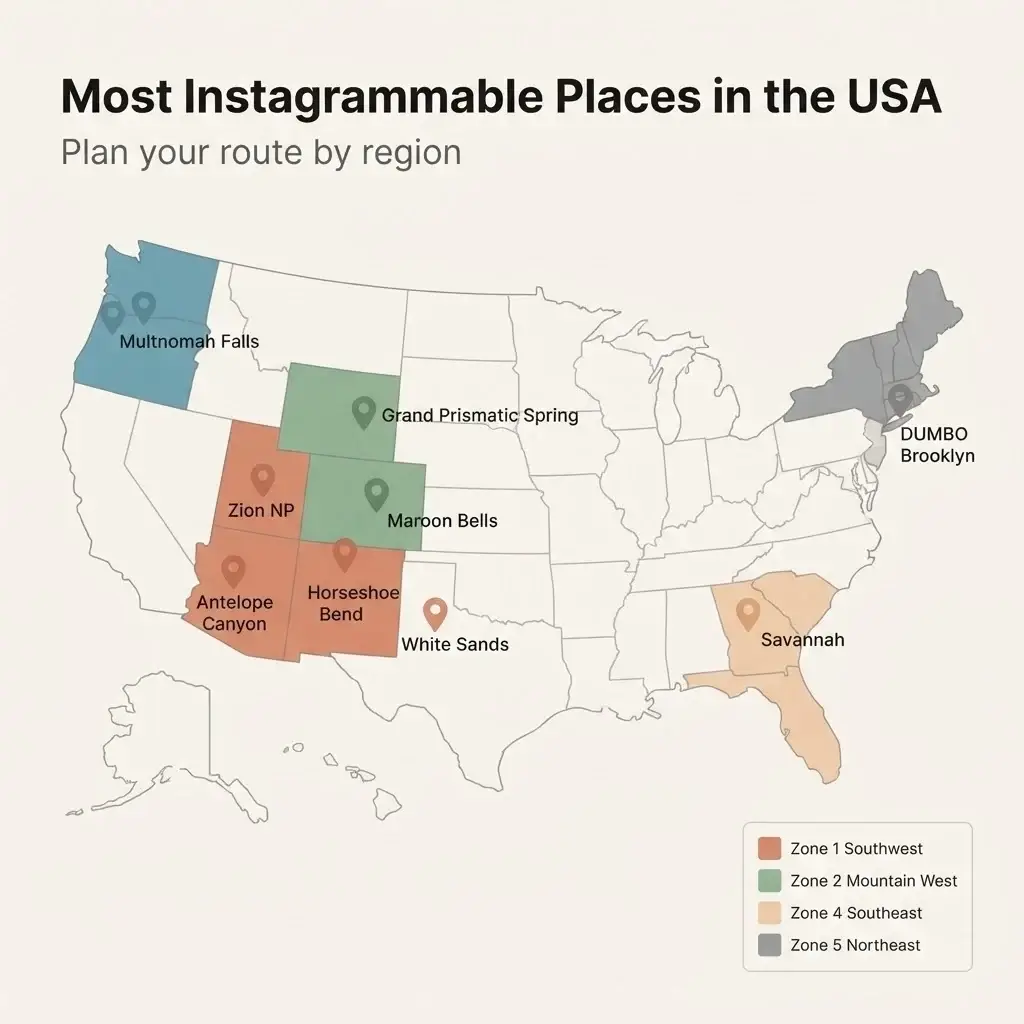
The Pacific Northwest is most photogenic in spring and early summer. Savannah and the Southeast are ideal in spring (March to April) and fall (October to November), when humidity drops and the light softens.
Finally, and this matters more than any camera tip: the experience of standing in these places is better than any photo you will take. The Grand Prismatic Spring in real life is the size of a city block, and the colors shift as you move. Maroon Lake at sunrise is quiet enough that you can hear your own breathing. The canyon walls of Zion make you feel like a very small, very grateful creature. Bring the camera, take the photos, but then put it down for a few minutes and just be there.
That is always worth more than the shot.