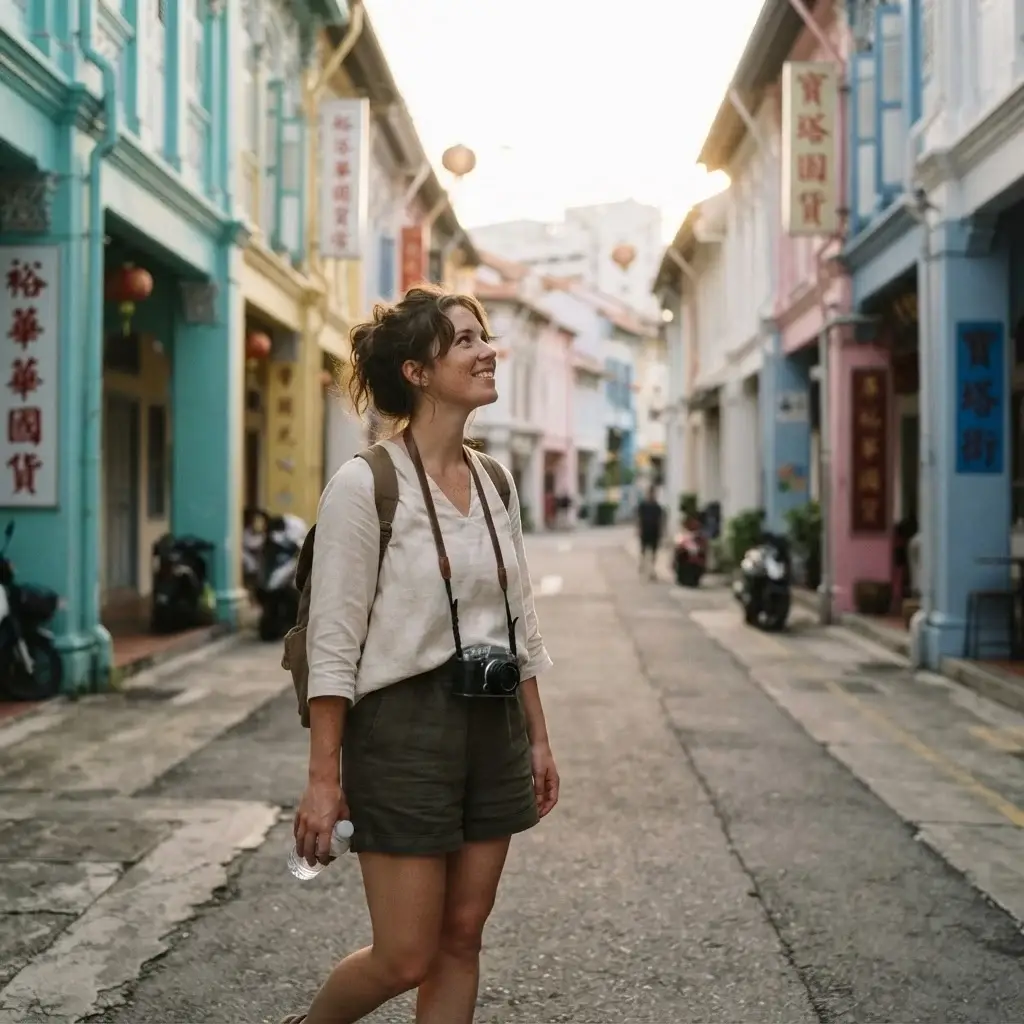
I remember sitting at my old corporate desk in New York, staring at the clock, and counting down the minutes until 5:00 PM. Back then, I only had two weeks of vacation time for the whole year. I used to panic trying to squeeze massive destinations into tiny weekend blocks. I felt like I had to run through cities like a sprinter just to see the main sights.
When you only have a short amount of time in a world-class hub, that familiar travel anxiety can easily creep in. You might ask yourself: Is two days really enough time to see anything real? Will I just get stuck in tourist traps?
If you are heading to Southeast Asia, you will likely stop in this bright, green, and fast-moving city-state. I am here to tell you that two days is plenty of time to catch the true spirit of this place. You do not have to spend all your time in generic malls or expensive resorts either. You can find deep culture, incredible street food, and peaceful green spaces all on your own.
This step-by-step guide will show you exactly how to experience Singapore in just 48 hours without burning out. We will dive into local neighborhoods, eat at famous hawker centers, and navigate the streets safely and confidently.
Pre-Trip Logistics and Seamless Arrival
Before you step off the plane at Changi Airport, you need a solid plan to handle the arrival steps smoothly. When I worked as a sightseeing guide in New York City, I learned that the secret to a stress-free trip is setting up your ground logistics before you ever leave home. Singapore is famous for being incredibly organized, which makes it the perfect place for a first-time solo traveler to build up their confidence.
First, make sure your paperwork is completely ready. I always tell travelers to check the passport and entry rules for their specific home country.
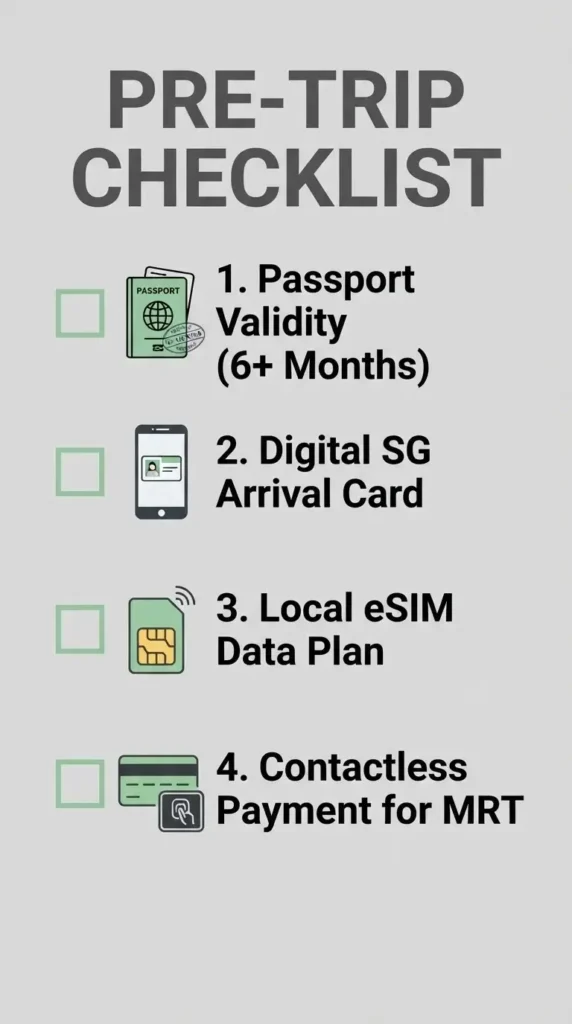
For example, you can look at the official travel advisories and entry requirements from the US Department of State to confirm your passport has at least six months of validity remaining before you book your flights. You also need to fill out the digital SG Arrival Card online within three days before you arrive. This card is completely free, and it lets you use the automated immigration gates at the airport, saving you tons of time standing in line.
Next, think about your health and physical comfort. The weather here is hot and humid all year long. It feels like stepping into a warm room the moment you walk outside. To stay healthy while exploring in the heat, you can check the CDC health recommendations and vaccine updates for travelers visiting Singapore to make sure you are fully protected and prepared for tropical climates.
Once you land, do not rush out of the airport immediately. Take about thirty minutes to explore Jewel Changi. This is a massive indoor nature complex connected right to the terminals.
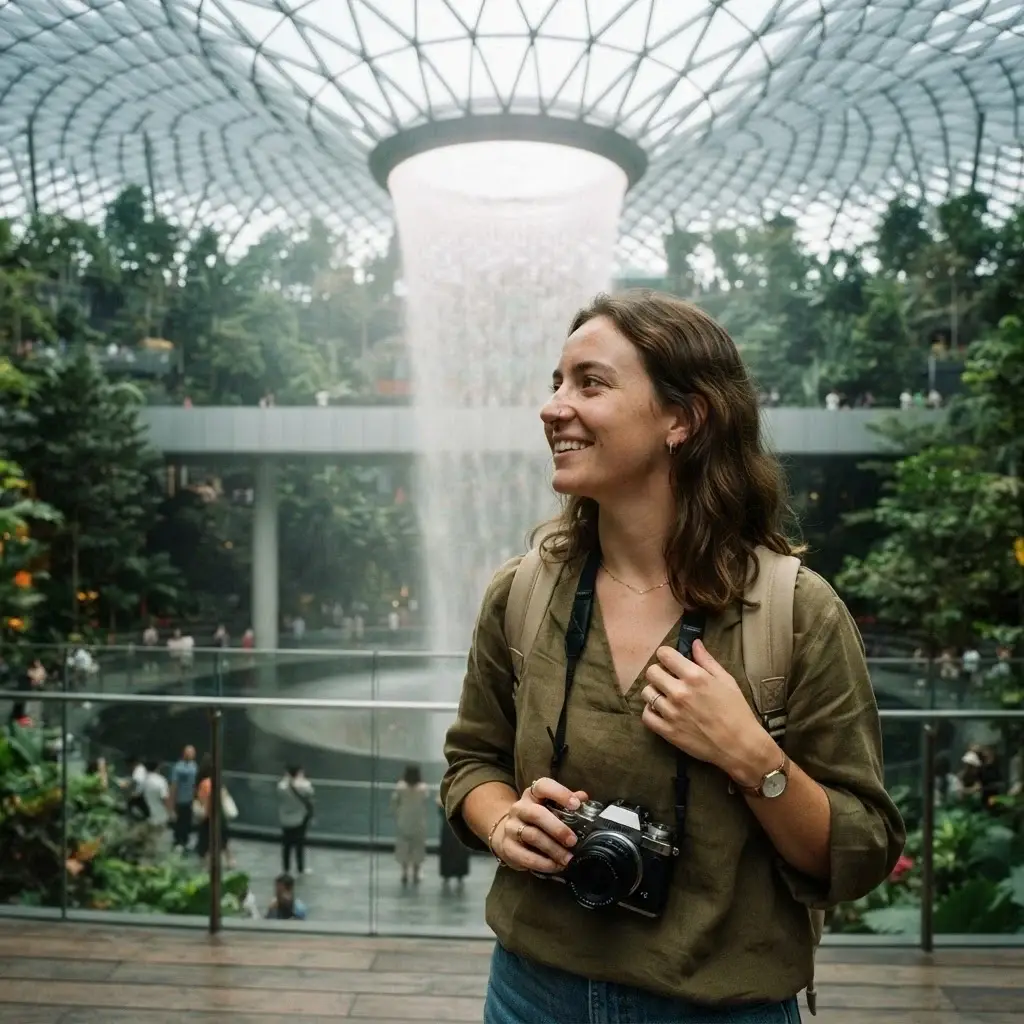
Stand on the viewing deck and watch the Rain Vortex, which is the tallest indoor waterfall in the world. It is surrounded by thousands of real trees and plants. It is a beautiful, peaceful way to clear your head after a long flight.
Before you leave the airport terminal, buy an eSIM online or pick up a local tourist SIM card at any airport convenience store. Having live data on your phone is critical for checking train maps and looking up food options on the go. Afterward, follow the signs down to the airport MRT station. MRT stands for Mass Rapid Transit, and it is the local subway system. You do not need to buy a special transit card anymore. You can just tap your regular contact-less credit card or your phone at the station gates to ride the trains and buses. It is cheap, fast, and incredibly simple.
Day 1: Morning — Historic Shophouses and Hawker Breakfast
08:00 AM — Walking the Streets of Chinatown
Start your first morning early to beat the heavy midday heat. Take the train to the Chinatown MRT station and walk out through Exit A onto Pagoda Street. When you step outside, you will see rows of beautiful, historic shophouses painted in bright pastel shades of blue, red, and yellow. These buildings have narrow fronts but stretch deep inside, and they represent the old heart of the early Chinese immigrant community.
Walk slowly down Pagoda Street toward South Bridge Road. In the early morning, the paths are quiet. You can hear the faint sound of shopkeepers rolling up their metal doors and the smell of traditional incense in the air. This neighborhood is an amazing place to realize how safe and walkable this city truly is. It gives you the space to slow down, look up at the architecture, and realize that you are successfully navigating a new country all by yourself.
09:30 AM — Visiting Historic Temples
Turn right on South Bridge Road and walk a single block until you see the striking tower of the Sri Mariamman Temple. This is the oldest Hindu temple in the city. The entrance tower is covered in hundreds of detailed, colorful sculptures of gods, goddesses, and mystical creatures. Just a few steps further down the same street, you will run into the Buddha Tooth Relic Temple. This is a massive, dark red building designed in the classic style of the Tang Dynasty.
Both of these sacred spaces welcome respectful visitors. Remember to slip your shoes off before stepping inside the Hindu temple, and make sure your shoulders and knees are covered before entering the Buddhist temple. Inside the Buddha Tooth Relic Temple, the air is cool and filled with the quiet hum of people chanting. Walk to the top floor to view the peaceful rooftop garden. It is a wonderful spot to sit on a wooden bench, enjoy the quiet, and clear your mind for the day ahead.
10:45 AM — Learning the Hawker Culture at Maxwell Food Centre
By now, you will be getting hungry. Walk directly across the street to the Maxwell Food Centre. This is a traditional, open-air pavilion packed with dozens of small food stalls. Hawker centers are the absolute soul of the local food scene. They are not fancy, but they are clean, cheap, and serve some of the best food on earth.
As a solo traveler, you need to learn the local “chope” system. If you see an empty table, place a small pack of tissues or an umbrella on the seat. This tells everyone that the table is taken while you go line up for your food.
[Maxwell Food Centre Strategy]
├── Step 1: Find an empty table and “chope” it with a tissue pack.
├── Step 2: Join the queue at Tian Tian Hainanese Chicken Rice.
└── Step 3: Order “Medium Chicken Rice” and pay with exact cash.
Walk over to the famous stall called Tian Tian Hainanese Chicken Rice. There is almost always a long line, but it moves very fast. Order a plate of poached chicken served over rice cooked in rich chicken broth. It costs around five or six Singapore dollars. The meat is incredibly soft, and the rice is bursting with flavor. Take your plate back to your table, add a spoonful of the spicy chili sauce, and enjoy your first authentic local meal alongside residents taking their morning breaks.
Day 1: Afternoon — A Journey Through Vibrant Cultural Enclaves
01:00 PM — The Colors and Scents of Little India
After lunch, head back to the MRT station and take the Downtown Line straight to the Little India station. When you walk out onto Serangoon Road, the environment changes completely. The quiet streets turn into a vibrant explosion of bright music, golden jewelry shops, and the intense, warm smell of fried spices and fresh jasmine flower garlands.
Walk down the narrow sidewalks and explore the Tekka Centre. The ground floor holds a massive wet market and a bustling food court. Watch the local vendors chop fresh vegetables and flip thin pieces of dough to make roti prata.
If you want a small sweet treat, buy a cold glass of mango lassi or a hot cup of teh tarik, which is a sweet milk tea that vendors pour back and forth between two cups from high up to create a thick, frothy top layer. Walking through these crowded, sensory-rich streets on your own is a huge confidence booster. It teaches you to trust your senses and enjoy the beautiful, chaotic rhythm of a different culture.
03:00 PM — The Heritage of Kampong Glam
From Little India, you can take a short fifteen-minute walk or a quick bus ride over to Kampong Glam, which is the historic Malay and Muslim quarter of the city. Walk down Bussorah Street, and your eyes will be drawn instantly to the massive golden dome of the Sultan Mosque rising up against the sky. The street is lined with tall palm trees and old shophouses that now hold Middle Eastern restaurants, perfume shops, and textile stores.
Take your time walking down Haji Lane, which runs parallel to the main mosque street. This narrow alleyway is famous for its creative energy. The historic walls are covered in massive, colorful street art murals painted by local and international artists.
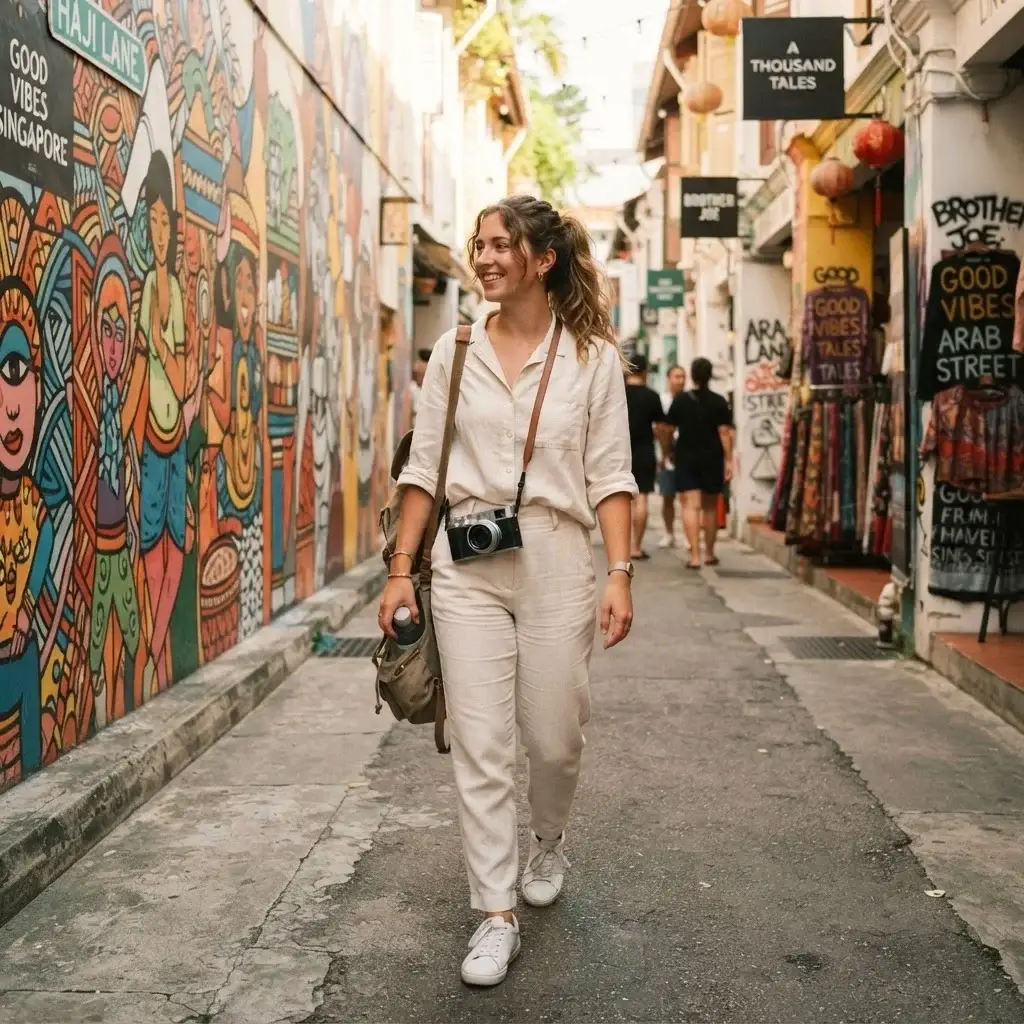
Instead of expensive luxury brands, you will find small, independent boutiques selling handmade clothes, vintage bags, and unique souvenirs. It is a fantastic place to sit at an outdoor cafe table, sip a cold drink, and watch people pass by.
Day 1: Evening — The Futuristic Waterfront and Garden Lights
05:30 PM — Walking Around Marina Bay
As the afternoon sun starts to go down, take the train to the Bayfront MRT station to experience the modern side of the waterfront. Walk along the wide concrete pathway that wraps around Marina Bay. You will see the famous Marina Bay Sands hotel building, which looks like a massive ship balanced across three giant skyscrapers.
When I was waitressing to save up money for my first big international trips, I used to think that you had to be incredibly wealthy to enjoy iconic global landmarks. But walking around this beautiful bay is completely free for anyone. You can just lean against the wooden railings, feel the cool evening breeze coming off the water, and watch the modern city skyline light up as the sky turns deep purple.
07:15 PM — Exploring the Supertree Grove
Walk through the massive cooling conservatories of Marina Bay Sands and follow the pedestrian bridges over into Gardens by the Bay. This is a huge, futuristic park built right on reclaimed land. The most famous feature is the Supertree Grove. These are giant, tree-like structures made of metal frames that are covered in living orchids, ferns, and climbing tropical plants.
Find a comfortable spot on the grassy lawn directly beneath the tall metal structures. At 07:45 PM, the park starts its evening light and music show, which is called Garden Rhapsody.
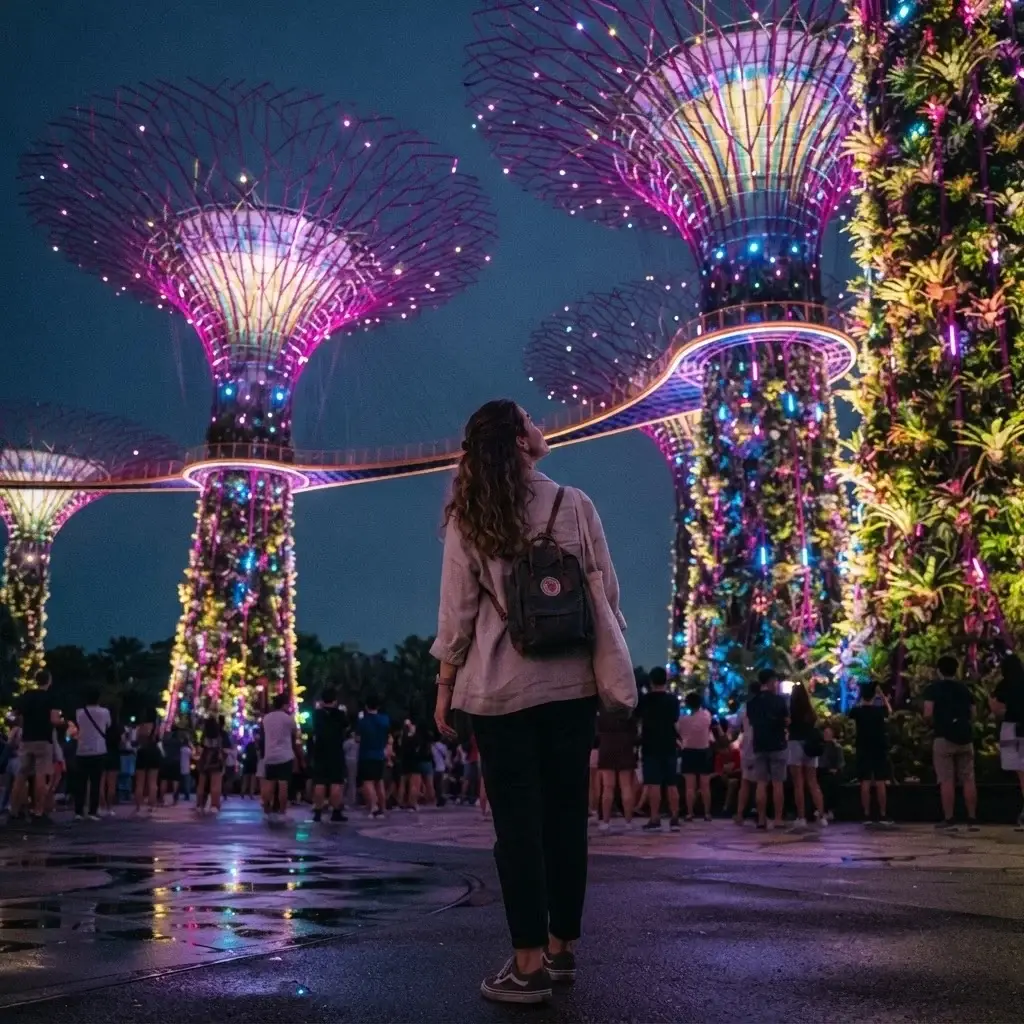
The entire grove of giant trees begins to flash and glow in different shades of green, red, and blue to the sound of dramatic music. It feels like you are sitting inside a classic science-fiction movie. It is an inspiring experience that reminds you exactly why you left your comfortable routine at home to travel the world.
08:30 PM — An Outdoor Dinner at Satay by the Bay
After the light show ends, follow the paved waterfront walking path inside the park for about ten minutes until you reach Satay by the Bay. This is a more relaxed, scenic hawker center located right near the water’s edge. It is famous for its open-air charcoal grills.
Walk up to the satay stalls and order a mixed set of chicken, beef, or mutton skewers. The meat is marinated in sweet local spices and grilled over real hot coals until the edges get nice and crispy.
The stall owner will serve the skewers with a thick, warm peanut dipping sauce, fresh pieces of red onion, and raw cucumber slices. Sit at a wooden table near the water, listen to the crickets in the grass, and enjoy a simple, delicious meal to celebrate wrapping up your first full 24 hours in the city.
Day 2: Morning — Quiet Green Spaces and Historical Wonders
07:30 AM — Walking Through the Singapore Botanic Gardens
Start your second morning by heading to the central part of the island to see the greenest space in the city. Take the Downtown train line and get off right at the Botanic Gardens MRT station. The entrance to the park is located just a few steps from the train exit, and admission to the main grounds is completely free.
This park is a massive green sanctuary that is over 160 years old. It is an incredibly important historic location, and you can see why it is proudly listed on the UNESCO World Heritage official database of protected cultural sites because of its major work with early tropical plant research.
[Day 2 Morning Walking Path]
Botanic Gardens MRT Exit ➔ Eco Lake ➔ Ginger Garden ➔ National Orchid Garden ➔ Tanglin Gate Exit
Walk down the wide, shaded pathways underneath giant tropical trees that are older than the city itself. You will see local residents practicing tai chi on the grass or jogging past quiet lakes filled with white swans.
Make sure to spend a few dollars to enter the National Orchid Garden section inside the park. It holds the largest collection of orchids in the world, with over one thousand distinct species on display.
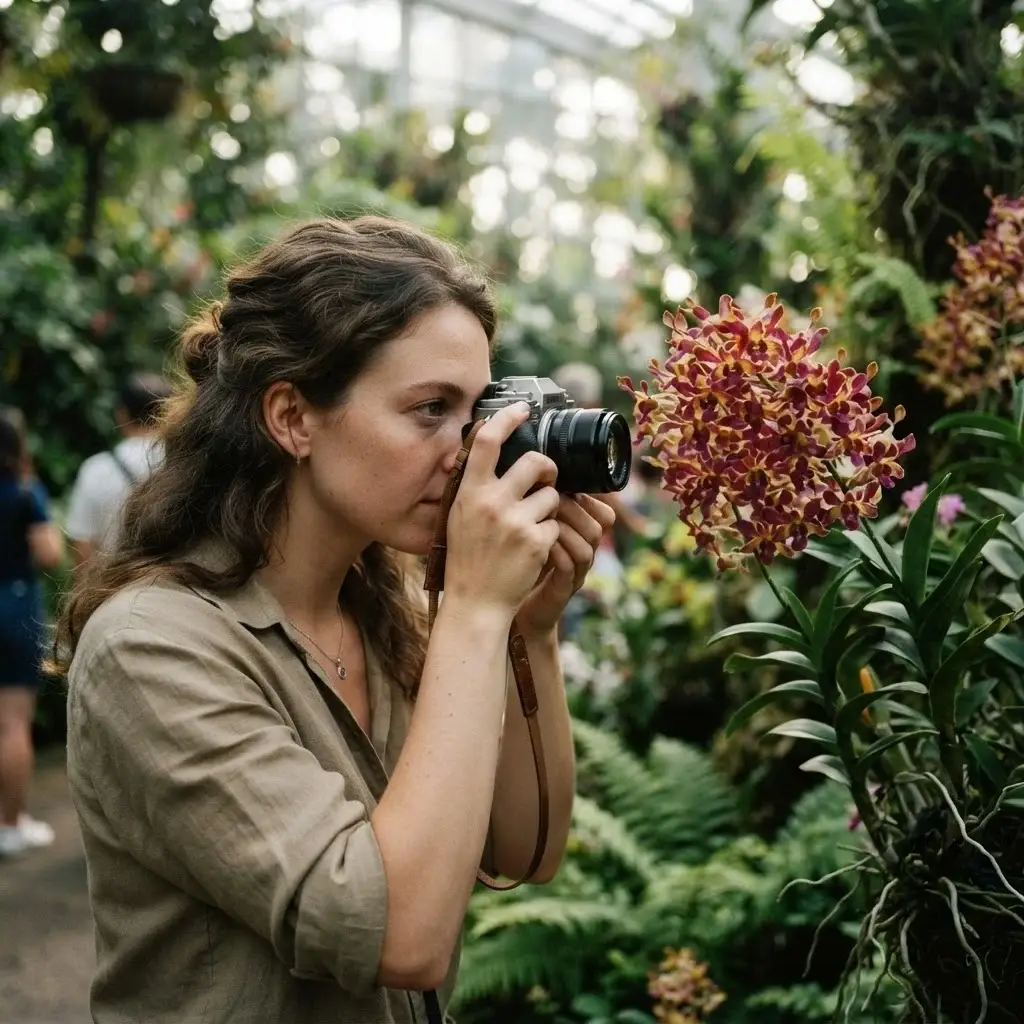
Walking through the misty glasshouses and seeing the bright rows of rare purple, pink, and gold flowers is incredibly peaceful. It is a perfect place for a solo traveler to write in a journal, take photos, and enjoy a slow, unhurried morning.
10:30 AM — Coffee and Colonial History in the Civic District
Take the train back toward the downtown area and get off at the City Hall MRT station to explore the historic Civic District. This neighborhood is filled with grand, white stone buildings that were built during the British colonial era. Walk past the Victoria Theatre and look across the green lawn at the Old Parliament House.
Step inside the National Gallery Singapore, which occupies the historic buildings of the former City Hall and Supreme Court. You do not have to buy a full museum ticket if you are short on time. You can walk through the stunning, air-conditioned public atriums for free.
Stop at a quiet cafe inside the building to grab a cup of local coffee and a slice of fresh cake. Sitting inside these massive, beautiful stone halls gives you a deep sense of the complex history of this island, tracking its path from a small trading port to a global power.
Day 2: Afternoon — Quiet Alleys and Mid-Century Architecture
01:00 PM — The Art Deco Neighborhood of Tiong Bahru
For your second afternoon, skip the busy shopping malls and take the East-West train line to the Tiong Bahru MRT station. This is one of the oldest housing estates on the island, and it looks completely different from the glass skyscrapers downtown. The streets are lined with low, white concrete buildings designed in the unique 1930s Art Deco architectural style, featuring curved corners, outdoor spiral staircases, and clean lines.
This neighborhood is the definition of slow travel. Walk down the quiet, shaded alleys and look for independent bookstores and hidden coffee shops.
It is a very peaceful, residential area that shows you how local families actually live away from the main tourist destinations. Navigating these quiet streets on your own helps you feel less like a temporary tourist and more like an intentional, curious explorer.
02:30 PM — Sampling Traditional Snacks at Tiong Bahru Market
Walk to the center of the neighborhood to find the massive, round Tiong Bahru Market building. The ground floor is a busy market selling fresh flowers and fruit, while the second floor holds a clean and organized hawker center.
[Tiong Bahru Food Guide]
– Dish to try: Chwee Kueh (Steamed rice cakes)
– Where: Jian Bo Shui Kueh (Stall #02-05)
– Flavor profile: Savory, salty, and slightly spicy preserved radish toppings
Look for a stall called Jian Bo Shui Kueh, which has been making traditional snacks for decades. Order a plate of chwee kueh, which are small, smooth steamed rice cakes topped with a savory, salty mixture of diced preserved radish and chili paste. A plate of four costs less than three dollars.
The texture is incredibly soft, and the savory topping is packed with rich flavor. Wash it down with a fresh, cold sugarcane juice squeezed right in front of you at a nearby drink stall.
Day 2: Evening — Riverside Views and a Street Food Finale
05:30 PM — Saying Goodbye to the Merlion
As your 48 hours begin to wind down, take a train back to the Raffles Place MRT station and walk out toward the edge of the Singapore River. Follow the paved concrete riverside path to Merlion Park. This is where you will find the famous Merlion statue, which has the head of a lion and the body of a fish, spraying water out into the blue bay.
Stand on the wooden viewing pier and look back out across the wide open water toward Marina Bay. This spot can get crowded with tour groups, but as a solo traveler, you can easily slide into the small gaps along the railing. Watch the classic wooden bumboats cruise slowly up and down the river water. It is a perfect spot to take a deep breath, watch the final sunset of your trip, and feel incredibly proud of everything you managed to see and do on your own over the last two days.
07:30 PM — The Famous Satay Street at Lau Pa Sat
For your final dinner, take a short ten-minute walk from the river into the heart of the central business district to find Lau Pa Sat. This is a stunning, historic market building made of dark Victorian cast-iron columns that dates back to the 1800s.
Every single evening at 07:00 PM, an amazing transformation happens right outside the historic building. The local police block off Boon Tat Street to cars, and vendors quickly wheel out rows of wooden tables and plastic chairs directly onto the asphalt. The area instantly turns into an energetic, open-air street food street known as “Satay Street.”
The air is thick with the rich smell of sweet smoke from dozens of open charcoal grills. Walk down the street and choose a stall—Stall 7 and Stall 8 are incredibly popular. Order a mixed plate of grilled chicken and prawn satay. Sit outside on the closed street surrounded by towering glass skyscrapers. Eating hot, smoky street food on the pavement while looking up at the modern office towers is an unforgettable experience. It is the perfect mix of old tradition and modern city life, and it makes for an incredible ending to your short journey.
Solo Traveler Survival Guide for Singapore
Navigating a massive global hub in a short time can feel intimidating, but this city is widely considered one of the easiest and safest places on earth for independent explorers. If you are preparing your very first international solo trip and feel nervous about handling things on your own, this city is the absolute best place to start.
Safety, Public Comfort, and Local Laws
The safety levels here are incredibly high, and violent crime is almost non-existent. You can walk down quiet residential streets or take the subway late at night completely on your own without any worry. However, the island has very strict laws to keep the public spaces clean and orderly.
Never litter on the streets, do not chew gum while walking around, and never eat or drink anything while you are inside the MRT train stations or on the trains. The fines for breaking these rules are very high, and the station staff watch the platforms closely. Keep your water bottle closed inside your bag until you walk completely out of the station doors.
Navigating the City Efficiently
The public transit system is the best way to get around quickly. The trains run every few minutes, they are immaculately clean, and the stations have clear, simple signs in English.
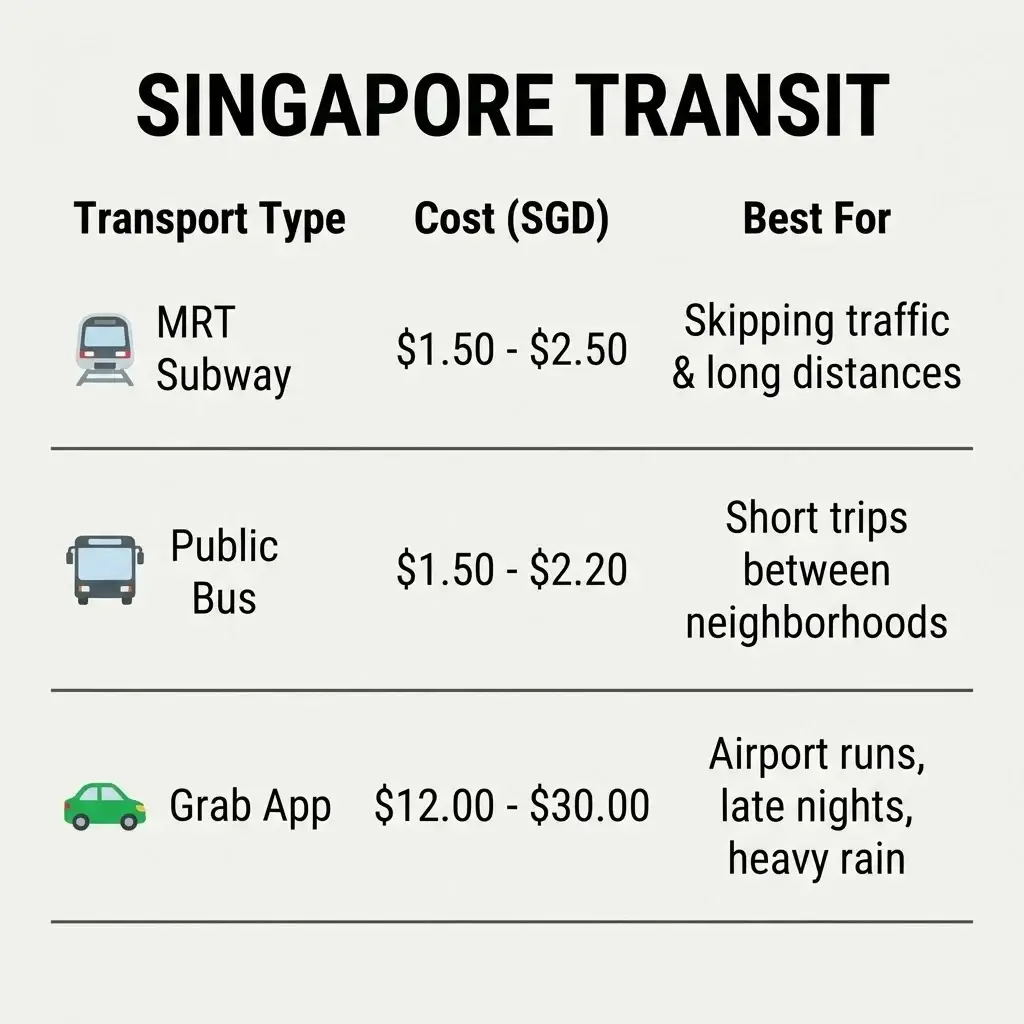
However, if you are tired after walking all day or need to get to the airport quickly with heavy bags, you can use a local ride-hailing app. Traditional taxis can be tough to hail on the street during peak rainstorms, so using an app is a lifesaver. You can read about how the system works and how to set up your payment account on the official Grab app ride-hailing overview for international visitors so you can safely book a car from your phone whenever you need a break from the heat.
If you want to read more about the overall culture, neighborhoods, and history of the island before you start planning your exact walking routes, you can look through the Lonely Planet Singapore destination guide and regional maps to get a clear mental picture of the layout.
Finally, even when traveling in the safest countries on earth, unexpected things can always happen like flight delays, lost bags, or minor medical issues. I always check the World Nomads travel insurance guidelines for independent creators before I pack my bags to ensure my camera gear and health are fully covered on the road.
Embracing the Power of Short Journeys
When your 48 hours come to an end, you will realize that you do not need weeks of vacation time to have a meaningful travel experience. In just two days, you can navigate a world-class transit system, learn the unwritten rules of local hawker centers, and walk through historic neighborhoods filled with deep cultural heritage.
Travel is not about counting the number of days you spend in a place or ticking famous monuments off a checklist. It is about proving to yourself that you are capable of stepping out of your comfort zone, exploring a new culture with an open mind, and taking control of your own adventures. Stop waiting for the perfect, long vacation window to appear. Pack a small bag, book that short ticket, and go see what the world has to teach you.