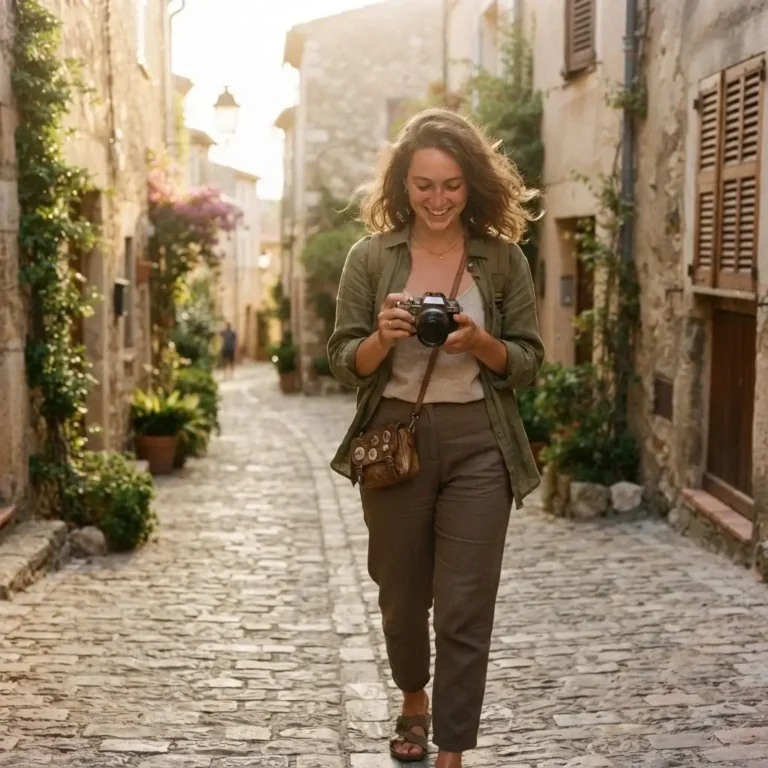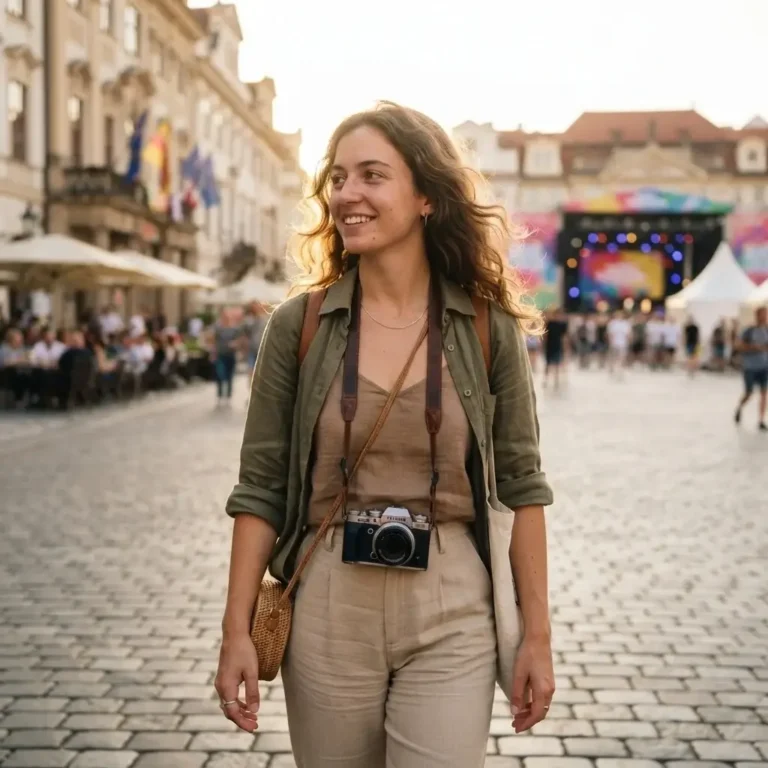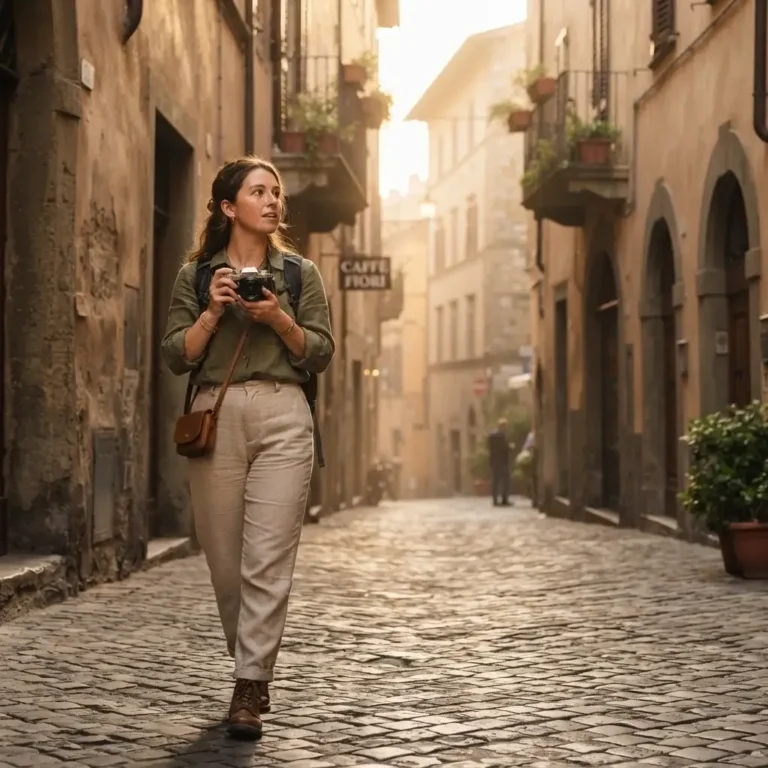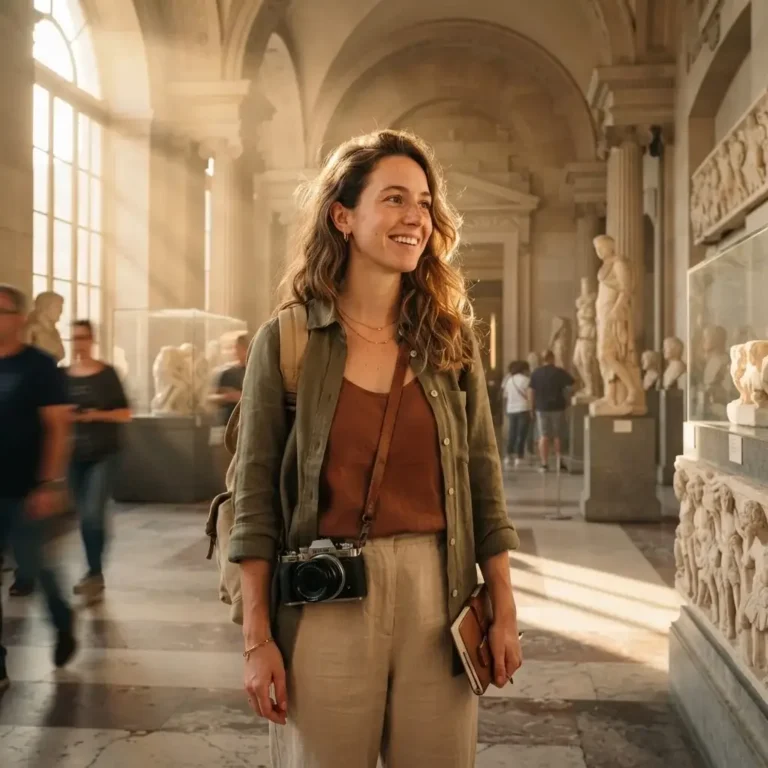
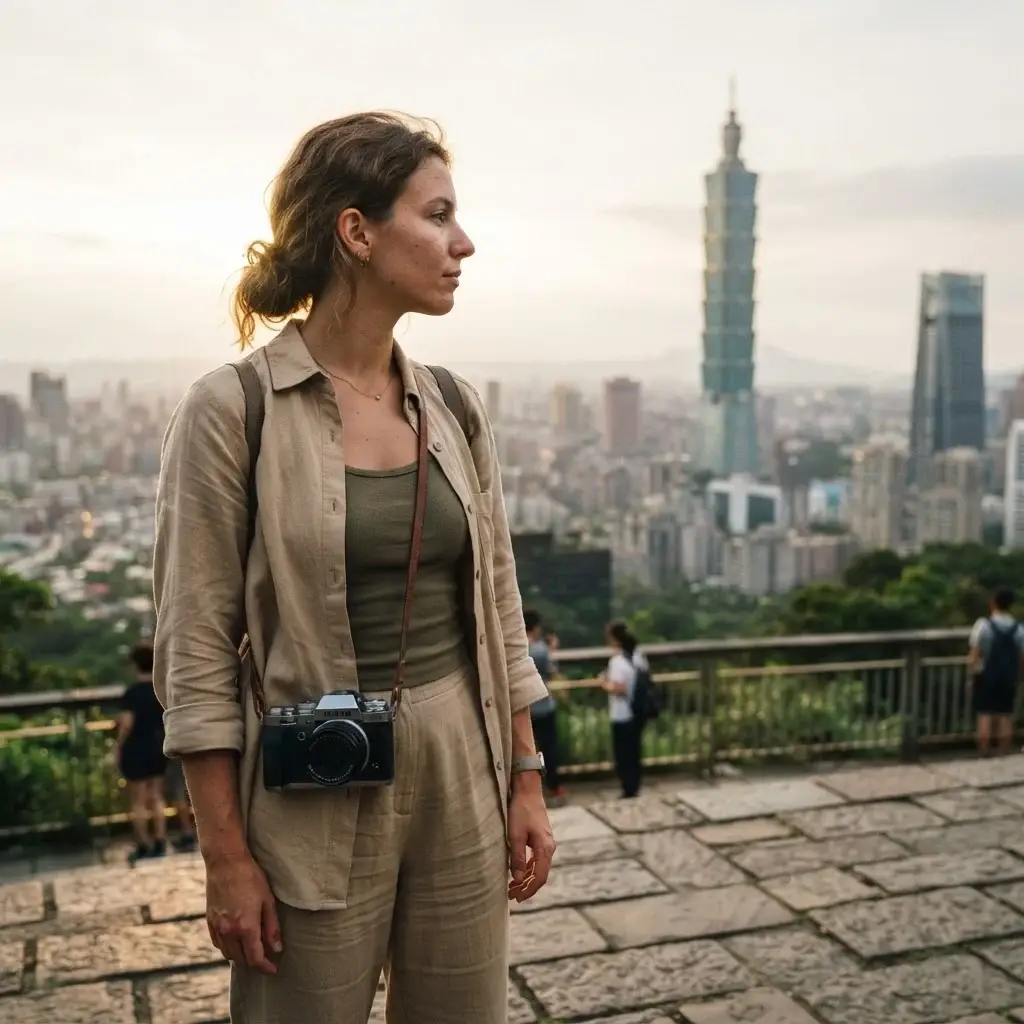
For a long time, I lived a life dictated by standard routines. I worked at a demanding corporate desk job in New York City, staring at a computer screen and counting down the days until my limited vacation time. I felt stuck. I wanted to see the world, but the thought of traveling completely alone to an unfamiliar country felt terrifying. I used to think that to make a trip worth the money, I had to pack every single hour with activities. I would look at travel brochures and massive online guides, writing down lists of fifty different places to visit in a single weekend. It felt like a race.
When I finally quit that office job, I had to work as a waitress and save every dime to fund my true dream: long-term, meaningful travel. Later, I taught English in Thailand and spent years learning how to navigate the world on my own terms. Through those raw experiences, I discovered a vital secret that completely changed my perspective. Travel is not a competition. You do not win an award for rushing through fifteen museums in two days. In fact, running around like that usually makes you feel more anxious, tired, and disconnected.
The best way to overcome your fears and build real travel confidence is to slow down. That is why I designed this specific 4-day itinerary for Taipei. Taipei is one of the safest, friendliest, and most rewarding cities in the world for solo travelers. It has a world-class public transit system, wonderful food, and a perfect mix of modern city life and quiet nature. By choosing a slow pace, you give yourself permission to make mistakes, read the signs, enjoy your meals, and genuinely connect with the local culture.
Why a Slower Pace Changes Everything for Solo Travelers
When I worked as a certified sightseeing guide in New York, I watched tourists sprint from one famous landmark to another. They were so busy looking through their camera lenses and checking items off a list that they never actually experienced the city. They were stressed. When you travel solo for the first time, stress is your biggest enemy. If your schedule is too tight, a single delayed train or a wrong turn can ruin your entire day and make you feel like you are failing.
A slow-paced itinerary gives you breathing room. If you get lost on the subway, it does not matter. You have plenty of time. If you find a beautiful tea house and want to sit there for three hours reading a book, you can do it. This freedom is exactly how you build confidence. You learn that you can handle small challenges on your own. You realize that the world is not a scary place to rush through, but a welcoming community to explore step by step.
Taipei is the ultimate training ground for this kind of personal growth. The city is laid out beautifully, the people are incredibly polite, and English signs are everywhere. To get a grand sense of the region’s geography and culture before you arrive, checking out the general destination overviews on Lonely Planet can give you a helpful baseline for your trip. But remember, we are going to take this city slow. Let’s look at exactly how to prepare for your journey with complete peace of mind.
The Groundwork: Arriving in Taipei with Zero Stress
Before you step on the plane, you can take a few simple steps to remove almost all your travel anxiety. True confidence comes from preparation, not luck. First, make sure your paperwork is completely ready. I always tell my readers to check the entry requirements and passport validity rules on the US Department of State Travel website well before their departure date so there are no surprises at the airport.
Next, think about your safety net. Traveling alone means you are responsible for yourself, which can feel heavy. To lift that weight off your shoulders, it is smart to look into proper medical and trip protection. Getting a reliable plan through World Nomads Travel Insurance is what I do to stay confident on the road, knowing that if I trip on a mountain path or lose my bags, I am covered.
Landing at Taoyuan International Airport (TPE)
When your flight lands in Taiwan, your first mission is to get connected and get moving. Do not rush through the arrival hall. Take a deep breath. Stop at one of the local telecom desks right in the airport to buy a 4G or 5G tourist SIM card with unlimited data. Having a working phone with Google Maps is like having a helpful local friend in your pocket at all times.
After getting your SIM card, walk over to the airport convenience store or the MRT service desk and buy an EasyCard. This is a small plastic card that you load with cash. You will tap this card to ride the subways, buses, and even to pay for items at convenience stores.
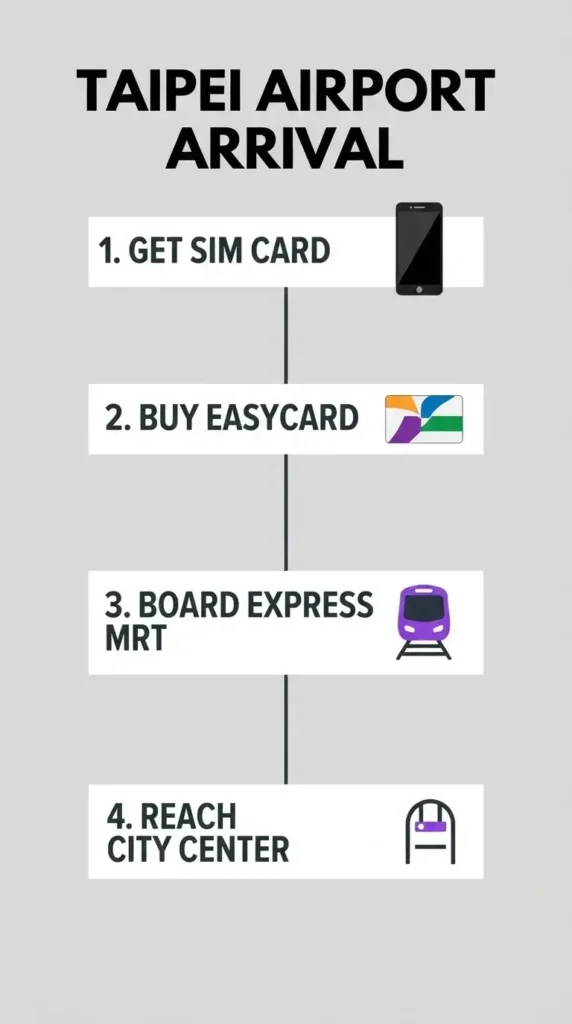
It completely eliminates the stress of handling foreign coins every time you want to buy a train ticket.
To get to the city center, follow the clear purple signs to the Taoyuan Airport MRT. There are two types of trains: the Commuter train (blue) and the Express train (purple). Take the Express train. It costs 160 New Taiwan Dollars (NTD) and takes you directly to Taipei Main Station in just about 39 minutes. The seats are comfortable, there is dedicated luggage space, and you can watch the green hills of Taiwan slide past your window as you glide into the city.
Day 1: Historic Roots and Evening Flavors
On your very first day in Taipei, we are going to focus on getting grounded. We will visit the oldest neighborhood in the city, look at stunning historic architecture, and eat incredible food at a local night market. This day is designed to show you how easy it is to navigate the city using your EasyCard.
Morning: Finding Peace at Longshan Temple
Start your morning around 9:00 AM to avoid the midday heat. Take the MRT Blue Line directly to Longshan Temple Station and walk out of Exit 1. The temple is just a few steps away. Built in 1738 by immigrants from Fujian, this temple has survived earthquakes, fires, and even bombings during World War II. It is a living, breathing part of the community where locals come every day to pray, chant, and find peace.
When you walk through the right-side gate (always enter through the right door, known as the dragon gate, and exit through the left, the tiger gate), the sensory experience will hit you. You will smell thick, sweet incense smoke and hear the low, rhythmic sound of people chanting scriptures. Do not feel intimidated. You are completely welcome here.
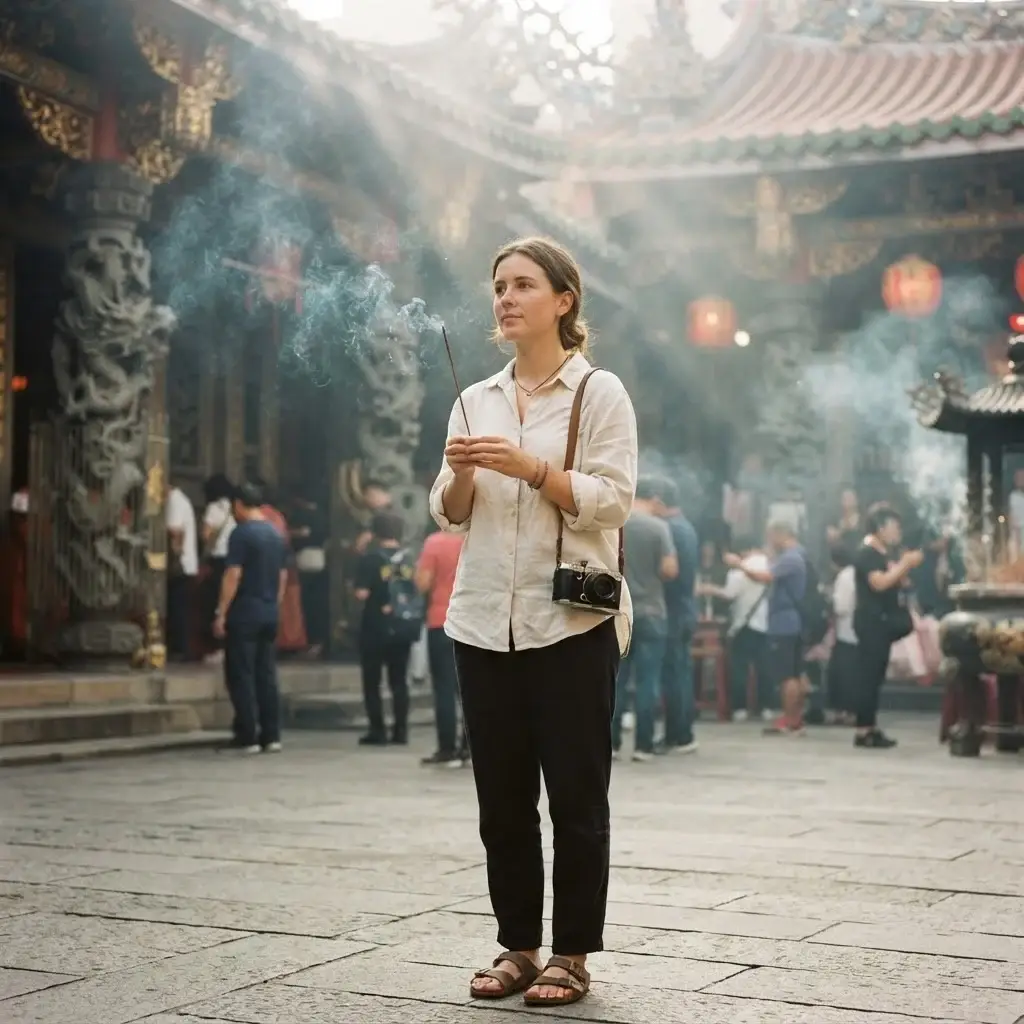
To build your confidence today, try the local tradition of jiaobei (moon-shaped oracle blocks). Walk up to the wooden tables near the main altar. You will see pairs of red, crescent-shaped wooden blocks.
- Pick up a pair and hold them in your hands.
- State your name, your birthday, where you live, and ask a clear, simple question about your life or your trip.
- Gently toss the blocks onto the stone floor.
If one block lands flat side up and the other block lands curved side up, the answer to your question is a clear “yes.” If they land any other way, it means “no” or that the gods are amused by your question. Watching the blocks clatter onto the floor is a beautiful way to participate in local life instead of just watching from the sidelines.
Afternoon: Strolling Through Bopiliao Historical Block
From Longshan Temple, take a short, flat five-minute walk down Guangzhou Street to the Bopiliao Historical Block. This is a preserved street lined with red-brick buildings that date back to the Qing Dynasty and the Japanese colonial era. It feels like walking through a time machine.
The city has turned these buildings into free art galleries and historical displays. Because we are following a slow-paced 4-day itinerary for Taipei, do not rush through here. Walk slowly along the covered brick arcades. Look at the old wooden doorways and the creative street murals painted by local artists. There are plenty of stone benches where you can sit under the shade of massive banyan trees. It is a quiet, peaceful space where you can journal, look over your maps, and realize that you are doing perfectly fine on your own.
Late Afternoon: The Energy of Ximending
When you are ready for a change of pace, hop back onto the MRT Blue Line for just one stop to Ximen Station and take Exit 6. You will walk straight into Ximending, which is often called the Times Square of Taipei. It is a massive pedestrian shopping zone filled with bright neon signs, clothing boutiques, street performers, and bubble tea shops.
The contrast between the quiet bricks of Bopiliao and the wild energy of Ximending is incredible. Walk down the streets and grab a cup of classic brown sugar bubble tea from a shop like Xing Fu Tang. You can watch the workers torch the brown sugar on top of the cream until it turns into a crispy, sweet caramel layer. Walk over to the iconic Red House, an eight-sided building built in 1908 that now houses independent craft shops, local design studios, and cafes. It is a wonderful place to pick up unique souvenirs that actually support local artists.
Evening: An Authentic Dinner at Ningxia Night Market
For dinner, we are going to tackle your very first Taiwanese night market. Take the MRT Red Line to Shuanglian Station, take Exit 1, and walk west down Minsheng West Road for about ten minutes. Ningxia Night Market is smaller and much less overwhelming than the famous Shilin Night Market, making it the perfect spot for a solo traveler to build their food-ordering confidence.
Night markets can look chaotic at first. There are bright lights, long lines, sizzling noises, and strange smells. Before you buy anything, walk from one end of the street to the other. Look at what people are eating. To make sure you stay feeling great while enjoying local treats, you can check general food safety tips on the CDC Travelers’ Health portal, though Taipei is famously clean and its night market stalls are heavily monitored by health officials.
- What to Eat: Look for the stall selling Lu Rou Fan (Taiwanese Braised Pork Rice). It is a simple bowl of steaming white rice topped with tender, savory, slow-cooked pork belly that melts in your mouth. A small bowl costs about 40 NTD (around 1.25 USD).
- How to Order: Pointing is completely acceptable. Most stalls have English menus with pictures. Just raise one finger to show you want one portion, smile, and say thank you (Xie Xie). The stall owners are incredibly patient and used to visitors.
Day 2: Sky-High Views and Cultural Design Parks
Today is all about seeing Taipei from two completely different viewpoints: from the top of a lush, green mountain trail and from inside a creative, repurposed industrial factory. You will practice navigating the MRT Red and Blue lines while learning that nature is never far away in this green city.
Morning: Conquering Elephant Mountain (Xiangshan)
Wake up early to catch the crisp morning air. Take the MRT Red Line all the way to the final stop, Xiangshan Station, and take Exit 2. Walk straight through the clean, quiet Xiangshan Park following the clear English signs toward the Xiangshan Hiking Trail entrance. It takes about ten minutes to reach the base of the stairs.
Elephant Mountain is not a rugged wild trail; it is a steep, well-maintained staircase made of wide stone blocks. Yes, there are a lot of stairs—about 600 of them to reach the top viewing platforms. But remember our philosophy: we are taking this slow. You do not need to race up the steps.
As you climb, you will pass local grandparents sprinting past you with giant smiles on their faces. Let them pass! Stop at the regular rest landings. Take a sip of water, look back through the trees, and watch the city skyline slowly open up below you. When you reach the Photographers’ Platform or the famous Six Giant Rocks, you will get an unobstructed view of the majestic Taipei 101 building rising into the sky like a giant bamboo stalk. Standing up there, feeling the cool mountain breeze on your face after a tough climb, gives you an instant rush of pride. You got yourself here.
Afternoon: Creative Spaces at Songshan Cultural Park
After walking back down the mountain, take the MRT from Xiangshan Station to Taipei 101/World Trade Center Station for lunch. The basement of Taipei 101 features a massive food court where you can safely try the world-famous soup dumplings at Din Tai Fung. Use the electronic waiting system, grab a number, and watch the chefs through the glass windows roll, fill, and pinch each dumpling with absolute precision. Order the classic pork xiaolongbao. Poke a small hole in the wrapper to let the hot broth escape, drink the soup, and then eat the dumpling with a sliver of fresh ginger dipped in soy sauce and vinegar.
Next, take the MRT Blue Line to Sun Yat-sen Memorial Hall Station, Exit 5, and walk to the Songshan Cultural and Creative Park. Built in 1937, this massive complex was originally a state-run tobacco factory during the Japanese colonial period. Today, the city has transformed the old industrial buildings, boiler rooms, and warehouses into a peaceful oasis for arts, design, and literature.
Walk through the grand wooden hallways of the main factory building. The rooms are now filled with independent design shops, paper goods stores, glass-blowing studios, and cozy cafes. Outside, there is a large, quiet lotus pond surrounded by wooden boardwalks and tall green reeds. You can sit by the water, watch the ducks swim, and enjoy a quiet afternoon surrounded by local families and creative minds. It is the perfect place to rest your legs after your morning hike.
Evening: The Vibrant Alleys of Raohe Night Market
As the sun goes down, it is time for dinner at one of Taipei’s oldest and most atmospheric markets. Take a ten-minute walk north from the creative park or take the MRT Green Line directly to Songshan Station, Exit 5. The magnificent, glowing traditional gate of Raohe Night Market sits right next to the beautiful Ciyou Temple.
Raohe is a single, long straight street packed with rows of food stalls down the middle and shops on the sides. It is incredibly easy to navigate because you just walk down one side and come back up the other.
- The Big Culinary Stop: Right at the very entrance of the market under the main sign, you will see a massive line of people waiting. Join it. They are waiting for the famous Fuzhou Black Pepper Buns (Hujiao Bing).
- The Experience: You can watch the workers roll out fresh dough, stuff it with thick chunks of black-pepper-marinated pork and handfuls of fresh green scallions, and slap them directly onto the inside walls of a deep, roaring clay oven. A hot, crispy bun costs about 60 NTD. Be careful when you take your first bite; the savory meat broth inside is piping hot! Eat it slowly as you walk down the market aisle.
Day 3: Misty Tea Mountains and Old-World Commerce
On day three of your 4-day itinerary for Taipei, we are going to escape the flat city streets completely. We will ride a glass-bottomed cable car high into the misty mountains of Maokong to learn about traditional tea culture. Afterward, we will head back down to visit the oldest trading street in the city to see how old traditions thrive in modern times.
Morning: Riding the Maokong Gondola
To start this mountain adventure, take the MRT Brown Line all the way to the southern terminus at Taipei Zoo Station. Walk out of the station and take a flat, five-minute walk down the sidewalk to the Maokong Gondola terminal building.
You can use your EasyCard to pay for the ride, which costs 120 NTD one way. When you join the queue, you will see two separate lines: one for the regular cable cars and one for the Crystal Cabins (called the “Eyes of Maokong”). Choose the Crystal Cabin line. These special cabins have a thick, three-layer clear glass floor.
As the cable car lifts off the ground and launches over the mountain ridges, look straight down between your feet. You will see the tops of lush green tea fields, flowing mountain streams, and rocky cliffs passing far below you. The ride takes about 25 minutes and goes up four kilometers into the clean mountain air. As the city skyline shrinks in the distance behind you, a deep sense of calm takes over. You are navigating the mountains of Taiwan all by yourself.
Lunch: Savoring Oolong Tea at the Summit
When the gondola doors open at the final Maokong Station, step out onto the mountain road. Maokong is the epicenter of Muzha Iron Goddess (Tieguanyin) Oolong tea production. The narrow mountain roads are lined with traditional, rustic tea houses built directly into the hillsides, offering panoramic views of the valley below.
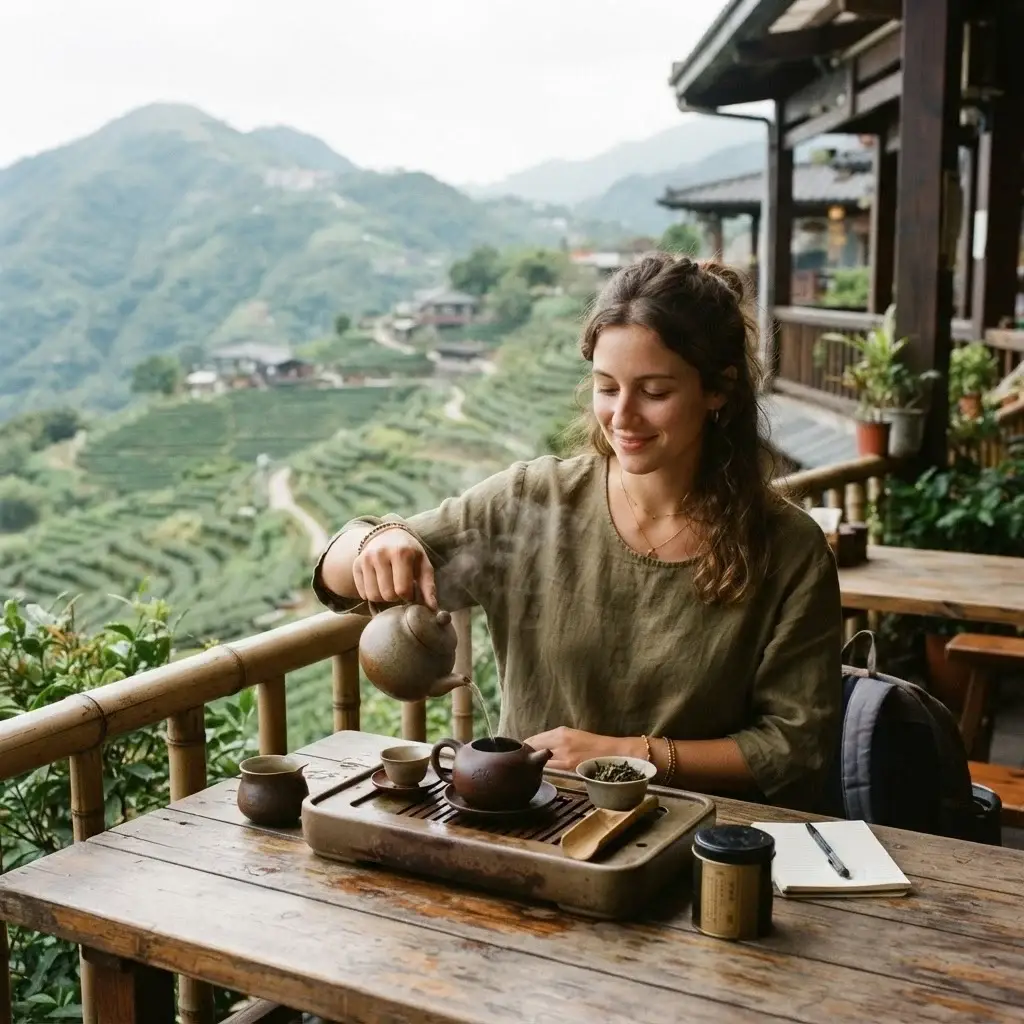
Walk along the road to a traditional spot like the Yao Yue Tea House (Moon-Inviting Tea House). When you sit down, the staff will bring you a canister of loose tea leaves, a clay kettle of boiling water sitting over a small flame, and a set of traditional porcelain tea cups.
If you do not know how to brew traditional tea, don’t worry. The host will happily demonstrate the process:
- Warm the small clay teapot with hot water first.
- Add a layer of tea leaves to the bottom.
- Pour in hot water and let it steep for exactly 45 seconds before pouring it into a small aroma cup.
- Roll the cup between your palms to smell the sweet, roasted orchid aroma before taking your first sip.
Order some tea-infused food for lunch, such as fried rice seasoned with fresh tea oil or sweet green tea steam buns. Sitting on a wooden deck surrounded by green mountains, listening to the birds, and pouring your own tea is a powerful lesson in slow travel. You are not rushing. You are completely present in the moment.
Afternoon: The Historic Soul of Dihua Street
After riding the gondola back down the mountain, take the MRT Brown Line to Nanjing Fuxing Station, switch to the Green Line, and ride it to Beimen Station. Walk out of Exit 3 and head north for about ten minutes until you reach Dihua Street in the historic Dadaocheng neighborhood.
Dihua Street is the oldest commercial street in Taipei, dating back to the 1850s when the city was a major shipping port for tea, fabrics, and medicinal herbs along the Tamsui River. The street is lined with beautifully restored two-story baroque buildings featuring intricate stone carvings, grand archways, and deep courtyards.
As you walk down the covered sidewalks, your senses will come alive. You will pass traditional Chinese medicine shops packed to the ceiling with dried roots, ginseng, and goji berries. You will see massive burlap sacks filled with dried mushrooms, scallops, and local nuts. Interspersed between these multi-generational family businesses are modern hipster cafes, independent ceramic studios, and small museums.
Stop by the Taipei Xiaohai City God Temple mid-way down the street. It is a small but incredibly busy temple where young locals come from all over Asia to pray to the Old Man Under the Moon (the god of matchmaking) for help finding love. The courtyard is filled with people holding incense sticks and offering sweet treats to the deity. It is a beautiful example of how deep cultural traditions are woven straight into the daily lives of modern residents.
Evening: Sunset at Dadaocheng Wharf
As the afternoon light begins to soften, walk westward down any of the side streets from Dihua Street for about five minutes until you reach the massive concrete flood wall. Walk through Huanhe Gate to enter the Dadaocheng Wharf area along the wide Tamsui River.
The city has built a wonderful container market directly on the pier. Colorful shipping containers have been turned into small food stalls and rooftop bars playing gentle music. Grab a cold local drink or some fresh scallion pancakes, climb up the metal stairs to the top of one of the containers, and grab a spot along the railing.
Watch the sun drop low over the river, painting the sky in deep shades of orange, pink, and purple. You will see locals riding bicycles along the riverside paths and listening to street musicians. Reflect on everything you have seen over the past three days. You have mastered the subways, climbed mountains, tried completely new foods, and successfully navigated an ancient city. Your travel confidence is growing with every single hour.
Day 4: Thermal Waters and Coastal Sunsets
On your final day in Taipei, we are going to explore the northern outer edges of the city. We will visit a tranquil hot spring village tucked inside an extinct volcanic valley and end our journey watching the ocean waves crash along the northern coast. This day is designed to show you how easy it is to venture outside the main city center using the efficient rail lines.
| Neighborhood | Key Highlight | Best Transit Access | Emma’s Top Tip |
| Beitou | Geothermal Valley & Public Baths | MRT Red Line to Beitou, transfer to Pink Line to New Beitou | Walk slowly around the steaming sulfur lake to avoid the intense heat. |
| Tamsui | Riverside Boardwalk & Fort San Domingo | MRT Red Line to the final terminal station at Tamsui | Rent a public YouBike using your EasyCard to ride along the flat coast. |
Morning: Exploring Steam and Stone in Beitou
Start your morning around 9:00 AM by boarding the MRT Red Line heading north. Ride it to Beitou Station, then cross the platform to catch the charming, single-stop Pink Line train up to Xinbeitou Station. The train cars are painted with cute cartoon characters and feature wooden tubs inside to celebrate the neighborhood’s famous hot spring history.
When you step out of the station, you will immediately notice a soft scent of sulfur in the air and see steam gently rising from the stone drainage ditches along the sidewalk. Walk up through the beautiful, shady Beitou Hot Spring Park. Your first stop is the stunning Beitou Public Library. This eco-friendly building is constructed entirely of natural wood and large glass windows, looking like a giant ship sitting inside a lush green forest.
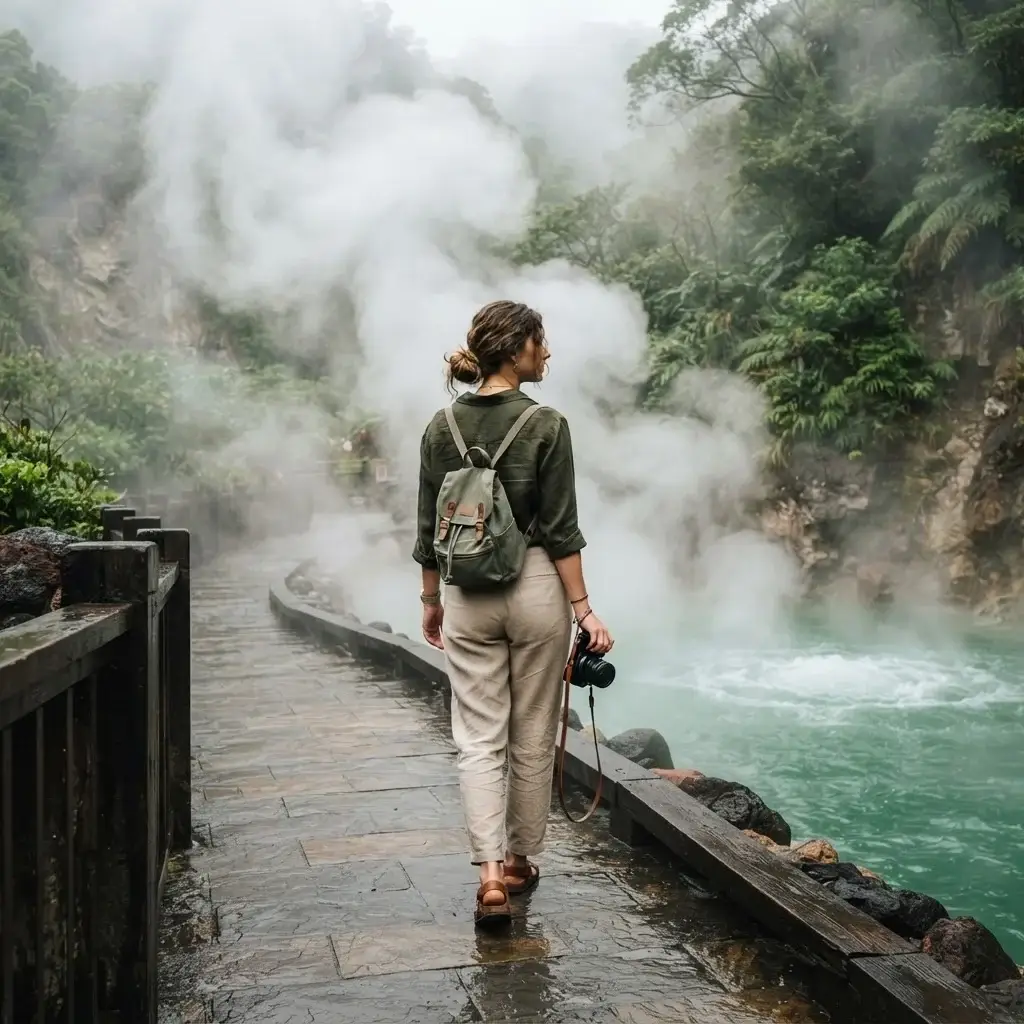
Keep walking up the hill along the bubbling river until you reach the Thermal Valley (also known as Hell Valley). This is a natural, volcanic sulfur hot spring that stays at a boiling temperature between 80 and 100 degrees Celsius. The city has built a wonderful stone boardwalk that loops around the edge of the emerald-green water.
As you walk along the path, massive, thick clouds of white mineral steam rise off the water, swirling around you like magical mountain fog. The heat is intense, and the sound of bubbling water is incredibly soothing. It feels like standing on the edge of a living planet.
Lunch: A Relaxing Soak in a Hot Spring
After seeing the roaring steam of the valley, it is time to experience the healing mineral waters yourself. If you want a truly local, community experience, walk over to the Beitou Public Outdoor Hot Springs (Millennium Hot Springs). It costs a mere 60 NTD to enter. The baths are completely co-ed, so you must bring a proper swimming suit. There are three cascading pools ranging from warm to incredibly hot, as well as two cold plunge pools.
If you feel a bit nervous about bathing in public, you can easily rent a completely private hot spring room for an hour at one of the local bathhouses along the park, such as the historic Beitou Hot Spring Museum area hotels.
After your soak, find a local noodle shop near the station and order a bowl of hot Beitou Ramen. This local dish features a rich, savory pork broth topped with tender braised pork, soft soft-boiled eggs, and fresh bamboo shoots. The hot soup perfectly complements the deeply relaxed, loose feeling in your muscles after bathing in the mineral waters.
Afternoon: Coastal History at Tamsui Old Street
Hop back onto the MRT Red Line and ride it all the way north to the final terminal stop at Tamsui Station. Walk out of Exit 1 and head toward the wide, breezy riverside boardwalk. Tamsui was a major trading port and Spanish colonial outpost in the 17th century, and it has a beautiful, laid-back coastal vibe that feels worlds away from downtown Taipei.
Walk along Tamsui Old Street, which runs parallel to the water. The street is lined with historic shops selling local specialties. Try the famous A-Gei, which is a large, fried tofu pouch stuffed to the brim with savory glass noodles, sealed with fresh fish paste, and steamed before being drenched in a sweet and spicy sauce. It is a hearty, delicious snack that you can only find right here by the water.
If you enjoy history, take a pleasant twenty-minute walk up the hill to Fort San Domingo. Built by the Spanish in 1628 and later occupied by the Dutch and the British, this bright red brick fortress offers incredible views looking out over the mouth of the Tamsui River and the grand Guanyin Mountain across the bay. Walking through the old stone archways and looking at the historic cannons reminds you of how many different cultures have shaped the history of this island.
Evening: The Sunset at Fisherman’s Wharf
For the grand finale of your slow-paced 4-day itinerary for Taipei, walk down to the Tamsui pier and board one of the local ferry boats heading to Fisherman’s Wharf (you can use your EasyCard to pay for the boat ride). The boat glides across the choppy river waves, offering a fantastic view of the green coastline as the cool sea breeze blows through your hair.
When you arrive at Fisherman’s Wharf, you will see the iconic Lover’s Bridge, a magnificent white single-tower suspension bridge that looks like a giant sailboat catching the wind. Walk up onto the wide wooden boardwalk that stretches along the harbor.
Find a quiet spot along the wooden benches to sit down. As the sun begins to drop below the horizon of the Taiwan Strait, the entire sky turns into a masterpiece of deep gold, crimson, and dark blue. The white bridge lights up in a shifting rainbow of neon colors, casting beautiful reflections across the dark harbor water.
Sit there and breathe in the fresh sea air. Think about how far you have come from your comfortable room at home. You flew across the world, navigated a massive foreign transit system, stepped out of your comfort zone every single day, and successfully managed an incredible adventure all by yourself. You didn’t rush, you didn’t panic, and you didn’t need anyone else to clear the path for you. That deep, quiet feeling of capability blooming inside your heart is exactly what solo travel is all about. You are ready for whatever adventure comes next.
Emma’s Insider Solo Travel Survival Guide
To ensure you maintain your inner peace and clear focus throughout your slow-paced 4-day itinerary for Taipei, keep these highly practical, real-world tips written in your travel journal.
Mastering the Subway Etiquette
The Taipei MRT is incredibly quiet, clean, and orderly. When you are waiting for a train, look down at the platform floor. You will see painted white or yellow lines showing you exactly where to line up diagonally next to the doors. Always wait for arriving passengers to step off the train fully before you enter.
Once inside the train, never eat, drink, or chew gum. Doing so can result in a heavy financial fine, which is why the stations and cars remain completely spotless. You will also notice dark blue seats marked as Priority Seats near the doors.
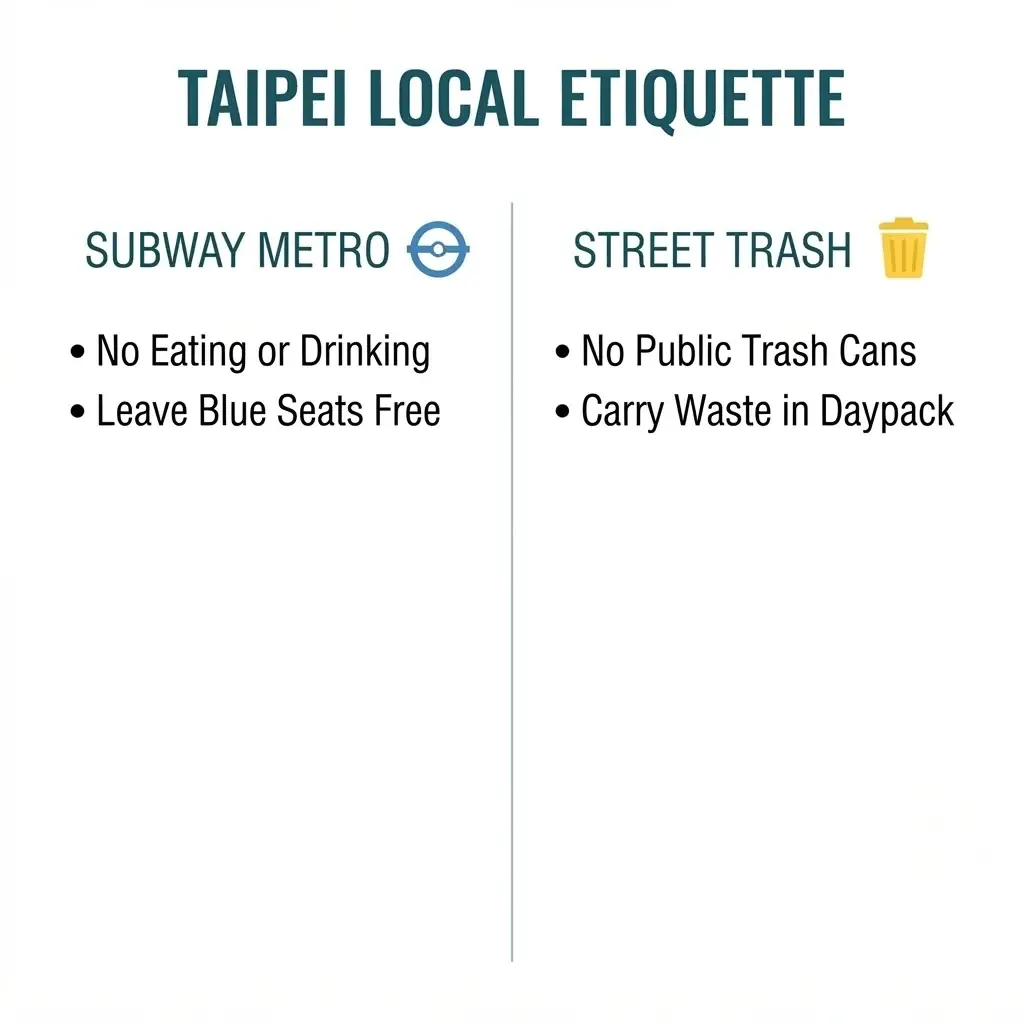
Even if the train is completely packed, locals will leave these seats empty for the elderly, pregnant women, or passengers with injuries. Following these small cultural rules helps you blend in smoothly and feel like a respectful local resident.
Embracing the Unique Trash Culture
One thing that surprises almost every first-time visitor to Taipei is the complete lack of public trash cans on the city streets. You can walk for miles without finding a single bin. Do not panic, and never litter. Locals simply carry their small pieces of trash with them in a plastic bag inside their daypacks.
You can easily dispose of small items inside the public restrooms at any MRT station or inside a local 7-Eleven or FamilyMart convenience store. In the evenings, you will experience Taiwan’s famous trash truck ritual. The city trash trucks drive through the neighborhoods playing loud classical music, like Beethoven’s “Fur Elise,” to alert residents. When you hear the music, you will see whole neighborhoods walk out onto the sidewalks holding colorful bags to toss their garbage directly into the back of the trucks. It is a wonderful, noisy community tradition that keeps the entire city incredibly clean.
Your Journey is Just Beginning
When I was sitting at my corporate desk all those years ago, I never imagined that I would find the courage to travel across the globe completely alone. I used to think that solo travel was only for fearless, hyper-confident people who never got scared or made mistakes. But the truth is, confidence is a muscle that only grows when you use it. You do not build courage by waiting for the perfect moment; you build it by taking one slow, steady step forward into the world.
Taipei is the perfect city to help you take that beautiful first step. It is a destination that welcomes your curiosity, respects your boundaries, and rewards your willingness to learn. By choosing a slow pace, you turn your trip from a stressful sightseeing marathon into a deeply restorative personal journey. You give yourself space to breathe, to observe, to taste, and to succeed. So pack your bags, load up your EasyCard, and get ready to discover exactly how capable you truly are. The world is waiting for you, and you can absolutely do this.