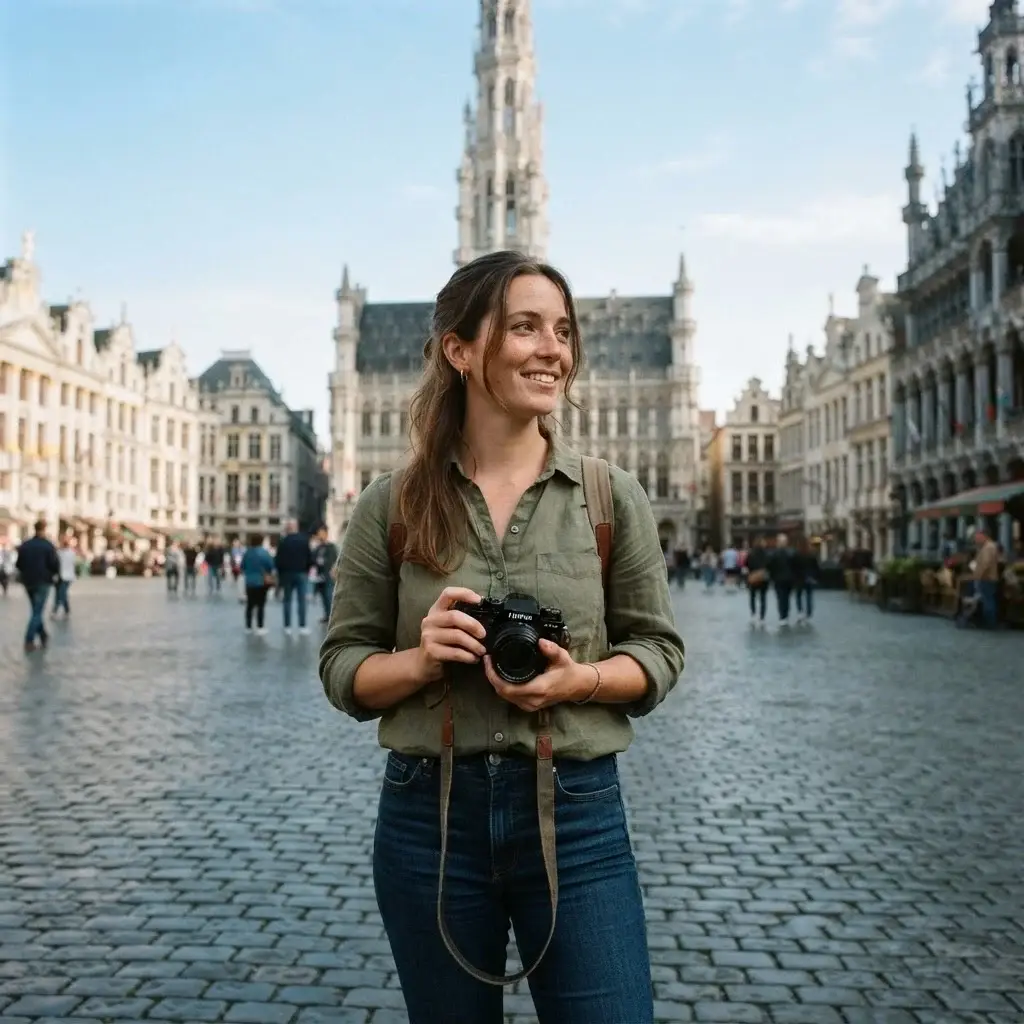
There is a specific moment that every solo traveler knows. It is that quiet second when you step off a train into a brand-new city, pull your backpack tight against your shoulders, and look up at a transit map written in a language you do not speak. Your heart thumps a little bit faster. You feel a mix of thrilling excitement and sudden, small panic.
I remember feeling that exact way years ago when I quit my stable New York office job to travel the world. Before that, I spent a lot of time working as a certified sightseeing guide in Manhattan and waitressing late shifts to save every dollar I could. I thought I knew how cities worked. But standing in a busy European station for the first time made me realize how big the world really is.
If you are planning your very first trip to Europe, or if you are stepping out on your own for a short weekend trip, Brussels can feel a little intimidating. It is the capital of the European Union. It is a city where people speak French, Dutch, and English all at the same time. It has a reputation for being a sterile, gray business hub full of politicians in dark suits.
But let me tell you a secret: that reputation is completely wrong.
Beneath its bureaucratic surface, Brussels is delightfully weird, beautifully historic, and incredibly warm. It is a city where world-class art lives right next door to colorful comic book murals painted on alley walls. It is a place where you can eat the richest chocolate in the morning and dip thick, crispy fries into communal bowls of mayonnaise by night.
You do not need a whole week to fall in love with this place. A weekend is the perfect amount of time if you have a solid plan. This exhaustive, smart 2-day itinerary for Brussels: Must-see attractions and insider navigation secrets will give you the exact steps to explore the city with total confidence. Let’s get your bags packed.
Getting Your Bearings: The Basics of Brussels Logistics
Before we look at the daily schedule, we need to talk about how to get around. When I taught English in Thailand, I learned very quickly that a trip can go wrong fast if you do not understand local transport. Brussels is actually quite small and flat in the center, which makes it an incredible city for walking. However, it is divided into two main areas: the Lower Town and the Upper Town.
The Lower Town is the historic heart. It is where you will find old cobbled streets, the main market squares, and lots of beautiful old brick buildings. The Upper Town is where the royal family lives, where the big art museums sit, and where the modern glass buildings of the European Union tower over the streets.
To move between these areas when your feet get tired, you will use the STIB/MIVB public transit system. It includes the underground metro, trams, and buses.
How to Buy Tickets and Navigate Like a Pro
You do not need to stand in long lines at ticket machines anymore. Brussels uses a contactless payment system. You can simply tap your bank card, phone, or smartwatch at the turnstile or on the grey validating machines inside buses and trams. A single ride costs a set fee, and the system automatically caps your daily spending so you never pay too much.
If you plan to fly into Brussels Airport (BRU), the easiest way to reach the center is by train. The airport station is located right beneath the terminal. Trains run every ten minutes straight to Brussels Central Station, and the ride takes less than twenty minutes.
Emma’s Safety Tip: Brussels has three main train stations: North, Central, and South (Midi). Brussels Central is the safest and most convenient station for tourists. Brussels South is where international trains like the Eurostar land. It can get very crowded and attracts pickpockets, so keep your eyes open and your bags zipped shut when walking through it.
Day 1: Historic Architecture, Comic Art, and Culinary Icons
Our first day focuses on the historic core of the Lower Town. This is where you get to see the grand history of Belgium, but also its playful, artistic side. Put on your most comfortable walking shoes because those old cobblestones are beautiful but very uneven.
Morning: The Heart of the Kingdom
We begin our morning at the single most famous spot in the city: The Grand Place.
When I first walked into this square, it took my breath away. It is a massive open plaza surrounded by 17th-century guildhalls covered in real gold leaf.
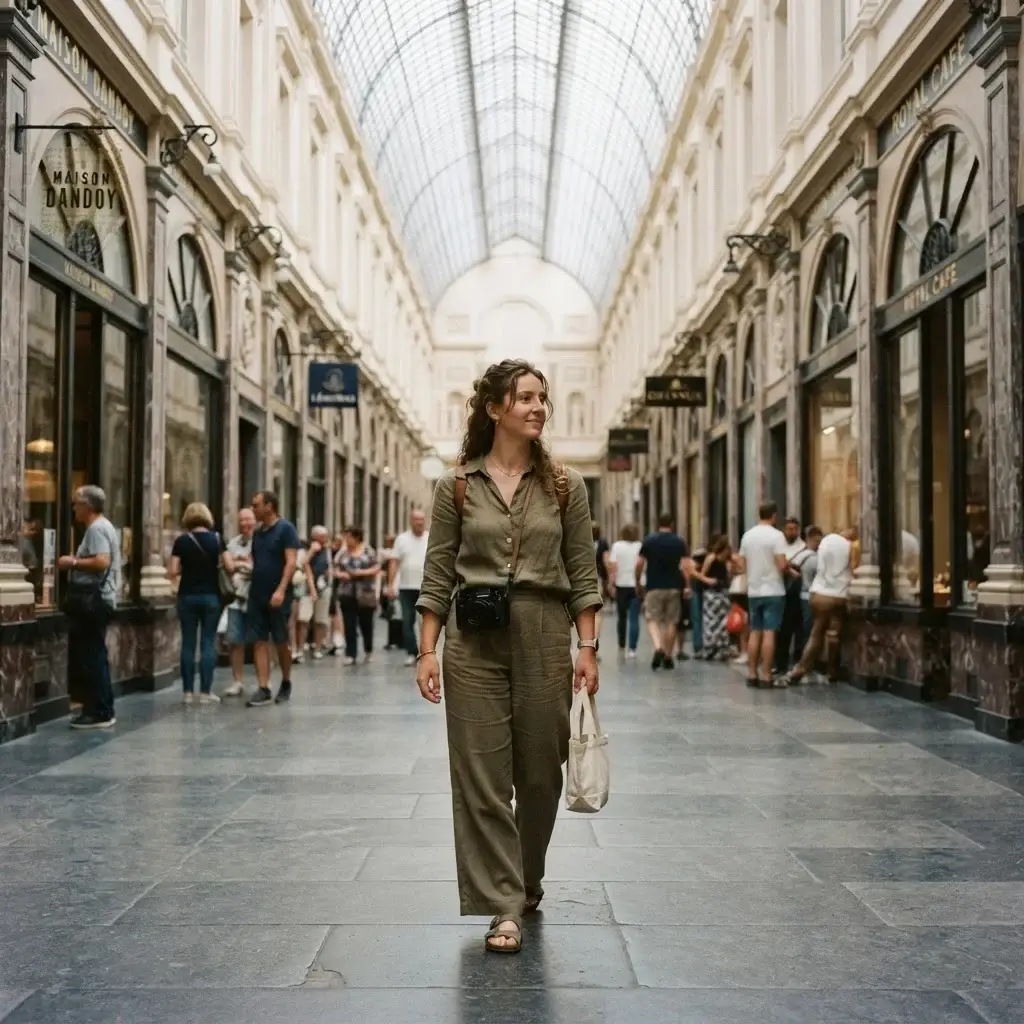
The buildings look like giant, intricate wooden clocks carved out of stone. In the center stands the towering Town Hall, which dates back to the 14th century.
To truly understand why this square is so special, I highly recommend checking out the official historical details provided by the UNESCO World Heritage convention site because it explains how these buildings were destroyed by French cannons in 1695 and completely rebuilt by the city’s merchants in just four years. It shows the incredible resilience of the people who built this city.
[Manneken Pis] (Famous Bronze Statue)
- How to get there: Walk to the center of the city. Every major street signboard points toward “Grand Place” or “Grote Markt.”
- Insider Secret: Arrive by 8:00 AM. The tourists will still be asleep, and you will share the golden square with local bakery delivery drivers and morning street sweepers. The light hitting the gold leaf at sunrise is magic.
- What to look for: Look closely at the statues on the front of the Town Hall. You will see funny little carvings of devils, monks, and dogs doing strange things. The architects had a brilliant sense of humor.
From the Grand Place, take a short five-minute walk down Rue de l’Étuve to find the city’s strangest mascot: Manneken Pis. This is a tiny bronze statue of a little boy peeing into a fountain.
I know it sounds ridiculous, but the locals absolutely love him. They dress him up in hundreds of different custom outfits throughout the year, from a tiny chef uniform to traditional clothing from around the world. Do not expect a massive monument; he is very small, but the crowd of people taking photos around him is always huge.
Mid-Day: Local Flavors and Hidden Trails
By mid-morning, you will smell something sweet in the air. It is time for your first culinary lesson. In Brussels, there are two types of waffles: the Brussels waffle and the Liège waffle.
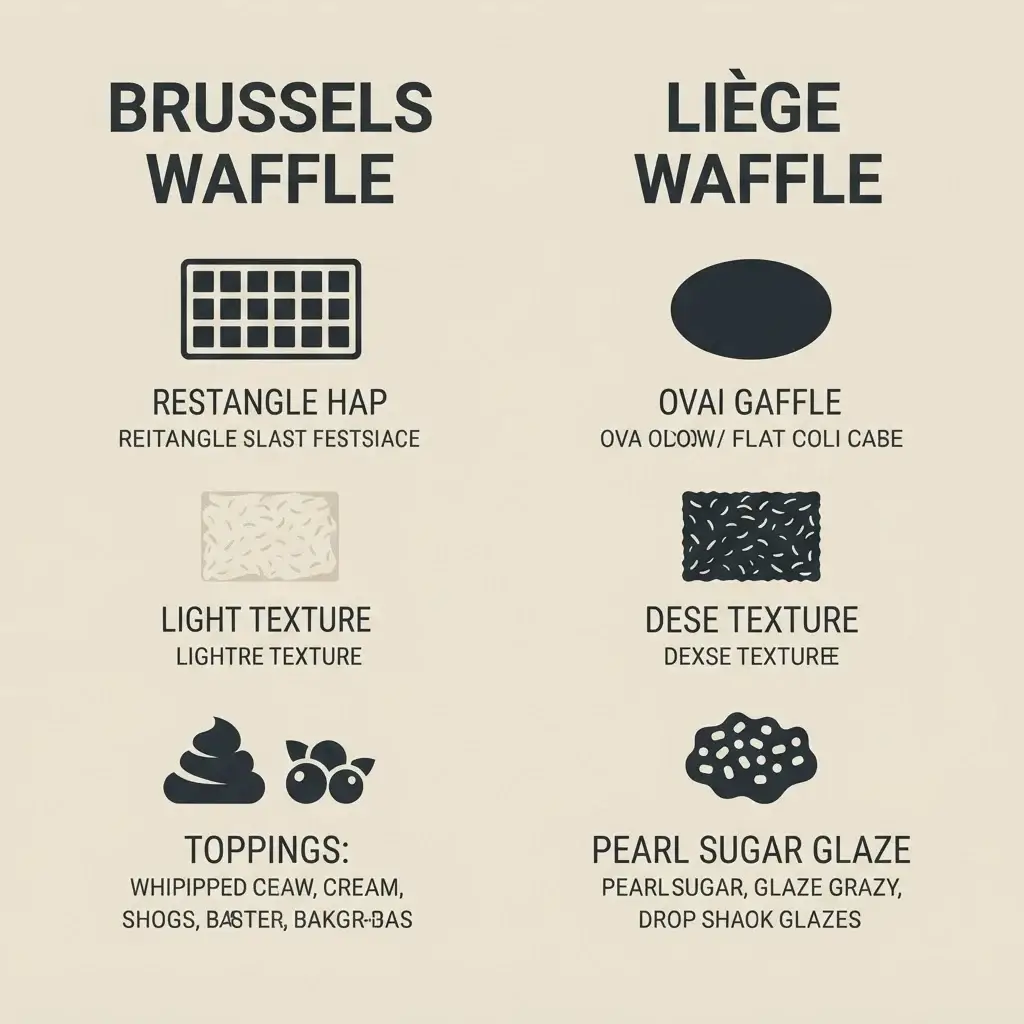
| Waffle Type | Texture & Shape | Flavor Profile |
| Brussels Waffle | Rectangular, light, and very crispy | Airy, not too sweet; usually topped with fruit or cream |
| Liège Waffle | Oval-shaped, dense, and chewy | Baked with chunks of pearl sugar that melt into a crunchy glaze |
For your morning snack, look for a bakery called Maison Dandoy near the Grand Place. Order a warm Liège waffle plain. Do not load it down with strawberries, chocolate sauce, and whipped cream. The locals eat them warm and plain so they can taste the caramelized sugar inside the dough.
Once you have your sugar rush, it is time to look up at the walls. Brussels is the birthplace of famous comic strips like The Adventures of Tintin and The Smurfs. To celebrate this, the city has created the Brussels Comic Book Route.
This is a trail of over sixty massive comic strip murals painted onto the sides of ordinary buildings. As you walk toward your next stop, keep your eyes peeled for Tintin climbing down a fire escape on Rue de l’Étuve, or the blue Smurfs playing on a wall near the Central Station. It turns the entire city into a free, open-air art gallery.
[Maison Dandoy] (Waffle Break) ──► Walk the Comic Book Route ──► [Les Galeries Royales Saint-Hubert]
Next, walk into Les Galeries Royales Saint-Hubert. Built in 1847, this is one of the oldest covered shopping arcades in Europe. It has a stunning arched glass roof and is lined with beautiful wooden shopfronts.
This arcade is the spiritual home of Belgian chocolate. This is where the praline—the filled chocolate shell—was invented.
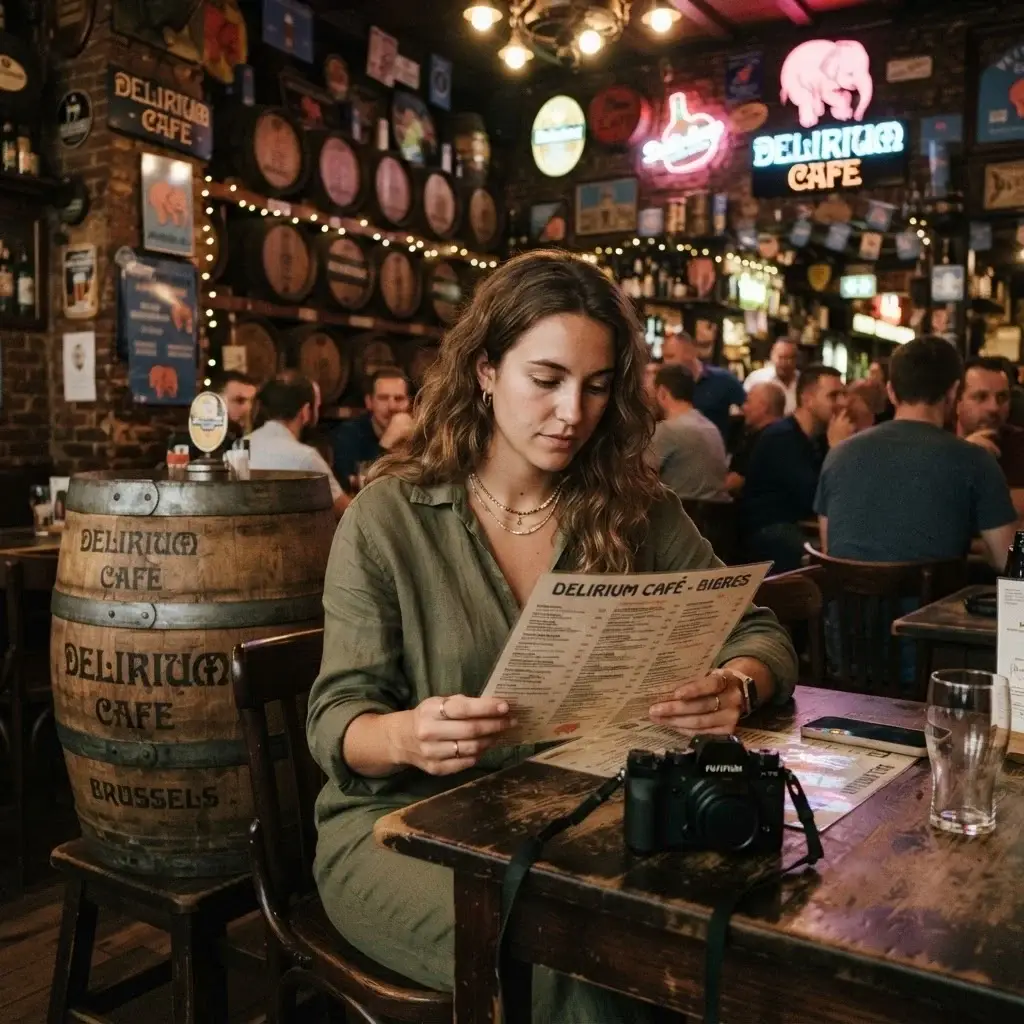
You will pass famous chocolate makers like Neuhaus, Pierre Marcolini, and Mary.
- Culinary Tip: Do not buy big pre-packaged boxes of chocolate. Walk up to the glass counters and ask to buy three or four individual pieces of your choice. It is much cheaper, and you can try unique flavors like dark chocolate with pink pepper or creamy hazelnut ganache.
- Navigation Advice: The galleries connect the historic center with the theater district. Walk slowly and look up at the glass ceiling, but be mindful of your purse or backpack, as people stop suddenly to look at the window displays.
Afternoon: The Fish Market and Local Brews
As the afternoon arrives, walk northwest toward the Place Sainte-Catherine. This neighborhood used to be the city’s old harbor and fish market. Today, the water has been turned into beautiful long reflection pools lined with trees and open-air cafes.
This is the perfect place to sit down for a real Belgian lunch. Look for a small, casual place called Noordzee (or Mer du Nord). It is an outdoor seafood counter where you stand at high tables on the pavement. You order from the chalkboard menu, and the cooks yell out your name when your food is ready.
- What to order: Try the kroketten (crispy grey shrimp croquettes) or a bowl of hot whelks cooked in a spicy broth. Wash it down with a glass of crisp white wine. It is loud, busy, and completely authentic.
- Insider Secret: Watch out for the seagulls. They are incredibly bold and will swoop down to steal a shrimp right out of your hand if you are not looking!
After lunch, take a quiet moment to walk inside the Église Sainte-Catherine. It is a beautiful church that blends Gothic and Renaissance architecture. The interior is peaceful, cool, and offers a quiet escape from the busy streets outside.
[Place Sainte-Catherine] (Seafood Lunch) ──► [Église Sainte-Catherine] ──► [Delirium Café]
To finish your afternoon, we need to talk about Belgian beer. Belgian beer culture is so special that it is also protected by UNESCO. The variety is immense, ranging from sour Lambics to deep, dark Trappist beers brewed by monks.
Walk down the tiny, dead-end alley called Impasse de la Fidélité to find the world-famous Delirium Café. This bar holds the Guinness World Record for having the most varieties of beer commercially available—over 2,000 types from all over the planet!
The bar can get very loud and crowded with students at night, but in the late afternoon, it is relaxed and friendly. Sit downstairs among the old beer barrels and neon signs.
If you are new to Belgian beer, do not order something with a high alcohol percentage right away. Ask the bartender for a Gueuze if you like sour flavors, or a Witbier if you prefer something light, fruity, and refreshing.
Right across the alley from the bar, look for Jeanneke Pis. This is the female counterpart to the little peeing boy statue. She is tucked behind an iron gate and is much less famous, but she completes the city’s quirky, irreverent trilogy of statues.
Day 2: Royalty, World-Class Fine Arts, and Global Icons
Our second day takes us out of the old valley and up into the hills of the Upper Town. This is where Brussels shows off its grand, royal European identity, followed by a quick train ride north to see its most futuristic monument.
[Day 2 Morning] ──► Royal Quarter (Palace & Park)
[Day 2 Mid-Day] ──► Mont des Arts & Royal Museums of Fine Arts
[Day 2 Afternoon] ─► Train ride to the Atomium & Mini-Europe
Morning: The Royal Quarter and Open Spaces
Start your second morning by walking up the hill toward the Mont des Arts. The name translates to “Hill of the Arts,” and it is easy to see why. This spot features a beautifully manicured public garden that offers one of the finest views of the Brussels skyline. Standing at the top of the stone stairs, you can see the tall spire of the Town Hall rising out of the historic center far below.
- How to get there: Walk from Brussels Central Station straight up the stone steps toward the grand neoclassical buildings.
- Insider Secret: This is the best photography spot in the entire city. Come here just as the morning sun hits the garden hedges. You will see locals sitting on the stone walls drinking coffee and reading newspapers.
Continue walking up the hill to reach the Place Royale. This majestic square is surrounded by symmetric white buildings from the late 1700s. In the center stands the impressive Church of Saint Jacques-sur-Coudenberg, which looks more like a grand Greek temple than a traditional church.
[Mont des Arts] ──► [Place Royale] ──► [Royal Palace of Brussels] ──► [Brussels Park]
Just a few steps from the square sits the official residence of the Belgian monarchy: the Royal Palace of Brussels. While the King and Queen actually live in a different castle outside the center, this grand palace is where the King conducts state business.
The building features a massive, elegant facade that is longer than Buckingham Palace in London. If you visit during the late summer months (typically from late July to early September), the palace opens its doors to the public for free guided tours inside its grand mirror halls and historic state rooms.
Directly across from the palace gates lies the Brussels Park (also known as the Royal Park). This was the city’s very first public park, laid out in the late 18th century. It features wide, shady avenues lined with classic statues and large fountains.
It is a wonderful place to take a slow, restorative walk. When I transitioned out of my frantic corporate routine into full-time travel, I had to learn how to appreciate these quiet moments. Sitting on a green bench under a canopy of chestnut trees, watching locals jog past, is just as important as seeing any historic monument.
Mid-Day: Masterpieces and Panoramic Views
After your morning park stroll, walk back toward the Place Royale to explore the Royal Museums of Fine Arts of Belgium. This is a massive complex of museums that holds over 20,000 paintings, sculptures, and drawings dating from the 15th century to the modern day.
The complex is divided into several sections, but if you only have a couple of hours, you should focus your energy on two specific parts:
- The Oldmasters Museum: This section houses an incredible collection of early Flemish and Dutch paintings. You can see world-famous works by artists like Peter Paul Rubens, Pieter Bruegel the Elder, and Anthony van Dyck.
- The Magritte Museum: This museum is dedicated entirely to the work of René Magritte, the famous Belgian surrealist painter. It holds the largest collection of his art in the world. You will see his iconic paintings of men in bowler hats, flying birds made of clouds, and strange, dreamlike landscapes.
[Royal Museums of Fine Arts]
│
├─► Oldmasters Museum (Rubens, Bruegel)
└─► Magritte Museum (Surrealist Art)
- How to visit: You can buy a ticket that grants entry to individual sections or a combined pass for the whole complex. Buy your tickets online in advance to skip the main queue at the front desk.
- What to look for: In the Bruegel room of the Oldmasters Museum, look for the painting called The Fall of Icarus. It is a brilliant piece of art where the dramatic mythological event happens in a tiny, unnoticed corner, while ordinary farmers keep plowing their fields in the foreground. It has a beautiful lesson about how everyday life keeps moving forward.
By the time you finish looking at the art, you will be hungry for lunch. Walk down the hill toward the Place du Grand Sablon. This historic neighborhood is famous for its elegant antique shops and upscale cafes.
For a true taste of traditional Belgian comfort food, look for a cozy bistro and order Carbonnade Flamande (or Stoofvlees). This is a rich, savory beef stew that is slow-cooked for hours in dark Belgian beer, onions, thyme, and mustard. The alcohol cooks away completely, leaving behind a thick, deeply flavorful gravy. It is traditionally served with a large plate of hot, golden fries.
Afternoon: The Atomium and Modern Engineering
To finish our second day, we are going to leave the historic center and take a short trip north to see the city’s most futuristic landmark: The Atomium.
[Central Brussels] ──► Metro Line 6 (Northbound) ──► [Heysel / Heizel Station] ──► [The Atomium]
Built for the 1958 Brussels World’s Fair (Expo 58), this breathtaking structure represents a single unit cell of an iron crystal magnified 165 billion times! It stands over 330 feet tall and consists of nine massive stainless-steel spheres connected by long escalator tubes. It looks like a giant, silver mid-century modern sculpture dropped into a green park.
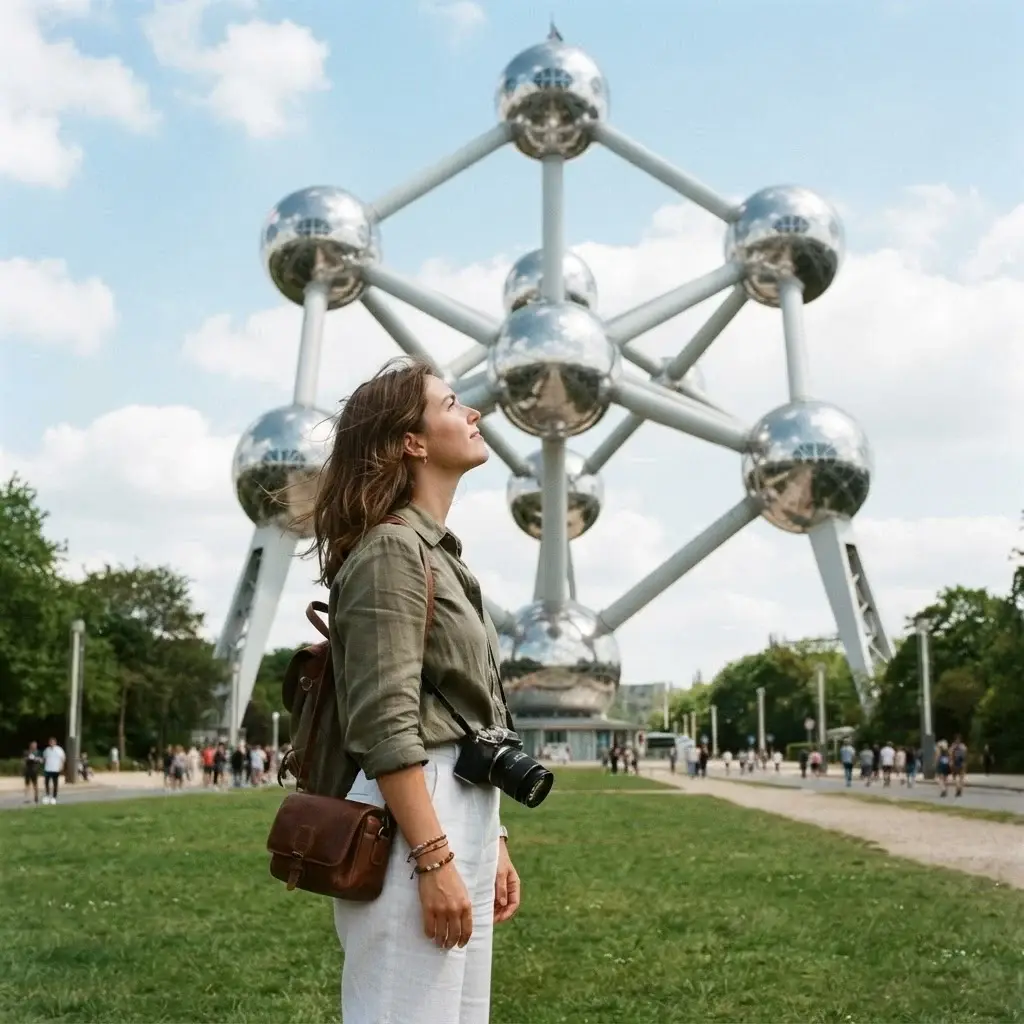
To reach it from the center of town, take Metro Line 6 from the station at Midi or Rogier heading northbound towards Roi Baudouin. Get off at the Heysel / Heizel station. The journey takes about twenty minutes, and as you step out of the underground station, the massive shiny spheres will appear right ahead of you.
You can buy a ticket to go inside the structure. High-speed elevators run through the metal tubes to take you into the spheres, which host historic exhibitions about the 1958 World’s Fair. The very top sphere features a panoramic observation deck that offers breathtaking 360-degree views of the entire city and the surrounding countryside.
- Insider Secret: The escalators inside the tubes are an attraction all on their own. They are lined with retro, colorful LED light installations that make you feel like you are traveling through a time machine or moving inside a sci-fi space station.
- Photography Tip: To get the best photo of the entire structure without other tourists blocking your shot, walk down the long, grassy boulevard called Boulevard du Centenaire that rolls down the hill right in front of the monument.
▲
│ Short Walk
[Mini-Europe] (Model Park)
Right next to the base of the Atomium sits Mini-Europe. This is a charming open-air miniature park that features highly detailed 1:25 scale models of the most famous monuments from across the European Union.
You can walk among roughly 350 tiny buildings, including a miniature Eiffel Tower, a small Big Ben, and a tiny version of the Grand Place you visited yesterday. Many of the models feature interactive buttons that make tiny trains run, small windmills turn, or Mt. Vesuvius erupt with smoke.
While it might sound like a playground for children, it is actually deeply educational and fun for solo adults too. It gives you a fantastic visual overview of Europe’s rich architectural history all in one single afternoon walk.
The Ultimate Belgian Fry Masterclass
You cannot visit Brussels without eating fries. But please, do not call them “French fries” while you are here! The locals are incredibly proud of their frites, and there is a real culinary science to how they are made.
Traditional Belgian fries are cut from fresh Bintje potatoes and fried exactly two times. The first fry cooks the inside until it is soft and fluffy like a baked potato. Then, the fries are taken out to cool and rest. Right before they are served to you, they are dropped into very hot fat a second time to create a super crispy, golden-brown outer crust.
Instead of ordering your fries at a standard sit-down restaurant, you should buy them from a fritkot or friture. These are small, dedicated fry kiosks or wooden shacks found in public squares across the city.
When you order, your fries will be handed to you in a large paper cone (cornet de frites). This heavy paper cone keeps the steam inside from turning the outer crust soggy.
The next step is choosing your sauce. A true local would never just squirt generic tomato ketchup on top. A classic fry kiosk will offer a long row of twenty or more custom sauces displayed behind the counter glass.
Navigating the Sauce Menu
- Mayonnaise: The classic choice. Belgian mayonnaise is different from American varieties; it is much thicker, richer, and has a slight lemony tang.
- Andalouse: The most popular local specialty sauce. It is a savory blend of mayonnaise, tomato paste, garlic, and sweet peppers. It is creamy with a tiny kick of spice.
- Samouraï: A spicy option. This is mayonnaise mixed with hot chili paste. It has a beautiful orange color and packs a serious punch.
- Sauce Lapin: A sweet and savory dark sauce made with onions, raisins, and local syrup.
Emma’s Culinary Rule: Never ask for the sauce to be put on the side. Let the fry master scoop a massive dollop of sauce right on top of the hot fries in the cone. Eat them using the tiny wooden fork provided, sitting on a nearby park bench or stone step.
Two of the absolute best fry kiosks in the city are Frit Flagey in the lively Ixelles neighborhood and Maison Antoine in the Place Jourdan. Maison Antoine is so famous that the traditional local pubs surrounding the square actually allow you to bring your paper cone of fries straight into their bars, provided you buy a local beer from them to enjoy alongside your meal!
Essential Brussels Travel Tips and Common Mistakes to Avoid
When you travel solo, managing your health and safety is entirely up to you. When I first started traveling across continents, I spent a lot of time reading official international safety advisories to make sure I was making smart choices.
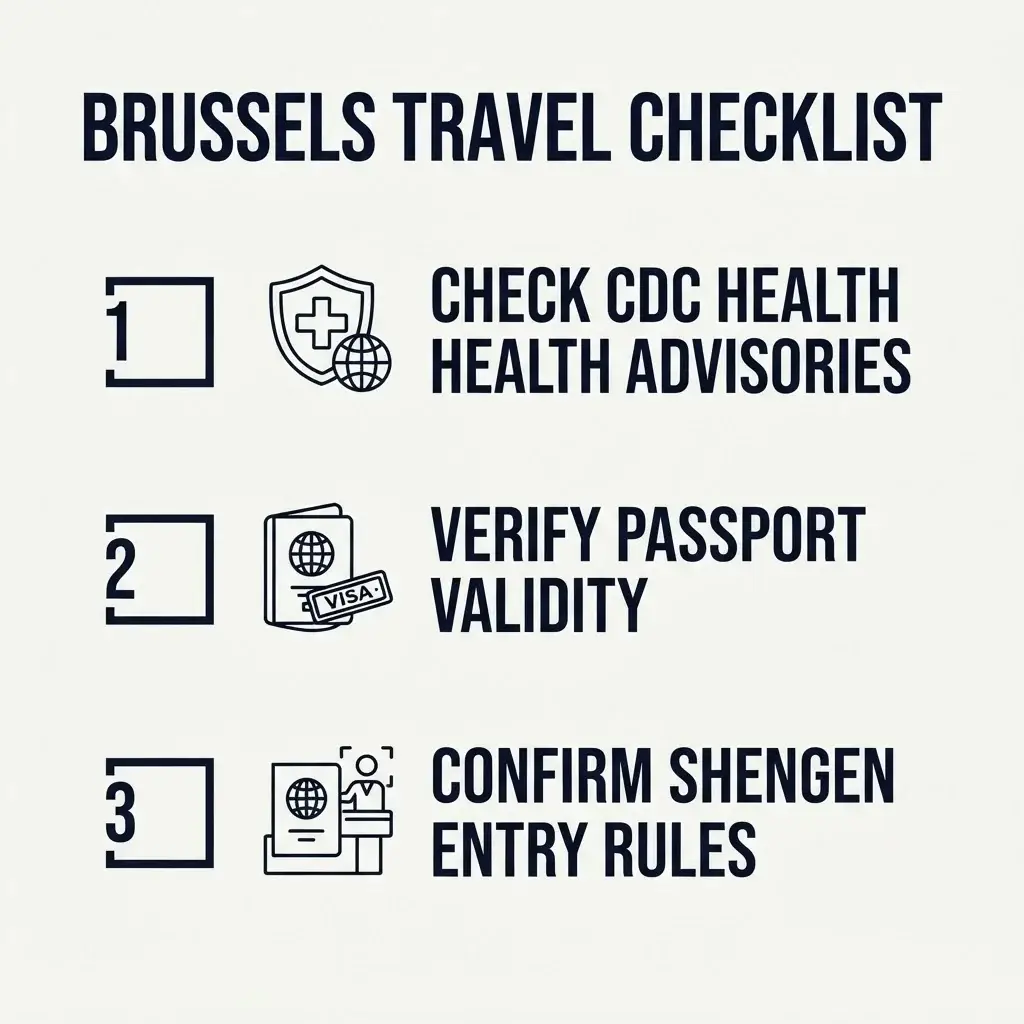
Before you leave your hotel room each morning, make sure your routine health needs are sorted. For peace of mind regarding health advisories, travel vaccines, and water safety, it is always a smart idea to consult the CDC Travelers’ Health guidelines for Belgium so you know exactly what to prepare before crossing borders.
Knowing the Entry Rules
You also want to make sure your paperwork is completely accurate before you even book your train or flight. To check the most up-to-date entry rules, passport validity requirements, and official security notices, I always cross-reference the US Department of State Travel advisory page to ensure I have all the proper documents for entering the Schengen Area without any unexpected delays.
[Travel Planning Checklist]
├─► Check CDC page for destination health updates
├─► Check State Department page for entry/visa rules
└─► Confirm passport has at least 6 months validity
The Tipping Culture Misunderstanding
A very common mistake that travelers make in Brussels involves tipping at restaurants. In Belgium, a 10% to 15% service charge is automatically included in the price of your food and drinks by law.
The price you see on the menu is the exact price you will pay on the final bill. You do not need to add a massive tip like you would in New York. If your service was exceptionally friendly, it is polite to round up the bill to the nearest euro or leave a small one or two-euro coin on the table, but it is never expected or demanded.
Language and Etiquette
Brussels is officially a bilingual city, meaning all street signs, transit announcements, and public notices are written in both French and Dutch. However, the vast majority of people you interact with in shops and restaurants speak French as their daily language.
You do not need to be fluent to be polite. Starting your conversation with a warm, smiling “Bonjour” (Good day) or “Bonsoir” (Good evening) changes everything. It shows that you respect their home. Most locals speak incredible English, but they will appreciate your effort to use a small bit of local courtesy before you ask them for help.
Why Brussels is the Perfect Place to Start Your Travel Journey
As our 48 hours come to an end, take a moment to look back at everything you have navigated. You walked through medieval squares covered in gold, rode the modern metro up into the hills, tried rich local stews cooked in beer, and stood beneath a giant silver atom soaring into the sky.
When I first left my traditional 9-to-5 job, I was terrified that I wouldn’t be able to handle the challenges of independent travel. I thought I would get lost, make costly mistakes, or feel too lonely on the road. But cities like Brussels taught me that travel is not about being a perfect, flawless expert. It is about having the curiosity to explore, the courage to try new things, and the openness to learn from the unexpected.
This city shows you that history and playfulness can live in the exact same place. It teaches you that a beautiful day can consist of looking at a world-class surrealist painting in the afternoon and eating hot fries with your fingers on a public plaza stone step just an hour later.
Stop waiting for the perfect moment or for a big group of friends to finally coordinate their schedules. The world rewards action. Take the leap, book your ticket, and let Brussels show you how beautiful and rewarding independent exploration can truly be.