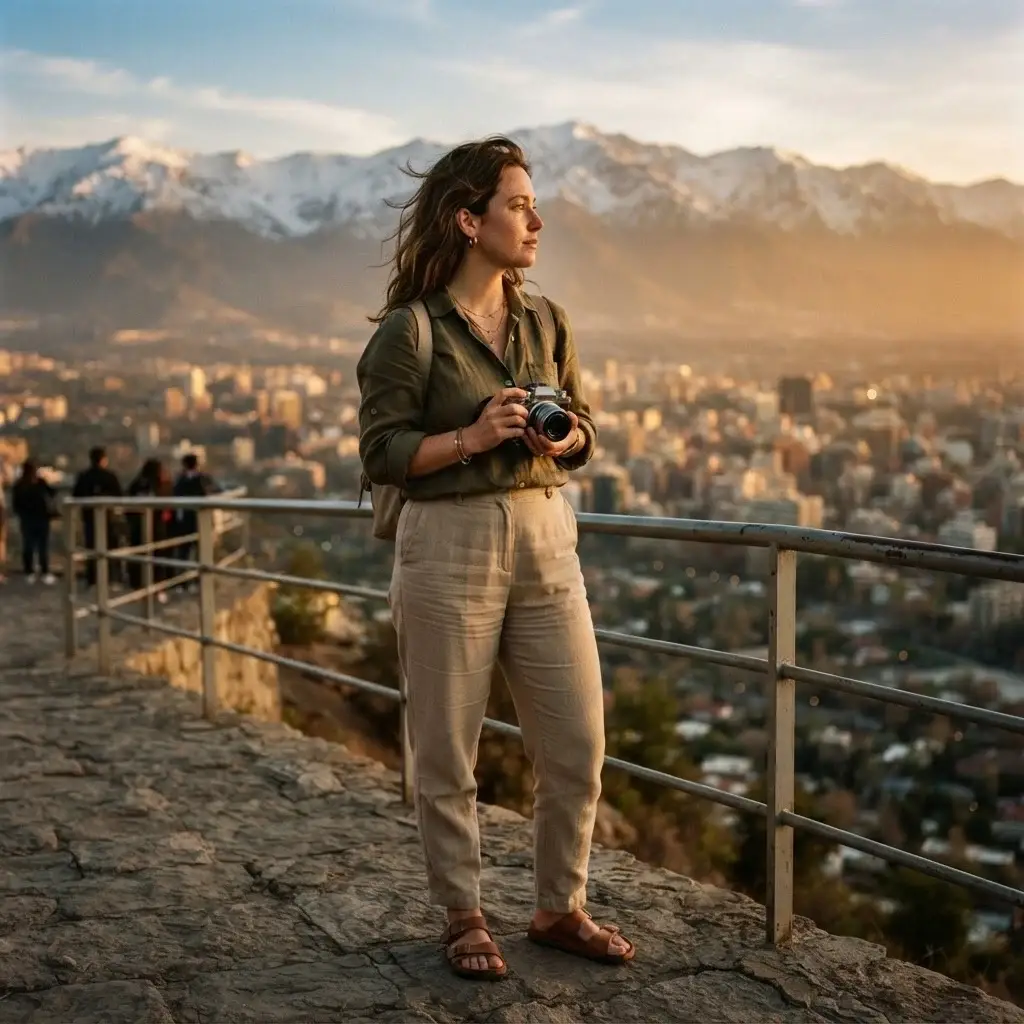
I remember the exact moment I realized my life in New York needed to change. I was sitting at my desk, staring at a spreadsheet, while the sun was setting outside my office window. I was a sightseeing guide in my free time, yet my “real” job felt like it was shrinking my world instead of expanding it. I started dreaming of places that felt vast, mountains that actually touched the sky, and cities that hummed with a rhythm I didn’t yet understand.
That itch for something different is what eventually led me to pack my bags and head to South America. And if you are feeling that same tug—that quiet, persistent urge to trade the predictable for the unknown—Santiago is the perfect place to start.
Santiago is a city of contrasts. You have the towering Andes mountains serving as a permanent, snow-capped backdrop to a busy, urban capital. It’s a place where modern skyscrapers sit right next to colonial churches, and where the street food stalls smell like toasted corn and sugar. For a solo traveler, it’s a brilliant choice. It’s vibrant, it’s manageable, and it’s a place that rewards curiosity.
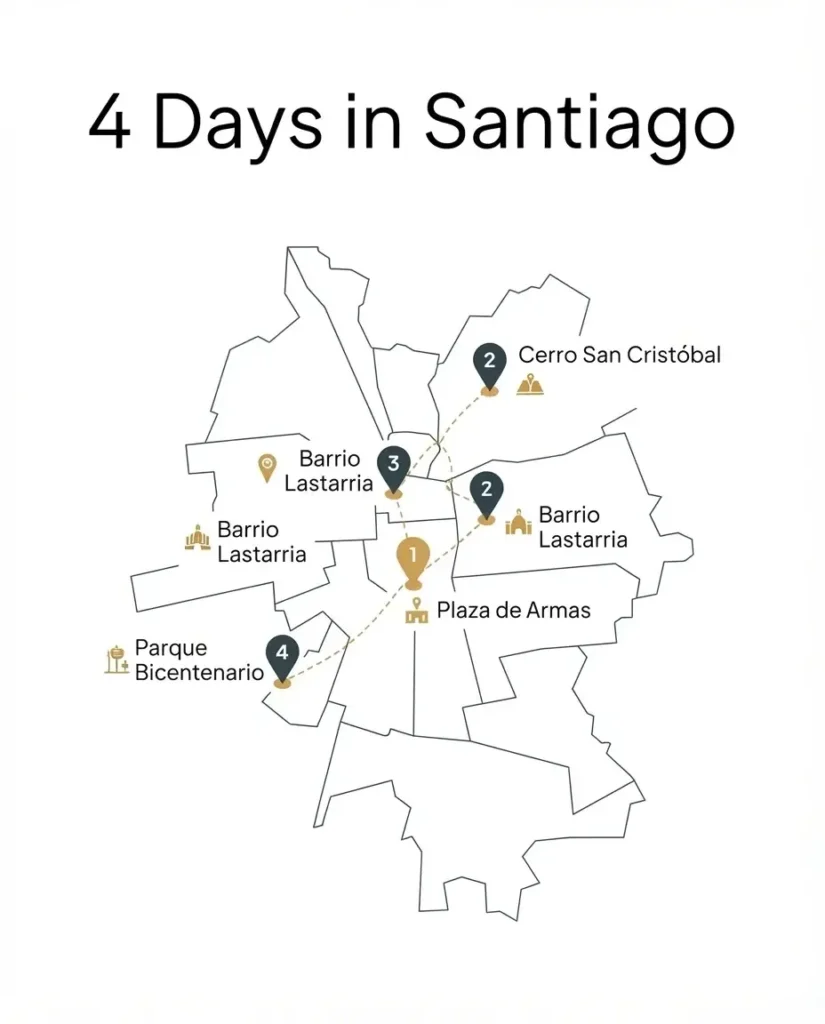
This 4-day itinerary for Santiago, Chile is designed to help you find your footing, build your confidence, and—most importantly—fall in love with the art of traveling on your own terms.
Before You Go: Planning with Confidence
Before you book your flight, let’s talk about the practical side of things. I used to be the person who worried about every “what if.” But I learned that the best way to quiet that anxiety is with information.
First, check the latest official entry requirements and safety updates on the US Department of State travel website. It helps to keep a printed copy of your essential documents in your day bag.
Regarding your health, it is always a smart move to review the latest health advisories and vaccine recommendations from the CDC Travelers’ Health site so you can focus on the fun parts of the trip rather than worrying about your well-being.
As for safety, Santiago is generally safe for solo travelers, but like any big city, you need to use your street smarts.
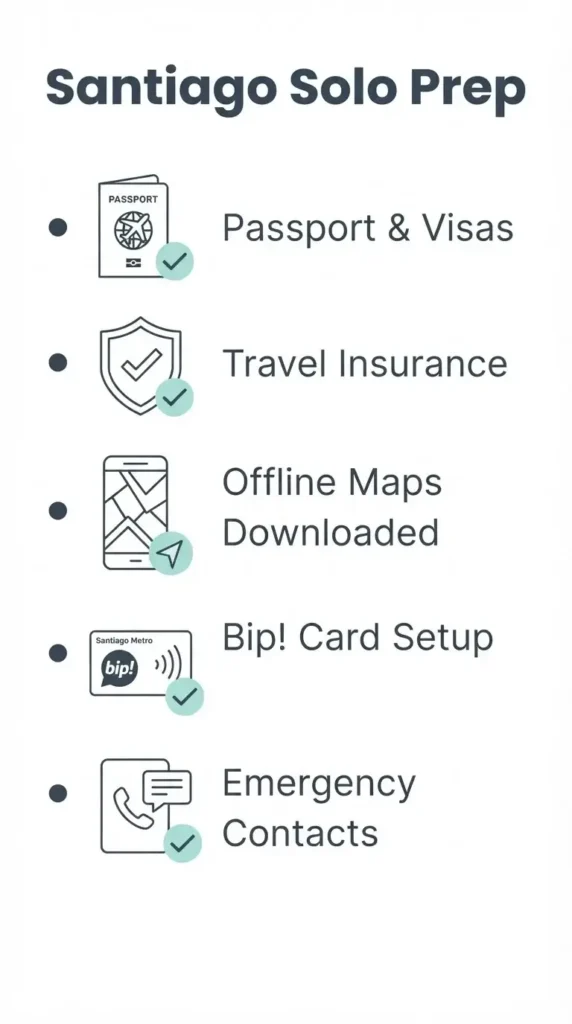
Keep your phone tucked away when you aren’t using it, be mindful of your bag in crowded places like the Metro, and trust your gut. If a situation feels “off,” just walk away. Solo travel is about trusting yourself as much as it is about exploring the world.
Day 1: The Heart of the City
On your first day, don’t try to do too much. The goal is to orient yourself and let the city breathe. Start at the Plaza de Armas. This is the historic center of Santiago, and it’s where the city’s life feels the most concentrated.
You’ll see the Metropolitan Cathedral, which is grand and stunning, but I encourage you to look at the people more than the buildings.
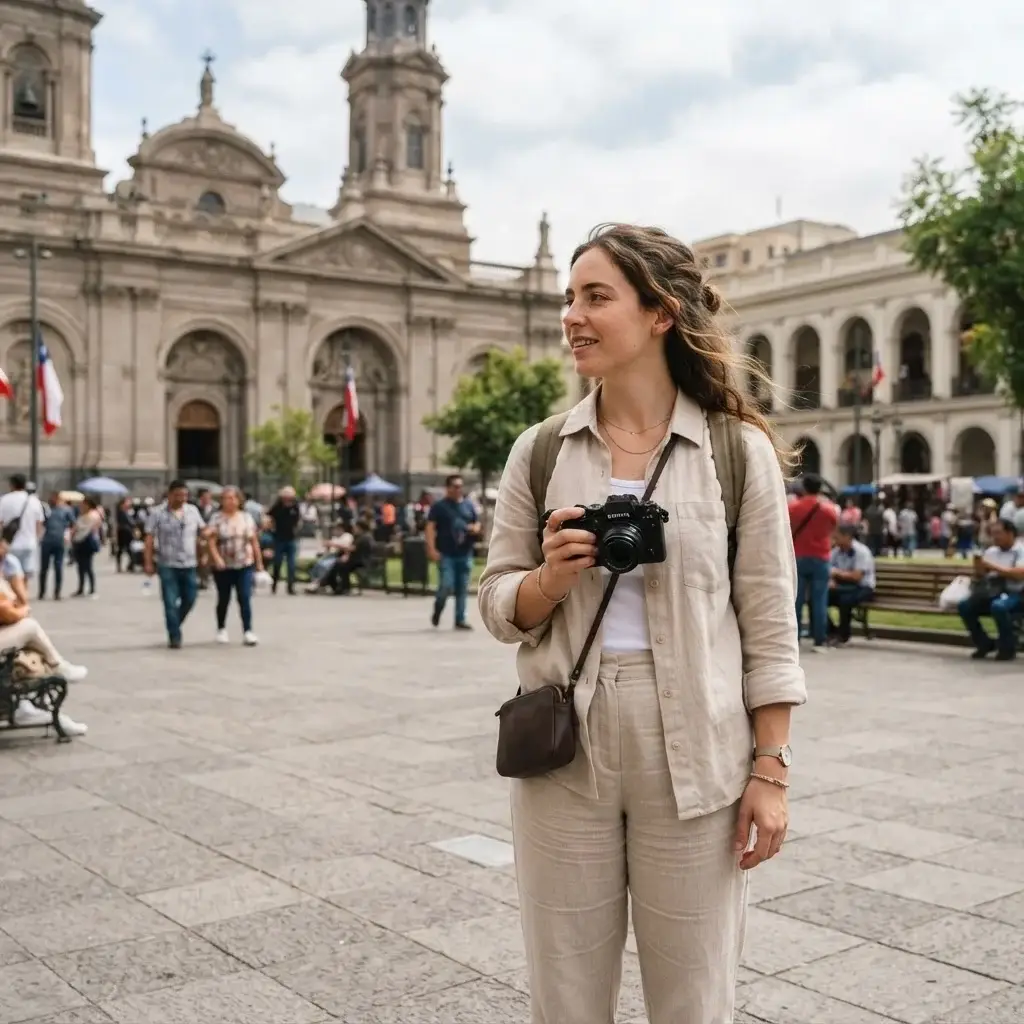
Watch the street performers, the elderly men playing chess in the shade, and the families enjoying a day out. This is the pulse of the city.
For lunch, head over to the Mercado Central. Yes, it’s a tourist spot, but it is also a beautiful historic building. Find a small, busy stall and order a caldillo de congrio (conger eel soup) if you’re feeling adventurous, or just a plate of fresh fish. If you want a more local vibe, wander a few blocks away into the smaller side streets.
After lunch, take a walk toward the Museum of Memory and Human Rights. I know, a museum might not sound like a “fun” vacation activity, but this place is vital to understanding modern Chile. It’s a heavy, deeply moving, and necessary look at the country’s history. Walking through it gave me a much deeper respect for the people I met during my stay. It’s a sobering experience, but it grounds you in the reality of where you are.
Day 2: Views and Bohemian Vibes
Now that you’ve seen the center, it’s time to see the city from above. You can’t visit Santiago without going up Cerro San Cristóbal. You can hike it if you’re feeling energetic—it’s a great workout—or you can take the funicular.
Once you reach the top, you’ll be treated to a panoramic view of the entire valley. On a clear day, the Andes look so close you feel like you could reach out and touch the snow. Take your time here. I spent an hour just sitting on a bench, writing in my journal, and watching the city below. It’s the perfect spot to feel the scale of your own adventure.
After you descend, walk straight into the Bellavista neighborhood. This is where the artsy, bohemian soul of Santiago lives. The streets are covered in vibrant murals, and there are small cafes and craft shops tucked away in every corner.
This is the perfect place to stop for a coffee. Chilean coffee culture is a big deal, and sitting in a sidewalk cafe in Bellavista is the best way to people-watch. If you want a general overview of the area before you start wandering, checking a guide on Lonely Planet can help you spot the specific murals or workshops that match your interests.
For dinner, find a place that serves pastel de choclo. It’s a corn pie dish with a meat filling, and it’s essentially a hug in a bowl. It’s comfort food at its finest.
Day 3: History and Hidden Gems
Today is about wandering through the Barrio Lastarria area. This is one of my favorite parts of the city because it feels like a mix of old European charm and South American energy. The streets are lined with old houses that have been converted into boutiques, bookstores, and wine bars.
Start your morning at the Parque Forestal. It runs along the river and is the perfect place for a slow, morning walk. It’s shaded by large, old trees, and it’s where local residents come to walk their dogs and start their day.
As you walk toward Lastarria, keep an eye out for the small galleries. This area is a hub for artists. You’ll find handmade jewelry, pottery, and art prints that aren’t the generic souvenirs you find in airport gift shops.
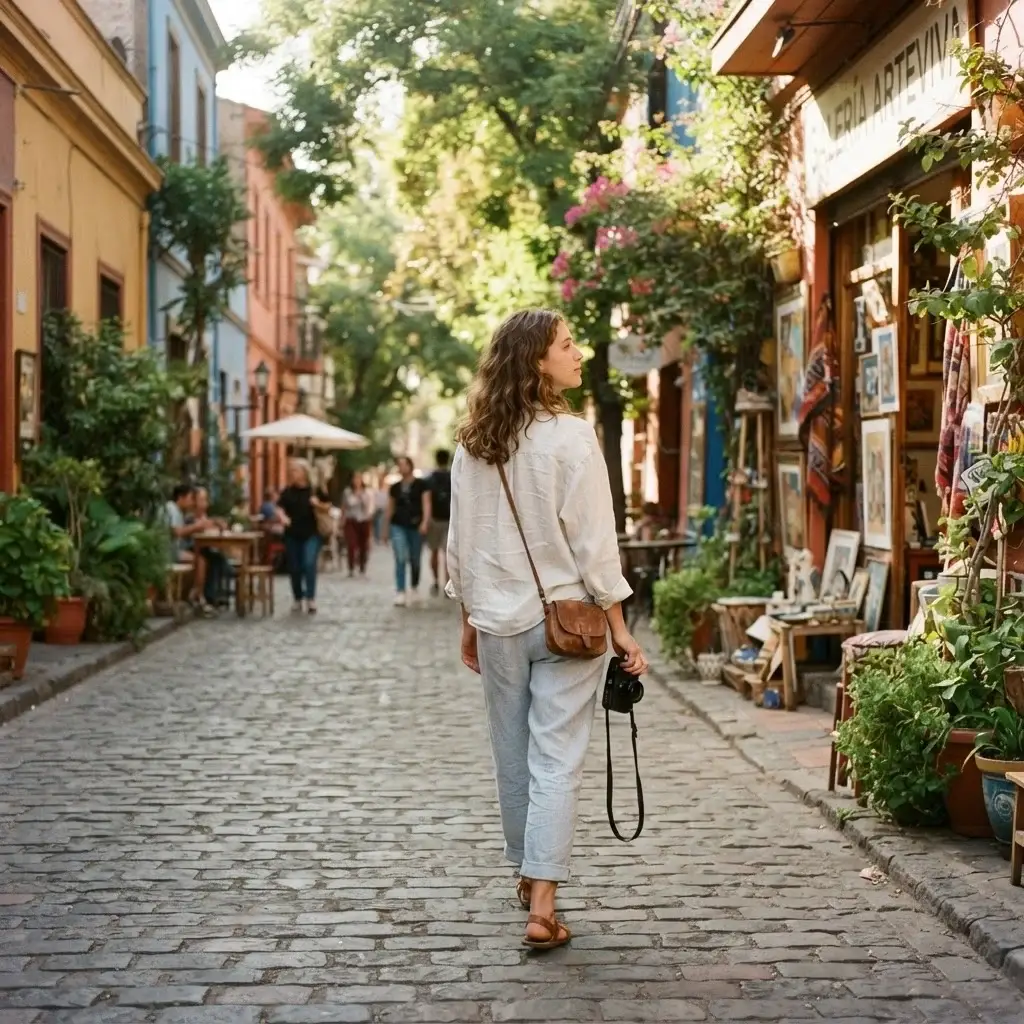
In the afternoon, visit the Cerro Santa Lucía. It’s a smaller hill than San Cristóbal, but it’s beautifully landscaped with fountains, staircases, and hidden viewpoints. It feels like a secret garden in the middle of a bustling metropolis. It’s a great place to sit with a book for an hour.
For dinner, try to find a place that serves local Chilean wine. Chile is world-famous for its wines, and you’ll find that even the “house” wine in many local restaurants is better than most of the wine I used to buy in New York. If you feel hesitant about safety at night, don’t worry. This area is usually lively and well-lit. Just stick to the main streets where there are people, and you’ll be fine.
Day 4: Finding Your Own Rhythm
By your fourth day, you might feel like you’ve hit your stride.
You know how the Metro works, you know how to order your food, and the city feels a little less intimidating. Use this day to do something that is just for you.
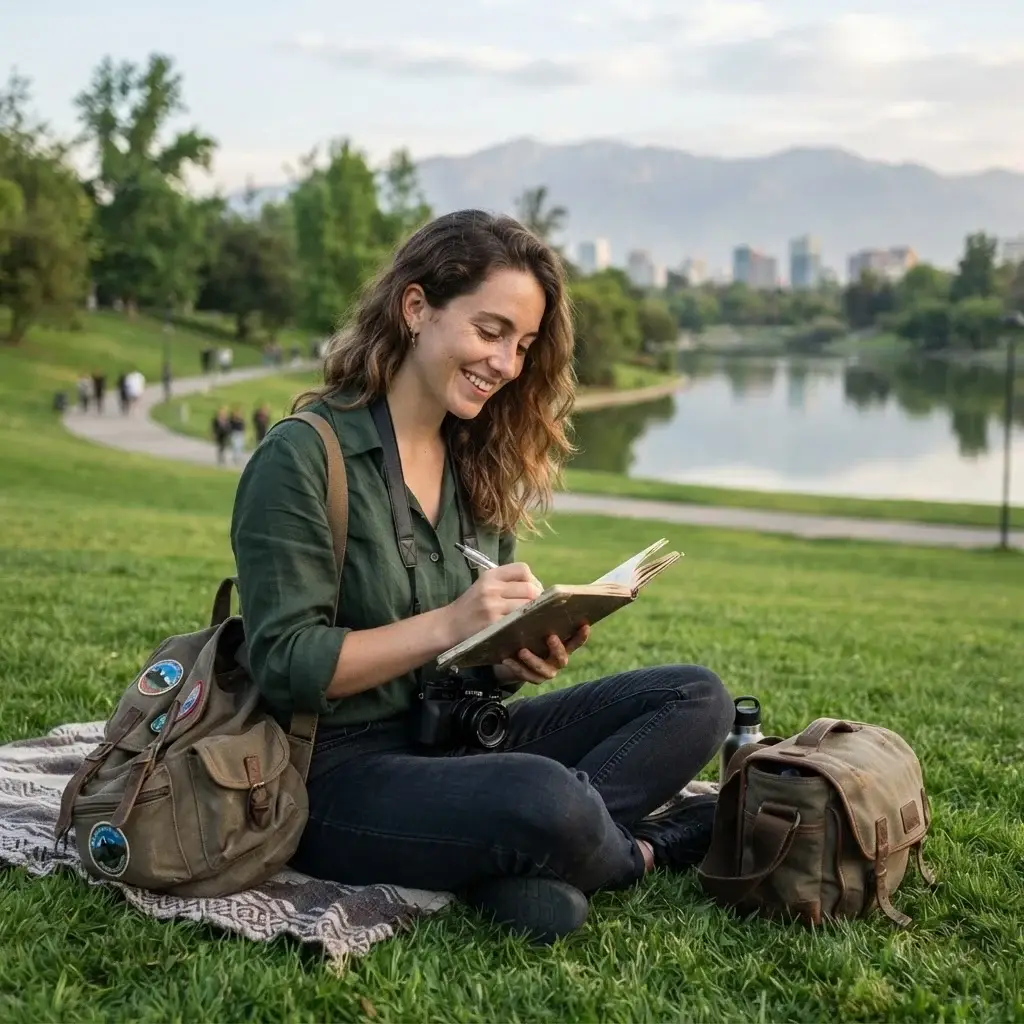
Maybe you want to visit the Parque Bicentenario in the Vitacura district. It’s a beautiful, modern park with black-necked swans in the lagoons and plenty of space to just lie on the grass and relax. It feels very different from the historical center—it’s polished, green, and quiet.
Or, if you’re a fan of literature, seek out La Chascona, the former home of the poet Pablo Neruda.
It’s located in Bellavista, and it’s filled with his personal belongings and eccentric collections. It gives you a window into the mind of one of Chile’s most famous residents.
If you find yourself feeling nervous about the final day, remember that the goal wasn’t to “conquer” Santiago. The goal was to show up, to experience something new, and to prove to yourself that you are capable of navigating a new world on your own.
As you prepare to leave, try to find a small local bakery and grab a marraqueta (a type of crusty bread roll) for your journey. It’s the simplest thing, but it’s a taste of daily life that you’ll carry with you long after you board your flight home.
Practical Tips for the Solo Traveler
Solo travel is often glamorized, but it’s really about the little, everyday decisions. Here is what I’ve learned about making the process smoother:
Transportation: The Metro in Santiago is fantastic. It’s clean, efficient, and goes almost everywhere you’d want to go. Buy a “Bip!” card when you arrive and keep it topped up. It’s your ticket to freedom. When you take taxis or rideshares, always use recognized apps rather than flagging down random cars on the street.
Eating Alone: I know this is the biggest hurdle for many solo travelers. My advice? Don’t hide. Bring a book or a journal, but don’t feel like you have to bury your face in it to avoid feeling lonely. Look around. People-watching is a valid activity. And honestly? Nobody is looking at you and thinking “oh, look, she’s alone.” They are too busy with their own lives. If you feel awkward, sit at the bar or a counter—it’s often more comfortable than a large table.
The Fear of the Unknown: You are going to make mistakes. You will take the wrong bus. You will walk in the wrong direction. You will struggle to find the right word in Spanish. That is not a failure; that is the process. When I was backpacking in Europe, I got lost almost every single day. Those were the days I remember the most because they forced me to ask for help, to look at a map, and to really see the city I was in.
Protecting Your Peace: I always advocate for having a safety net. It’s not about living in fear, it’s about preparation. Having good travel insurance is part of that. Sites like World Nomads offer guidance on travel safety and insurance that can give you that extra layer of confidence when you’re out there on your own. Knowing you have support makes it so much easier to say “yes” to an adventure.
Cultural Etiquette
Chileans are generally friendly, but they appreciate a bit of formality. A polite “Buenos días” (good morning) or “Buenas tardes” (good afternoon) when entering a shop or sitting down at a table goes a long way. It shows that you aren’t just a tourist passing through; you’re a visitor who respects their space.
Also, be patient with the language. You don’t need to be fluent, but learning a few basic phrases—”la cuenta, por favor” (the check, please) or “donde está…” (where is…)—will make your interactions much smoother. Most people in the tourism industry will have some English, but making the effort to speak Spanish shows a level of humility that local people really appreciate.
Why Solo Travel Changes You
You might be reading this because you want a nice trip, but I suspect it’s more than that. You’re looking for a change. You’re looking to see if you can be the person who figures things out.
When you navigate a foreign city—when you successfully order a meal, find your way to a park, or just walk down a street and feel comfortable in your own skin—you are building a version of yourself that is more capable than the one who stayed home.
Santiago is a safe, exciting, and beautiful environment to practice this. It isn’t a city that demands you rush. It’s a city that invites you to participate. You can drink the coffee, climb the hill, read the book, and walk the streets. You are the architect of your own experience here.
Don’t wait for the “perfect” moment. Don’t wait until you have the perfect travel companion or the perfect amount of savings or the perfect plan. The “perfect” moment is just a fantasy we use to put off doing the things we’re actually excited about.
Book the flight. Pack the bag. Go to Santiago. Walk through the Plaza de Armas and realize that the world is a lot bigger, a lot kinder, and a lot more reachable than you ever thought possible. You are more than capable of handling this. You’re ready for this. And once you take those first few steps on your own, I have a feeling you won’t want to stop.