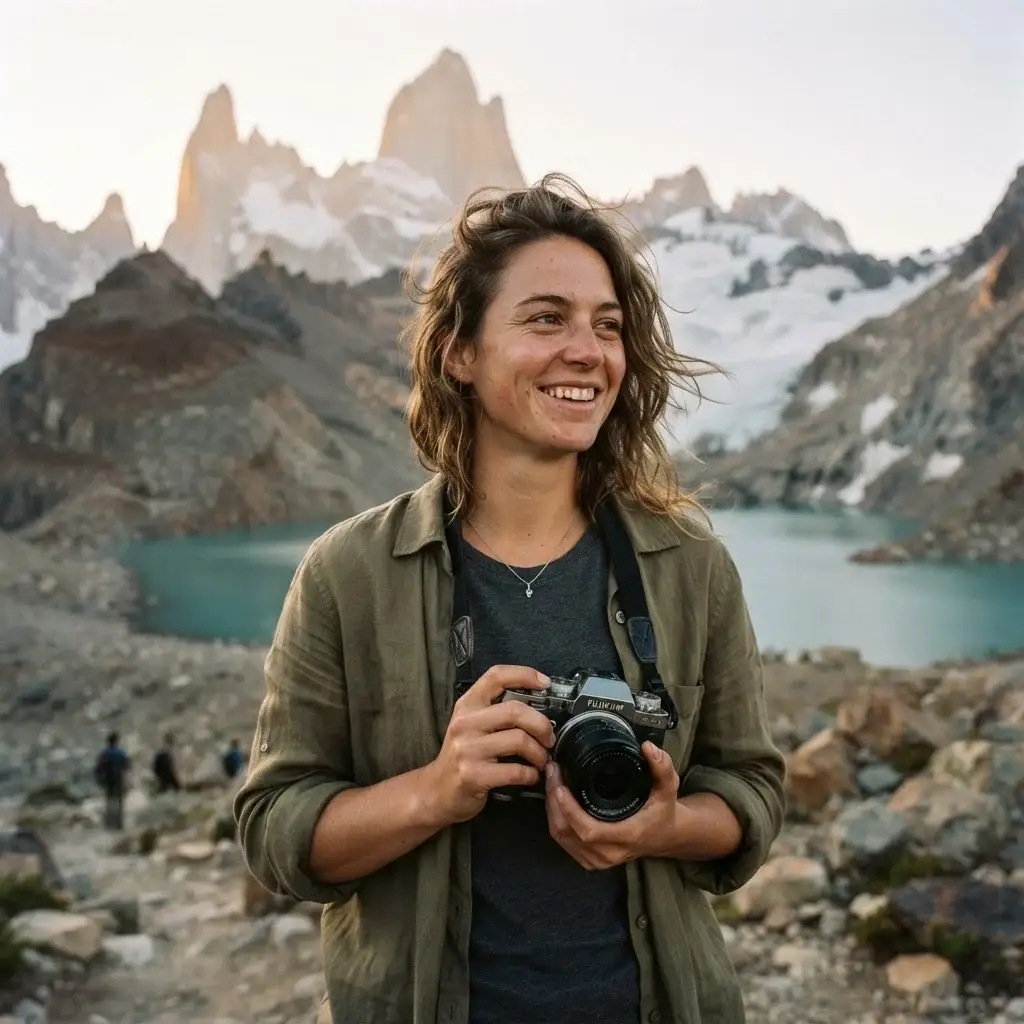
There was a time, not so long ago, when I sat at a desk in a stiff blazer, staring at a calendar and counting down the days until my next two-week vacation. I felt like a bird trapped in a cage, dreaming of wide-open spaces where the only schedule was the rising and setting of the sun. When I finally walked away from that office life, I made a promise to myself: I would stop waiting for the “perfect moment” to explore the wilder parts of this planet.
Patagonia was at the top of my list. It felt like a myth—a rugged, windswept place at the very tip of South America. When I first looked at the map, I felt completely overwhelmed. How do you actually get around? How do you connect the dots between the mountains and the glaciers? If you are feeling that same flutter of anxiety, please know that you are not alone. Planning an itinerary for multiple cities in Patagonia is a puzzle, but once you put the pieces together, the reward is life-changing.
I want to share exactly how I navigated this beautiful, challenging region. This isn’t a list of luxury resorts or curated tours. This is the raw, honest, and budget-friendly plan I used to see the best of Chile and Argentina on my own.
The Reality of Traveling the Region
Before we dive into the specific stops, let’s talk about the mindset. Patagonia is not a place you “check off.” The weather changes in seconds. A sunny morning can turn into a snowstorm by lunch. You need to be flexible. When you travel solo here, you are rarely actually alone. The hostels, the hiking trails, and the bus terminals are filled with other travelers who are just as nervous and excited as you are.
If you are just starting your research, take a look at the general destination overview provided by Lonely Planet to get a sense of the scale. The distances are massive. You will spend time on buses. A lot of time. Embrace that. Look out the window at the endless steppe, read a book, or just let your mind wander. This is where the magic of slow travel happens.
Logistics: Preparing for the Border Crossings
One of the biggest hurdles is the border between Chile and Argentina. It isn’t as simple as hopping on a train. You will be taking buses, and those bus routes often cross back and forth across the border.
Before you book a single flight, check the official entry requirements provided by the US Department of State to make sure your passport is ready and you know the visa rules for your specific nationality. It changes, and you do not want to be stuck at a land border because you missed a paper requirement.
When I plan an itinerary for multiple cities in Patagonia, I prefer to loop.
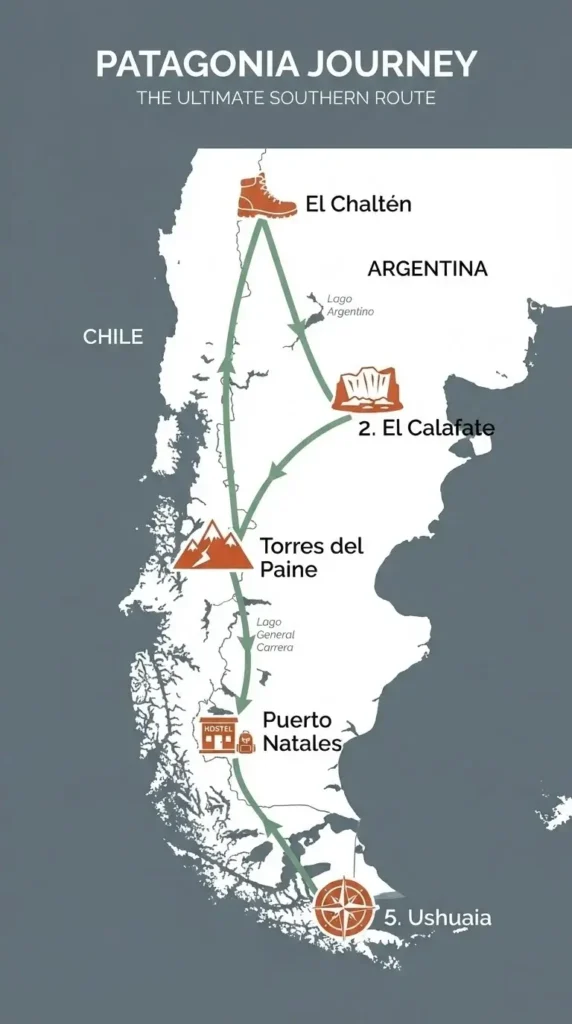
I start in Chile and end in Argentina, or vice versa, to avoid backtracking. It saves money and, more importantly, it saves your sanity.
Part 1: Puerto Natales, Chile (The Starting Point)
Most solo travelers start in Puerto Natales. It is a cozy, windy town that feels like the edge of civilization. I loved the vibe here—it’s full of hikers coming back from the mountains and planning their next moves.
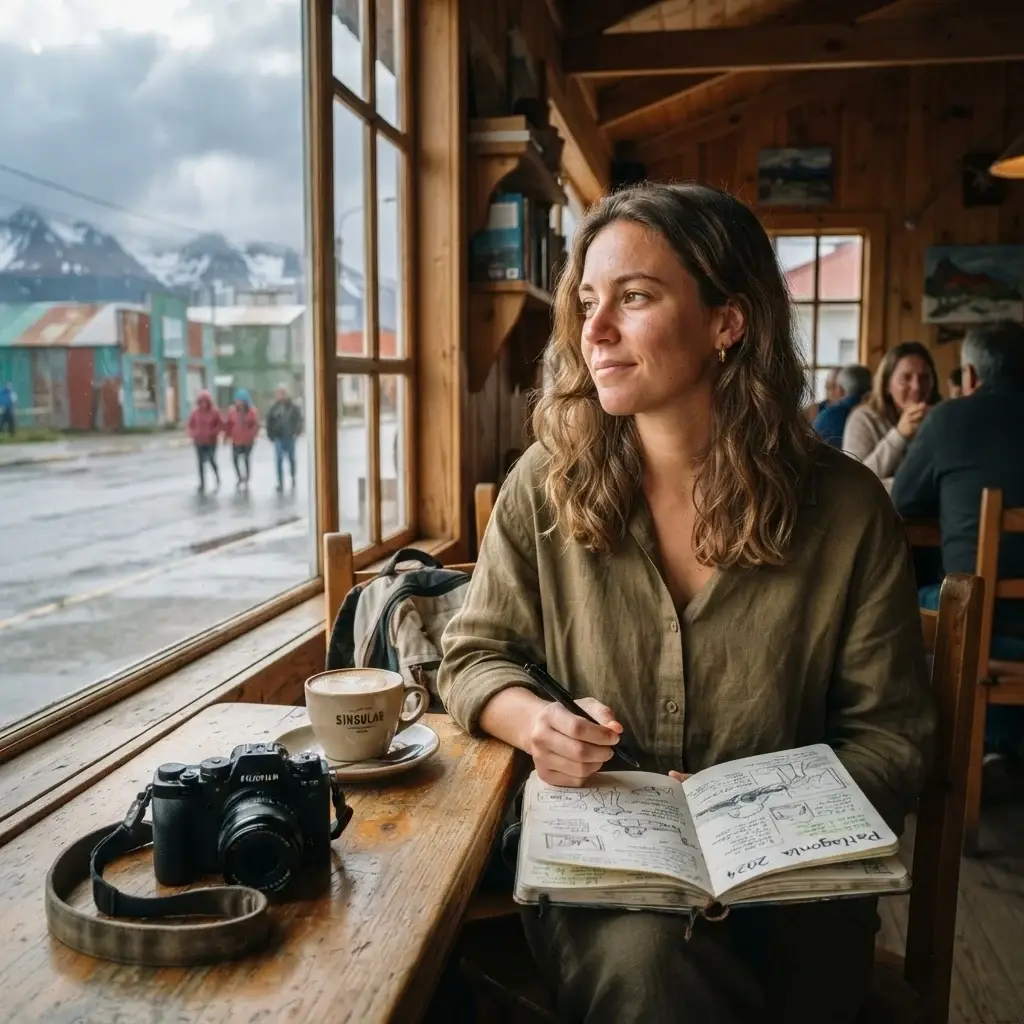
- What to do: This is your base for Torres del Paine. Even if you aren’t doing the massive, week-long treks, you can do amazing day hikes.
- Eating: You must try the local seafood. Look for small, family-owned places serving chupe de centolla (king crab stew). It is rich, comforting, and perfect after a cold day of hiking.
- Budget Tip: Don’t stay in the fancy hotels. Find a locally-owned hostel with a kitchen. Grocery shopping in town is much cheaper than eating out every meal. Buying pasta, sauce, and fresh fruit at the local market saved me hundreds of dollars.
Part 2: Torres del Paine National Park
You cannot come to this part of the world and skip the park. It is a UNESCO World Heritage-listed site for a reason. The granite towers piercing the sky are something you have to see with your own eyes to believe.
- Solo Advice: If you are nervous about safety, know that the main trails in Torres del Paine are very well-marked and busy during the peak season. You will see people from all over the world.
- The “W” vs. Day Hikes: You don’t have to carry a 40-pound pack to enjoy the park. I opted for a mix of day hikes, returning to my hostel in Puerto Natales each night.
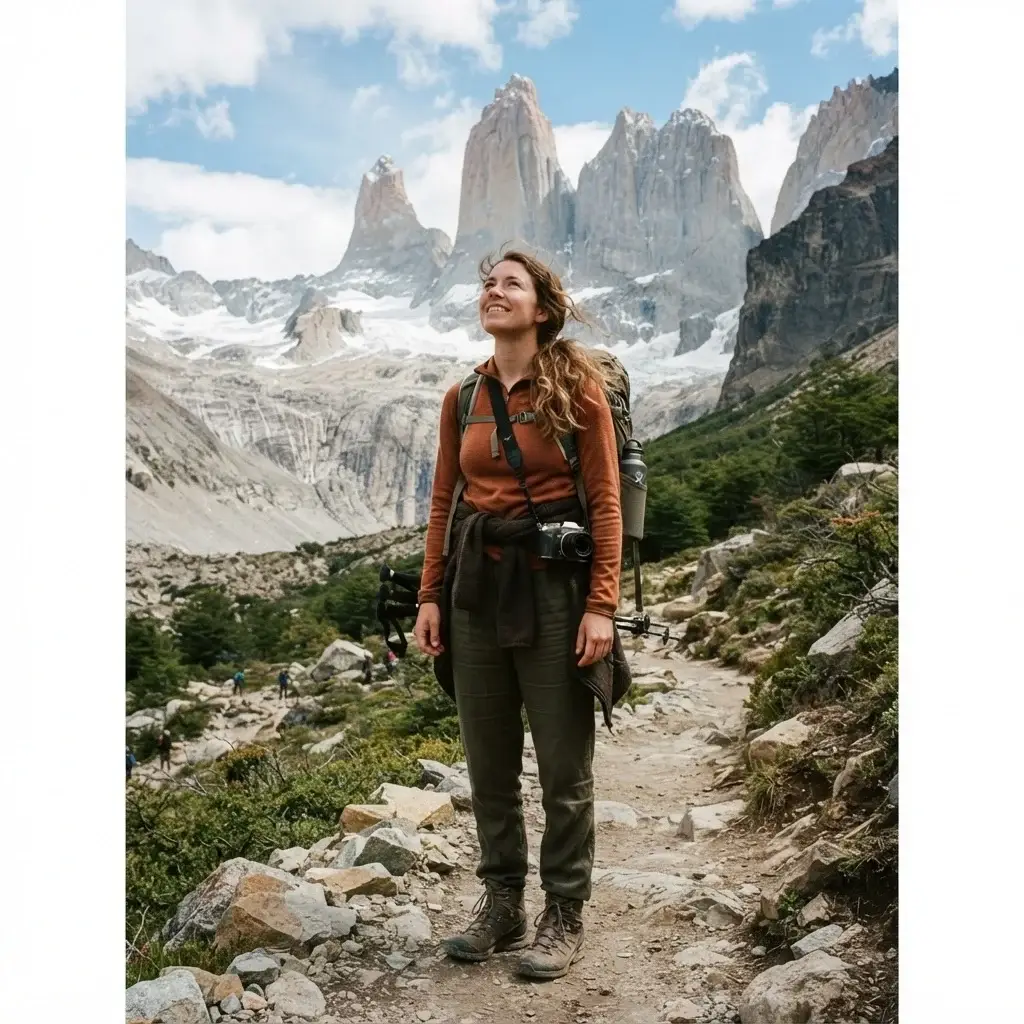
- It allowed me to have a hot shower and a real bed, which kept my morale high.
Part 3: Crossing the Border to El Calafate, Argentina
Taking the bus from Puerto Natales to El Calafate is a rite of passage. It takes about five to six hours, depending on the border crossing. Pack snacks. Seriously, pack more snacks than you think you need.
El Calafate is the gateway to the Perito Moreno Glacier. This is the moment in the trip where you feel small. Seeing the glacier groan, crack, and drop giant shards of ice into the water is a sound that sticks with you forever.
- Insider Secret: Everyone goes to the glacier on the popular morning buses. Try to find a tour or a transport that leaves in the afternoon.
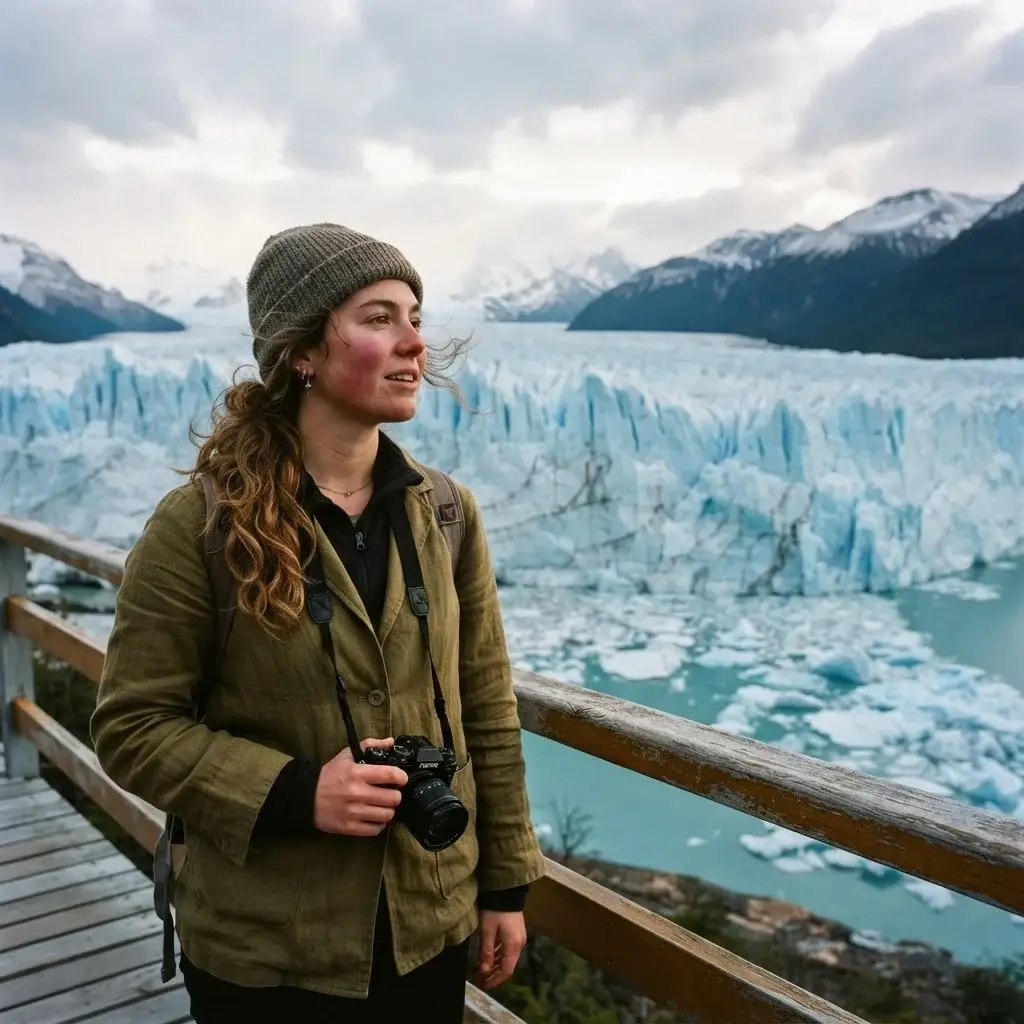
- The crowds thin out, and you get those wooden walkways to yourself for a few golden hours before sunset. It makes the experience feel intimate rather than like a theme park.
Part 4: The Hiker’s Paradise: El Chaltén
If I had to pick a favorite spot in my entire itinerary for multiple cities in Patagonia, it would be El Chaltén. It is a tiny village built for one purpose: hiking. There are no fancy amenities, and the internet can be spotty, which I honestly loved. It forces you to disconnect.
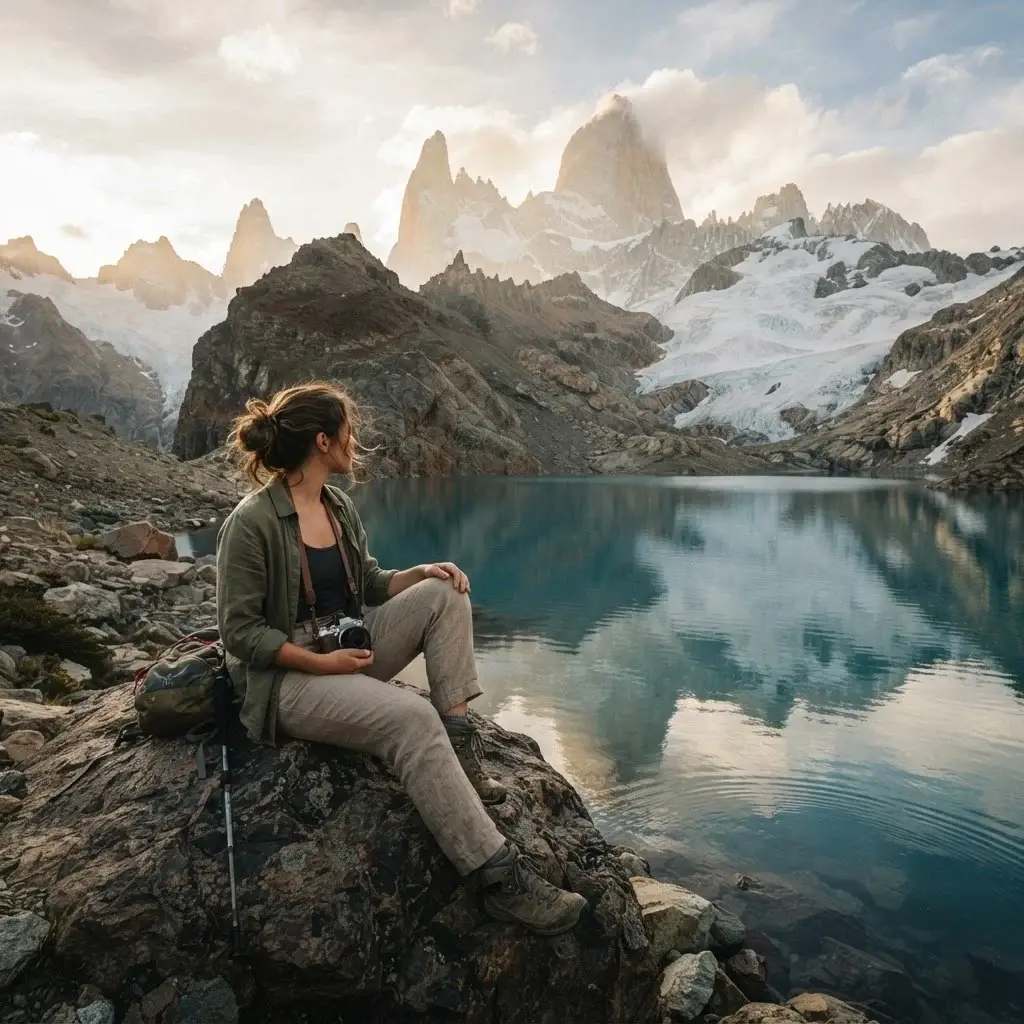
- Hiking: The trail to Laguna de los Tres is the classic. It is a steep climb, but when you reach the top and see the Fitz Roy mountain reflected in the blue water, you will forget how tired your legs are.
- Cultural Note: Spend your afternoons in the local teahouses. I spent hours writing in my journal in a small cafe, drinking hot chocolate and watching other travelers limp back into town with tired, happy faces. It’s a very communal atmosphere. You will make friends here easily.
Part 5: The End of the World: Ushuaia
From El Chaltén, most travelers fly or take a long bus ride down to Ushuaia. This is the southernmost city in the world. It feels distinct from the rest of Patagonia. It is surrounded by water and dramatic peaks.
- What to do: Take a boat tour through the Beagle Channel. Seeing sea lions and penguins in the wild is a reminder of how vast and diverse this region is.
- Budget Tip: Ushuaia is a tax-free zone, which can make some gear cheaper, but restaurants can be pricey. Stick to the local favorites like cordero patagónico (Patagonian lamb). It is roasted over an open fire and is an absolute culinary staple of the region.
Keeping Health and Safety in Mind
When you are hiking and traveling solo, you have to be your own advocate for safety. It’s not about being afraid; it’s about being prepared.
Before you go, take a look at the traveler health advisories on the CDC website for the region. While there are no major health risks that should stop you, knowing what to look out for in terms of food safety or altitude changes is just good planning.
I also never travel to remote areas without solid coverage. Unexpected injuries or flight cancellations can happen to anyone. I usually look into travel insurance guidance and safety tips from World Nomads to understand what kind of coverage makes sense for trekking and outdoor activities. It gives me the peace of mind to focus on the trail rather than worrying about the “what-ifs.”
Practical Tips for Your Budget
The biggest mistake I made on my first big solo trip was assuming I needed to pay for everything in advance to be safe. That is rarely true. Patagonia has a very robust infrastructure for independent travelers.
- Use the Buses: You do not need private transfers. The bus network is reliable and, frankly, it’s where I met some of my best travel friends. We shared stories about our hometowns and our fears of leaving our jobs.
- Cook Your Own Meals: I mentioned this before, but it bears repeating.
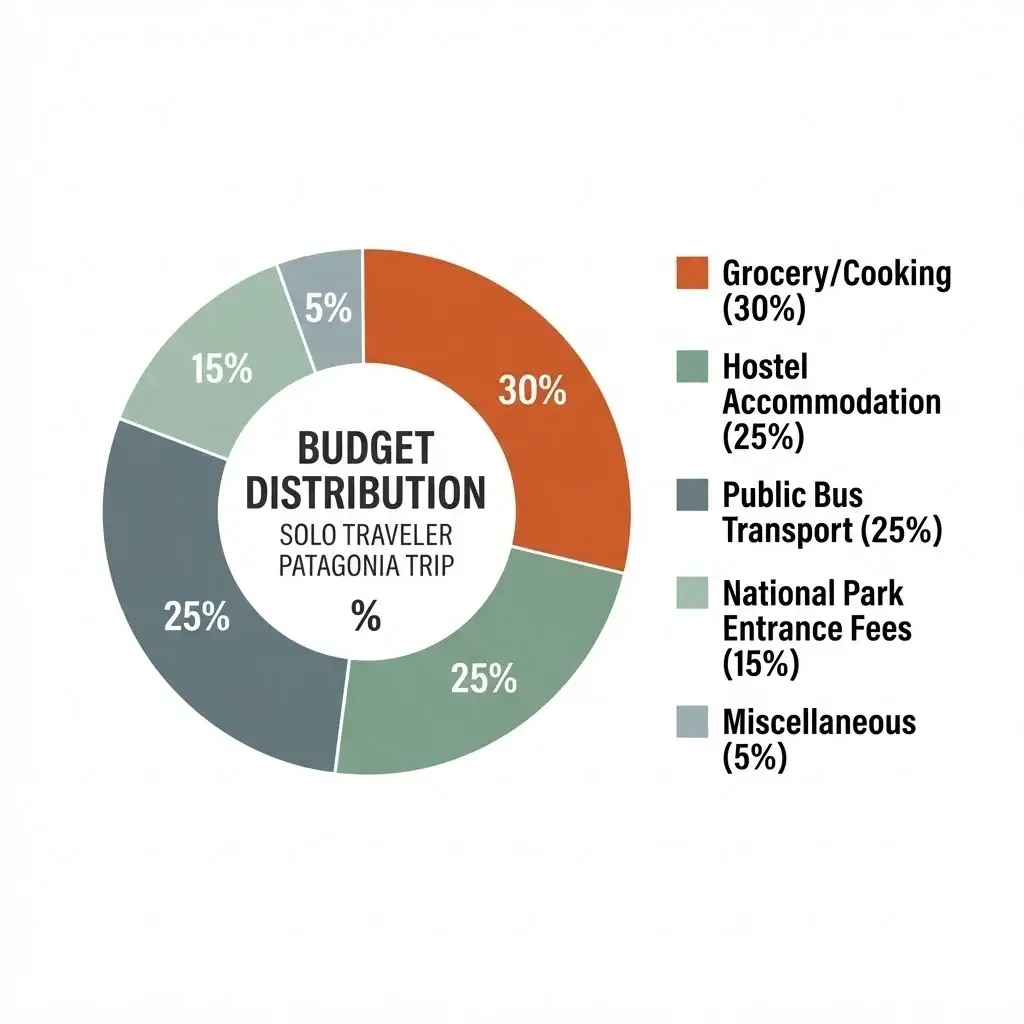
- Dining out in places like El Calafate or Puerto Natales every single night will drain your wallet faster than anything else. Buying local ingredients is part of the fun. Learn to make a simple salad or a pasta dish in the hostel kitchen.
- Pack Layers: Do not buy fancy, expensive gear just because the marketing says you need it. Wear what you have. The most important thing is having layers: a base layer, a warm fleece, and a good windbreaker. The wind is the real enemy here, not the cold.
- Slow Down: I see people trying to cram too much into their itinerary for multiple cities in Patagonia. They visit a town for one day and then leave. Don’t do that. Spend three or four days in one place. Get to know the local coffee shop owner. Walk the same trail twice. It is cheaper, and you will feel much more connected to the place.
Why This Trip Changes You
When I was sitting in my office in New York, I thought travel was about the places I checked off a list. I thought success was having a full passport. But after trekking through the wind in El Chaltén and navigating the bus stations in Chile, I realized that travel is actually about the version of yourself you meet on the road.
Solo travel in Patagonia strips away all the things you hide behind. There is no one to impress. There is no one to manage your schedule but you. If you get lost, you have to find your way back. If you are lonely, you have to initiate a conversation.
You will find that you are more capable than you ever gave yourself credit for. You will handle the border crossings, you will figure out the bus schedules, and you will find your way to the top of that mountain.
Preparing for Your Own Adventure
If you are reading this and feeling that same itch I felt back at my desk, I want you to know something: You can do this. The uncertainty is part of the experience. It is the price you pay for the adventure.
Start by looking at a map. Pin the cities. Read the bus schedules. Start a savings account specifically for this. The “perfect time” is a myth that keeps us stagnant. The only time you have is the time you decide to take.
Whether you start in Puerto Natales or fly directly into Argentina, the route you choose will become your own unique story. Don’t worry about making it look like the photos on social media. Make it look like your life. Make it messy, make it real, and make it meaningful.
The trails in Patagonia are waiting. They don’t care about your job title, your resume, or how much money you have in the bank. They just want you to show up, be present, and keep walking.
I hope this helps you get started. If you find yourself on a bus somewhere near the Andes, staring out at that vast, golden landscape, remember that you made it happen. You took the step. And that is the most important part of the journey.