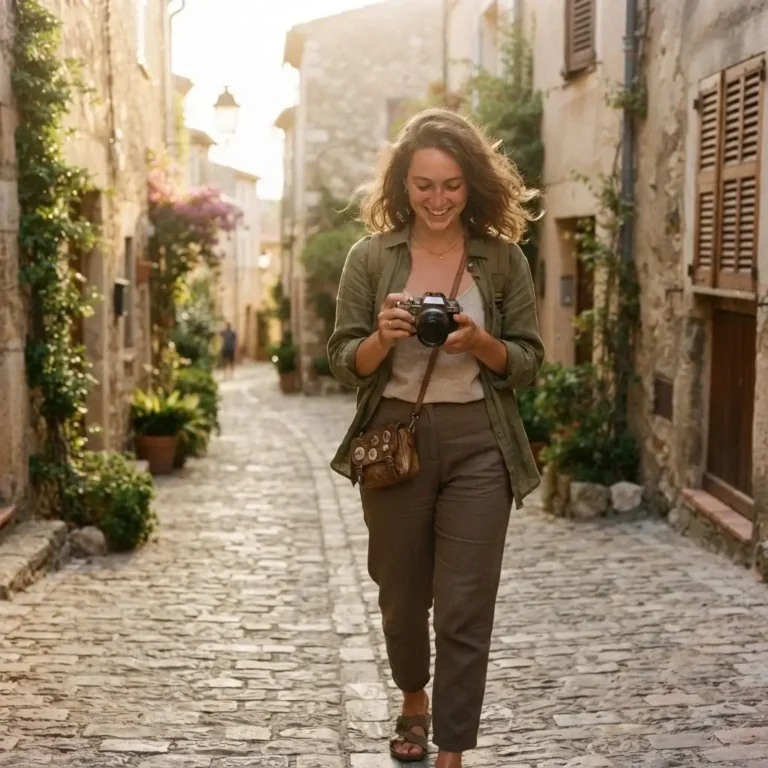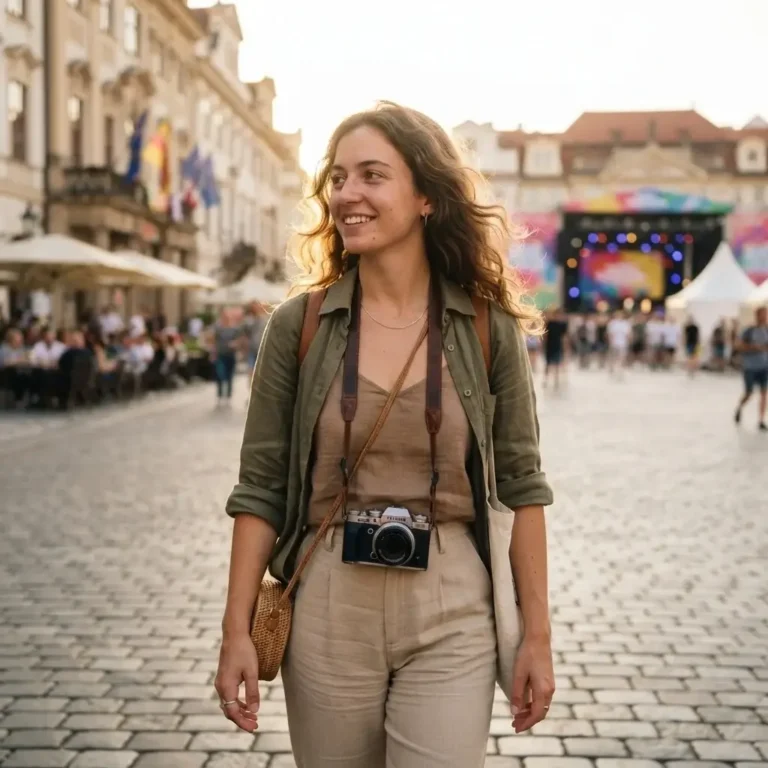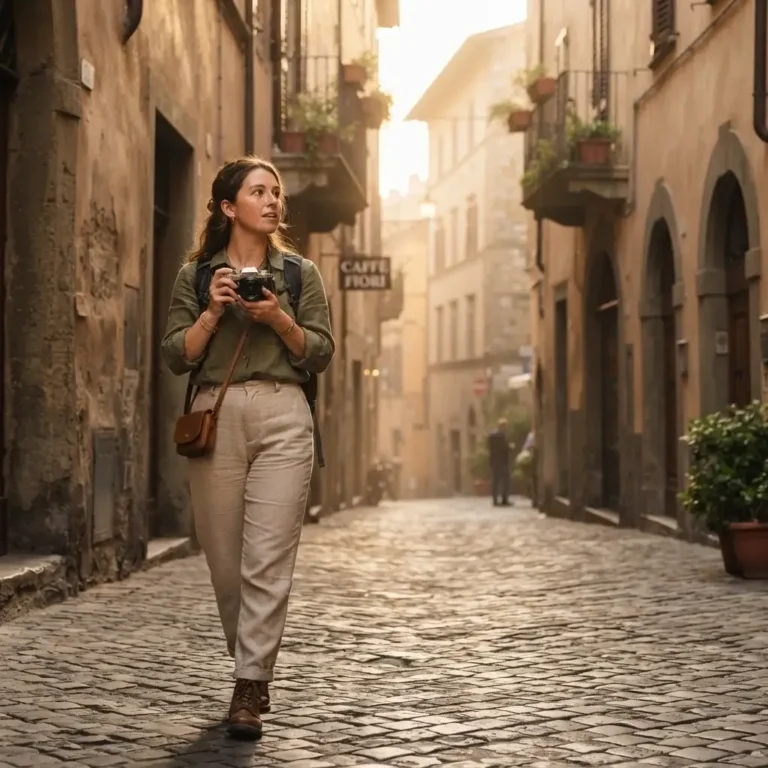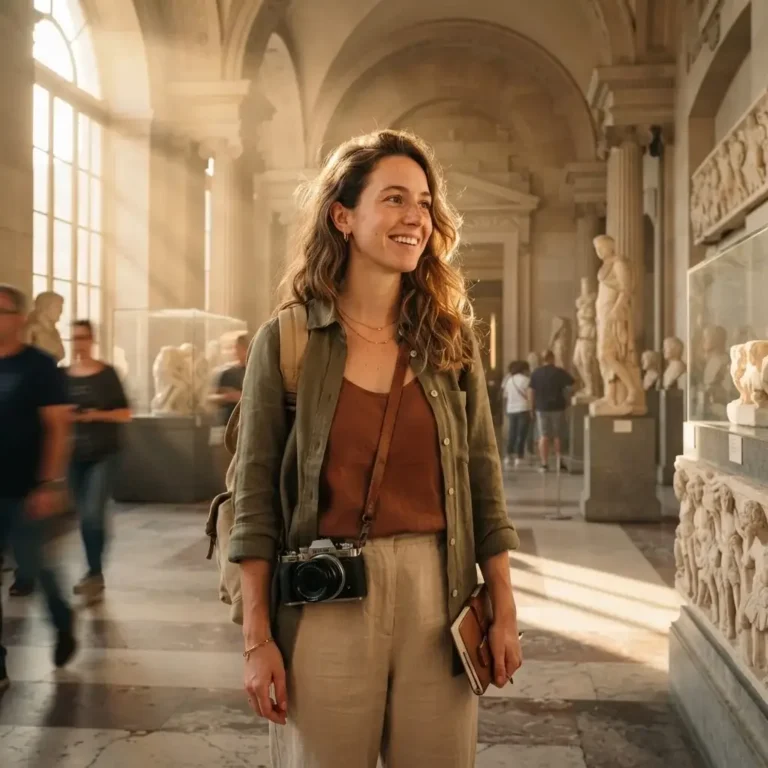
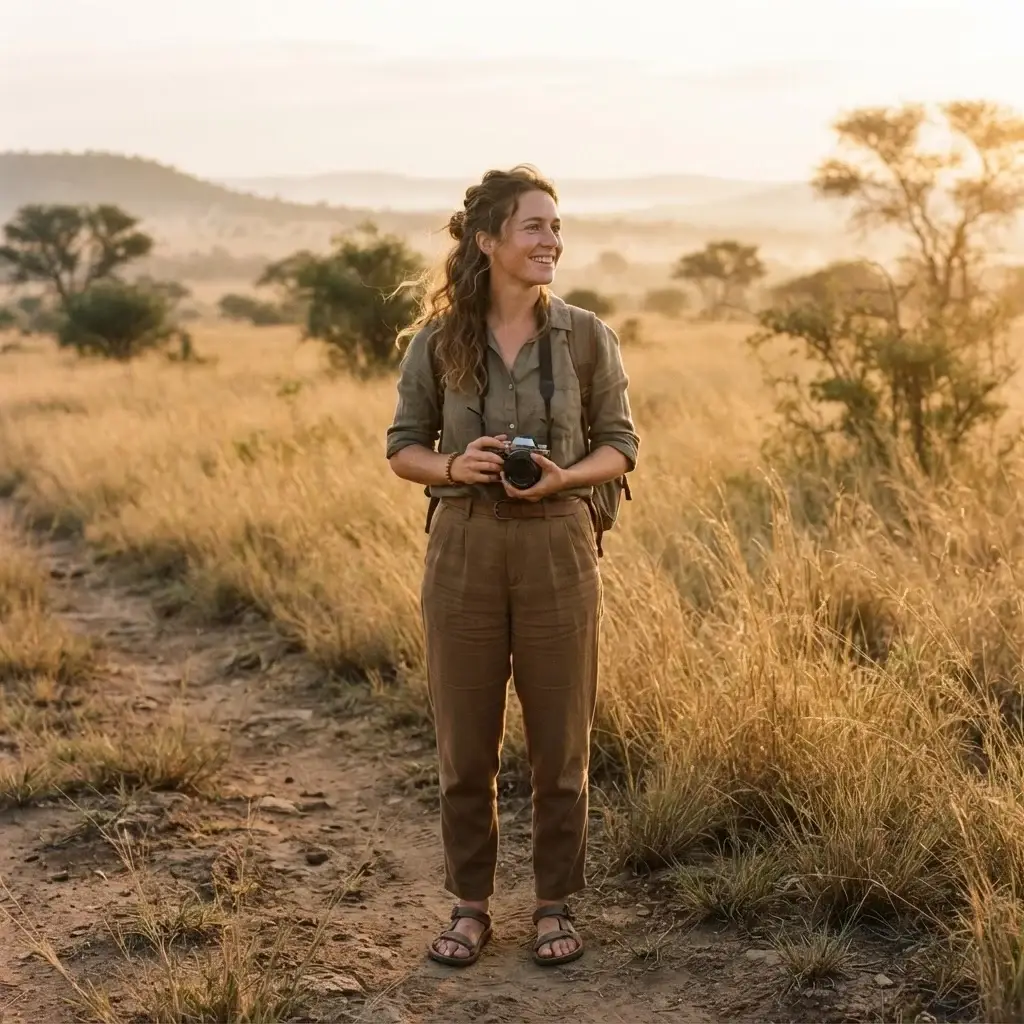
When I was working as a sightseeing guide in New York City, I used to watch thousands of people from all over the world explore my hometown. I would stand on the top deck of a tour bus, point out the Empire State Building, and secretly dream of the day I would be the one exploring a faraway place.
Back then, I was waitressing double shifts just to save enough money to escape my boring 9-to-5 office job. I wanted real adventure. I wanted to see lions in the wild and understand different cultures. But everyone told me that going to South Africa alone was a bad idea. They said it was too hard to plan and too scary for a solo female traveler.
They were wrong.
You do not need to wait for a group of friends to agree on dates. You do not need to spend ten thousand dollars on a fancy luxury safari tour. You can rent a car, drive yourself, and have the most amazing time of your life. All you need is confidence and a good plan. That is why I wrote down my exact 7-day itinerary for Johannesburg & Kruger National Park.
This plan is built for regular people. It covers exactly what to eat, where to drive, and how to stay safe. Let’s get packing.
Pre-Trip Prep: Staying Safe and Healthy
First things first. You might feel a little nervous about safety. That is completely normal. I felt the exact same way before I got on the plane. But fear should never stop you from seeing the world. You just need to be smart and prepared.
Before I book any flights, I always check the US Department of State Travel website to read the most up-to-date entry requirements and local safety tips for solo travelers in South Africa. It helps me know what to expect before I even pack my bags.
For a trip to the African bush, you also need to think about your health. Kruger is in a malaria zone, depending on the time of year you go. I highly suggest you look at the CDC Travelers’ Health page a few months before your trip so you can ask your doctor for the right malaria pills.
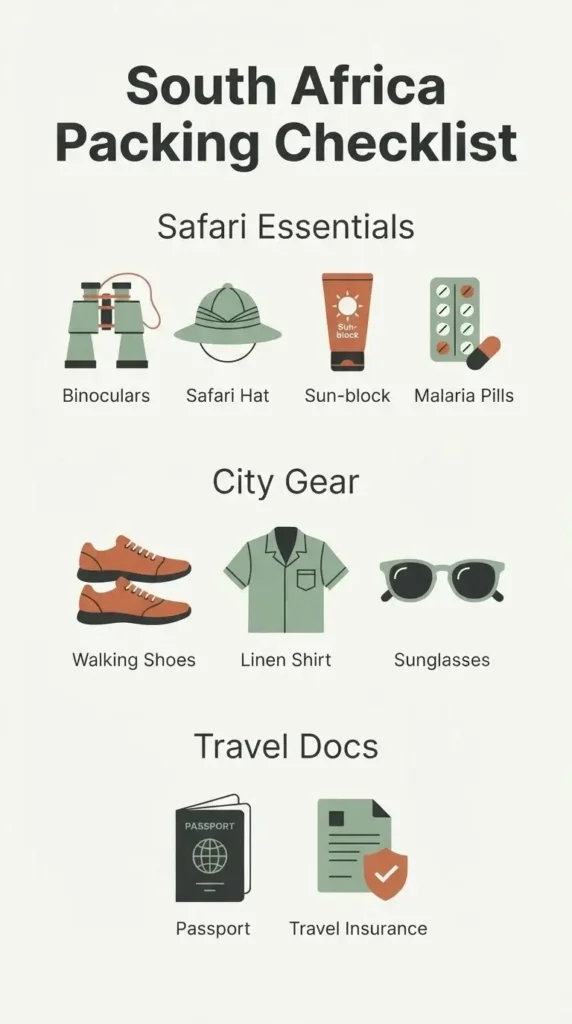
You will also need to rent a car for this trip. The freedom of having your own set of wheels is the best part of this adventure. Rent your car for pickup at O.R. Tambo International Airport in Johannesburg. Make sure you book an automatic transmission if you are not used to driving a manual car with your left hand. In South Africa, they drive on the left side of the road!
Day 1: Touching Down in the City of Gold
Morning: Arrival and Getting Your Bearings
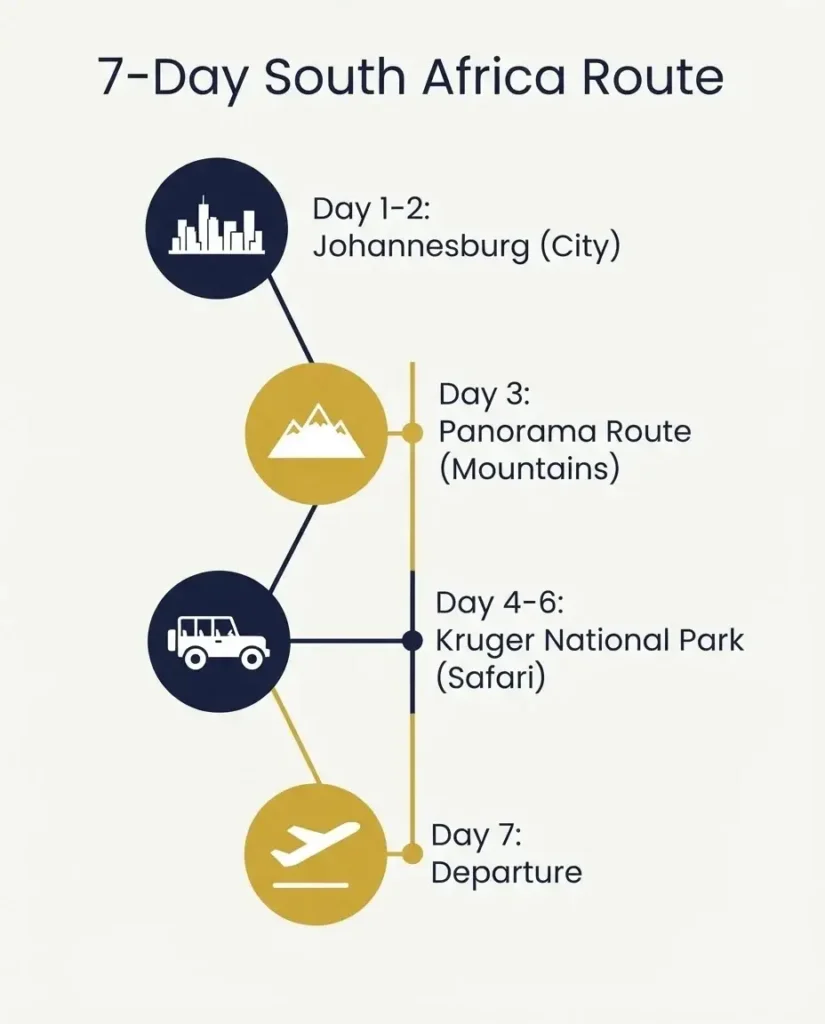
You will likely land at O.R. Tambo International Airport in the morning. After a very long flight, you will feel tired. Do not try to drive to Kruger today. That is a huge mistake many first-timers make. Instead, take a day to rest and explore Johannesburg, a city built on a giant gold rush.
Pick up your rental car at the airport. The signs are very clear and easy to follow. Once you have your keys, drive to the neighborhood of Rosebank or Sandton. These areas are very safe, easy to walk around, and have plenty of great places to stay for solo travelers.
Afternoon: Food and Walking
After you drop off your bags, stretch your legs. Head to the Rosebank Mall area. There is an outdoor walking space called the Zone. It is bright, fun, and full of life.
It is time for your first South African meal. Find a local cafe and order something called “bunny chow.” It has nothing to do with rabbits! It is a hollowed-out loaf of white bread filled with rich, spicy curry. It is a famous street food that started in the city of Durban. It is messy, cheap, and so tasty.
Evening: An Early Night
Since you have jet lag, keep your evening very simple. Walk to a nearby grocery store, like Woolworths or Checkers, and buy some snacks for your road trip tomorrow. Buy a big bag of “biltong.” This is South African dried meat, kind of like beef jerky, but much better. It is cured with vinegar and coriander. It will be your best friend in the car. Go to sleep early. Tomorrow is a big day.
Day 2: The Heart of History
Morning: The Apartheid Museum
You cannot visit South Africa without learning about its past. Wake up early, eat a big breakfast at your hotel, and drive to the Apartheid Museum.
Give yourself at least three hours here. It is a very heavy, emotional experience. When you buy your ticket, it will randomly say “White” or “Non-White,” and you must enter through different doors based on your ticket. This forces you to feel a tiny piece of what segregation was like. The exhibits are huge and full of videos, photos, and stories of the brave people who fought for freedom.
While the Apartheid Museum itself is not on the UNESCO World Heritage list like Robben Island in Cape Town, the stories inside show the same incredible human spirit that the United Nations works to protect worldwide.
Afternoon: Soweto Bicycle Tour
After the museum, drive the short distance to Soweto. This is the most famous township in the country. Do not just drive through it in your car. To really connect with the culture, join a local bicycle tour.
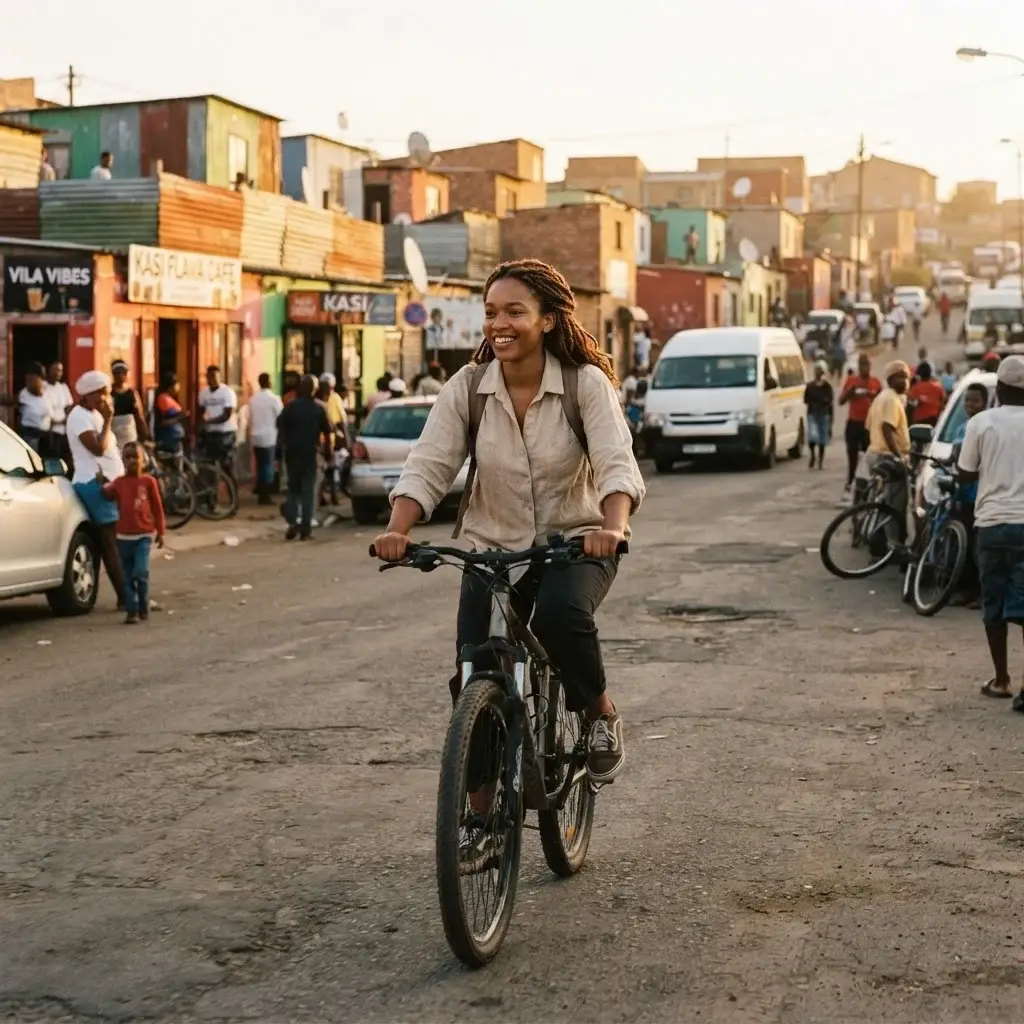
I did a two-hour bike tour here, and it was the highlight of my city stay. Local guides will ride with you through the busy streets. You will see kids playing soccer, smell meat cooking on open fires, and hear music blasting from open windows. You will ride past the home of Nelson Mandela and the home of Archbishop Desmond Tutu. They lived on the exact same street!
Evening: A Real Braai
Before you leave Soweto, eat dinner at a local spot like Chaf Pozi. Here, you will experience your first “braai.” A braai is South African barbecue. They cook huge pieces of beef, chicken, and sausage (called boerewors) over hot wood coals. Eat it with “chakalaka,” a spicy tomato and bean relish, and “pap,” a thick cornmeal porridge. You eat it all with your hands. It is amazing.
Day 3: The Panorama Route Road Trip
Morning: Hitting the N4 Highway
Wake up at 6:00 AM. It is time to leave the city and drive toward the wild. You will take the N4 highway east towards the Mpumalanga province. The roads are paved and mostly in great condition, but watch out for large trucks.
The drive takes about four hours before you reach the start of the Panorama Route. This is one of the most beautiful drives in the world. It curves high up into the mountains before dropping down into the lowveld where the animals live.
Afternoon: Waterfalls and Pancakes
Your first stop on the route should be the town of Graskop. This little town is famous for one thing: pancakes. Stop at Harrie’s Pancakes and order a savory pancake filled with chicken and mushrooms, or a sweet one filled with cooked apples and cream.
After lunch, drive to God’s Window. This is a viewpoint on the edge of a massive cliff. If the sky is clear, you can see for miles and miles down into the valley. Next, drive to the Bourke’s Luck Potholes. These are crazy, round rock pools carved by swirling river water over thousands of years. They look like giant stone blenders.
Evening: The Blyde River Canyon
End your driving day at the Three Rondavels viewpoint. This looks out over the Blyde River Canyon, which is one of the largest green canyons on the planet. The rocks are shaped like traditional African huts.
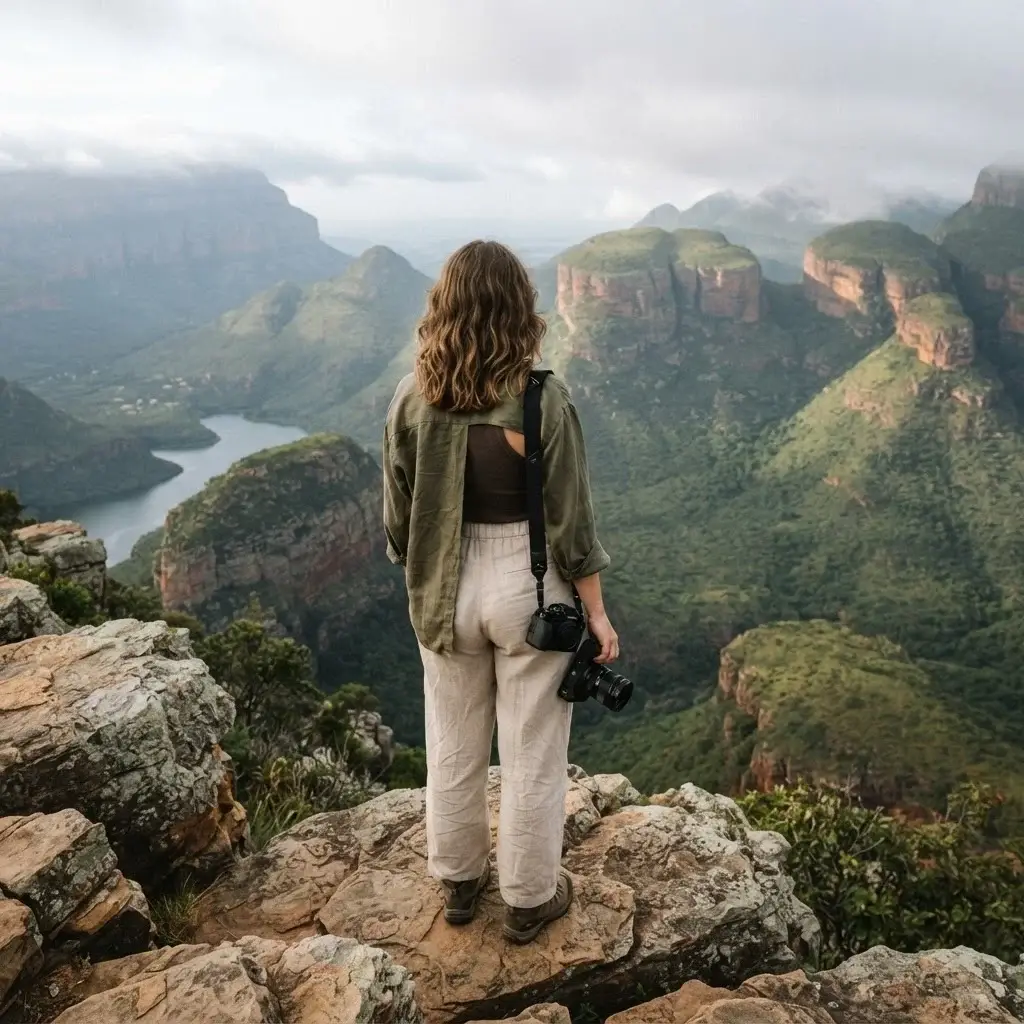
Find a small guest house in the town of Hazyview or Graskop to sleep for the night. Get lots of rest. Tomorrow, you enter the park.
Day 4: Entering the Wild
Morning: The Gates of Kruger
Wake up before the sun. You want to be at the Phabeni Gate or Paul Kruger Gate the exact minute they open. The best time to see wild animals is right at dawn when it is cool and the big cats are hunting or walking on the roads.
When you pay your entrance fee at the gate, buy a green map book from the camp shop. This book is magic. It shows every dirt road, water hole, and camp in the park.
If you are wondering what kind of animals you might spot near the rivers, I suggest flipping through a Lonely Planet destination guide before your trip to learn the difference between a leopard and a cheetah.
Afternoon: The Slow Drive to Lower Sabie
Once inside the park, the speed limit is very slow. You are only allowed to go 50 kilometers per hour on paved roads, and 40 on dirt roads. But you should go even slower.
Roll your windows down. Turn your radio off. Listen to the birds. Look closely at the bushes. On my very first day driving this route, I had to slam on my brakes because a huge family of elephants was crossing the road.
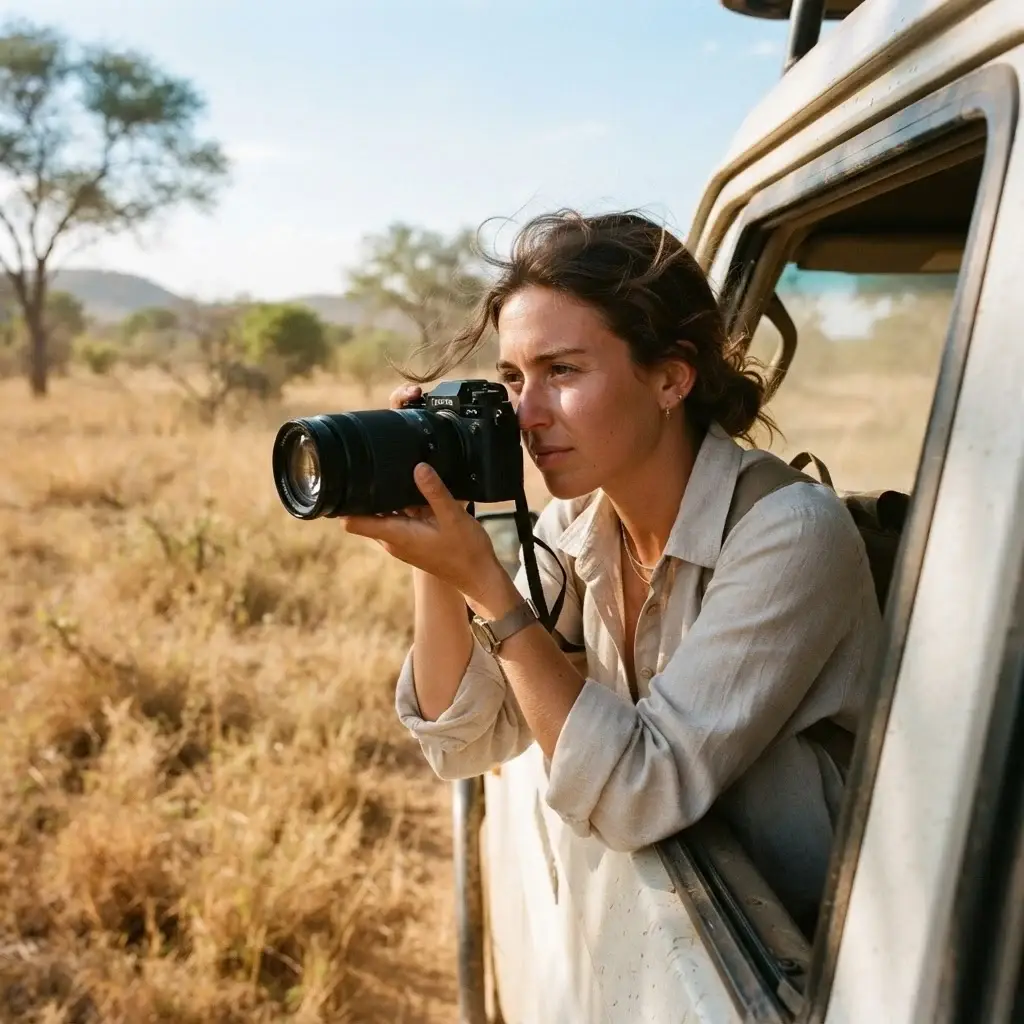
The mother elephant stood right in front of my little rental car and stared at me. My heart was beating so fast, but I felt so alive.
Drive slowly toward the Lower Sabie rest camp. This area of the park has lots of water, which means lots of animals. Look out for hippos in the Sabie River.
Evening: Camp Life
Check into your bungalow or safari tent at Lower Sabie. The camps inside Kruger are fenced off, so you are safe from lions while you sleep. But you will still hear them roaring in the dark!
Eat dinner at the camp restaurant. They have a big deck that looks right over the river. Order a slice of “melktert” for dessert. It is a sweet, creamy milk tart dusted with cinnamon.
Day 5: Deep Safari Mode
Morning: Coffee and Cats
Today is all about finding lions. Wake up at 4:30 AM. Pack your car with your biltong, some rusks (hard biscuits you dip in coffee), and a thermos of hot tea. Be at the camp gates when they open at 5:30 AM.
Drive north toward Satara camp. Satara is known as the “cat capital” of Kruger because the land is very flat and grassy, making it easier for lions and cheetahs to hunt. Drive very slowly. Look at the lower branches of big trees. Leopards love to sleep up high in the shade.
Afternoon: The Waterhole Wait
By noon, the African sun is very hot. The animals get sleepy and stop moving. This is the perfect time for you to pull into a picnic spot. Many picnic spots in Kruger let you rent a small gas grill. You can cook a hot dog right there in the bush.
After eating, find a big waterhole on your map. Drive there, turn off your car engine, and just wait. Sit in silence. Soon, you might see a tower of giraffes come down for a drink, spreading their long front legs awkwardly to reach the water.
Because you are driving alone in the wild, getting a flat tire is always possible. I always remind solo travelers to look into World Nomads Travel Insurance before a big trip to cover any unexpected hiccups on the road. It gives you peace of mind when you are miles away from a city.
Evening: The Sunset Drive
Check into Satara camp. Before dinner, book a “sunset drive” through the camp office. You cannot drive your own car in the park after dark, but you can pay to go on a big open-air truck with a park ranger. They use massive spotlights to find nocturnal animals like hyenas, bushbabies, and owls.
Day 6: Walking with the Wild
Morning: A Bush Walk
For your last full day in the park, step out of your car. Book an early morning bush walk with armed park rangers. You will wake up before dawn, put on hiking boots, and walk single-file into the grass.
This is not about getting close to dangerous animals. It is about learning the small details. The rangers will teach you how to read animal footprints in the dirt. They will show you how to tell how old elephant dung is. They will teach you which plants are used for traditional medicine. Walking on the same dirt as wild rhinos makes you feel very small in the best way possible.
Afternoon: The Long Drive Back
After your walk, take a quick shower, pack your bags, and begin the drive back toward the park gates. Stop at the Skukuza camp for lunch. They have a great cafe built inside an old train station.
Exit the park through the Paul Kruger gate and begin the four-hour drive back toward the Johannesburg area. It is sad to leave the bush behind, but watching the landscape change from wild trees back to city lights is part of the journey.
Evening: Sleeping Near the Airport
Since you have a flight to catch tomorrow, I suggest staying at a hotel near the O.R. Tambo airport, or back in Rosebank. Have a quiet dinner, pack your bags, and scroll through the hundreds of photos of elephants on your phone.
Day 7: Farewell Jozi
Morning: Maboneng Precinct
If your flight is in the late afternoon, you have time for one more adventure. Drive to the Maboneng Precinct in downtown Johannesburg. This is a very trendy, artsy neighborhood built out of old factories.
Walk down the street and look at the giant, colorful murals painted on the sides of buildings. Stop at Arts on Main, a cool market space where local artists sell handmade jewelry, bright fabrics, and leather bags.
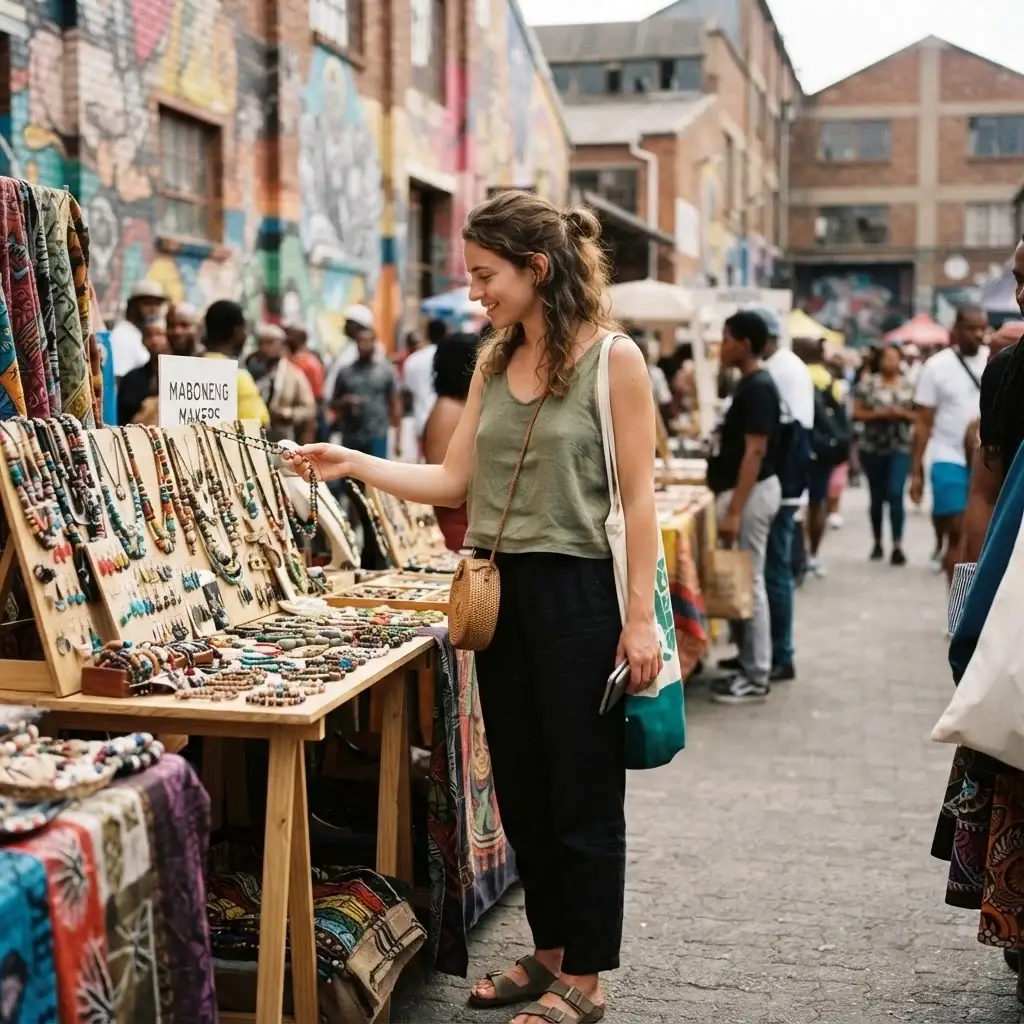
This is the perfect place to buy a souvenir that is not just a cheap magnet. Buy something made by a local person.
Afternoon: Flying Home
Drive your rental car back to the airport. Returning it is very simple.
As you sit at your gate waiting for your flight, take a deep breath. You did it. You navigated a massive African city. You drove yourself through the wild bush. You ate foods you had never heard of before. You did not wait for the perfect time, and you did not let fear stop you.
Travel is supposed to challenge you. It is supposed to shake up your routine. That is how confidence grows. I promise you, the person getting on this plane to go home is much stronger than the person who landed here a week ago.
Now, where are we going next?