
When I quit my traditional office job to pursue travel full-time, my friends thought I was making a massive mistake. I exchanged a steady paycheck and a rigid, predictable routine for a life built around a backpack and a notebook. Before launching this blog, I spent years working flexible jobs—from waitressing late nights to working as a certified sightseeing guide in New York City. Those roles taught me a profound lesson: the best travel experiences do not happen when you are rushing through a destination with a checklist. They happen when you slow down, learn how a city breathes, and gain the confidence to navigate its streets like a local.
Madrid is the perfect city for this kind of slow, immersive exploration. Spain’s capital does not reveal its true magic through massive monument walls alone. It reveals itself in the clinking of glasses at a crowded tapas bar, the afternoon sun hitting an old brick plaza, and the rhythmic flow of a neighborhood settling into its daily routine.
If you are a first-time traveler or planning your first big solo trip, it is completely normal to feel a wave of planning anxiety. I remember feeling that exact knot in my stomach before my first solo backpacking trip across Europe. But you do not need to feel overwhelmed. Five days is the absolute sweet spot for Madrid. It gives you enough time to see the world-famous art galleries, explore historic royal palaces, and still leaves plenty of room to wander without a rigid schedule.
This guide is designed to remove the guesswork. We are going to break down your days step-by-step, covering what to eat, how to get around, and how to build the confidence to truly experience Madrid.
Getting Around Madrid: Your Practical Transit Masterclass
Before we dive into the daily stops, let us handle the logistics. When I worked as a tour guide in New York, I saw countless travelers waste hours of their trip simply because they did not understand the local transit system. Madrid has one of the cleanest, fastest, and most affordable public transportation networks in the world. You do not need to rely on expensive taxis or ride-sharing apps here.
Navigating the Madrid Metro System
The Metro is your best friend in Madrid. The lines are color-coded, well-signposted, and incredibly easy to read.
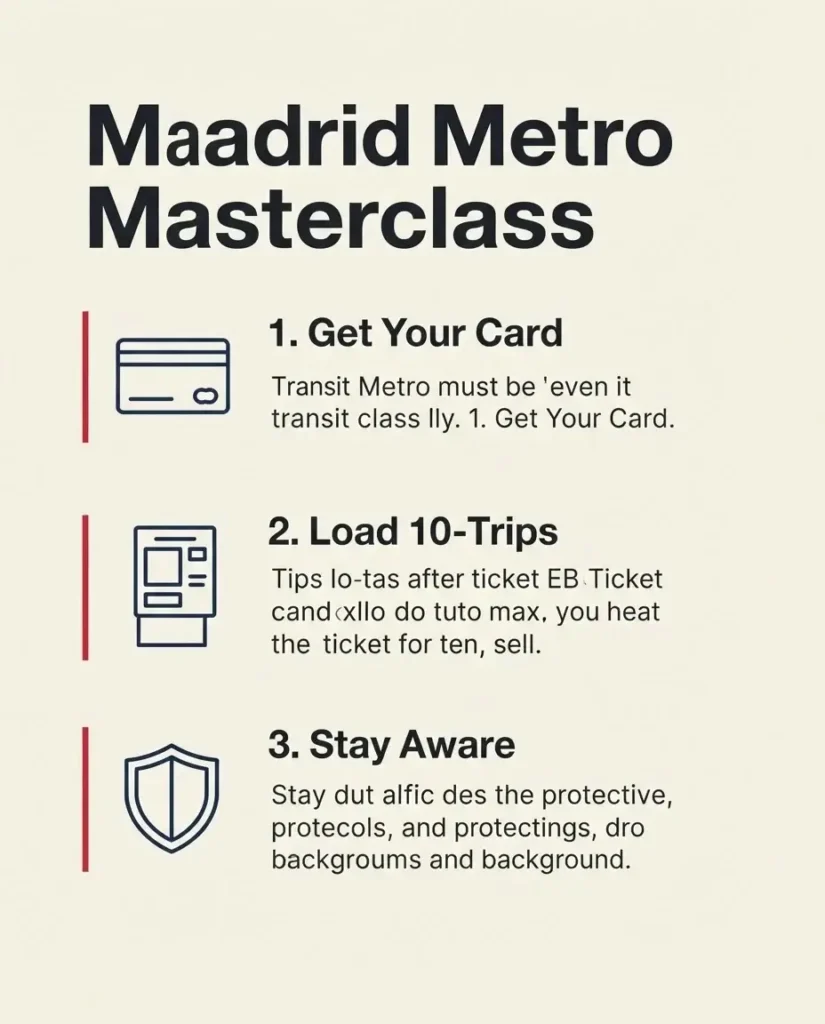
To ride the metro, you need to purchase a red Tarjeta Multi card from any station ticket machine. The card itself costs a few euros, and you can load it with a 10-trip ticket bundle, which can be shared if you are traveling with someone else.
- The Golden Rule of the Metro: Keep your eyes on your belongings. Madrid is a remarkably safe city, but crowded metro cars are prime real estate for opportunistic pickpockets. Hold your bag in front of you, keep your phone out of your back pocket, and travel with a sense of awareness. If you ever feel uncertain about travel safety or want to know how to handle unexpected situations abroad, it is always a smart idea to read through the safety guides provided by World Nomads Travel Insurance to help build up your solo travel confidence.
- Station Tips: When looking for a station entrance on the street, look for the diamond-shaped red and blue Metro signs. The automated screens inside the station will show you exactly how many minutes until the next train arrives.
Walking the City
Madrid is a hilly city, but it is deeply rewarding to explore on foot. Walking through the distinct barrios (neighborhoods) is how you catch the real essence of the city. Make sure you pack a broken-in pair of walking shoes. Do not bring brand-new shoes on a five-day itinerary; your feet will pay the price by day two.
Day 1: Historic Roots and the Royal Heart of Madrid
For your very first day, we are going to focus on the oldest, most historic sections of the city. This area is known as Madrid de los Austrias, reflecting the era when the Habsburg dynasty ruled Spain. Walking these winding stone streets will immediately ground you in the city’s rich history.
Puerta del Sol: The Center of the Spanish Universe
Start your morning early at Puerta del Sol. This bustling public square is the absolute center of Spain. In fact, if you look closely at the pavement outside the regional government building, you will find the “Kilometer Zero” stone slab, from which all radial roads in Spain are measured.
- What to Look For: Find the famous bronze statue of the Bear and the Madroño (strawberry tree), which is the official symbol of Madrid.
- Insider Secret: Puerta del Sol can get intensely crowded as the day goes on. Arriving before 9:00 AM allows you to enjoy the grand architecture without the wall-to-wall crowds.
Plaza Mayor: The Grand Seventeenth-Century Square
From Sol, take a short three-minute walk down Calle Mayor to enter Plaza Mayor. This massive, porticoed square dates back to the early 1600s. The uniform red buildings with their iron balconies have witnessed everything from royal weddings and football matches to public executions during the Spanish Inquisition.
- Culinary Stop: Step just outside the square’s arches to find a local institution like La Campana. Order a bocadillo de calamares (a crusty bread roll filled with crispy, tender fried squid). It costs only a few euros and is the quintessential Madrid street food. Squeeze fresh lemon juice over the squid, grab a napkin, and enjoy it on the go.
- Navigation Advice: Avoid sitting at the outdoor cafe tables directly inside Plaza Mayor for a full meal. The prices are heavily inflated for tourists, and the food quality rarely matches the price. Enjoy the architecture from the center of the square, then head to the side streets for authentic dining.
The Royal Palace and Almudena Cathedral
Next, head west toward the Palacio Real (Royal Palace). This is the largest functioning royal palace in Europe, boasting over 3,000 rooms.
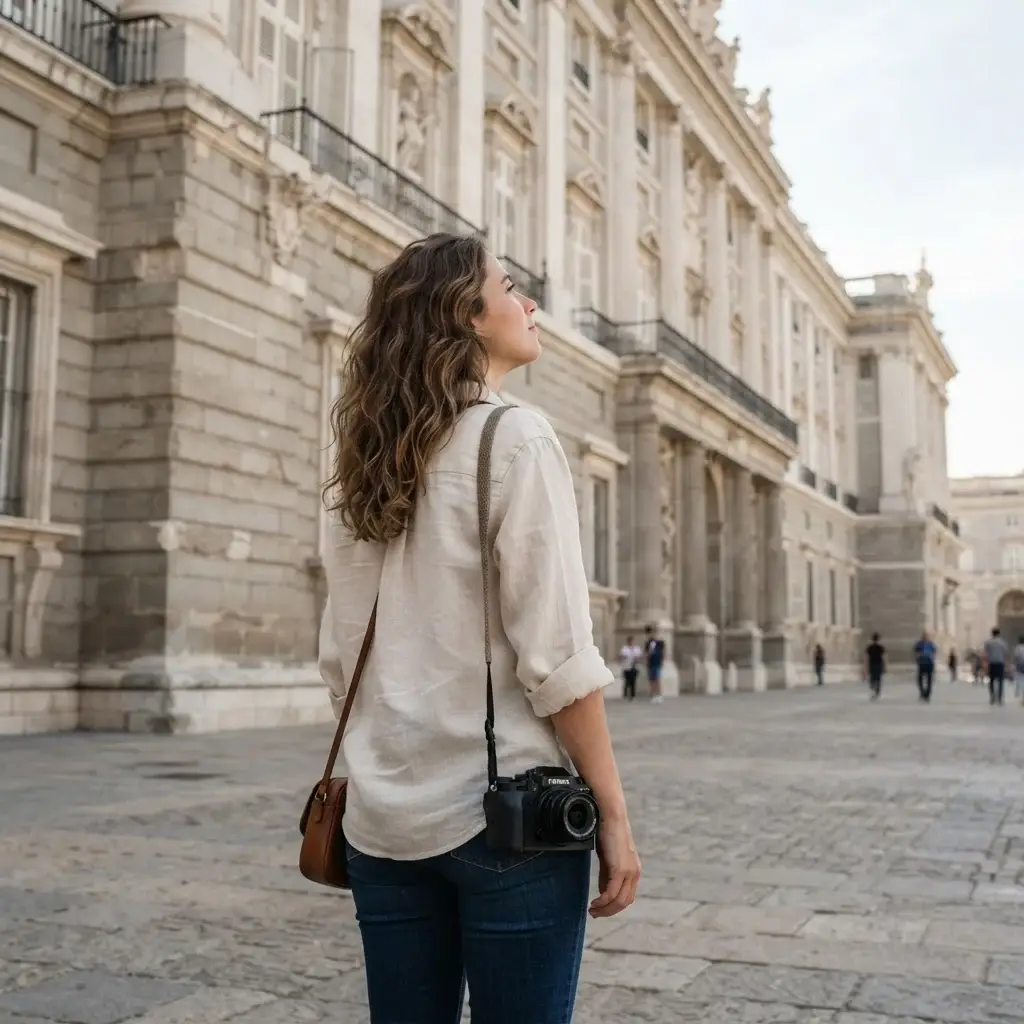
While the current royal family does not actually live here day-to-day, it is still used for official state ceremonies.
- Practical Tip: Buying your tickets online in advance is non-negotiable here if you want to save hours of standing in line. Allocate at least two hours to explore the grand throne room, the royal armory, and the porcelain rooms.
- Don’t Miss: Right next to the palace sits the Catedral de la Almudena. Unlike many ancient European cathedrals, this one was completed in 1993. Step inside to see the uniquely modern, brightly colored pop-art ceilings.
- Afternoon Rest: Walk behind the palace to the Sabatini Gardens. It is a beautifully manicured, quiet green space where you can sit on a stone bench, rest your feet, and take in a stunning view of the palace’s northern facade.
Day 2: The Golden Triangle of Art and Madrid’s Iconic Park
Madrid is home to some of the most significant art collections on earth. Even if you do not consider yourself an art buff, seeing these masterpieces in person is a deeply moving experience that helps you understand the cultural fabric of Spain.
The Prado Museum: A Journey Through Spanish Masterpieces
Start your second day at the Museo del Prado. This world-class gallery is massive, housing thousands of works from the 12th to the 19th centuries. If you tried to look at every single painting, you would be here for days.
- What to Prioritize: Head straight for Diego Velázquez’s Las Meninas, an incredibly complex royal portrait that has fascinated viewers for centuries. Then, explore the haunting, intense “Black Paintings” of Francisco Goya, which he painted directly onto the walls of his own house late in life.
- Insider Secret: The Prado offers free admission hours Monday through Saturday from 6:00 PM to 8:00 PM. However, the lines during this time are incredibly long, and two hours is simply not enough time to do this museum justice. Spend the money for a general morning ticket so you can explore at a peaceful, unhurried pace.
El Retiro Park: Madrid’s Green Oasis
After absorbing so much intense art, your brain will need a break. Cross the grand Paseo del Prado boulevard and head up the hill into Parque del Buen Retiro.
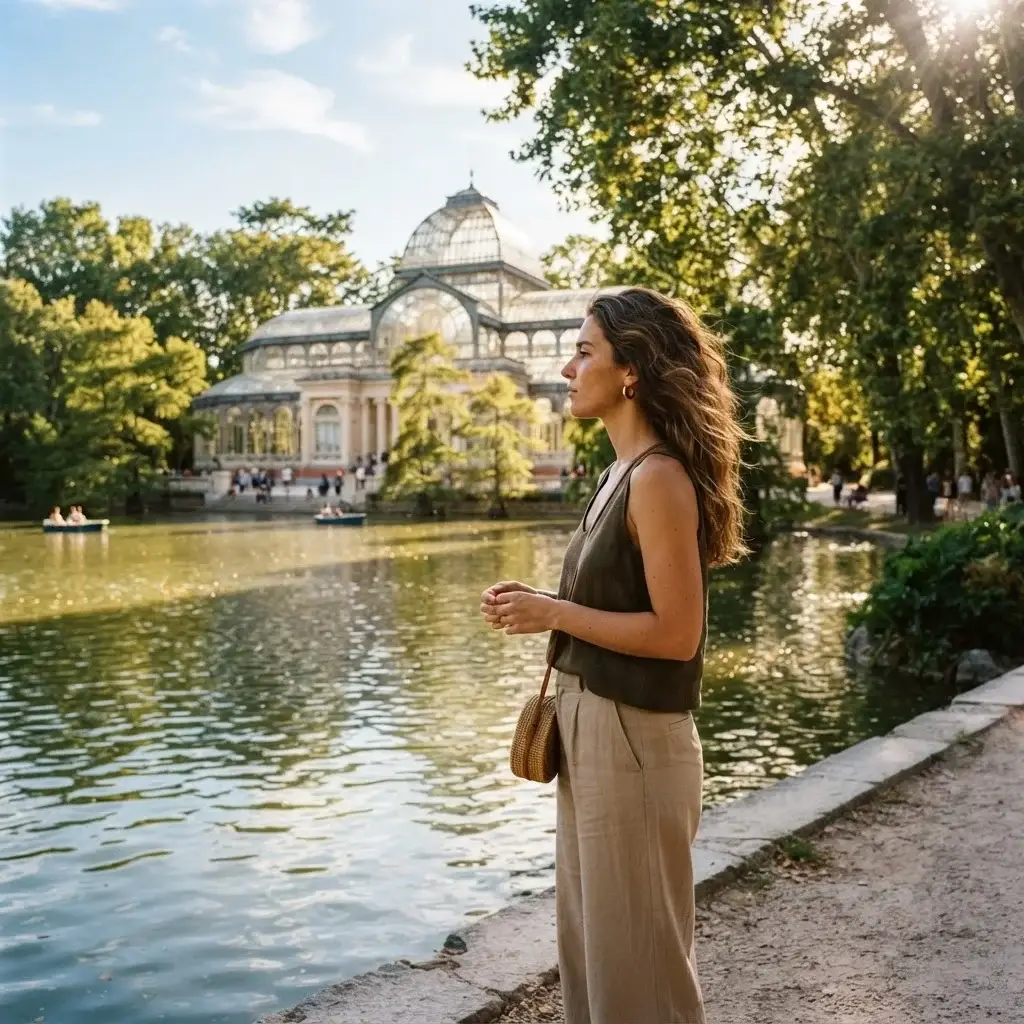
This gorgeous park was once a private royal retreat, but today it belongs fully to the people of Madrid.
- What to See: Walk to the Palacio de Cristal (Glass Palace), a breathtaking structure made almost entirely of glass and iron, reflecting beautifully into an adjacent lake filled with ducks and turtles. Afterwards, head over to the grand artificial lake where you can rent a small rowboat for a few euros and paddle around the massive monument to King Alfonso XII.
- Culinary Tip: Grab a bag of fresh roasted almonds or a dish of helado (ice cream) from one of the small kiosks inside the park. It is the perfect accompaniment for a slow, relaxing stroll down the shaded avenues.
The Reina Sofía Museum: Twentieth-Century Mastery
Exit the southern side of Retiro Park and make your way to the Museo Nacional Centro de Arte Reina Sofía. This museum focuses on 20th-century modern and contemporary art.
- The Main Event: The absolute crown jewel here is Pablo Picasso’s Guernica. This massive, black-and-white canvas depicts the horrors and chaos of the bombing of a Basque town during the Spanish Civil War. Standing in front of it is an unforgettable, sobering experience. Take your time to study the agony in the figures; it is a masterclass in visual storytelling.
- Navigation Advice: The museum is housed in a grand old hospital building with modern glass elevator shafts on the exterior. Use the exterior elevators for a fantastic view of the surrounding Atocha neighborhood as you move between floors.
Day 3: Literary Footsteps, Tapas Trails, and Sunset Temples
On Day 3, we shift our focus from massive monuments to the intimate charm of Madrid’s neighborhood culture. This day is all about walking slowly and eating exceptionally well.
Barrio de las Letras: The Literary Quarter
Spend your morning wandering through the cobblestone alleys of the Barrio de las Letras. This historic neighborhood was home to Spain’s greatest golden age writers, including Miguel de Cervantes, the author of Don Quixote. As you walk, look down at the pavement—you will find famous quotes from Spanish literature written in golden letters embedded directly into the stone streets.
- Where to Pause: Find Plaza de Santa Ana. This gorgeous square is lined with traditional cafes and theater buildings. It is a fantastic place to order a café con leche (coffee with milk), sit outside, and watch the city wake up.
Authentic Tapas Exploration on Calle de Cava Baja
For lunch, make your way to the historic La Latina neighborhood and look for Calle de Cava Baja. This single street is world-famous for having the highest concentration of tapas bars in the city.
- How to Eat Tapas Like a Local: Do not sit down for a massive, heavy meal at one single place. The authentic way to experience a tapas crawl is to stand at the bar, order one caña (a small, crisp draft beer) or a glass of local wine, and try one or two house specialties. Once you finish, pay your tab and move next door to the next bar.
- What to Order: Stop by Casa Lucas for creative, modern tapas on toast. Look for a traditional spot serving tortilla de patatas (a thick, comforting Spanish omelet made with eggs, potatoes, and onions). The perfect Spanish tortilla should be slightly gooey and runny in the center.
Temple of Debod: An Egyptian Sunset in Spain
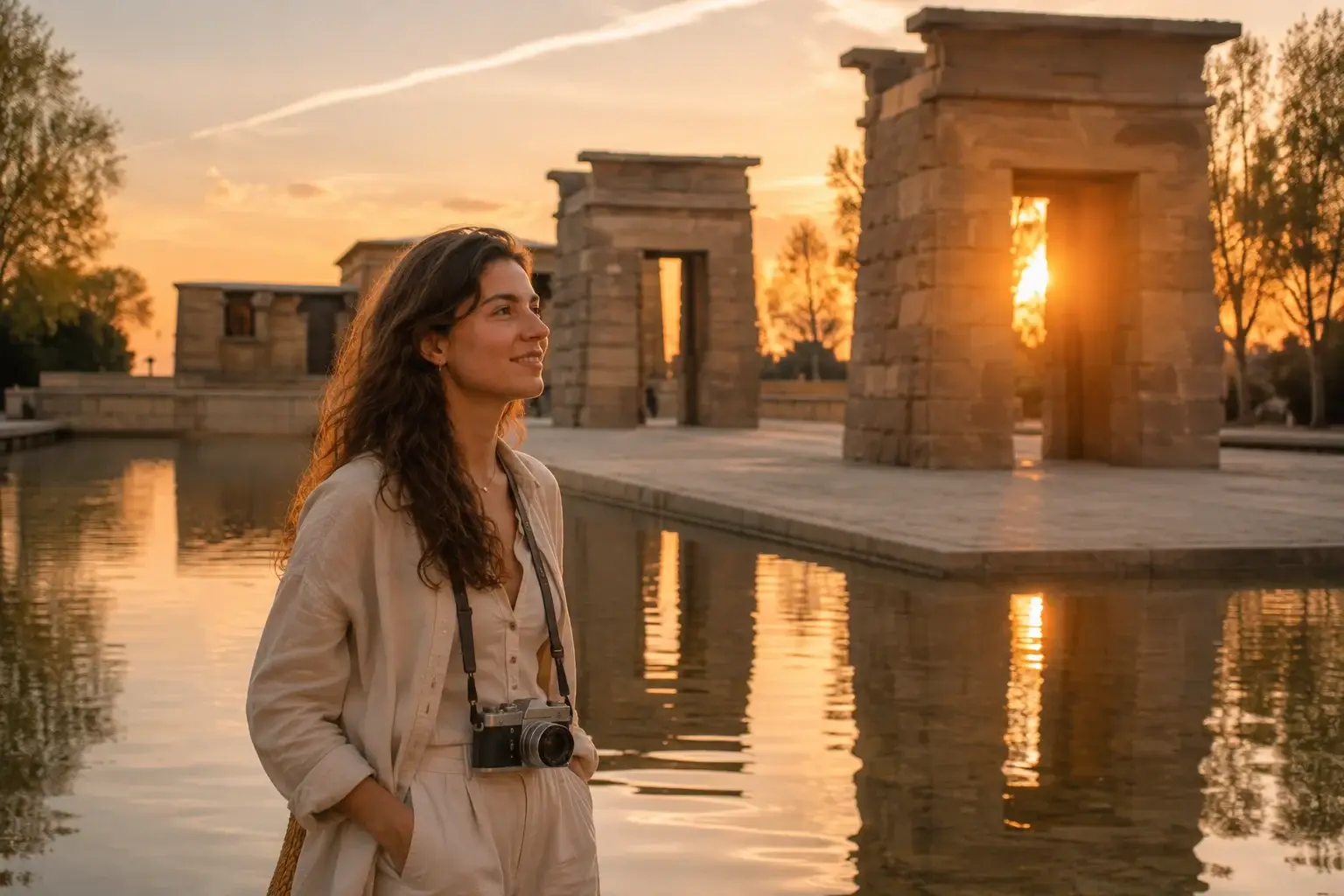
As the late afternoon approaches, take a scenic walk toward the western edge of the city to visit the Templo de Debod. This is an authentic ancient Egyptian temple dating back to the 2nd century BC. It was gifted to Spain by the Egyptian government in the 1960s to save it from flooding during the construction of the Aswan High Dam.
- Insider Secret: This is hands-down the absolute best sunset spot in all of Madrid. The temple is set inside a hilltop park, and as the sun drops, the ancient stone arches are illuminated, reflecting perfectly into the surrounding pools of water. Behind the temple, you will find a panoramic lookout platform offering sweeping views across the vast Casa de Campo park and the Royal Palace.
Day 4: Vibrant Neighborhoods and Shopping Secrets
Now that you have seen the core historic sights, it is time to explore the diverse, vibrant neighborhoods that give Madrid its modern identity. Each barrio has a completely distinct personality.
Malasaña: The Counter-Culture Hub
Start your morning in Malasaña, the epicenter of Madrid’s alternative and indie scene. In the 1980s, this neighborhood was the birthplace of La Movida Madrileña, a massive counter-cultural movement that exploded after the end of Franco’s dictatorship. Today, the streets are lined with vintage clothing shops, independent bookstores, and colorful street art.
- Where to Wander: Explore the streets around Plaza de dos de Mayo. It is a lively square where local parents chat while their kids play, and artists sit outside sketching on sketchpads.
- Navigation Advice: Malasaña is fantastic for independent boutique shopping. If you are looking for unique souvenirs that aren’t generic plastic trinkets, this is the neighborhood to find them.
Chueca: Modern Energy and Exceptional Indoor Markets
Directly adjacent to Malasaña is Chueca, a bright, welcoming neighborhood that serves as the heart of Madrid’s LGBTQ+ community. It is a stylish, high-energy area packed with great shoe shops and trendy cafes.
- Culinary Stop: Skip the heavily commercial tourist markets for a lunchtime meal and head inside the Mercado de San Ildefonso or the multi-story Mercado de San Antón. On the ground floor of San Antón, you can view incredible fresh produce and traditional Iberian ham stalls. Head up to the top floor to find a gorgeous rooftop terrace where you can order gourmet croquettes and enjoy a panoramic view over the neighborhood rooftops.
Salamanca: Elegance and Grand Architecture
If you want to see a completely different side of Madrid, take a walk across the grand Paseo de la Castellana boulevard into Salamanca. This neighborhood is the epitome of elegance. The avenues are wide and tree-lined, the buildings feature beautiful 19th-century facades, and the streets are incredibly clean.
- What to Do: Even if you aren’t looking to shop for high-end designer brands, walking down Calle de Serrano is a wonderful visual experience. It feels completely distinct from the narrow, medieval stone corridors of La Latina or the gritty, artistic charm of Malasaña.
Day 5: A Majestic Day Trip to Toledo
On your final day, we are going to use Madrid’s incredible rail network to take a short day trip. While there are several excellent options nearby, nothing matches the historic grandeur of Toledo.
Preparing for Your Day Trip Safely
When planning any excursion outside a major capital city, ensuring your essential logistics are entirely in order is vital for a smooth journey. To ensure you meet all current regulatory guidelines and entry requirements before crossing any borders or planning regional transit loops, it is always best to double-check the latest official advice on the US Department of State Travel website. Keeping your passport and documentation secure while moving between transport hubs will keep your journey stress-free.
Journeying to the City of Three Cultures
Toledo is located just 30 minutes south of Madrid via the high-speed Avant train, departing regularly from the grand Atocha Station. This ancient hill city is a stunning destination. For centuries, Christians, Muslims, and Jews lived here in close harmony, earning Toledo its famous nickname: “The City of Three Cultures.” Because of its remarkably preserved medieval layout and wealth of historic monuments, the entire historic core is recognized globally as a UNESCO World Heritage site.
Navigating Toledo’s Medieval Streets
When you step out of the Toledo train station, you will feel like you have stepped directly back into the Middle Ages. The city sits majestically on a rocky hill, completely encircled by the roaring River Tagus.
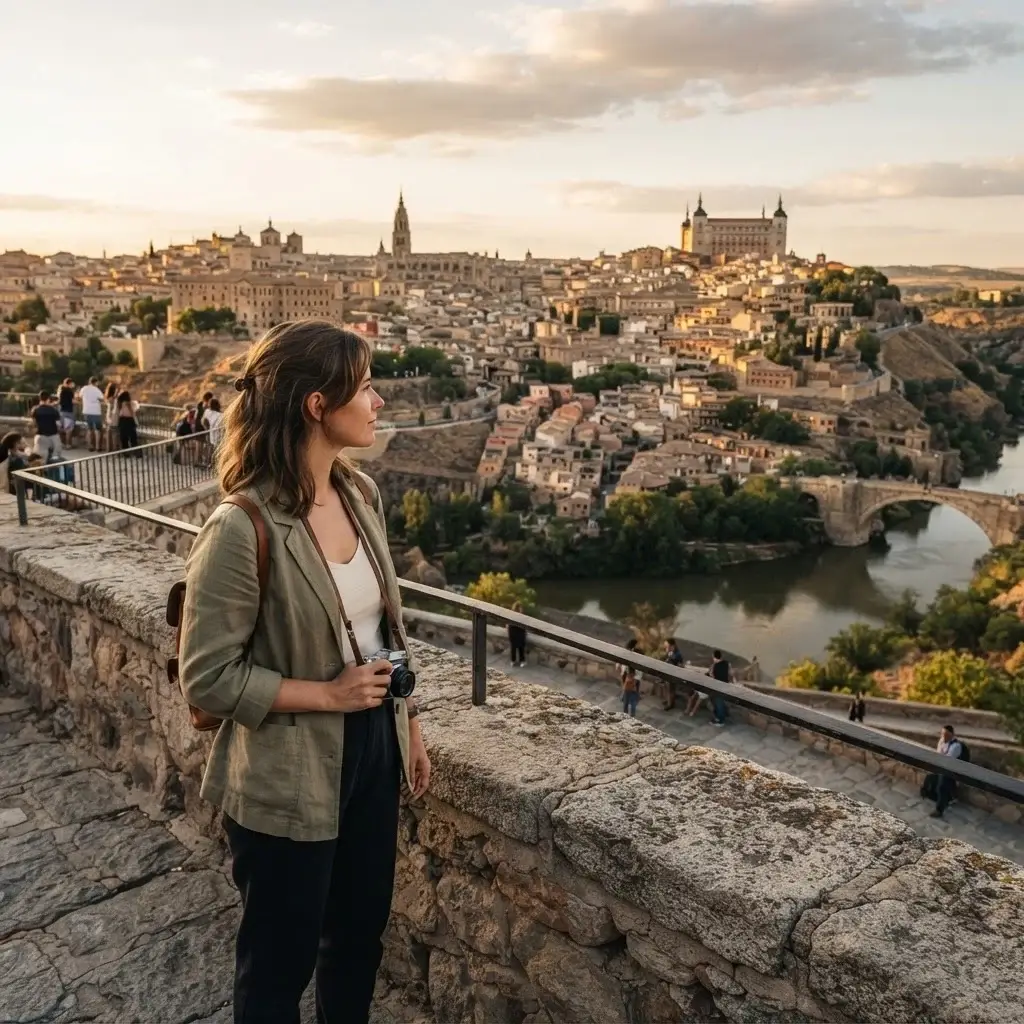
- What to See: Visit the Catedral de Toledo, a breathtaking masterpiece of Gothic architecture with an interior that holds masterpieces by El Greco. Afterward, walk through the historic Jewish Quarter to explore Synagogue of Santa María la Blanca, one of the oldest intact synagogue structures in Europe, featuring stunning Moorish arches.
- Insider Secret: Toledo is famous for its steep, winding hills. Put your map away and allow yourself to get completely lost in the maze of stone streets. The city is compact enough that you will eventually hit the outer walls or the main square, Plaza de Zocodover.
- What to Eat: Toledo is famous for its marzipan. Stop by a traditional shop like Santo Tomé on the main square to try authentic, hand-made marzipan shapes made from local almonds and honey. It is sweet, dense, and has been made using the same traditional recipe for centuries.
The Pinverse Travel Guide to Eating Natively in Madrid
I firmly believe that cultural immersion happens through the palate. When I left the corporate grind and spent time living with a family in Ghana or teaching English in Thailand, I learned that food is the ultimate universal language.
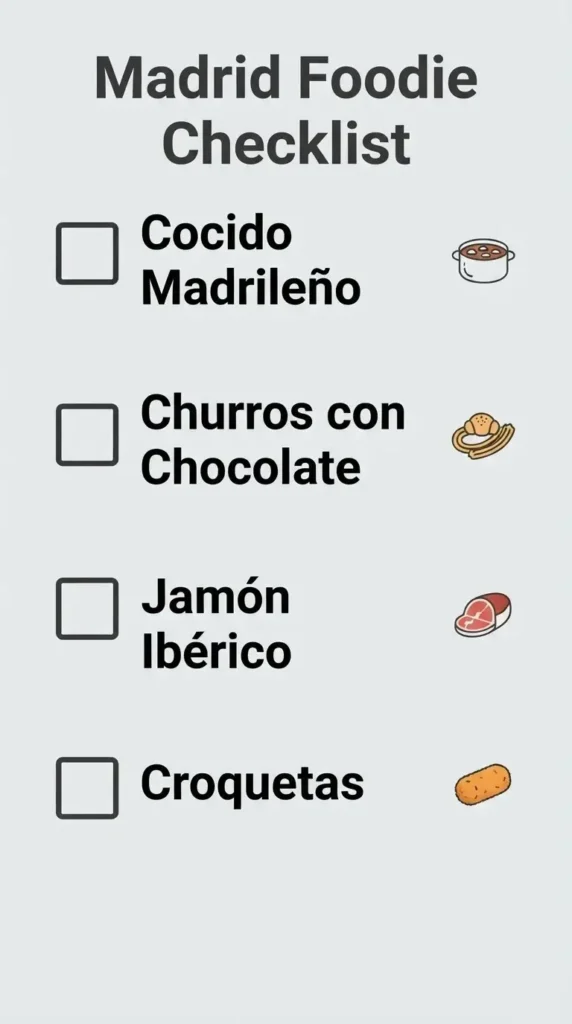
In Madrid, dining is a deeply social ritual. To eat like a local, you need to understand the rhythm of the Spanish dining clock.
Mastering the Spanish Dining Schedule
This is the single biggest hurdle for most international visitors. If you try to eat dinner at 6:30 PM or 7:00 PM, you will find yourself standing outside dark, locked restaurants, or sitting entirely alone inside an empty tourist trap.
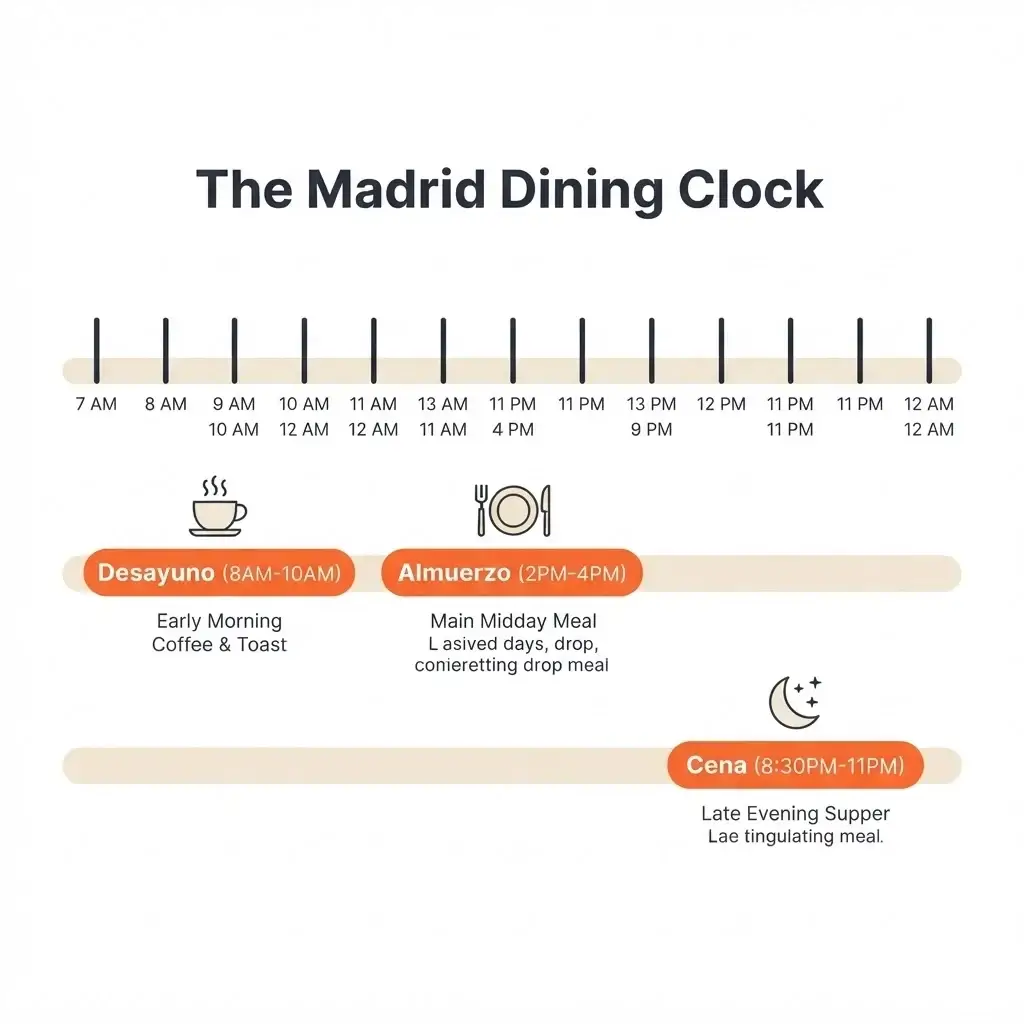
- Breakfast (Desayuno): Typically light, eaten between 8:00 AM and 10:00 AM. Order a tostada con tomate (crusty toasted bread rubbed with fresh grated tomatoes, olive oil, and salt) along with your coffee.
- Lunch (Almuerzo): The main meal of the day, served between 2:00 PM and 4:00 PM. Look for restaurants offering a Menú del Día (Menu of the Day). This is an incredibly affordable fixed-price lunch menu that typically includes a starter, a main course, bread, a drink (often wine), and dessert for a set price. It is the absolute best way to eat high-quality, home-cooked Spanish food on a budget.
- Dinner (Cena): Eaten incredibly late. Restaurants open their doors around 8:30 PM, but local madrileños do not sit down to eat until 9:30 PM or even 10:00 PM.
Essential Dishes You Must Try
| Dish Name | What It Is | Best Place to Try It |
| Cocido Madrileño | A rich, multi-course pork and chickpea stew | A traditional tavern in La Latina |
| Churros con Chocolate | Crispy fried dough pastry with thick dipping chocolate | Chocolatería San Ginés (Open 24/7) |
| Jamón Ibérico | Cured ham made from acorn-fed Iberian pigs | Any neighborhood charcutería (deli) |
| Croquetas | Creamy, fried béchamel binders filled with ham or cod | Traditional markets in Chueca |
Crucial Madrid Logistics for a Worry-Free Journey
To make your five-day itinerary completely seamless, keep these practical, down-to-earth logistical details in mind.
Tipping Etiquette in Spain
Tipping in Spain is not like tipping in North America. Servers are paid standard living wages, so there is no pressure to leave a massive percentage. In casual cafes and tapas bars, leaving a few loose coins on the small metal tray is completely sufficient. In a sit-down restaurant for dinner, leaving a 5% to 10% tip is considered polite if the service was exceptional. If the service was just average, no tip is expected.
Embracing the Tap Water
You do not need to buy heavy plastic bottles of water during your time in Madrid. The city’s tap water (agua del grifo) comes directly from the nearby Sierra de Guadarrama mountains and is widely considered to be some of the cleanest, best-tasting tap water in all of Europe. Bring a reusable water bottle and fill it up throughout your trip to save money and reduce plastic waste.
Health and Well-being Safety
Staying healthy while exploring a bustling foreign city is essential for maintaining your energy across five full days. To ensure you stay safe and well-informed regarding food safety and regional wellness guidelines during your travels, it is always a wise practice to consult the official destination advisories on the CDC Travelers’ Health portal before your departure.
Final Thoughts: The Courage to Step Beyond Your Comfort Zone
As you look over this five-day plan, remember that travel is not about achieving absolute perfection. It is about personal growth, leaning into your curiosity, and finding the independence to step outside your comfort zone. Some of the most memorable parts of my own journeys didn’t come from a pristine museum brochure—they came from getting completely lost, making a mistake ordering food, and finding a beautiful, quiet courtyard by accident.
Madrid is a city that rewards courage. It is an incredibly welcoming place for solo travelers, first-timers, and anyone looking to reconnect with a sense of adventure. Do not wait around for the “perfect moment” to book your ticket. The world is out there waiting for you, and you are entirely capable of navigating it with confidence.



