I grew up in New York. I worked here as a certified sightseeing guide, standing on the top deck of double-decker buses pointing at skyscrapers, watching hundreds of first-timers press their faces against cold glass with their eyes wide open. And I’ll tell you what I noticed: the people who had the best time were not the ones with the longest list. They were the ones who slowed down, picked a handful of things they genuinely cared about, and gave themselves room to wander.
That’s the approach I want to share with you here.
This is not a list of 40 things to squeeze into four days. It’s a guide built around what’s genuinely worth your time in this city, what each experience actually feels like, how to approach each one practically, and how to string it all together without burning yourself out by Tuesday afternoon. Whether you’re coming solo, with a friend, or planning your very first time here, this is how I’d walk you through it.
First, a Word About Managing New York City Expectations:
New York will humble you in the best possible way. It is enormous. Five boroughs, over eight million people, and a pace of life that does not slow down for anyone. The mistake most first-timers make is trying to see everything. You will not. You physically cannot.
The better strategy is to anchor your trip to three or four neighbourhoods and let the city fill in the gaps around them. Walk more than you plan to. Eat often. Take the subway. Let yourself get a little lost. The city rewards the curious far more than it rewards the checklist-keeper.
With that said, here are the attractions that genuinely earn their place on any first visit, and how to approach each one like someone who actually knows the city.
Central Park: Your Starting Point, Not Just a Green Space
I spent more hours in Central Park than I can count, both as a guide and as a New Yorker who needed somewhere to breathe. Most visitors see it as a green rectangle between skyscrapers. That underestimates it considerably.
Central Park stretches from 59th Street all the way to 110th Street and covers 843 acres. Walking from one end to the other without stopping takes the better part of an hour. What you want to do instead is pick a specific corner to explore rather than trying to “do” the whole thing.
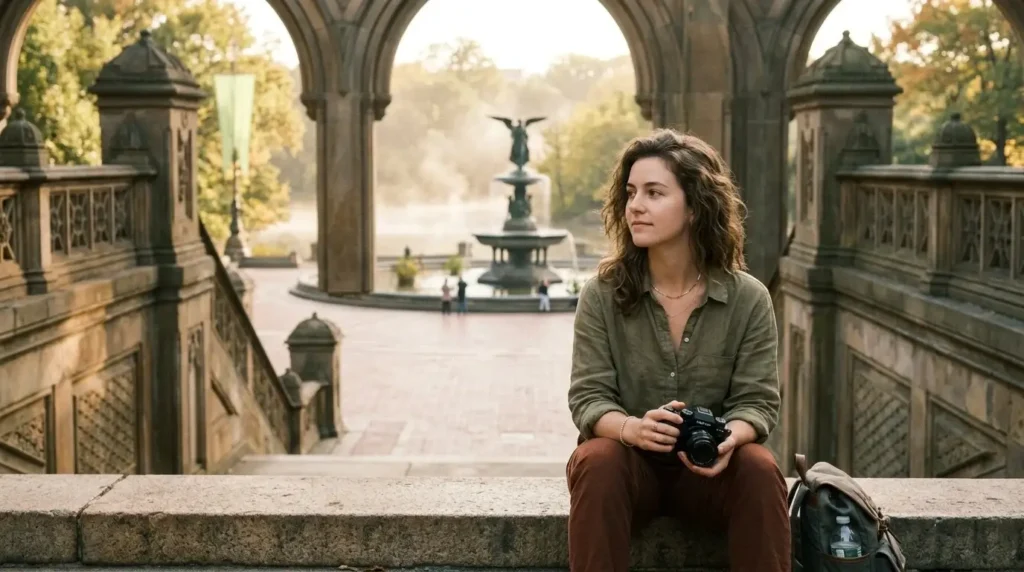
For first-timers, I always recommend entering near the 72nd Street entrance on the east side and walking toward the Bethesda Terrace and Fountain. It is one of the most beautiful spots in the city, and it tends to be less frantic than the southern end near Columbus Circle. From there, follow the path up toward the Reservoir if you want a quieter stretch, or head toward Belvedere Castle for a free elevated view of the park and the skyline.
The Conservatory Garden at the north end of the park, near 105th Street and Fifth Avenue, is almost always quiet and genuinely stunning. Most tourists never make it that far, which is exactly why you should.
Central Park is completely free to enter and open year-round. The Central Park Conservancy offers free public tours and has an excellent visitor map on their site if you want to plan a specific route before you arrive. Book a tour if you can. They are led by knowledgeable volunteers and give you context the average visitor completely misses.
What to eat nearby: Exit on the west side around 72nd Street and head down Columbus Avenue. That stretch is lined with good neighbourhood cafes and bakeries. Skip the food carts inside the park unless you want an overpriced pretzel.
The Statue of Liberty and Ellis Island: Book Before You Land
This one comes with a very specific piece of advice that I cannot stress enough: do not wait until you arrive to buy tickets. I watched countless tourists walk up to Battery Park expecting to buy a ticket on the spot and turn away disappointed. Tickets, especially for pedestal and crown access, sell out weeks to months in advance.
The ferry departs from Battery Park in Lower Manhattan (the boarding point is inside Castle Clinton) and from Liberty State Park in New Jersey.
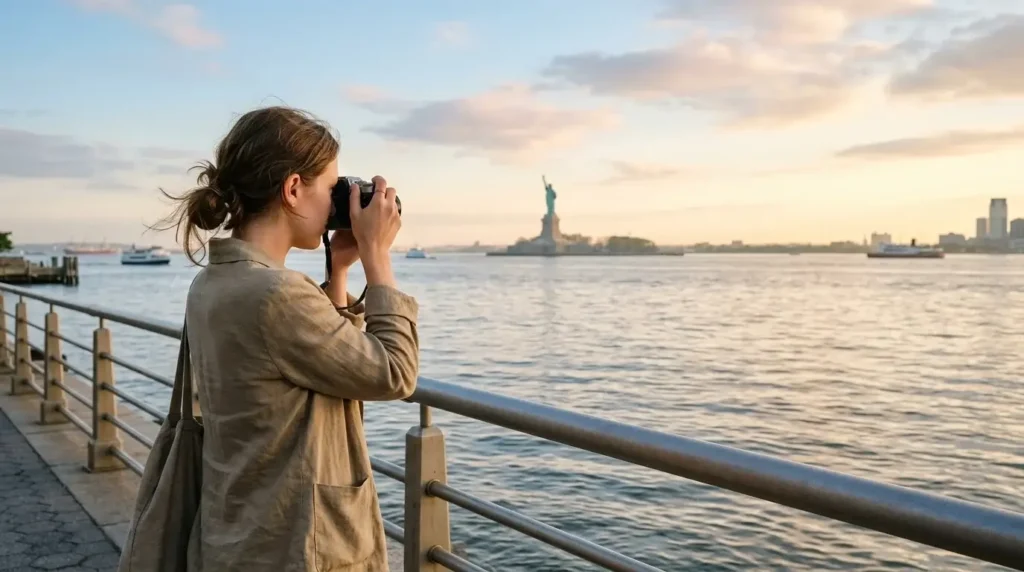
There are street sellers near The Battery who will try to sell you tickets. Ignore them completely. The only authorised ferry is Statue City Cruises, and the only legitimate on-site ticket office is inside Castle Clinton. The best approach by far is to book directly through the National Park Service’s official Statue of Liberty page before your trip.
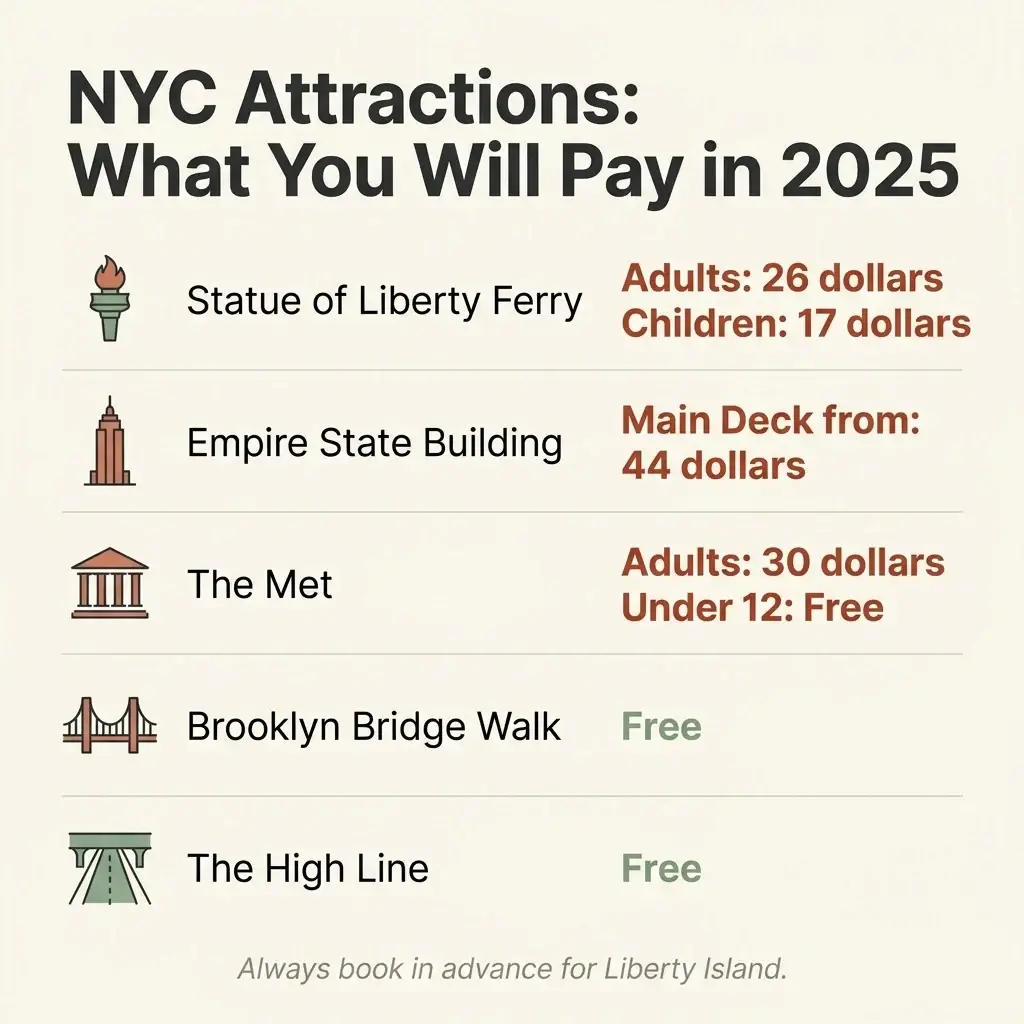
Ferry tickets cover the grounds of Liberty Island and Ellis Island, the audio tour, and ranger-led tours, all included. The base adult fare is $26, with children 4-12 at $17 and seniors at $23. Pedestal and crown access require additional advance reservations and a small surcharge, with crown access particularly limited.
Ellis Island is frequently the more emotionally resonant part of this trip. The immigration museum there tells the story of millions of people who passed through those halls searching for a new life. If you have any family who came to America through Ellis Island, spending real time in that building will mean something. Rushing through to catch the ferry back is one of the more common regrets I hear from people who did this trip.
Give this experience a full half-day minimum. Arrive early on the first ferry to avoid the midday crowds.
The Empire State Building: The City From Above
There is something specific that happens when you step out onto an observation deck in New York for the first time. The scale of the city becomes real in a way that street level never quite shows you. You can trace the entire length of Manhattan. You can see New Jersey on one side and the outer boroughs spreading out on the other. It is genuinely breathtaking.
The Empire State Building sits at 350 Fifth Avenue in Midtown and has two observation levels: the main deck on the 86th floor and the top deck on the 102nd floor. The views from the 86th floor are the classic experience, and for most visitors that is more than enough. Tickets for the main deck start from $44 for adults, and the top deck from $64. Reservations are required, so book through the official Empire State Building website before your visit.
My practical tip: go at sunset or shortly after. The transition from golden hour to the illuminated city at night is one of the most spectacular things you can witness in New York. The line moves much faster if you’ve pre-booked a timed entry.
One common question is whether to go to the Empire State Building or One World Observatory downtown. My honest answer: they offer different things. The Empire State Building is older, more iconic, and the 86th-floor outdoor deck gives you unobstructed wind-in-your-face views. One World Observatory is sleeker, more modern, and the view south over lower Manhattan and the harbour is extraordinary. If you have time for one, the Empire State Building is the classic for a reason.
The 9/11 Memorial and Museum: Go With the Right Mindset
This is not an attraction in the traditional sense. It is a memorial. And I think it’s important to say that clearly before you go, because the experience will be different from everything else on this list.
The two reflecting pools sit exactly where the Twin Towers stood, each one a full acre in size, with the names of every person killed carved into the bronze parapets around them. Standing there is quiet in a way that does not feel accidental. The memorial is free to visit and open every day.
The museum below ground is a different, much more intense experience. It documents the events of September 11, 2001, through objects, personal accounts, media, and physical remnants of the site itself. It is deeply moving. It can also be overwhelming. Give yourself time to decompress after. Do not schedule this in the middle of a packed day of sightseeing. The 9/11 Memorial and Museum is open Wednesday through Monday from 9am to 7pm, with the last entry at 6pm. Museum tickets require advance booking.
The surrounding Financial District has changed enormously since 2001. The neighbourhood around the memorial now has remarkable architecture, including the Santiago Calatrava-designed Oculus transit hub, which is free to walk through and worth a look even if you’re not taking the subway.
The Brooklyn Bridge: Walk It, Then Stay in DUMBO
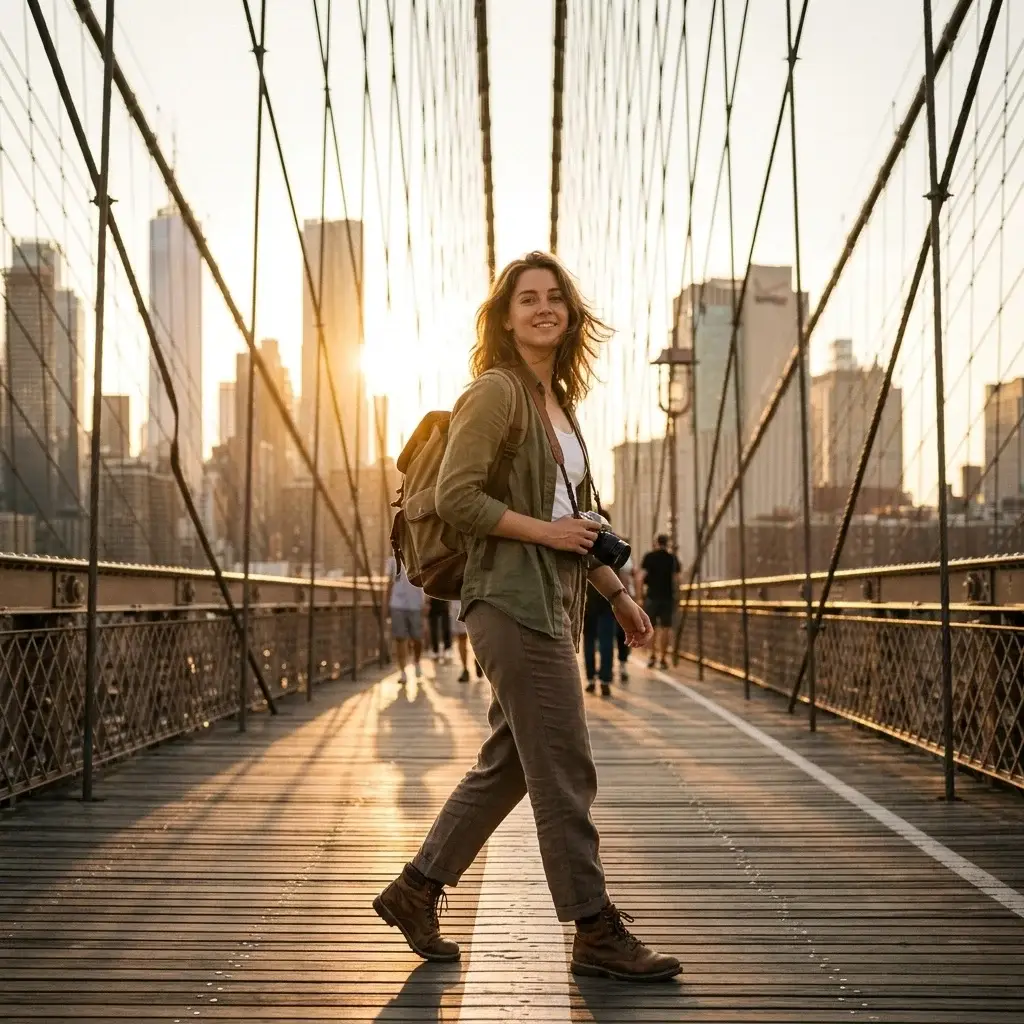
Walking across the Brooklyn Bridge is one of the most satisfying things you can do in New York, and it costs absolutely nothing. The pedestrian walkway runs above the vehicle lanes and gives you open views across the East River in both directions. On a clear day, with lower Manhattan behind you and Brooklyn ahead, it genuinely does not get much more New York than this.
The walk from the Manhattan entrance (near City Hall Park) to the Brooklyn side takes about 20 to 30 minutes at a relaxed pace. Start from Manhattan if you want the better view walking toward Brooklyn. Go early in the morning if you want manageable crowds. By mid-morning on weekends, the walkway can feel genuinely congested.
When you reach the Brooklyn side, do not immediately turn back. Walk down into DUMBO (Down Under the Manhattan Bridge Overpass), the neighbourhood directly beneath the bridge. It is one of the most photogenic streets in New York, particularly the view down Washington Street where the Manhattan Bridge frames perfectly in the gap between buildings. There are excellent coffee shops, a weekend artisan market, and the Brooklyn Bridge Park along the waterfront, which gives you green space, waterfront views, and the best skyline perspective in the city.
What to eat in DUMBO: Grimaldi’s Pizzeria is the famous choice under the bridge. Expect a line. If you’d rather skip the wait, Juliana’s Pizza around the corner is equally good and often has a shorter queue.
The Metropolitan Museum of Art: Plan Before You Walk In
The Met is one of the greatest art museums in the world. It is also, depending on how you approach it, one of the most overwhelming buildings you will ever walk into.
The collection spans five thousand years of human history across more than two million works. Trying to see all of it in one visit is not just impractical, it is counterproductive.
You will end up glazed over by hour three, shuffling past paintings you can barely see. The visitors who love The Met are almost always the ones who pick two or three galleries and spend real time in them.
My personal recommendation for first-timers: the Egyptian galleries (including the Temple of Dendur, a full ancient Egyptian temple relocated and reassembled inside the museum), the Greek and Roman sculpture court, and the European paintings galleries on the second floor. That alone will take several absorbing hours.
Admission is $30 for adults, $22 for seniors, and $17 for students. Children under 12 are free. New York State residents pay what they wish, with a minimum of one cent. You can check all current admission details and plan your route through the Met’s plan your visit page before you arrive. Free guided tours are available, and the audio guide is included on the Bloomberg Connects app.
The Fifth Avenue entrance on the east side of Central Park is the main entrance. The museum is open Thursday through Tuesday. Arrive when it opens at 10am for the quietest experience.
The High Line: An Unexpected Favourite
If you asked me what one New York experience surprises visitors most consistently, it would be the High Line. People expect a pleasant little walk. What they get is something that genuinely changes how they see the city.
The High Line is a 1.45-mile elevated park built on a former freight railway line on the west side of Manhattan, running from the Meatpacking District at Gansevoort Street up to Hudson Yards at 34th Street. It is completely free to visit. The park has gardens, public art installations, outdoor seating, and views of the Hudson River and the surrounding neighbourhood streetscape from above.
What makes it special is the perspective. Walking the High Line puts you at second and third-floor height, looking into building facades, over rooftops, and through narrow steel gaps at the street below. It feels like the city as it is never normally seen.
The High Line’s official visitor page has current hours, seasonal schedules, and accessibility information. Generally it opens at 7am and closes at 10pm on weekdays and 11pm on weekends from April through November, with reduced winter hours. Entry points with elevators are available along the route for those who need them. Bikes are not allowed on the park itself.
Walk the High Line from north to south, finishing at the Meatpacking District end near Gansevoort Street.
From there you are steps from the Whitney Museum of American Art and a short walk from the West Village, one of the best neighbourhoods in Manhattan for wandering and eating well.
Getting Around: The Subway is Your Friend
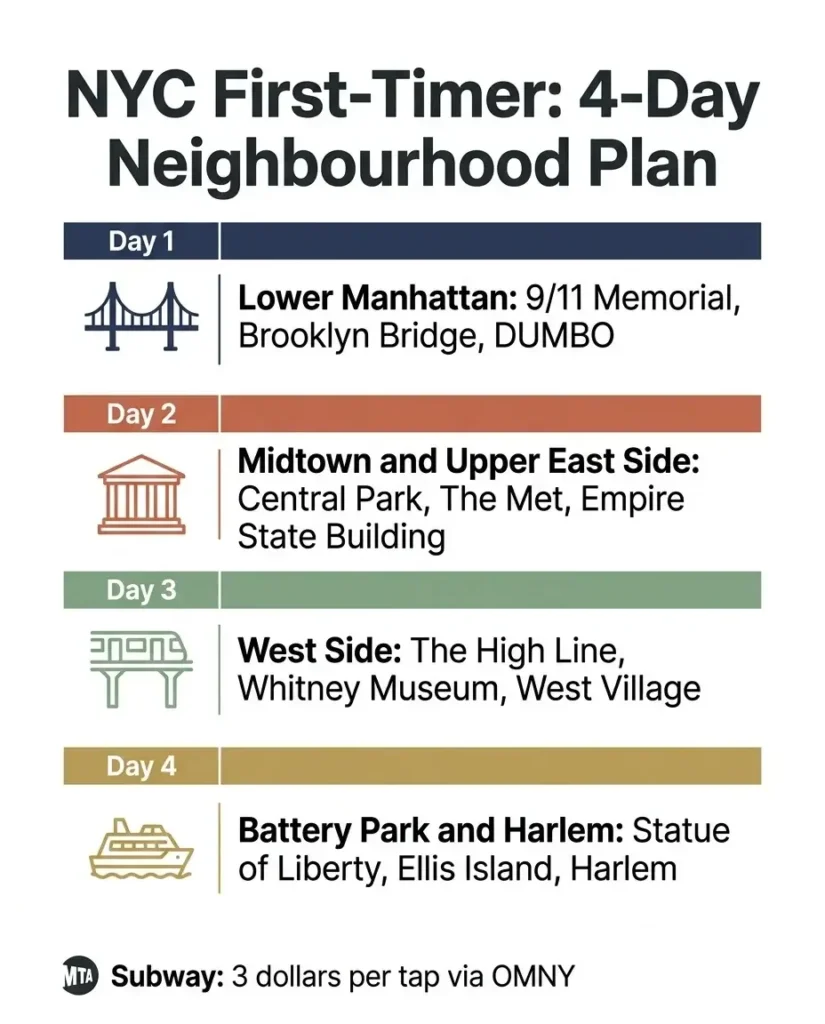
I know the New York subway has a reputation. It is loud, it is not always clean, and during rush hour it is genuinely packed. But for getting across this city efficiently, nothing beats it. A single trip costs $3 and takes you anywhere in Manhattan, into Brooklyn, Queens, the Bronx, and Staten Island.
The easiest way to pay is to tap your contactless credit or debit card directly at the turnstile using the OMNY system. No MetroCard, no kiosk, no fumbling. Your card is charged $3 per tap. You can also grab an OMNY card at any subway station if you prefer a dedicated card.
For navigating routes, Google Maps and Citymapper are both excellent for New York. Type in your destination and they will give you the exact train, platform direction, and number of stops. The MTA’s official guide to riding the NYC subway is also worth a skim if you’ve never ridden it before. The fundamentals are simple once you understand the uptown versus downtown direction logic.
For solo travelers especially, the subway is safe the vast majority of the time. Stay aware of your surroundings, keep your bag in front of you during busy periods, and use the middle cars during off-peak hours. The city itself is far more welcoming to solo travelers than its reputation sometimes suggests.
Harlem: The Cultural Heart of the City
No guide to New York’s must-see experiences is complete without Harlem, and yet most first-timer itineraries leave it off completely. That is a real shame.
Harlem, on the north end of Manhattan, is a neighbourhood with extraordinary cultural depth. It is the historic centre of African American art, music, literature, and cuisine, from the Harlem Renaissance of the 1920s to the jazz clubs still operating today. Walking its streets feels different from Midtown. The architecture is rich, the food is soulful, and the community energy is unmistakably its own.
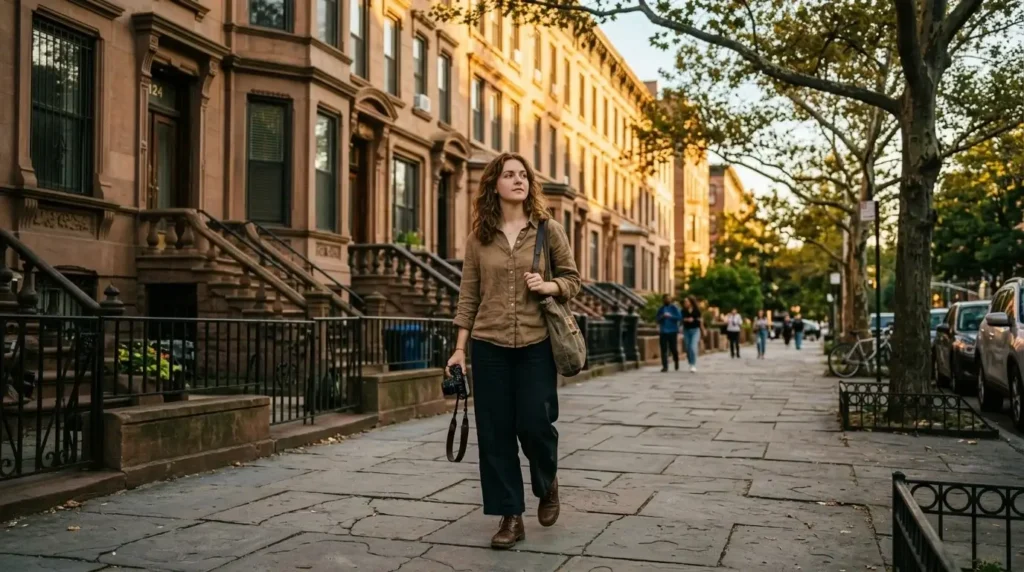
From what solo travelers and cultural explorers consistently report, the experience of taking a walking tour of Harlem with a local guide is one of the most meaningful things you can do in New York if you want to understand the city beyond its landmarks. The NYC Tourism official Harlem guide is a solid starting point for neighbourhoods to explore, dining recommendations, and cultural institutions including the Apollo Theater, where amateur night continues to run today much as it did decades ago.
Food in Harlem is excellent. Look for soul food spots on Lenox Avenue (also known as Malcolm X Boulevard) and Sylvia’s Restaurant on the same strip, which has been feeding the neighbourhood since 1962. Sunday brunch with live jazz is a Harlem institution.
A Few Things Worth Being Honest About:
Times Square is worth seeing once, for about 20 minutes, ideally at night when the lights are in full effect. It is overwhelming, commercial, and packed with tourists and people in costume who will ask you for money after a photo. There is no cultural depth there. See it. Appreciate the spectacle. Then leave.
The New York Public Library’s Stephen A. Schwarzman Building on Fifth Avenue and 42nd Street is free to visit and genuinely beautiful inside. The Rose Main Reading Room on the second floor is one of the most impressive public interiors in the city. Free one-hour guided tours run at 11am and 2pm, Monday through Saturday, if you want the full story behind the building.
Avoid buying “I Love NY” souvenirs from Times Square. The exact same products are available elsewhere for half the price, if you want them at all.
Stringing It Together: A Simple Day-by-Day Logic
Rather than racing between borough and borough, group your days by geography. Day one in Lower Manhattan covers the 9/11 Memorial, a Brooklyn Bridge walk into DUMBO, and the surrounding Financial District. Day two in Midtown and the Upper East Side covers Central Park, The Met, and a sunset trip to the Empire State Building. Day three devoted to the west side of Manhattan covers The High Line, the Whitney Museum, and the West Village for dinner. A fourth day with a morning ferry to Liberty Island and Ellis Island, then back to explore Harlem in the evening, rounds out a genuinely full introduction to this city.
That is four days of real, intentional experience. Not a list of 40 things. Not a race. Just New York, approached like someone who wants to actually feel it.
The Best Thing About New York City:
It rewards the people who pay attention. The sightseeing guide version of this city is impressive. The wandering-down-a-side-street-and-finding-something-unexpected version is unforgettable.
Give yourself permission to close the list for an hour.
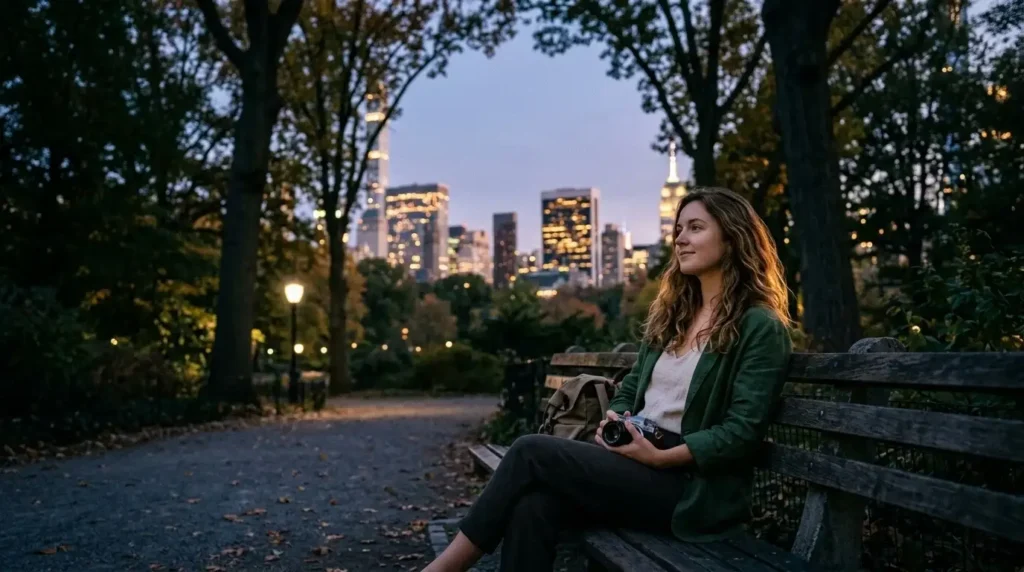
Sit in a park. Eat something you didn’t plan to eat. Take the wrong subway car and see where it deposits you. Some of the best New York stories I carry are not from the Empire State Building or the Statue of Liberty. They are from a diner in Queens at 11pm, or a stoop conversation in Brooklyn, or a spontaneous Saturday afternoon in the park with a street musician who was better than anyone playing in a proper venue that weekend.
The attractions on this list will give you anchors. The city itself will do the rest.