Let me tell you something I wish someone had told me years ago, back when I was stuck at a desk in New York, staring at a spreadsheet and dreaming about mountains I was sure I’d never be “fit enough” or “brave enough” to walk.
You don’t have to be an athlete to walk one of the best long-distance hiking trails in Europe. You just have to be willing to take the first step, then the next one, then a few thousand more.
I say this as someone who used to think long-distance hiking was only for people with expensive gear and mountain-goat legs. I was wrong. Some of the most rewarding trails on the continent are gentle, well-marked, and built for people who are walking their very first multi-day route. When I left my office job and started scraping money together, waitressing on weekends and later teaching English abroad, I learned that adventure isn’t reserved for the rich or the ultra-athletic. It’s reserved for the people who show up.
This guide is my honest, practical map for beginners. I’ll walk you through the best long-distance hiking trails in Europe for first-timers, tell you exactly how long they take, when to go, what to eat along the way, and the little navigation tricks that keep you from getting lost or overwhelmed. No hype. No “you must do this before you die” nonsense. Just real information to help you plan a trip you’ll actually finish, and love.
What “Long-Distance Hiking” Really Means (And Why Beginners Can Do It)
First, let’s clear up a fear I hear all the time. “Long-distance” does not mean you’re sprinting up a cliff with a 40-pound pack for a week straight.
A long-distance trail simply means a walking route that takes more than one day, usually stitched together in “stages.” Each stage ends in a town or a mountain hut where you sleep, eat, and rest. You walk one comfortable chunk each day. That’s it.
Here’s the mindset shift that changed everything for me. You are not hiking 150 miles in one go. You are taking a nice walk, having lunch, then taking another nice walk, and sleeping well. You do that several days in a row. The distance adds up on its own.
Most beginner-friendly stages run between 8 and 15 miles a day. That sounds like a lot until you realize you have all day to do it, with snack breaks, photo stops, and long lunches built in. When I worked as a certified sightseeing guide in New York, I’d walk 10 to 12 miles around the city in a single shift without even thinking about it. City walking is training. You may be more ready than you feel.
The two things that separate a happy first hike from a miserable one aren’t fitness or bravery. They’re smart route choice and honest planning. Pick a trail that matches you, and the trail carries you the rest of the way.
How I Choose a Beginner Trail (A Simple Checklist)
Before I name my favorite routes, here’s the exact filter I run every trail through when I recommend it to a nervous first-timer.
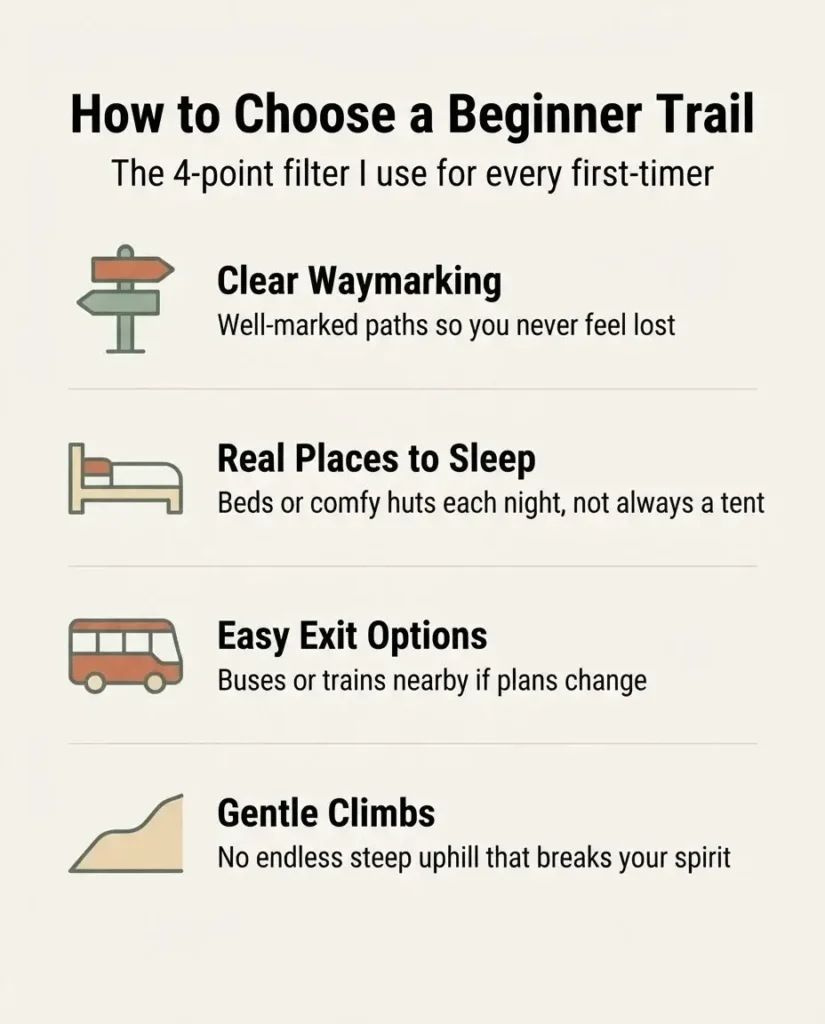
I look at whether the trail is well-marked, because getting lost is the number one thing that shakes a beginner’s confidence. I look at whether you can sleep in real beds or comfortable huts each night instead of always camping. I look at how easy it is to bail out, meaning can you catch a bus or train back to a town if your knee acts up or the weather turns. And I look at how gentle the climbs are, because steep, endless uphill is what breaks spirits.
Every trail I’m about to share passes this test. They are the ones I’d hand to my own friends who’ve never done this before.
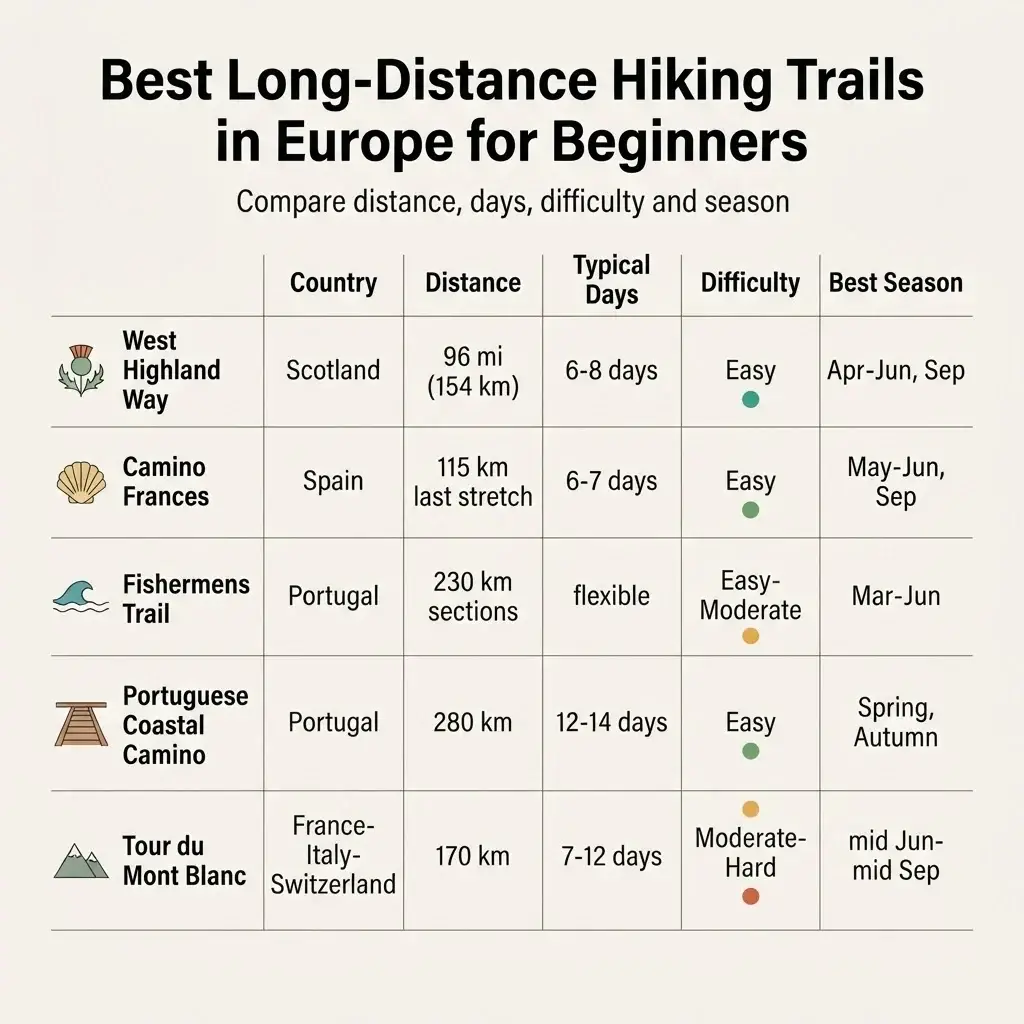
1. The West Highland Way, Scotland: The Perfect First Long Walk
If you asked me where a nervous beginner should start, Scotland’s West Highland Way would be near the top of my list every single time.
This trail runs 96 miles, or about 154 kilometers, from Milngavie just north of Glasgow all the way to Fort William in the Highlands. The official route folks smartly built it so you walk south to north, which means the early days are the easy ones. The gentle southern stages ease you in and quietly build your strength before the more dramatic mountain scenery near the end. You can read the official breakdown straight from the source, and honestly I always tell people to start their planning at the trail’s own excellent route overview kept by the West Highland Way team rather than a random blog, because the stage details there are accurate and updated.
Most people take six to eight days. That’s daily distances of roughly 12 to 18 miles, which is very doable when you’ve got nothing to do but walk.
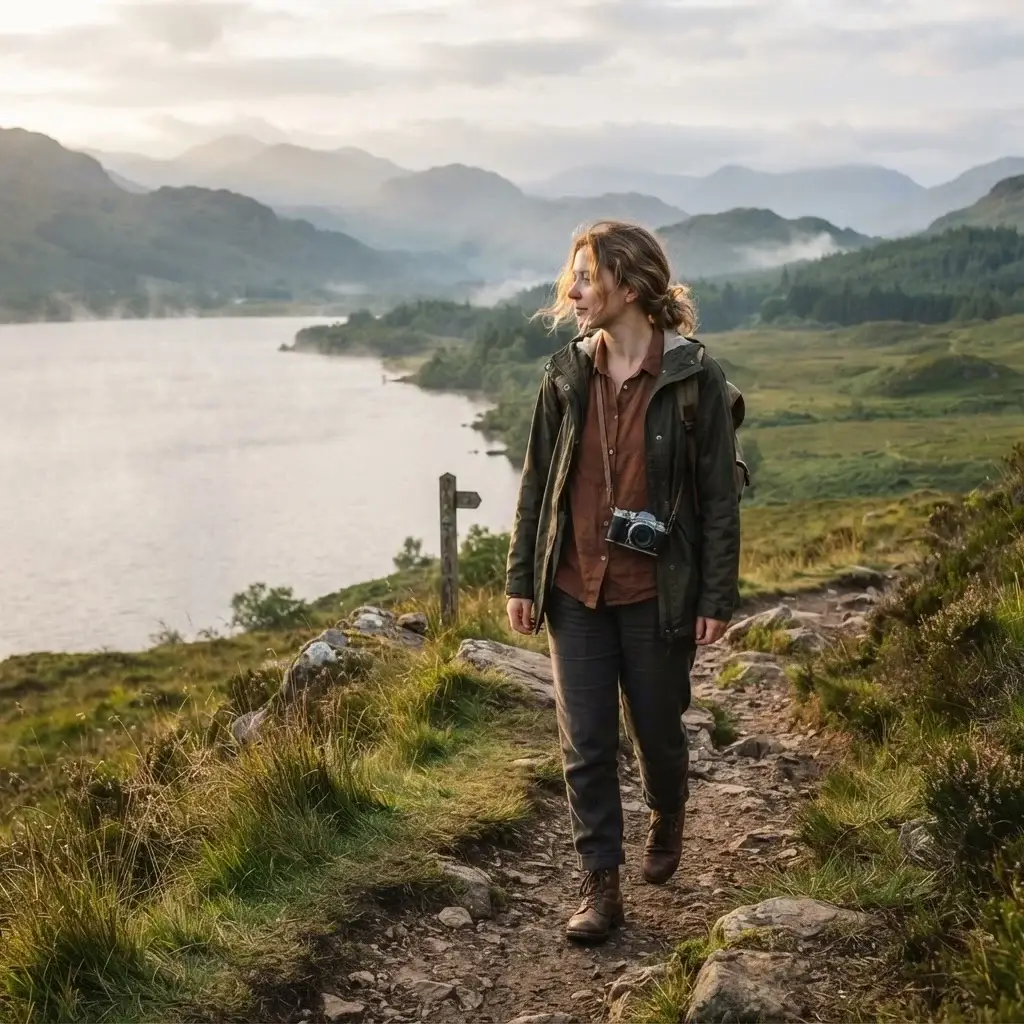
When to go: Aim for late April to early June, or September. Here’s an insider truth nobody puts on the postcards: Scotland has tiny biting insects called midges, and they swarm in the warm, still, damp days of high summer. If you want to keep your sanity, walk in spring or early autumn when the midges are quiet and the trail is less crowded.
What to eat: Please, do not skip a proper Scottish breakfast at your guesthouse before a walking day. Eggs, beans, toast, and if you’re brave, a taste of haggis or a potato scone. It’s fuel that lasts for hours. Along the trail, stop in the village of Kinlochleven and warm up with a bowl of Cullen skink, a rich, smoky haddock soup that tastes like heaven after a cold morning. When you finally reach Fort William, reward yourself with fresh fish and chips by the water.
Navigation tip: The route is marked with a thistle symbol inside a hexagon. Once you learn to spot that little thistle, you’ll relax completely, because it appears at every turn you’d worry about. Carry a paper map anyway for the day between Loch Lomond and the moorland, where phone signal fades.
2. The Camino de Santiago (Camino Francés), Spain: A Trail That Carries You
The Camino de Santiago isn’t just a hike. It’s a centuries-old pilgrimage, a moving community, and probably the most beginner-friendly long trail on Earth, because the whole system is built to support walkers.
The classic French Way, or Camino Francés, is the famous one, stretching nearly 790 kilometers from the French border across northern Spain to the city of Santiago de Compostela. Now, before you panic, almost nobody walks the whole thing on their first try, and you don’t need to. Many first-timers walk just the final 115 kilometers from the town of Sarria to Santiago, which takes about six or seven gentle days and still earns you the official pilgrim certificate. It’s a whole cultural world in itself, and you can dig into the history behind it through the official UNESCO listing for the Routes of Santiago de Compostela, which recognizes just how deep this walking tradition runs.
What makes it so easy for beginners is the network. There are hostels called albergues every few kilometers, cafés constantly, yellow arrows pointing the way so clearly that you almost can’t get lost, and thousands of other walkers who become instant friends. You are never truly alone out there, even walking solo. That’s exactly why I recommend it to people afraid of solo travel.
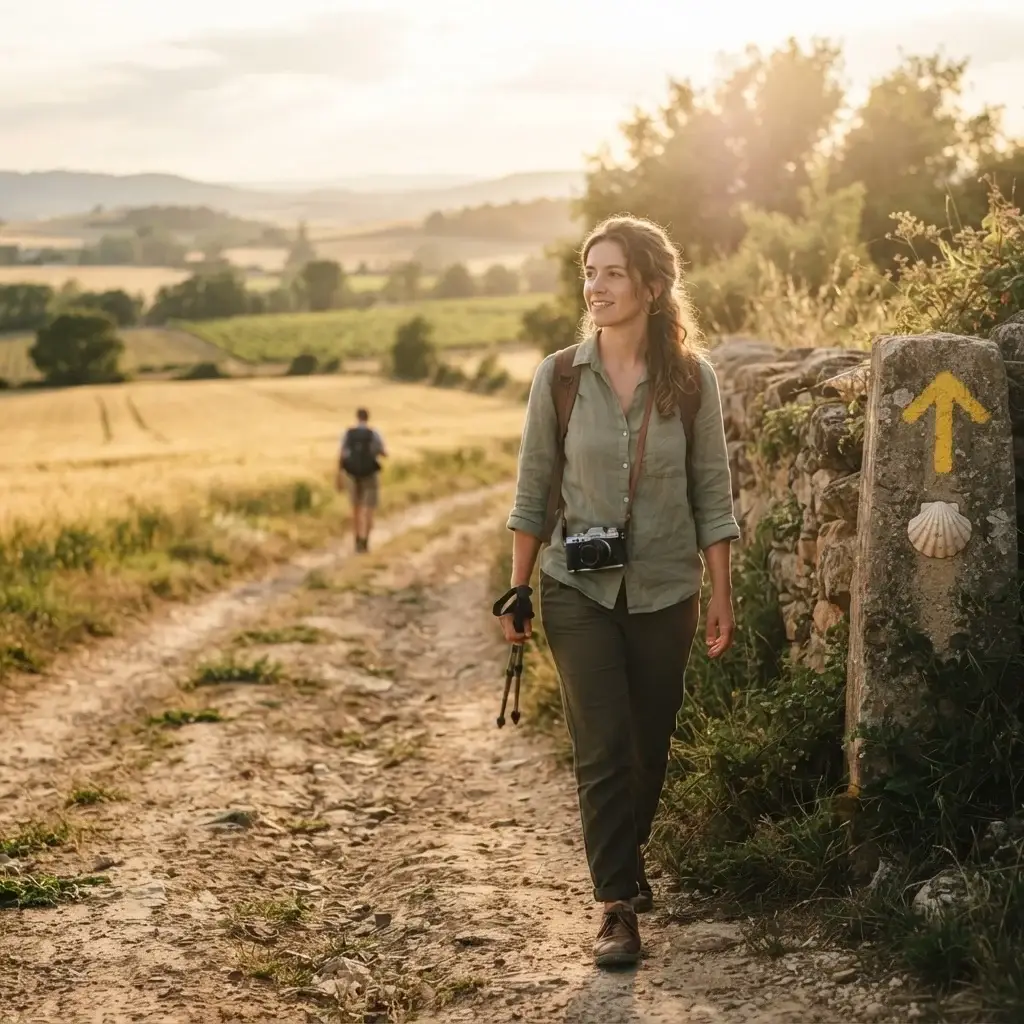
You get the growth of doing it yourself, wrapped in a warm safety net of fellow pilgrims.
When to go: May, June, and September are ideal. July and August get hot and crowded, especially in the flat middle sections.
What to eat: Order the “menú del peregrino,” the pilgrim menu, offered at almost every town restaurant. It’s a cheap, filling three-course meal with wine, made exactly for hungry walkers. In Galicia near the end, you must try pulpo a la gallega, tender octopus with paprika and olive oil, and a slice of tarta de Santiago, a soft almond cake dusted with sugar in the shape of a cross.
Navigation tip: Follow the yellow arrows and the scallop shell symbols. That’s genuinely it. The scallop shell is the sign of the Camino, and once you learn it, the whole country seems to point you toward Santiago.
3. The Fishermen’s Trail (Rota Vicentina), Portugal: Ocean Air and Soft Sand
If mountains scare you but you still want a real multi-day adventure, walk beside the sea instead. Portugal’s Fishermen’s Trail, part of the wider Rota Vicentina, is one of the most beautiful coastal walks I know, and it’s genuinely welcoming to newcomers.
The full Fishermen’s Trail runs about 230 kilometers along Portugal’s wild southwestern coast, but it’s broken into short day sections, most capped around 22 kilometers, that you can mix and match. You walk on cliff-top paths and, yes, quite a lot of soft sand, which is the one catch. Sand is tiring, so I’d call this “easy in spirit, but work for your calves.”
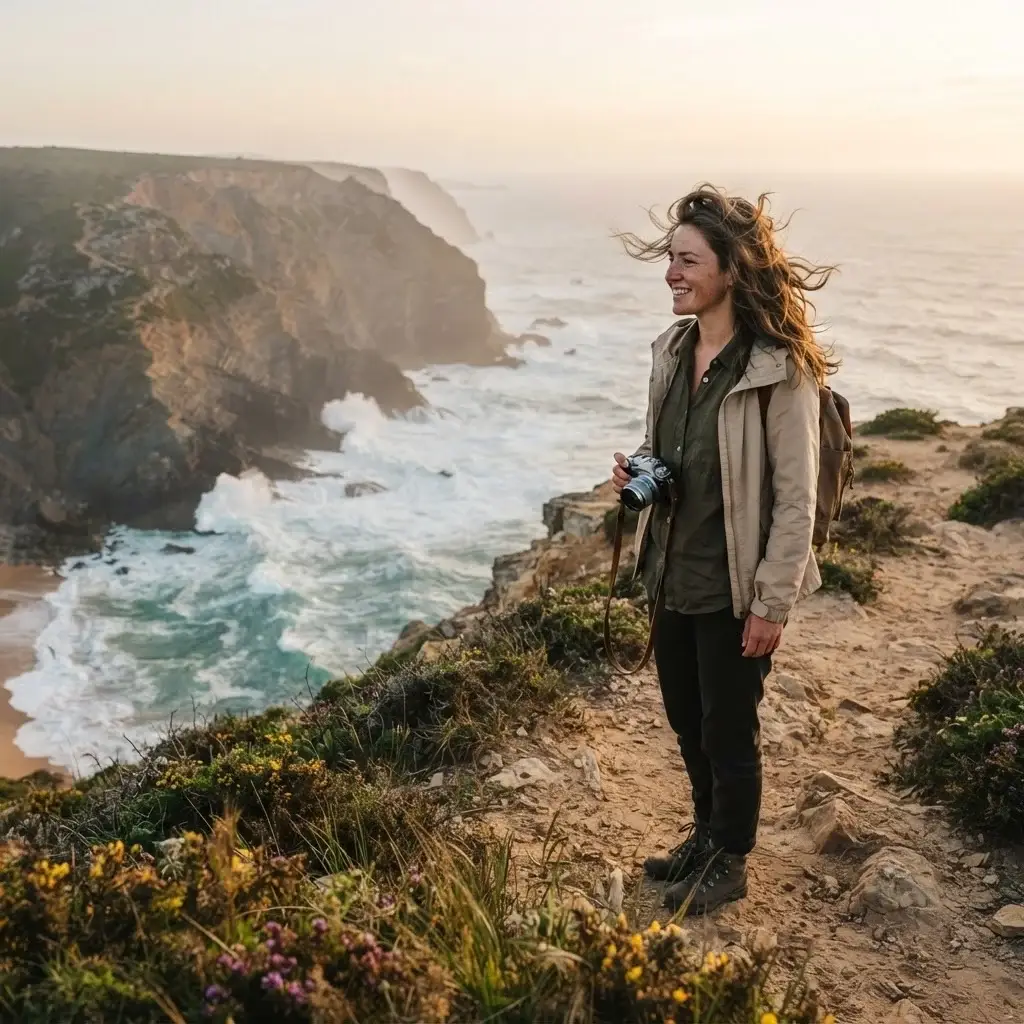
Take it slow and it’s pure joy.
One honest safety note: the official trail managers warn that this route isn’t recommended for people with a strong fear of heights, since some sections hug dramatic cliff edges. For a good general overview of the coastline and towns you’ll pass, I like checking a straightforward destination resource like the Lonely Planet guide to Portugal’s Alentejo and Algarve coast, which helps you picture where you’re actually going before you commit.
When to go: Spring, from March to June, is magic here, with wildflowers everywhere and mild temperatures. Autumn works beautifully too. Avoid deep summer, when the Portuguese sun on open cliffs is brutal.
What to eat: You’re on a fishing coast, so eat like it. Grilled sardines, fresh clams cooked in garlic and cilantro called amêijoas à Bulhão Pato, and a custard tart, the pastel de nata, with your morning coffee. In little towns like Odeceixe, the seafood is caught that morning.
Navigation tip: Look for the trail’s blue-and-green stripe markers painted on posts and rocks. On the sandy beach stretches where paint has nowhere to go, just keep the ocean on your correct side and watch for the next marker where the path leaves the sand.
4. The Portuguese Coastal Camino: A Gentler Pilgrimage by the Sea
Here’s a route I love recommending to people who want the community and support of the Camino but prefer flat, breezy coastal walking over inland heat.
The Portuguese Coastal Camino runs roughly 280 kilometers from the lovely city of Porto up to Santiago de Compostela, and most walkers finish it in about 12 to 14 days. Because it hugs the Atlantic much of the way, the climbs are mild and the sea breeze keeps you cool. You still get the yellow arrows, the albergues, the pilgrim community, and the certificate at the end, but with beach towns and boardwalks instead of mountain passes.
It’s a wonderful “second step” trail, or even a first one if you’re comfortable walking longer overall but want easy terrain.
When to go: Late spring and early autumn again. The Atlantic coast can be windy, so pack a light waterproof layer even in summer.
What to eat: Start in Porto with a francesinha if you’re very hungry, a hearty sandwich smothered in sauce, though maybe save that for a rest day. On the trail, seafood rice, grilled fish, and vinho verde, the region’s light, slightly fizzy green wine, are the local rewards.
Navigation tip: Choose the “Senda Litoral” boardwalk variant near the coast when you can, especially early on. It’s flat, scenic, and almost impossible to get lost on, which is exactly what you want in your first few days while you find your rhythm.
5. The Tour du Mont Blanc: A Bigger Dream Worth Building Toward
I’m including the Tour du Mont Blanc not because it’s the easiest, but because so many beginners dream of the Alps, and I want to be honest with you about what that dream actually requires.
This famous loop circles the Mont Blanc massif through France, Italy, and Switzerland, covering about 170 kilometers over 7 to 12 days. It is stunning beyond words. But it is genuinely more demanding than the other trails on this list, with daily climbs and descents that can total well over a thousand meters.
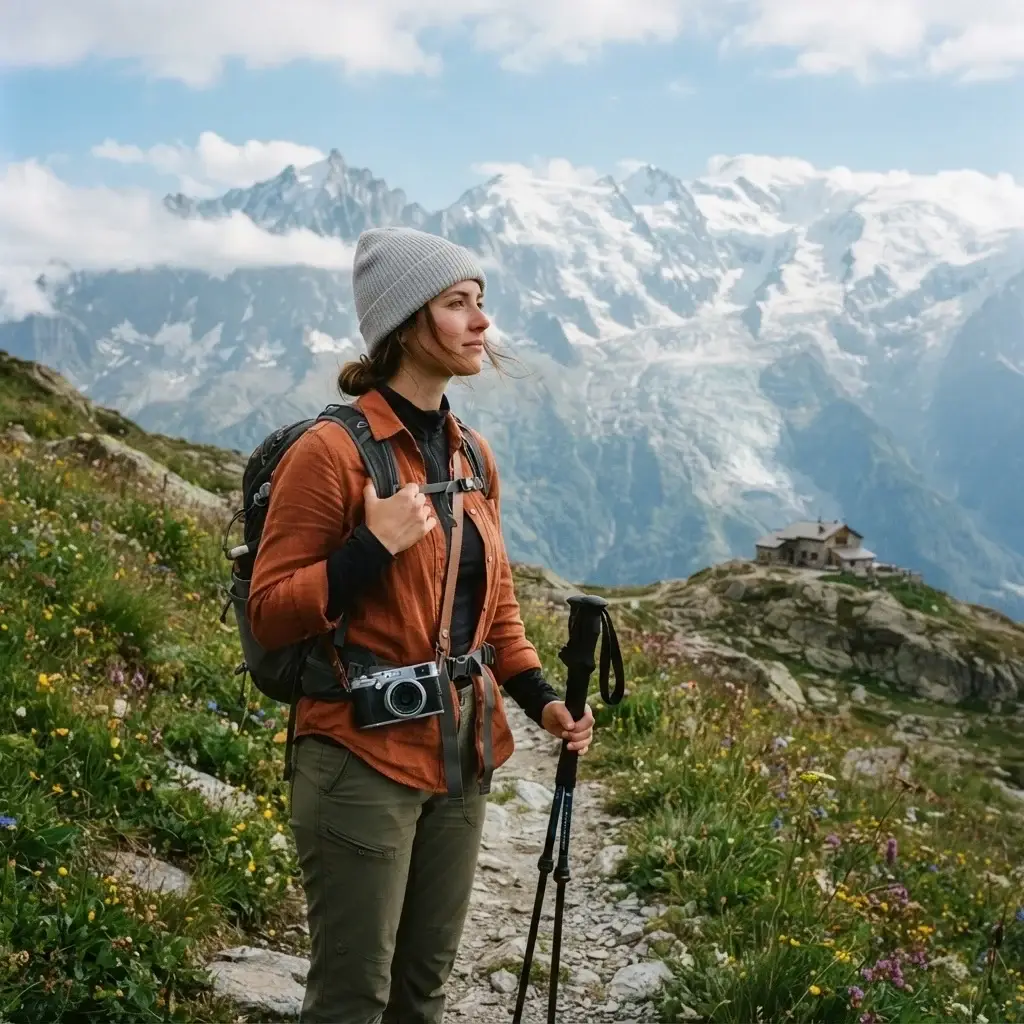
This is not a “first-ever” trail for most people.
So here’s my honest coaching. Put the Tour du Mont Blanc on your list as your third or fourth long walk, not your first. Do the West Highland Way or a Camino first, learn how your body handles multiple days, and then come back to the Alps ready. When you do, you can sleep in mountain refuges, hot meals and bunk beds waiting each night, which removes the need for camping. Before any trip crossing multiple countries like this, I always double-check current entry rules and any regional advisories through the official U.S. Department of State international travel pages, just so there are no border surprises for the paperwork side of things.
When to go: Mid-June through mid-September only. Outside those months, snow closes the high passes and the huts shut down.
What to eat: This trail crosses three food cultures, which is half the joy. In France, tartiflette, a bubbling dish of potatoes, bacon, and melted Reblochon cheese. In Italy, fresh pasta and polenta in the Aosta Valley. In Switzerland, rösti and rich chocolate. You will burn every calorie, so eat freely.
Navigation tip: The route is well signed, but the network of variant trails can confuse newcomers. Download an offline GPS map before you go, because signal disappears in the high mountains, and mark your chosen refuge each night so you always know your target.
The Gear That Actually Matters (And What You Can Skip)
Beginners waste so much money on gear they don’t need. Let me save you some cash, learned the hard way from my own overpacked early trips.
The single most important thing you own is your footwear. Well-fitting, broken-in shoes or boots matter more than anything else on your body.
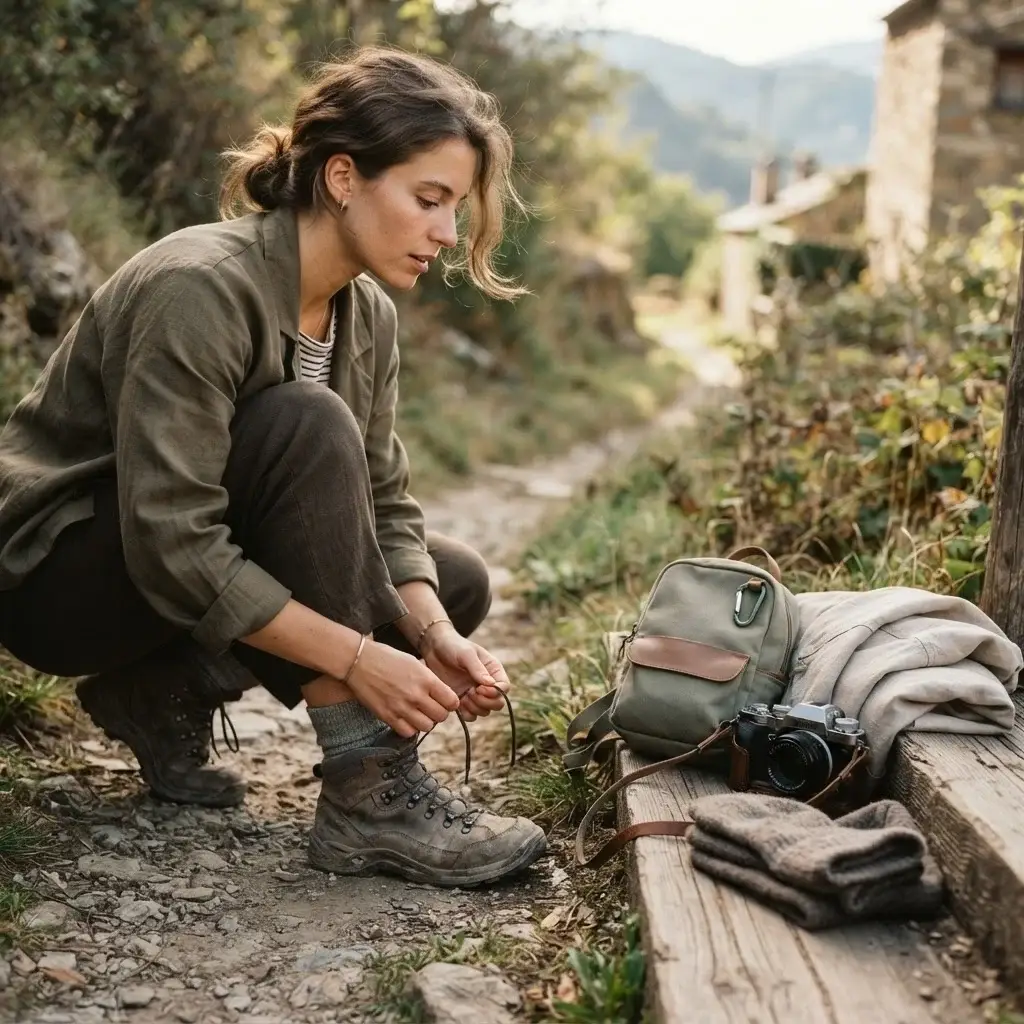
Never, ever walk a long trail in brand-new shoes. Wear them for weeks around town first. Right behind that come good socks, ideally wool or a wool blend, and I recommend two pairs a day, changing at lunch to keep blisters away.
You need a comfortable daypack, a light waterproof jacket, and layers you can add and remove as the weather shifts. On trails like the Camino or the coastal routes where you sleep in towns, you carry very little, just clothes and daily snacks. On hut-to-hut routes, you still don’t need a tent or cooking gear because meals and beds are provided.
What can you skip? Fancy trekking poles are optional for gentle trails, though they genuinely help your knees on steep descents. Expensive gadgets, giant first-aid kits, and three pairs of “just in case” shoes can all stay home. Your back will thank you for every ounce you leave behind.
Staying Safe and Well on the Trail
I want you to feel confident, not fearless in a reckless way. A few real habits keep you safe.
Tell someone your daily plan, even just a text to a friend each morning saying where you’re headed. Carry more water than you think you need, especially on exposed coastal and mountain sections. Learn the local emergency number for each country you’re in, and know that across the European Union, dialing 112 reaches emergency services.
Health-wise, most of these trails run through regions with excellent, safe conditions, but it never hurts to glance at the official CDC Travelers’ Health pages for your destination country before you fly, mostly to check routine vaccines are up to date and to read any food and water notes. And please, get travel insurance that specifically covers hiking. A twisted ankle on a remote cliff path is exactly the moment you’ll be grateful you have it, and resources like the World Nomads guidance on adventure travel coverage explain in plain language what hiking-friendly policies should include so you don’t buy the wrong plan.
The biggest real risk for most beginners isn’t dramatic. It’s blisters and doing too much too soon. Go slower than your ego wants on day one. Your feet set the pace for the whole trip.
How to Actually Plan Your First Trip (Step by Step)
Let’s turn the dream into a plan, because a plan is what kills the fear.
Start by picking one trail from this list that matches your comfort level, then decide how many days you honestly have, including travel to and from the start.
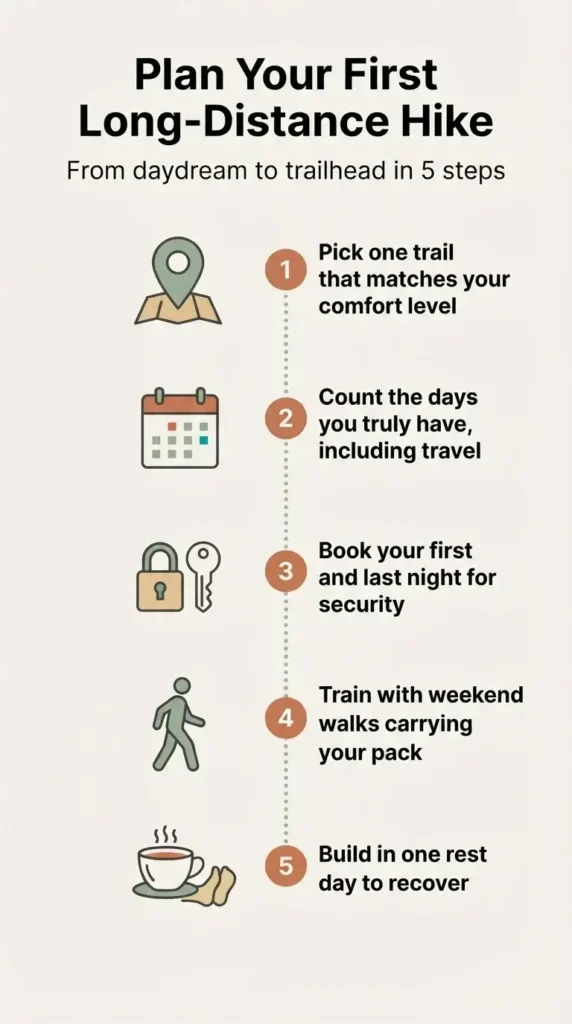
Book your first and last night’s accommodation before you go, so the beginning and end feel secure, and leave the middle flexible if the trail supports it. On popular routes like the Camino in peak months, or the Tour du Mont Blanc huts, book beds well ahead, because they fill fast.
Then train gently at home. Take longer and longer walks on weekends, carrying the pack you plan to use. Walk hills if you have them. Two months of weekend walks makes an enormous difference. This is the exact quiet preparation that turns “I could never do that” into “I did that.”
Finally, build in one rest day if your schedule allows. A day to soak your feet, wander a town, and let your body recover is not a luxury. It’s what lets you enjoy the second half instead of limping through it.
You’re More Ready Than You Think
I still remember the version of me who thought trails like these belonged to other, braver people. That person was scared she’d fail, look foolish, or not be strong enough.
She was wrong. And if any part of that sounds like you right now, I promise you’re wrong too, in the best possible way.
The best long-distance hiking trails in Europe were not built for superhumans. They were built by ordinary people, walked for centuries by farmers, fishermen, and pilgrims, and they are waiting for you exactly as you are today. You don’t need to be fitter first. You don’t need to wait for a braver year. You need a trail that fits you, a sensible plan, and the willingness to take that first step out the door.
Pick your trail. Circle a date on the calendar. Then go put on your shoes. The path will teach you the rest, one honest, beautiful step at a time. I’ll be cheering you on the whole way.