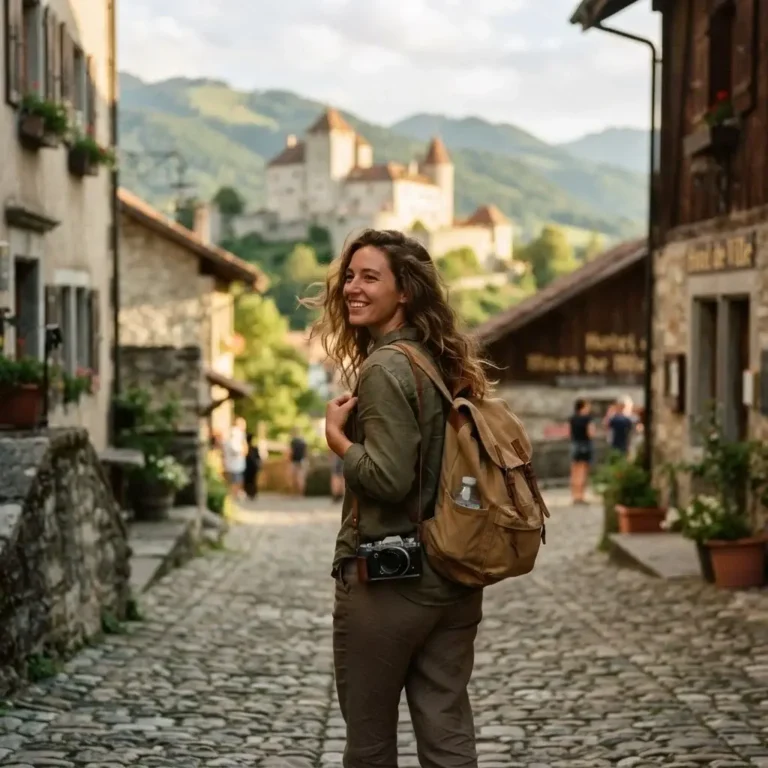
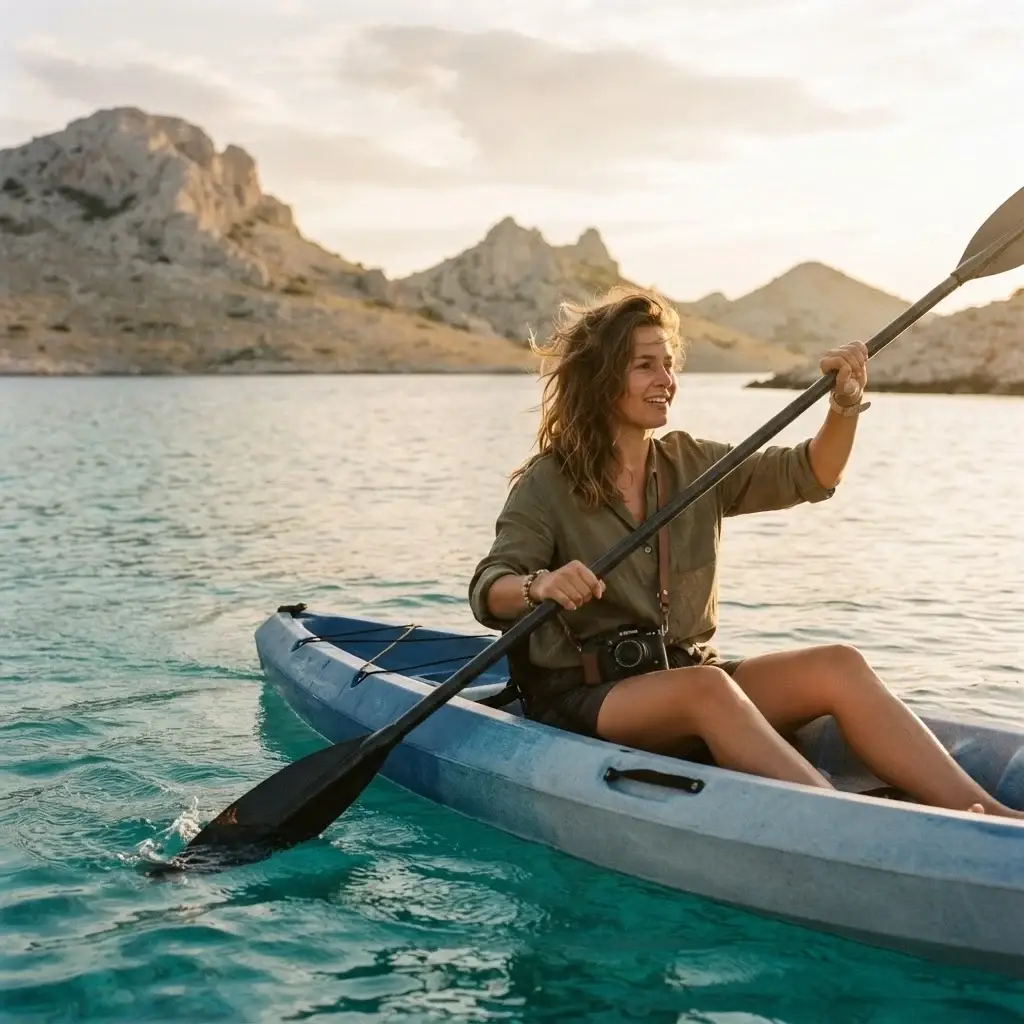
I still remember standing on a dock in Europe years ago, backpack on my shoulders, watching a group of paddlers glide out across still water and thinking, that looks incredible, and also, terrifying. I didn’t grow up on boats. I grew up in New York, guiding sightseeing tours through crowded streets, not gliding across open water. But something about that scene stuck with me during my solo backpacking trip across Europe, this quiet reminder that some of the most memorable travel moments aren’t the ones you plan around a famous landmark. They’re the ones where you’re a little out of your depth, literally and figuratively, learning something new about yourself one paddle stroke at a time.
If you’re dreaming about a kayaking trip somewhere in Europe but you’re not sure which destination actually fits a beginner, a solo traveler, or someone who just wants a calm, beautiful way to see a new place, this guide is for you. I’m not a professional paddler, and I won’t pretend to be. What I am is someone who has spent years researching, planning, and talking to fellow travelers about exactly this kind of decision, and I’ve pulled together the destinations that consistently come up as the best fit depending on your comfort level, your budget, and how much adventure you’re actually craving.
Croatia’s Dalmatian Coast and the Kornati Islands
If you want turquoise water, dramatic limestone islands, and the kind of scenery that looks unreal in photos but is somehow even better in person, Croatia’s Dalmatian coast is where most kayaking lovers end up first. The Kornati archipelago, a national park made up of nearly 90 islands and islets scattered across the Adriatic near Zadar, is the crown jewel here. Multi-day kayak and camping trips through Kornati let you paddle between uninhabited islands, snorkel in coves that feel completely private, and camp under skies with almost no light pollution.
Here’s what surprises a lot of first timers though. Kornati is a protected national park, which means you can’t just paddle in freely. You need to buy an entry ticket, either in advance or at the kiosk in Murter, and the ticket information listed on the park’s official site is worth checking before you go, since pricing and access points can shift by season. The paddling season generally runs from late spring through early autumn, with July and August being warmest but also busiest and windiest. If you’re newer to kayaking, aim for May, June, or September, when the water is calmer and the heat is more manageable.
What should you actually eat here? Skip the tourist-trap seafood platters near the marinas and look for a family-run konoba, a small traditional tavern, serving black cuttlefish risotto or grilled fish caught that same morning. It’s simple food, but it’s the kind of meal that tastes better because you earned it after a full day on the water.
Slovenia’s Soca River and Lake Bled
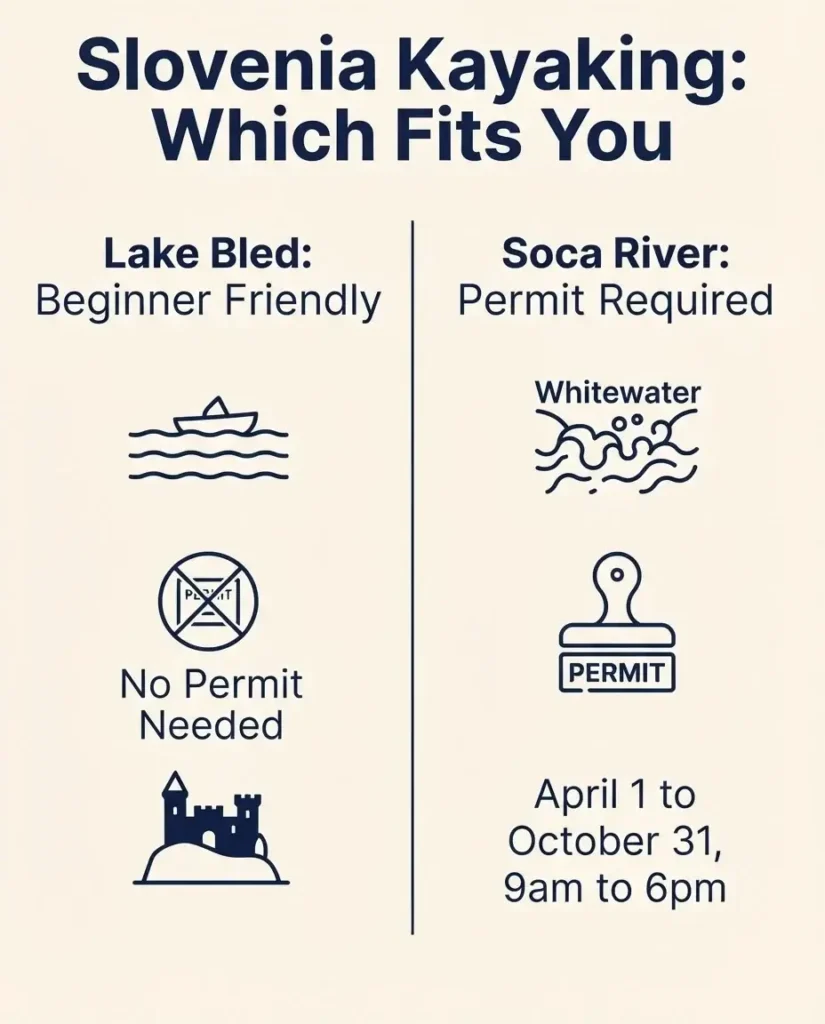
Slovenia offers something Croatia doesn’t, which is a real contrast between calm, beginner-friendly water and genuinely thrilling whitewater, often within an hour’s drive of each other. Lake Bled itself is about as gentle as kayaking gets. The water is flat, the setting is postcard perfect with a hilltop castle and a tiny island church, and most people can rent a kayak or join a short guided tour without any prior experience.
The Soca River, which runs through Triglav National Park near Bovec, is a different story entirely. Its glacier-fed water has that famous emerald color you’ve probably seen in photos, but it also has real current and, in sections, genuine whitewater that requires guidance or prior skill. What a lot of travel blogs leave out is that boating here is tightly regulated. According to Triglav National Park’s official boating guidelines, kayaking and canoeing on the Soca are only permitted from April 1 through October 31, between 9 a.m. and 6 p.m., and every paddler needs a paid permit from the park authority, guided or not. If you’re a first timer, book a guided trip rather than trying to navigate the permit system and the river current on your own. It’s not the moment to test your independence.
Norway’s Lofoten Islands
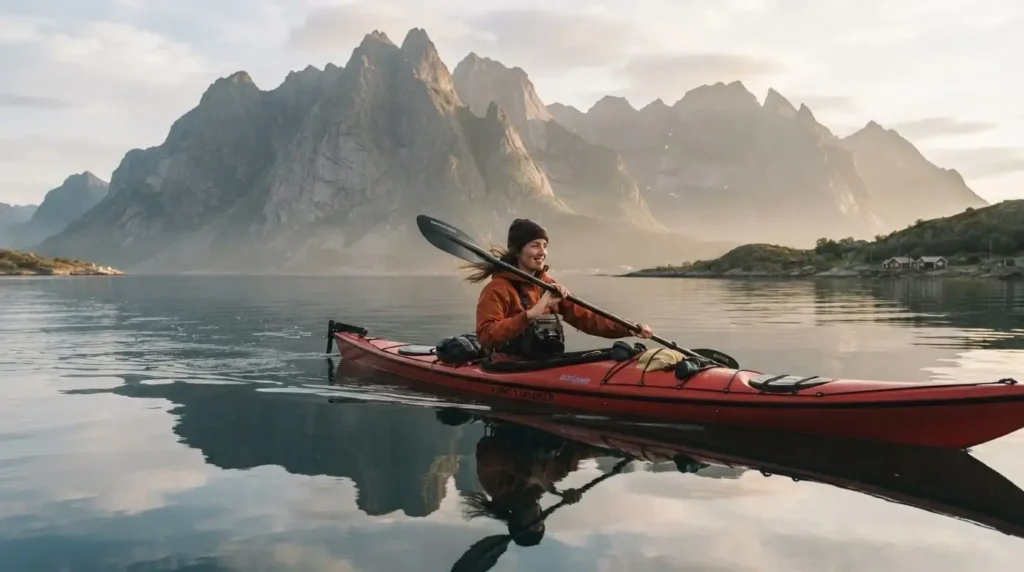
I’ll be honest, this is the destination on this list I find most emotionally magnetic, even though I haven’t paddled there myself. Something about jagged mountains rising straight out of Arctic water, with almost no separation between raw wilderness and the sea, feels like exactly the kind of humbling, beautiful discomfort that changes how you see travel. What consistently surprises people researching Lofoten is that the water in the fjords is often shallow and calm, which makes it far more approachable for beginners than the dramatic scenery suggests.
The season here is longer than most assume. Summer brings the midnight sun, meaning you can technically paddle at what feels like ten at night under full daylight, while winter brings northern lights tours for paddlers chasing a completely different kind of magic. If you’re planning a first Arctic kayaking trip, Visit Lofoten’s guide to kayaking in the region breaks down which operators run trips at which times of year, which matters because conditions swing dramatically between seasons. Pack more thermal layers than you think you need. Even in July, the water and wind off the fjords can feel shockingly cold once you’re wet.
Scotland’s Outer Hebrides
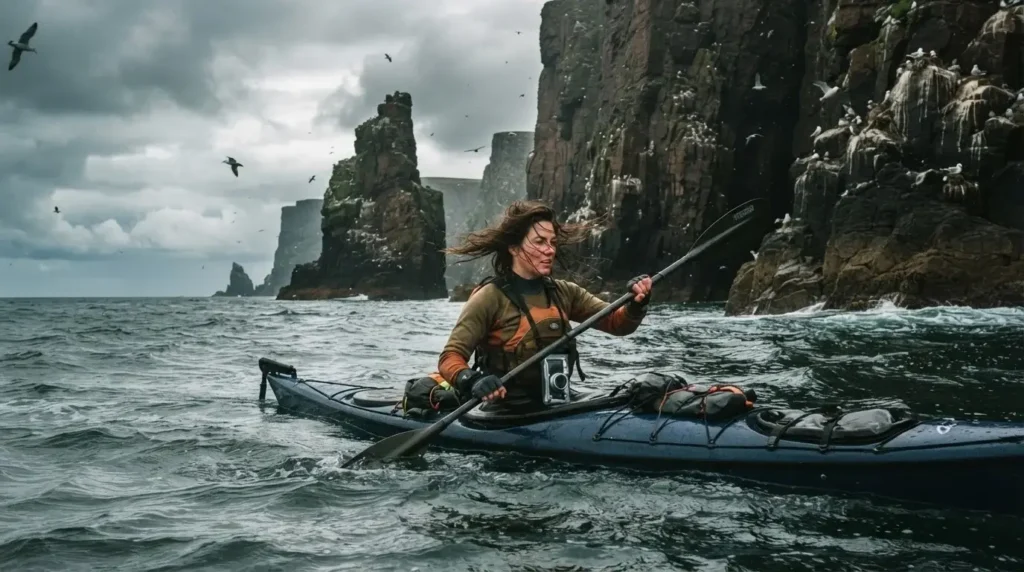
This is where I want to be direct with you, because I don’t want anyone booking a trip here under the wrong impression. The Outer Hebrides are stunning, wild, remote, and genuinely one of the best sea kayaking destinations in the world, but they are not where a total beginner should start. Real Atlantic swell, strong tidal currents, and long open-water crossings mean most reputable operators only accept confident intermediate paddlers for multi-day expeditions through places like the Sound of Harris or out toward Mingulay.
That said, if you already have some kayaking experience and you’re craving something wilder, this is where you go. Sea caves, dramatic stacks, white sand beaches that feel more Caribbean than Scottish, and a level of solitude that’s hard to find anywhere else in Western Europe. The Outer Hebrides official tourism site’s watersports page is a solid starting point for understanding which operators run trips for which skill level, since this is one region where choosing the wrong outfitter for your ability really matters.
Sweden’s Stockholm Archipelago
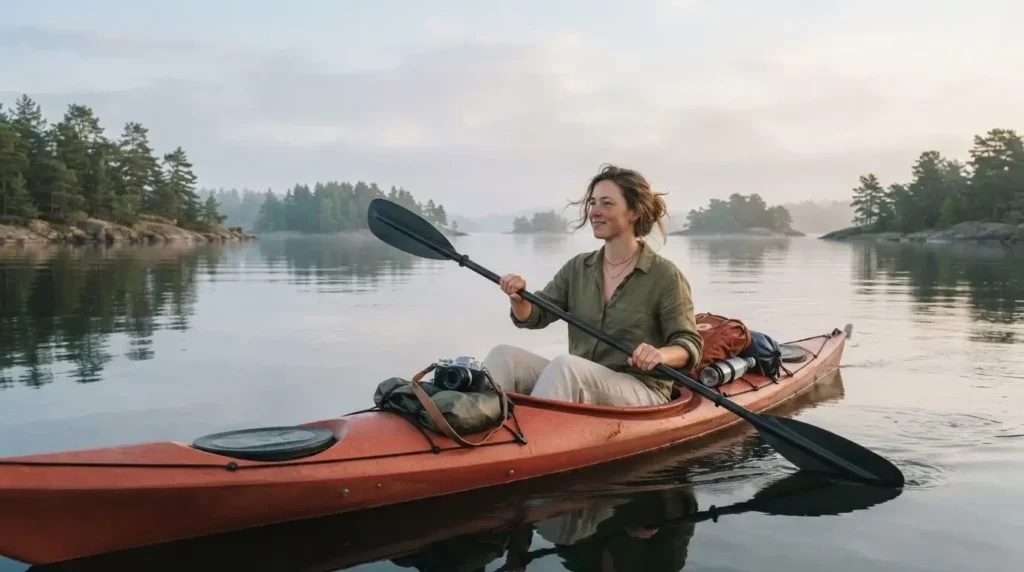
If the Hebrides sound intimidating, Stockholm’s archipelago is almost the opposite experience, and it might be my favorite recommendation on this entire list for a nervous first timer. Made up of roughly 30,000 islands and islets stretching out from the city, it’s calm, protected, and remarkably safe for paddling, with no significant tidal current and no big underwater swell to worry about. You can genuinely paddle out from central Stockholm and feel like you’ve entered total wilderness within an hour.
What makes this destination especially good for solo travelers is that wild camping is legal here, so a multi-day self-guided trip is realistic even without a huge budget or a big group. The Visit Stockholm guide to kayak adventures in the archipelago lists rental options and guided tours ranging from a couple of hours to multi-week expeditions, which gives you flexibility depending on how much time and confidence you’re working with. This is the kind of place where you could genuinely learn to kayak for the first time and leave feeling like a capable paddler, not a lucky survivor.
Choosing Between a Guided Tour and Paddling Solo
I want to be honest about something here, because it connects to a belief I hold about travel in general. Independence and self-reliance are wonderful goals, and solo travel has taught me more about myself than almost anything else I’ve done. But independence isn’t the same as recklessness, and kayaking is one of those activities where overestimating your skill level has real consequences.
If this is your first time ever holding a paddle, book a guided tour, full stop. It’s not a failure of independence to ask for guidance. A good guide teaches you paddle strokes, reads the water and weather for you, and turns what could be a stressful first experience into a genuinely joyful one. Once you’ve done a few guided trips and you understand your own comfort level with wind, current, and distance, that’s when solo or self-guided multi-day trips like the ones possible in Stockholm’s archipelago start to make real sense.
Staying Safe on the Water
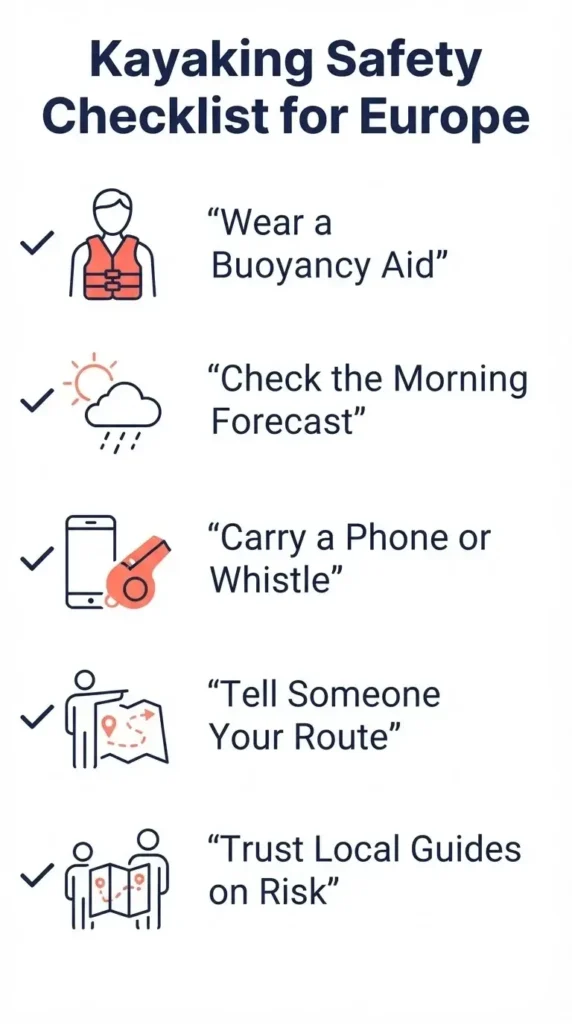
This is the part of the article I refuse to rush through, because no scenic view is worth a preventable accident. Weather and water conditions in Europe can shift fast, especially in coastal and fjord regions, and cold water immersion is a real risk even in summer. The RNLI’s kayaking and canoeing safety guidance is one of the clearest, most practical resources I’ve found on this, covering everything from wearing a properly fitted buoyancy aid to checking tide and wind forecasts before you launch and always telling someone on land where you’re going and when you expect to be back.
A few non-negotiables regardless of destination: always wear your buoyancy aid, even on flat lake water where it feels unnecessary. Check the marine forecast the morning of your trip, not the night before. Carry a phone in a waterproof case or a whistle if you’re paddling somewhere remote enough that a phone signal isn’t guaranteed. And if a guide or local outfitter tells you conditions look risky that day, believe them over your own excitement to get on the water.
Respecting Protected Waters
Many of the destinations on this list, including Kornati, Triglav, and large stretches of Croatia’s and Scotland’s coastlines, fall within Natura 2000, the EU’s network of protected land and marine areas designed to safeguard threatened habitats and species. According to the European Environment Agency’s data on marine protected areas, a meaningful percentage of Europe’s coastal waters now fall under some form of protection, which is part of why permits, seasonal restrictions, and designated launch points exist in places like Kornati and the Soca River. This isn’t bureaucracy for its own sake. It’s the reason the water stays this clear and the wildlife stays this present. Paddling responsibly, staying on marked routes where required, and packing out anything you bring in is a small price for access to places this beautiful.
What to Pack for a European Kayaking Trip
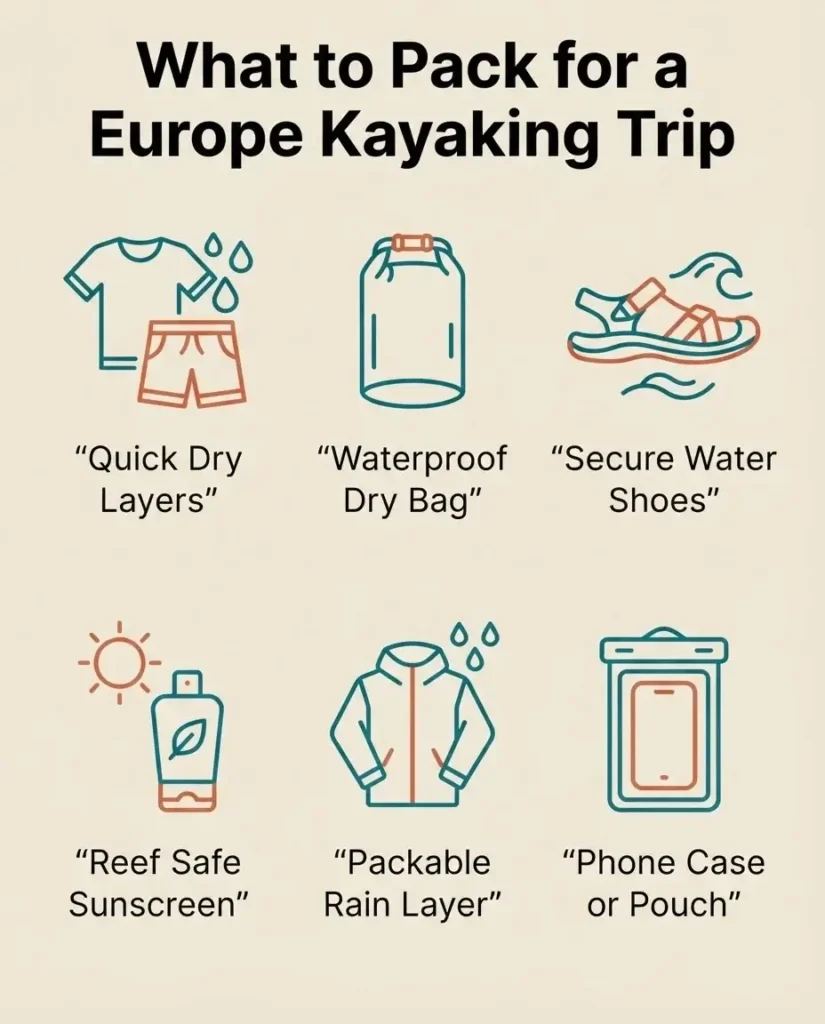
You don’t need to own expensive gear to try this. Most destinations on this list offer rentals, and guided tours typically include the kayak, paddle, and buoyancy aid. Still, a few personal items make a real difference in comfort. Quick-dry clothing layers matter more than almost anything else, since you will get wet even on a calm day, and cotton stays wet and cold for hours. A dry bag for your phone, passport, and any snacks is worth the small investment, since even calm water finds a way to splash into open bags. Water shoes or sandals with a secure strap save your feet from sharp rocks on rocky coastlines like Croatia’s or Scotland’s. Reef-safe sunscreen matters in the Mediterranean, where the sun reflects hard off the water. And a light, packable rain layer is worth carrying even in summer in Norway, Sweden, or Scotland, where weather can change within an hour.
Finding Your Fit
If I had to sort this list by confidence level, I’d say Lake Bled and Stockholm’s archipelago are where nervous first timers should start, since both offer calm water and forgiving conditions. Kornati and Lofoten sit in the middle, gorgeous and memorable but requiring a bit more preparation, permits, or seasonal awareness. The Soca River and the Outer Hebrides are where you go once you’ve built real confidence and want something that pushes you further.
None of these destinations require you to be an athlete or an expert. They require curiosity, a willingness to feel a little uncertain before you feel capable, and the same thing that got me on a plane alone years ago instead of waiting for the perfect moment to travel. That moment doesn’t come announced. You just decide, book the trip, and let the water teach you the rest.