
I still remember the exact moment my phone died in the middle of a massive train station in Rome.
I was 23 years old. I had just quit my traditional office job, packed my bags, and decided to figure out how to travel the world. Before this, I worked as a sightseeing guide in New York City. I was used to knowing exactly where I was. But standing in Italy with the wall with just an adapter.
blank screen, no map, no translation app, and no way to look up my hostel address, panic set in.
I had brought a cheap, bulky adapter I bought at a dollar store. It broke the second I tried to push it into a wall outlet at a coffee shop.
That single moment taught me a huge lesson. When you travel solo, your phone is your lifeline. It is your map, your camera, your wallet, and your emergency contact list. You cannot afford to run out of battery.
Since that day, I have backpacked across Europe, lived with a host family in Ghana, taught English in Thailand, and hiked through China. I have plugged my devices into trains, airport floors, jungle cafes, and tiny hostel walls. Finding the best travel chargers for international trips became a personal mission of mine.
I want to share exactly what works, what fails, and how to keep your gear safe. I am also going to share some of my favorite food and navigation tips for the places I mention, because traveling is about so much more than just plugging in your phone. Let’s get into it.
The Big Difference: Adapters vs. Converters
Before we talk about the best travel chargers for international trips, we need to clear up the biggest mistake new travelers make.
People often confuse travel adapters with voltage converters. If you do not know the difference, you might literally blow up your laptop. I once watched a girl in my hostel in Australia melt her expensive hair straightener because she plugged it straight into the wall with just an adapter.
Smoke filled the whole room.
Here is the simple rule to remember.
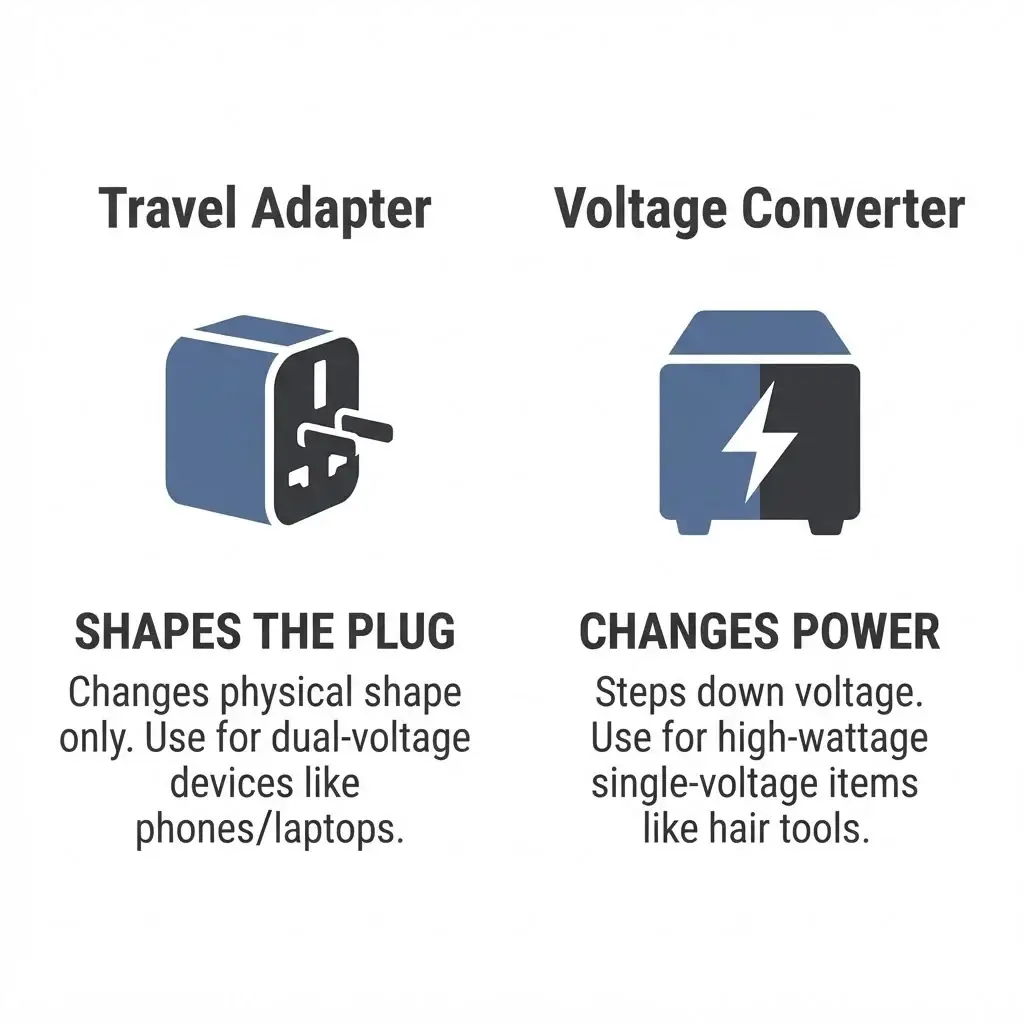
An adapter only changes the physical shape of your plug. It makes your flat American prongs fit into a round European hole. It does not change the electricity flowing through the wires.
A converter actually changes the electrical voltage.
In North America, our wall outlets run on 110 volts. In most of Europe, Asia, Africa, and Australia, the outlets pump out 220 to 240 volts. If you plug a 110-volt device into a 220-volt outlet without a converter, it will fry.
How do you know what you need? Look at the tiny print on your charger block. If it says “Input: 100-240V”, you are safe! This means your device is “dual voltage.” Almost all modern phone chargers, laptop cords, and camera chargers are dual voltage. You only need a simple, cheap adapter for these.
Things that heat up—like hair dryers, curling irons, and cheap travel kettles—are usually single voltage. For those, you need a heavy, expensive converter. Honestly, my best advice is to leave your hair dryer at home. Let your hair dry naturally in the breeze. It is much easier.
My Top Picks for Global Tech
When you are living out of a backpack, every single item needs to earn its space. I hate carrying extra weight. Over the years, I have narrowed down my tech bag to a few specific items.
The Universal GaN Charger Block
If you buy one thing for your next trip, make it a universal GaN (Gallium Nitride) charger block. GaN technology is a fancy way of saying the charger can handle a ton of power but stays very small and does not get hot.
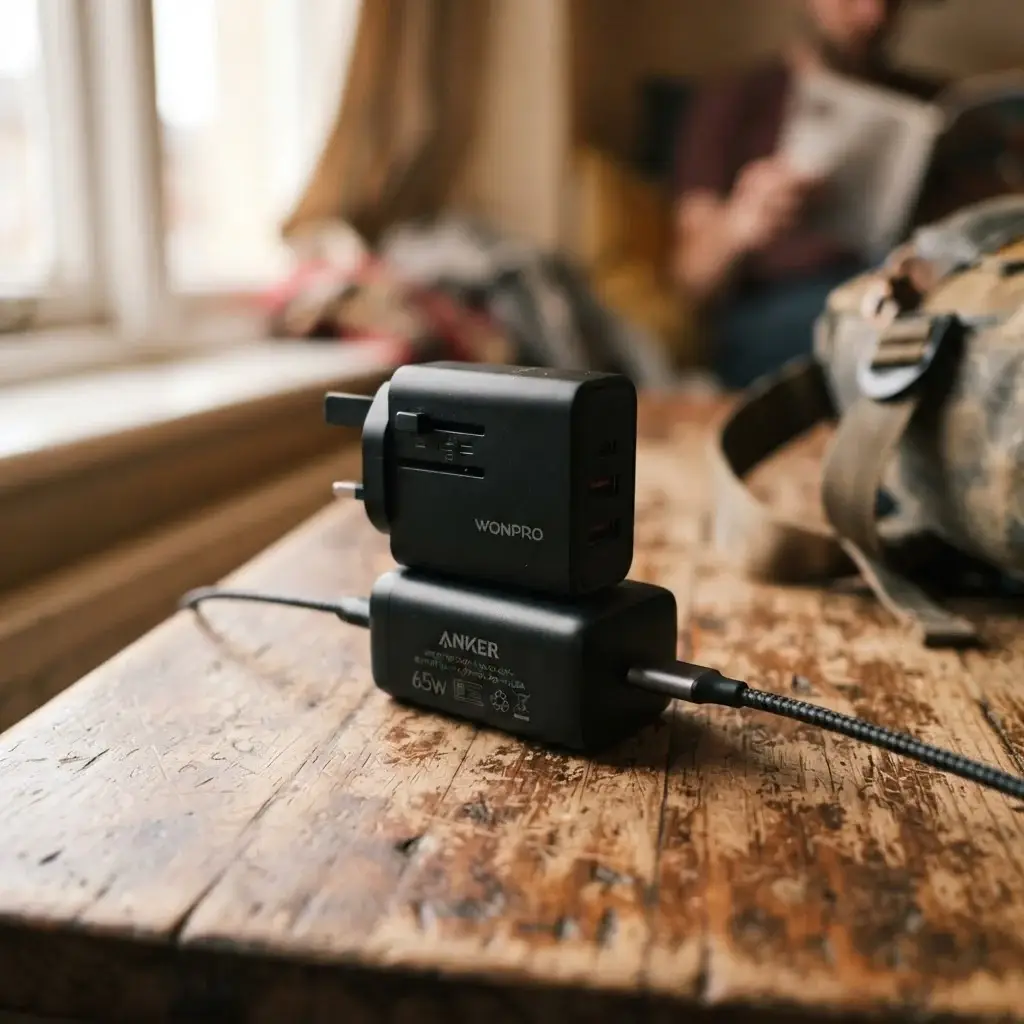
I carry one block that has three USB-C ports and one regular USB-A port. It lets me charge my phone, my camera battery, and my laptop all at the exact same time from a single wall outlet. This is a lifesaver in hostel dorm rooms where you might only get one plug next to your bed. Instead of fighting for outlet space, I just plug in my one block.
The Worldwide Adapter Cube
You need a physical adapter to make your GaN block fit into foreign walls. I use a universal cube. It has little sliders on the side. You push a slider, and the prongs for Europe, the UK, or Australia pop out. It is brilliant.
However, you have to be careful about protecting your gear from power spikes in older buildings. If a bad power surge does ruin your laptop, having coverage from World Nomads Travel Insurance can save your whole trip budget.

I always make sure my tech is covered before I fly.
The Heavy-Duty Power Bank
An adapter does not help you when you are on a 12-hour bus ride through the mountains with no outlets in sight. A high-quality power bank is your best friend.
I carry a 20,000mAh power bank. It is a bit heavy, weighing about a pound, but it can charge my phone fully about four or five times. When you are taking hundreds of photos and using maps all day, your battery drains fast. Reading through a Lonely Planet destination guide on your tablet is great, but only if the tablet turns on when you need it. I never leave my hotel room without my power bank fully charged in my day bag.
Plugging In Around the World: Europe
Let’s talk about specific regions, what plugs you need, and how to enjoy your time there once your phone is fully charged.
In mainland Europe, you will use the Type C plug. This has two round pins. It works in France, Italy, Spain, Germany, and almost everywhere else on the continent.
When I backpacked solo across Europe, I loved the train system. European trains are fast, clean, and amazing. But here is an insider navigation tip: always validate your regional train ticket in Italy before you get on board. There are little yellow or green machines on the platform. If you do not stamp your ticket, they will fine you heavily on the train. I saw it happen to so many tourists.
When your phone is charged and you are walking around, eat exactly what the locals eat. In Rome, skip the heavy pizza in the middle of the day. Instead, go to a small bakery and buy a square of pizza al taglio. It is baked in long rectangular pans, cut with scissors, and sold by weight. It is cheap, fast, and incredible. In Paris, grab a fresh baguette from a boulangerie, some local cheese, and sit by the Seine River for a cheap dinner.
Many of the older buildings in Europe have very loose wall outlets. Sometimes my heavy universal adapter would just fall out of the wall! I learned to carry one tiny, cheap Type C plastic adapter just for Europe. It fits tightly into the wall, and then I plug my charger into that.
Navigating the United Kingdom and Ireland
The UK and Ireland use a totally different plug. They use the Type G plug. It has three huge, flat, rectangular pins. These plugs are massive and heavy.
Here is a funny thing about UK wall outlets: they have tiny switches right next to them. You can plug your phone in, but if you do not flip the little switch on the wall to the “on” position, no electricity flows. I once woke up in London with a dead phone because I forgot to flip the wall switch!
London is one of my favorite cities, but it can be overwhelming for a first-time solo traveler. To navigate the city, you do not need to buy a special Oyster transit card anymore.
Just tap your contactless credit card or your phone on the yellow reader when you get on the Tube, and make sure you tap out when you leave. It is so easy.
For food, you cannot leave the UK without having a Sunday Roast in a traditional pub. You get roasted meat, crispy potatoes, vegetables, and a huge fluffy Yorkshire pudding covered in gravy. It is the ultimate comfort food after a long day of walking in the rain.
The Tech Scene in Southeast Asia
Southeast Asia is my favorite region in the world. I spent months teaching English in Thailand, and it completely changed my life.
The plugs here can be confusing. Thailand officially uses Type A, B, C, and O. Basically, almost any plug from America or Europe will fit into a Thai wall outlet because their outlets are built to accept multiple shapes. However, the voltage is 220V, so remember the rule about converters!
Having your phone ready to go in Southeast Asia is completely vital for getting around. You literally cannot hail a ride without battery power for the Grab official app, which is the Uber of Southeast Asia.

You use it for taxis, motorbike rides, and even food delivery. Never get into a street tuk-tuk without agreeing on the price first, but honestly, using the app is much safer and cheaper.
If you want to read up on local customs or festival dates before you go, the Tourism Authority of Thailand has amazing guides. The culture here is deeply respectful. Always take your shoes off before entering a temple or someone’s home. Do not point your feet at anyone, and never touch anyone on the head.
The food in Thailand is unbeatable. When you are in Chiang Mai, you must eat Khao Soi. It is a rich, creamy, spicy coconut curry noodle soup topped with crispy fried noodles. Eat it at a tiny plastic table on the street. It will cost you about two dollars and it is better than any fancy restaurant meal. Drink fresh coconut water directly from the shell to stay hydrated in the intense heat.
Getting By in China
I hiked through China during a very long solo trip. It is a vast, beautiful, and complex country to navigate.
China mostly uses Type A (like the US flat prongs), Type C (European round prongs), and Type I (slanted flat prongs). Most hotels have universal outlets that take almost anything.
The biggest challenge in China is not the physical plugs; it is the internet. Many western apps and websites are blocked. You must download a reliable VPN (Virtual Private Network) before you arrive in the country. If you wait until you are there, you will not be able to access the app store to download one.
Navigating China as an English speaker is tough. Download offline translation apps. The high-speed rail network is a modern marvel. The trains are flawless and run perfectly on time. When booking trains, always bring your passport to the station because your ticket is digitally tied to your passport number.
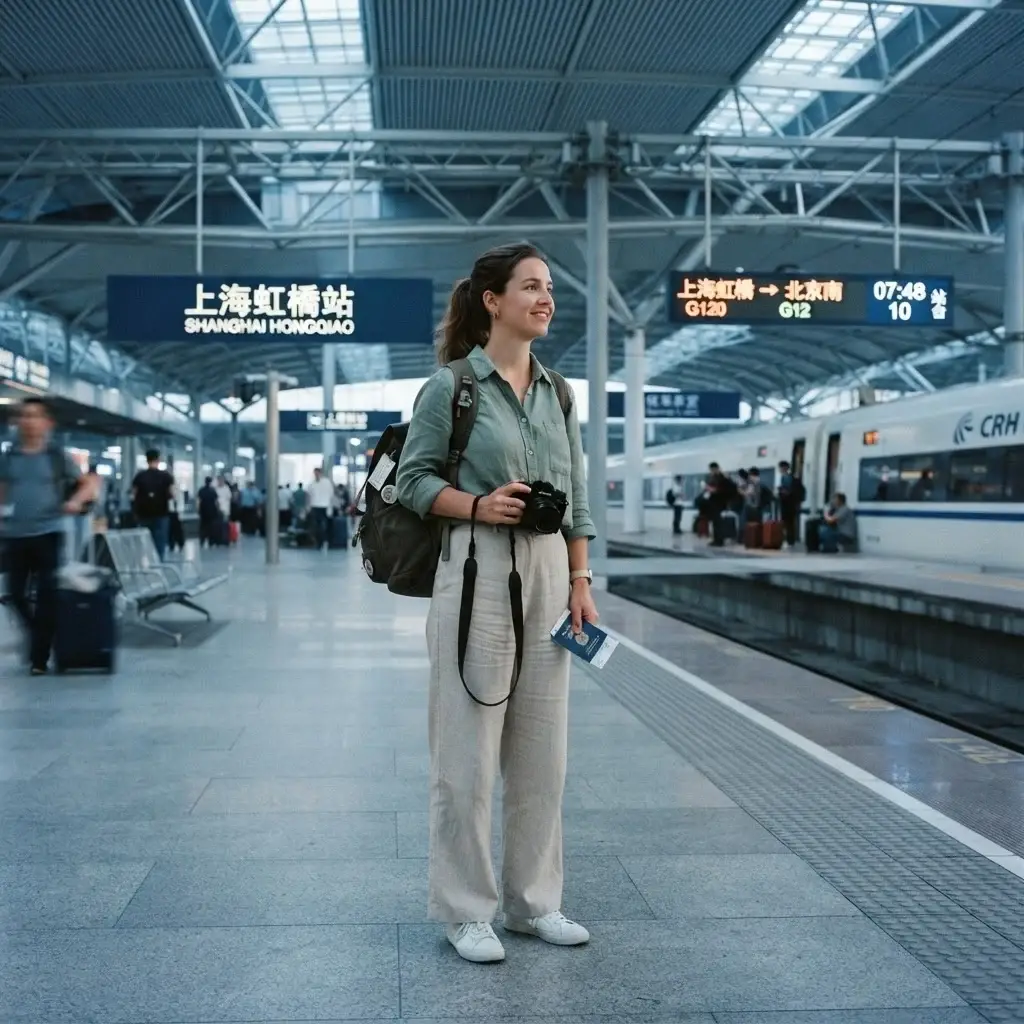
Food in China varies wildly by region. If you are in the south, you must try soup dumplings (Xiao Long Bao). You bite a tiny hole in the top of the dumpling, suck out the hot, rich broth, and then eat the pork and dough. It is incredible.
Before heading into remote areas, I always check the CDC Travelers’ Health recommendations for water and food safety. In China, you should never drink the tap water. Always drink bottled water or boil the tap water thoroughly before drinking. Even locals boil water before drinking it.
Staying Powered in Australia
I studied abroad in Australia, and it holds a massive piece of my heart.
Australia uses the Type I plug. It has two flat pins that are tilted in a V-shape, and sometimes a third straight pin at the bottom.
Australia is huge. You need a charged phone because you will be doing a lot of domestic flying or taking very long road trips. The sun here is no joke. Keep your phone out of direct sunlight. I once left my phone on a cafe table in Sydney, and within ten minutes, it shut down because it overheated.
To navigate cities like Melbourne, take advantage of the free tram zone in the city center. You do not need a ticket if you stay within the grid. It makes getting around incredibly cheap.
When it comes to food, you have to eat a meat pie. It is the ultimate Australian on-the-go snack. It is a hand-sized pastry filled with minced meat and gravy. Add a little bit of tomato sauce (ketchup) on top. Also, try a flat white coffee. The coffee culture in Australia is the best in the world. They take their espresso very seriously.
Life and Plugs in West Africa
Living with a host family in Ghana was one of the most eye-opening experiences of my life. The warmth and community there are unmatched.
Ghana uses the British Type G plug (the heavy three-pin one). The power grid in some parts of West Africa can be a little unstable. Power outages, called “lights out,” happen frequently. This is exactly why carrying a massive power bank is non-negotiable. You charge your power bank whenever the electricity is on, so you have backup power when it cuts out.
Navigation in Ghana is an adventure. The main way to get around cities like Accra is by using a “Tro-Tro.” These are shared minivans. There are no official maps or schedules. You stand by the side of the road, and the “mate” (the guy hanging out the window) yells the destination and uses hand signals to show where they are going. You just hop in. It costs pennies and is a deeply authentic way to see the city.
The food in Ghana is rich, spicy, and heavy on starches. You absolutely must try Jollof rice. It is rice cooked in a rich, spicy tomato stew. Eat it with fried plantains and grilled chicken. It is spicy, deeply flavorful, and incredibly filling. Eat with your right hand only; using your left hand to eat or hand things to people is considered very rude in Ghanaian culture.
How to Pack Your Tech Safely
Now that you know what chargers to bring and what plugs you need, let’s talk about how to pack them.
Never put your best travel chargers for international trips or your power bank in your checked luggage. Power banks have lithium-ion batteries. Airlines strictly require you to keep lithium batteries in your carry-on bag because of fire risks in the cargo hold.
I keep all my cords, blocks, and adapters in one small zippered pouch. I hate digging through a messy backpack to find a tangled cord.
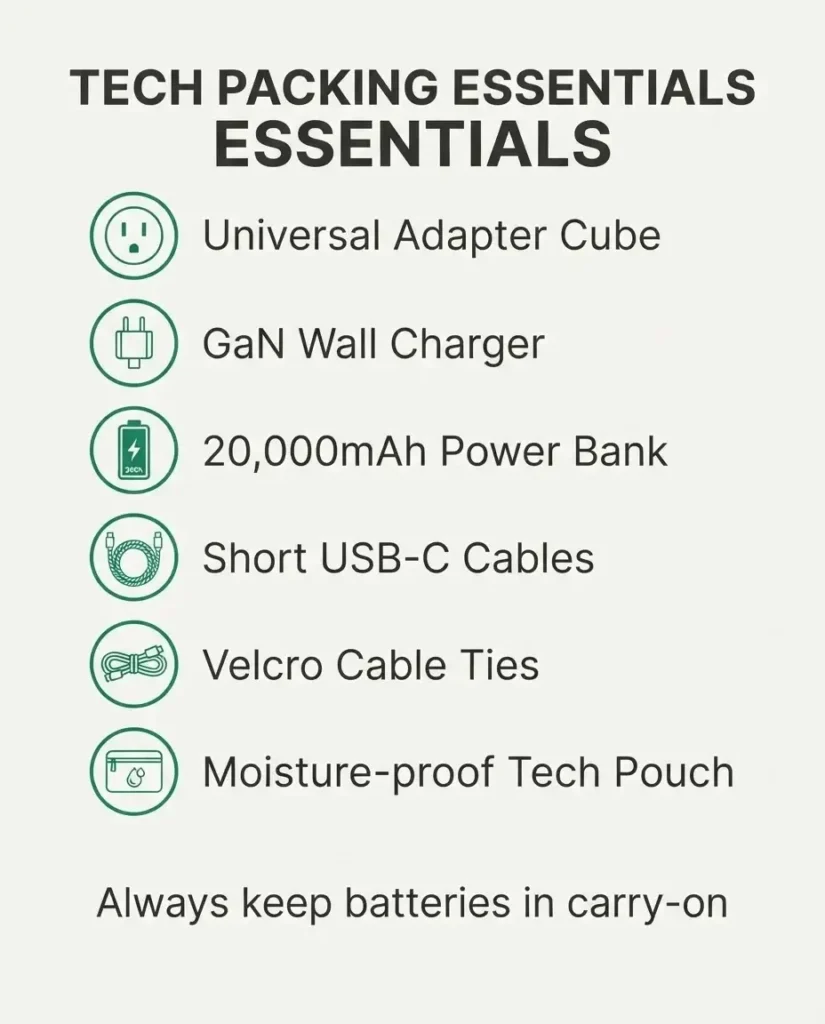
I use little velcro ties to keep every cord wrapped up neatly.
If you are traveling to a tropical place, humidity is your enemy. When I was in Thailand, the air was so wet that my camera lens kept fogging up. Keep your chargers and electronics in a dry bag, or throw a few of those little silica gel packets (the ones that come in new shoe boxes) into your tech pouch to absorb moisture.
When I visited the stunning UNESCO World Heritage sites in Europe, my camera battery died halfway through the day because I forgot to charge it the night before. I was so upset. Now, I have a strict routine. Every single night, the moment I walk into my hostel or hotel room, I plug everything in. I do not wait until morning. I set up a little charging station on the desk. Phone, power bank, camera. Every night. Build this habit, and you will never be caught with a dead device again.
Final Thoughts on Hitting the Road
I know that planning a trip can feel scary. I know that figuring out voltages, plugs, visas, and flight paths can make you want to just stay home. I always keep digital copies of US Department of State Travel safety alerts downloaded on my phone just in case, which brings me massive peace of mind.
But please, do not let the fear of making a mistake stop you. You will make mistakes. You will pack the wrong shirt, you will get lost on a train, and you might even blow a fuse in a hostel room.
It is all part of the journey. The mistakes are usually where the best stories come from.
Get a good universal adapter. Buy a solid power bank. Pack your bag. The world is huge, it is beautiful, and it is waiting for you. Stop waiting for the perfect moment. There is no perfect moment. There is only right now. Take the leap, trust yourself, and go see the world. I promise you, you can handle it.