I still remember the absolute panic of packing for my first solo backpacking trip across Europe. I was standing in my tiny New York apartment, surrounded by mountains of clothes, three different pairs of shoes, and a pile of “just in case” gadgets that I would never actually use. My backpack was so heavy I could barely lift it off the floor. I was terrified of forgetting something crucial, so I tried to pack my entire life into a single piece of luggage.
During my years working as a certified sightseeing guide in New York City, I watched thousands of travelers arrive completely weighed down by massive suitcases. Later, when I left my traditional office job to travel long-term, teach English in Thailand, and live with a host family in Ghana, I learned a hard truth. Overpacking is a physical burden that steals your energy, drains your budget with extra fees, and keeps you from fully immersing yourself in local culture.
The secret to a stress-free journey isn’t packing more stuff to cover every single worst-case scenario. The secret is packing smart, relying on items that serve multiple purposes, and trusting that you can find most things you need on the road.
This is the exact, exhaustive packing checklist for international travel that I use today. It is designed to help you strip away the planning anxiety, organize your gear, and step onto your flight feeling light, capable, and ready for adventure.
1. The Foundation: Luggage and Organization Systems
Before we talk about what goes into your bag, we need to talk about the bag itself. Your choice of luggage dictates how you move through train stations, walk down cobblestone streets, and navigate crowded local buses.
Choosing Your Primary Pack or Suitcase
If you are planning a trip with lots of movement, I highly recommend a travel backpack over a rolling suitcase. When I was navigating the bustling night markets in Chiang Mai or catching local minibuses in Accra, having my hands free made a massive difference.
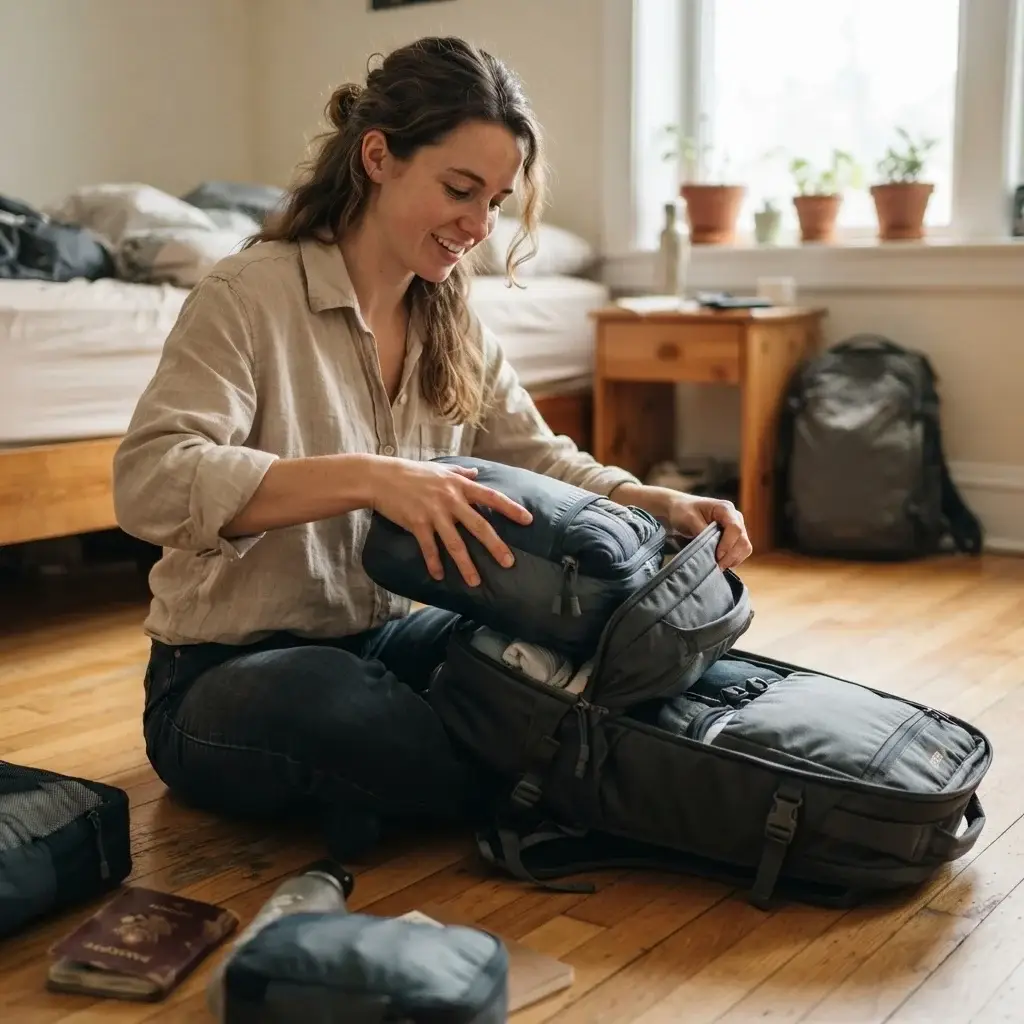
Look for a carry-on-sized backpack between 40 and 45 liters. This size forces you to limit what you bring, fits easily in overhead airplane bins, and saves you from the nightmare of lost checked luggage.
If you prefer a rolling suitcase, choose a hard-shell bag with sturdy, multidirectional spinner wheels. Make sure the handles are securely riveted. Whether you choose a backpack or a suitcase, ensure the material is water-resistant. You do not want a sudden tropical downpour to soak your entire wardrobe before you even reach your hostel.
The Magic of Packing Cubes
If you take only one piece of advice from this entire guide, let it be this: use packing cubes. These lightweight fabric pouches are the ultimate secret weapon for organized travel. They act like portable drawers inside your backpack or suitcase.
I categorize my clothes into separate cubes:
- Large Cube: Pants, long-sleeve shirts, and outerwear.
- Medium Cube: T-shirts, tank tops, and dresses.
- Small Cube: Underwear and socks.
- Mesh or Dry Bag: Dedicated strictly to dirty laundry to keep it separate from clean clothes.
Using packing cubes allows you to pull out exactly what you need without exploding the contents of your entire bag across a hostel bed or hotel room floor. It also compresses your clothing, saving up to 30% of your luggage space.
2. Essential Documents, Money, and Security
You can buy a new T-shirt or a toothbrush almost anywhere in the world. However, you cannot easily replace your official identification, entry permissions, or access to your funds. This section of your packing checklist for international travel is the most critical.
Passports, Visas, and Entry Requirements
Your passport must be valid for at least six months beyond your planned return date. Many countries will deny you boarding at the airport if your passport expires sooner. Additionally, ensure you have at least two to four blank pages left for entry and exit stamps.
Before you book anything, you need to check the specific entry rules for your destination country. I always verify official entry requirements, visa durations, and local safety warnings by reading the latest updates on the US Department of State Travel webpage to ensure I have the proper documentation well before my departure date.
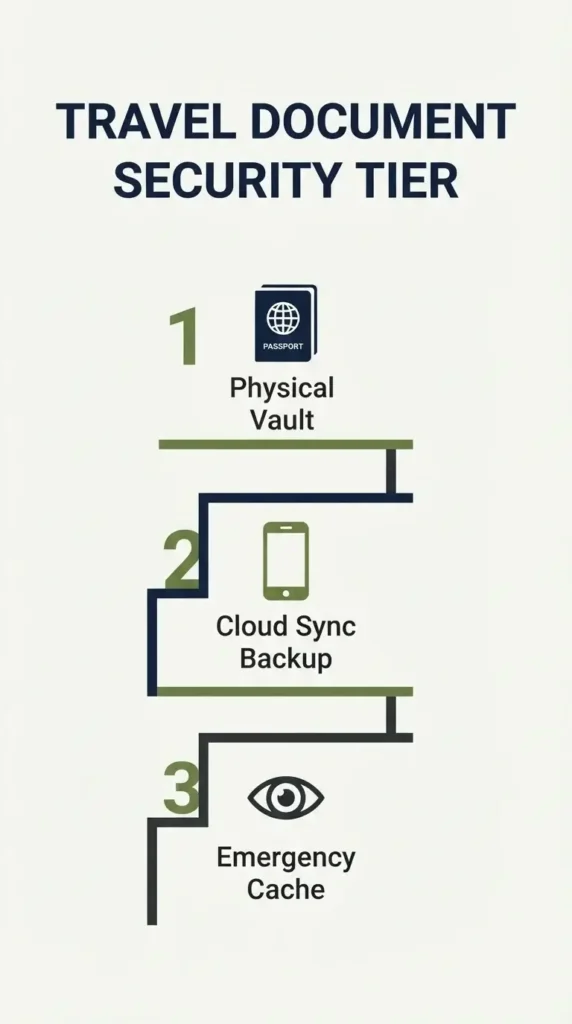
Keep physical printouts of your visa approvals or electronic travel authorizations tucked into a waterproof document sleeve inside your bag.
Digital Backups and Cloud Storage
Do not rely solely on your smartphone to access your important documents. If your phone battery dies, gets stolen, or drops into a river, you need a backup plan.
Take clear photos of your passport photo page, your visas, your driver’s license, your travel insurance policy, and your credit cards (front and back). Upload these images to a secure, password-protected cloud storage folder that you can access from any computer globally. I also email a duplicate copy of these files to myself and a trusted family member back home.
Cash, Cards, and International Banking
Never travel with all your money in one place. I use a multi-tiered system to protect my finances on the road:
- The Primary Card: A debit card that waives international ATM withdrawal fees.
- The Backup Card: A secondary credit card from a completely different bank network, kept in a separate pocket of my main backpack.
- The Emergency Cash: $100 to $200 in crisp, clean, unblemished US dollar bills hidden in a secret compartment. Many exchange booths abroad will reject torn, creased, or older bills.
Before you leave, notify your banks about your travel dates and destinations so they do not flag your transactions as fraudulent and freeze your accounts. When using foreign ATMs, always choose machines located inside physical bank branches during business hours. If the machine eats your card, you can walk inside and ask for assistance immediately.
3. The Clothing Capsule Wardrobe
The goal of a capsule wardrobe is to maximize your outfit combinations while minimizing the total number of items you carry. Every single piece of clothing you pack must match at least three other items.
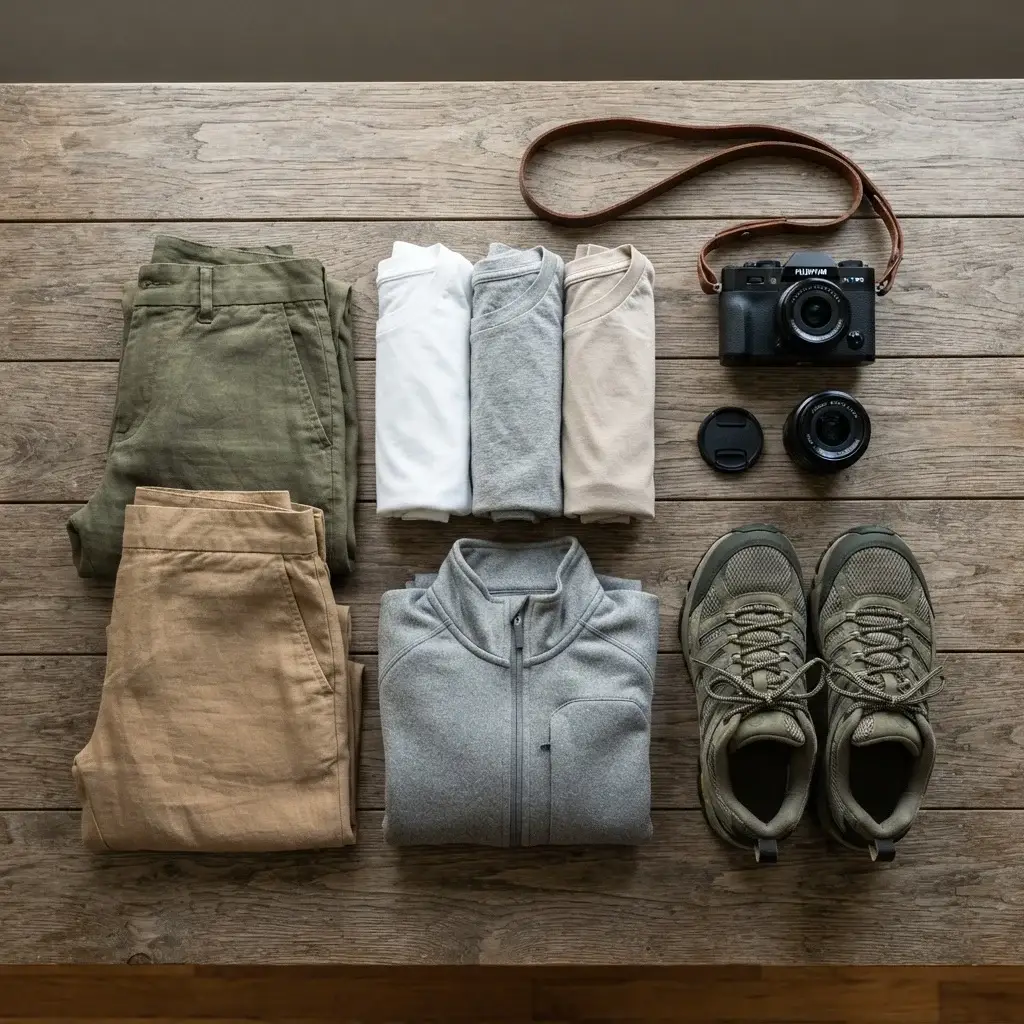
Stick to a simple color palette of neutrals with one or two accent colors.
The “Rule of Five” for Tops and Bottoms
For a trip lasting anywhere from a week to a year, you do not need more than a week’s worth of clothing. You can easily wash your garments in a bathroom sink or visit a local laundromat.
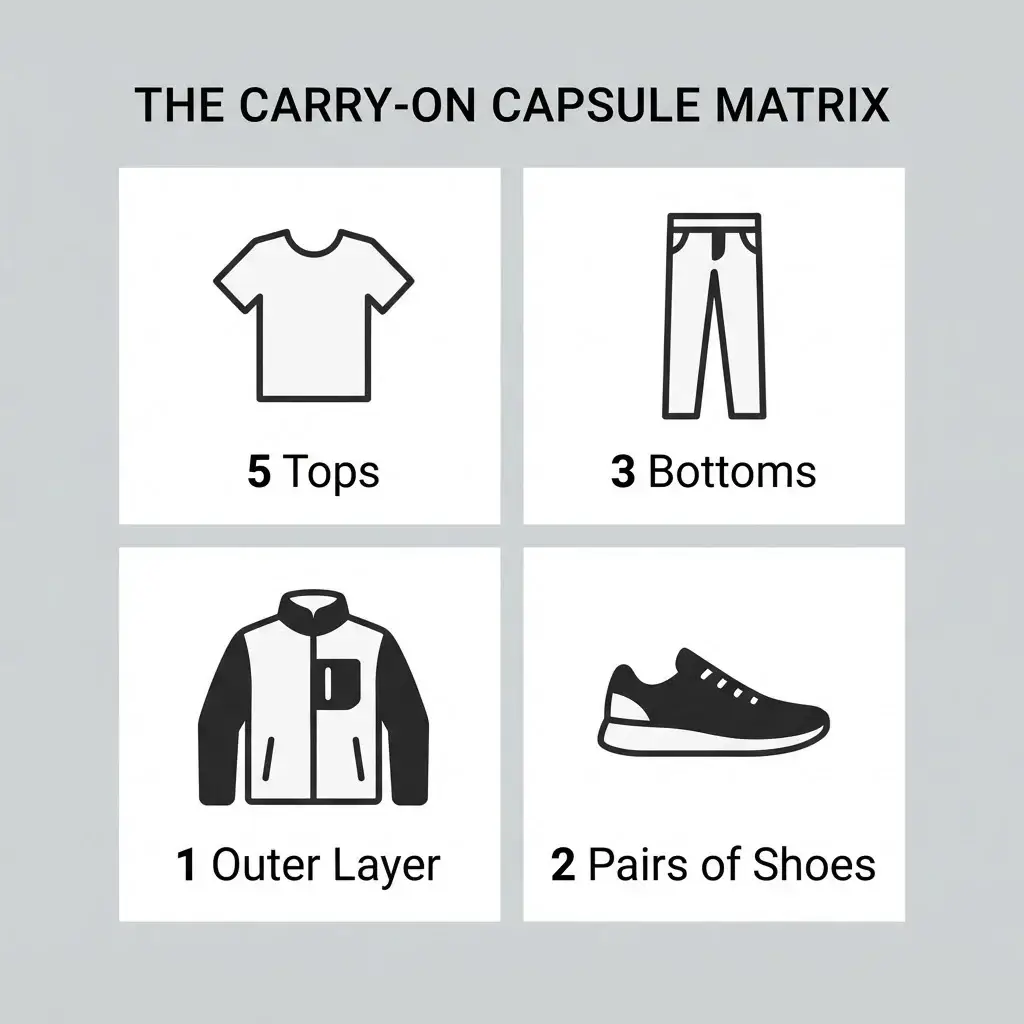
Here is my standard clothing list:
- 5 Versatile Tops: Mix of lightweight t-shirts and breathable tank tops. Include at least one lightweight, long-sleeve button-down shirt for sun protection and smarter dress codes.
- 3 Bottoms: One pair of durable long pants (like linen or lightweight travel trousers), one pair of comfortable shorts, and one pair of athletic leggings. Avoid heavy denim; it takes days to air-dry in humid climates.
- 1 Layering Piece: A versatile merino wool sweater or a lightweight fleece jacket for cold airplanes, chilly evenings, or high-altitude mountain destinations.
- 1 Outer Shell: A high-quality, windproof, and fully waterproof rain jacket.
Underwear, Socks, and Sleepwear
Pack seven pairs of underwear and four pairs of socks. Look for moisture-wicking materials like merino wool or synthetic nylon blends. These fabrics dry in a matter of hours, allowing you to wash them at night and wear them completely dry the next morning. For sleepwear, pack a single set of lightweight, comfortable shorts and a loose t-shirt.
Footwear: The Ultimate Travel Decision
Shoes are the heaviest, bulkiest items on your packing checklist for international travel. You only need two pairs total. Wear your heaviest pair on the airplane to save space and weight in your luggage.
- The Everyday Walking Shoe: A supportive, broken-in sneaker or trail-runner with excellent grip. Do not bring brand-new shoes on a trip; you will end up with painful blisters that ruin your walking tours.
- The Versatile Sandal: A sturdy, water-friendly sandal with secure ankle straps. These work for walking through warm cities, relaxing on beaches, and protecting your feet in communal hostel showers.
4. Electronics, Power, and Tech Management
In our modern world, gear management is a major part of travel preparation. Keeping your devices charged, connected, and protected is essential for smooth navigation and safety.
Adapters and Voltage Converters
Different parts of the world use completely different electrical wall outlets and voltage levels. Invest in a high-quality universal travel adapter that features built-in slider plugs compatible with US, UK, EU, and AU outlets. Look for an adapter that also includes multiple built-in USB and USB-C ports. This allows you to charge your phone, camera, and power bank simultaneously using a single wall socket.
Be aware of voltage differences. Outlets in the US run on 110 volts, while much of Europe, Asia, and Africa uses 220-240 volts. Most modern electronics like laptops, smartphones, and cameras are dual-voltage and adjust automatically. However, high-draw appliances like hair dryers or straighteners can short-circuit or catch fire if plugged into a higher voltage without a heavy step-down converter. It is far better to leave these items at home and use the hair dryers provided by your accommodations.
Power Banks and Charging Management
An external battery pack is an absolute safety requirement for solo travelers. When you are using your phone for navigation, looking up local train schedules, and taking photos, your battery will drain rapidly.
Carry a 10,000mAh to 20,000mAh external power bank in your daypack. A 10,000mAh pack is typically enough to recharge a standard smartphone two to three times. Keep your charging cables organized inside a small, dedicated electronics pouch so they do not tangle or fray in your bag.
5. Health, First Aid, and Toiletries
When traveling internationally, you may encounter different water profiles, unfamiliar food preparations, and regional insects. Having a compact, well-stocked medical kit can save you from spending hours searching for a local pharmacy while feeling unwell.
The Compact Travel First-Aid Kit
Do not pack a massive, industrial-sized medical box. Instead, use a small, clear zip-top pouch and stock it with the essentials:
- Pain Relief: Ibuprofen or acetaminophen for headaches, muscle soreness, or minor fevers.
- Digestive Care: Antidiarrheal medication, antacids, and rehydration salts. This is critical for recovering from accidental food or water contamination.
- Wound Care: A handful of adhesive bandages in various sizes, blister cushions (like moleskin), and a small tube of antibacterial ointment.
- Motion Sickness: Tablets if you are prone to nausea on winding mountain roads or choppy ferry rides.
To protect your personal health and verify if your destination requires specific immunizations, it is smart to review the official medical guidelines on the CDC Travelers’ Health platform before assembling your kit. This helps you identify regional health risks, necessary prescription medications, or preventative malaria treatments you might need to acquire prior to departure.
Streamlined Toiletries and Liquid Rules
Remember the strict aviation rule for carry-on baggage: all liquids, gels, and aerosols must be in containers of 3.4 ounces (100ml) or less, and all containers must fit comfortably inside a single, clear, quart-sized plastic bag.
Switch to solid toiletries whenever possible to save liquid space and eliminate the risk of messy leaks. Solid shampoo bars, solid conditioner, and solid bar soap work wonderfully and last much longer than liquid versions. Pack a high-SPF, broad-spectrum sunscreen and an insect repellent containing DEET or Picaridin if you are traveling to tropical regions.
6. Cultural Awareness and Destination Adaptation
True adventure lies in respecting the places and people we visit. Your packing choices should reflect an awareness of local traditions, religious norms, and environmental conditions.
Dress Codes for Sacred Spaces
When I traveled through Thailand and visited historical ruins, I had to ensure my clothing matched the local cultural expectations. Many temples, churches, mosques, and holy sites worldwide require visitors to cover their shoulders and knees before entering.

A lightweight, breathable linen scarf or sarong is a fantastic multi-use item to add to your packing checklist for international travel. You can keep it tucked into your daypack and quickly wrap it around your shoulders or waist when visiting a sacred site. For accurate cultural context, local holiday calendars, and proper etiquette guidelines for Southeast Asia, you can browse through the rich resources on the official Tourism Authority of Thailand website to plan your wardrobe appropriately.
Climate and Layering Adjustments
Always research the seasonal weather patterns of your destination. A common mistake is assuming a country is universally warm or cold. For instance, northern regions can experience bitter winters while southern coastlines remain tropical. Pack clothing that can be layered up for warmth or stripped down for heat, rather than packing bulky, single-season items.
7. Smart Transit Apps and Digital Preparation
Your digital packing list is just as important as your physical one. Installing the right applications on your smartphone before you leave home will make your on-the-ground transit smooth, safe, and cost-effective.
Offline Maps and Navigation Safety
Do not assume you will have instant cellular data or high-speed Wi-Fi when you touch down in a new country. Before your flight, open your navigation app and download the complete offline map area for your destination city. This allows you to use your phone’s built-in GPS to track your location, find your accommodation, and navigate streets even when you are completely offline.
Local Ride-Hailing and Transit Efficiency
Taking traditional taxis straight from an international airport can occasionally expose weary travelers to scams or inflated pricing. Using local ride-hailing services provides upfront, transparent pricing and tracked routes. If you are venturing to Southeast Asian destinations, you can learn how ride-hailing provides secure transit options by visiting the Grab official app overview page to set up your account and link your payment card securely before arrival.
Similarly, install the official local rail or subway apps for cities with extensive public transportation systems. This allows you to buy digital transit tickets on your phone, avoid long station queues, and view real-time delays or route changes.
8. Safety, Insurance, and Comfort Items
The final step in your packing checklist for international travel is securing your peace of mind. When you protect your health, your belongings, and your personal comfort, you can step out of your comfort zone with absolute confidence.
Travel Insurance Coverage
Independent travel is beautiful, but it can be unpredictable. Flights get delayed, luggage disappears, and people occasionally get sick or injured far from home. Never leave your home country without comprehensive travel insurance protection.
Make sure your policy covers emergency medical treatment, evacuation costs, trip cancellations, and coverage for your high-value gear. For flexible plans tailored specifically to independent explorers and adventure activities, you can review coverage options directly on the World Nomads Travel Insurance platform to find a policy that fits the exact scope of your upcoming journey. Keep a digital copy of your policy number and emergency hotline contact details easily accessible on your phone.
In-Flight Comfort Secrets
Long-haul international flights can be incredibly draining if you are unprepared. Pack a small, dedicated comfort kit inside your personal daypack to keep under the seat in front of you:
- Noise-Canceling Earbuds: Essential for blocking out engine roar and crying babies so you can actually sleep.
- Contoured Sleep Mask: Blocks out cabin lights completely to help maintain your sleep rhythm.
- Inflatable Neck Pillow: Provides neck support without taking up massive amounts of space in your luggage when deflated.
- Reusable Water Bottle: Bring an empty insulated bottle through airport security and fill it up at a water station before boarding to stay hydrated during dry flights.
Summary Packing Checklist for International Travel
To make your preparation completely effortless, copy this streamlined reference list when you begin loading your bags:
Packing light is ultimately an exercise in letting go of fear. It is a declaration that you are ready to move through the world with agility, curiosity, and confidence. By keeping your luggage simple, your paperwork secure, and your mind open, you free yourself to experience the profound personal growth and joyful, unexpected moments that authentic international travel provides.