Best Motorcycle Road Trips in Europe for Nervous First-Timers

Let me guess. You have a map open in one browser tab, a photo of the Stelvio Pass in another, and a little voice in your head asking whether you are really the kind of person who does this. I know that voice well. It is the same one that kept me at a gray office desk in New York long after my heart had already left the building.
Here is what I have learned from years of solo travel, from backpacking across Europe with a pack that was too heavy to teaching English in Thailand with almost no plan at all. The fear does not mean you are not ready. It usually just means the thing matters to you. A motorcycle road trip across Europe is one of the most rewarding ways to travel I can imagine, and it is far more doable than that nervous voice wants you to believe.
I want to be honest with you up front. I have not ridden every one of these routes myself. What I can give you is real research, real current numbers, and the same planning mindset that got me through solo trips I was terrified to start. We will cover the routes worth your first ride, when to go, what it costs, the paperwork nobody explains clearly, and how to build the kind of confidence that turns a daydream into a departure date.
Start With Honesty About Where You Are
Before we talk routes, be honest about your riding, not your dreams. There is a big difference between someone who has commuted on a bike for three seasons and someone who just got licensed last month. Neither is wrong. But they should pick different first trips.
If you are newer, your enemy is not the distance. It is the combination of unfamiliar bike, unfamiliar country, mountain hairpins, and pressure to keep up. Remove even two of those and the trip becomes joyful instead of white-knuckled. That is the whole philosophy here. We are not trying to conquer Europe. We are trying to enjoy it, learn something, and come home more sure of ourselves than when we left.
The Best Motorcycle Road Trips in Europe, Ranked by Who Should Ride Them
I am organizing these by rider comfort rather than by scenery alone, because the prettiest road in the world is no fun if it scares you sick.
For Your Very First Big Ride: Route des Grandes Alpes, France
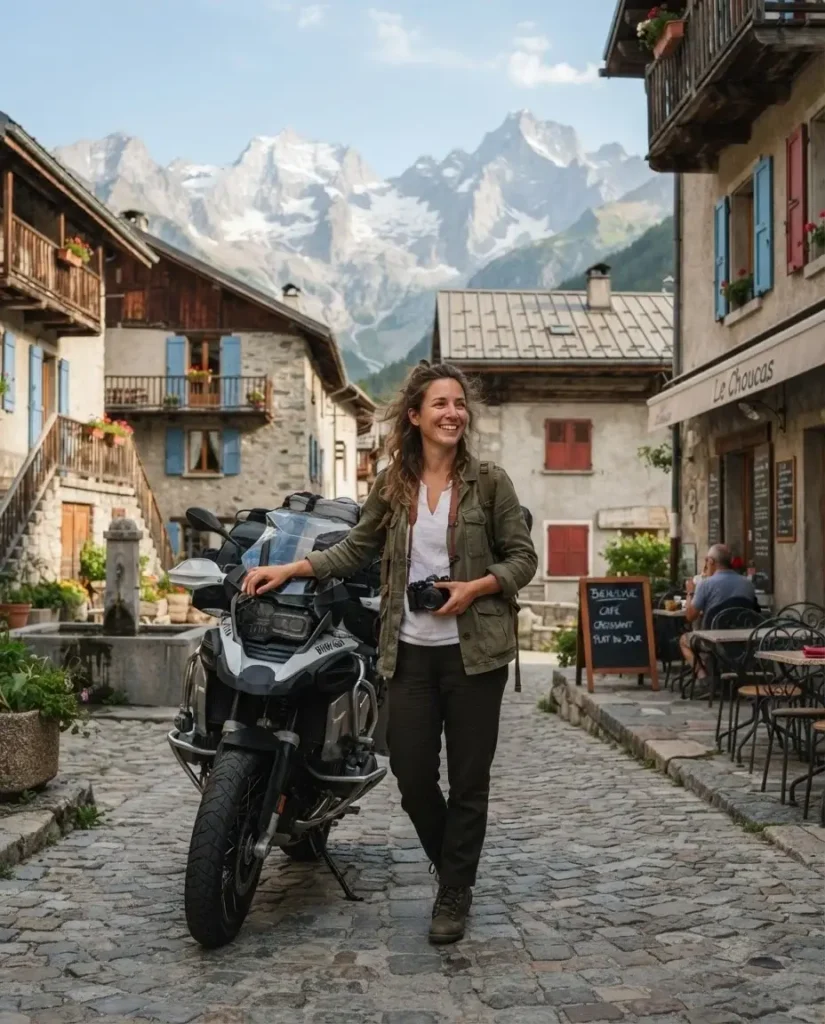
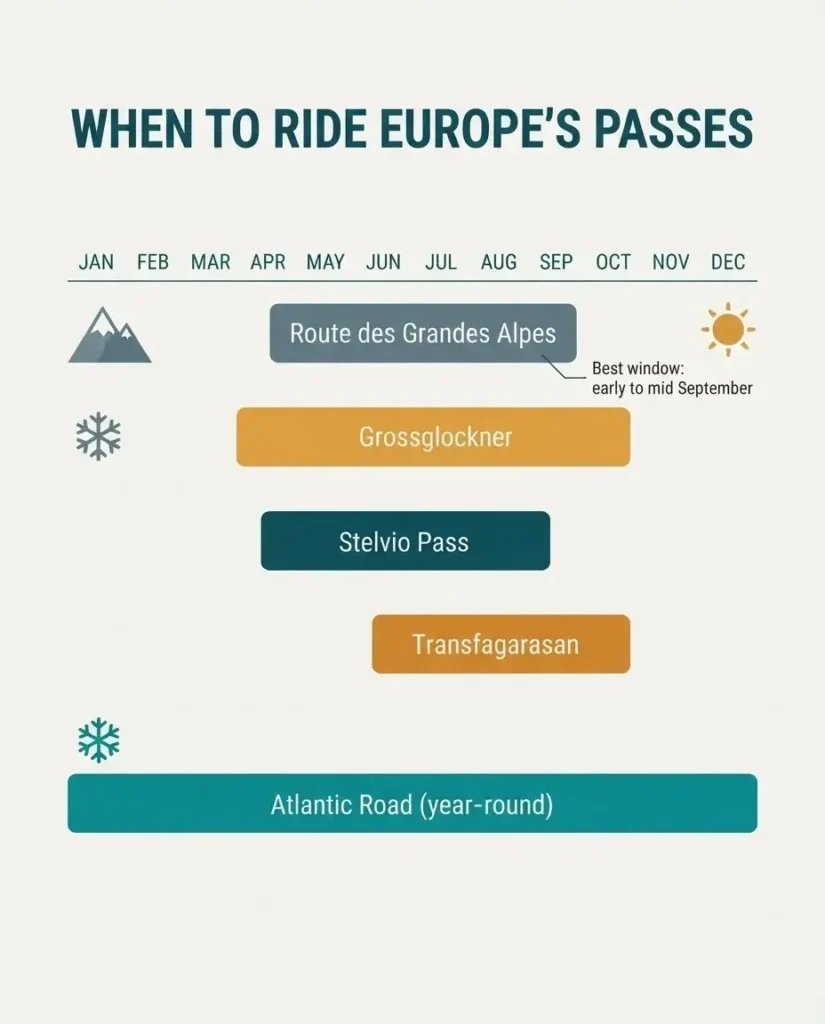
If I were pointing a nervous first-timer at one route, it would be this one. The Route des Grandes Alpes runs roughly 700 kilometers from Lake Geneva down to the Mediterranean near Menton, crossing around seventeen mountain passes. What makes it beginner-friendly is that it is a signed, well-documented tourist itinerary with excellent infrastructure, plenty of towns to break up the day, and a gentler learning curve than the extreme high passes. The people who maintain the route publish detailed stage-by-stage planning on the official Route des Grandes Alpes site, which takes a lot of the guesswork out of your first attempt.
Ride it south so you finish at the sea. Break it into four or five short days rather than three long ones. Eat a proper Savoyard lunch in the mountain towns, tartiflette and reblochon cheese, and treat the passes as something to savor, not survive.
For the Rider Ready to Level Up: Grossglockner High Alpine Road, Austria
Austria’s Grossglockner is a masterpiece of a mountain road, and it is a fantastic stepping stone because it is short, immaculately maintained, and entirely set up for visitors. It is a toll road, and the current motorcycle day ticket is 36.50 euros, dropping to 30 euros for trips after 6 p.m., with all the hours and ticket options laid out on the official Grossglockner road website. One thing that surprised me in my research and that I want you to know: there is an official ban on night driving, and in the early morning the road can briefly close to motorcycles because of freezing meltwater, so plan a mid-morning start.
Because it is a there-and-back showpiece rather than a long point-to-point slog, it is a great place to practice switchbacks with zero pressure. Ride up, take photos at Kaiser-Franz-Josefs-Höhe, watch for marmots, and ride back down having genuinely improved.
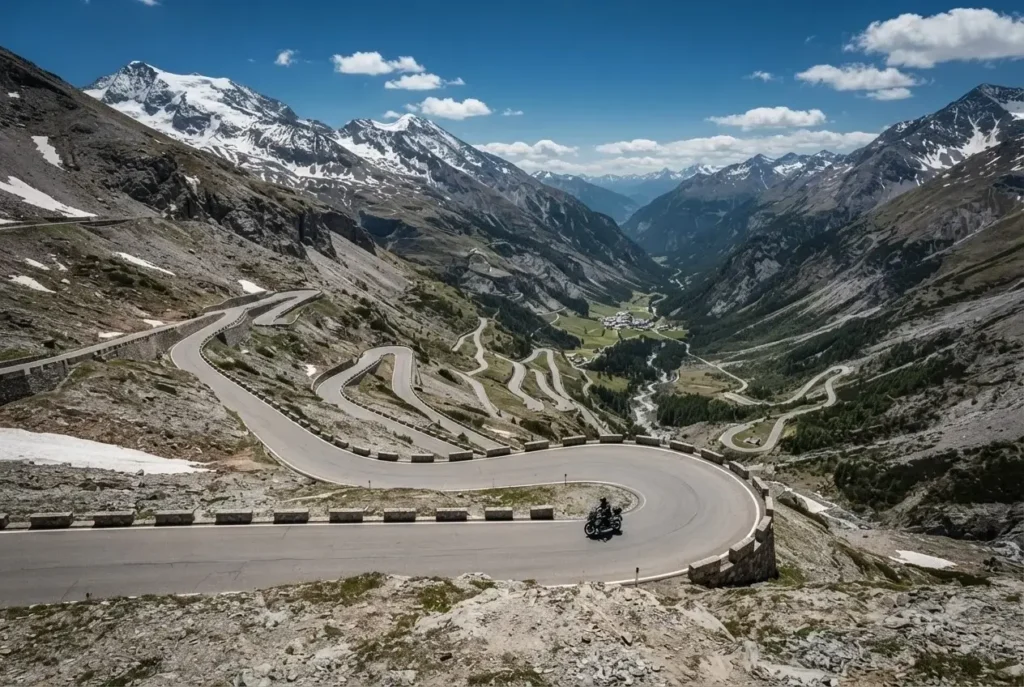
The One Everyone Photographs: Stelvio Pass, Italy
The Stelvio is the poster child of European motorcycling, forty-eight hairpins climbing to 2,758 meters. It is stunning. It is also busy, cold at the top even in summer, and genuinely demanding. I would not make it your first pass ever, but it belongs on the list for your second season or once the Grossglockner feels comfortable.
Timing is everything here. The Stelvio usually opens somewhere between late May and early June depending on how much snow fell, and in heavy years it stays shut well into June. The surrounding national park publishes seasonal information and event dates, and I would check the Stelvio National Park site before you commit to a date, because nothing deflates a trip like arriving at a closed gate. Warm up in Bormio at the bottom, and try the local pizzoccheri, a hearty buckwheat pasta that tastes even better after a cold descent.
For the Rider Who Wants a Story: Transfăgărășan, Romania
Romania’s Transfăgărășan is the wildcard, and it is glorious. It is less crowded than the Alps, dramatically beautiful, and it comes with a real planning catch that trips people up constantly. The full road is generally only open from around 1 July to 31 October, weather permitting, and closed roughly November through June, which the Romania tourism board’s road page spells out clearly. If you dream of this ride, you are effectively planning a high-summer trip, full stop.
What I love about pointing curious travelers toward Romania is that it delivers exactly what Pinverse is about: fewer crowds, warmer welcomes, and a culture that surprises people who arrive with outdated assumptions. Stop for a bowl of ciorbă, the sour soup that shows up everywhere, and let the trip be about the country, not just the tarmac.
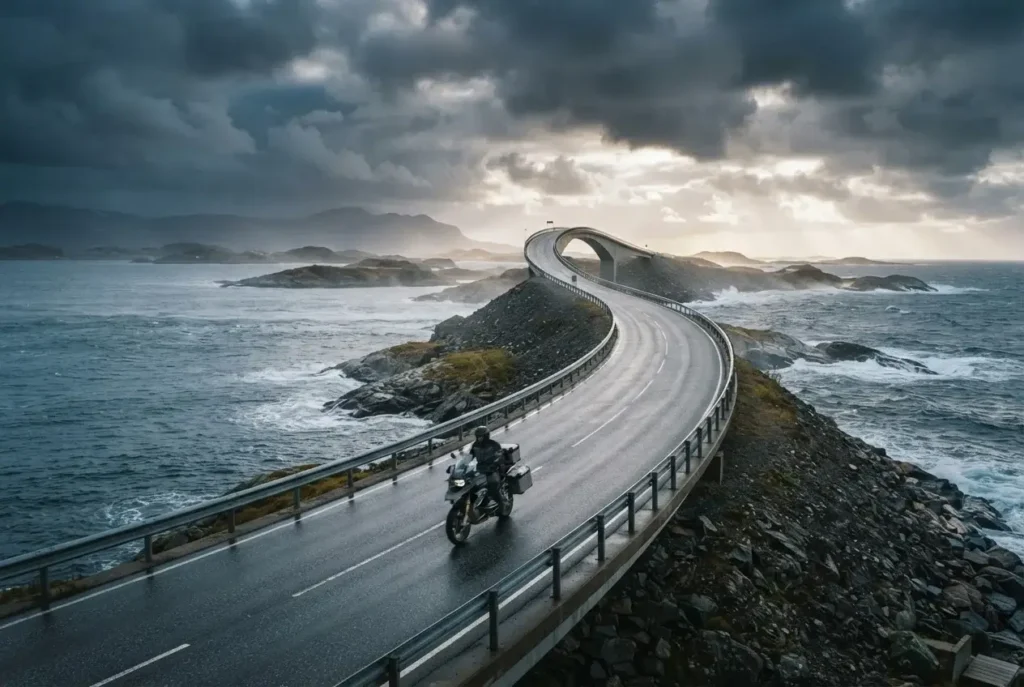
For the Coastal Dreamer: The Atlantic Ocean Road, Norway
If mountain hairpins genuinely frighten you, point yourself north instead. Norway’s Atlantic Ocean Road is a low-altitude, sea-level ribbon of causeways and bridges that hops between islands, and it is toll free with official National Tourist Route status, as noted on the Visit Norway listing for the Atlantic Road. There are no terrifying drops, just open ocean, wind, and that famous Storseisundet bridge that looks like it launches into the sky.
The trade-off is weather and cost. Norway is expensive and the sky changes its mind constantly. Pack proper waterproofs and treat rain as part of the experience rather than a ruined day.
For the Rider Who Wants Fewer Crowds: Picos de Europa, Spain
Northern Spain is quietly one of the best riding regions in Europe and gets a fraction of the Alpine traffic. The roads through the Picos de Europa national park twist through limestone peaks, green valleys, and villages where the cider is poured from above your head. You can plan around the park’s own visitor guidance on the official Picos de Europa national park site, which covers access and what to expect. Eat the cabrales cheese if you are brave, and let the slower pace reset you.
When to Actually Go
This is where first-timers most often get burned, so let me be direct. High alpine passes are seasonal. Many do not open until mid to late May, some not reliably until early July, and they start closing again in October. If your dream route crosses high passes, you are looking at roughly June through September.
My honest recommendation is early-to-mid September. Crowds thin out, the weather is often still lovely, the passes are still open, and prices start easing. August delivers the most reliable open-pass weather but also the most traffic and the highest prices. May and early June are a gamble on the highest routes. If you are set on Romania’s Transfăgărășan, July and August are essentially your only window.
Rent, or Bring Your Own Bike?
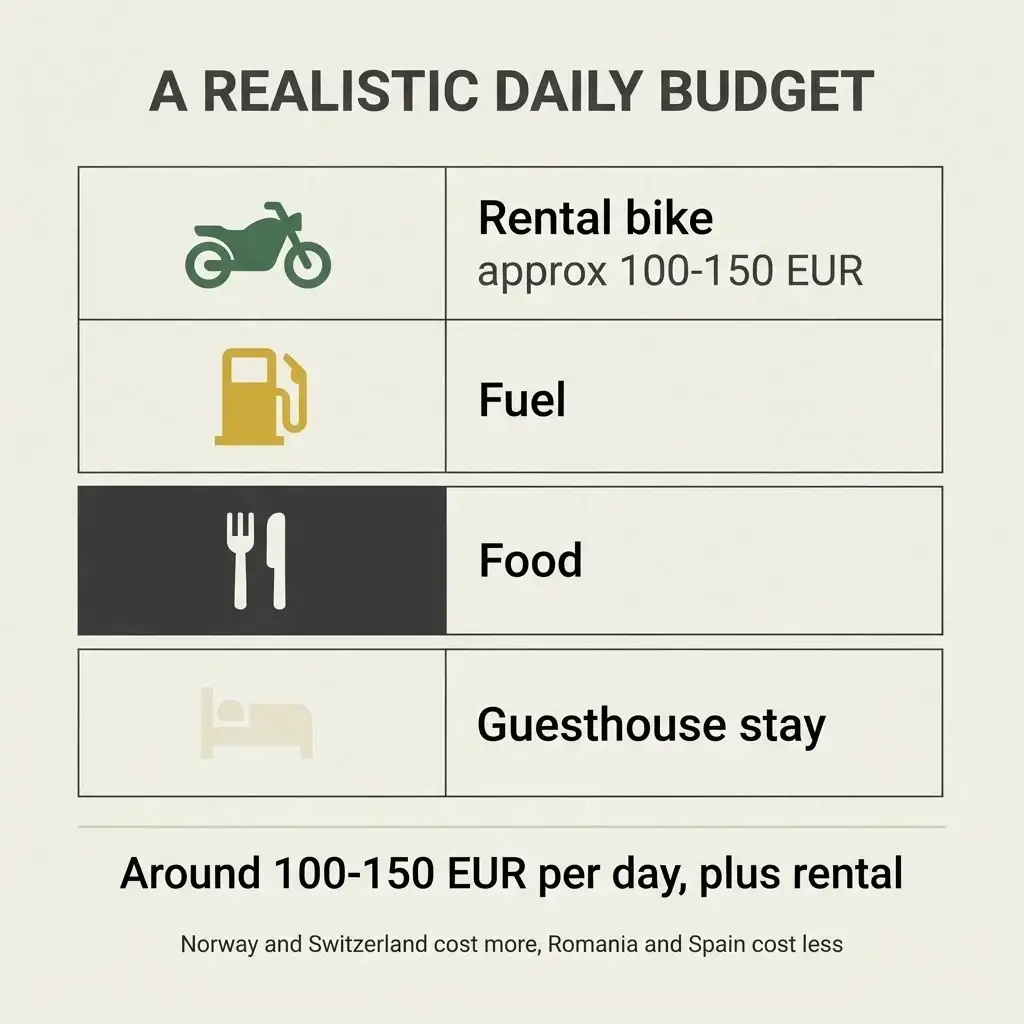
For most first-timers flying in, renting wins. You skip the enormous hassle and cost of shipping, you get a bike suited to the terrain, and you avoid learning a big trip and a big bike at the same time. Expect to budget meaningfully for a quality rental, often somewhere around 100 to 150 euros per day for a capable touring or adventure bike, frequently with a daily kilometer allowance and a per-kilometer charge beyond it. Read the mileage and insurance terms before you sign, not after.
If you already own a bike in Europe and it fits you like an old jacket, riding your own is wonderful. Just know that shipping a bike internationally is a serious logistical and financial project, and not the move for a first trip.
The Paperwork Nobody Explains Properly
Here is the unglamorous part that will absolutely save your trip. Sort it early and it disappears into the background.
You need a valid motorcycle license, and if you are visiting from outside Europe, in many cases an International Driving Permit alongside it. Get the IDP in your home country before you fly, because you cannot get it once you have left.
If you are bringing your own insured bike, you will likely need a Green Card, which is internationally recognized proof of motor insurance. These are typically issued for anywhere from 15 up to 90 days for a European trip, so match it to your itinerary. Riders on rentals normally have insurance bundled into the rental, but you must confirm exactly what is and is not covered.
Then there are tolls and vignettes. Several countries, including Austria, Switzerland, Slovenia, and others, require you to buy a road-use vignette or sticker before using certain roads, and specific showpiece roads like the Grossglockner charge their own separate toll on top. Sort your vignettes as you cross borders and keep a little cash in each currency for the countries that have not adopted the euro.
Finally, carry the legally required kit. Rules vary by country, but commonly you may need to carry documents, a warning triangle where applicable, and reflective gear, and helmet laws are universal and strict. A quick check of each country’s requirements before you cross saves you a roadside fine.
What a Day and a Budget Really Look Like
Let me pop the fantasy of riding 600 kilometers a day through mountains. On twisty alpine roads, a realistic and enjoyable day is closer to 200 to 300 kilometers, because the roads are slow, the views demand stops, and fatigue on a bike is real and dangerous. Plan short, and you will finish each day grinning instead of gritting your teeth.
For budgeting, a rough mid-range figure many riders land on is around 100 to 150 euros per day once you add fuel, food, and a simple guesthouse, and that sits on top of your rental if you are renting. Norway and Switzerland push that higher. Romania, Spain, and Eastern Europe bring it down. The single biggest cost lever is accommodation, so mixing simple guesthouses with the occasional splurge keeps the whole trip within reach. If a corporate salary is not funding this, know that I built my own travel life on flexible work and disciplined saving, not luck. It is a series of small, boring financial choices that add up to a very un-boring trip.
Riding Solo Without Riding Scared
I travel solo by choice, and I want to gently push back on the idea that a solo motorcycle trip is reckless. It is not. It is one of the fastest confidence-builders I know. But it does ask you to be deliberate.
Tell someone your daily route and check in each evening. Never let ego set your pace on a mountain, because there is always a faster rider behind you and letting them pass costs you nothing. Build in a buffer day so a storm or a closed pass does not detonate your whole plan. And book your first two nights in advance so that arriving tired in a new country feels like a soft landing rather than a scramble.
The confidence does not arrive before you go. It gets built one small decision at a time, the same way it did when I first stepped off a plane alone with no idea what came next. By the third day you will not recognize the nervous person who booked this.
Gear, Food, and the Small Stuff That Matters
Pack for weather you do not expect. Mountains make their own climate, and a sunny valley can turn to cold rain at altitude within an hour. Waterproofs, layers, and warm gloves earn their space even in July. Protective riding gear is not optional, and I would never tell you otherwise.
Keep your luggage light and balanced, because a top-heavy bike handles badly exactly when you least want it to. And leave room in your plans, not just your panniers, for the food. Half the joy of riding through Europe is stopping in a village you never planned to visit and eating something you cannot pronounce. That unplanned lunch is often the memory you keep.
You do not need to be fearless to do this. You just need to be prepared, honest about your level, and willing to take the first real step. The best motorcycle road trips in Europe are not reserved for a braver, more experienced version of you somewhere in the future. They are waiting for the you who finally picks a route, checks the pass dates, and books the first two nights. Everything after that is just riding.