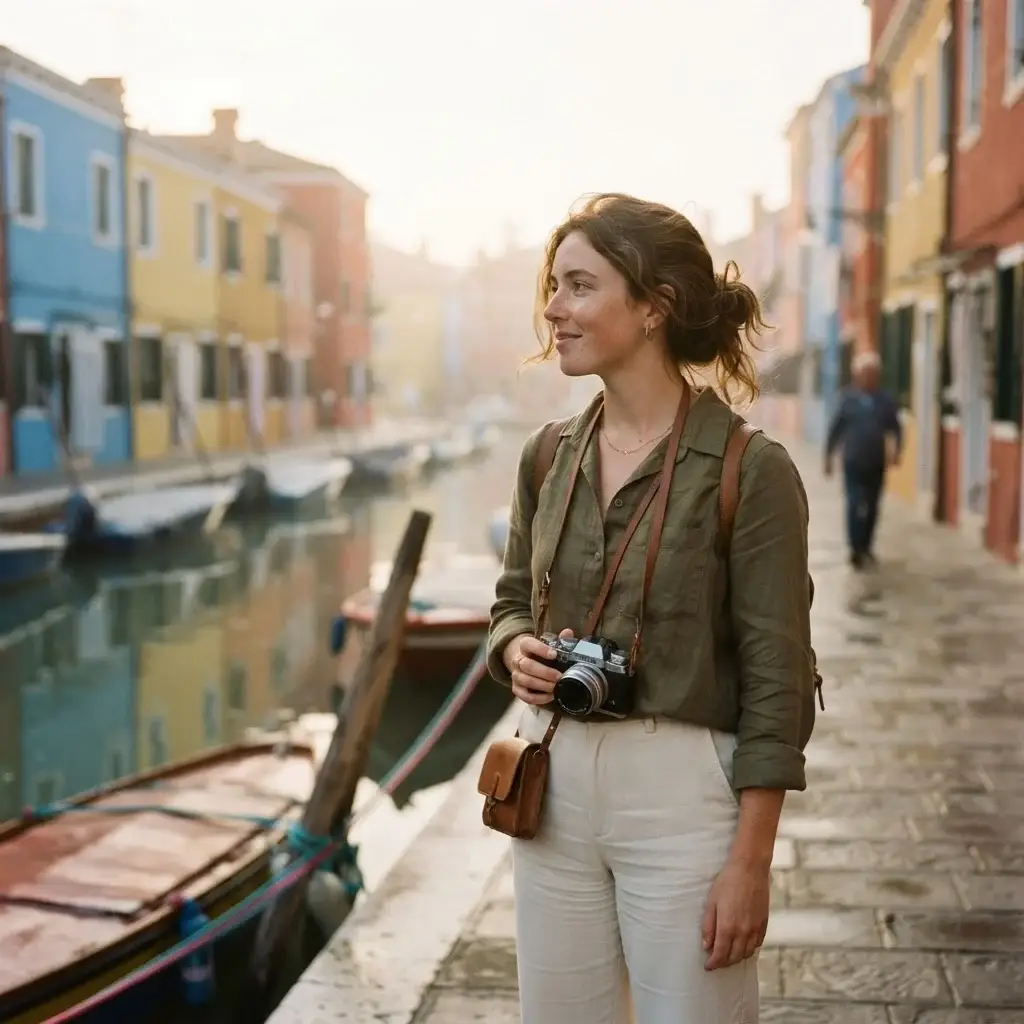
I think there is a specific kind of daydream that colorful towns create. You are scrolling on your phone, half-tired, and suddenly there is a row of houses painted in pink, mint green, buttercup yellow, and deep sea blue, all reflected in a canal. Something in your chest goes “I want to be there.” Then, about ten seconds later, the practical brain kicks in and says “but how would I even do that?”
That gap, between the wanting and the how, is exactly where a lot of trips quietly die. So let me help you close it.
I have spent years building a life around slow travel and backpacking solo across Europe, and one thing I have learned is that the most colorful towns in Europe are far more reachable than their photos make them look. You do not need a huge budget, a travel companion, or the “perfect moment.” You need a rough plan, a little courage, and someone honest walking you through it. That is what this guide is for.
First, Let’s Talk About What “Colorful” Actually Means
Here is a small mindset shift that will make your whole trip better. These towns are not theme parks. They are real places where real people hang their laundry, argue about parking, and raise their kids. The colors usually come from practical history, not from a tourism committee.
Fishermen painted their homes in bright, clashing shades so they could spot their own house through fog or from a boat far out at sea. That is the story you will hear in Burano, in Bergen, and in the fishing coves of Cinque Terre. Once you know that, you walk these streets differently. You are not just collecting a photo. You are stepping into a working solution someone invented generations ago that happened to turn out beautiful.
I say this because how you show up matters. Keep your voice down in residential lanes early in the morning. Do not point your camera into someone’s open window. A little respect goes a long way, and honestly, it makes the experience richer for you too.
The Italian Rainbow: Burano, Cinque Terre, and Procida
If you only have time for one colorful region, Italy is the easiest place to start, because the towns are stunning and the trains are simple.
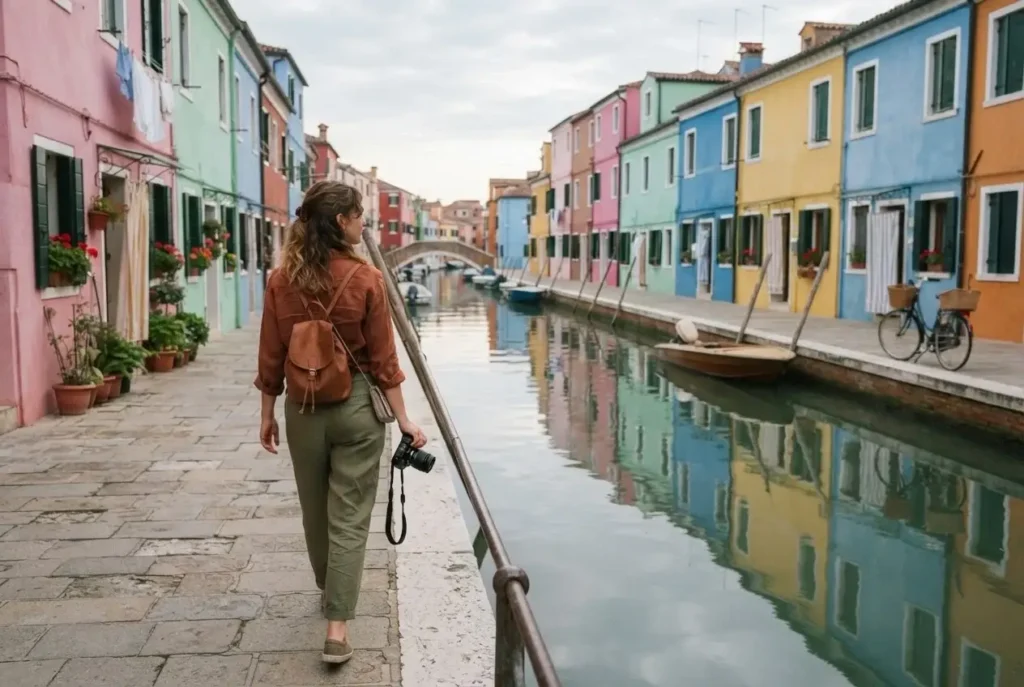
Burano, the Island That Looks Painted by a Kid With No Rules
Burano sits in the Venetian lagoon, about a 40-minute vaporetto (water bus) ride from Venice. Every single house is a different color, and there is a genuine rule about it: if you want to repaint, you apply to the local government and they tell you which shades are allowed for your specific house. That is why it never looks messy. It looks like a color wheel someone shook up.
The local legend, which you can read more about through the folks at Atlas Obscura who dug into the island’s history, is that fishermen painted the houses so they could find home through the thick lagoon fog. Whether every detail is literal or a bit of romantic storytelling, the tradition is real and protected today.
What to eat: Burano is famous for bussolà, a buttery ring-shaped cookie, and for risotto de gò, a risotto made with lagoon fish. Grab the cookies from a small bakery, not the first tourist stand you see.
Navigation tip: Take the number 12 vaporetto from Fondamente Nove in Venice. Go early, ideally on the first boats, because Burano is tiny and fills up by late morning. If you get there by 9 a.m., you will have those empty rainbow streets almost to yourself.
Cinque Terre, Five Cliffside Villages Stacked Like Candy
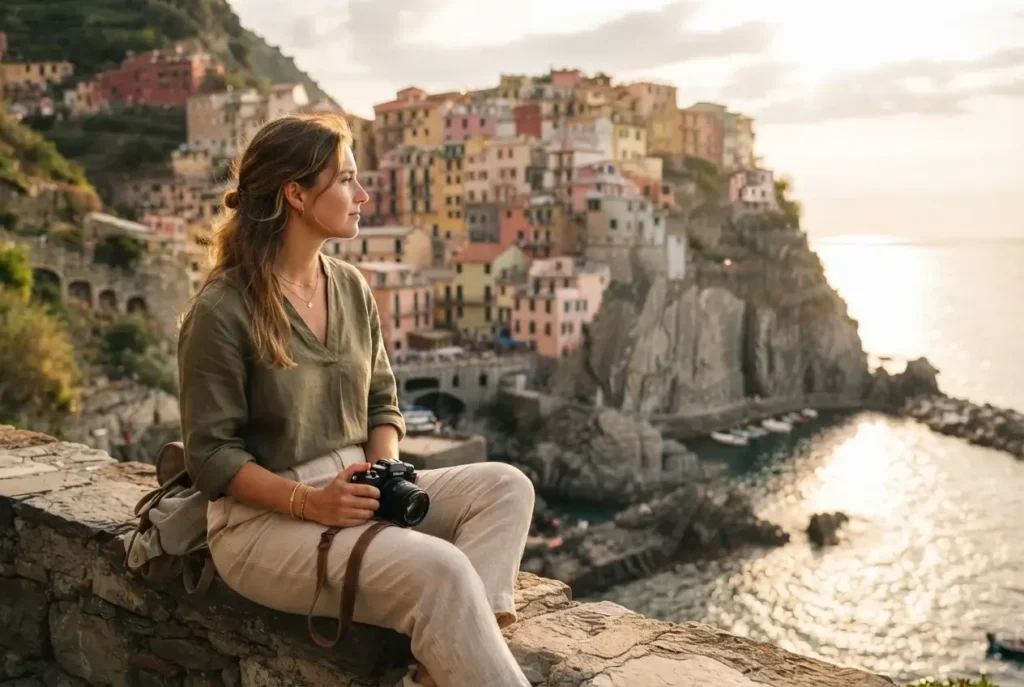
Cinque Terre means “five lands,” and that is exactly what it is: five old fishing villages (Monterosso, Vernazza, Corniglia, Manarola, and Riomaggiore) clinging to the cliffs of the Italian Riviera. The houses are painted in warm apricots, pinks, and yellows that glow at sunset.
Here is the practical part people miss. The villages are connected by a train that runs through tunnels in the cliffs, and by hiking trails along the coast. If you plan to hike the main coastal path, you will need a trekking card, which through the official Cinque Terre National Park you can see runs roughly ten to fifteen euros for a day depending on the season. There is also a combined card that covers unlimited regional trains between the villages, which for most first-timers is the smarter buy. Good news for shoulder-season travelers: in the deep off-season, most trails are free.
What to eat: This is the birthplace of pesto. Order trofie al pesto, a short twisted pasta drowned in fresh basil sauce. Get a paper cone of fried anchovies and calamari from a fry shop and eat it on the harbor wall.
Navigation tip: Base yourself in one village and treat the train as your elevator. Trains between villages take only a few minutes. Vernazza and Manarola are the postcard shots, but Corniglia, the only one not on the water, is the quietest and my kind of place.
Procida, the One That Feels Like a Secret
Procida is a small volcanic island near Naples, and it is the colorful town for travelers who want fewer crowds. The heart of it is Marina Corricella, a fishing harbor where pastel houses are stacked up the hillside like an amphitheater facing the sea. It was Italy’s Capital of Culture a few years back, but it still feels genuinely lived-in rather than polished for visitors.
You reach it by ferry or hydrofoil from Naples, and the local tourism folks at Visit Procida lay out the Marina Corricella area and how to get down to it. The harbor is car-free, reached by steep steps and narrow lanes, so pack light and wear real shoes.
What to eat: Lemons the size of your fist grow here, so try anything lemon, especially a granita or a slice of lemon cake. Seafood straight off the boats at the harbor restaurants is the whole point.
The Northern Palette: Nyhavn and Bergen
Southern Europe gets all the color credit, but the north quietly competes, and the light up there does something special to bright paint.
Nyhavn, Copenhagen’s Harbor of Storybook Houses
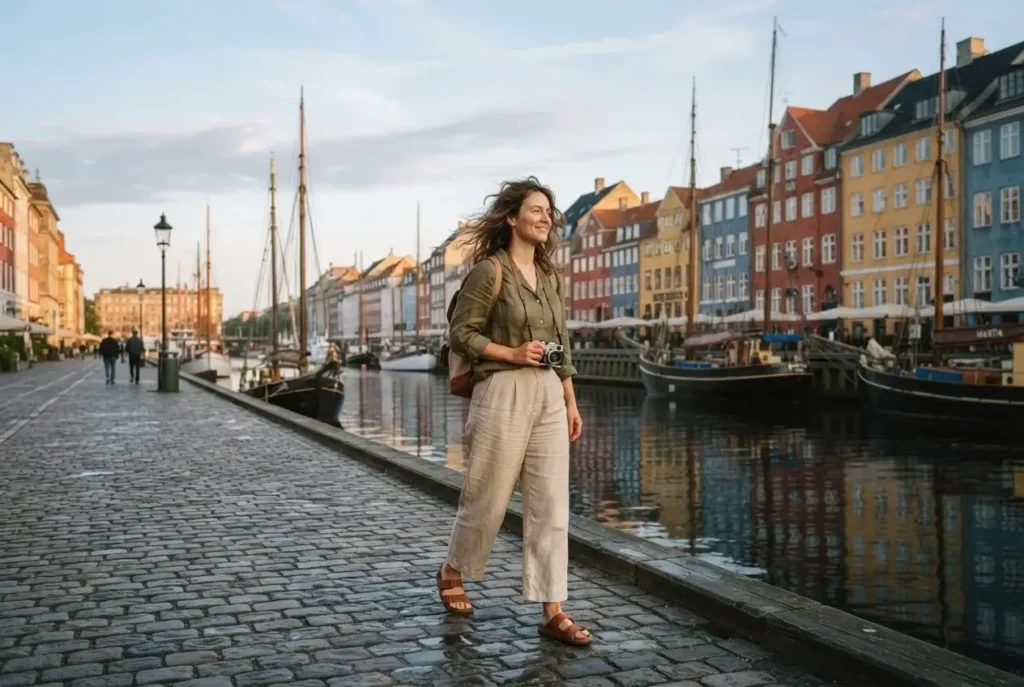
Nyhavn (it means “new harbor”) is that iconic row of narrow 17th-century townhouses in reds, mustards, and blues, lined up along a canal full of old wooden boats. It was once a rough sailors’ district full of taverns. Hans Christian Andersen actually lived in three of these houses and wrote some of his fairy tales here, which feels right, because the whole street looks like a page from one.
It is genuinely easy to reach, and the city’s official tourism site notes that Nyhavn is a short walk from Kongens Nytorv Metro station, so you do not need to overthink the logistics at all. This is a great one for nervous solo travelers, because Copenhagen is walkable, safe, and full of English speakers.
What to eat: Try smørrebrød, the Danish open-faced sandwich, usually piled with things like pickled herring or roast beef. In winter, warm up with a cup of gløgg, Danish mulled wine, from the Christmas market that fills the cobbles.
Navigation tip: Nyhavn is beautiful but small and busy. Come at sunrise for photos, then walk ten minutes to the Broens Street Food market across the water for a cheaper, calmer meal than the canal-side restaurants.
Bergen and the Wooden Wharf of Bryggen
Bergen, on Norway’s west coast, is the gateway to the fjords, and its old wharf, Bryggen, is a row of crooked wooden Hanseatic trading houses in ochre, red, and cream. These are not just pretty. This wharf is a genuine piece of world history: it has been a UNESCO World Heritage Site since 1979 for its role in the medieval Hanseatic League trading network. Walking the narrow wooden passages behind the main facade, you can feel how old the place is.
For context on what you are actually looking at, the tourism board’s write-up on the lesser-known side of Bryggen behind the facade is worth a read before you go, because the real character is in the back alleys, not just the famous front row.
What to eat: Head to the fish market for fresh salmon, prawns, and if you are adventurous, a taste of whale or reindeer. A simple fish soup on a cold day is one of my favorite things about the Norwegian coast.
Navigation tip: Bergen rains a lot, genuinely a lot, so bring a proper waterproof layer and just accept the weather as part of the mood. Take the Fløibanen funicular up Mount Fløyen for the view over all those colored roofs.
The Fairytale Hillside: Sintra, Portugal
Sintra is a slightly different flavor of colorful. Instead of a harbor of painted houses, its star is the Pena Palace, a wild explosion of egg-yolk yellow and blood red domes sitting on a green mountaintop above the town. It looks like a cartoon castle, and it is one of the most joyful buildings in Europe.
A word of hard-won practical advice, because this is where people mess up their day. Tickets are timed-entry and sell out. The managing body, Parques de Sintra, sells Pena Palace tickets online only, with a specific date and time slot, and the palace-plus-park ticket runs in the low forties of euros. Buy your slot before you leave your accommodation, not when you arrive.
What to eat: Sintra is known for two pastries, travesseiros (flaky almond-cream pillows) and queijadas (little cheese tarts). Buy both. You are on holiday.
Navigation tip: Sintra is an easy train ride from Lisbon, about 40 minutes. Once there, the town is hilly and the palace is high up, so use the local bus (the 434 loop) or you will spend your energy on a brutal walk uphill. Go early on a weekday if you possibly can.
How to Actually Chain These Together Into One Trip
Here is the part the pretty lists skip. You do not have to see all of these in one trip, and honestly you should not try. Cramming leads to exhaustion and that awful feeling of ticking boxes instead of experiencing places.
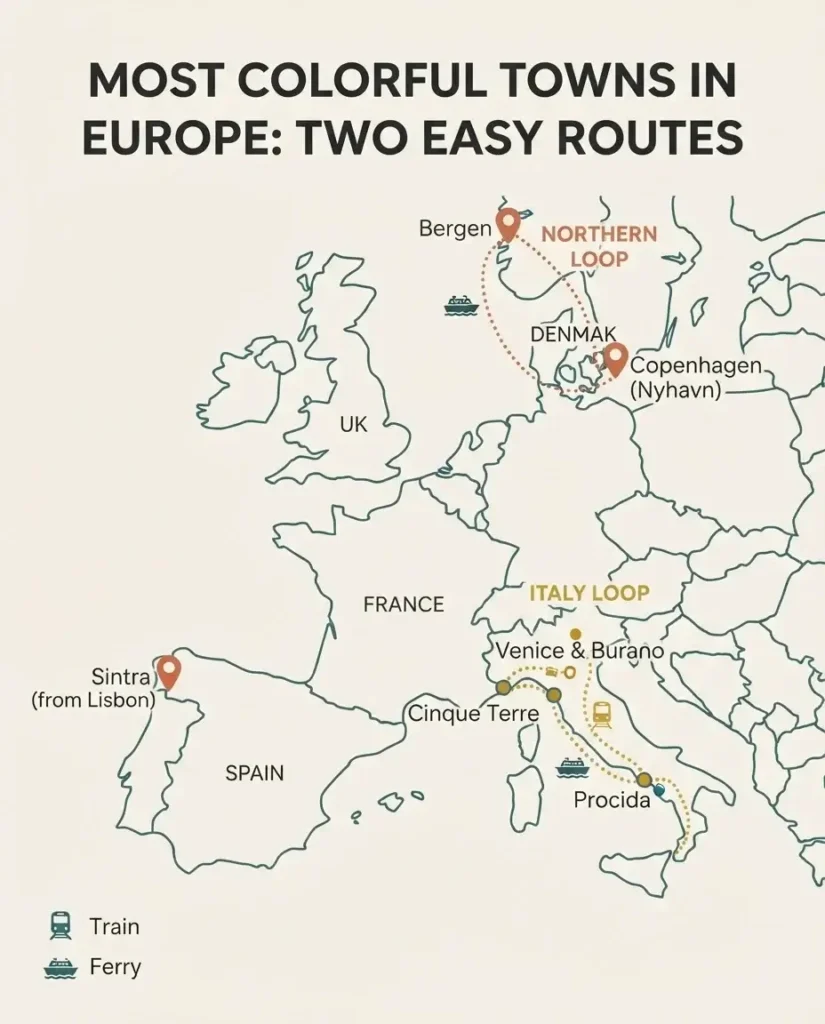
If you want a realistic first route, pick a region. An Italy loop of Venice-Burano, then a train down to Cinque Terre, then further south toward Naples and Procida, is a clean two-week trip that never asks you to fly. A separate northern trip pairing Copenhagen’s Nyhavn with a flight or ferry up to Bergen makes sense as its own week. Sintra pairs naturally with a Lisbon city break.
When I was younger and saving hard, working flexible jobs to fund my travels, I learned that trains are your friend in Europe. Point-to-point tickets, booked a few weeks ahead, are often cheaper and far less stressful than trying to fly between small towns. And slow overland travel means you actually see the countryside change color between destinations, which is half the joy.
Solo, Nervous, or on a Budget? Read This.
If you are planning to do this alone and your stomach flips a little at the thought, good. That flip means it matters. I felt exactly that before my first solo backpacking trip across Europe, and I can tell you the fear shrinks the moment you are actually standing in one of these streets with a coffee in your hand.
These particular towns are wonderful for solo travelers because they are small, walkable, and full of other visitors, so you are rarely truly alone even when you are traveling alone. Copenhagen and Bergen especially are very safe and easy to navigate on your own.
On budget: stay one town over from the famous spot. Sleep in La Spezia instead of inside Cinque Terre, in Naples instead of on Procida, in Lisbon instead of Sintra. Take the first train in and you get the empty-street magic at a fraction of the accommodation cost.
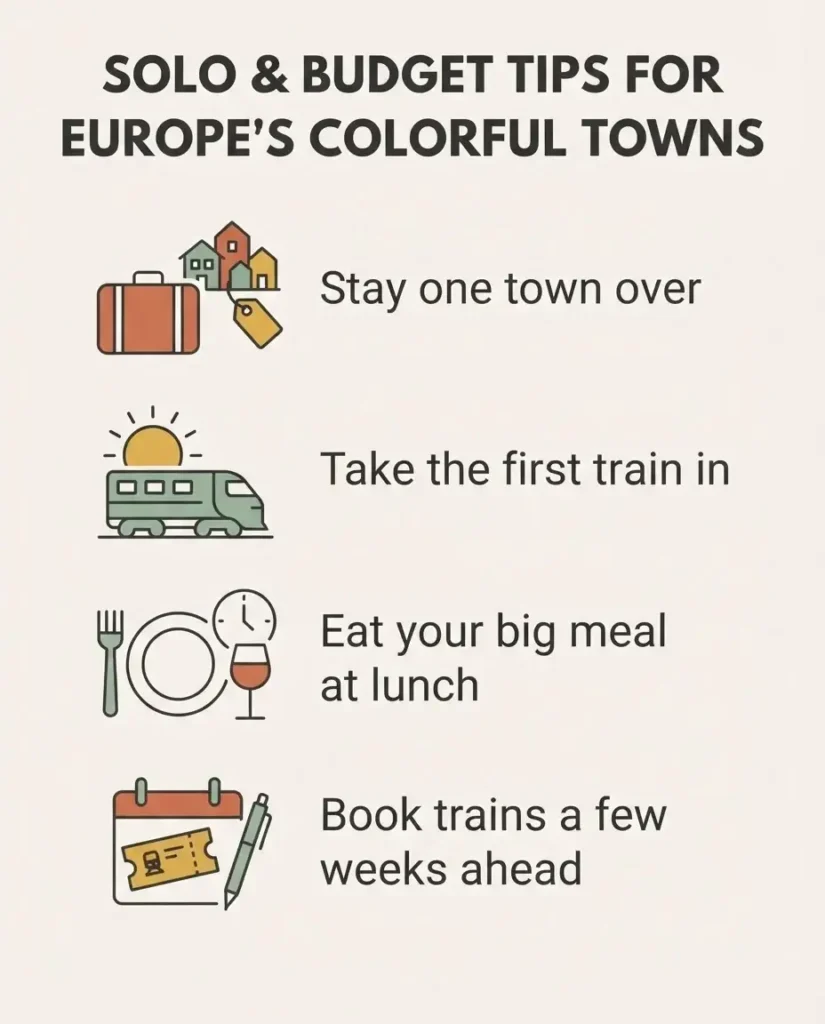
Eat your big meal at lunch when many places offer set menus, and treat dinner as something lighter.
The colorful towns of Europe are not a reward you earn later, after you are richer or braver or more experienced. They are available to you now, in whatever budget and confidence level you currently have. Pick one town. Pick one date. Start there, and let the rest of the daydream catch up to real life.