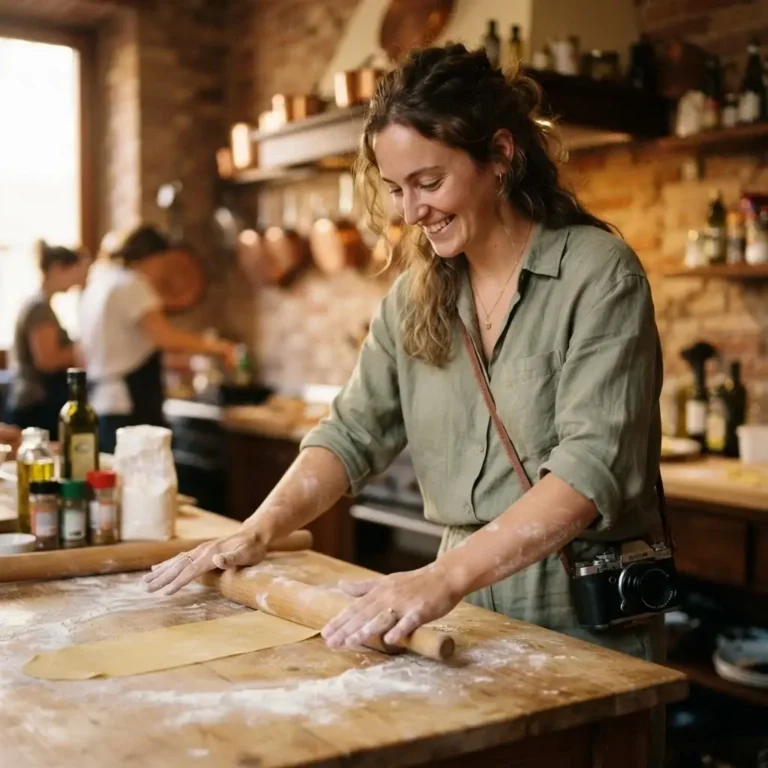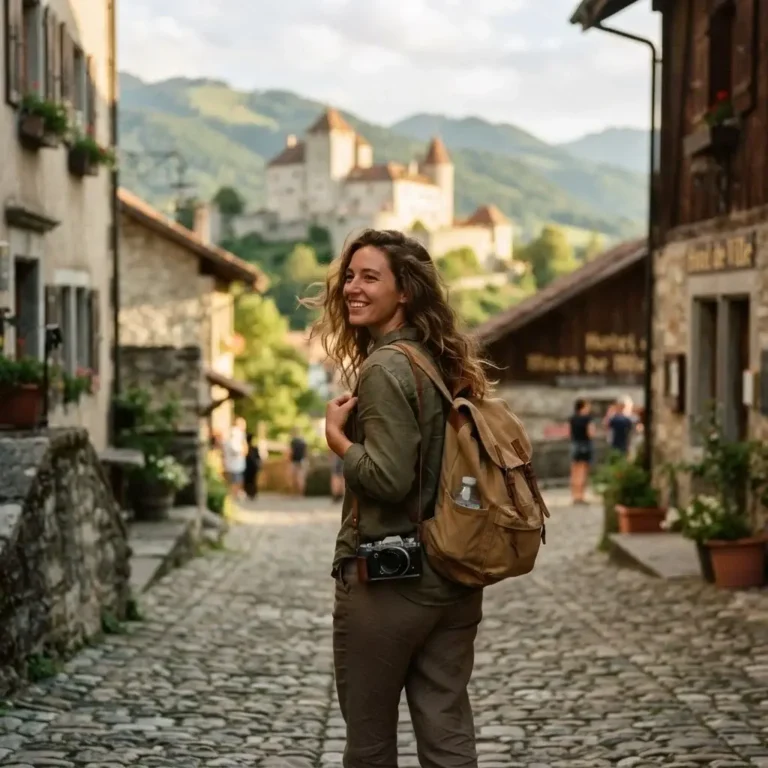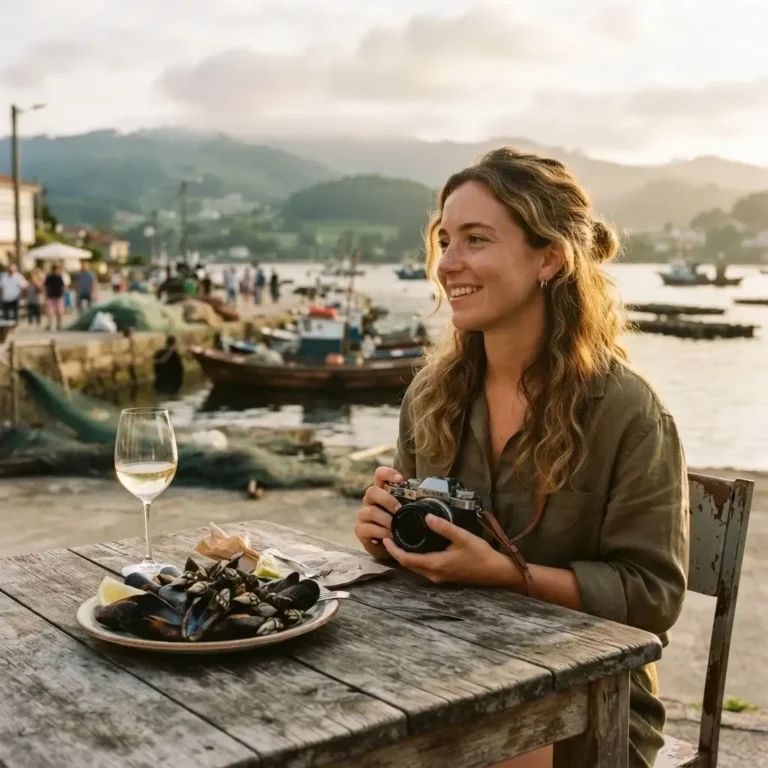
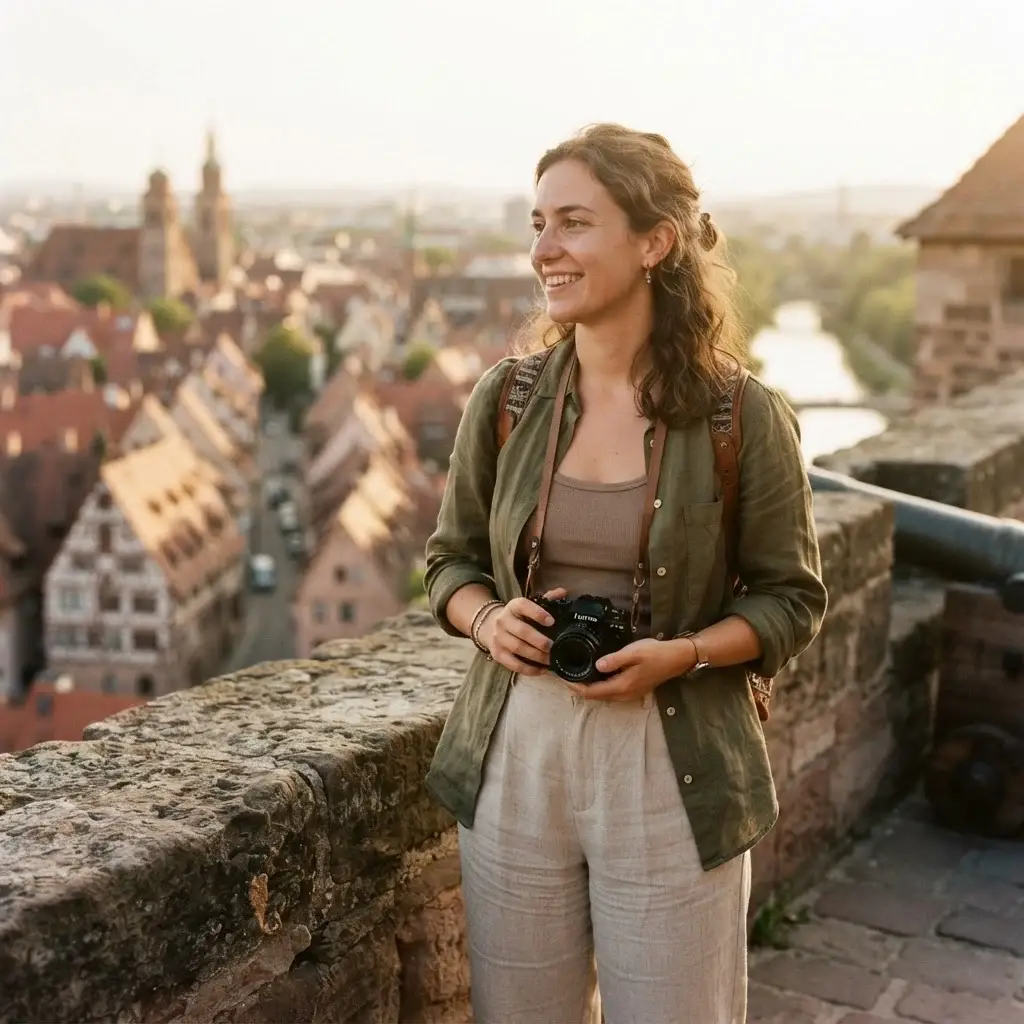
For years, I followed what everyone told me was the right path. I sat at a desk in an office, stared at a computer screen, and dreamed about seeing the world. I would look at photos of old European streets and think it was all out of my reach. I thought you had to be rich to travel. I remember working double shifts as a waitress in New York just to put away fifty bucks a week for my travel fund. Every dollar mattered.
If you are reading this right now, you might feel that same pull. You want to buy the ticket. You want to walk down cobblestone streets, hear a different language, and eat incredible food. But the money part is scary. You might think Western Europe is just too expensive for a normal person. I am here to tell you that it is not. You do not need a luxury budget to have an amazing, life-changing trip. You just need the right information.
Today, we are going to talk about a country that surprises a lot of people. When we think of cheap travel, we usually think of Southeast Asia. But if you want the classic European experience without the massive price tag, I have great news for you. Finding Budget-friendly destinations in Germany as a beginner is not only possible, it is actually one of the smartest travel choices you can make. You just have to know where to look and how to plan. Let us dive into everything you need to know.
Why Germany is Perfect for First-Time Solo Travelers
Germany is a dream for beginners. It is incredibly safe, the train system goes everywhere, and almost everyone you meet will speak some English. When I first started traveling solo, safety was my biggest worry. But walking around German cities, even at night, I felt a deep sense of calm. The streets are well-lit, the public transit is reliable, and the culture respects personal space.
If you are feeling nervous about crossing borders and dealing with paperwork, you can easily ease your mind by reading up on the latest entry requirements and safety notes for your trip to see just how straightforward it is for tourists to visit. You do not need to stress about complicated visas if you are coming from places like the US, the UK, or Canada for a short trip.
Another huge bonus is that Germany is built for regular people, not just luxury tourists. The cities are filled with public parks, free museums, cheap bakeries, and affordable public transit. You do not have to spend a fortune to have a good time. Instead of heading to super expensive cities like Munich or Frankfurt, we are going to look at smaller, cooler, and much cheaper spots.
Leipzig – The Cool Artsy City That Will Not Break the Bank
A lot of people call Leipzig the “New Berlin.” Berlin used to be the cheapest, coolest city in Europe. Now, it is getting much more expensive. But Leipzig still has that raw, artistic, underground magic, and it is incredibly cheap. It is a young city full of students, artists, and musicians. The vibe is very relaxed. Nobody is trying to show off here.
Getting There and Around
Leipzig has a massive, beautiful central train station called Leipzig Hauptbahnhof. It is actually one of the largest train stations in Europe. You can catch a train here from anywhere in the country. Once you arrive, you will find that Leipzig is wonderfully compact. You can walk to almost all the main spots in the city center.
When your feet get tired, the tram system is your best friend. The yellow trams run everywhere. You can buy a day ticket for just a few euros. But honestly, if the weather is nice, rent a cheap bicycle. Leipzig is very flat and full of green parks, making it a perfect city for biking.
Where to Sleep and Save
You want to stay near a street called Karl-Liebknecht-Straße. Locals just call it “KarLi.” This street is the beating heart of the city. It is lined with cheap cafes, thrift stores, and funky bars. There are several excellent hostels in this area. You can usually find a bed in a clean, safe dorm room for around twenty to thirty euros a night.
If you prefer a private room, look for short-term room rentals online. Because Leipzig is a huge university city, students are always renting out their rooms for cheap when they go home for the weekend. This is a fantastic way to save money and stay in a real, local neighborhood.
What to Eat (Cheaply!)
You will never go hungry in Leipzig. First, you have to try a Döner kebab. This is the ultimate cheap German street food. It is hot, fresh bread stuffed with roasted meat, crisp veggies, and garlic sauce. A huge Döner will cost you about six or seven euros, and it will keep you full for hours. You can find Döner stands all over KarLi.
For something sweet, head to a local bakery and ask for a “Leipziger Lerche.” It is a little pastry filled with crushed almonds, nuts, and a touch of jam. They cost about two euros and go perfectly with a cheap cup of coffee. Bakeries in Germany are a budget traveler’s best friend. You can get fresh bread, cheese rolls, and pretzels for next to nothing.
Free and Low-Cost Things to Do
Leipzig is packed with history, and much of it is free to look at. You can walk into St. Thomas Church, where the famous composer Johann Sebastian Bach worked and is now buried. The architecture inside is stunning.
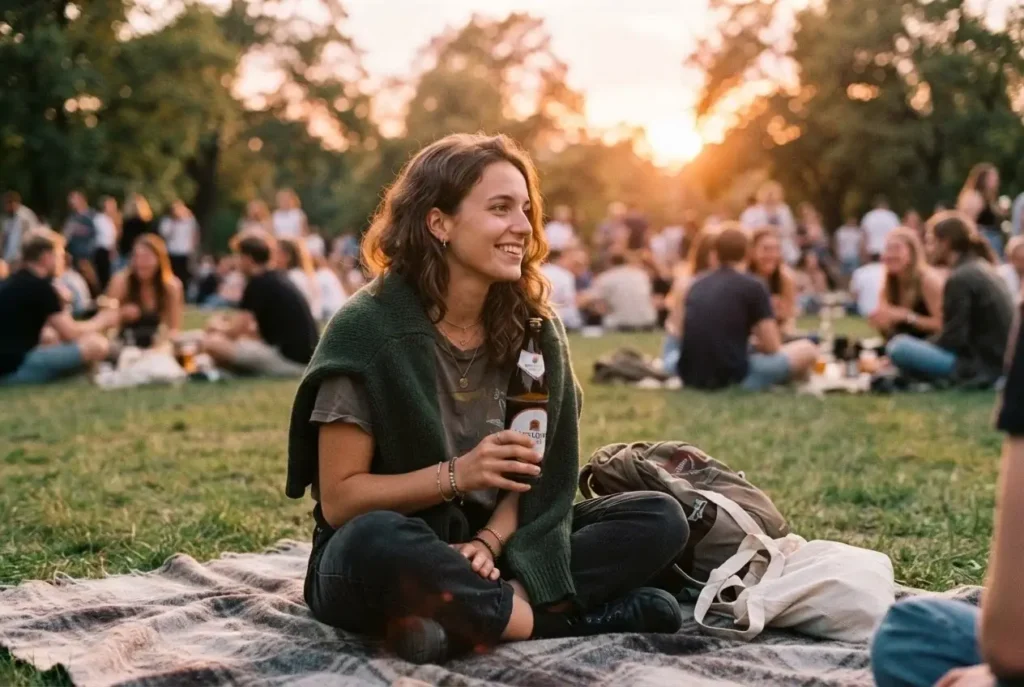
If you want a great view, head to the Völkerschlachtdenkmal. It is a giant, dramatic monument just outside the city center. The park around it is completely free to explore. In the evening, grab a cheap drink from a local convenience store (called a Späti) and go sit in Clara-Zetkin Park. Hundreds of young people gather there to play music, chat, and watch the sunset.
Before building your whole itinerary, I highly recommend checking out a broad travel guide for getting a broad feel for the country’s regions so you understand exactly where Leipzig sits on the map.
Dresden – A Royal City on a Backpacker Budget
Dresden is located very close to Leipzig, so you can easily visit both in one trip. Dresden will take your breath away. It is sitting right on the Elbe River. Half of the city looks like a beautiful, old royal fairytale. The other half is wild, colorful, and covered in street art.
Getting There and Around
Dresden is easy to reach by bus or train. The train ride from Leipzig takes barely an hour. When you arrive, you will notice the city is split into two main parts: the Altstadt (Old Town) and the Neustadt (New Town).
The DVB tram network connects everything perfectly. A single ticket is very cheap. However, the best way to get around Dresden is simply walking along the river. The paths are wide, flat, and offer the best views of the city skyline.
Where to Sleep and Save
If you are on a budget, you must stay in the Neustadt. The Old Town is full of expensive hotels for luxury tourists. The Neustadt is where the real life happens. It is full of narrow streets, quirky shops, and cheap hostels.
I stayed in a lovely little hostel here that felt just like a big, welcoming house. Hostels in the Neustadt often have shared kitchens. Buying groceries and cooking your own dinner for just three or four euros is a massive confidence booster when you are traveling solo on a tight budget.
What to Eat
Dresden has a very special cake called Eierschecke. It is a three-layered cake made of dough, sweet cheese, and a vanilla pudding top. You can buy a big slice at any traditional bakery for a couple of euros.
For dinner, the Neustadt is packed with cheap international food. You can find incredible falafel wraps, huge bowls of ramen, and classic German Currywurst for under eight euros. Currywurst is a chopped-up pork sausage covered in a sweet, spicy curry ketchup. It sounds a little strange, but it is delicious, filling, and very cheap.
Free and Low-Cost Things to Do
The best things in Dresden do not cost a penny. You can walk around the outside of the Zwinger Palace. The gardens, fountains, and massive statues are all completely free to explore. It feels like walking through a movie set.
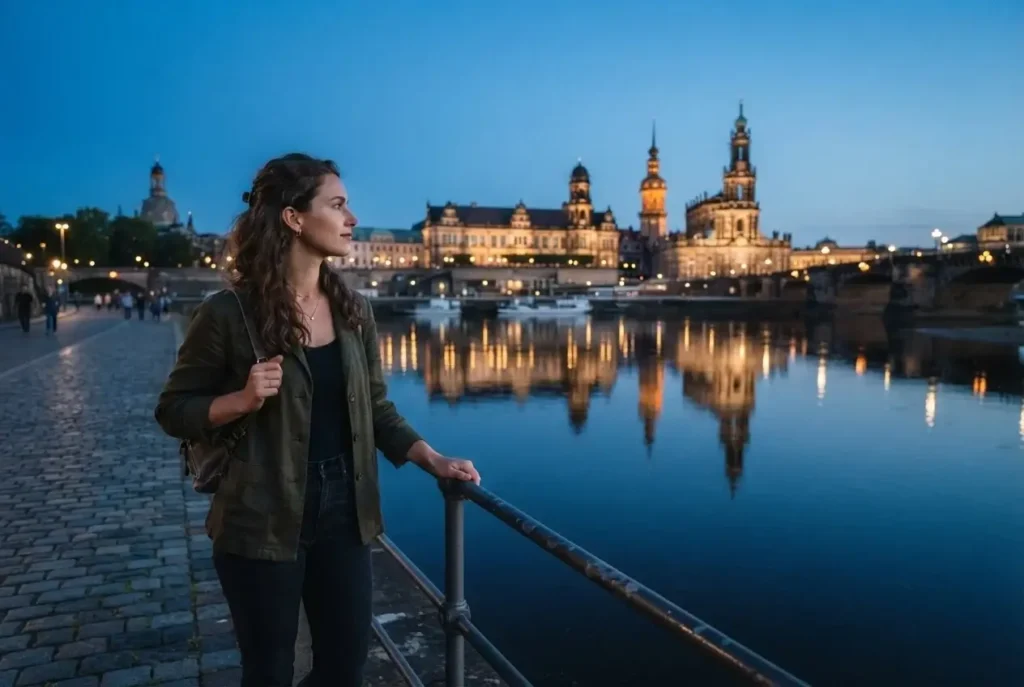
You also have to visit the Frauenkirche, the massive domed church in the center of the Old Town. It was destroyed in the war and completely rebuilt using the original stones. Going inside is free during open hours. In the evening, do what the locals do: buy a cheap bottle of local beer, sit on the grassy banks of the Elbe River, and watch the lights come on across the old royal buildings.
Bremen – A Fairytale Town in the North
When people visit the north of Germany, they usually rush straight to Hamburg. Hamburg is amazing, but it is very pricey. Just an hour away is Bremen. Bremen is smaller, cheaper, and dripping with pure, old-world charm. It feels like stepping straight into a storybook.
Getting There and Around
Bremen is highly connected by the train system. The moment you step out of the main train station, you are just a short walk from the historic center. You rarely even need to buy a tram ticket in Bremen because the city center is so compact.
The streets here are mostly made of old cobblestones, so make sure you are wearing comfortable walking shoes. Leave the fancy heels or stiff boots at home. You will be on your feet all day, and you want to be comfortable.
Where to Sleep and Save
Look for places to stay in the “Viertel” neighborhood. It is just east of the main old town. This area is full of old houses painted in bright colors, little boutiques, and cheap places to eat. There are several wonderful hostels here that cater to backpackers and solo travelers.
Because Bremen is smaller, accommodation here is generally cheaper than in the massive cities. You can easily find a cozy, safe bed without blowing your daily budget. The hostel staff in Bremen are also famously friendly and will happily give you a free map and circle the cheapest local spots.
What to Eat
Because Bremen is close to the coast, fish is a big deal here. You can find little food stands selling fish sandwiches (Fischbrötchen) for just a few euros. They are fresh, salty, and perfect for a quick lunch.
But the real local secret in Bremen is a food called a “Rollo.” It was invented in Bremen by local shop owners. It looks like a massive wrap, stuffed with meat, cheese, salad, and sauce, and then baked until the bread is crispy. It is incredibly cheap, incredibly filling, and absolutely delicious. You can find Rollo shops all over the Viertel neighborhood.
Free and Low-Cost Things to Do
The main square in Bremen is one of the most beautiful in Europe. You can see the old Town Hall, which is a masterpiece of old architecture. The details on the building are incredible, and you can learn more about its history by checking out the official list of protected historical sites online, which explains why it is preserved so carefully.
Right next to the Town Hall is a bronze statue of the Town Musicians of Bremen—a donkey, a dog, a cat, and a rooster stacked on top of each other. It is from an old fairytale. Rubbing the donkey’s front legs is said to bring good luck, and it is completely free to do.
Make sure you walk down Böttcherstraße. It is a tiny, hidden street made entirely of red bricks with strange, beautiful artwork everywhere. Then, get completely lost in the Schnoor district. It is the oldest part of the city, full of tiny, winding alleys and houses from the 1400s.
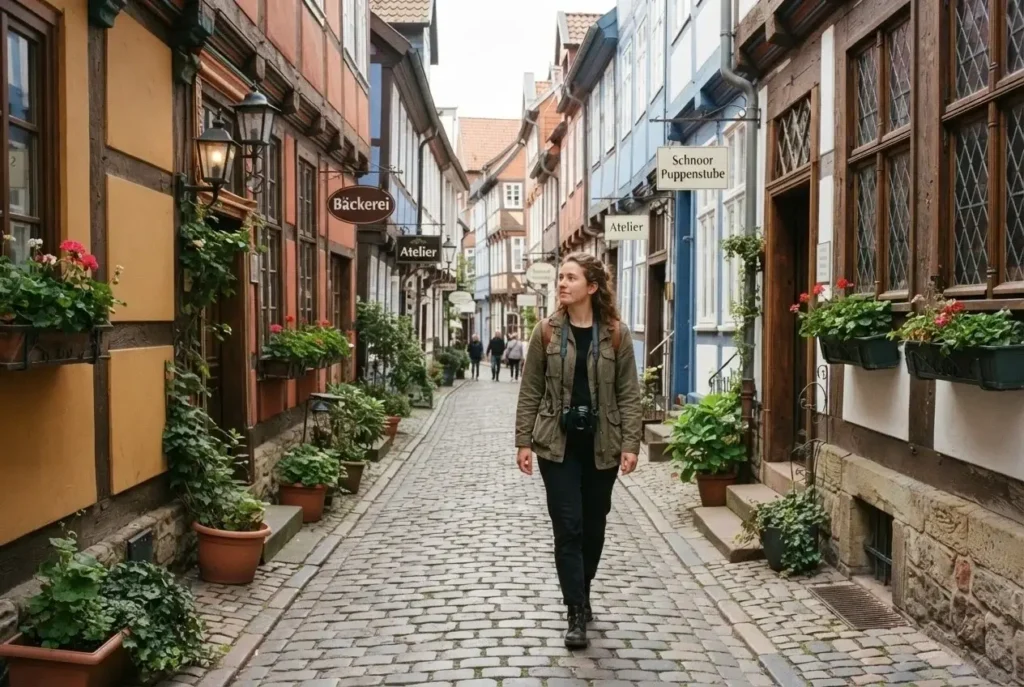
Walking around costs nothing and feels magical.
Freiburg – Sunshine and the Black Forest
If you want to see the famous Black Forest but do not want to spend a fortune on fancy spa resorts, Freiburg is your perfect base. It is located in the very southwest corner of Germany. It is known as the sunniest city in the country, and it has a very happy, laid-back atmosphere.
Getting There and Around
Freiburg is easy to reach by train from major hubs like Frankfurt or Stuttgart. The city is famous for being environmentally friendly. Almost everyone rides a bike. There are bike lanes everywhere.
The inner city is mostly free of cars. You can walk right down the middle of the street safely. One thing you will notice immediately are the “Bächle.” These are tiny, shallow water canals running right through the streets of the old town. Legend says if you accidentally step into one, you will marry a local from Freiburg.
Where to Sleep and Save
Freiburg has a famous, long-running backpacker hostel located right near the edge of the forest. It is a legendary spot for solo travelers. Staying in a hostel here is the best way to meet other people who want to go hiking.
You can group up with new friends to share the costs of train tickets into the deep forest. The hostels here are clean, safe, and heavily focused on outdoor activities. They almost always have huge, cheap breakfasts available to get you fueled up for a day of walking.
What to Eat
You cannot visit this region without trying Flammkuchen. It looks a bit like a thin-crust pizza. The classic version is a very thin, crispy dough covered in sour cream, onions, and little bits of bacon. It is light, salty, and totally addictive. You can buy a whole one for around seven or eight euros.
If you are hungry during the day, head straight to the Münstermarkt. This is a huge open-air market that happens every day around the main church. Look for the stands selling the “Lange Rote” (Long Red). It is a long, delicious grilled sausage served in a fresh, crusty bread roll. It is cheap, authentic, and you will see business people and students standing side-by-side eating them.
Free and Low-Cost Things to Do
Nature is free in Freiburg. You can walk straight out of the city center and hike up the Schlossberg. It is a large, forested hill right on the edge of town. The hike will get your heart pumping, but the views of the city and the distant mountains are spectacular.
If you want to go deeper into the Black Forest, you can take a short, cheap local train ride to Lake Titisee. You can walk around the giant, dark blue lake for free.
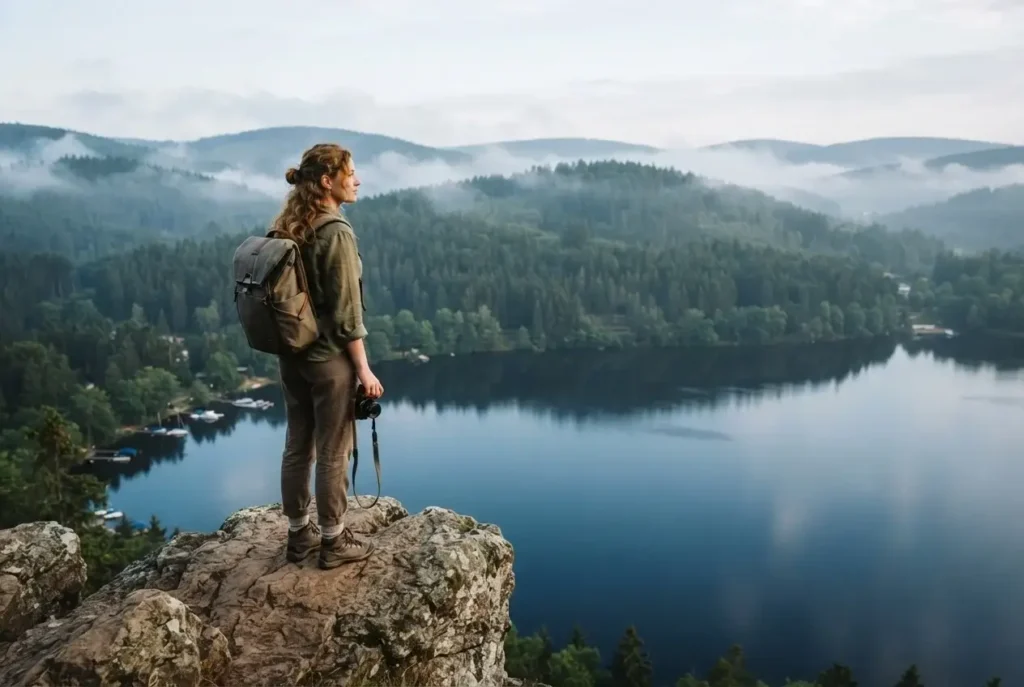
The air out there smells deeply of pine trees and fresh earth. It is the perfect place to sit on a rock, eat a cheap sandwich from a bakery, and just feel proud of yourself for making this trip happen.
Nuremberg – Bavarian Magic Without the Munich Price Tag
When people dream of Germany, they usually picture Bavaria: huge castles, giant pretzels, and old wooden houses. Most people go straight to Munich for this. But Munich is one of the most expensive cities in the country. If you want that classic Bavarian magic on a budget, you must go to Nuremberg.
Getting There and Around
Nuremberg is very centrally located in the southern half of Germany. The train station drops you right at the edge of the ancient city walls. You can literally see the old stone towers the moment you walk out the door.
The public transit here is fantastic. They have buses, trams, and a great underground subway system (U-Bahn). But honestly, the old town is entirely surrounded by a wall, and everything inside that wall is easy to reach on foot.
Where to Sleep and Save
Nuremberg has several wonderful, modern hostels located right inside the city walls. They offer huge lockers, secure rooms, and great communal areas. Prices are significantly lower than anything you will find down south in Munich.
Staying inside the walls means you do not have to spend any money on morning transit. You can wake up, walk outside, and immediately be standing on a 500-year-old cobblestone street.
What to Eat
Nuremberg is famous for two incredible foods, and both are cheap. The first is the Nürnberger Rostbratwurst. These are tiny, finger-sized sausages packed with marjoram and spices. The traditional way to eat them on the street is called “Drei im Weckla” (Three in a bun). For about three or four euros, you get three hot, grilled sausages stuffed into a fresh, crunchy roll with sharp mustard. It is heaven.
The second food is Lebkuchen. This is a traditional German gingerbread, baked on a thin wafer. It is soft, sweet, and packed with nuts and spices. You can buy them individually in little bakery windows. When you are eating street food or shopping at local markets, it never hurts to brush up on standard health advice and packing tips for the region just to make sure your stomach stays happy while you travel.
Free and Low-Cost Things to Do
The giant Imperial Castle sits at the very top of the city. While it costs a few euros to go inside the museum rooms, walking around the massive castle grounds, the courtyards, and the gardens is completely free.
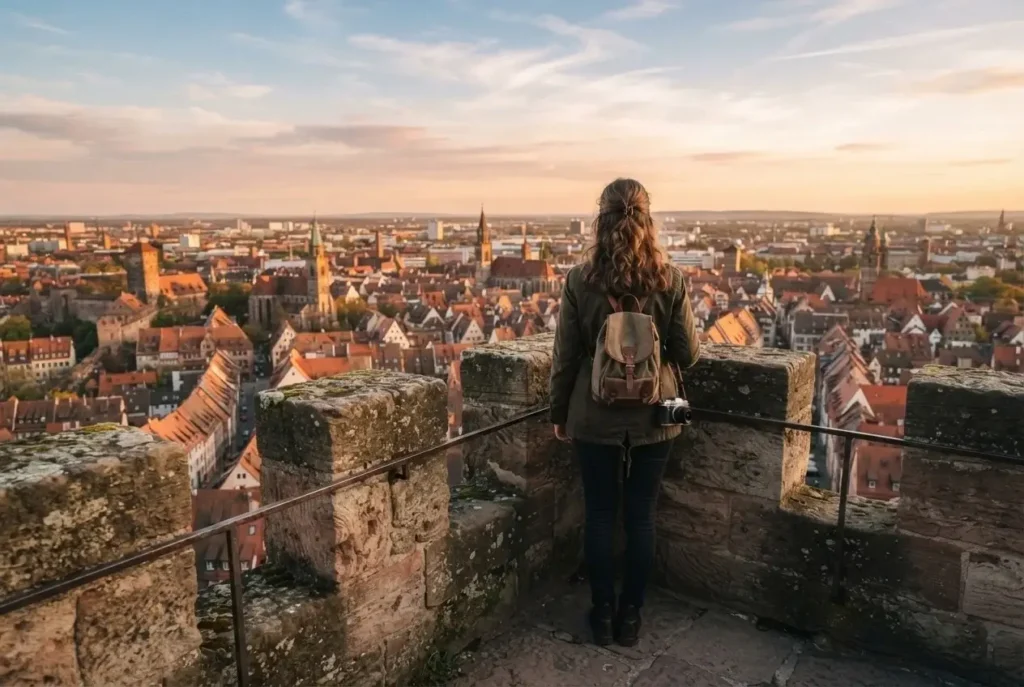
The view looking down over the red roofs of Nuremberg is stunning.
You can also walk through the Handwerkerhof. It is a tiny village built right into the old city walls near the train station. It is full of small craft shops showing how things were made hundreds of years ago. It feels exactly like stepping onto a movie set, and it costs nothing to look around.
My Top Insider Secrets for Traveling Germany on a Dime
Now that you know where to go, we need to talk about exactly how to survive day-to-day without draining your bank account. These are the little tricks I learned from making mistakes, asking locals, and paying too much on my first few trips. Once you know these secrets, Germany becomes incredibly affordable.
Mastering the Trains and the Deutschlandticket
Trains in Europe can be very expensive if you buy tickets on the day you travel. But Germany recently introduced something life-changing for budget travelers: the Deutschlandticket (Germany Ticket).
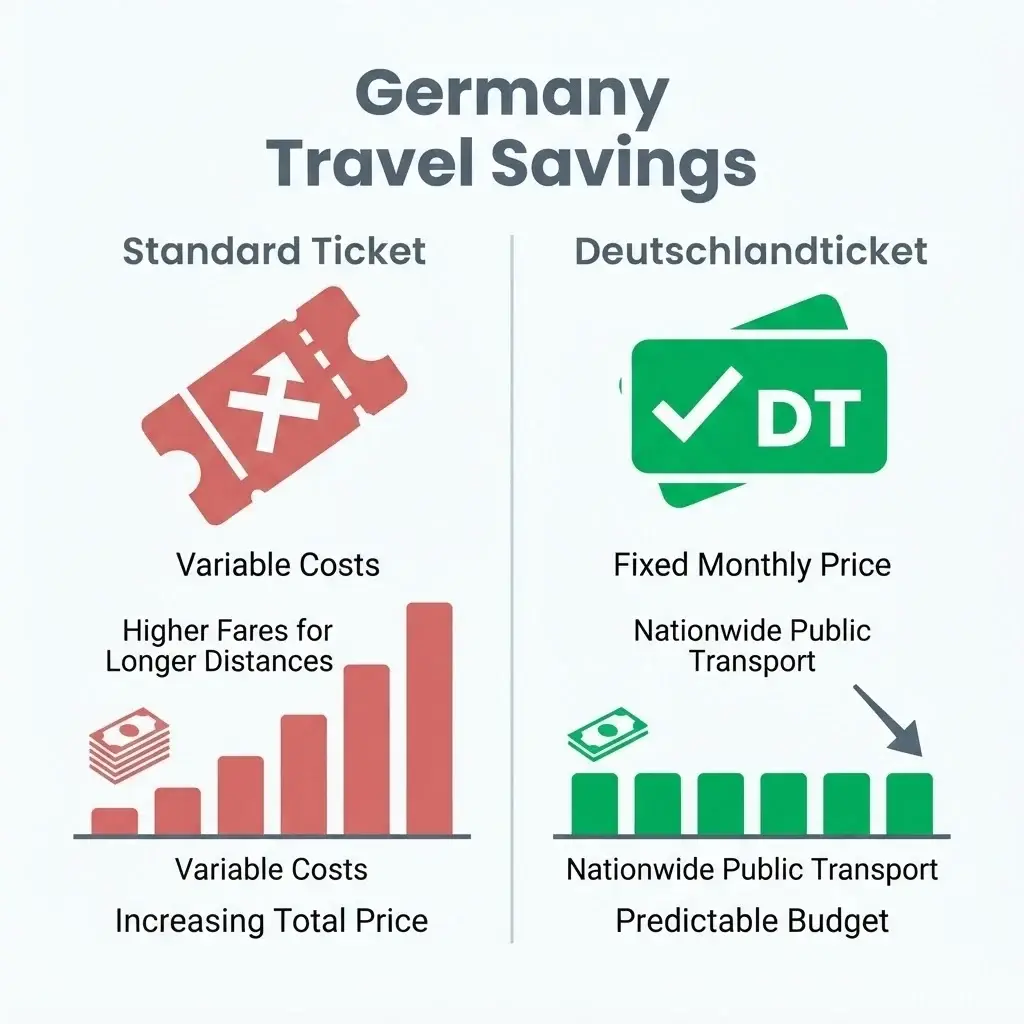
For a flat fee (currently around 49 euros a month), you can ride almost every single regional train, subway, tram, and city bus in the entire country. You cannot use the super-fast white bullet trains (called ICE trains), but the regional red trains go to all the same places, just a little bit slower. If you are staying in Germany for a week or more, this ticket will save you hundreds of dollars. You can ride from Leipzig to Dresden, or from Bremen to the coast, for basically free once you have the ticket.
The Magic of the Pfand System
When you buy a plastic bottle of water or a glass bottle of soda in a German grocery store, you will notice the price is a little higher than the shelf tag says. This is because of “Pfand.” Pfand is a deposit system.
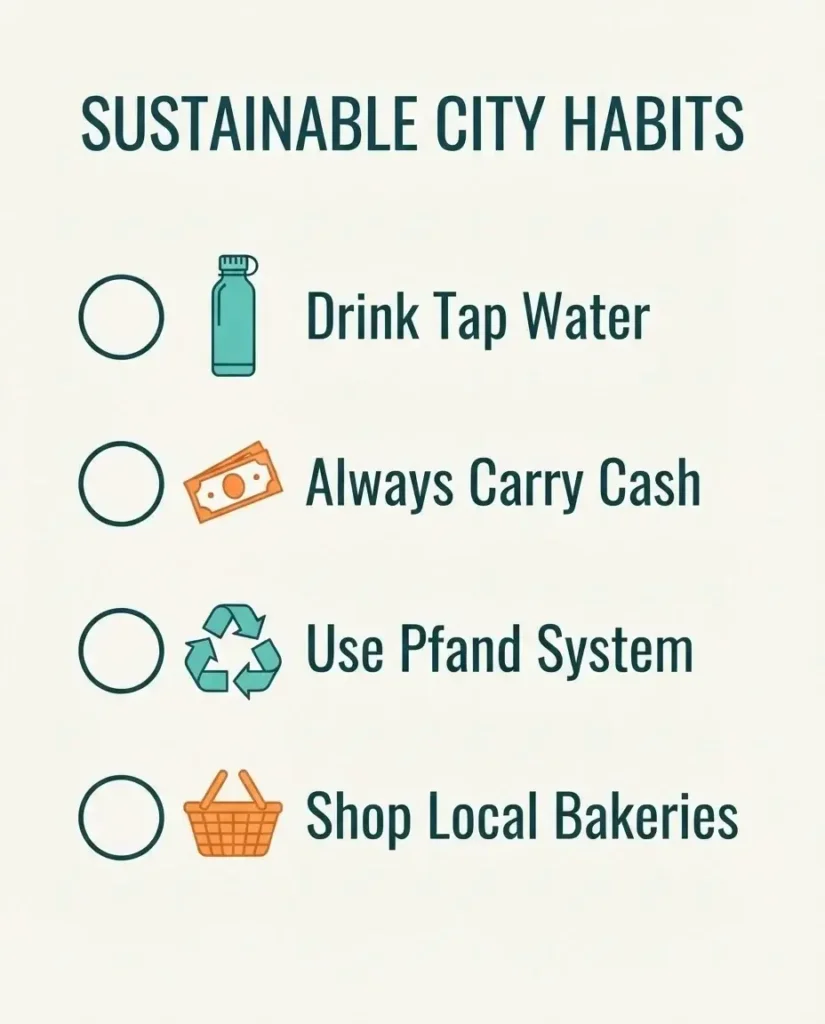
You pay an extra 8 to 25 cents per bottle. When you are done drinking it, do not throw it in the trash! Take the empty bottle back to any supermarket. There are big machines near the entrance. You feed the empty bottles into the machine, and it prints out a little receipt with a money value. You take that receipt to the cashier, and they give you cash back, or take it off your grocery bill. This is a great way to recycle and keep your budget tight.
Tap Water is Safe and Free
Do not waste your money buying bottled water every day. The tap water in Germany is not just safe; it is extremely high quality. Bring a reusable water bottle from home. You can fill it up at your hostel sink before you leave for the day.
If you go to a restaurant and ask for water, they will bring you expensive, sparkling bottled water by default. If you want free tap water, you have to specifically ask for “Leitungswasser.” Even then, some fancy cafes might still charge you or refuse. It is always easier to just carry your own bottle.
Cash is Still King
This surprises a lot of North Americans. We are so used to tapping our phones or cards for everything. While Germany is changing slowly, cash is still incredibly important. Many bakeries, Döner stands, small bars, and market stalls will only accept physical money.
If you try to buy a three-euro sausage with a credit card, you might get a grumpy look and a firm “Nein.” Always keep about forty euros in small bills and coins in your pocket. It will save you from going hungry when you find the perfect street food spot.
Take Care of Yourself
Finally, no matter how cheap you are trying to be, there is one thing you should never cut from your budget. Life on the road is unpredictable. Trains get delayed, bags get lost, and sometimes you trip on a cobblestone and twist an ankle. That is just part of the adventure. I always recommend protecting your trip and grabbing straightforward travel insurance before you leave home. Having that safety net means you can walk around these beautiful German cities with total peace of mind, knowing that if something small goes wrong, you are not going to lose all your hard-earned savings.
Traveling to Germany on a budget does not mean you have to suffer. You do not have to sleep on dirty floors or eat dry bread. By choosing cities like Leipzig, Dresden, Bremen, Freiburg, and Nuremberg, you get all the incredible culture, safety, and beauty of Europe for a fraction of the cost.
Stop waiting for the perfect time. Stop waiting until you have five thousand dollars in the bank. You are smart enough to figure out the trains, you are brave enough to eat at the local markets, and you are entirely capable of having the adventure of a lifetime right now. Pack a comfortable pair of shoes, bring your curiosity, and go see the world.