How to Find the Best Car Rental Deals in Europe Without Stress

The first time I seriously considered renting a car in Europe, I did the thing we all do. I typed in a couple of dates, saw a number that looked almost too good, and felt that little spark of “wait, can it really be that cheap?” Then I read a few forum threads and the spark turned into a knot in my stomach. Cross-border fees. Young driver surcharges. Insurance I didn’t understand. A deposit hold big enough to freeze my card.
Here is the honest truth I want to lead with, because it’s the whole point of this blog: a great car rental deal in Europe is completely within your reach, but the cheap sticker price is never the real price. The travelers who pay the least are not the ones who find a magic secret site. They are the ones who understand how the pricing game works before they book. That’s what I’m going to walk you through, step by step, the way I’d explain it to a friend who’s nervous about their first road trip abroad.
Why the Cheapest Quote Is Almost Never the Real Price
When an aggregator flashes a car for six dollars a day, that number is bait. It’s real, technically, but it’s the stripped-down base rate before the things that actually make a car drivable and legal get added on.
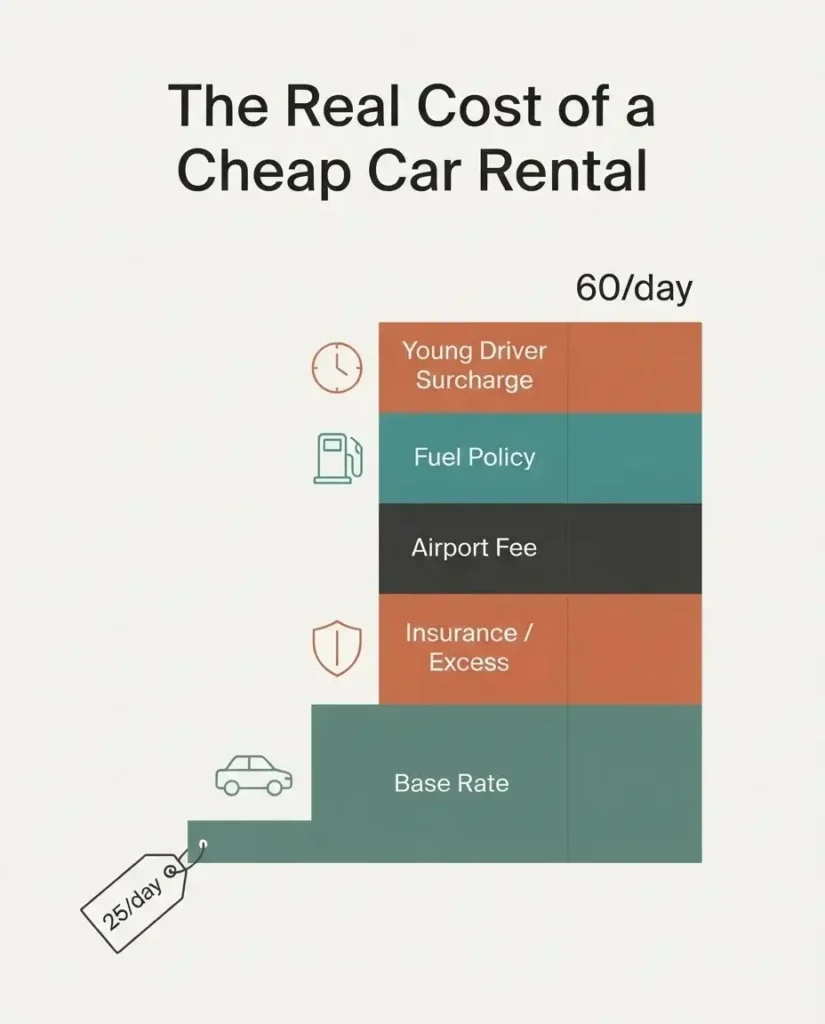
The real cost is the base rate plus insurance plus fees plus fuel policy plus any surcharges that apply to you specifically. A car advertised at 25 dollars a day can land closer to 60 once you add basic coverage, an airport location fee, and a young-driver charge. City averages tell the story better than the headline teasers. Across popular destinations you’ll typically see something like Munich around 25 dollars a day, Lisbon near 29, Rome around 35, Dublin about 50, and Paris closer to 57, and those still sit before extras.
So the goal isn’t to chase the lowest number on a screen. The goal is to find the lowest total you’ll actually pay. Everything below is aimed at that.
Book Early, and Book at the Right Time
The single most reliable way to save money is boring: book in advance. European rental inventory, especially automatics and larger cars, gets thin and expensive close to your travel dates and in peak summer. Reserving weeks ahead almost always beats walking up to a counter, and most reservations can be cancelled or rebooked for free, so there’s little downside to locking in early and re-checking later.
A few timing habits that genuinely move the price: avoid picking up on a Sunday when many downtown offices are closed and airport desks charge a premium, avoid tiny rural pickup points with limited stock, and compare a downtown pickup against the airport. Airports are convenient but often carry a location surcharge, while a city-center office can be noticeably cheaper if you don’t mind a short transit ride to reach it.
Where to Actually Search (and Why to Cross-Check)
Use a broker or aggregator to see the whole market at once, then cross-check the winning offer directly on that supplier’s own site. Sometimes the aggregator is cheaper, sometimes the direct booking includes better coverage for a similar price. It takes five extra minutes and it’s the closest thing to a free discount you’ll find.
When you compare, don’t just sort by price. Read what’s included. One quote might bundle coverage and a full-to-full fuel policy while a “cheaper” one leaves you exposed on both. The listing that looks a few dollars more per day is frequently the better deal once you total it up.
The Fees That Ambush First-Timers
This is where money quietly leaks, so let me lay out the usual suspects.
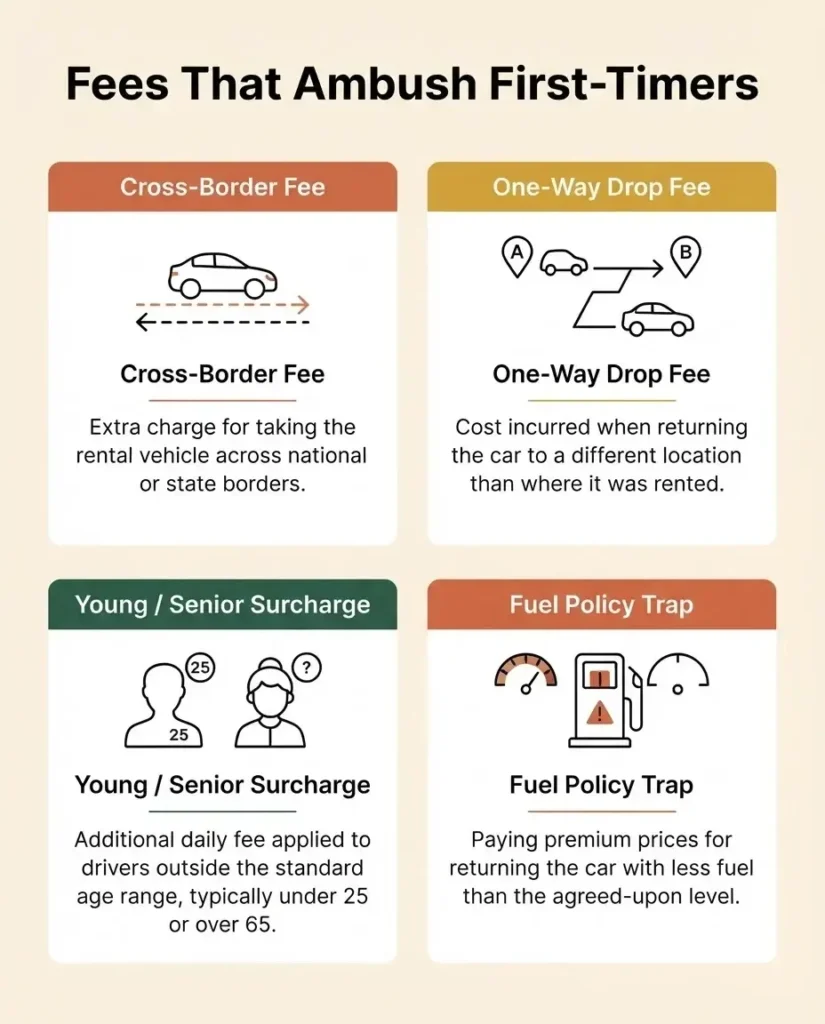
Young driver and senior surcharges hit drivers roughly under 25 or over 70, and they’re charged per day, so on a long rental they add up fast. Cross-border fees apply the moment you tell them you’re driving into another country, which is a real thing across the continent and something a lot of travelers only discover at the counter. One-way drop fees, when you collect in one country and return in another, are the brutal one. Dropping a car in a different country than you picked it up can cost hundreds of euros, so whenever possible, plan a loop that returns the car where you started.
Then there’s the fuel policy. “Full to full” is your friend: you get a full tank and return it full, paying only for what you burn. Avoid “full to empty,” where you prepay for a tank and effectively gift them whatever fuel you don’t use. And expect a refundable deposit hold on your credit card at pickup, often several hundred to over a thousand euros depending on the car, which is held, not spent, but it needs to be available on the card in the main driver’s name.
Manual or Automatic? This One Decision Changes Your Price
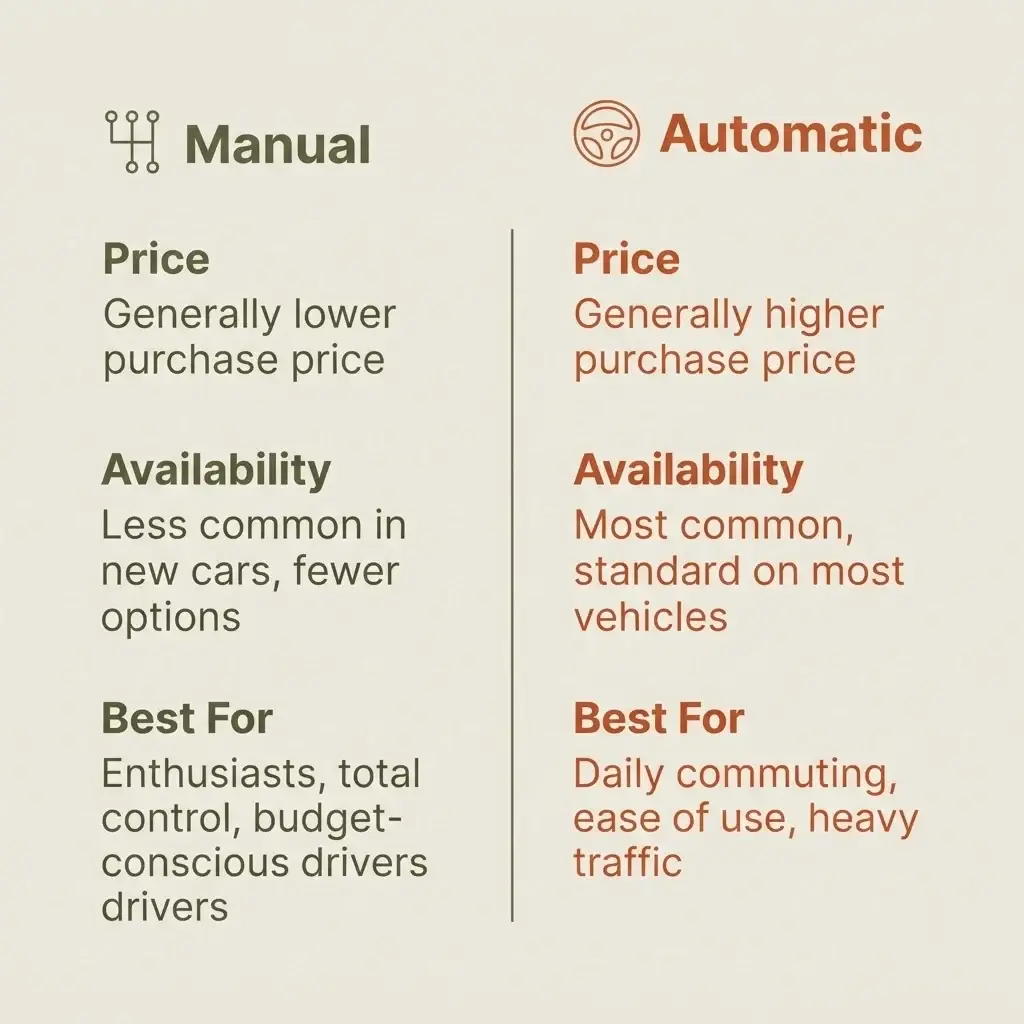
Here’s something North American travelers routinely get caught by: in most of Europe, the default rental is a manual transmission. Automatics exist, but they’re fewer and they cost more, and availability is far better at airports and big cities than in small towns.
If you can drive a manual, or you’re willing to learn before your trip, you’ll unlock the cheapest cars on the lot. If you need an automatic, book it early and specifically, because “or similar” on a cheap listing can quietly mean a stick shift. I learned to appreciate this kind of small preparation the hard way during my years backpacking Europe solo, when the difference between a smooth day and a stressful one usually came down to one detail I’d sorted out in advance.
The Insurance Question, Explained Simply
Insurance is where the counter upsell gets aggressive, and where a little knowledge saves real money and stress.
Most rentals include a Collision Damage Waiver, or CDW. This isn’t true insurance. It means the company waives its right to charge you the full cost of damage, but leaves you responsible for an “excess” (also called a deductible), which can easily be 1,000 euros or more. If you damage the car, that excess is the amount you’re on the hook for. Rick Steves has a clear, no-nonsense breakdown of how CDW and the deductible actually work, and I’d genuinely read his explanation of the collision damage waiver before you book, because understanding this one concept is what stops the counter agent from scaring you into overpaying.
You have a few ways to cover that excess. You can buy the company’s own excess-reduction product at the counter (convenient but often the priciest option), buy a standalone third-party excess policy in advance for a fraction of the cost, or check whether a premium credit card includes rental coverage, though card coverage often excludes certain countries and car types, so verify the fine print. Whatever you choose, decide before you arrive. Standing at the desk is the worst time to make an insurance decision.
Paperwork: Your License and the IDP
Now the documents, because a rental deal means nothing if they won’t hand you the keys.
For visitors from outside Europe, many countries accept your valid home driver’s license together with your passport, but several, including Italy, Spain, Austria, and Greece, expect you to also carry an International Driving Permit, which is essentially a certified translation of your license. If you’re driving between EU countries, the EU’s own guidance on driving licence recognition is the authority I’d trust to confirm what’s accepted where, rather than relying on a rental blog’s summary.
The IDP itself is cheap and easy. In the United States, AAA is an official issuer, and you can see the current process and the roughly 20 dollar fee on the AAA International Driving Permit page. You cannot get a legitimate one after you arrive in Europe, so sort it at home. It’s a tiny errand that removes a huge source of stress, and honestly, most rental headaches I read about come down to a missing document rather than the price.
The Costs That Aren’t on the Rental Bill
Renting the car is only part of driving in Europe. Two categories catch people out, and both can mean fines rather than just fees.
First, tolls and vignettes. Some countries charge distance-based tolls you pay as you go, while others (like Austria, Switzerland, Slovenia, and the Czech Republic) require a prepaid “vignette,” a sticker or digital pass you must have before you enter the motorway. The European Commission’s overview of road charging explains how these two systems differ, which is worth a skim if your route crosses several countries in a day. Ask your rental company whether a vignette is already fitted, because driving without one is a fine, not a warning.
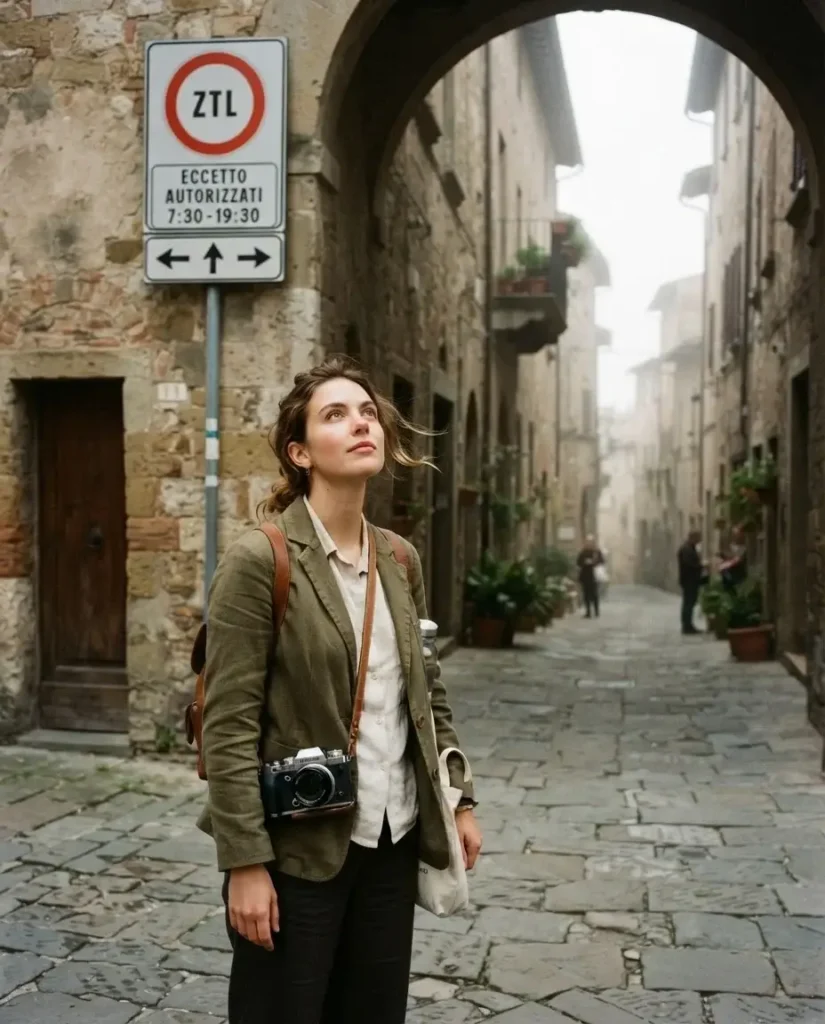
Second, low emission zones. A growing number of European cities restrict which vehicles can enter their centers, and entering the wrong zone in the wrong car can trigger a fine starting around 68 euros in some places. Before you drive into any major city, I’d check your route against the database at Urban Access Regulations in Europe, which is the most complete source I’ve found for these zones, and confirm with your rental desk whether your car is compliant. Italy’s ZTL zones in historic centers are especially easy to blunder into.
A Quick Pre-Booking Checklist
Before you click confirm, run through this:
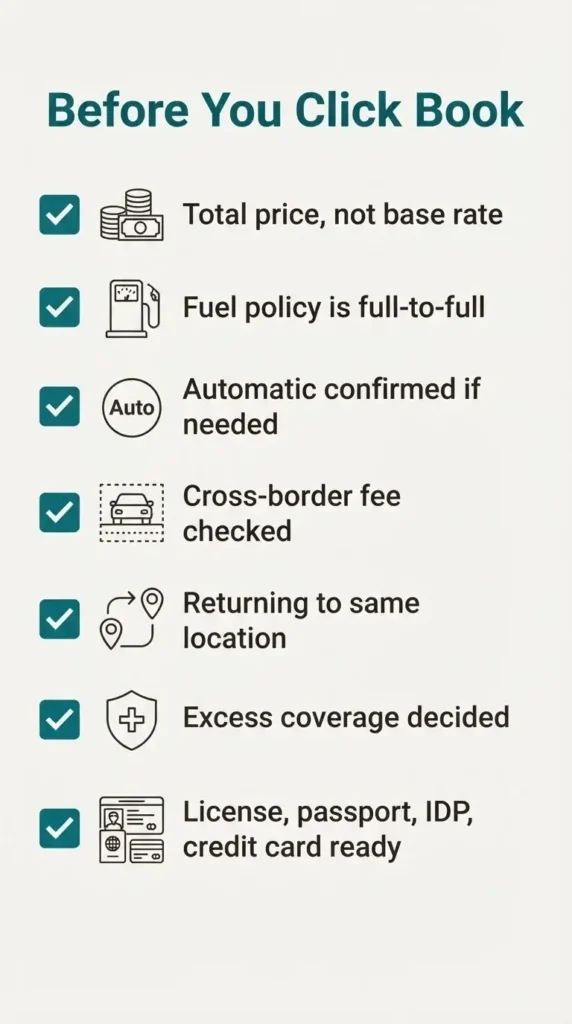
- Is the total price clear, including insurance and fuel policy, not just the daily base rate?
- Is the fuel policy full-to-full?
- Do I need an automatic, and is it specifically confirmed?
- Does my route cross a border, and what’s the fee?
- Am I returning the car to the same location to avoid one-way fees?
- Do I trigger a young or senior driver surcharge?
- Have I decided on excess coverage in advance?
- Do I have my license, passport, IDP if needed, and a credit card in the main driver’s name for the deposit?
Pickup Day: The Ten Minutes That Protect You
When you collect the car, slow down. Photograph and video the entire vehicle before you drive off, every scratch, wheel, and the interior, with a timestamp. Confirm the fuel level matches the contract. Ask where the vignette is if you need one. Check that the spare or repair kit is present. This ten-minute habit is the best insurance you’ll never pay for, because damage disputes at return almost always come down to who has evidence.
What Solo Travelers Should Keep in Mind
If you’re renting alone, a couple of extra thoughts. A car gives you a kind of freedom that public transit can’t, especially for reaching villages, coastlines, and trailheads on your own schedule, and that independence is exactly the confidence-builder I believe solo travel is really about. But you’re also the only driver, the only navigator, and the only set of eyes, so favor an automatic if manual driving would stretch you, download offline maps, and don’t overpack your daily route. Tired driving in an unfamiliar country is the one place I’d never cut corners.
You don’t need to have this all memorized. You just need to book with your eyes open. Do that, and the “too good to be true” number stops being a trap and starts being a starting point. The open road across Europe is one of the great joys of independent travel, and it’s far more within reach than the fine print makes it feel. Sort the details once, and then go enjoy the drive.