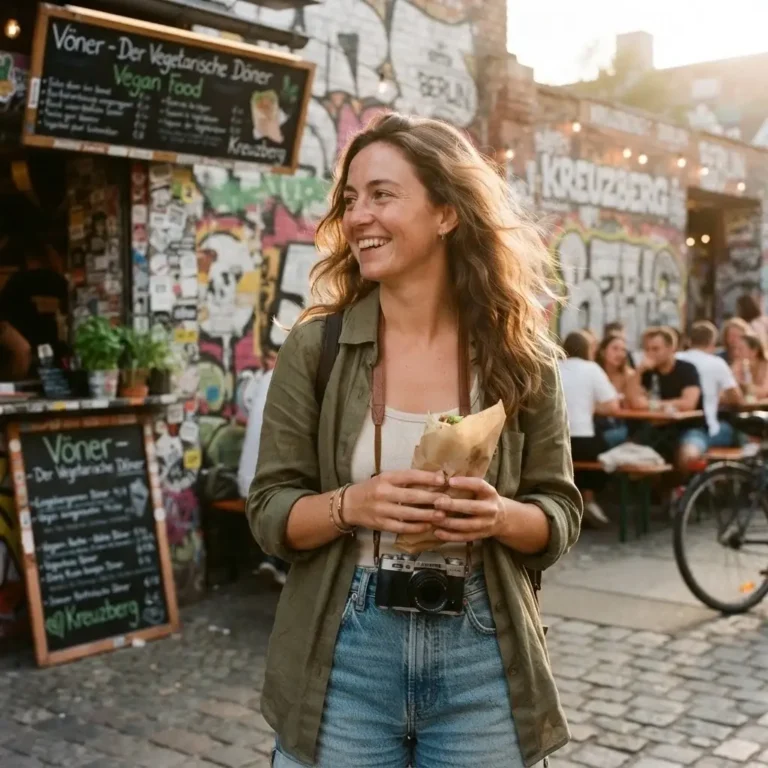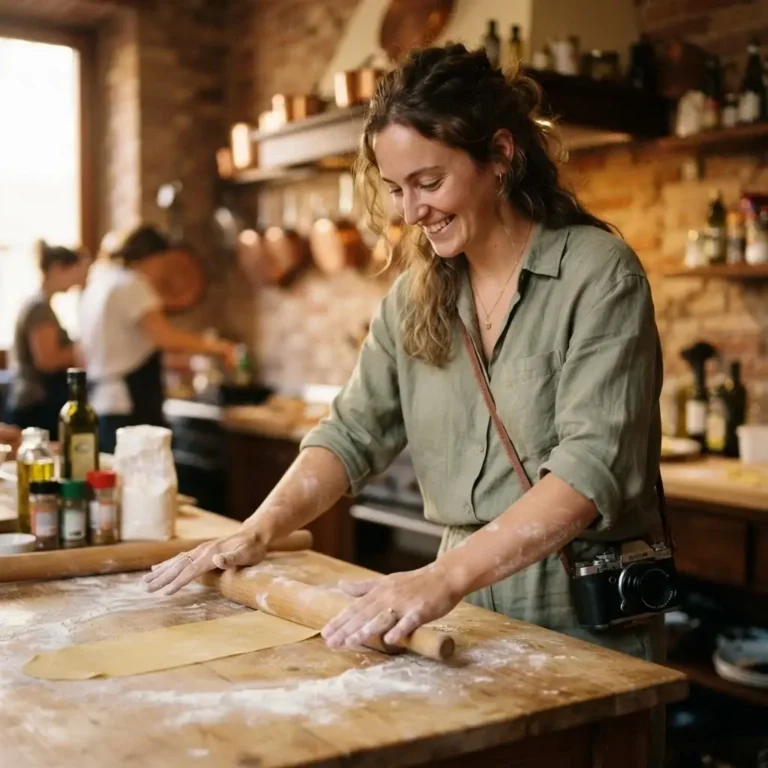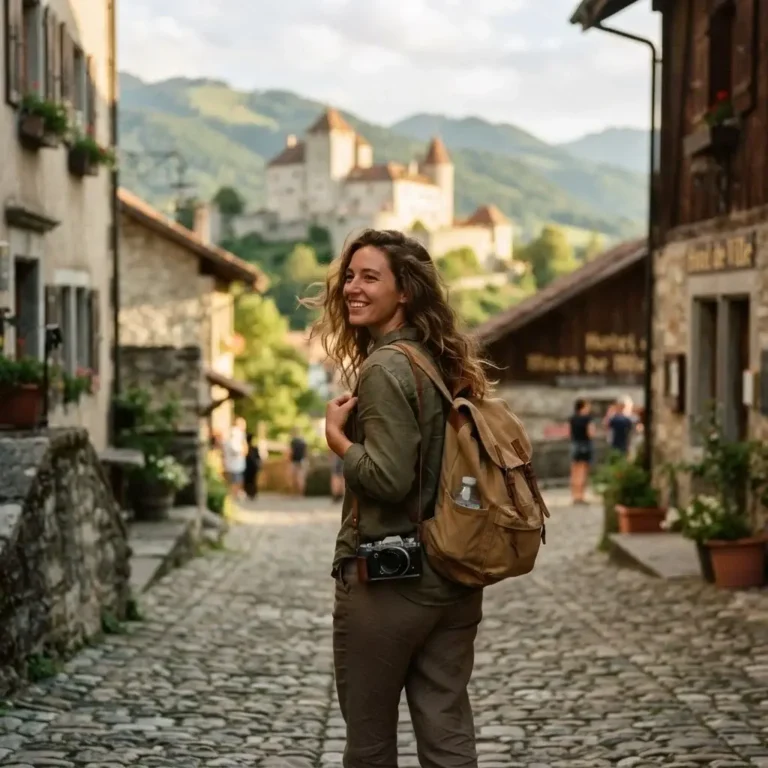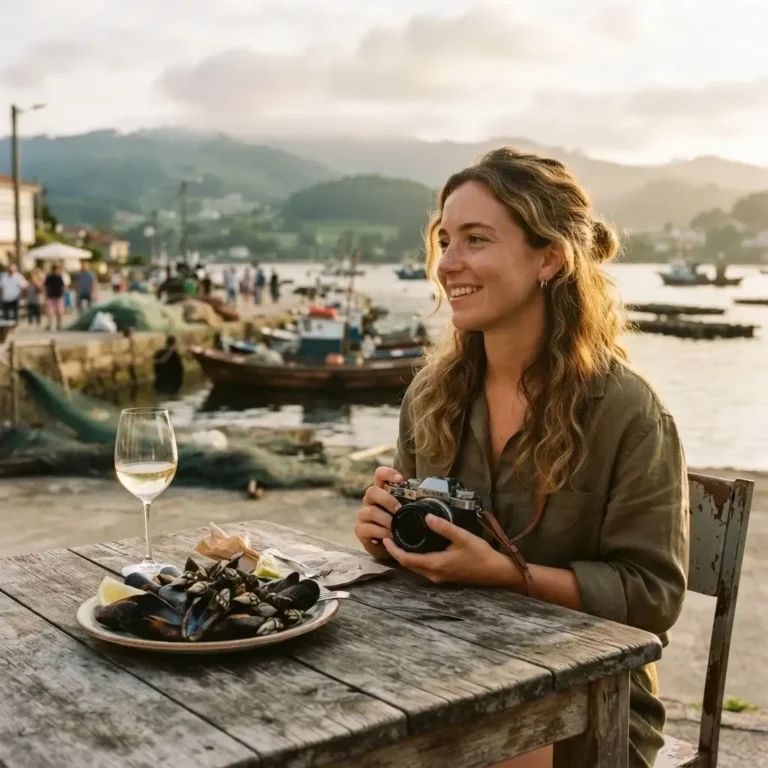
The first time I backpacked solo across Europe, I had a rail pass, a backpack that was way too heavy, and a list of cities I felt like I “had to” see. Paris, Rome, Barcelona, Prague. I checked them off one by one, and I don’t regret a single stop. But somewhere around week three, sitting in a crowded train car with my nose pressed to the window, I remember watching the flat farmland outside Munich slowly rise into hills, then ridgelines, then real mountains, and thinking: I wonder what’s happening in the little towns up there that nobody puts on a postcard.
That feeling never left me. It’s the same pull that eventually sent me to live with a family in Ghana instead of just visiting the capital, and the same instinct that had me hiking through rural China instead of only seeing Beijing’s big landmarks. The places tourists rush past are usually where the real texture of a country lives. Europe’s remote mountain villages are exactly that kind of place. They’re not hidden in some mystical sense, you can absolutely find them and get to most of them without a car, but they require a little more patience and a little less itinerary-checking than the big cities do. That patience is the whole point.
This guide is built for the person who wants more than a scenic photo. I’m going to walk you through specific villages worth the extra effort, the honest logistics of reaching them, the mistakes most first-timers make, and how to think about safety and confidence if you’re doing this alone. Some of these places I’m drawing from deep, current research and conversations with people who’ve made the trip. I’ll always tell you clearly when I’m speaking from that researched place versus my own lived travel background, because you deserve a guide who’s straight with you.
Why Seek Out a Remote Village Instead of Another Big City
There’s nothing wrong with a big city itinerary. I love a good city too. But remote mountain villages teach you something cities can’t, mainly because they force you to slow down. There’s usually one bus a day, or one cable car, or a single trail in and out. You can’t rush a place like that. You either commit to the rhythm of it or you don’t go at all.
That slowness is where cultural immersion actually happens. It’s the same lesson I learned teaching English in Thailand, where the real relationships and understanding came not from the tourist strip but from the slow, repetitive routine of showing up in the same small community day after day. A remote village asks the same of you, just compressed into a day or two instead of months. You eat where the locals eat because there’s often nowhere else. You talk to the guesthouse owner because there’s no big lobby to hide in. You notice details, like how the stone houses are built to survive heavy snow, or how the whole village seems to organize its day around when the one shop is actually open.
What “Remote” Really Means When You’re Talking About Europe
I want to be honest about something before we go further: almost nowhere in Europe is truly cut off from the modern world anymore. Even the most isolated alpine hamlet usually has decent cell coverage and a road or cable car within reach. “Remote” here means something more specific. It means low population, limited transport options, a slower pace of life, and a place that has resisted the kind of large-scale development that turns a village into a theme park version of itself.
That distinction matters because it changes how you plan. You’re not preparing for total wilderness survival. You’re preparing for limited transit schedules, cash-only economies in some spots, shops that close for a long lunch or entire off-season months, and the very real possibility that your phone plan won’t have signal for a stretch of trail. None of that should scare you off. It should just shape your packing list and your patience.
Gimmelwald, Switzerland: The Village With No Cars
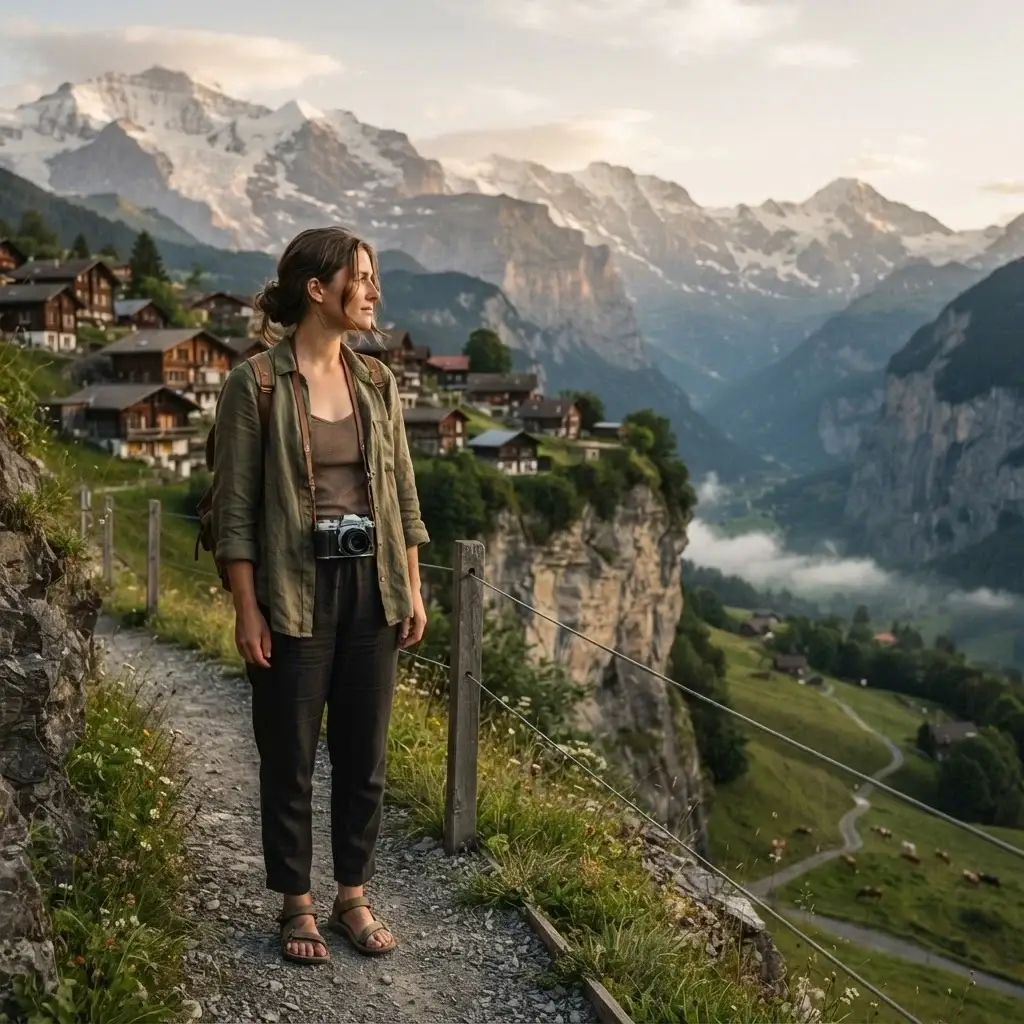
Gimmelwald sits on a cliff ledge in the Bernese Oberland, tucked into the Jungfrau region above the Lauterbrunnen Valley, and it has no road access for private cars at all. The only way in is by cable car from Stechelberg, or on foot along a well-marked trail from neighboring Mürren. That single fact changes the entire feel of the place. There’s no traffic noise, no parking lots, just cowbells, alpine air, and a scattering of wooden chalets that look almost untouched by the last century.
If you’re planning the trip, know that the cable car and connecting cog railways in this region are run by the Jungfrau Railways group, and pricing shifts by route and season, so I’d check the current Schilthorn cable car timetable and fares directly before you go, since a round trip up to the Schilthorn summit from Stechelberg runs well over 100 Swiss francs at full price while regional passes can bring that down significantly. Base yourself in Gimmelwald itself for a night if you can. Most day-trippers only pass through, and staying overnight is when the village actually opens up, when the day-tour buses clear out and it’s just you, a handful of hikers, and a mountain silence that’s hard to describe until you’ve heard it.
What to eat there is simple and good: expect hearty Swiss mountain fare, rösti, alpine cheese, dried meats, and fresh bread from the small village shop if it’s open when you arrive. Bring a bit of cash, since card acceptance can be patchy in the smallest guesthouses.
Papigo and the Stone Villages of Zagori, Greece
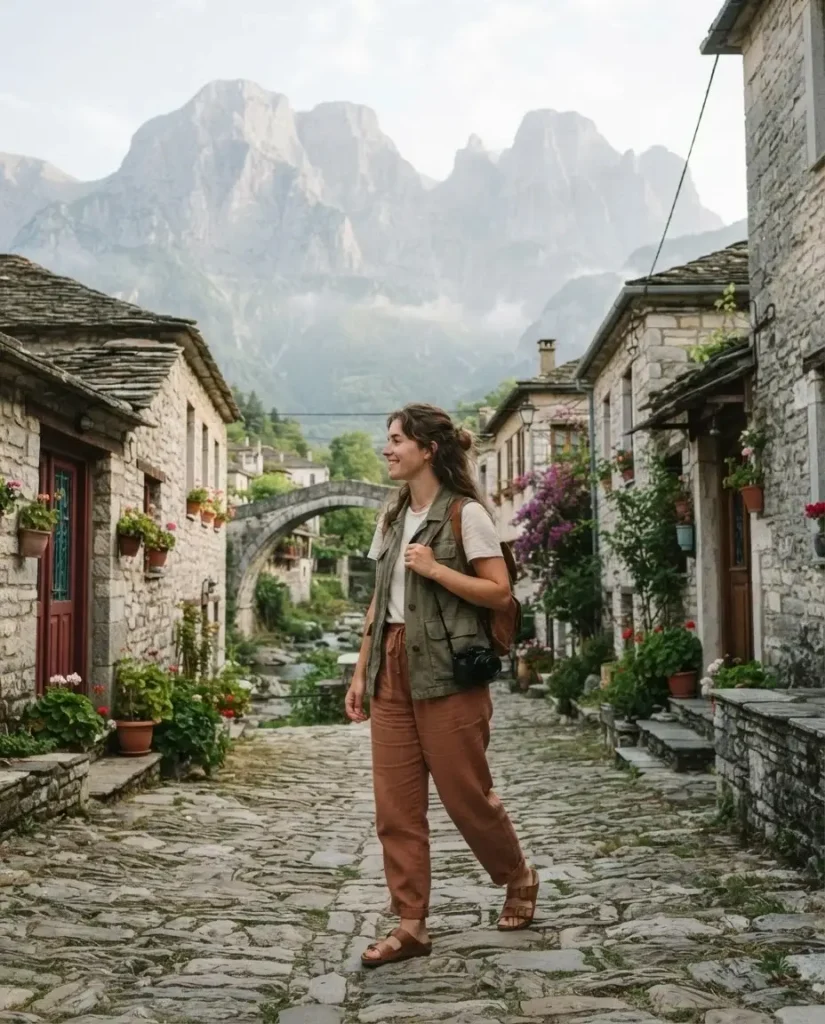
In northwestern Greece, tucked into the Pindus Mountains, sits a cluster of forty-six stone villages collectively known as the Zagorohoria. Papigo, split into an upper and lower settlement, is one of the most striking, built at the foot of the jagged Mount Tymfi peaks and just a short drive or hike from the edge of the Vikos Gorge, which is recognized by Guinness World Records as the deepest gorge relative to its width anywhere on the planet.
This entire region was designated a UNESCO Global Geopark under the name Vikos-Aoos, which tells you something about how geologically dramatic the landscape really is. From what travelers who’ve done the trip consistently report, the Beloi viewpoint above the gorge is one of the best sunrise or sunset spots in the country, and it’s reachable by a moderate hike rather than a technical climb. The stone architecture in these villages, arched bridges, slate roofs, tight cobbled lanes, has barely changed in centuries, largely because the region was historically difficult to farm and access, which paradoxically preserved it.
Getting there usually means flying or training into Ioannina and then arranging a rental car, since public transit into the deeper Zagori villages is limited and infrequent. If you’re nervous about mountain driving, hire a local guide for at least the gorge trail portion. Meals here lean into slow-cooked Epirus specialties, pites (savory pies stuffed with local greens or cheese), trout from the mountain rivers, and thick, tangy Greek yogurt with local honey.
Rocca Calascio and Santo Stefano di Sessanio, Italy
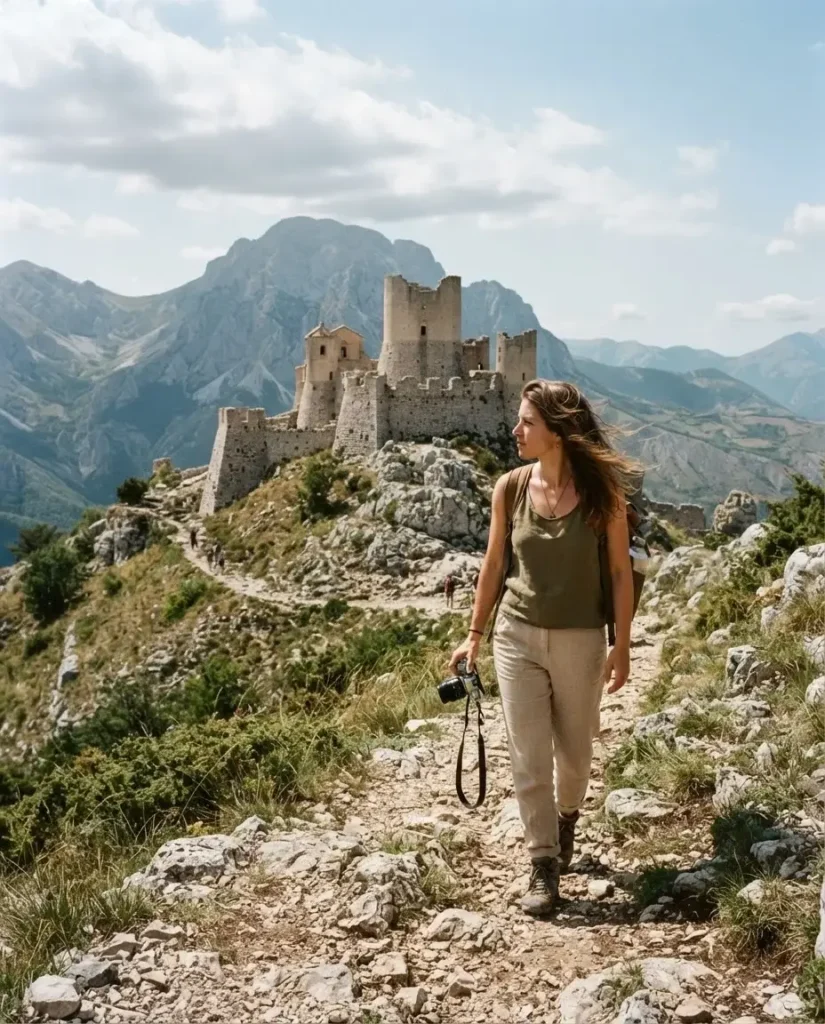
High in the Abruzzo region of central Italy, inside the Gran Sasso e Monti della Laga National Park, sits Rocca Calascio, a medieval hilltop fortress at roughly 1,460 meters that ranks among the highest mountaintop forts in the country. Below it, the tiny village of Santo Stefano di Sessanio has been carefully restored using traditional stone and mortar techniques, and it now functions almost like a living museum of Apennine mountain life, minus the velvet ropes.
The whole area falls under the Gran Sasso e Monti della Laga National Park’s official listing for Rocca Calascio, which is worth a look before you go for updated access notes and trail conditions, since parts of the fortress area can close temporarily for restoration work. Abruzzo doesn’t get the tourist crowds of Tuscany or the Amalfi Coast, and that’s exactly the appeal. You’ll likely need a rental car to reach it comfortably, as bus service into these small hill towns is sparse, especially outside peak summer months.
Food here reflects the region’s shepherding history: expect arrosticini (skewered mutton grilled over charcoal), saffron from the Navelli plain nearby, and simple pasta dishes finished with local pecorino. Santo Stefano has a handful of small guesthouses converted from historic buildings, and staying a night lets you catch the fortress at golden hour without the day-trip crowds.
Piódão, Portugal: The Schist Village Hidden in the Serra do Açor
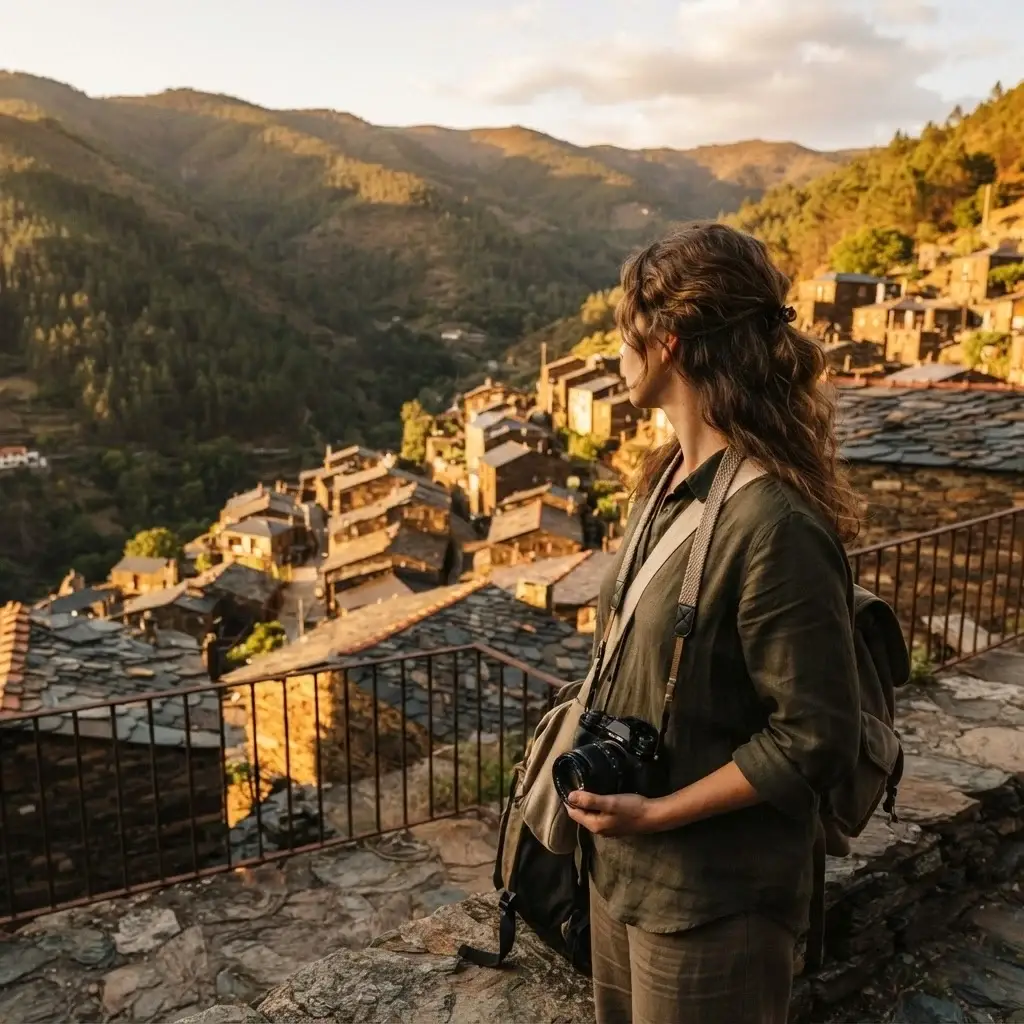
In central Portugal’s Serra do Açor mountain range, Piódão looks almost carved into the hillside itself. Every building is constructed from dark local schist stone with matching slate roofs, a building tradition shared across a wider network known as the Aldeias do Xisto, or Schist Villages, a group of roughly two dozen small settlements scattered through this rugged, forested part of the country.
The official Center of Portugal tourism page on the Schist Villages is a genuinely useful starting point for planning, since it breaks the villages down by river basin and gives a realistic sense of driving distances between them, and honestly, having a car is close to essential here, since the roads winding into these hills are narrow and winding with limited public transport. Piódão itself only got electricity in the 1990s, which gives you a sense of just how isolated this pocket of Portugal remained even in recent memory.
If you’re anything like me when I first planned a rural, car-dependent trip like this, budget more driving time than Google Maps suggests. Mountain roads here are slow by design. Once you arrive, look for locally raised goat cheese, chestnut-based dishes in the fall, and hearty bean and sausage stews that reflect the region’s shepherding past.
The Rhodope Mountain Villages of Bulgaria
Along Bulgaria’s southern border, the Rhodope Mountains hold some of the least visited village clusters in the entire European Union, centered around towns like Smolyan and the smaller settlements scattered through the surrounding valleys. This range is also one of the last strongholds in Europe for wolves, brown bears, and lynx, which tells you a lot about how undeveloped much of the terrain remains.
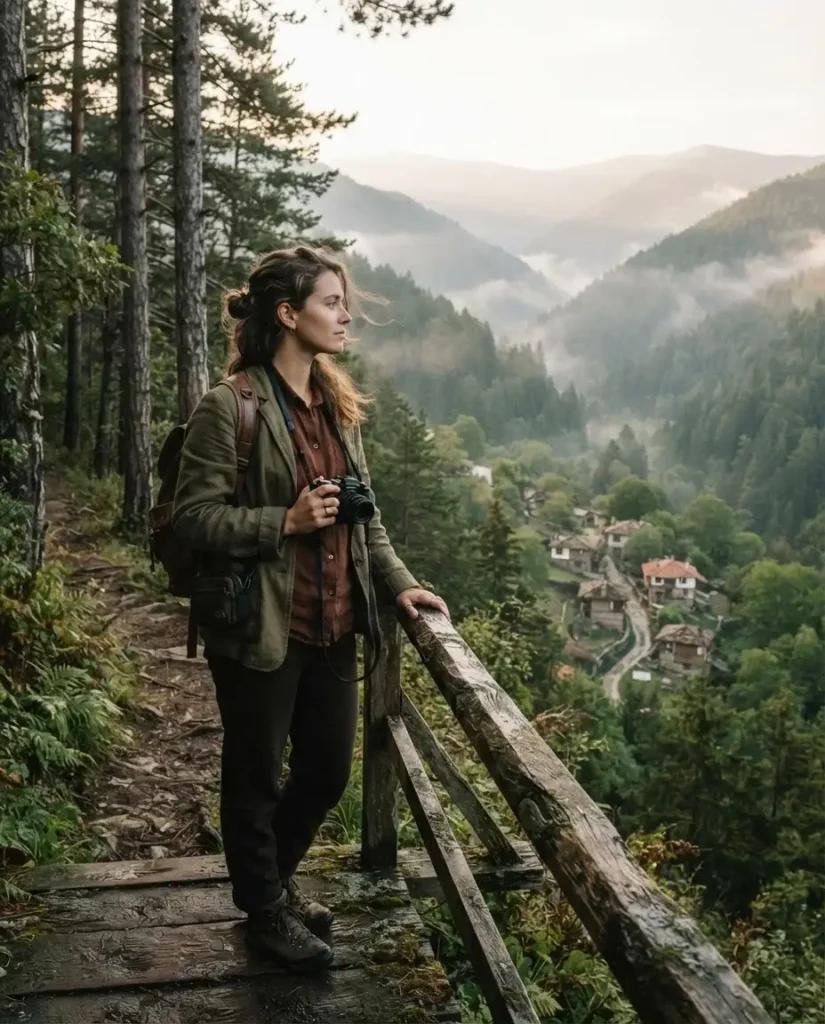
Conservation groups tracking the region, including the detailed overview from Rewilding Europe on the Rhodope Mountains, describe a landscape of dense old-growth forest, traditional shepherding communities, and a slower pace of rural life that has mostly avoided the mass tourism seen elsewhere in the Balkans. From what I’ve gathered researching this corner of Europe, English is spoken less consistently here than in Western Europe, so a translation app and a good dose of patience go a long way. Public buses connect the larger towns, but reaching the smallest villages usually means a rental car or a local guide.
Culinarily, expect Bulgarian mountain staples: banitsa (a flaky cheese pastry, often eaten for breakfast), grilled meats, and shopska salad made with whatever vegetables are freshest that week. Homestays and small family-run guesthouses are common and often the warmest way to experience the culture directly.
The Mistakes First-Time Visitors Keep Making
I’ve watched enough travelers plan trips like this, and made my own version of these mistakes backpacking solo through Europe, to know the same handful of errors show up again and again.
The biggest one is treating a remote village like a quick photo stop instead of a place to actually stay. When you only pass through for an hour, you experience the postcard version, and you miss the part where the village breathes differently at night, once the tour buses leave. Hallstatt in Austria is the cautionary tale most people point to here. It’s genuinely a beautiful lakeside mountain village, part of the UNESCO-listed Hallstatt-Dachstein Salzkammergut cultural landscape, but its narrow lanes have become so overwhelmed by day-trip tourism that the town itself has had to introduce visitor caps and traffic restrictions just to function. That’s what happens when a remote place becomes famous without the infrastructure to absorb the crowds. It’s a good reminder to seek out the quieter alternatives, or to visit well-known spots like Hallstatt outside peak hours and peak season if you do go.
The second mistake is underestimating opening hours and seasonal closures. Small mountain economies often run on their own logic. A shop might close for two hours at lunch, or a guesthouse might shut down entirely from November through March. Always confirm accommodation and food availability directly before you travel, especially outside of June through September.
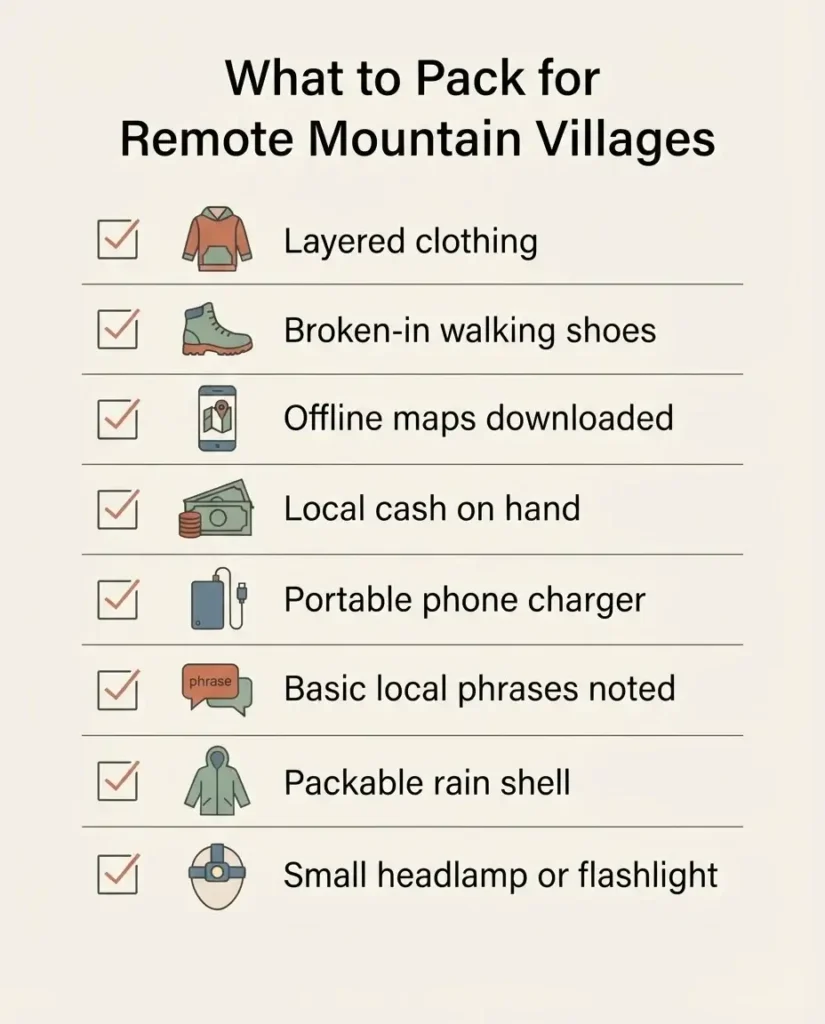
The third mistake is assuming you’ll have reliable cell signal and card payment everywhere. Carry some local cash, download offline maps before you lose signal, and let someone know your rough plan if you’re heading into a trail-access-only village alone.
Budget, Season, and What to Actually Pack
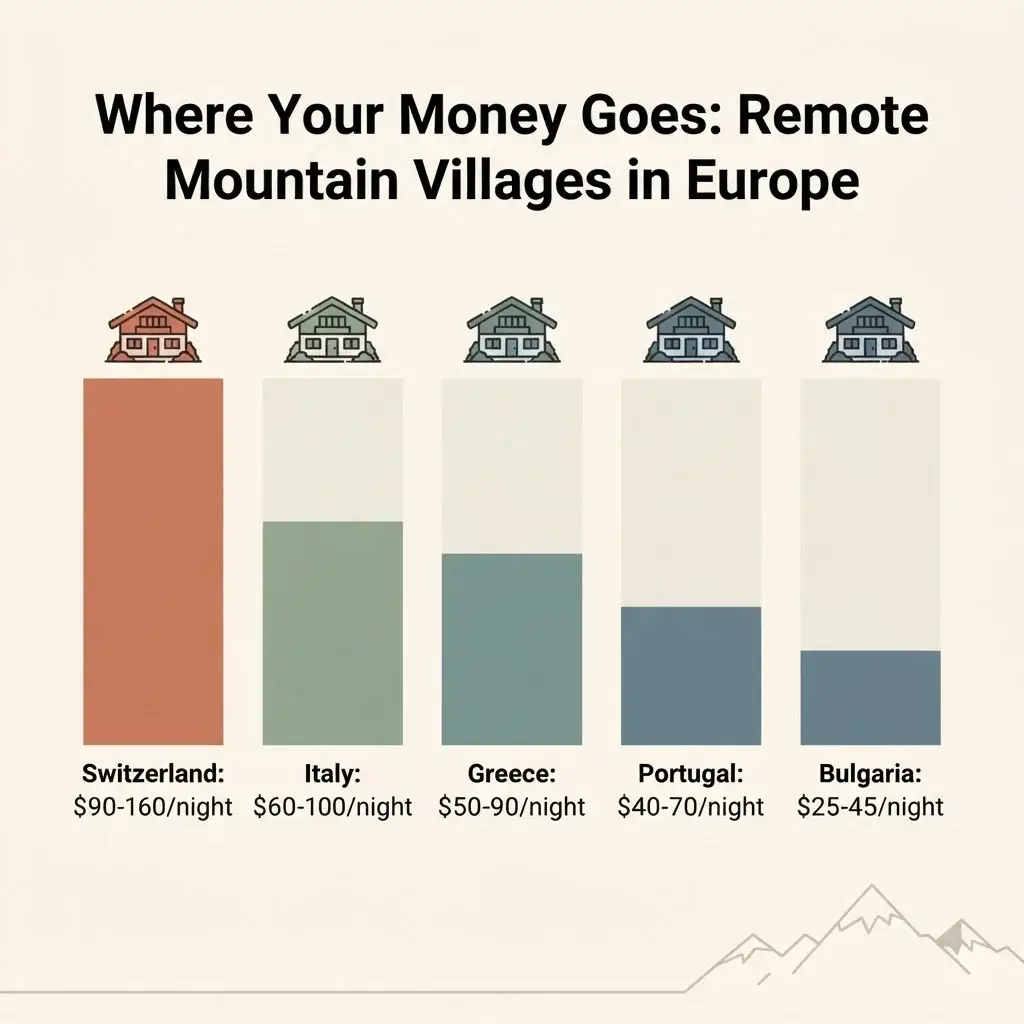
Cost varies enormously by country, but as a general pattern, Western European mountain regions like Switzerland run noticeably higher than Southern and Eastern European ones. A modest guesthouse night in Gimmelwald or the Jungfrau region can easily run 80 to 150 Swiss francs, while a similar stay in Bulgaria’s Rhodope villages or Portugal’s schist villages might cost a third of that. Build your route around that reality if you’re traveling on a tighter budget, and consider anchoring a trip in a lower-cost country with a day or two splurge somewhere pricier like Switzerland.
Shoulder season, generally May through June and September into early October, tends to offer the best balance of open trails, mild weather, and thinner crowds. High summer brings more reliable transport schedules but also the heaviest tourist traffic in the better-known spots. Winter can close many of these villages off entirely, especially the higher alpine ones, so always check current access before building a winter itinerary.
Pack in layers no matter the season. Mountain weather shifts fast, and a sunny afternoon in a valley village can turn cold and windy within an hour if you gain elevation. Solid, broken-in walking shoes matter more here than almost anywhere else you’ll travel, since cobbled and uneven stone paths are the norm rather than the exception.
Traveling Alone in Small Villages: Safety and Confidence
If you’re nervous about doing this solo, I understand that hesitation completely. I felt a version of it standing at the edge of unfamiliar train platforms across Europe in my twenties, and again arriving alone in a small town in Ghana where I didn’t speak the local language yet. What I learned in both places is that small communities are often more watchful and welcoming than big cities, not less. Fewer visitors often means more genuine curiosity about who you are and why you’ve come, rather than indifference.
Practically speaking, solo travel in a remote village usually means better safety, not worse, simply because crime rates in these areas tend to be extremely low. The real risks are more logistical than personal: getting stuck without transport, losing daylight on a trail, or running into a language barrier when you need help. Mitigate those by confirming your last bus or cable car time before you set out for the day, telling your guesthouse host your rough plan if you’re hiking alone, and learning a handful of basic local phrases, even just hello, thank you, and where is, which tends to open doors in small communities faster than English ever will.
Confidence in these settings builds the same way it does anywhere else: through small, repeated actions. Ask the shopkeeper a question. Sit at the one local café instead of ordering food to your room. Say yes when someone offers to show you the trail they grew up walking. Those small moments accumulate into the kind of trip you actually remember years later, long after the postcard views have blurred together with every other mountain photo you’ve ever taken.
Remote mountain villages won’t hand you convenience. They’ll ask a little more patience, a little more planning, and a willingness to slow down in a world that constantly pushes you to speed up. In exchange, they offer something increasingly rare in modern travel: a place that still feels like itself. That trade has been worth it every single time I’ve made it, whether the mountain was in Switzerland’s Alps or somewhere I stumbled onto by accident on a slow train through unfamiliar country. Start with one village on this list, give it more than a day, and see what it teaches you.