How to Choose the Best Conservation Volunteering Programs in Europe

I still remember the version of me who stared at a spreadsheet under office lights, quietly wondering if my whole life was going to be spent counting down to two weeks of vacation a year. When I finally walked away from that desk and started stitching together a life around flexible work and travel, one of the ideas that pulled at me hardest was this: what if a trip could give something back instead of just taking pretty photos?
That is the heart of conservation volunteering. And Europe, it turns out, is one of the easiest places in the world to try it, whether you are protecting turtle nests on a Greek beach or rebuilding a mountain trail in the Arctic. But here is the honest part nobody tells you upfront. Not every “volunteer” program is what it claims to be. Some are run by passionate nonprofits. Others are booking agencies with a nice logo. This guide will help you tell the difference, choose well, and show up ready, even if you have never done anything like this before.
What Conservation Volunteering in Europe Actually Involves
Let me clear up the biggest myth first, because it trips up almost everyone. Conservation volunteering is not cuddling animals. It is work. Real, sweaty, muddy, rewarding work.
Depending on the project, your day might mean walking beach patrols before sunrise to find turtle nests, hauling gravel to fix an eroded hiking trail, pulling invasive plants, counting wildlife, or feeding animals in a rescue center. It is physical, it is outdoors, and it is often repetitive. And yet almost every volunteer I have read about or spoken with describes it the same way: it was the most meaningful thing they did all year.
If you are anything like I was when I first planned an unfamiliar trip, you are probably worried you are not qualified. Good news. The vast majority of programs need no experience at all. They train you on site. What they actually want is someone reliable, respectful, and willing to get their hands dirty.
The Truth About “Voluntourism” (Read This Before You Pay Anyone)
Here is the thing I wish someone had drilled into me earlier. There is a whole industry built around selling volunteer trips, and not all of it deserves your money.
The warning signs of a project to avoid are the ones that let you pay to hold baby animals with no real conservation purpose, that keep their prices hidden until you fill out a form, or that are run by a for-profit company rather than the organization doing the actual work. A genuine program is transparent about where your fee goes, is usually a registered charity or run by a public agency, and can clearly explain the conservation outcome your labor supports.
My rule of thumb: try to book directly with the organization doing the work whenever you can, rather than through a third-party agency that adds a markup. You will often pay less and know exactly where your money lands. To understand why this work matters at all, it helps to see how seriously the continent takes it. The European Commission has recognized long-term efforts like the campaign to protect the Mediterranean loggerhead sea turtle, which shows how volunteer-supported monitoring feeds directly into official conservation results. When your beach patrol data becomes part of that picture, you are not playing at conservation. You are part of it.
The Best Types of Conservation Volunteering Programs in Europe
Rather than hand you a ranked list that pretends one program is “the best” for everyone, let me walk you through the main categories, because the best choice honestly depends on you. Your budget, your fitness, how long you can stay, and what moves you all matter.
Sea Turtle and Marine Conservation (Greece and the Mediterranean)
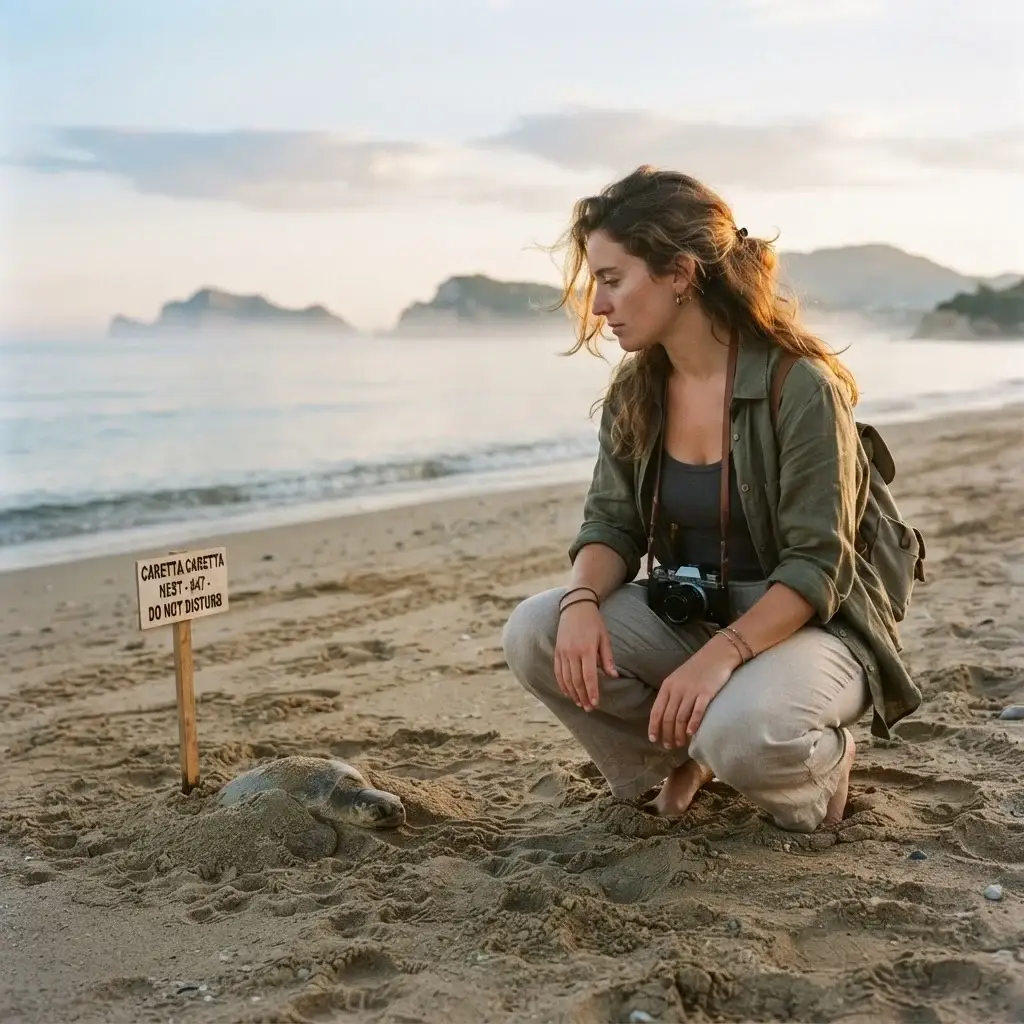
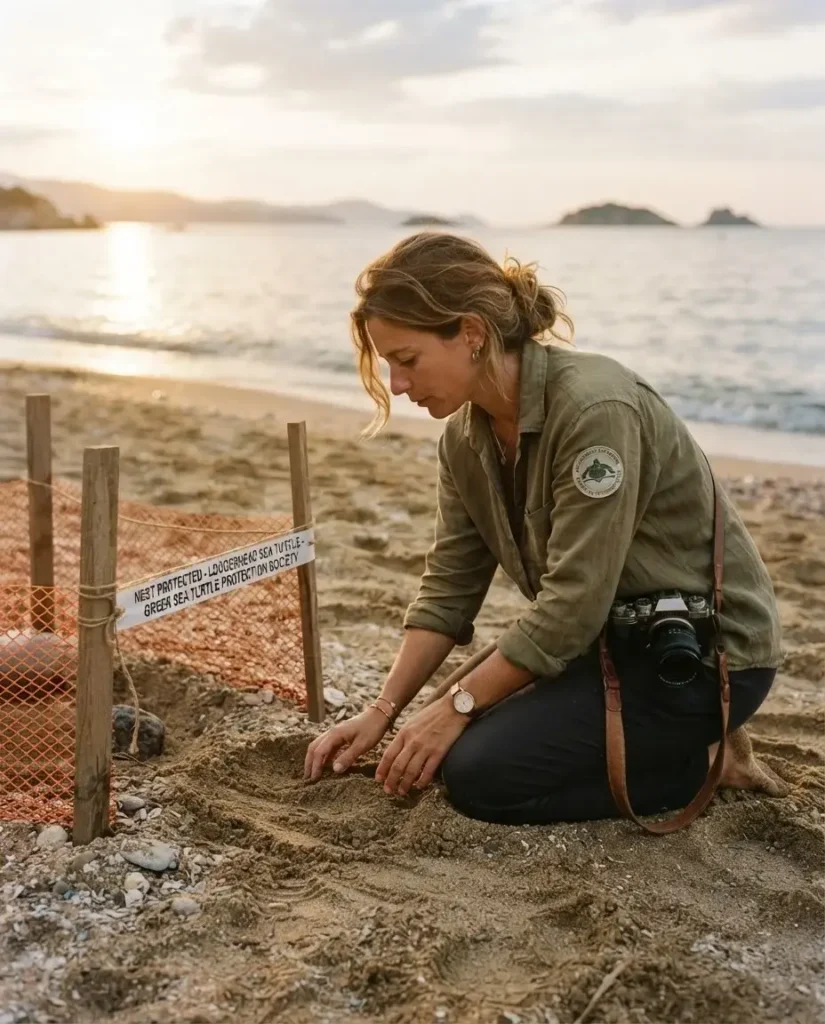
If the ocean is your pull, this is where I would start looking. The Mediterranean is a critical nesting region for loggerhead turtles, and the work is hands-on in the best way.
The most respected name here is Archelon, the Sea Turtle Protection Society of Greece, a nonprofit that has been at this for decades. When I dug into the details of the Archelon volunteer program, a few things stood out as refreshingly honest. You need to be at least 18, speak good English, arrange your own health insurance, and commit to a real chunk of time, a minimum of four weeks for field projects and five for the rescue center. For nesting-beach camps you bring your own camping gear and live communally, which is not glamorous but is exactly why it bonds a team so fast. There is a participation fee, but it covers your accommodation, training, and admin, and you are paying a genuine charity, not a middleman. They even welcome volunteers over 50 for shorter two to three week stays in the milder months of May, June, and September.
What to expect day to day: early morning surveys locating and protecting nests, shading nests from the sun, guiding curious tourists on educational beach walks, and sometimes tagging turtles. What to eat while you are there: lean into the simple, glorious Greek staples that fuel long days, things like fresh horiatiki salad, grilled fish, souvlaki, and as much watermelon as you can carry back from the local market.
Rewilding and Wildlife Recovery Across the Continent
Rewilding is one of the most exciting movements in European conservation, and it is a completely different flavor of experience. Instead of managing one species on one beach, you are helping restore whole ecosystems, bringing back wolves, bison, vultures, and beavers, and letting nature run itself again.
The organization to know is Rewilding Europe, which coordinates projects across landscapes from the Iberian mountains to the Danube Delta and the Southern Carpathians. Their volunteer and internship database is worth browsing slowly, because roles range from short practical stints to multi-month placements in wildlife monitoring, habitat work, and even conservation storytelling. From what volunteers consistently report, these placements suit people who want to go deep and can commit longer, and they often reward those with a specific skill, whether that is photography, ecology, or communications.
If you have ever wondered whether one person’s effort really matters at a landscape scale, this is the category that answers yes.

Trail Building and Nature Restoration in Iceland
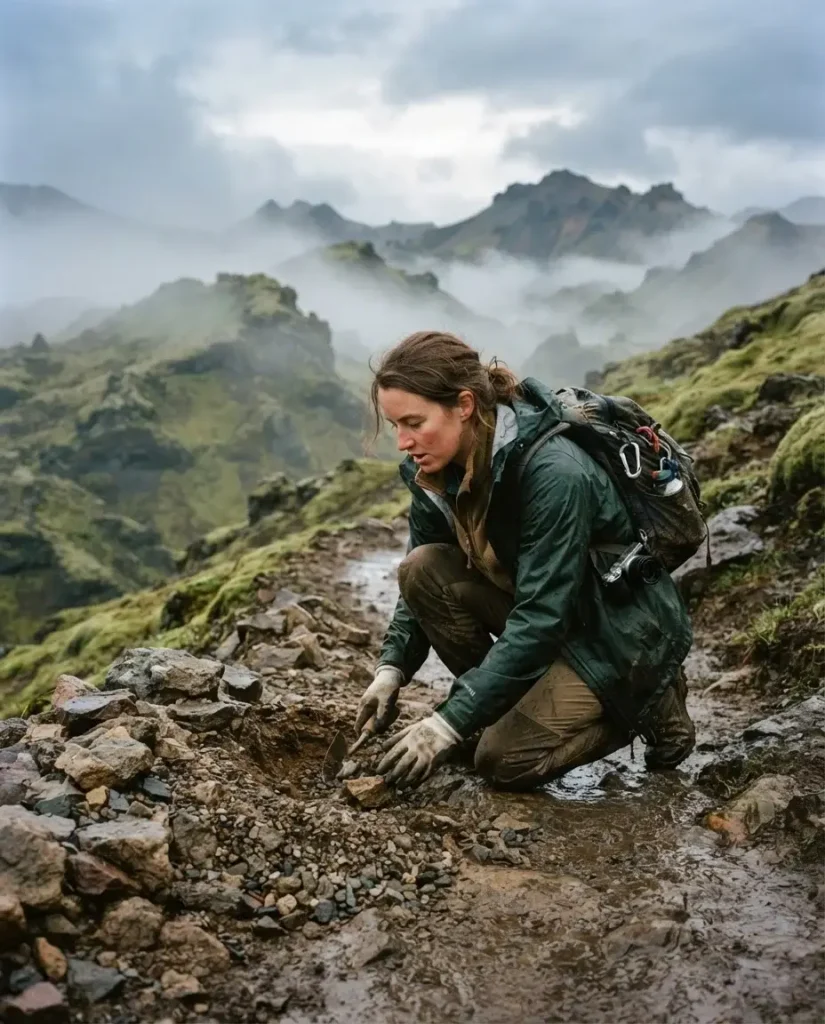
Iceland holds a special place in my imagination as a solo traveler, all that raw, elemental landscape, and here is a way to experience it while giving back. The Iceland Conservation Volunteers program is run not by a company but by the country’s own Environmental Agency, Umhverfisstofnun, which manages the vast majority of Iceland’s protected areas.
According to the official Iceland Conservation Volunteers page, roughly 80 to 100 international volunteers join each summer, together completing around 300 weeks of conservation work a year. Much of it is trail building and maintenance in remote national parks, plus tackling invasive plants and restoring landscapes damaged by off-road driving. This is genuinely physical work in a place with famously unpredictable weather, so it rewards the fit and the flexible. The payoff is unreal: you live and work in some of the most beautiful corners of the country, in tight-knit international teams, far from the tourist crowds. What to eat to keep your energy up: hearty Icelandic lamb soup (kjötsúpa), skyr for protein, and dark rye bread, all of which suit long days outdoors.
Organic Farming and Regenerative Land Work (Everywhere, on a Budget)
If your budget is tight, and mine certainly was in my early travel years when I was stashing tip money in a shoebox, this is your door in. WWOOF, which stands for World Wide Opportunities on Organic Farms, connects volunteers with organic farms across dozens of European countries. Through the WWOOF network, you typically work a set number of hours in exchange for food and a place to sleep, so beyond a small annual membership fee and your transport, your daily costs can be close to nothing.
It is not “wildlife” conservation in the classic sense, but regenerative farming, soil health, and biodiversity are deeply connected to the environmental picture, and the cultural immersion is unbeatable. You live with a local family or farm, eat what you help grow, and learn a rhythm of life most travelers never touch. This ties into something I believe deeply: authentic cultural experiences beat rushing through attractions every single time.
How Much Does It Cost? An Honest Breakdown
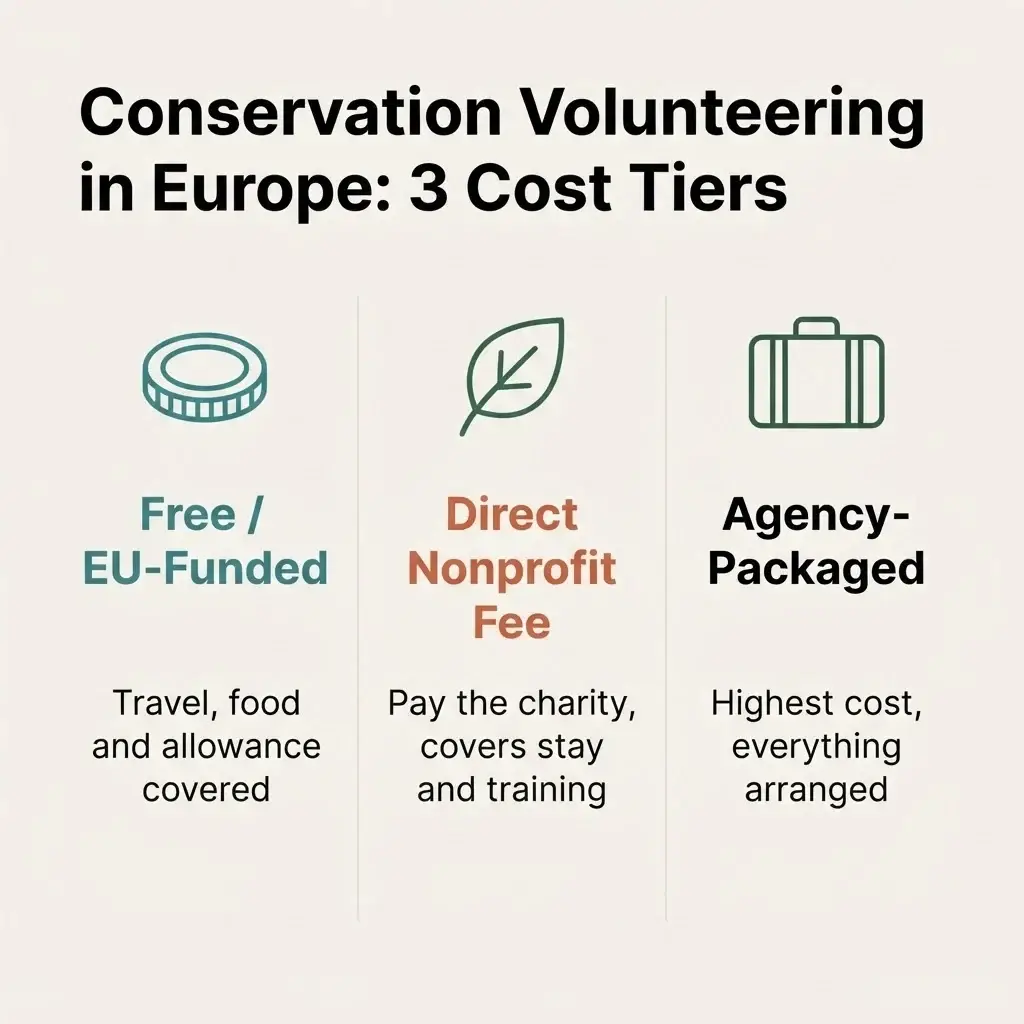
This is the question everyone whispers, so let me answer it plainly. Costs fall into roughly three tiers.
Free or paid-to-volunteer options exist and are real. The clearest example is the EU’s own scheme, which I will cover next. WWOOF and some farm or hostel work exchanges are also nearly free once you cover membership and travel.
Direct nonprofit fees are the middle tier. When you book straight with a charity like Archelon, you pay a participation fee that genuinely covers your accommodation, training, insurance-in-case-of-accident, and administration. This is usually far more affordable than the agency route and every euro stays close to the cause.
Agency-packaged programs sit at the top. Booking the same kind of project through a for-profit placement company can cost several times more for the same two weeks, because you are paying for their marketing, support desk, and profit margin. Sometimes that convenience is worth it, especially for a nervous first-timer who wants everything arranged. Just go in knowing what the markup buys you.
On top of the program itself, always budget for flights, travel insurance, any visa costs, and personal spending.
And never, ever skip insurance. Many programs, Archelon included, require proof of your own health coverage before you can join.
The Free Route Most Travelers Miss: EU-Funded Volunteering
Here is the option the paid agencies will never advertise, because there is nothing in it for them. If you are between 18 and 30, the European Solidarity Corps is an EU-funded program that can cover your travel, accommodation, food, and even a small allowance for volunteering placements across Europe, including environmental and conservation projects. You can explore active placements through the official European Solidarity Corps volunteering portal.
I cannot stress enough how underused this is. For a young solo traveler dreaming of a meaningful trip but stuck on the money, this can turn “someday” into “this year.” Placements can run from a couple of weeks to a full year, and the structure and support built into the scheme make it genuinely beginner-friendly. If you fit the age range, look here first.
Is Conservation Volunteering Good for Solo Travelers and First-Timers?
I would argue it is one of the best possible ways to travel solo, and I say that as someone who took her first big solo leaps full of doubt. Here is why it works so well.
You are never actually alone. You arrive solo but land inside a ready-made team of people from all over the world who chose the exact same thing you did. That shared purpose collapses the usual awkwardness fast. You also have structure, which is a quiet gift for a first-timer, because you are not improvising every day in a strange place. There are set tasks, safe accommodation, and people who know the area. And the confidence you build is real and lasting. Solo travel grows you through action, and few things prove to you what you are capable of like finishing a hard week of physical work in a foreign country alongside strangers who became friends.
If fear is the thing holding you back, and it holds nearly everyone back at the start, a structured conservation program is one of the gentlest on-ramps to solo travel I know.
Practical Planning: Timing, Visas, and Insurance
A few practical threads to pull together before you commit.
Timing matters enormously and varies by project. Turtle nesting work in Greece runs across the warm months, roughly late spring through early autumn, with summer as the peak. Iceland’s trail-building season is the short, bright summer. Farm work follows the growing seasons. Match your availability to the project’s real calendar, not the other way around.
On visas, if you hold a passport that lets you enter the Schengen Area visa-free, you can generally stay up to 90 days in any 180-day period for short volunteering, which comfortably covers most programs. Longer placements, or certain nationalities, may need a specific visa, so always confirm the current entry rules for your passport and destination before booking anything.
On insurance, treat it as non-negotiable. You want coverage that includes medical care and, ideally, the kind of active outdoor work you will be doing. Several programs will ask for proof before they confirm your place.
What to Pack for a Conservation Volunteering Trip
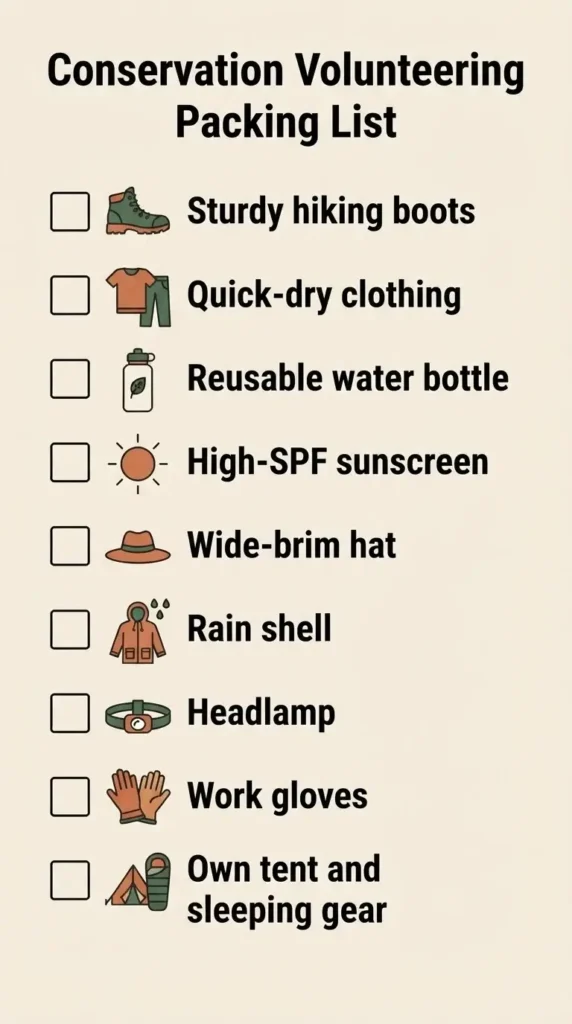
Packing well is a skill I learned the hard way on my earliest trips, so let me save you some pain. For most conservation projects you will want sturdy closed-toe shoes or hiking boots, plenty of quick-dry clothing you do not mind ruining, a reusable water bottle, high-SPF sunscreen and a wide-brim hat for beach work, a rain shell for anywhere like Iceland, a headlamp for early or late shifts, and work gloves. For camping-based projects like Archelon’s nesting beaches, remember you supply your own tent and sleeping gear. Pack light, pack practical, and leave the fancy outfits at home. Nobody on a turtle beach cares what you are wearing.
Choosing the Right Program for You
So how do you actually decide? Ask yourself four honest questions. How much time can you truly give, since many of the best programs want three to six weeks, not a long weekend? What is your real budget, which points you toward EU funding, WWOOF, direct nonprofit fees, or a packaged agency? How physical do you want it, since beach patrols, mountain trails, and farm work all demand different things from your body? And what genuinely moves you, because you will work harder and happier on something you actually care about.
There is no single best conservation volunteering program in Europe. There is only the best one for the person you are right now, with the time, money, and passion you actually have. And the moment you stop waiting for perfect conditions and pick one, you have already done the hardest part.
The version of me stuck at that desk could never have imagined how much a trip built around giving back would give back to her instead. Wherever you are reading this from, I hope you stop counting down the days and start counting the ways you could go. Your turtles, your trail, your farm, or your wolves are out there. Go find them.