Best Islands for Birdwatching in Europe: A Solo Traveler’s Guide

The first time I stood on a cliff edge with wind slapping my jacket and thousands of seabirds wheeling below me, I did not know the name of a single one of them. I want to say that upfront, because if you are reading this and worrying that you are not a “real” birder yet, I have been exactly where you are. Curiosity is the only qualification you need. Everything else you pick up along the way.
Islands are where birdwatching in Europe gets magical. They sit on ancient migration routes, they hold species you cannot find anywhere else, and they concentrate huge colonies onto dramatic cliffs. For a solo traveler, they also offer something quieter and harder to name: long stretches of time where it is just you, a pair of binoculars, and the world doing its wild thing without an audience. That is where the confidence grows.
This guide walks you through the islands I would send a friend to, grouped by what you actually want out of the trip. I will be honest about seasons, access, and cost, because a remote island with the wrong ferry schedule can turn a dream trip into a stressful one. Let’s plan it properly.
How to Choose Your Island (Start With the Birds, Then the Season)
Here is the mistake most first-timers make. They pick a beautiful island, book flights, and then discover the birds they hoped to see are on the other side of the planet that month. Birds run on a calendar, and yours has to match theirs.
There are really two kinds of island birding trips. The first is seabird colonies, where cliffs erupt with puffins, gannets, and guillemots that come ashore only to breed. That is a late spring to summer show. The second is migration hotspots, where islands act as rest stops for birds crossing continents, which peaks in spring and again in autumn. Once you know which experience you want, the “when” answers itself.
If you are brand new, I genuinely recommend picking one target bird you find beautiful and building around it. Wanting to see one puffin will teach you more about planning than any checklist. And if you want to understand why certain islands matter so much for conservation, the concept of Important Bird and Biodiversity Areas mapped by BirdLife International is a great rabbit hole. It shows you which places are globally significant, and it quietly makes you a more thoughtful traveler.
The Scottish Isles: Where Seabird Colonies Feel Endless
If I could send a first-time island birder anywhere in Europe, it might be Scotland. The seabird spectacle is world class, the infrastructure is friendly to solo travelers, and English makes the logistics low-stress if you are nervous about going alone.
Shetland: Big Colonies, Easy Access
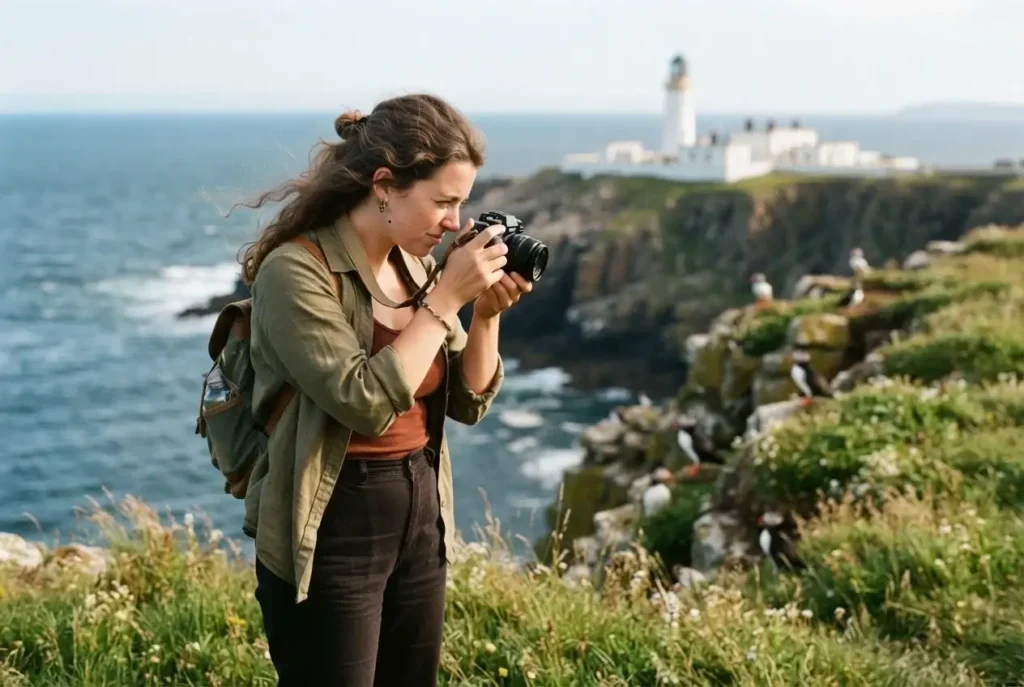
Shetland is the sweet spot between “wild” and “doable.” At the southern tip, Sumburgh Head is an RSPB nature reserve where you can walk right up to nesting puffins in early summer, along with fulmars, guillemots, and shags, all against a working lighthouse. It is the most beginner-friendly seabird site I know of, and the RSPB’s official Sumburgh Head reserve page lays out access clearly. The visitor centre generally runs from around April to September, Thursday to Monday, so time your visit accordingly.
Getting there: fly into Sumburgh Airport, which is right next to the reserve, or take the overnight ferry from Aberdeen to Lerwick. Base yourself in Lerwick for a first trip. It has cafes, groceries, and buses, which matters when you are traveling solo and want an easy home base. Eat local: try a bowl of Cullen skink, a thick smoked haddock soup, and fresh Shetland lamb.
Fair Isle: Britain’s Migration Legend
Between Shetland and Orkney sits tiny Fair Isle, one of the most famous bird migration outposts in Britain. Its observatory reopened in 2025, and the island is legendary for turning up rare vagrants blown off course. This one is more of an intermediate trip because access depends on a small ferry or plane and weather, but the sense of community among birders there is something special for a solo traveler.
St Kilda: The Most Dramatic Colony in Europe
If puffins and gannets are what you crave, few places on Earth compete with St Kilda, an archipelago far out in the Atlantic. It is a rare dual UNESCO World Heritage Site, recognised for both its nature and its abandoned human history, and you can read the full story on the UNESCO World Heritage listing for St Kilda. As of 2025 it holds the world’s largest northern gannet colony, with over 59,000 breeding pairs, and nearly a million seabirds crowd its cliffs at peak breeding.
Be realistic about access. You reach St Kilda on a day boat or a small expedition in summer, seas permitting, and trips get cancelled for weather. The National Trust for Scotland’s St Kilda page is the place to understand what a visit involves before you build a trip around it. From what solo travelers consistently report, booking a small-group boat is the smart move here, both for the logistics and because you will be glad of company on rough water.
The Faroe Islands: Puffins on a Cliff Edge
The Faroes feel like the edge of the map in the best way. Green cliffs plunge straight into the Atlantic, and the island of Mykines is the puffin star. It is the only Faroese island where you can also see northern gannets, and in summer the puffins nest so close to the footpath that you learn to walk slowly and quietly out of pure respect.

Here is the critical logistics point, and please write it down. Mykines is only reachable by ferry (or a small helicopter service) between 1 May and 31 August, and puffins start leaving by mid to late August. Miss that window and you will find an empty cliff. The official Faroe Islands guide to Mykines covers the ferry season and booking, and the birding-specific breakdown on Birdingplaces’ Mykines page tells you exactly which species show up where.
Solo tips: the ferry is small and books out in peak summer, so reserve ahead. Weather can strand you, so build a buffer day into your plan and do not schedule a flight home the morning after Mykines. Base yourself in Tórshavn, the small capital, which is walkable and safe and has excellent seafood. Try local lamb and, if you are adventurous, ask about traditional dried fish.
The Mediterranean Islands: Migration and Warm-Weather Birding
If cold Atlantic cliffs are not your idea of a good time, the Mediterranean islands offer birdwatching in sunshine, with migration as the headline act.
Lesvos, Greece: A Spring Migration Classic
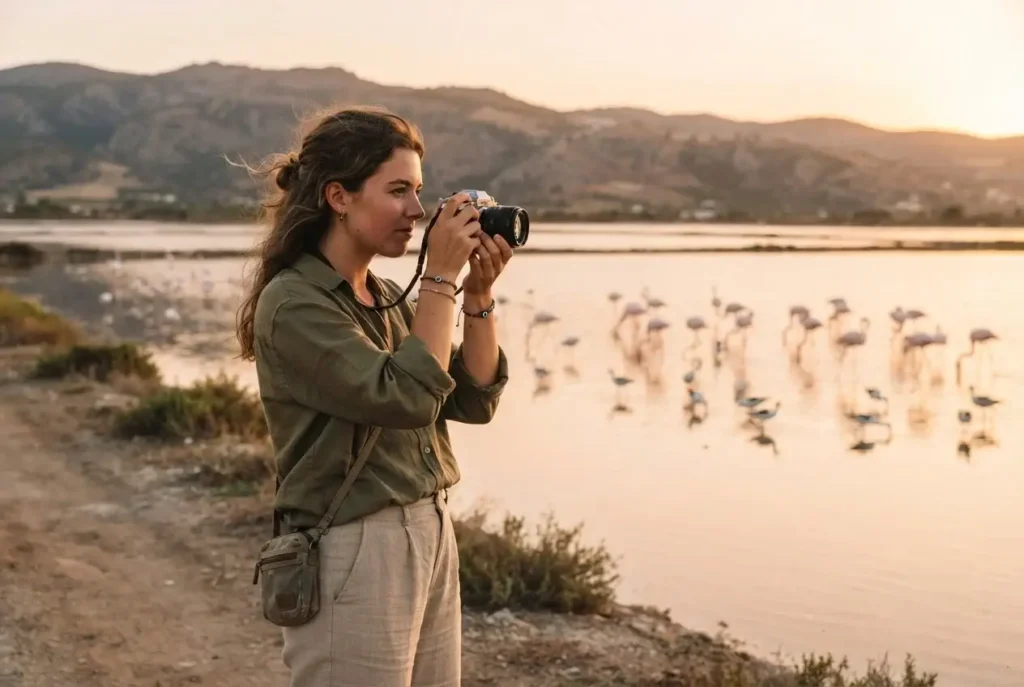
Lesvos is quietly one of the best islands in all of Europe for spring migration. Over 330 species have been recorded here, and in April and May the island fills with birds streaming north from Africa. The Kalloni Salt Pans are the beating heart of it, with flamingos, herons, waders, and flurries of colorful migrants passing through. The island’s own Lesvos birdwatching overview is a solid starting point for mapping out sites.
For a solo traveler, Lesvos is wonderfully manageable. Rent a small car, base yourself near Kalloni, and drive between wetlands, river mouths, and hillsides at your own pace. Greek island hospitality is warm and safe, and the food alone is worth the trip. Sit down to fresh grilled sardines, local ouzo if that is your thing, and whatever the taverna caught that morning. Slow mornings at the salt pans and slow lunches after are the whole point.
Mallorca, Spain: Easy Wins for Beginners
Everyone thinks of beaches when they hear Mallorca, but the S’Albufera Natural Park is a superb, accessible wetland with bird hides and flat, walkable trails. It is a great place to see specialties like the moustached warbler and purple swamphen without any hardcore hiking, which makes it ideal if you are easing into birding or short on time. The detailed S’Albufera de Mallorca birding guide on Birdingplaces breaks down the target species and where to stand.
Because Mallorca has full tourist infrastructure, it is one of the least intimidating islands on this list for a first solo trip. Fly in, base near Alcúdia, and mix birding mornings with a swim in the afternoon. Nobody said this had to be all discipline.
The Canary Islands: Endemics You Cannot See Anywhere Else
The Canaries are Europe’s outpost for endemic birds, species that exist here and nowhere else on the planet. That is a special kind of thrill. On the western, greener islands you can look for the blue chaffinch in the pine forests and the little Berthelot’s pipit almost everywhere. Over on Fuerteventura, the dry steppes hold the endangered Canarian houbara bustard, a large, shy, almost prehistoric-looking bird that is the animal symbol of the island.
The Canaries suit a different traveler. This is less about giant colonies and more about the patient hunt for scarce, remarkable birds across volcanic landscapes. The islands are also warm year-round, which makes them a smart winter option when the northern colonies are empty. From what experienced birders report, an early start and quiet patience on the Fuerteventura plains give you the best chance with the houbara, and you should always keep a respectful distance since the population is fragile. Eat well while you are there: fresh grilled fish with the local mojo sauces, and the wrinkly little papas arrugadas potatoes.

What Season Should You Actually Go?
Let me make this simple, because timing is where trips succeed or fail.

For seabird colonies like Scotland and the Faroes, aim for late May through July. Puffins are ashore, chicks are being fed, and the cliffs are loud with life. By mid to late August, many colonies empty out fast.
For spring migration, especially Lesvos and Mallorca, aim for April and May, when birds pour north across the Mediterranean.
For autumn migration and rarities, September and October are magic on islands like Fair Isle.
For Canary Islands endemics, almost any month works, which is why they are my top pick for a winter escape when everything up north is quiet.
How to Do This Solo Without the Overwhelm
If you have never traveled alone for something like this, take heart. Birdwatching is one of the most solo-friendly hobbies there is, because the quiet is a feature, not a problem.
Start with an accessible island. Mallorca, Shetland’s Sumburgh Head, or Lesvos are all gentle first steps with real infrastructure. Save St Kilda and Fair Isle for when you have a trip or two under your belt. For remote, weather-dependent islands, always book the boat in advance and leave a buffer day so a cancellation does not wreck your whole plan.
Bring a decent pair of binoculars, not the cheapest ones, and learn to use them at home before you go. Download a bird ID app and a field guide for your region. And here is the mindset shift that mattered most for me: you do not need to identify everything. Some of my best moments watching wildlife have been ones where I simply watched, without naming a single thing.
On the confidence front, I will say what I always say. I left a conventional office job because the life I wanted did not fit inside two weeks of vacation a year. I worked flexible jobs to fund my travels, backpacked Europe alone, and slowly learned that I was far more capable than I believed. A birdwatching island trip is a beautiful low-stakes way to test that for yourself. The stakes are tiny. The payoff is enormous.
Watch Birds the Right Way
One last thing that matters to me. These islands hold fragile populations, and the way we visit shapes whether they survive. Keep your distance from nesting birds, stay on marked paths, never chase or flush a bird for a better photo, and follow the local reserve rules even when nobody is watching. The best birders I have met are the quietest and the most patient. Be that person. The islands, and the birds, will reward you for it.
Wherever you go first, I hope you feel that same jolt I felt on that windy cliff, the one that says the world is far bigger and stranger and more alive than your daily routine ever let on. That feeling is why we go. Book the trip.