The Most Breathtaking Coastal Cliffs in Europe (and How to Actually Visit Them Solo)

I still remember the first time I stood on a cliff edge with the ocean roaring below me. It was during my solo backpacking trip across Europe, years before I ever thought of myself as a “travel writer.” I was tired, my feet hurt, and I had no real plan for the day. Then I turned a corner on a coastal path and the ground just fell away into the sea. I stood there for a long time, a little breathless, feeling very small in the best possible way.
That feeling is exactly why coastal cliffs deserve a spot on your travel radar, especially if you are traveling alone. They are humbling, they are free or nearly free to visit, and they reward you for simply showing up and paying attention. You do not need a big budget or a perfect itinerary. You need decent shoes, a rain jacket, and a little courage.
So let me walk you through the coastal cliffs in Europe that genuinely take people’s breath away, organized loosely by how dramatic and how beginner friendly they are. For most of these I have not personally stood at the edge, and I will be honest with you about that. What I can do is give you accurate, current, well researched planning info so you can go with confidence instead of anxiety.
What Makes a Cliff Truly “Breathtaking” (It Is Not Just Height)
Before we start naming places, let me gently reset expectations, because this is where a lot of first timers get tripped up.
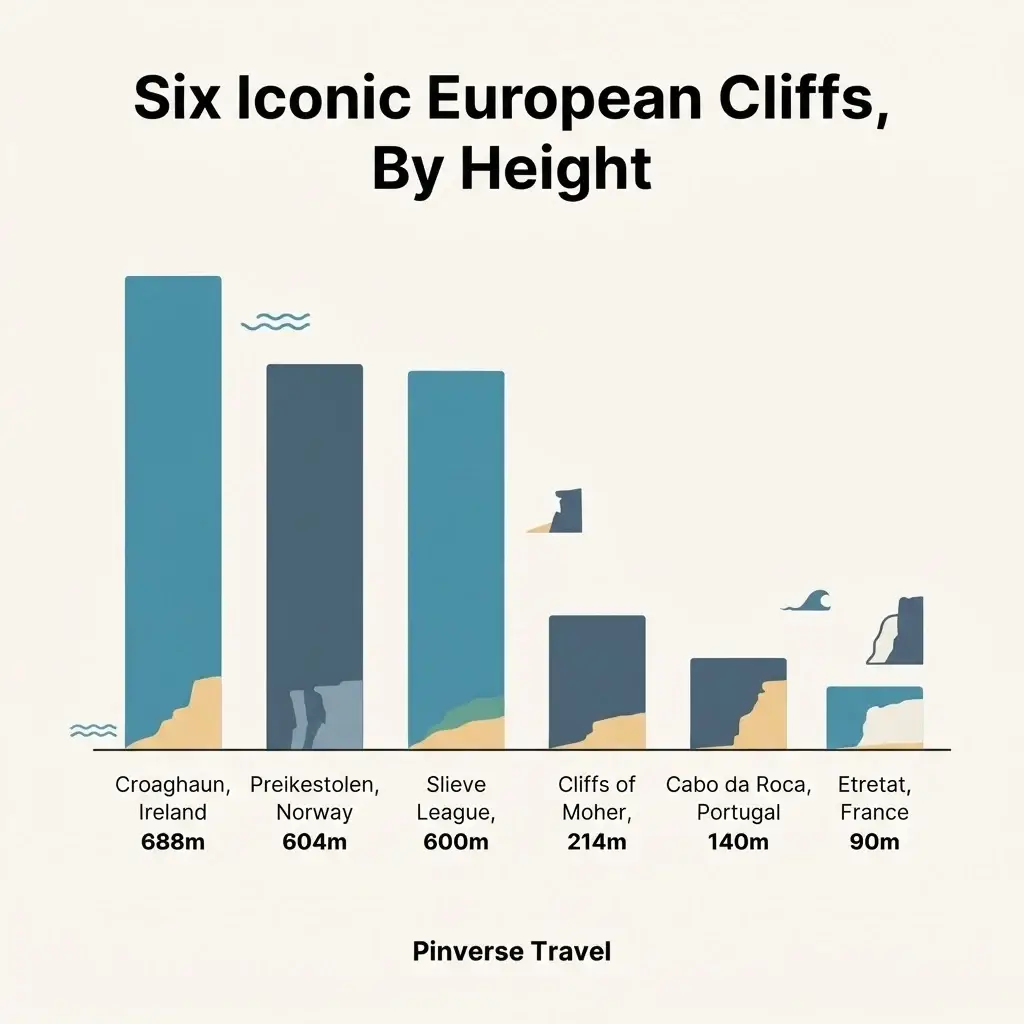
Height matters, but it is not everything. A 600 meter cliff wrapped in fog can feel less magical than a 90 meter cliff glowing at sunset with waves crashing and seabirds wheeling overhead. What actually makes a cliff unforgettable is the combination of scale, light, weather, and how close you can safely get. Some cliffs are famous for their sheer drop. Others are famous for strange rock formations, or for being the literal edge of a continent.
The other thing nobody tells you is that cliffs are weather machines. The same spot can be sunny, foggy, and windy within a single hour. I learned this lesson the slow way in Europe, and it is the single most important thing to plan around. Great cliff photos and great cliff memories almost always come down to timing and patience, not luck.
Slieve League and the Wild Cliffs of Ireland
If you want raw, uncrowded drama, Ireland is where I would point most solo travelers first.
The famous one is the Cliffs of Moher in County Clare, and for good reason. They rise to around 214 meters and stretch for about 14 kilometers along the Atlantic. Here is the practical truth that confuses a lot of visitors: the cliffs themselves are on public land, so seeing them is free, but the parking and visitor experience carry a fee, and it is charged per person rather than per car. According to the official Cliffs of Moher visitor site, opening hours shift with the season, running roughly 9am to 5pm in winter and stretching to 8am until 9pm from May through August. Booking your timed ticket online in advance is strongly recommended, because walk up entry is not guaranteed in busy months.
But here is my slightly contrarian tip. If you want cliffs that feel wilder and far less crowded, look north to Donegal. Slieve League, or Sliabh Liag in Irish, rises nearly 600 meters straight out of the ocean, almost three times the height of the Cliffs of Moher. They are among the highest sea cliffs in Europe, and the atmosphere up there is completely different, quieter, mistier, more elemental. And if you are a serious hiker chasing the actual record, the highest sea cliffs in Ireland are the Croaghaun cliffs on Achill Island, reaching 688 meters, which the geographic record confirms are the third highest sea cliffs in Europe. Croaghaun has no ticket booth and no railing. It is a genuine hike to a genuine wild edge, so it is for confident walkers only.
What to eat: after a windy cliff day in the west of Ireland, seafood chowder with brown soda bread is the reward you have earned. It shows up on nearly every pub menu along the coast, and it is cheap, filling, and honestly wonderful.
Getting there solo: if you are not driving, day tours to the Cliffs of Moher run frequently from Galway, which is one of the friendliest solo travel bases in the country. For Slieve League and Achill, a rental car makes life much easier, but organized small group hiking tours exist if you would rather not drive on the left.
Preikestolen and the Fjord Cliffs of Norway
Norway is the country people picture when they imagine cliffs plunging into deep blue water, and it lives up to the reputation.
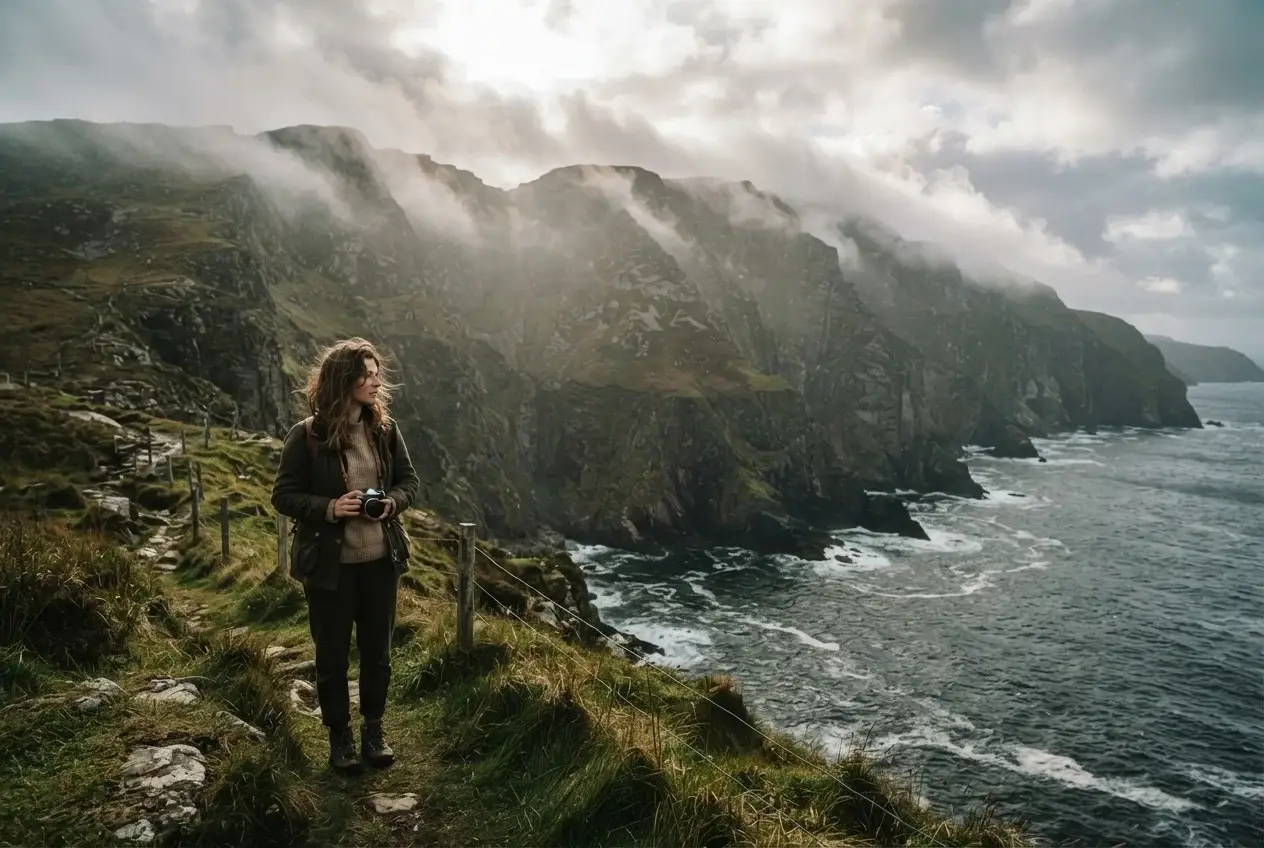
The showstopper is Preikestolen, also called Pulpit Rock, a flat plateau sitting about 604 meters above the Lysefjord. This one is a hike, not a viewpoint you drive up to. According to Visit Norway, the trail runs roughly 8 kilometers round trip with about 500 meters of elevation gain, and it takes most people around four hours there and back. The hike itself is free. What you pay for is parking, and the fee is tiered based on how long you stay, so budget for that if you drive.
I want to be straight with you here, because I have not stood on Preikestolen myself. From everything experienced hikers consistently report, the trail is well marked but genuinely rocky and steep in sections, and it is absolutely doable for a reasonably fit solo traveler who takes it at a steady pace. The bigger risk is weather, not difficulty. Fog can erase the entire view, and wet rock near an unfenced 600 meter drop is not something to take casually. Go early, check the forecast obsessively, and do not push toward the edge for a photo in bad conditions. No shot is worth that.
Getting there solo: the closest base is Stavanger, an easy and safe city for solo travelers. In the main season, ferries and buses connect Stavanger to the trailhead, so you do not need a car. This is one of the best cliff hikes in Europe for a solo person precisely because the trail is busy enough that you are never truly alone on it.
étretat and the Alabaster Cliffs of France
Not every breathtaking cliff requires a strenuous hike, and étretat in Normandy is my favorite example of that.
These are the chalk white cliffs with the famous natural arches and a needle of rock rising from the sea, the ones that inspired painters like Monet. They are gentler in scale than Norway or Ireland, but visually they are among the most photogenic coastlines on the continent. You can walk up grassy clifftop paths on either side of town for the classic views, and the town itself is small, walkable, and welcoming to solo visitors.
Getting there without a car takes a little planning. As the official Normandy Tourism site explains, you can reach the area by train to nearby stations like Le Havre or Fécamp and then connect by regional coach into étretat. From Paris it is very doable as a long day trip, though staying overnight lets you catch the cliffs at sunrise or sunset without the day crowds, which I would gently push you to do if your schedule allows.
What to eat: this is Normandy, so lean into the local specialties. Fresh mussels, salted butter caramel, and a glass of cider are the regional trio. Sitting with a bowl of moules after a clifftop walk is exactly the kind of small, unglamorous moment that makes solo travel feel rich.

Cabo da Roca, Where Mainland Europe Ends
There is something quietly powerful about standing at the edge of a continent, and Cabo da Roca in Portugal gives you exactly that.
This windswept headland near Sintra is the westernmost point of mainland Europe. The cliffs here drop about 140 meters to the Atlantic, and there is a lighthouse and a stone marker noting the spot “where the land ends and the sea begins.” It is less about dramatic height and more about the feeling of the place, the wind, the vastness, the sense of an ending and a beginning at once. The official Visit Portugal page is a good starting point for orienting yourself before you go.
Getting there solo: this is one of the easiest cliff experiences on this list to reach without a car, which makes it ideal for nervous first timers. It sits close to both Sintra and Cascais, and public bus route 403 connects them and stops at Cabo da Roca. That means you can pair it with a day exploring Sintra’s palaces, then end at the cliffs, all on public transport, all affordable.
A gentle honesty note: it gets very windy, genuinely hat losing windy. Bring a layer even on a warm day, and hold onto small belongings near the edge.
Zumaia and the Flysch Cliffs of Spain’s Basque Coast
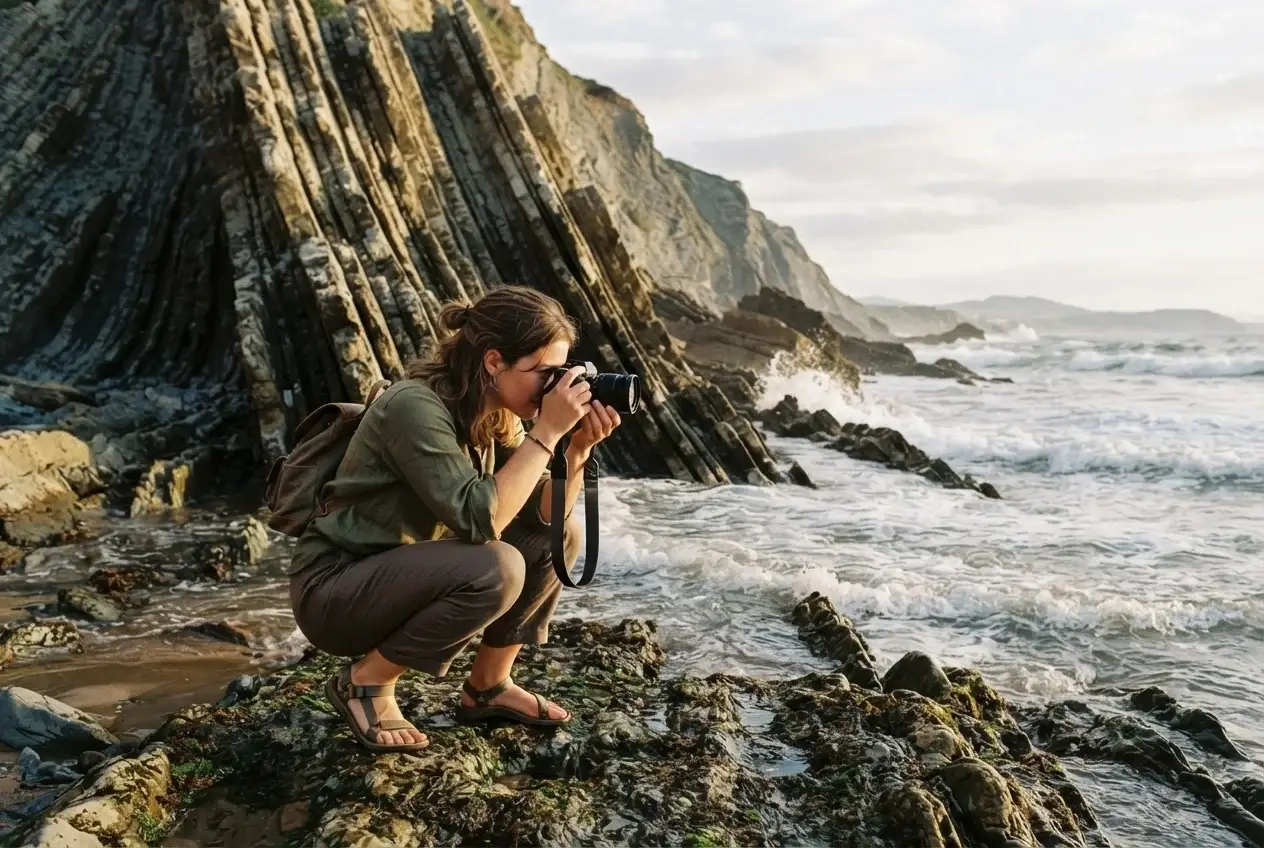
For something completely different, the Basque coast of northern Spain has cliffs that look like the pages of a giant stone book, tilted and stacked in dramatic layers.
These are the flysch cliffs around Zumaia and Deba, and they are genuinely special enough to have earned UNESCO recognition. The layered rock records tens of millions of years of Earth’s history, which is why the area is protected as a geological park. You can learn about the guided coastal walks and the science behind the formations directly from the Basque Coast Geopark’s official site, which is the most reliable source for current tour and access details.
Why I love recommending this one for solo travelers: the Basque Country is warm, safe, and utterly obsessed with food, which makes eating alone completely normal and even joyful. The famous pintxos culture means you can wander from bar to bar, order a couple of small plates at each, and never feel awkward about a table for one.
What to eat: pintxos, obviously, but also look for grilled fish and the local sheep’s milk cheese, Idiazabal. In San Sebastián, a short trip away, standing shoulder to shoulder at a pintxos bar is one of the easiest ways to feel connected on a solo trip.
The Faroe Islands, For When You Are Ready for Something Bigger
I am putting the Faroe Islands last on purpose, because they are the reward you graduate toward once cliffs have gotten under your skin.
This tiny North Atlantic archipelago is basically nothing but cliffs, sea stacks, waterfalls that fall straight into the ocean, and grass so green it looks unreal. The hike to Kallur Lighthouse on the island of Kalsoy is one of the most photographed cliff walks in the world right now. The official Faroe Islands guide covers the ferry logistics and tour options, which matters a lot here because reaching the trailhead involves timed ferries and some land access rules that have changed in recent years.
Let me be honest about the level. The Faroes are more remote, more weather dependent, and more expensive than anywhere else on this list. This is not where I would send an anxious first timer. But for a solo traveler who has already done a trip or two and wants to feel like they have reached the edge of the map, it is unforgettable. The infrastructure is safe and the locals are famously welcoming, which takes a lot of the edge off traveling somewhere so wild alone.
How to Plan a Solo Cliff Trip Without the Overwhelm
Here is the part I care about most, because inspiration is easy and actually going is hard. Let me give you the practical spine of a plan.
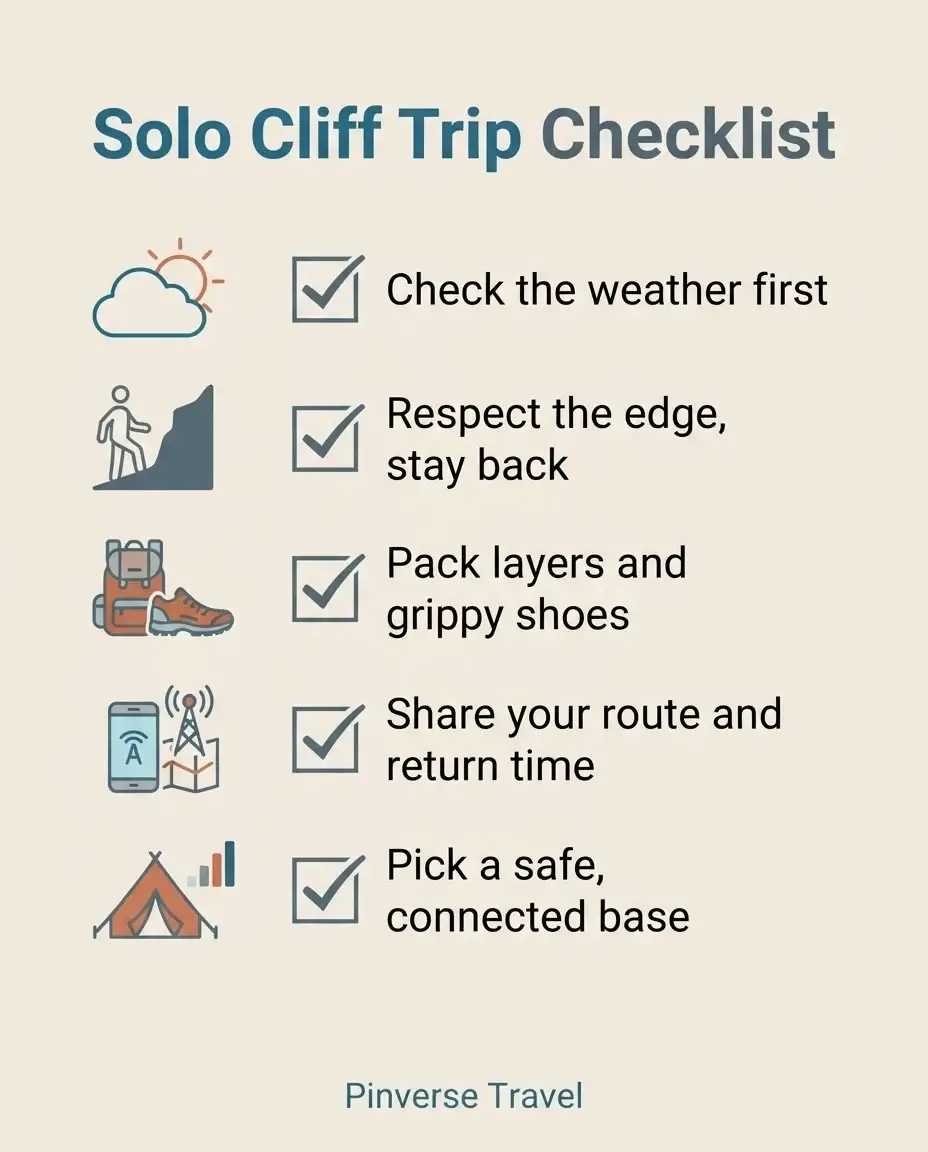
Start with weather, not scenery. For every cliff on this list, the single biggest factor in whether you have a magical day or a foggy disappointment is the forecast. Build flexibility into your itinerary so you can shift your cliff day if a clear window opens. This one habit will do more for your trip than any gear or guidebook.
Respect the edge, always. Many of Europe’s most beautiful cliffs have no fences, no railings, and crumbling edges that are not obvious from above. Every year people get hurt chasing photos. Stay back from the edge, especially in wind or wet, and never turn your back to the sea near a drop. Solo means no one is right there to grab you, so caution is not optional, it is the price of admission.
Pack for four seasons in one afternoon. A waterproof jacket, layers, and shoes with real grip will cover you almost anywhere on this list. I packed wrong on my very first solo trip and paid for it, so learn from my mistake rather than your own.
Tell someone your plan. Before any solo cliff hike, share your route and expected return time with someone you trust, and check current conditions and advisories. Governments keep updated country by country travel guidance, and the UK Foreign Travel Advice service is a clear, free resource for European destinations even if you are not British, useful for entry rules, safety, and local emergency info. Two minutes of prep buys a lot of peace of mind.
Choose your base wisely. Cities like Galway, Stavanger, Lisbon, and San Sebastián are safe, friendly, and well connected, which means you can do cliffs as day trips and sleep somewhere social. For a solo traveler, the right base is half the battle.
The Real Reason to Go
I will leave you with the thing I actually believe, under all the logistics.
You do not need to be an experienced hiker, a confident traveler, or a person who has it all figured out to stand at the edge of Europe and watch the ocean throw itself at the rocks. You just need to decide to go, then handle the next small step, and the one after that. Cliffs have a way of reminding you how much bigger the world is than your worries. That perspective is the whole point. The view is just the bonus.
So pick one. Check the forecast. Book the ticket. The perfect moment is not coming, but a very good one is already within reach.