Beyond Norway: Best Fjord Landscapes to Visit in Europe

The first time I saw a real photo of a fjord, I was sitting at a gray office desk in New York with a coffee going cold beside me. It was one of those pictures that makes your chest ache a little. Sheer cliffs dropping straight into still, dark water. A tiny ferry that looked like a toy. I remember thinking, half joking and half not, “people just go there?”
Yes. People just go there. And after years of building a life around travel, saving through flexible work, and learning how to plan trips that once felt impossible, I can tell you that the fjords are far more reachable than that daydreaming version of me believed. They are also not one single place. Everyone says “the fjords” and pictures Norway, but Europe’s fjord landscapes stretch from the Arctic edges of Iceland to a sunny bay in Montenegro that starts arguments among geographers.
So let’s do this properly. I’ll walk you through the best fjord landscapes to visit in Europe, help you figure out which one actually fits you, and cover the parts most guides skip: getting there without a car, keeping costs sane, going solo, and what to eat when you arrive hungry and a little proud of yourself.
First, what is a fjord, and why do they feel so different?
A fjord is a long, deep arm of the sea that reaches inland between steep cliffs. Glaciers carved these valleys over thousands of years, then the sea flooded in when the ice retreated. That’s why the water is so deep and the walls so vertical. You are literally sailing through an ancient, drowned glacier path.
That geology is the whole reason fjords hit differently than a regular coastline or lake. The scale plays tricks on you. A waterfall that looks modest is often taller than a skyscraper. This is not a “check the photo, move on” kind of place. It rewards slowing down, which happens to be the way I love to travel anyway.
The heart of it all: Norway’s West Norwegian Fjords
If you only visit one fjord region in your life, it will almost certainly be in western Norway, and honestly, that’s the right instinct.
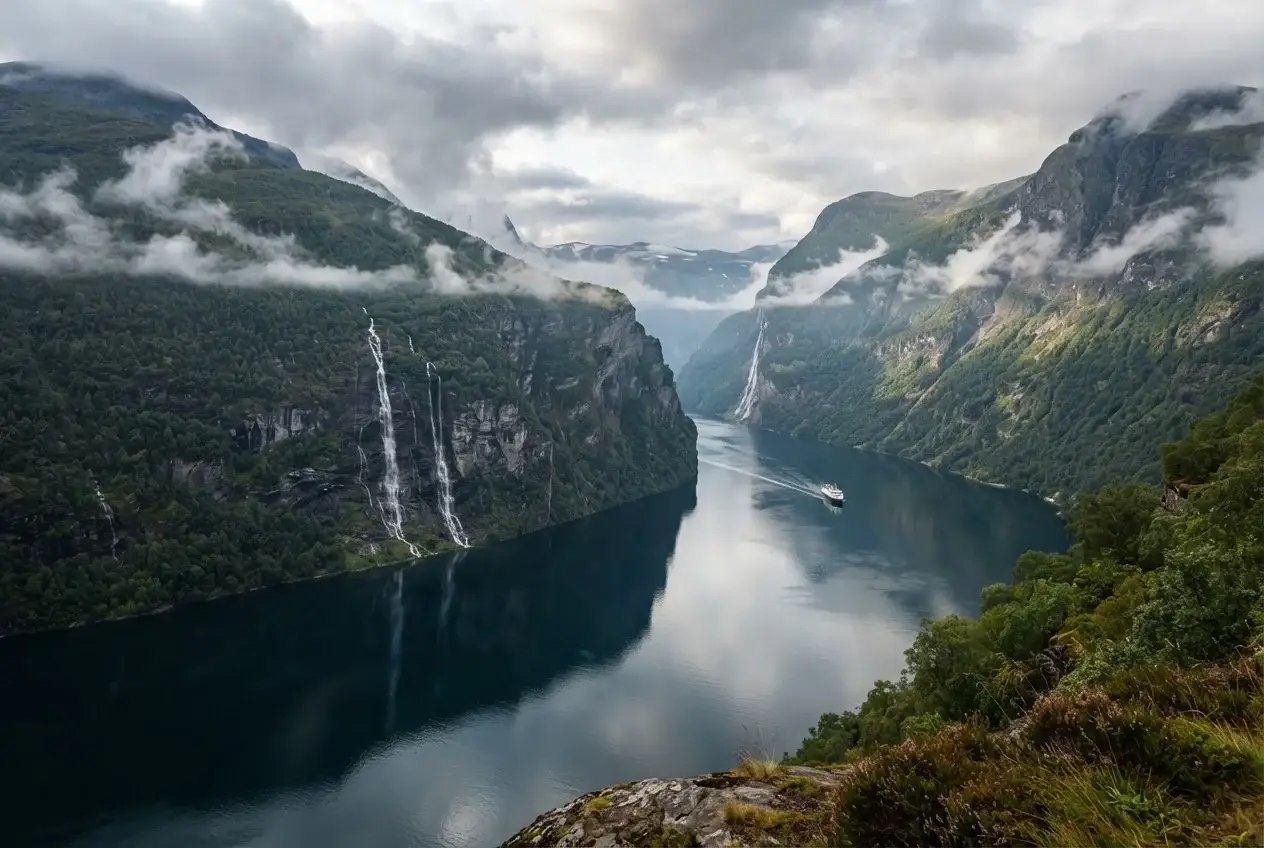
The crown jewels are the Geirangerfjord and the Nærøyfjord, which together form a UNESCO World Heritage Site. I always send curious readers to the official listing for these two on the UNESCO World Heritage Centre site, because it explains something the glossy travel photos don’t: these fjords are considered a kind of textbook example of what a fjord should be, with walls rising up to around 1,400 meters straight out of the water. Reading that before you go changes how you look at them. You stop seeing a pretty view and start seeing a living record of the last ice age.
Geirangerfjord is the poster child, ringed by waterfalls with names like the Seven Sisters. It gets busy, especially when cruise ships are in, so I’ll be honest with you: if you want that hushed, cathedral feeling, you’ll want to time it carefully or pick a quieter neighbor.
Sognefjord: the deep, quiet giant
Sognefjord is the longest and deepest fjord in Norway, nicknamed the King of the Fjords. Its side branches are where the magic concentrates. The narrow Nærøyfjord and the neighboring Aurlandsfjord are the ones that leave first-timers speechless. This is also where the famous little village of Flåm sits, tucked at the end of the water like the last stop before the mountains close in.
Hardangerfjord: soft edges and blossoms
Hardangerfjord is gentler and greener, famous for orchards that erupt into blossom in spring. If your mental image of fjords is all severe and Nordic, Hardanger is the friendly counterpoint, all fruit farms and cider and rolling calm. It’s a lovely choice for a first fjord if dramatic heights make you nervous.
Lysefjord and the hike that made Norway famous
Then there’s the Lysefjord near Stavanger, home to Preikestolen, or Pulpit Rock, the flat cliff ledge that sits about 604 meters above the water. You’ve seen the photo even if you don’t know the name. When people ask me if they can handle it, I point them to the official trail details on the VisitNorway Preikestolen page, which lays out the roughly 8 kilometer round trip and the 4 to 5 hours it usually takes. It’s rated moderate, not expert. If you’re reasonably fit and take your time, you can do this. I’ve watched plenty of ordinary, slightly-out-of-breath travelers make it up and cry a little at the top. In a good way.
How to actually get around the fjords, even without a car
Here’s the fear I hear most from solo travelers and first-timers: “Don’t I need to rent a car and drive on terrifying mountain roads?”
You don’t. This is the single most freeing thing to understand about fjord travel. Western Norway has one of the most beautiful public transit systems on earth, where the ferry is the bus.
The easiest way in for a first-timer is the self-guided route known as Norway in a Nutshell. It stitches together scenic trains, a fjord cruise, and a connecting bus into one journey between Bergen and Oslo, and you can see the current route and booking details on the official Norway in a Nutshell page. The star of it is the FlÃ¥m Railway, a steep, jaw-dropping little train that corkscrews down through waterfalls and green cliffs. It sounds like a tour, but it’s really just a smart way to chain together public transport. You travel at your own pace, alone if you like, no group to shuffle behind.
If you’d rather build your own path, the regular passenger and car ferries are the way to do it. Norway’s official tourism site keeps a clear overview of getting around by boat, and I’d genuinely encourage you to sit with it for twenty minutes before booking anything. Once you realize you can hop between villages on scheduled ferries, the whole region unlocks and the car anxiety just dissolves.
My honest take: for a first fjord trip, go car-free. Base yourself in Bergen, use it as your launchpad, and let the boats and trains do the work. Save the road-trip fantasy for a return visit when the place already feels like an old friend.
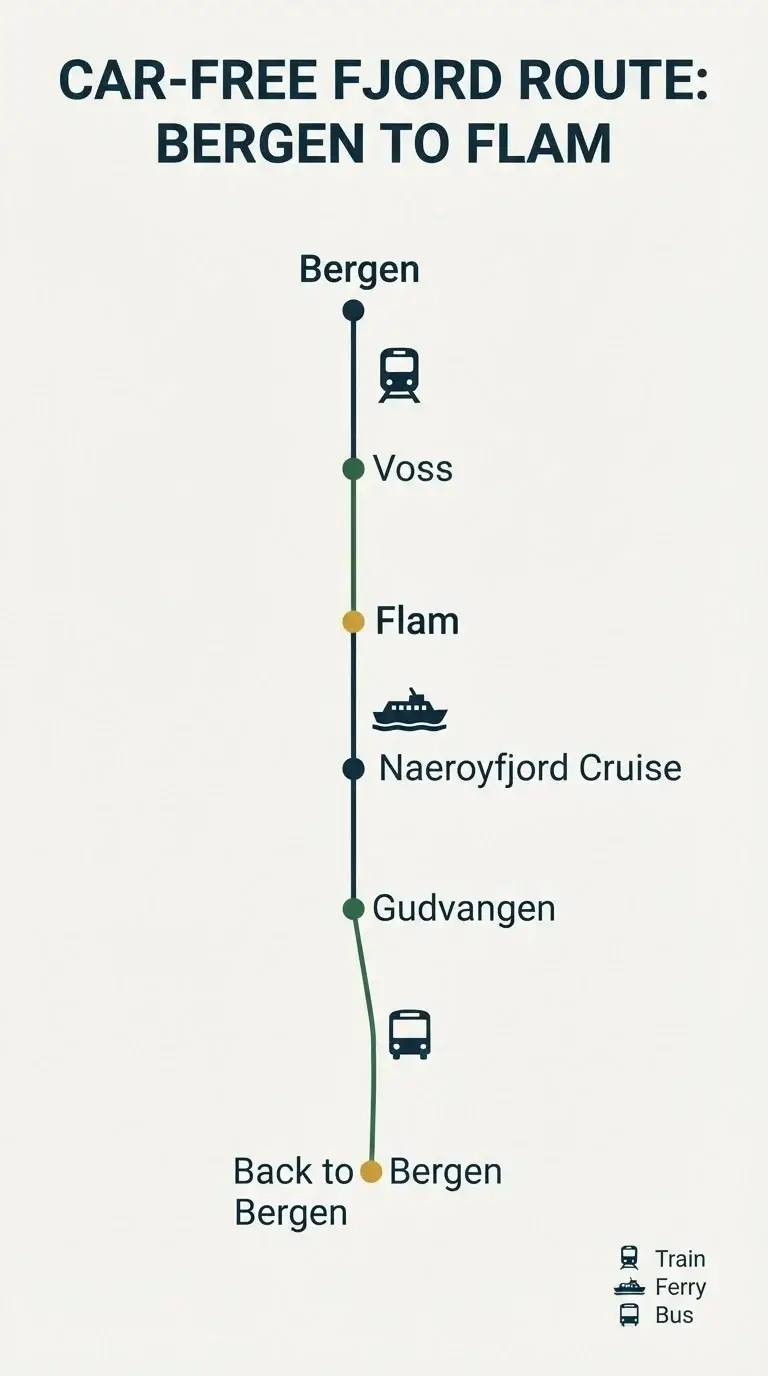
Beyond Norway: the fjords almost nobody tells you about
Norway earns its reputation, but limiting yourself to it means missing some of the most soul-stirring corners of Europe. This is the part competitors skip, and it’s my favorite part.
Iceland’s Westfjords: the wild, empty north
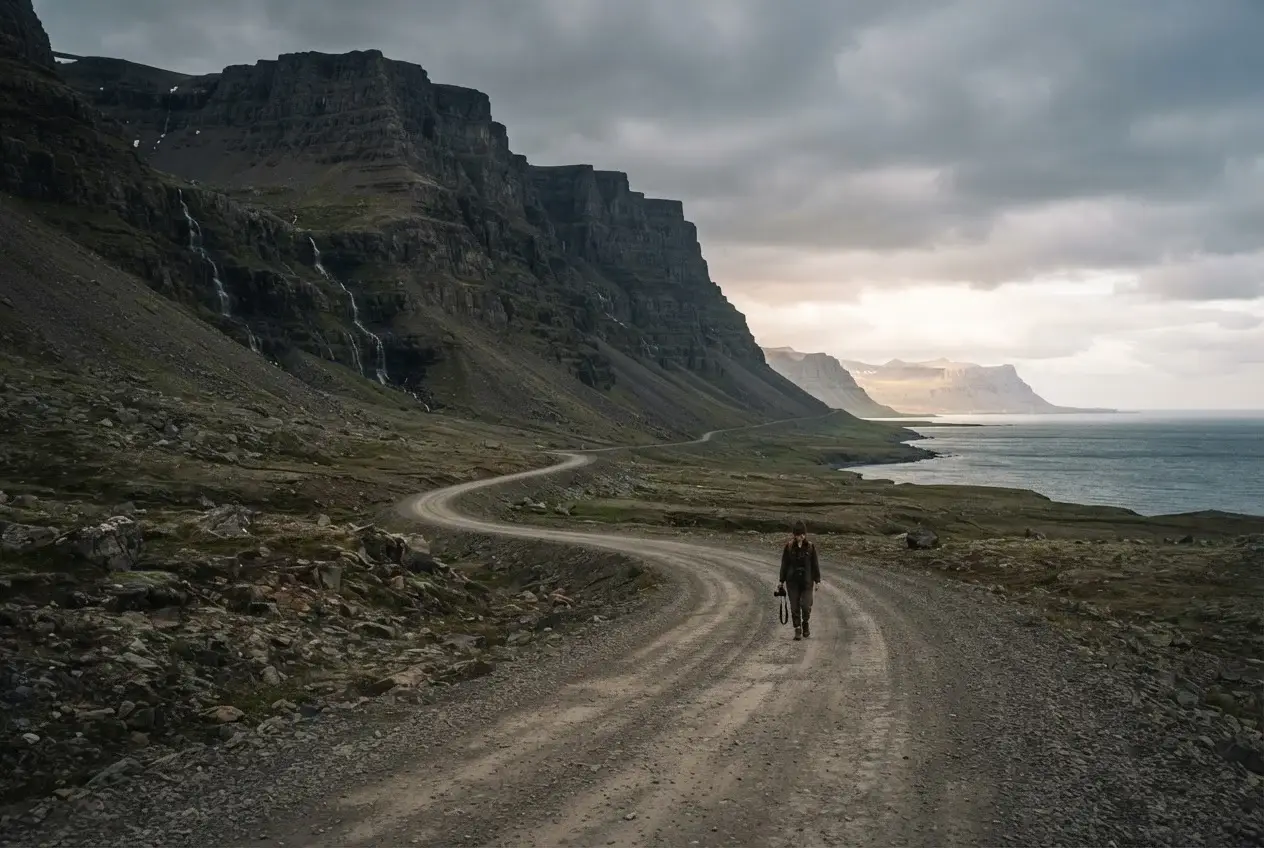
If Norway is the greatest hits album, Iceland’s Westfjords are the deep cut that die-hards swear by. This clawed peninsula in Iceland’s far northwest is remote, rugged, and gloriously under-visited, with towering sea cliffs, Arctic foxes, and roads that feel like the edge of the map. From everything solo travelers consistently report, this is where you go when you’ve already done the famous fjords and want something rawer and quieter. The regional tourism body’s site at Visit Westfjords is the most honest planning resource I’ve found for it, including practical notes on road conditions, which matter enormously up there because the season is short and the weather makes the rules.
I’ll be straight with you: this is a harder trip than Norway. It’s more remote, transit is thinner, and you’ll want more time and more flexibility. But if solitude is the thing your soul is chasing, few places in Europe deliver it like this.
Scotland’s sea lochs: fjords in everything but name
The West Highlands of Scotland are laced with sea lochs that are, geologically, fjords. Places like Loch Etive and the fjord-like inlets around the Highlands have that same drowned-valley drama, wrapped in moody Scottish weather and castle ruins. Here’s what makes Scotland a smart pick if the price of Norway makes you flinch: it’s more affordable, English is everywhere, and the transit and hostel network is friendly to solo budget travelers. It’s the fjord experience with training wheels, and I mean that as high praise.
The Faroe Islands: drama at maximum
Between Scotland and Iceland sit the Faroe Islands, a cluster of green, cliff-walled specks in the North Atlantic that feel almost invented. The fjords here are narrow and fierce, the villages tiny and turf-roofed. It’s a growing favorite for travelers who want that “how is this real” feeling without the crowds. Expect changeable weather, real remoteness, and scenery that will ruin other landscapes for you a little.
Kotor Bay: the fjord debate of southern Europe
And now the fun controversy. The Bay of Kotor in Montenegro is often called Europe’s southernmost fjord, a stunning zigzag of blue water backed by steep mountains and a medieval old town. Geologists will tell you it’s technically a submerged river canyon, a ria, not a true glacier-carved fjord, and the Bay of Kotor reference page walks through why. But standing there, most people neither know nor care. It looks and feels like a fjord bathed in Mediterranean sun. If you want fjord grandeur with warm weather, swimming, and a lower price tag, this is your answer. I’d never gatekeep someone’s joy over a geology technicality.
When should you go?
This matters more than most first-timers realize, because the fjords in July and the fjords in October are almost different planets.
Late June through August is peak. Long daylight, everything open, the warmest water and weather. It’s also when the crowds and the cruise ships arrive, and prices climb. If you want that famous solitude, this is not it.
May and September are my sweet spot for northern fjords. Fewer people, softer light, still-workable weather, and better value. September brings the first hint of autumn color and a real quiet returning to the water.
Winter is a specialist’s game. Some routes close, days get very short, but the northern lights and snow-draped cliffs are extraordinary if you go in prepared. For a first trip, I’d steer you toward the shoulder seasons.
Let’s talk about money, honestly
Norway is expensive. I won’t pretend otherwise, and I hate guides that gloss over it. Restaurant meals, alcohol, and last-minute transport can genuinely shock you.
But “expensive” does not mean “impossible,” and I say that as someone who funded early travels through flexible, unglamorous work rather than a big salary. The way you make the fjords affordable is by being strategic. Cook some of your own meals from grocery stores, which are far cheaper than restaurants. Book trains and popular ferries ahead when you can. Stay in hostels or simple guesthouses, which in Norway are clean and often stunning. Drink the tap water, which is excellent and free. And choose your region with your wallet in mind. If Norway’s costs feel out of reach right now, Scotland and Kotor deliver enormous beauty for a fraction of the price, and there is zero shame in starting there.
Is solo fjord travel safe and enjoyable? Yes.
This is close to my heart, so I’ll be direct. The fjord countries, Norway, Iceland, Scotland, the Faroes, are among the safest, most solo-friendly places I could point a nervous first-timer toward. Low crime, reliable infrastructure, widely spoken English, and a culture of respecting people’s space and independence.
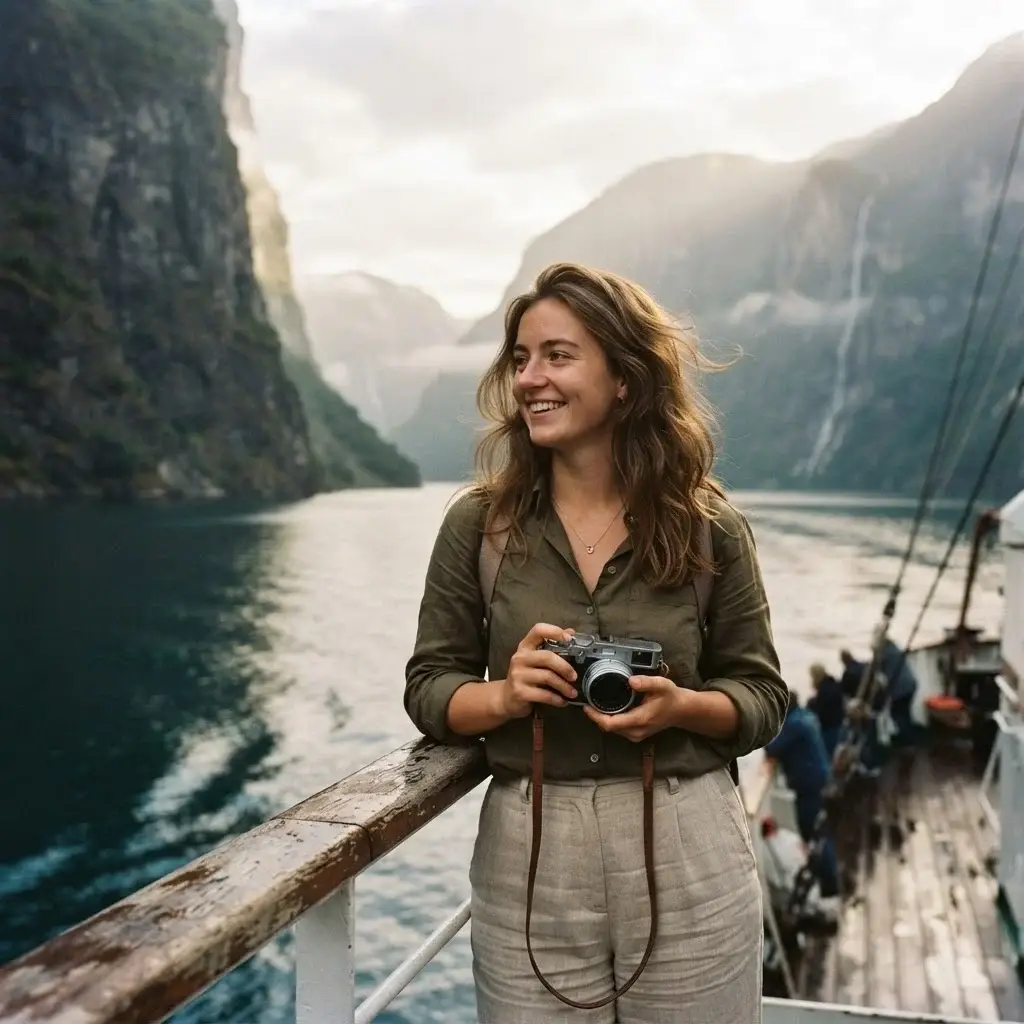
What solo travelers consistently report, and what matches everything I believe about traveling alone, is that these landscapes are almost designed for solitude. Nobody blinks at a person sitting alone on a ferry deck, wrapped in a jacket, just watching the cliffs slide by. If you’re anything like I was before my first solo trip, the fear isn’t really about danger. It’s about whether you’ll feel awkward or lonely. Out here, alone doesn’t feel lonely. It feels like clarity. The main practical cautions are the ordinary ones: respect the weather, tell someone your hiking plans, don’t push a trail beyond your ability, and check conditions before remote drives.
What to eat in fjord country
Food is where a landscape becomes a memory, so don’t skip it. In Norway, seek out fresh seafood, salmon and cod above all, plus hearty brown cheese called brunost that tastes like caramel and confusion in the best way. Waffles with jam and sour cream are a beloved ferry-and-cafe ritual. In Iceland’s Westfjords, look for fresh fish and the famous Icelandic lamb. In Scotland, warm up with seafood chowder and, if it’s your thing, a local whisky by the loch. And around Kotor, the food shifts Mediterranean and generous: grilled fish, olive oil, and prosciutto from the hills.
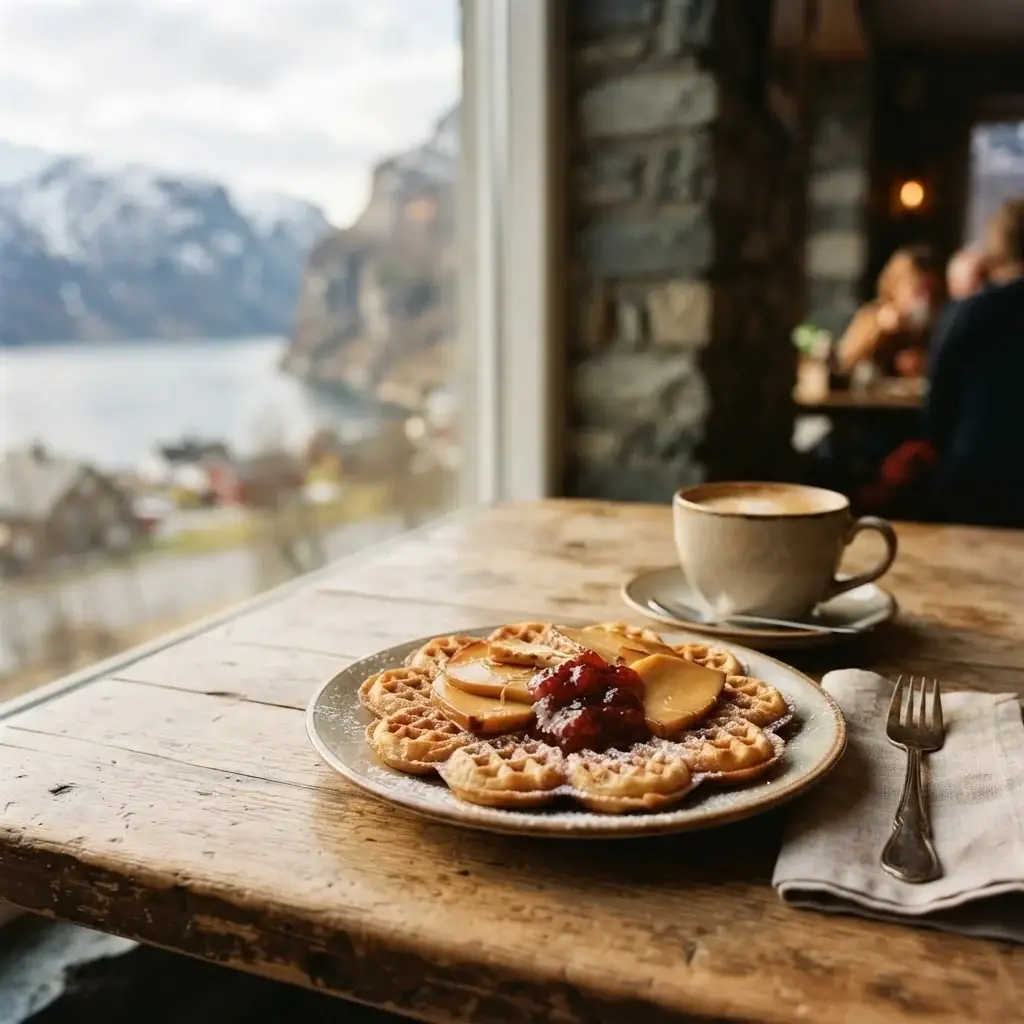
My one rule everywhere: eat at least one meal where the locals eat, even if you’re alone, even if it feels a little vulnerable. That’s usually where the trip stops being a slideshow and starts being yours.
How to choose the one that’s right for you
So, which fjord landscape is the best to visit in Europe? The honest answer is that “best” depends entirely on who you are right now.
If you want the definitive, awe-guaranteed, well-supported first trip, go to western Norway and base yourself in Bergen. If you crave raw solitude and don’t mind a harder journey, aim for Iceland’s Westfjords. If budget and ease matter most, Scotland’s sea lochs are a gorgeous, gentle entry point. If you want maximum drama and minimal crowds, the Faroe Islands. And if you want fjord beauty with sunshine and a lighter price tag, Kotor Bay in Montenegro.
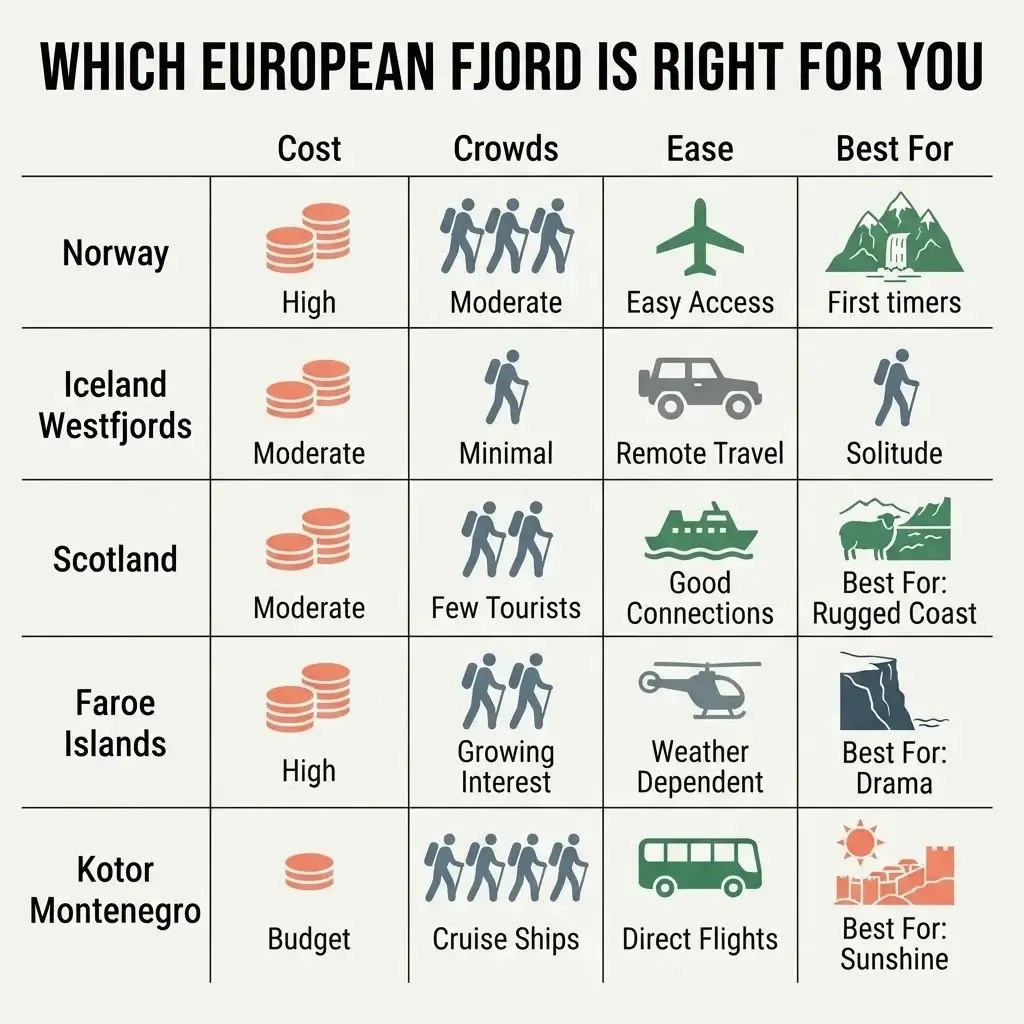
The one wrong choice is the one where you keep waiting. I spent years at that gray desk telling myself the fjords were for other, braver, richer people. They weren’t. They were for whoever decided to go. That can be you, this year, and you can absolutely do it on your own. Pick the region that matches your courage and your budget today, not the imaginary perfect version of you a few years from now. The cliffs have been standing for thousands of years. They’ll wait, but there’s no reason you should.