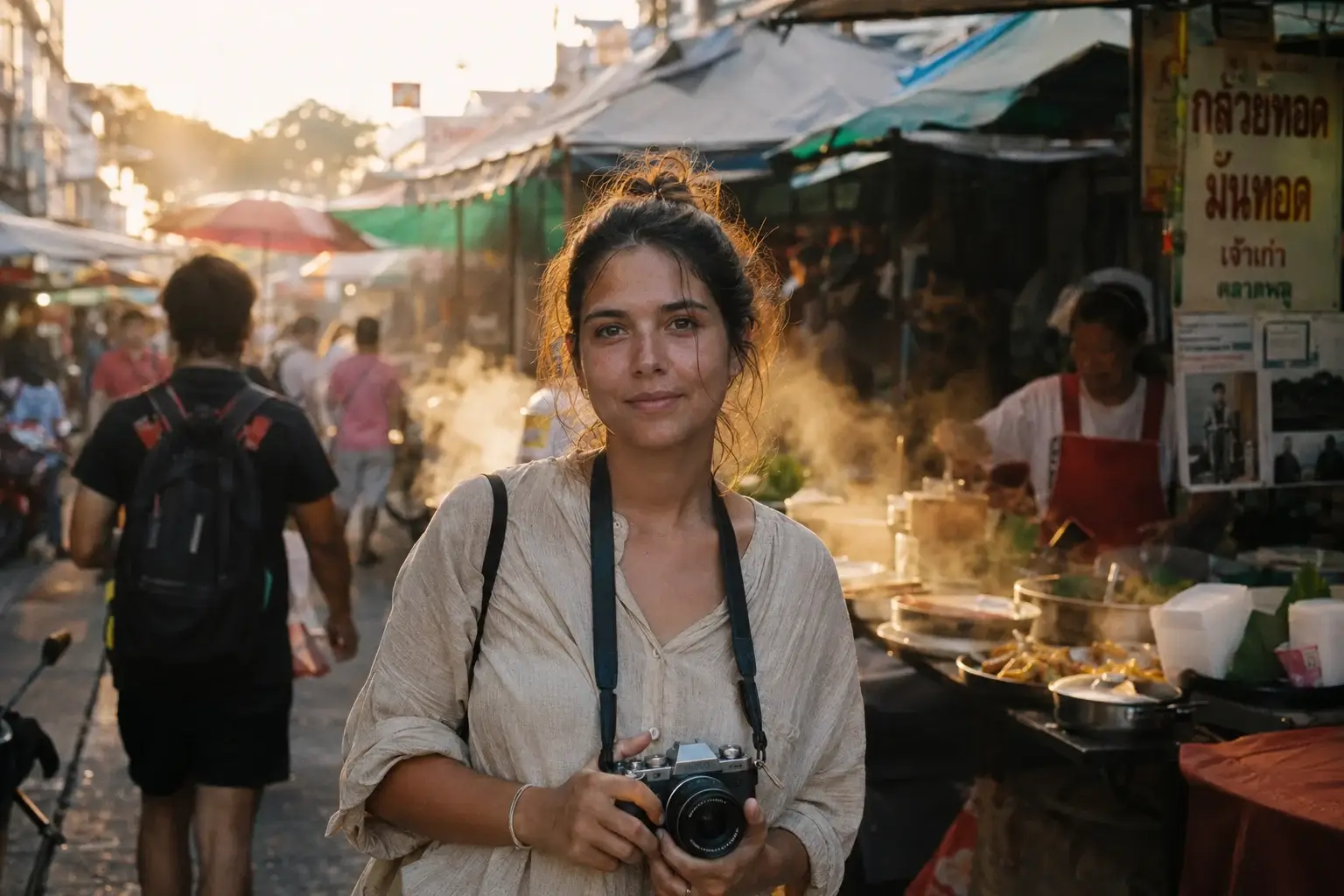
When I first left my corporate office job in New York to start traveling full-time, I was terrified. I had this vision of losing my passport in a crowded train station or having my camera stolen in a busy market. I spent my first few months holding my bag so tightly that my knuckles turned white. It was exhausting.
Over the years, through backpacking across Europe, living with a family in Ghana, and navigating the bustling streets of Bangkok, I realized something important: travel isn’t about living in fear. It’s about being prepared. I’ve made my share of mistakes—like leaving my bag unattended for “just a second” in a cafe—but those moments taught me how to move through the world with confidence rather than caution.
If you are just starting out, or if you feel that lingering anxiety every time you board a flight, know this: you can protect your belongings without sacrificing your joy. Here is how I manage my gear and my peace of mind.
The art of blending in: Avoiding the “tourist” label
The most effective way to keep your things safe is to look like you belong exactly where you are. When I worked as a sightseeing guide in New York, I could spot a tourist from a block away. It wasn’t just the map or the camera around the neck; it was the way they walked, constantly looking around for their bag or stopping in the middle of the sidewalk to check a phone.
When you arrive in a new city, take a day just to observe. Don’t rush into the main attractions immediately. Walk the local streets, watch how people carry their bags, and try to mirror their behavior. If you are heading to a new country, it is always a smart idea to look at the official travel advisories from the US Department of State to get a sense of the local environment and any specific safety protocols they suggest for visitors.
I prefer to carry bags that don’t scream “expensive equipment.” I use a nondescript, beat-up-looking backpack that has traveled with me through dirt roads and city subways. It doesn’t look like it holds a laptop or a high-end camera. This psychological trick has saved me more times than I can count.
The “layers of security” method
I never keep all my valuables in one place. If you have your wallet, passport, and phone in one pouch, and you lose that pouch, your trip is essentially over. I break everything into “layers.”
My most important items—my passport and a backup credit card—never leave my body. I use a slim, moisture-wicking belt that hides under my clothing. It’s not fancy, but it works. Then, my “daily carry” is in a cross-body bag that sits in front of me, never behind. When I sit down at a cafe or a restaurant, I loop the strap around my leg. It sounds simple, but it creates a physical tether that makes it impossible for someone to walk off with my bag without me feeling it.
If you are planning your first trip, check out the general destination guides on Lonely Planet to understand the local customs regarding baggage and personal space. Knowing whether it is common to carry bags in front or if there are specific “bag snatcher” hotspots in a city can change how you pack your daily essentials.
Managing gear in transit
Trains, buses, and airports are where I am most vigilant. When I was teaching English in Thailand, I relied heavily on ride-sharing apps to avoid the confusion of local taxi pricing and the risk of leaving bags in random trunks. If you find yourself in Southeast Asia, learning how Grab works for travelers can be a game-changer. It provides a digital record of your ride, your driver, and your route, which adds a layer of security that you don’t get when hopping into a random car on the street.
On long train rides, I use a small cable lock to secure my main pack to the luggage rack. It doesn’t need to be a heavy chain; just something that makes it annoying for someone to grab it quickly. Remember, most opportunistic theft relies on speed. If you make it take longer than three seconds to get to your bag, the thief will almost always move on to an easier target.
Digital safety: The invisible valuables
We often forget that our phones and laptops are just as valuable—if not more so—than the cash in our wallets. I back up everything to the cloud every single night. If my phone were stolen, I would lose the hardware, but I wouldn’t lose my photos, my notes, or my contacts.
I also use a privacy screen on my laptop. When I am working in a crowded airport lounge or a busy train station, I don’t want the person sitting next to me to see what I am typing or look at my sensitive files. It’s a small, inexpensive tool, but it offers a huge amount of peace of mind. And always, always have a secondary device if your work depends on it. A cheap, older tablet can be a lifesaver if your primary computer dies or gets stolen.
Dealing with the “unexpected”
I remember one time in China, I was hiking near a beautiful historic site, and I realized I had misplaced my day bag. My heart sank. I spent an hour retracing my steps, feeling that familiar wave of panic. Eventually, I found it exactly where I had left it near a bench. It was a wake-up call. I realized I had become too comfortable.
Part of the process is knowing that even if the worst happens, you will survive. This is why I always have travel insurance. I look for plans that cover theft and lost gear. Browsing the traveler safety advice on World Nomads helped me realize that insurance isn’t just for medical emergencies; it is a vital part of your financial safety net while moving across borders. It allows you to replace what you lost and keep going, rather than having to cut your trip short.
Staying healthy and safe while exploring
Safety isn’t just about thieves; it is also about your health and your environment. In some parts of the world, keeping your valuables safe also means knowing where to eat and how to stay hydrated so you don’t have to leave your bags in a rush to find a restroom or a clinic. Before you head to a new destination, I highly recommend reviewing the destination health advisories from the CDC Travelers’ Health site. They provide excellent, practical info on food safety, water quality, and necessary vaccines. If you are healthy and hydrated, you are much more alert and capable of keeping an eye on your surroundings.
When I was living in Ghana, I learned that the most authentic experiences come from stepping off the beaten path, but you have to balance that with research. UNESCO sites, for example, often have very structured visitor centers where you can safely stow larger bags while you explore the site itself. Check the official UNESCO World Heritage site pages for any major landmark you visit; they often list “visitor tips” that include information on bag storage and safe routes for pedestrians.
Developing a “Traveler’s Instinct”
Over time, you will develop an intuition. You’ll be able to walk into a room and instantly know where the exits are, where to keep your bag, and who to ask for help. This isn’t paranoia; it’s situational awareness.
I stopped checking my phone every five minutes. When you walk with your head up, scanning the horizon, you look like someone who knows exactly where they are going. Thieves target people who look lost, confused, or distracted. Even if I am lost, I find a shop, go inside, and pull out my map. I never stand on a street corner staring at a phone screen.
My final piece of advice: Trust yourself
You are capable of more than you think. Don’t let the fear of losing a camera or a wallet stop you from seeing the world. The memories, the cultural exchanges, and the personal growth are worth the risk. By taking these practical steps—keeping your valuables split up, staying aware, using technology to your advantage, and having a safety net—you can focus on what really matters: the adventure.
The world is a beautiful place, and most of the people you meet will be kind, helpful, and welcoming. Take the precautions, pack your bags with care, and then step out that door. You’ve got this.