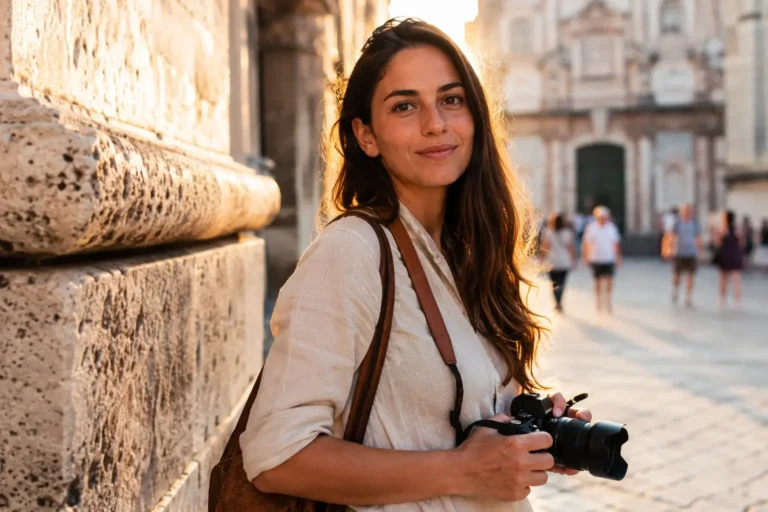
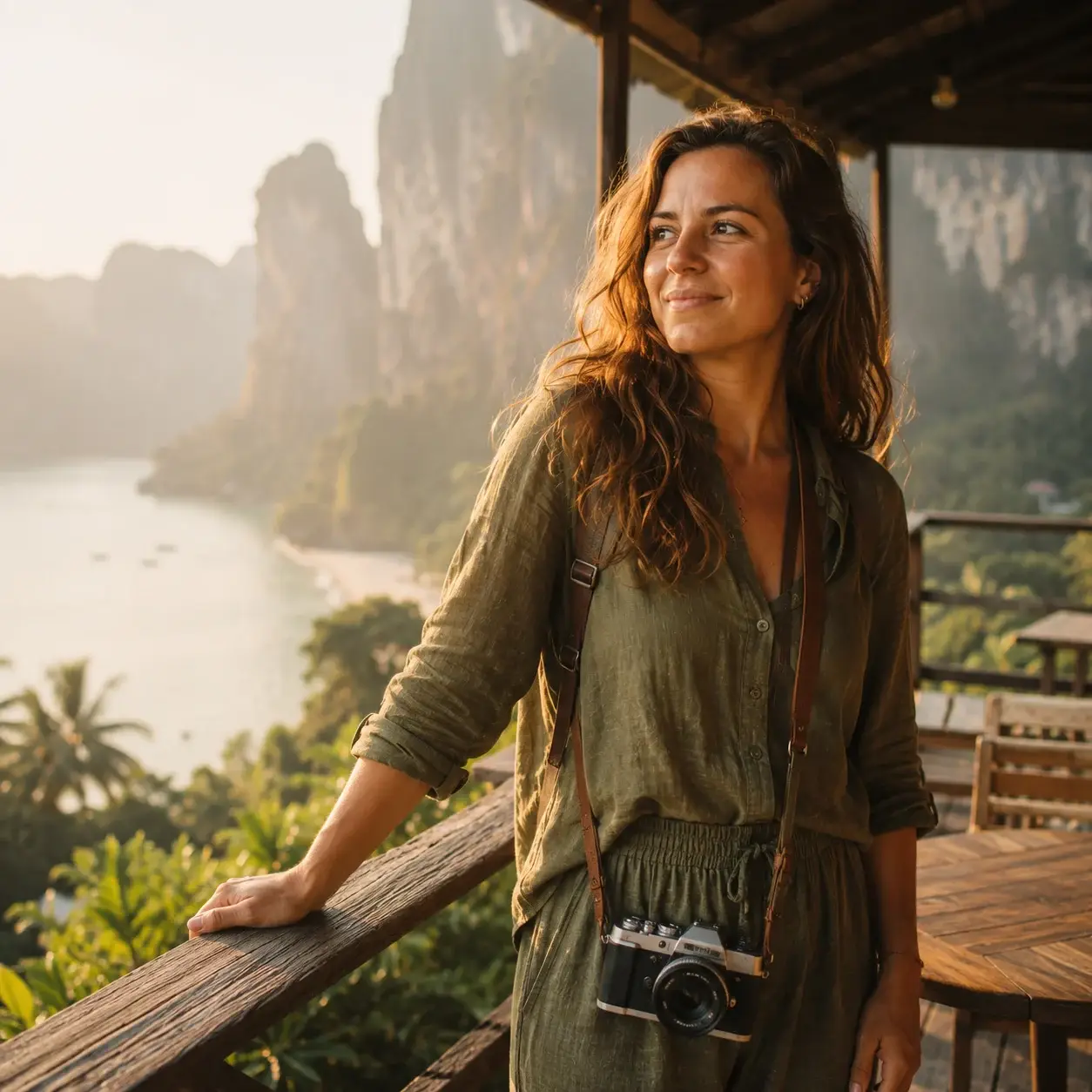
I still remember the heavy weight of my backpack pressing into my shoulders as I dragged myself up three flights of narrow stairs in a tiny hostel in Madrid. It was my very first solo trip after leaving my corporate 9-to-5 job in New York. I had spent months planning, saving every dollar from my side waitressing jobs, and dreaming of freedom. Yet, there I was, sweating, exhausted, and completely weighed down.
When I finally unzipped my bag, the culprit was obvious. Half of my packing space was taken up by full-size shampoo bottles, heavy glass jars of night cream, three different hair serums, and a massive makeup palette I hadn’t opened once. I had packed out of fear. I was terrified of being far from home without my exact comfort routine.
That night, as I looked at a leak that had soaked my only clean pair of jeans in lavender-scented conditioner, I learned a hard lesson. Overpacking your toiletries is not just a minor annoyance. It is a burden that steals your physical energy, drains your wallet with airline baggage fees, and distracts you from the actual experience of exploring the world.
Today, we are diving deep into the best travel-size beauty essentials and, more importantly, the critical packing mistakes that even seasoned travelers make. Whether you are prepping for your very first solo adventure or planning a slow-travel journey across continents, streamlining your self-care bag is the ultimate way to build confidence and move with freedom.
1. The Trap of the “Just in Case” Mentality
The biggest mistake we make when choosing our toiletries happens in our own minds long before we even zip the bag. It is the voice that whispers, “What if I get invited to a formal gala while backpacking through Southeast Asia?” or “What if my skin completely changes its type the moment I cross the ocean?
When I worked as a certified sightseeing guide in New York City, I watched tourists from all over the world stumble off tour buses carrying massive daypacks. They looked like they were preparing for a lunar landing rather than a walk through Central Park. They carried every single beauty product they owned, just in case.

Why Overpacking Out of Fear Ruins Your Flow
When you fill your bag with products you rarely use at home, you create physical and mental clutter. You spend twenty minutes every morning digging through a mountain of bottles just to find your toothbrush. If you are moving between guesthouses, trains, and buses every few days, that daily frustration compounds.
Furthermore, heavy bags make you a target. When you are struggling to lift a giant suitcase onto a train platform or down a crowded street, you cannot focus on your surroundings. You are less aware, more tired, and far more likely to leave something behind. True solo travel confidence comes from knowing you can handle whatever happens with exactly what is on your back.
The Solution: Pack for the Realistic Average Day
Look at your current daily routine. What are the non-negotiable items you use every single morning and night? For most of us, it is a simple cleanser, a reliable moisturizer, sunscreen, and maybe one or two multi-use makeup items. That is your baseline. If you do not use a heavy clay face mask every Wednesday at home, you certainly will not do it while staying in a lively beach bungalow in Railay. Pack for who you actually are, not a fictional version of yourself who suddenly adopts a twelve-step beauty routine while living out of a suitcase.
2. Liquid Limits and the Art of Decanting
We have all been there: standing in the airport security line, watching a TSA agent toss an expensive, half-full bottle of luxury face wash into the trash bin because it exceeded the liquid limit. It is heartbreaking, expensive, and completely preventable.
The standard international rule for carry-on luggage is simple: all liquids, gels, and aerosols must be in containers of 3.4 ounces (100 milliliters) or less, and all containers must fit comfortably into a single, clear, quart-size plastic bag.
The Right Way to Decant Your Favorites
You do not need to buy brand-new, pre-packaged miniature versions of your entire skincare routine. In fact, doing that is often a waste of money and leads to unnecessary plastic waste. Instead, invest in high-quality, reusable silicone or food-grade plastic travel bottles.
- Silicone Squeeze Bottles: These are perfect for thick liquids like shampoo, conditioner, and body wash. They are flexible, easy to squeeze to get every last drop, and wide-mouthed so you can refill them without making a mess.
- Hard Plastic Dropper Bottles: These work best for thin, watery liquids like facial toners, liquid foundations, or hair oils. Silicone can sometimes react with oil-based products, causing them to leak or change texture, so stick to hard plastic or glass for oils.
- Contact Lens Cases: This is my favorite insider secret for short trips. A simple, cheap contact lens case has two secure, leak-proof compartments. They are the absolute perfect size for holding a few days’ worth of eye cream, spot treatment, or liquid concealer.
Label Everything Immediately
Never tell yourself, “I will remember that the blue bottle is face wash and the clear bottle is shampoo.” Once you are jet-lagged, exhausted, and trying to wash your face in a dimly lit hostel bathroom, all liquids look exactly the same. Use a permanent marker or a label maker to clearly mark every single container the moment you fill it.
3. Ignoring the Power of Solid Alternatives
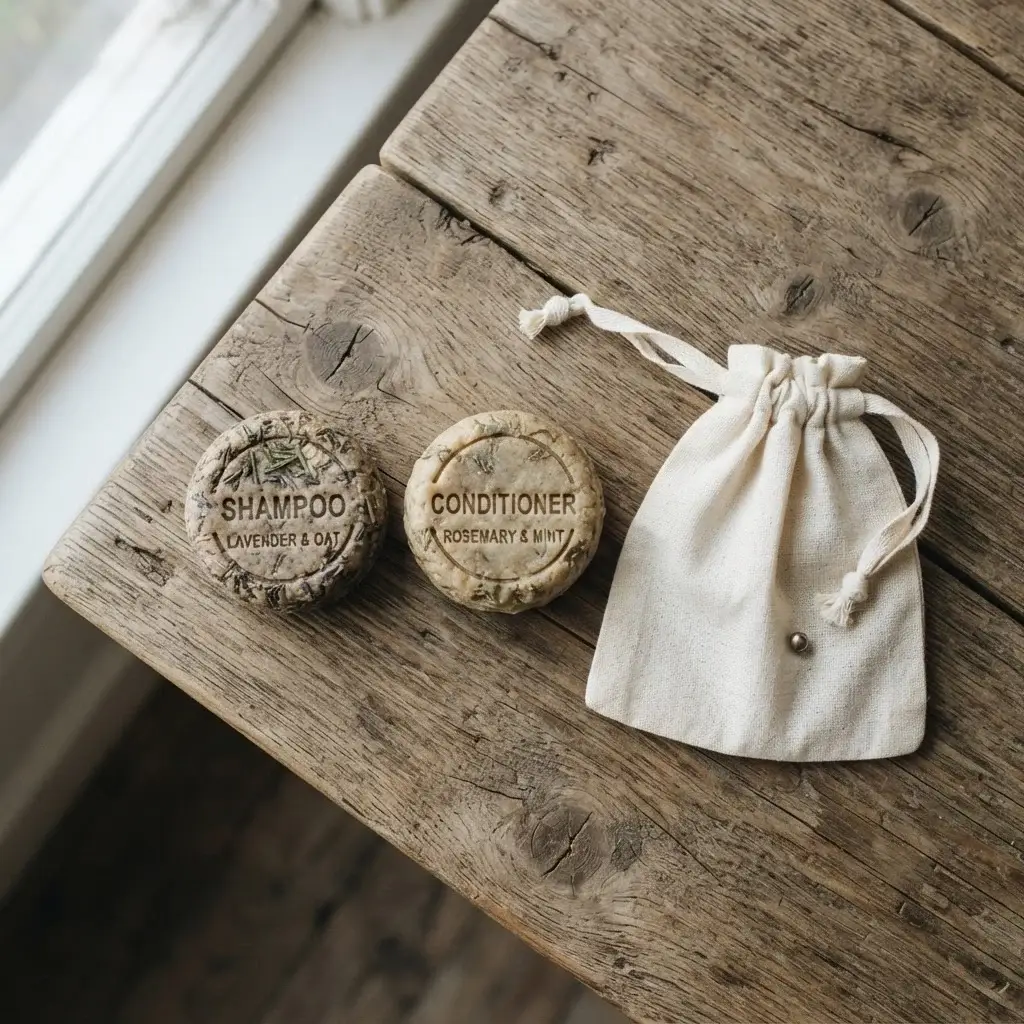
If you want to completely eliminate the stress of liquid rules and security checks, the secret weapon is transitioning to solid beauty products. The evolution of solid cosmetics over the last few years has been incredible. They are no longer the harsh, drying bars of soap from decades ago; they are high-performance, nourishing formulas designed specifically for hair and skin health.
Why Solids are a Solo Traveler’s Best Friend
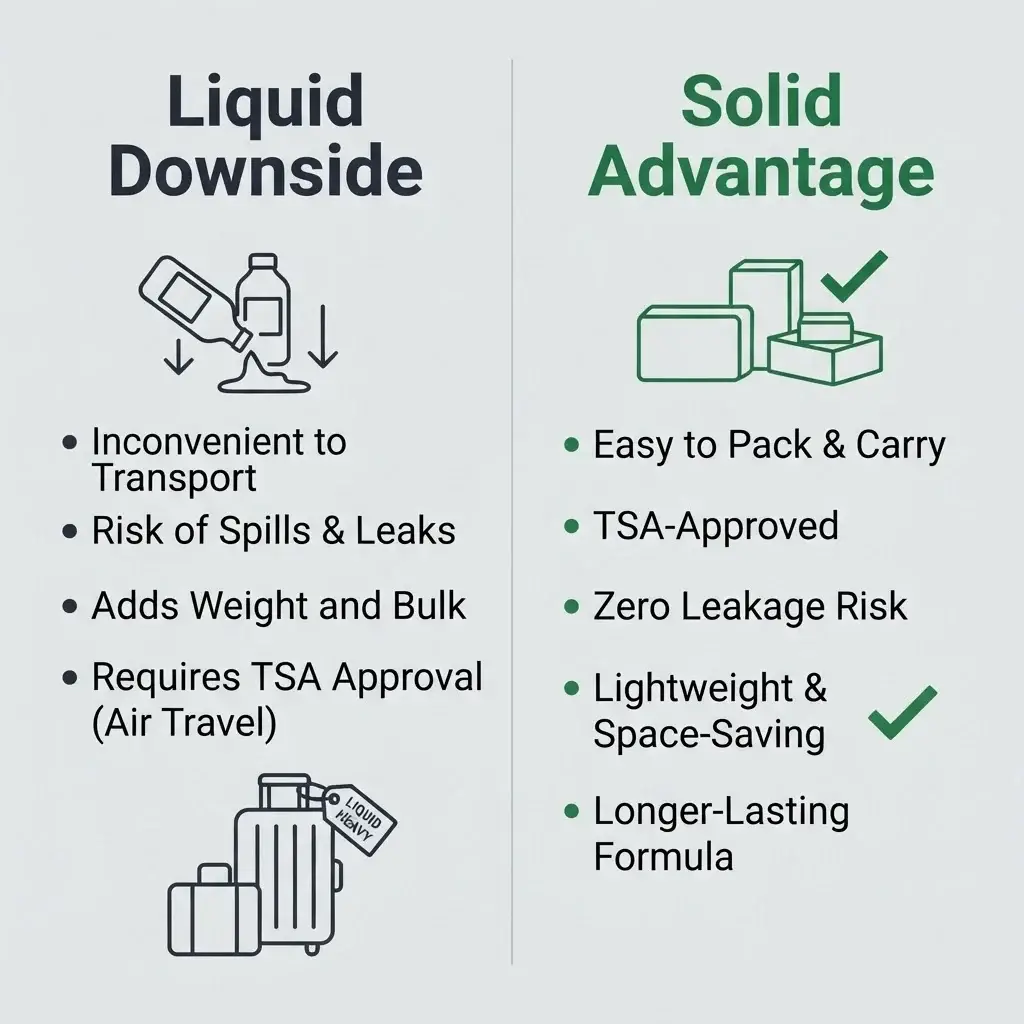
Solid products have zero risk of exploding inside your luggage due to airplane cabin pressure changes. There is nothing worse than opening your backpack after a long flight to find your favorite silk shirt covered in leaked body lotion. Solids also don’t count toward your precious quart-size liquid bag allocation, freeing up space for the liquids you truly cannot substitute, like prescription topicals or specific liquid foundations.
The Best Solid Swaps to Make
- Shampoo and Conditioner Bars: A single, high-quality concentrated shampoo bar can last for up to eighty washes. That is equivalent to two or three full-size plastic bottles. Look for bars made with gentle, sulfate-free surfactants like sodium cocoyl isethionate, which will clean your hair without stripping its natural moisture, even if you are washing with hard water abroad.
- Solid Lotion Sticks: These look like large lip balm tubes. You simply rub them directly onto dry elbows, knees, or hands. The warmth of your skin melts the nourishing plant butters, providing deep hydration without any liquid mess.
- Toothpaste Tablets: These are dry, bite-sized pressed powder tabs. You pop one in your mouth, chew it slightly to create a paste, and then brush with a wet toothbrush as normal. They are incredibly lightweight, take up almost no space, and eliminate the sticky mess of half-crushed toothpaste tubes.
4. Forgetting to Protect Against Leaks and Pressure Changes
Airplanes are a hostile environment for liquid containers. As the aircraft climbs to 35,000 feet, the air pressure inside the cabin drops significantly. The air trapped inside your plastic cosmetic bottles expands, pushing against the cap. When you land and open the bag, that built-up pressure forces the liquid out, creating a messy explosion.
The Pre-Flight Squeeze Technique
Before you pack your decanted liquid bottles into your toiletry kit, open the cap slightly. Gently squeeze the sides of the bottle to expel a small amount of air, creating a slight vacuum inside. While maintaining the squeeze, tightly screw the cap back on. This leaves room for the remaining air inside the bottle to expand during the flight without forcing the product out through the seams or cap threads.
The Plastic Wrap Shield
For extra insurance on bottles that have snap-top lids or pumps, use ordinary kitchen plastic wrap. Unscrew the entire cap from the bottle neck, place a small square of plastic wrap tightly over the open opening, and then screw the cap back down over the plastic. This creates a secondary, airtight seal that prevents liquids from leaking out even if the lid pops open during transit.
Double Containment
Never let your toiletries roam free in your main backpack compartments. Always place your individual containers inside a water-resistant, lined toiletry bag. For absolute safety, put that toiletry bag inside a clear, durable zip-top storage bag. If a leak does occur, it is entirely contained within that plastic barrier, preserving your clothes, travel documents, and electronics from damage.
5. Overlooking Multi-Use Multi-Taskers
When every single ounce of weight in your bag matters, packing single-purpose products is a major strategic error. You do not need a separate lip color, cheek blush, eyelid shimmer, contour powder, and highlighting cream.
The goal of a smart, minimalist travel beauty routine is to find items that do double or triple duty. This not only lightens your load but also speeds up your morning routine, giving you more time to explore local morning markets, grab a fresh pastry from a neighborhood bakery, or catch an early train.
Smart Multi-Use Combinations to Look For
- Tinted Moisturizer or BB Cream with SPF: This single product replaces three separate items: your daily hydrating cream, your sun protection layer, and your light-coverage makeup base. It evens out your skin tone while protecting you from UV damage during long walking tours.
- Lip and Cheek Tints: Cream-based sticks or pots work beautifully to add a natural flush of healthy color to both your lips and the apples of your cheeks. Many formulas are gentle enough to be patted onto your eyelids as a soft monochromatic eyeshadow as well.
- Micellar Water: This acts as a makeup remover, a gentle morning cleanser, and a skin soothener all at once. Best of all, it does not require rinsing with running water. If you are staying somewhere with limited water access or are on a long, overnight train journey, you can simply pour a small amount onto a reusable cotton pad to completely clean your skin right from your seat.
- Pure Jojoba or Argan Oil: A tiny 1-ounce dropper bottle of pure jojoba oil can replace your heavy night cream, your hair frizz serum, your cuticle oil, and can even be used as an oil-cleanser to break down stubborn waterproof mascara at the end of the day.
6. Failing to Adapt to Your Destination’s Climate and Culture
A major pitfall is packing the exact same beauty routine for a winter trip to Oslo that you would for a humid summer journey through Bangkok. Your skin is a living organ that reacts constantly to its environment. If you don’t adjust your travel-size beauty essentials to match the specific weather and cultural norms of your destination, your skin will pay the price.
Packing for High Humidity and Tropical Heat
When I was teaching English in Thailand, the intense humidity and heat taught me to completely reinvent my approach to self-care. Heavy oil-based creams and thick liquid foundations will melt off your face within five minutes of walking outside.
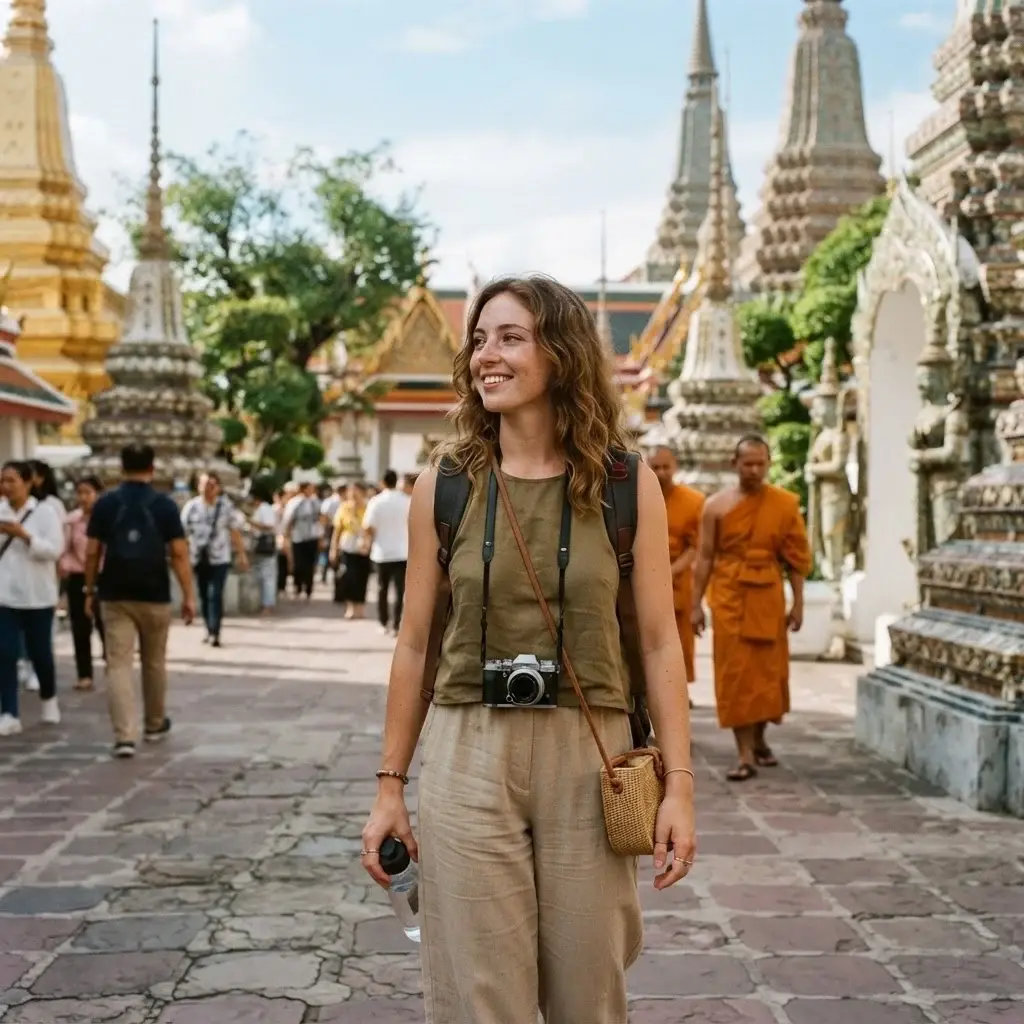
They block your pores, trap sweat, and lead to sudden breakouts.
In humid, tropical environments, swap your rich creams for lightweight, water-based gel moisturizers containing hyaluronic acid. Switch to oil-free, non-comedogenic sunscreens that dry to a matte finish. For makeup, leave the heavy bases behind and opt for a touch of water-resistant concealer only where needed, set with a dusting of translucent powder.
Packing for Arid Deserts and High-Altitude Cold
Conversely, if you are hiking through high alpine regions or exploring dry desert landscapes, the air will strip every drop of moisture from your skin. The low humidity levels cause the water in your skin cells to evaporate rapidly, leading to a damaged skin barrier, flaking, redness, and painful cracking.
For dry, cold climates, you need occlusive ingredients that lock moisture in. Bring a rich, ceramide-packed cream or a dense balm. Do not forget a high-quality lip treatment with beeswax or shea butter; chapped, bleeding lips can make eating delicious local foods completely miserable.
Respecting Local Cultural Norms
Your beauty routine should also reflect the cultural landscape of the places you visit. In many regions of the world, heavy, brightly colored makeup or strong synthetic fragrances are uncommon or considered inappropriate in sacred spaces.
When packing, opt for a clean, natural look that allows you to move respectfully through local communities. If you are planning to visit historic temples or remote villages, consider minimizing strong perfumes out of courtesy to the people hosting you. If you are looking for health advisories or planning tips tailored to your destination’s specific conditions, it is always smart to check the CDC Travelers’ Health guide before you finish packing your bag.
7. The Danger of Cheap, Low-Quality Travel Containers
It can be incredibly tempting to walk into a discount store and buy the cheapest, unbranded set of clear plastic travel bottles available on the clearance rack. They cost next to nothing, and they look fine on the shelf. But this is a classic example of saving a dollar upfront only to pay a massive price later.
Why Cheap Plastic Fails on the Road
Inexpensive travel bottles are usually made from thin, brittle plastics like polystyrene. These materials have almost no flexibility. When they are crammed into a tight backpack, subjected to the rough handling of airport baggage loaders, or exposed to temperature drops, they crack easily along the seams or cap threads.
Cheap bottles also feature low-quality, poorly engineered screw caps or snap lids. The threads do not align perfectly, allowing liquids to seep out slowly over time. There is nothing more frustrating than arriving at an incredible destination only to find your limited supply of specialized facial serum has pooled at the bottom of your toiletry kit.
What to Look for Instead
When shopping for your travel-size beauty essentials, view your containers as a long-term investment in your travel gear. Look for reputable brands that use high-grade materials:
- BPA-Free, Food-Grade Silicone: This material is virtually indestructible. You can drop it on a hard tile bathroom floor, step on it, or squeeze it repeatedly, and it will never crack or lose its shape.
- Leak-Proof Valve Technology: Premium silicone bottles often feature a self-sealing silicone valve inside the cap opening. This prevents the product from dripping out even if the main cap is left wide open.
- Secure Lock Rings: Some high-quality bottles include an integrated plastic outer collar that locks the cap firmly in place, preventing it from accidentally twisting open when compressed inside your luggage.
8. Neglecting Sun Protection and Basic First Aid in the Beauty Bag
A beautiful complexion starts with healthy skin, and the single most important beauty product you can ever pack is a reliable, high-performance sunscreen. Yet, many travelers view sun protection as an afterthought—something they can easily pick up at a beachside shop once they arrive at their destination. This mistake can have serious consequences for both your health and your wallet.
The Pitfalls of Buying Sunscreen Abroad
Depending on where you are traveling, finding a sunscreen that suits your specific skin type can be surprisingly difficult and incredibly expensive. In many popular tourist beach towns, sunscreen prices are heavily marked up, sometimes costing three or four times what you would pay at home.
In certain regions, particularly across parts of Asia, a large percentage of locally sold daily facial moisturizers and sunscreens contain active skin-lightening or “whitening” ingredients like niacinamide, hydroquinone, or kojic acid. If you do not read the local language labels carefully, you might accidentally purchase a product designed to alter your skin tone.
Additionally, counter-regulatory counterfeit products are common in unauthorized markets. To ensure you are using safe, regulated skin protection and to keep track of any regional health alerts, check the US Department of State Travel updates for country-specific safety warnings before you depart.
Integrating First Aid with Self-Care
Your beauty kit should always include a few small, essential health items that keep you feeling comfortable and confident on your feet. When you are walking ten miles a day down cobblestone streets or hiking rugged mountain trails, physical discomfort can ruin the magic of an experience.
- Hydrocolloid Blister Bandages: These are absolute lifewavers. They act like a second skin over painful blisters, sealing out dirt and bacteria while accelerating healing. Pop a few into your cosmetic pouch so they are always within reach during long walking tours.
- Hydrocortisone Cream: A tiny, travel-size tube of 1% hydrocortisone cream is essential for soothing sudden allergic skin reactions, mysterious heat rashes, or itchy insect bites.
- Antiseptic Wipes: Keep a few individually wrapped sterile alcohol or antiseptic wipes in your kit. They are perfect for cleaning your hands before touching your face to apply skincare, or for cleaning a small cut or scrape on the fly.
9. Packing Tools and Accessories That Require Power
It is incredibly easy to fall into the trap of wanting to bring your entire suite of electronic styling tools along with you. You imagine yourself styling your hair perfectly before heading out to a beautiful dinner or snapping photos in front of historic monuments. But packing full-size hair dryers, heavy curling irons, or electric straighteners is a classic beginner mistake.
The Voltage and Plug Nightmare
Different countries use completely different electrical voltages and plug shapes. In the United States and Canada, the standard electricity grid runs on 110-120 volts. However, across Europe, Asia, and Africa, the standard is 220-240 volts.
If you plug a single-voltage American hair straightener into a European wall outlet using a simple plastic plug adapter, the heating element will receive double the voltage it was designed to handle. At best, you will instantly fry the internal circuitry of your expensive tool, rendering it useless. At worst, the tool will overheat rapidly, melt the plastic casing, spark, and create a serious fire hazard in your room.
Heavy, Bulky Cord Clutter
Even if your styling tools are dual-voltage, they are incredibly heavy and take up an immense amount of physical space in your backpack. The long, thick electrical cords are notorious for tangling around other items, creating a chaotic mess every time you try to unpack your bag.
Embrace Your Natural Texture and Lightweight Tools
The most liberating approach to solo travel beauty is to leave the high-maintenance heat tools at home and learn to embrace your hair’s natural texture.
- Microfiber Hair Towel Wrap: Pack a tiny, ultra-lightweight microfiber towel wrap. Microfiber absorbs water out of hair significantly faster than standard cotton hotel towels, cutting your air-drying time in half.
- Solid Styling Balms or Sea Salt Sprays: Bring a small, travel-size container of a lightweight hair balm, pomade, or curl cream. You can work a pea-sized amount through damp hair to control frizz and define texture without needing any heat.
- No-Heat Styling Methods: Learn a few simple, elegant braided styles, top-knots, or classic up-dos that keep your hair secure and off your face during hot, active days of exploring.
10. The Golden Rules of Minimalist Travel Beauty Architecture
Now that we have broken down the major packing mistakes to avoid, let us look at how to construct the ultimate, high-efficiency travel beauty kit from the ground up. This system is designed to maximize space, prevent organization headaches, and keep you feeling light on your feet.
Implement the Three-Bag System
Instead of forcing every single health, hygiene, and beauty item into one large, chaotic bag, divide your kit into three small, specialized pouches. This structure keeps you organized and ensures you can access exactly what you need instantly without unzipping your entire luggage.
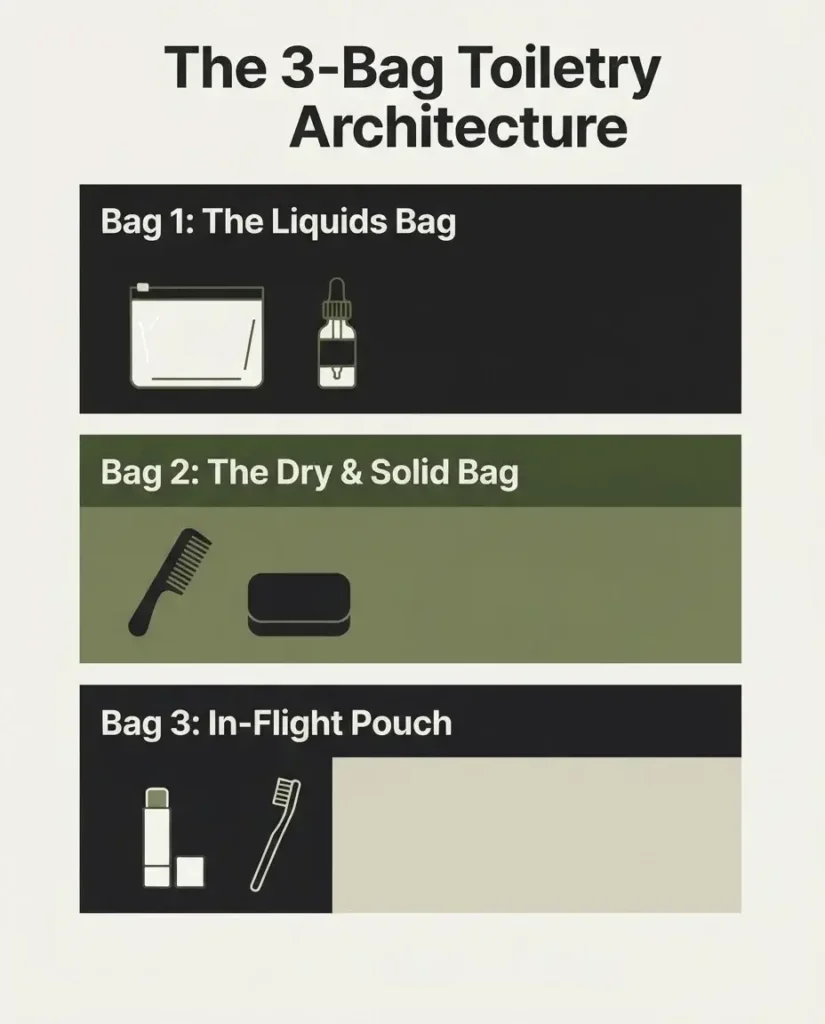
- Bag One: The Liquids Bag: This should be your clear, quart-size, durable plastic pouch. It contains only your essential liquids and gels that must be scanned at airport security checkpoints. Keep this bag in an easily accessible outer pocket of your carry-on luggage so you can slide it out onto the security conveyor belt without a hitch.
- Bag Two: The Dry and Solid Bag: This can be a lightweight fabric or nylon mesh pouch. It houses all of your solid items, tools, and dry accessories—things like your shampoo bars, toothbrush, razor, nail clippers, solid deodorant, and makeup brushes. Since this bag contains zero liquids, it can stay safely packed deep inside your main luggage compartment during transit.
- Bag Three: The In-Flight Refresh Pouch: This is a tiny, pocket-sized pouch that stays with you at your airplane seat or in your daypack. Fill it with a few select items to stay comfortable during long journeys: a hydrating lip balm, a small travel pack of wet wipes, a miniature tube of hand cream, your toothbrush tablets, and a small pack of tissues.
The Power of the Hanging Toiletry Bag
If you are planning to stay in a variety of accommodations—from tight sleeper train cabins to historic guesthouses—consider choosing a dry bag that features an integrated hanging hook.
In many older accommodations around the world, bathroom counter space is virtually non-existent. The sink area might be small, or the counter could be wet from a previous guest’s shower. A hanging toiletry bag allows you to hang your entire kit from a towel rack, a bathroom door hook, or even a window frame. Your products stay clean, dry, completely organized, and accessible at eye level.
Moving Forward with Confidence and Freedom
When you look closely at the art of packing light, you realize it isn’t really about the products themselves. It is about a shift in your mindset. It is about choosing to trust that you are capable, that you are resilient, and that you do not need to carry a heavy mountain of material possessions to feel beautiful, safe, and prepared on the road.
Every ounce of weight you remove from your physical luggage is an ounce of energy you give back to your travel experience. When you streamline your travel-size beauty essentials and leave the packing mistakes behind, you clear the space to focus on what truly matters: the crisp morning air as you step onto a new mountain trail, the rich aroma of local street food stall dishes cooking over open flames, and the unforgettable connections you make with people along the way.
Pack with intention, embrace the beauty of simplicity, and step out into the world with open hands and a light spirit. Your next great adventure is waiting for you.