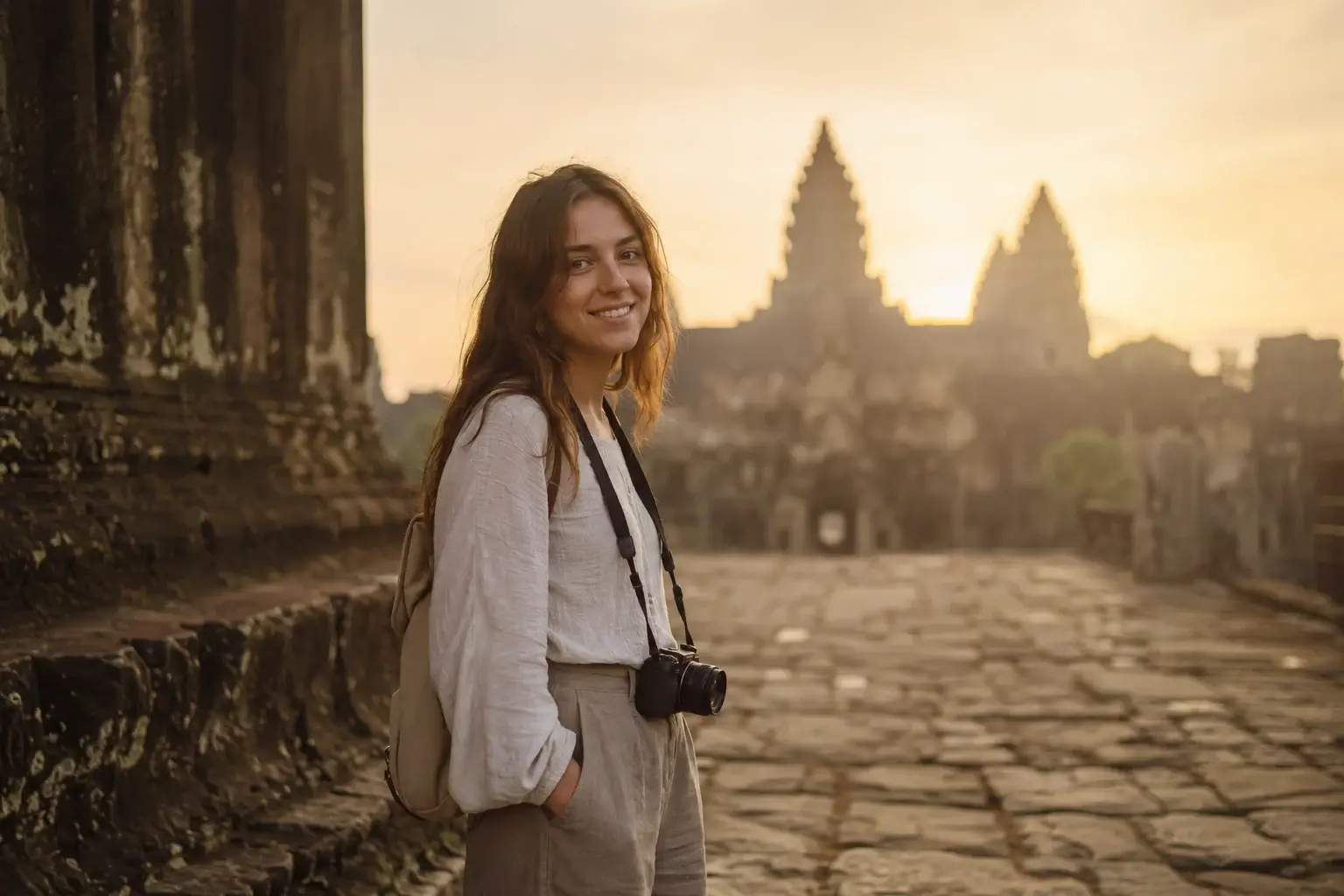
I remember the exact moment I decided to change my life. I was sitting at a gray desk in a very boring office in New York. I had followed all the rules. I went to college at the State University of Albany, got my degree, and took the safe, normal job. But looking at my screen that day, I felt completely stuck. I had just two weeks of vacation time for the entire year. Two weeks to see the whole world. It was never going to be enough.
So, I quit. I started working crazy shifts waitressing just to save every dollar I could. I wanted to travel on my own terms. I wanted to see Europe, live in Ghana, and teach English in Thailand. But when I finally bought that first one-way ticket, a huge wave of panic hit me. I was going alone. What if I got lost? What if someone stole my bags? What if I got sick?
Those fears are completely normal. Every solo traveler feels them. But over the years, I learned a huge secret. The fear goes away when you are prepared. You do not need to be a survival expert to travel the world by yourself. You just need the right tools. When you pack smart, you replace worry with confidence.
Today, I want to share my personal checklist with you. This is the exact must-have safety gear for solo travelers that I use on every single trip. These are simple, practical items that will keep you safe, protect your belongings, and let you focus on what really matters: exploring the world and having an amazing time.
Why safety gear is about freedom, not fear
Before we open up the backpack, we need to talk about mindset. A lot of people think that packing safety gear means you are expecting bad things to happen. That is simply not true.
When I worked as a certified sightseeing guide in New York City, I saw thousands of tourists every single week. The ones who had a bad time were usually the ones who did not prepare. They kept their wallets in their back pockets in crowded places. They let their phones die. They got lost without a map.
Packing safety gear is about giving yourself freedom. When you know your hotel door is secure, you sleep better. When you know your passport is hidden, you can walk through a busy market without holding onto your bag for dear life. You can actually taste the street food, listen to the street musicians, and talk to local people. Your brain is free to enjoy the culture.
Let’s break down the actual items you need. I promise you do not need to spend a fortune. Authentic travel is not about buying expensive luxury gear. It is about buying smart, simple things that actually work.
The foundational items you absolutely need
When people ask me for advice on must-have safety gear for solo travelers, I always start with the absolute basics. These are the items that keep your most vital things safe: your money, your identity, and your connection to the world.
The classic hidden money belt
I know, I know. A money belt sounds like something your grandpa wears. But hear me out. A thin, fabric money belt that clips flat under your clothes is still the best way to hide your big bills and your passport.
Do not use a fanny pack that sits on the outside of your shirt. That just tells everyone exactly where your cash is. You want a soft pouch that tucks inside your pants or under your skirt. Keep your passport, your backup credit card, and your large cash bills in there.
When I take overnight trains in Europe or ride a crowded bus in South America, I sleep deeply because I know nobody can reach my passport without waking me up. You keep a small amount of daily spending money in your regular pocket or day bag. This way, if you lose your day bag, your trip is not ruined. You still have your ID and your main funds safely tucked away.
A heavy-duty portable power bank
Your phone is your map, your translator, your camera, and your emergency lifeline. You cannot let it die. When you are traveling alone, a dead phone can turn a small mistake into a scary situation.
Invest in a high-quality, heavy-duty power bank. I carry one that holds at least three full phone charges. If I take a long bus ride that breaks down, or if the power goes out in my hostel, I know I can still look up directions or call for help. Make it a daily habit to charge your power bank every single night while you sleep.
Digital and physical document backups
This is not a physical piece of gear you buy at a camping store, but it is a tool you must build. Before you leave home, make digital copies of your passport, your visas, your travel insurance, and your credit cards. Email them to yourself. Email them to a trusted friend or family member back home.
Then, print physical copies. Keep a paper copy of your passport in a completely different bag from your real passport. If your main bag goes missing, having a paper copy of your ID makes going to the embassy ten times easier.
Keeping your bags and belongings secure
Once your personal documents are safe, you need to protect your luggage. You will spend a lot of time carrying your bags through train stations, airports, and city streets.
TSA-approved flexible cable locks
I never travel without a few small combination locks. But do not buy the rigid metal ones. Buy the ones with a flexible wire cable.
The flexible wire can bend and weave through different types of backpack zippers. When I sleep in hostel dorm rooms, I use these to lock my bag. If I am on a train and I want to go to the dining car to grab a snack, I use the flexible cable lock to attach my main backpack to the metal leg of my seat. It stops someone from just grabbing my bag and running off at the next train stop.
A slash-proof daypack
Your daypack is the bag you carry around town while your big luggage stays at the hotel. This bag needs to be tough.
When you walk through busy markets, pickpockets can be very fast. I learned this while navigating crowds in China and busy streets in Rome. Look for a daypack that has hidden steel mesh sewn into the fabric. This stops thieves from slicing the bottom of your bag with a knife so your things fall out. Also, make sure the zippers have small clips that lock them together. It makes it very hard for a stranger to unzip your bag silently while standing behind you in a crowd.
Bluetooth luggage trackers
Losing your bag is a huge fear for solo travelers. A simple Bluetooth tracker, like an Apple AirTag or a similar device, is a game-changer. Toss one inside the lining of your big backpack and another inside your daypack.
If the airline loses your bag, you can see exactly which airport it is sitting in. If you leave your daypack at a cafe, you can track it down. It is a tiny piece of gear that gives you massive peace of mind.
Staying safe in transit and in your room
Moving from place to place is usually when you are the most vulnerable. You are tired, you are carrying all your stuff, and you are trying to figure out where you are going. You also need to feel safe when you finally get to your room and lock the door.
The portable door stop alarm
This is one of my favorite items on my list of must-have safety gear for solo travelers. It is a small plastic wedge that looks like a normal door stop. But it has a metal plate on top.
You slide it under your hotel or hostel door from the inside before you go to sleep. If someone tries to open your door from the outside, the door pushes down on the metal plate. This sets off an incredibly loud, screaming siren. Not only does it physically block the door from opening, but the noise will scare away anyone trying to get in and wake you up instantly. It is cheap, small, and works brilliantly.
Using secure transport apps
When I was living in Bangkok and teaching English, I had to figure out how to get around safely. Hailing random cabs on the street late at night can be confusing when you do not speak the language.
My best navigation advice for cities is to use local ride-tracking apps instead of waving down street taxis. I always recommend taking a few minutes to read up on how Grab works for travelers to get around Southeast Asian cities safely. When you use an app like this, the price is fixed, the driver’s name and license plate are recorded, and your exact GPS route is tracked on your phone. You can even share your live ride status with a friend.
A simple safety whistle
It sounds very basic, but a loud sports whistle is a fantastic tool. I keep one clipped to the outside strap of my day bag.
If you get lost hiking a trail, a whistle sound travels much further than your voice. If someone is making you feel uncomfortable on a dark street, blowing a loud whistle draws immediate attention from everyone around you. People hate loud noises, and bad guys hate attention.
Health and medical safety on the road
Your physical health is your most important asset when you travel alone. If you get a bad stomach bug or a bad cut, you cannot just call your mom to bring you soup. You have to take care of yourself.
A custom-built first-aid kit
Do not buy those giant, pre-packaged red first-aid boxes from the camping store. They are full of things you do not need and take up too much room.
Build your own in a small zipper pouch. You need: good quality fabric bandages, blister pads for your heels (you will be walking a lot!), basic pain relievers, motion sickness pills for bumpy bus rides, and an anti-diarrhea medicine. When I was hiking through rural parts of China, having my own small medical kit saved me from a lot of misery when my stomach did not agree with a new dish.
A water purification bottle
Food is one of the best parts of travel. I love eating authentic local meals. I want you to eat the Pad Thai in Thailand and the fresh fruit in the markets of Ghana. But you have to be smart about culinary safety.
A water bottle with a built-in heavy-duty filter is a lifesaver. Sometimes tap water is not safe to drink, and constantly buying plastic water bottles is bad for the budget and the environment. With a filter bottle, you can fill up from a tap in a bathroom or a hostel sink, and the filter removes the bacteria.
Before you eat anything adventurous, I always tell my readers to check the latest destination health advisories to know exactly what food and water precautions to take in that specific country. This helps you figure out if you should avoid raw salads or stick only to cooked foods in certain regions.
Travel insurance documentation
Physical gear is great, but it cannot fix a broken leg or pay for a canceled flight. Travel insurance is non-negotiable for solo travelers.
Keep your insurance policy number and the international emergency phone number saved on your phone and written on a piece of paper in your wallet. Even with all the physical gear, your ultimate backup is reading through good insurance guidance and traveler safety content to make sure you know exactly what to do if you need to visit a foreign hospital.
Navigating local environments and blending in
A big part of staying safe is not looking like a clueless tourist. The more you blend in and respect the local environment, the less likely you are to be targeted by scammers.
A versatile modesty scarf
This is a very simple piece of cloth, but it is incredibly powerful. As a solo female traveler, a large, lightweight scarf is my best friend.
If the air conditioning on a bus is freezing, it is a blanket. But more importantly, it is a tool for cultural respect. In many countries, showing your bare shoulders or knees is considered rude. If you plan to visit sacred temples or official UNESCO World Heritage sites, you need to cover up out of respect. Keeping a scarf in your bag lets you quickly cover your shoulders or wrap it around your waist as a long skirt so you can enter these beautiful, historic places without offending anyone.
Knowing the local emergency rules
Every country has different rules and different numbers for the police or an ambulance. It is not always 911.
Before I fly to a new country, I write down the local emergency numbers. I also look up the location of my home country’s embassy. It is always a smart move to read through the official travel safety ratings and alerts before you book your flights to understand any current protests, weather warnings, or areas of a city to avoid. Knowledge is your best defense.
A solid LED headlamp
Power outages happen all the time in developing countries. Or, you might find yourself walking back to your beach bungalow in the dark after watching the sunset.
Holding your phone flashlight drains your battery fast, and it keeps one of your hands busy. A small LED headlamp that straps to your head leaves your hands free to carry groceries, hold a map, or unlock your door. It is tiny, cheap, and very useful.
What to leave behind: Gear that makes you a target
Part of packing must-have safety gear for solo travelers is knowing what not to bring. Sometimes, the things you pack actually make you less safe.
Leave the flashy jewelry at home
I never travel with expensive watches, diamond rings, or real gold necklaces. Even if they have deep sentimental value, leave them safe at home.
When you wear expensive things, you signal to everyone around you that you have money. This makes you a target for thieves and scammers. When I travel, I wear cheap, simple jewelry that I would not be sad to lose. Authentic travel is not a fashion show. It is about the experience.
Ditch the massive, heavy luggage
If you have a backpack that is so huge you can barely walk up a flight of stairs, you are putting yourself in danger.
When your bags are too heavy, you move slowly. You look tired and distressed. You cannot run to catch a train, and you cannot easily navigate away from someone making you uncomfortable. You become reliant on strangers to help you carry your things.
Pack light. If you can carry your own bag easily, you are totally independent. Independence is the core of solo travel confidence.
Stepping out with confidence
The world is huge, beautiful, and absolutely worth exploring. It is not a scary place out to get you. The vast majority of people you meet on the road will be kind, helpful, and curious about you.
When I look back at my first solo trip, I laugh at how scared I was. I wish I could go back and tell that younger version of myself that she was capable of so much more than she realized. I learned that mistakes happen. Buses break down, it rains on beach days, and sometimes you get off at the wrong train station. That is just part of the adventure.
By packing the right must-have safety gear for solo travelers, you take away the real risks. You lock down your bag, you secure your health, and you protect your money. Once those basics are handled, you can take a deep breath, step out of your comfort zone, and truly experience the magic of travel. Stop waiting for the perfect moment. Pack your bag, grab your door stop alarm, and go see the world. You are going to do great.