
Free Airport Lounge Access: What Actually Works in 2025

I used to walk past airport lounges without a second thought. As a sightseeing guide in New York and a self-funded backpacker working waitressing shifts to fund my next flight, lounge access felt like something that existed for a very different kind of traveler. Suits and status, not hostel beds and layovers.
Then I started paying attention, and I realized something that changes how a lot of travelers see airports: the people inside those lounges are not all flying business class. A huge number of them are ordinary travelers who simply learned the system.
Lounge access is genuinely available to more people than most realize. And the ways to get it for free, or close to free, are expanding every year. This post breaks down exactly what works, what to prioritize depending on how often you travel, and what to watch out for so you don’t waste money chasing a perk you’ll barely use.
What Airport Lounges Actually Offer (and Why They Matter)
Before getting into how to access them, it’s worth being clear about what you’re actually getting. Quality varies widely from lounge to lounge, but the typical experience includes comfortable seating, complimentary food and non-alcoholic drinks, free Wi-Fi, charging stations, and access to cleaner restrooms. Many lounges also include free alcohol, full hot buffets, private work areas, and in some cases, showers.
For solo travelers especially, lounges offer something beyond comfort. When you’re navigating a long transit alone, having a safe, calm space to eat a real meal, charge all your devices, and decompress without someone bumping your elbow every five minutes is genuinely valuable. On tight travel budgets, a lounge with a solid food spread also means you’re not spending $18 on an airport sandwich. That adds up quickly across a year of trips.
The question is not really “are lounges worth it?” They almost always are. The question is what route to access makes sense for you specifically.
Route 1: Fly Business or First Class (The Obvious Path, But With a Nuance)
The most straightforward way to walk into an airport lounge is to hold a business or first class ticket on an international flight. Most full-service carriers worldwide include lounge access automatically with premium cabin bookings. You don’t need a credit card, a membership, or any special status. You just show your boarding pass.
The nuance most articles skip: this applies to award bookings too. If you’ve redeemed miles or points to book a business class seat, you typically still receive the same lounge access as a cash-paying business traveler. For travelers who play the points game even modestly, this can be a real upgrade on long-haul trips without an extra dollar spent.
The catch is obvious: business class fares are expensive in cash. This route makes sense when you’re already booking a premium seat for a long journey, or when you’ve strategically used miles to book one. It’s not a practical everyday solution, but it’s worth knowing you don’t need to pay full fare to use it.
Route 2: Build Airline Elite Status (The Long Game That Pays Off)
If you fly with a consistent airline or within one of the major alliances, earning elite status opens lounge access as one of its most tangible perks.
The two largest flight alliances have clear and official policies on this. Star Alliance Gold status grants you access to any member airline’s Business Class lounge when traveling on a Star Alliance flight, regardless of which cabin class you actually booked. That means you could be sitting in economy on a United or Lufthansa flight, and still walk into the lounge before boarding. The same logic applies across oneworld’s alliance lounge program, where Emerald status (the highest tier) unlocks First and Business Class lounge access globally, and Sapphire tier earns you Business Class lounge access.
Earning that status requires genuine commitment, typically flying 50,000 or more qualifying miles or segments per year with a single airline or alliance. For frequent travelers who already consolidate their flying, it’s a natural progression. For occasional travelers, the math doesn’t work unless you’re specifically building toward it.
The real value here is the compound effect. Once you have Gold or Emerald status, you’re not paying a monthly or annual fee for the lounge access. It just comes with the status you’ve already earned, along with priority boarding, extra baggage allowance, and upgrades when available.

Route 3: The Credit Card Route (The Most Practical Path for Most Travelers)
This is where the majority of travelers who have lounge access actually get it: through a travel credit card that includes lounge access as a benefit. It is also the most confusing area because the card market changes constantly and the fee structures vary enormously.
Here’s the honest breakdown of how it works. Premium travel cards either include membership to a lounge network like Priority Pass or grant access to a bank’s proprietary lounges or both. Priority Pass is the world’s largest independent lounge network, covering 1,900+ lounges and airport experiences across over 600 airports globally. When a card comes with Priority Pass Select as a benefit, you’re getting access to that enormous network without paying Priority Pass’s own membership fees separately.
The three most discussed cards for lounge access right now are:
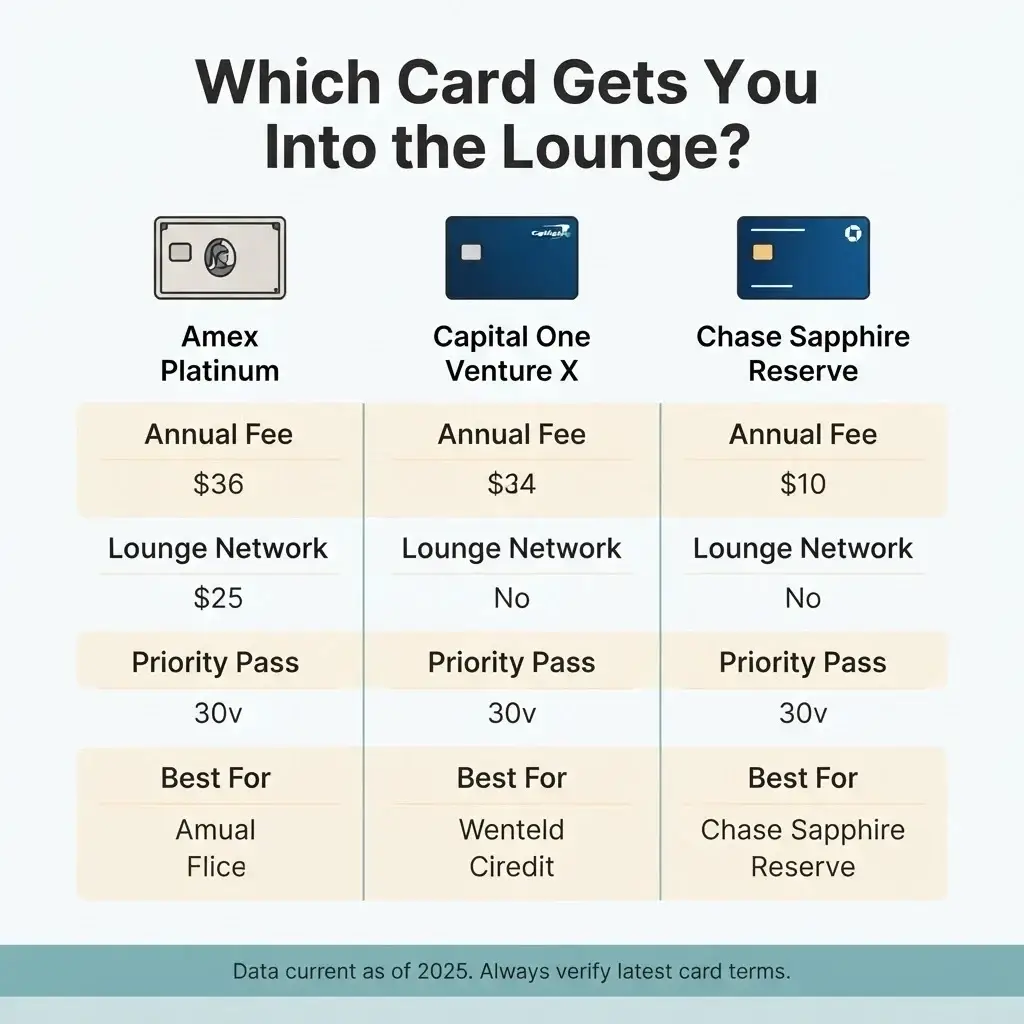
The American Express Platinum Card has the broadest lounge network of any consumer card. It includes Priority Pass Select enrollment, access to Amex’s own Centurion Lounges (at 16 US locations and 12+ international ones), Plaza Premium Lounges, and Delta Sky Clubs (with spending requirements). The annual fee is $895, which is genuinely high. Whether it justifies itself depends entirely on how often you use the other travel credits and perks that come with it, not just the lounge access alone. You can explore the full Centurion Lounge network at thecenturionlounge.com.
The Capital One Venture X has become the standout value card for lounge access. At a $395 annual fee with a $300 annual travel credit that effectively lowers your real cost to around $95 per year, it offers unlimited access to Capital One’s own lounges and Landings concepts, plus Priority Pass Select membership. One important policy update: as of February 1, 2026, authorized users no longer receive complimentary lounge access automatically. Primary cardholders still get unlimited free access. If you’re considering this card, review the latest terms directly at Capital One’s Venture X page before adding authorized users.
The Chase Sapphire Reserve carries a $550 annual fee and includes Priority Pass Select membership, giving cardholders access to the global Priority Pass network. It also includes access to Chase’s own growing network of proprietary Sapphire Lounges.
For a comprehensive comparison of what each card actually delivers, NerdWallet’s airport lounge access guide is one of the more balanced non-affiliate breakdowns available.
A Word on Annual Fees: The Math You Should Actually Run
I know the annual fees on premium cards can feel like a dealbreaker, especially if you’re a budget-conscious traveler. Here’s how I’d think about it honestly.
The cards aren’t just buying you lounge access. They’re bundling travel insurance, TSA PreCheck or Global Entry credits, trip delay coverage, and other perks. If you’re a traveler who buys travel insurance separately anyway, those costs start offsetting the annual fee before you ever walk into a lounge.
For the Venture X specifically, if you travel enough to use the $300 travel credit once a year, you’re already reducing the net cost to around $95. If you then visit a Priority Pass lounge twice, even at the pay-per-use rate of $35 per visit, you’ve broken even. After that, every visit is genuinely free.
Run your own numbers based on how many times you fly annually. If you take three or more trips a year and already pay separately for travel insurance, airport food, and checked bag fees, a well-chosen premium card often makes real financial sense, not just aspirational sense.

Route 4: Day Passes (When You Just Need It Once)
If you don’t want a credit card and don’t have elite status, day passes are a straightforward option for occasional access. Several major airlines still sell them directly.
American Airlines sells 24-hour Admirals Club day passes that allow multiple entries to different Admirals Club locations within that period. United Airlines sells single-visit United Club passes. Most individual lounge day passes run between $60 and $80 per person.
Whether that price makes sense depends entirely on your layover length, what the lounge offers, and how much you’d otherwise spend in the terminal. A three-hour layover with a full buffet and open bar, where you’d otherwise spend $25 on a meal and $10 on a drink, starts to close the gap. A 45-minute layover probably doesn’t justify it.
One important note: Delta Air Lines no longer sells single-visit Sky Club passes. Annual Sky Club membership is now restricted to Medallion elite status members or specific credit cardholders. If you were hoping to pay your way in for a day on Delta, that door is closed.
Route 5: Airline Alliances and International Program Options
This is the most underappreciated route in most English-language lounge access articles, largely because they default to a US-centric view.
If you’re not a US resident or don’t want a US credit card, DragonPass is the most accessible international alternative to Priority Pass. DragonPass connects to over 1,300 airport lounges globally, and membership is bundled with credit cards issued by many international banks, particularly across Asia, Europe, and the Middle East. If your bank card at home includes a DragonPass benefit, you may already have lounge access you’ve never activated.
The process is simple: check your bank’s card benefits, download the DragonPass app, activate your membership with the details provided, and use it to access lounges on your next trip.
Route 6: Military Access and USO Lounges
This one matters to a specific group of travelers, but it’s genuinely valuable and often under-discussed. U.S. military personnel on active duty and their families can access USO lounges at numerous airports throughout the United States and select international locations at no cost. USO lounges typically offer snacks, entertainment, free Wi-Fi, phone charging, and a comfortable environment staffed by volunteers.
Beyond USO locations, United Airlines offers complimentary United Club access for U.S. military members traveling on orders. American Airlines provides free Admirals Club access for uniformed military members. If you are currently serving, these are benefits worth using on every eligible trip.

Common Mistakes That Leave Travelers Standing Outside
From what solo travelers consistently report, these are the errors that catch people off guard:
Assuming your ticket automatically grants access. Business class gets you in on most international routes, but domestic business on many US carriers does not. Always verify before walking up to the desk.
Not activating your Priority Pass benefit. A surprising number of credit card holders have Priority Pass Select as a perk they never enrolled in. The card doesn’t enroll you automatically. You have to activate it in your card’s benefits portal.
Arriving at a full lounge. This happens more than people expect, particularly at busy hubs during peak travel times. Overcrowding has become a genuine issue at some Priority Pass lounges. Some lounges now require advance reservations. If the lounge you’re counting on is in a major hub during a busy period, have a backup plan.
Bringing guests and not knowing the policy. Most cards allow you to bring guests, but the rules and fees differ. On the Amex Platinum, for example, guests at Centurion Lounges cost $50 per adult unless you spend $75,000 annually on the card. Know the guest policy for your specific card and lounge before arriving with company.
Where to Actually Start if You Have Nothing Right Now
If you’re reading this with zero lounge access today and want the most practical first step, here’s my honest take.
If you’re a US-based traveler who takes three or more trips per year, the Capital One Venture X offers the clearest value proposition right now. The effective annual cost after the travel credit is low, the lounge network is broad, and it’s the option most likely to pay for itself.
If you’re outside the US or prefer not to open a new card, check whether any card you already hold internationally includes DragonPass membership you haven’t activated. A surprising number of mid-tier bank cards globally carry this benefit quietly.

If you’re building toward long-term travel, think about which airline or alliance you fly most frequently and whether consolidating your bookings to that airline will realistically earn you elite status within 12 to 18 months. The compounding benefits of status, lounge access, priority boarding, and fare upgrades together are worth more than any credit card perk in isolation.
And if you just have one specific trip with a long layover and want to try a lounge once without committing to anything, a single day pass is a reasonable way to see if the experience is worth planning around going forward.

The Honest Truth About Airport Lounges
I’ll be real with you: airport lounges are not transformative. They won’t make a bad trip good. But they do make the in-between parts of travel more human, which matters more than it sounds when you’re on your seventh hour in an airport alone.
The food is real. The seating is comfortable. The quiet is genuine. And the feeling of walking past the terminal chaos into a calm room where someone hands you a glass of wine is, well, pretty good.
You don’t need to be a frequent business traveler to have it. You just need to know the routes, pick the one that fits your actual travel life, and stop assuming it’s not for you. Because based on everything solo travelers discover once they figure this out, it almost always is.