Underrated Glamping Spots That Will Change How You Travel

There is a version of glamping that gets shared constantly online. Glass bubble tents in Iceland, floating safari camps in the Serengeti, overwater bungalows in the Maldives. They are beautiful. They are also everywhere.
When I first started looking into glamping as a way to slow down and actually connect with a place, I kept bumping into the same ten destinations. And look, some of them deserve the attention. But most of the content out there is either catered to couples with unlimited budgets or reads like a press release for the resort itself.
What I wanted, and what I think a lot of you are looking for, is something different. Not just a pretty tent. A place where the landscape, the culture, and the experience of simply being there shifts something in how you see the world. That is what the best glamping can do when it is done right. And it does not have to cost a fortune.
So I spent time researching and digging into what solo travelers, slow travelers, and genuinely curious people consistently say about the glamping destinations that never make the mainstream lists. These are those places.
What Glamping Actually Means (And Why It Matters for This Type of Travel)
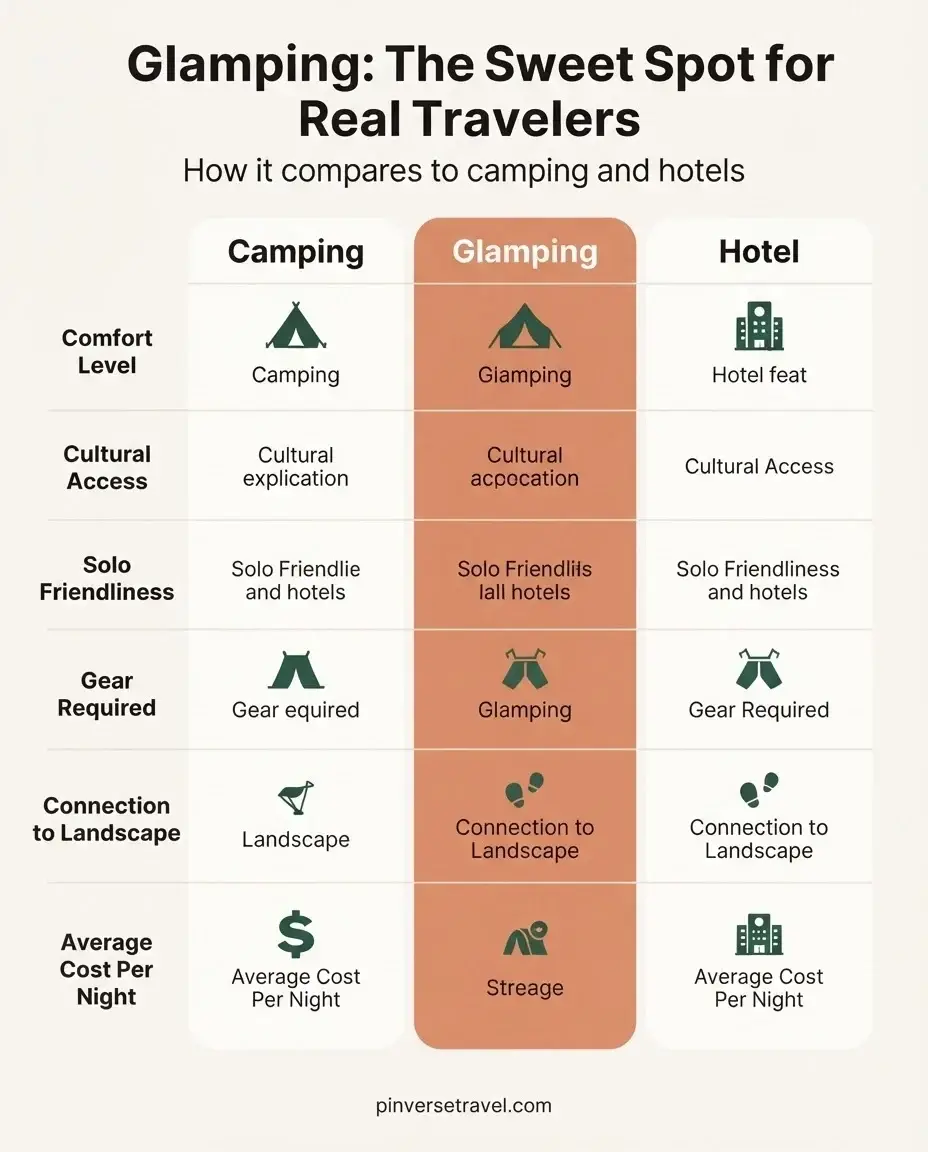
Before we get into specifics, it is worth being clear about what we’re actually talking about. Glamping sits in a specific sweet spot. It is not camping, which requires significant gear, physical preparation, and comfort with roughing it. It is also not a hotel, which insulates you completely from the environment and often from the culture around you.
Glamping, when it is done well, keeps you close enough to a landscape to feel it, while giving you a real bed, weather protection, and usually a meal someone else has cooked. That middle ground makes it genuinely accessible to people who are curious about remote places but are not ready for a full backpacking expedition. It also makes it particularly good for solo travelers because you get the solitude and the closeness to nature without the safety concerns of remote independent camping.
The spots below are not on every list. Some of them are genuinely unknown outside of regional travel communities. All of them offer something richer than a nice photo.
Wadi Rum, Jordan: Sleeping Inside a Living Painting
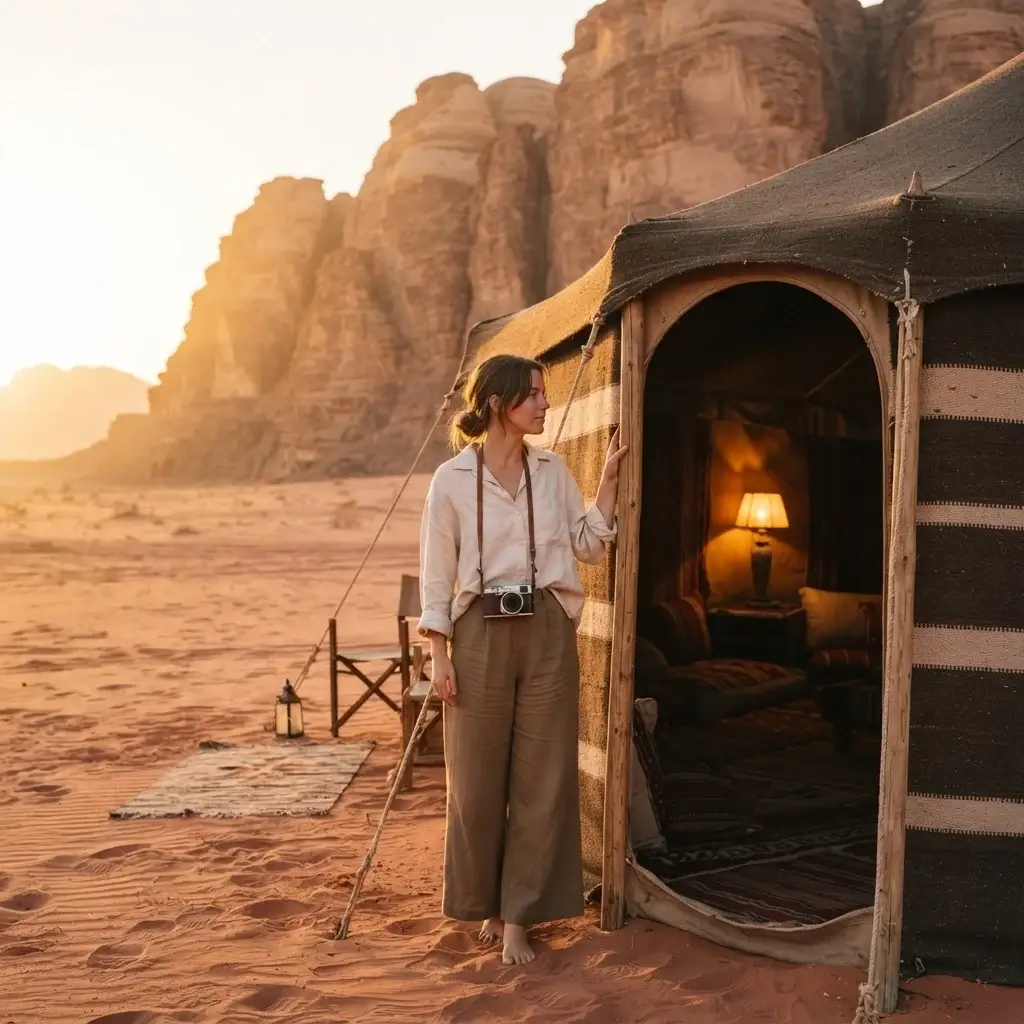
If there is one destination on this list that deserves more mainstream attention specifically in the context of cultural glamping rather than pure luxury, it is Wadi Rum. Jordan’s desert valley has been inscribed as a UNESCO World Heritage Site since 2011, covering 74,200 hectares of sandstone formations, Nabataean inscriptions, and ancient rock art dating back 12,000 years. This is not just a scenic desert. It is one of the longest continuously inhabited landscapes on Earth.
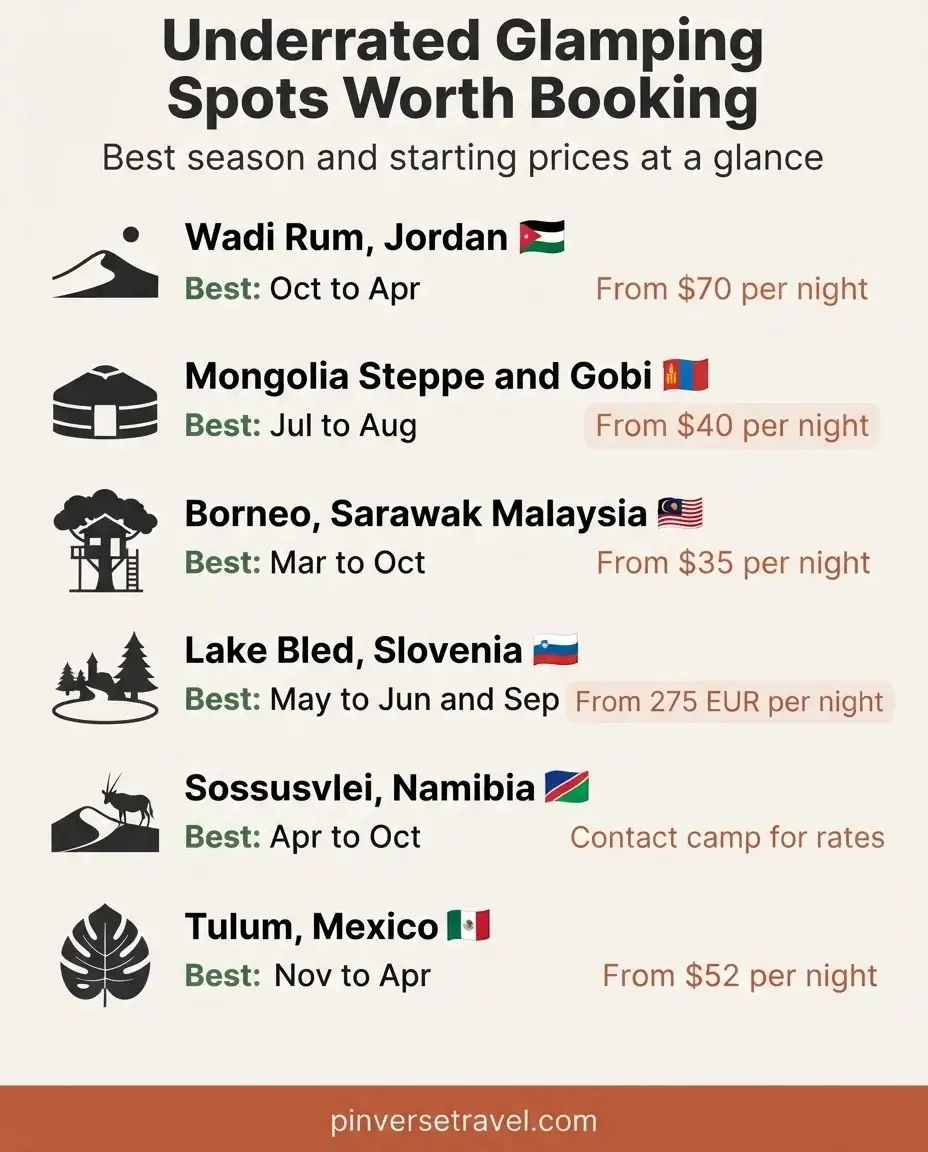
Glamping here means sleeping in traditional Bedouin-inspired tented camps set directly inside the protected area. Camps range from straightforward and affordable, roughly $70 per night including dinner and breakfast, to premium bubble tent experiences at $200 and above. Most camps include a shared meal in a central dining tent, which is genuinely one of the highlights. Mansaf (slow-cooked lamb and rice in fermented yogurt) and Zarb (a traditional Bedouin barbecue cooked underground in a sand pit) are the dishes you want to try. Do not skip the sweet tea poured from an impossibly high kettle.
What sets Wadi Rum apart from more well-known desert glamping destinations is the access it gives you to Bedouin culture and a landscape that genuinely feels alien. The red-orange stone towers are enormous. Sunsets turn them violet and then almost black. The silence at night is the kind you don’t find anywhere else.

For solo travelers, Wadi Rum is navigable and safe. Most camps organize jeep tours, camel treks, and sunrise hikes as part of their packages. The Jordan Tourism Board provides current entry information including Jordan Pass details, which bundles your visa fee with attraction entry and is usually the most cost-effective option for visitors coming from most Western countries.
What to bring: a headlamp, a warm layer for cold desert nights, and an open attitude toward conversation. Bedouin hospitality is not performative. It is the real thing.
Mongolia’s Steppe and Gobi: The Ger Camp Experience
This one might be the most genuinely underrated entry on this list. Mongolia’s ger camps are extraordinarily well-suited to the kind of slow, culturally immersive travel that I believe changes people. And yet they almost never appear on Western glamping round-ups.
A ger (pronounced “gare”) is the traditional round felt tent that Mongolian nomads have lived in for at least 3,000 years. It is intelligent design: warm in winter, cool in summer, fully assembled in under 30 minutes, and built around a central stove that doubles as a hearth and a gathering point. The Mongolian ger was inscribed on UNESCO’s Intangible Cultural Heritage list in 2013, which is fitting because it is not just shelter. It is a way of organizing life.

Tourist ger camps across Mongolia, from the windswept Gobi Desert to the green river valleys of Terelj National Park and the shores of Lake Khuvsgul, offer stays that range widely in comfort and price. According to Discover Mongolia, standard camps cost $40 to $120 per person per night including meals, while ensuite and luxury camps (including the well-regarded Three Camel Lodge in the Gobi) range from $80 to $400. For most travelers, a mid-range ensuite camp offers the best balance of comfort and authenticity.
The food at ger camps leans heavily on mutton, beef, and dairy. Khuushuur (fried meat dumplings), buuz (steamed dumplings), and tsuivan (stir-fried noodles with meat) are the dishes you will encounter most. If you are offered airag, the slightly fizzy fermented mare’s milk that Mongolians consider a gift, at least try a sip. It is an acquired taste, but saying yes is a genuine gesture of respect.
A few cultural notes that most glamping articles skip entirely: never step on the threshold of a ger, always enter and move clockwise, accept food with your right hand or both hands, and do not point your feet toward the central fire. These are not arbitrary customs. They are expressions of a very specific and deeply held philosophy about the home, the hearth, and the guest.
For solo travelers, ger camps are consistently reported as safe and welcoming. The July to August peak season coincides with Naadam, Mongolia’s national festival of wrestling, archery, and horsemanship (July 11 to 13), which is worth building your trip around. Book at least two to three months ahead for peak season stays, and closer to six months for the most popular Gobi camps.
Borneo’s Rainforest, Sarawak, Malaysia: Treehouse Glamping at the Edge of the World
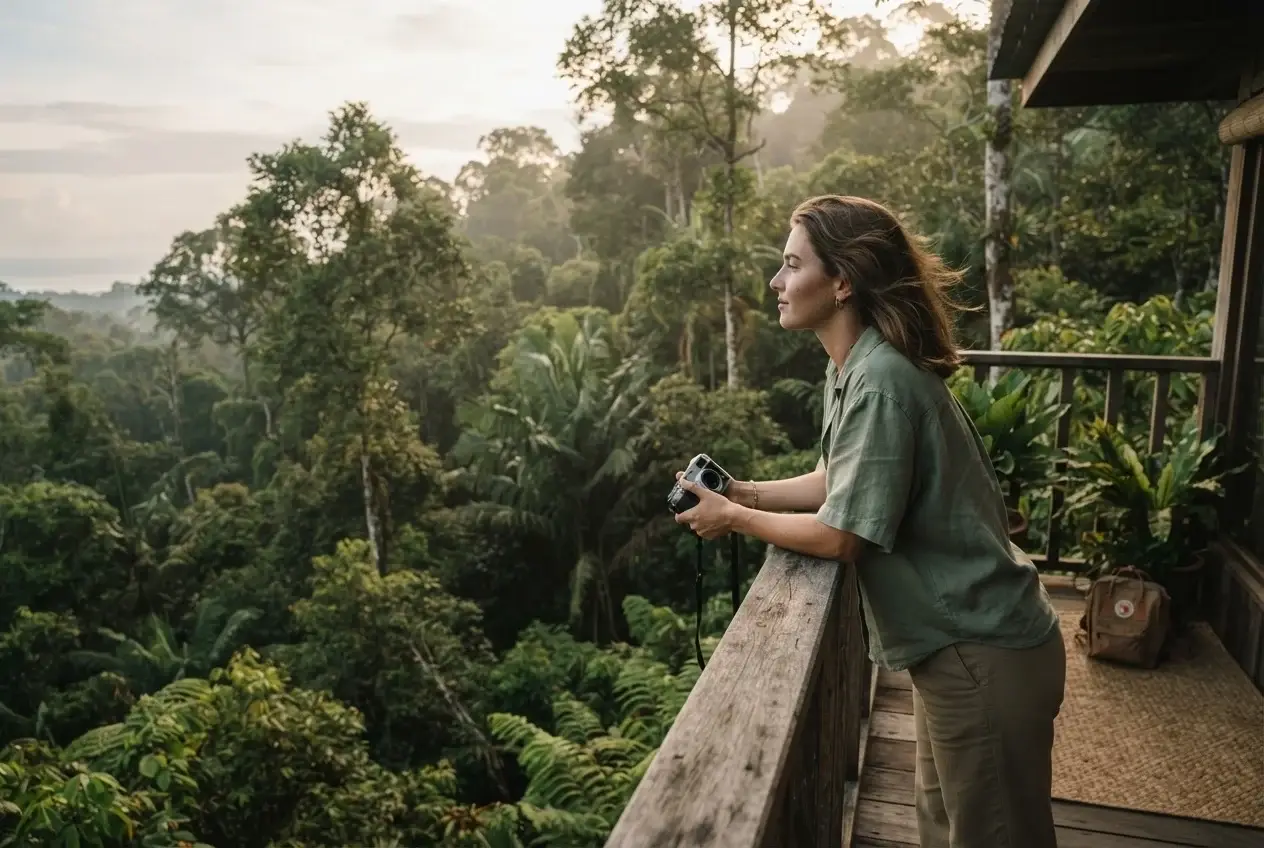
Malaysian Borneo does not get nearly the glamping attention it deserves. Sarawak, the Malaysian state on the northwest coast of Borneo, is home to one of the world’s oldest tropical rainforests and some of the most biodiverse ecosystems on the planet. The Sarawak Tourism Board describes the region as having UNESCO-recognized natural sites, ancient cave systems, and a multicultural heritage spanning dozens of indigenous groups.
The Permai Rainforest Resort, located about 35 kilometers from Kuching city at the foot of Mount Santubong, offers treehouse accommodation that genuinely earns the glamping label. According to the Permai Rainforest Resort’s official site, the property sits in pristine rainforest by the sea, with treehouse units built into the canopy. Starting rates have been reported by travelers at around $35 to $82 per night, depending on the unit and season. At that price point, this is genuinely one of the most accessible rainforest glamping experiences available anywhere in the world.
Waking up in a treehouse with the sounds of hornbills, macaques, and the ocean breeze below you is the kind of sensory experience that is very hard to recreate. Solo travelers consistently report feeling safe and well taken care of here, with the proximity to Kuching (a small, walkable city with outstanding food) making it easy to combine with a few days of urban exploration.
Speaking of food: Sarawak has its own distinct culinary identity. Sarawak laksa, a coconut and sambal-based noodle soup that is completely different from the laksa found elsewhere in Malaysia, is the dish you need to try. Kolo mee (springy noodles with char siu pork and a light sauce) is the local breakfast of choice. Kuching’s weekend food market is an excellent orientation.
Best time to visit Sarawak is generally between March and October when rainfall is lower. The Rainforest World Music Festival, usually held in July at the Sarawak Cultural Village near the resort, is a remarkable cultural event that draws traditional musicians from across Southeast Asia and indigenous communities from throughout Borneo.
Slovenia, Lake Bled: Eco-Glamping Where Europe Gets Quietly Extraordinary
Most travelers who visit Lake Bled stay in a standard hotel, snap photos of the island church, and leave. The ones who stay at Garden Village Bled experience something entirely different.
Garden Village Bled is an eco-glamping resort located a three-minute walk from Lake Bled, offering pier tents over a river, treehouse units, and larger glamping tents set in forested gardens. According to their official website, the property is designed around sustainable living and connection to the natural environment. Rates vary by accommodation type and season; pier tents have been listed from around 275 EUR per night and treetop units can reach close to 200 GBP per night in peak season, reflecting the premium European eco-glamping market. This is not the cheapest destination on this list, but it offers exceptional value for what you get: a genuinely extraordinary natural setting with thoughtful design and outstanding locally sourced food.
What the Slovenia experience offers that most glamping destinations don’t is ease of access from major European cities combined with a surprisingly uncrowded natural environment. Ljubljana, Slovenia’s charming capital, is about 55 kilometers away and makes an ideal base before or after. The Triglav National Park, Slovenia’s only national park, begins just northwest of Bled and offers some of the most beautiful hiking in central Europe.
For food at Garden Village Bled, the restaurant uses produce from the property’s own kitchen garden. For a local food experience in Bled itself, kremsnita (a vanilla and cream cake with flaky pastry, a regional specialty) is a serious cultural institution and worth every calorie.
Bled is an excellent solo destination. The town is compact, safe, and genuinely welcoming to independent travelers. Late spring (May to June) and early autumn (September) offer the most pleasant weather and smaller crowds than the July and August peak.
Namibia, Near Sossusvlei: Glamping Beside the World’s Oldest Desert
Namibia is not a new glamping destination, but Desert Hills Glamping Camp near Sesriem is one of the properties that barely registers on mainstream travel radar despite being exceptionally well-positioned.
According to Visit Namibia’s official tourism portal, the Namib Desert is the oldest desert on Earth and home to some of the highest sand dunes in the world. Desert Hills Glamping Camp sits about 17 kilometers southeast of Sesriem, the gateway to Sossusvlei and Dead Vlei, two of the most surreally beautiful landscapes in Africa. The camp has 11 twin tents with en-suite bathrooms, flush toilets, fans, and 220V electricity. Prices are competitive by African glamping standards. Details are available directly through Namibia Tracks and Trails.
The location means you are staying close enough to the famous rust-red dunes and the bleached white salt pan of Dead Vlei to do sunrise visits before other day-tripping tourists arrive. Sossusvlei at first light, with the dune shadows still long and the air cool, is genuinely one of the great visual experiences in travel. But you need to be there early, and glamping on-site rather than driving in from Sesriem town puts you in a different category entirely.
Food in the camp is prepared fresh by a resident chef, with travelers frequently citing the quality as a highlight. For a local Namibian culinary experience, look for potjiekos (a slow-cooked stew prepared in a three-legged cast iron pot over an open fire) and biltong (air-dried seasoned meat), both of which appear in various forms across Namibian camp cooking.
Namibia is one of the safest travel destinations in Sub-Saharan Africa and is well-organized for independent and solo travel. English is widely spoken. The best time to visit Sossusvlei for glamping is April to October when temperatures are cooler and the desert landscape is at its most photographically dramatic.
Tulum, Mexico: Jungle Glamping That Goes Beyond the Hype
Tulum has a complicated reputation. The town itself has become overcrowded and overpriced in ways that frustrate many travelers who loved it five years ago. But the jungle glamping options in the surrounding area, particularly those built around private cenotes (natural sinkholes filled with crystal-clear water), offer a genuinely different kind of experience.
Uman Glamping and Cenote Tulum is a property that consistently appears in solo traveler forums as an authentic alternative to the resort scene. The property provides luxury tents in jungle surroundings with access to on-site cenotes for around 150 pesos. Budget jungle glamping in the Tulum area starts at around $52 per night, though mid-range options with private bathroom facilities run closer to $100 to $150.
The cenote experience is the core of what makes glamping in this region unlike anywhere else. Swimming in a cenote, particularly one without dozens of other tourists, is genuinely otherworldly. The water is cold, impossibly clear, and often lit by shafts of sunlight coming through openings in the jungle canopy above. Cenotes were sacred to the ancient Maya, and even without that history, they feel like places that demand a certain quiet.
What to eat: Cochinita pibil (slow-roasted pork marinated in achiote and sour orange, traditionally buried and slow-cooked underground) is the dish of the Yucatan. Find it at local markets in the pueblo section of Tulum rather than the hotel zone. Sopa de lima (lime-based chicken soup), panuchos (fried tortillas stuffed with black bean paste), and fresh agua de tamarindo round out the local food picture.
Solo travelers should note that Tulum’s jungle zone, away from the beach strip, is generally quieter and safer than the more crowded tourist areas. Use established transportation options rather than unmarked taxis when moving between zones.
What All These Places Have in Common
None of them are on every list. All of them offer something that a hotel simply cannot: the experience of falling asleep inside a landscape rather than adjacent to one. Each one is tied to a culture, a history, or a natural system that makes the stay more than accommodation. And in every single case, solo travelers consistently report that glamping was the format that made a place feel intimate and accessible in a way that a standard hostel or resort never could.
Glamping tends to organize your experience around shared meals, guided activities, and common spaces where you naturally meet other travelers and local guides. For solo travelers, that built-in social structure is genuinely useful. You get privacy when you want it and community when you need it.
If you are waiting for the perfect moment to try something like this, you are waiting for something that won’t arrive. The perfect moment to book one of these stays is now, before the word gets out further, before prices climb with growing demand, and before these places end up on every mainstream list just like the ones you are already tired of seeing.
Pick one. Start there. See what happens.