Best Places to Travel Alone as a Woman (From Easy to Bold)

There is a moment most women reach, usually somewhere between the third time a trip fell through because a travel companion canceled and the hundredth time they watched a stranger’s solo travel photos on Instagram, when a thought arrives that is impossible to un-think: why am I still waiting?
I know that feeling well. Before I left my office job and started building a life around travel, I spent months convincing myself I needed the right companion, the right moment, the right amount of savings, the right everything. What I eventually learned, backpacking solo across Europe and later living with a family in Ghana and teaching in Thailand, was that the “right moment” almost never shows up on its own. You make it.
Solo travel as a woman is one of the most powerful, practical, and genuinely fun things you can do for yourself. And the question of where to go first, or next, matters a lot. Not every destination is equally approachable, and not every “safe” place is necessarily the most rewarding. This guide is designed to cut through the noise and give you something concrete: real destinations, real context, and honest tradeoffs, organized from the most beginner-friendly to the more adventurous.
Before we get into the list, one thing worth knowing: according to solo travel statistics compiled by Condor Ferries, around 84% of all solo travelers worldwide are women. You are not the exception. You are the rule.
How I Think About Destination Safety for Women
Safety is not binary. A destination is not simply “safe” or “unsafe,” and anyone who tells you otherwise is oversimplifying. When I am evaluating a place for solo female travel, I am thinking about several layers at once: the general crime rate, attitudes toward women, how easy it is to get around independently, what the hostel and accommodation culture is like, and how much local infrastructure actually supports a solo traveler day-to-day.
A genuinely useful resource for this kind of nuanced, crowd-sourced safety data is the Solo Female Travelers Safety Index, which ranks countries across seven variables including risk of harassment, attitudes toward women, and risk of theft, all drawn from both official data and the real firsthand reviews of solo female travelers. It is not perfect, but it is far more honest than a generic “top 10 safest countries” list.
There is also the US Department of State’s Women Travelers page, which covers health and security considerations specific to women traveling internationally. Bookmark it, check it before any trip, and always register your travel through the Smart Traveler Enrollment Program (STEP) so the nearest US embassy knows you are in-country.
With that foundation in place, here is where I genuinely think you should go.
Japan: The Gold Standard for First-Time Solo Female Travelers
If you are trying to talk yourself into that first solo trip and fear is the main thing holding you back, Japan is where I would send you. Not because it is the most exotic place on earth, but because it may be the place best designed, structurally and culturally, to make a solo traveler feel safe, respected, and genuinely welcomed.
Japan consistently ranks among the top five most peaceful countries in the world on the Global Peace Index. Violent crime is exceptionally rare. If you drop your wallet on a train, odds are genuinely good that it ends up in a lost-and-found box at the nearest koban (neighborhood police box) with everything still inside. Solo women report regularly feeling more comfortable walking alone at night in Tokyo than in their own home cities. That is not a marketing slogan. It is what travelers say consistently, and it matches what the official data shows.
The Japan National Tourism Organization’s solo travel guide notes that Japan is in many ways architected for the solo experience. Restaurants have counters designed for single diners. Capsule hotels have private pods. Convenience stores (7-Eleven, Lawson, FamilyMart) function as one-stop hubs for food, cash, Wi-Fi, and basic supplies. Trains announce stations in English and Japanese. During peak commute hours, women-only train cars are available on major city lines, clearly marked with pink signage on the platform and the door.
Getting around is easier than people expect. The 7-day JR Pass costs 50,000 yen (approximately $335 USD) and covers bullet train travel between major cities including Tokyo, Kyoto, Hiroshima, and Osaka. You can also buy IC cards like Suica or Pasmo for metro and local bus travel.
US citizens do not need a visa for stays up to 90 days.
What to eat: Ramen at a counter stool in Tokyo. Fresh sushi from Tsukiji Outer Market. Takoyaki (octopus balls) from a street stall in Osaka. Matcha soft serve in Kyoto. The food alone could justify the trip.
Real talk: Japan can feel a little solitary at times. The cultural formality, combined with occasional language barriers, means deep spontaneous friendships with locals are less common here than in, say, Southeast Asia or South America. Hostels help a lot with the social piece if that matters to you.
Portugal: Europe’s Most Welcoming Solo Destination
For European travel, Portugal keeps rising to the top of every honest conversation about where solo women feel genuinely comfortable, and for good reason. Lisbon and Porto are walkable, culturally rich, and affordable by Western European standards. The people are warm without being pushy. English is widely spoken. The food is extraordinary.
Portugal ranked 7th on the 2025 Global Peace Index, one of its highest placements in years. The country’s official tourism board actively promotes Portugal as a destination for solo travelers, describing it on their solo travel page as a place where “you can enjoy in safety…nice, welcoming people who will make your trip an unforgettable experience.” That is not just brochure language. It reflects a culture that is genuinely hospitable to independent visitors.
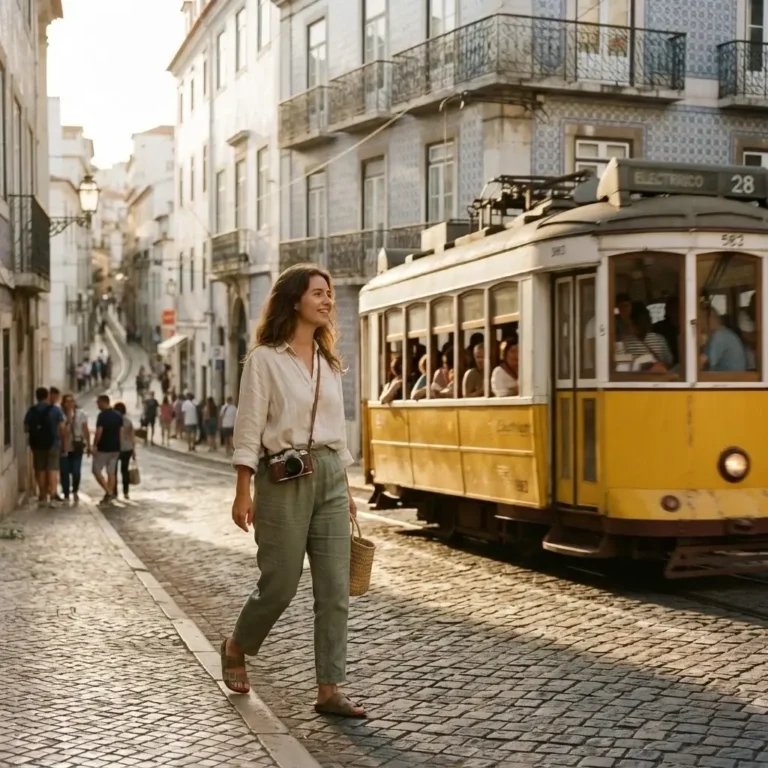
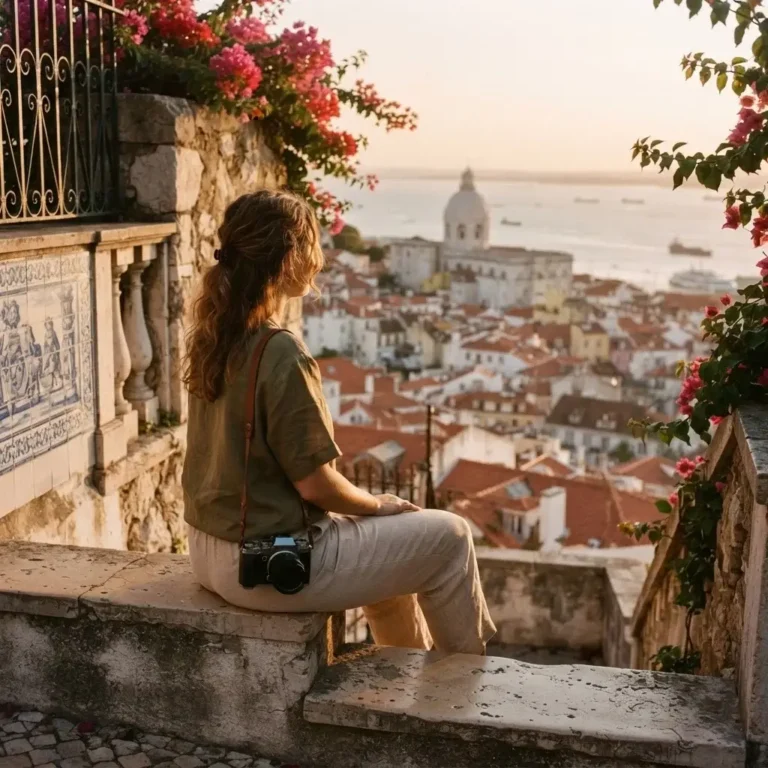
Lisbon is a natural starting point. The Alfama neighborhood, with its mosaic-tiled streets, fado music drifting from open doorways, and miradouros (viewpoints) overlooking the Tagus River, is one of the most atmospheric places in Europe to wander alone. Tram 28, the famous yellow tram that climbs through the hilly old city, costs less than two euros and functions as an unofficial guided tour. The LX Factory is a converted industrial complex turned weekend market, perfect for a solo afternoon of browsing, eating, and people-watching.
Porto is worth a separate visit if you can manage it. The Ribeira waterfront, the port wine cellars in Vila Nova de Gaia (a short walk across the Dom Luis I Bridge), and the extraordinary blue-tiled churches make Porto feel like the discovery Lisbon used to be before everyone found out about it.
What to eat: Pastel de nata (custard tarts) warm from the oven at Pasteis de Belem. Bifanas (pork sandwiches) at a counter stall. Bacalhau com natas (salt cod with cream) at any proper taberna. A glass of vinho verde with a simple lunch at a place without an English menu outside.
US citizens do not need a visa for stays of up to 90 days under the Schengen Agreement. Your passport simply needs to be valid for the duration of your stay.
Iceland: Solo Travel in Its Purest Form
Iceland occupies a unique category. It is not just one of the safest countries in the world for women, it has been ranked the most gender-equal country on the planet by the World Economic Forum for over a decade straight. If you are a woman who wants to feel completely unremarkable in the best possible sense, Iceland is the place.
The Guide to Iceland’s official solo travel resource describes solo female travel in Iceland as “especially safe and supported thanks to low crime rates, gender equality, and social norms that discourage harassment.” That social climate is real and palpable. Women traveling alone here do not attract unwanted attention. Nobody questions why you are at dinner by yourself. The whole culture treats independence as normal, because it is.
The landscape is genuinely transformative. The Golden Circle route (Thingvellir National Park, the Geysir geothermal area, and Gullfoss waterfall) is doable in a single day by rental car. The Ring Road, Route 1, circles the entire island and is one of the great road trips in the world. The Reykjanes Peninsula offers black sand beaches, lava fields, and the famous Blue Lagoon. Northern lights season runs from September through March.
Reykjavik itself is a small, walkable capital. The weekend nightlife (Icelanders start late, around midnight) is lively, safe, and easy to navigate alone. Harborside restaurants serve fresh langoustine soup and lamb dishes that reflect exactly where you are in the world.
US citizens do not need a visa for stays of up to 90 days.
Real talk: Iceland is expensive. Budget at least $150 to $200 per day for accommodation, food, and a rental car. That cost is the main barrier, not safety or logistics.
New Zealand: Adventure and Ease, All in One Country
New Zealand is another destination that is remarkably well set up for independent female travelers. It ranked 4th on the 2024 Global Peace Index and has a culture of outdoor adventure, hostel camaraderie, and genuine friendliness toward solo visitors. The official Tourism New Zealand site is one of the better government tourism portals for itinerary planning.
The North Island and South Island each have a completely different personality. Auckland, Wellington, and the Coromandel Peninsula anchor the North. Queenstown (the adventure sports capital of the world), Fiordland, the Milford Sound, and the Marlborough wine region define the South. Most solo travelers rent a campervan and do a self-drive loop, which gives total flexibility and is genuinely sociable because the campsite culture across New Zealand is warm and open.
For women who want both safety and an experience that pushes them slightly beyond their comfort zone, New Zealand sits in a sweet spot. Bungy jumping, skydiving, and white-water rafting are accessible and well-regulated. The hiking trails (called “tracks” locally) include the Routeburn and the Abel Tasman Coastal Track, both manageable for solo walkers with basic fitness.
US citizens need an NZeTA (New Zealand Electronic Travel Authority) to enter, which is applied for online before departure. It costs approximately NZD $17 (around $10 USD) and is typically approved within minutes.
What to eat: Flat whites (New Zealand arguably does coffee better than anywhere else in the Southern Hemisphere). Hangi, a Maori feast of meat and vegetables slow-cooked in an earthen oven. Green-lipped mussels on the South Island. Fish and chips on any harbor town wharf at sunset.
Thailand: Affordable, Culturally Rich, and Solo-Traveler-Fluent
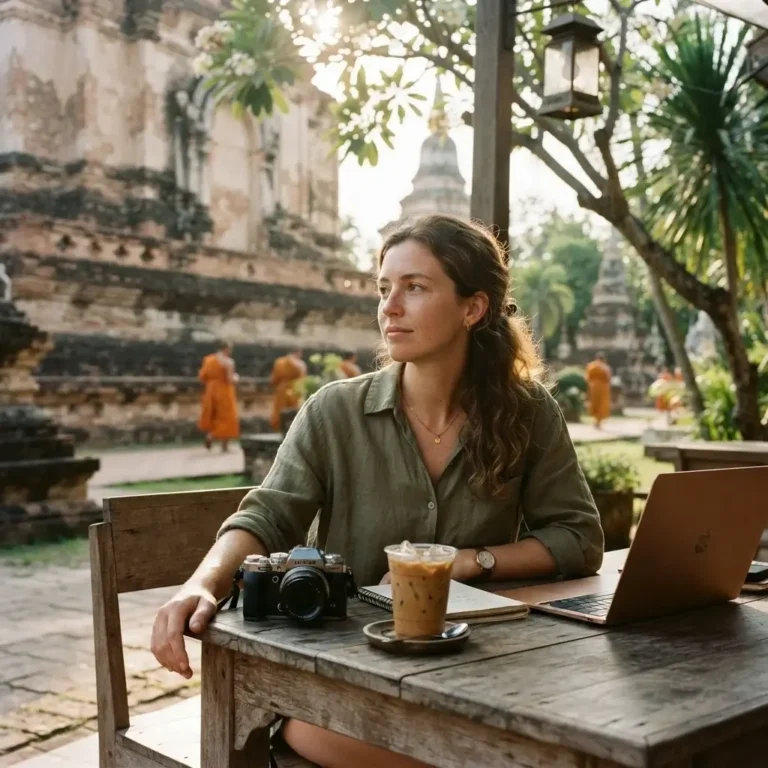
I spent time teaching English in Thailand, and I can tell you from my own experience that the country has a remarkable warmth toward solo travelers. The Thai hospitality is genuine. The food is extraordinary. And the traveler infrastructure, hostels, guesthouses, minibuses, tour operators, is among the most developed in Asia, which makes the logistics of solo travel significantly easier.
From what solo women traveling through Thailand consistently report, the key is being thoughtful about where you go and using common sense about context. Bangkok, Chiang Mai, Pai, and the major islands are well-trodden solo travel circuits with strong backpacker communities and good female-oriented hostel options. Chiang Mai in particular has a reputation as one of the best cities in Southeast Asia for slow travel: inexpensive, manageable in size, culturally rich, and full of cooking classes, temple visits, ethical elephant sanctuaries, and night bazaars.
Dress modestly when visiting temples (shoulders and knees covered), respect the Wai greeting, and be aware that public displays of frustration are culturally read very differently here than back home. Staying calm and respectful goes a long way in almost every situation.
What to eat: Pad see ew from a street cart. Tom kha gai (coconut galangal chicken soup) at any market canteen. Mango sticky rice from a night market stall. Khao soi (the creamy northern Thai curry noodle dish) in Chiang Mai. Street food in Thailand is not just affordable, it is the best food you will eat on the trip.
US citizens do not need a visa for stays of up to 30 days under the tourist exemption (extendable in-country). A longer stay requires a tourist visa applied for in advance.
Costa Rica: The Best Gateway to Solo Travel in Latin America
For women who want to venture beyond Europe and Asia but are not yet ready for the complexity of South America, Costa Rica is the destination I would point to first. It is consistently ranked the safest country in Latin America, has a strong eco-tourism infrastructure, and is genuinely beautiful in a way that rewards slow travel.
The country’s “Pura Vida” philosophy (literally “pure life,” used as a greeting, a farewell, and a general attitude toward existence) creates a culture that is relaxed and welcoming. San Jose, the capital, requires the same street smarts you would apply in any urban environment. But once you move outside the capital, to La Fortuna and the Arenal volcano area, the Monteverde cloud forest, the Osa Peninsula, or the beaches of the Nicoya Peninsula, the pace of life slows dramatically and the experience of being alone feels less daunting and more like a gift.
Solo women here tend to base themselves in smaller towns and take day trips rather than trying to cover too much ground. Eco-lodges outside the main tourist hubs are worth the slightly higher price for the safety, quality, and connection to the landscape they offer.
What to eat: Casado (the classic rice, beans, salad, plantain, and protein plate that Costa Ricans eat daily). Gallo pinto for breakfast. Fresh ceviche on the Pacific coast. Imperial beer and a slice of plantain tart at a small soda (local diner) rather than a tourist restaurant.
US citizens do not need a visa for stays of up to 90 days.
A Note on Destinations to Build Up To
None of the above are the only places worth going. Solo female travelers report incredible experiences in South Korea, Taiwan, Slovenia, Colombia, Peru, Morocco, Senegal, Georgia (the country, not the state), and dozens of other places that do not make generic “safest” lists but offer extraordinary richness when approached with preparation and respect. The right destination is ultimately the one that matches where you are in your solo travel journey, not the one that appears most often on a list.
The destinations above are recommended as starting points because they have reliable infrastructure, manageable logistics, and a track record of making first-time solo female travelers feel capable rather than overwhelmed. Once you have one or two solo trips under your belt, your comfort zone expands faster than you expect. What felt like a bold leap becomes the new baseline.
Before You Book: The Things That Actually Matter
The destination matters, but the preparation shapes the whole experience. A few things I consider non-negotiable:
Travel insurance is not optional when you are traveling alone. There is no one else there to help you navigate an emergency, which means you need a policy that has you covered for medical evacuation, trip cancellation, and emergency assistance around the clock. Research providers thoroughly, read the fine print on activities coverage, and do not skip it to save money.
Tell someone your itinerary. A trusted friend or family member should know where you are, where you are staying, and when to expect to hear from you. Register with the STEP program through the US State Department so the nearest US embassy can reach you in an emergency.
Solo travel is not a competition or a performance. You do not have to visit every landmark, stay in the cheapest possible accommodation, or never feel nervous. The most important thing is that you go, stay curious, and trust yourself more than you think you can right now.
That trust grows. Every single time.