
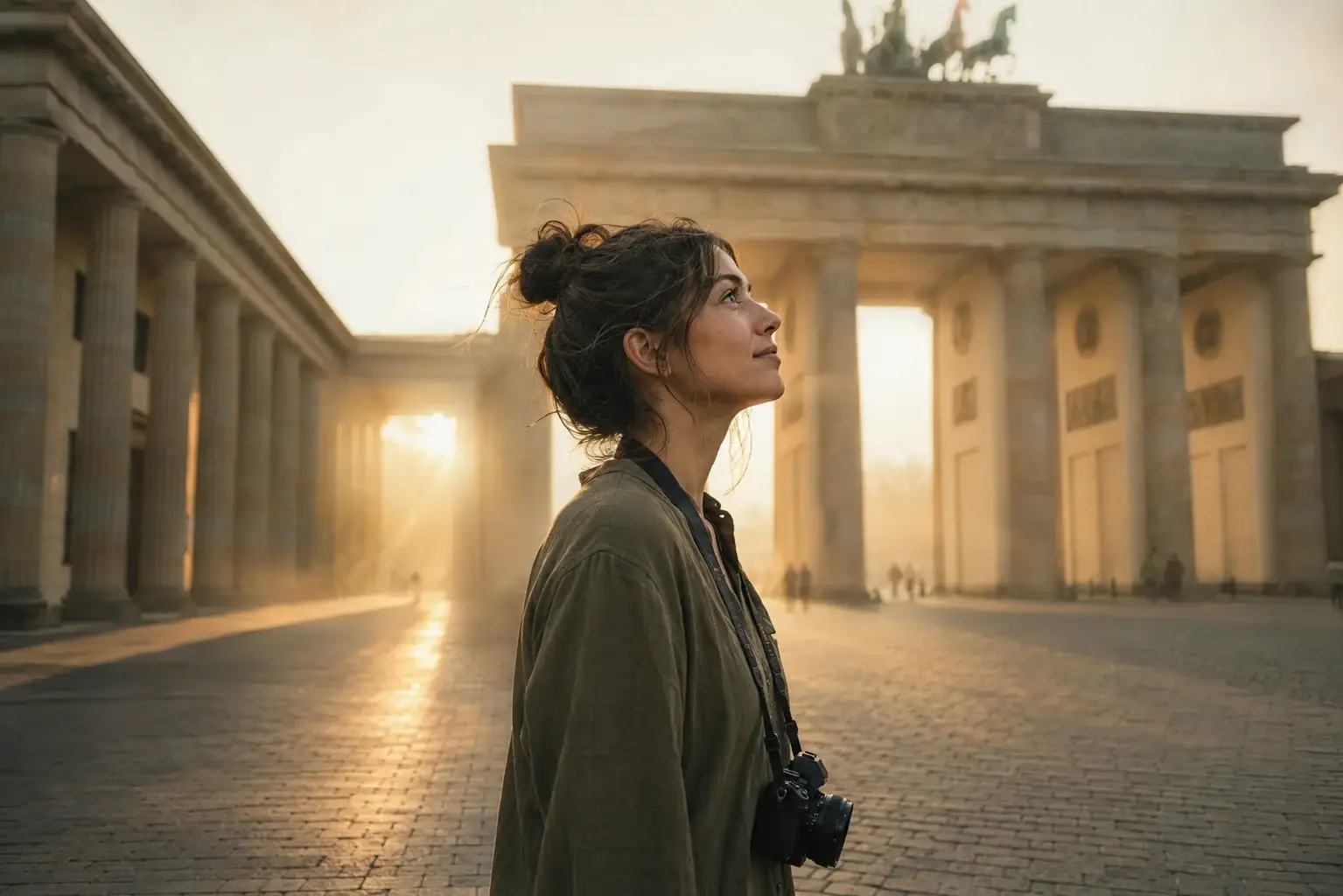
When I first stepped off the train at Berlin Hauptbahnhof years ago, fresh out of my rigid 9-to-5 office job and carrying nothing but an oversized backpack and a heart full of nervous energy, I felt completely overwhelmed. I had spent years saving money from waitressing shifts and working as a New York sightseeing guide, so I thought I knew how cities worked. But Berlin is a completely different beast. It is decentralized, historically heavy, sprawling, and sometimes fiercely raw.
During that first trip, I made almost every mistake in the book. I stayed in the wrong neighborhood, spent hours backtracking on the train system, and accidentally ordered raw minced pork for breakfast because I didn’t understand the local menu.
But over many return visits, I fell in love with Berlin’s layered past and its resilient, creative spirit. This city rewards travelers who slow down and look past the gray concrete facade. If you are planning your first seven-day trip, you do not have to learn the hard way. This is the best one-week itinerary for Berlin, built to help you avoid the common mistakes, build your solo travel confidence, and experience the city like a local.
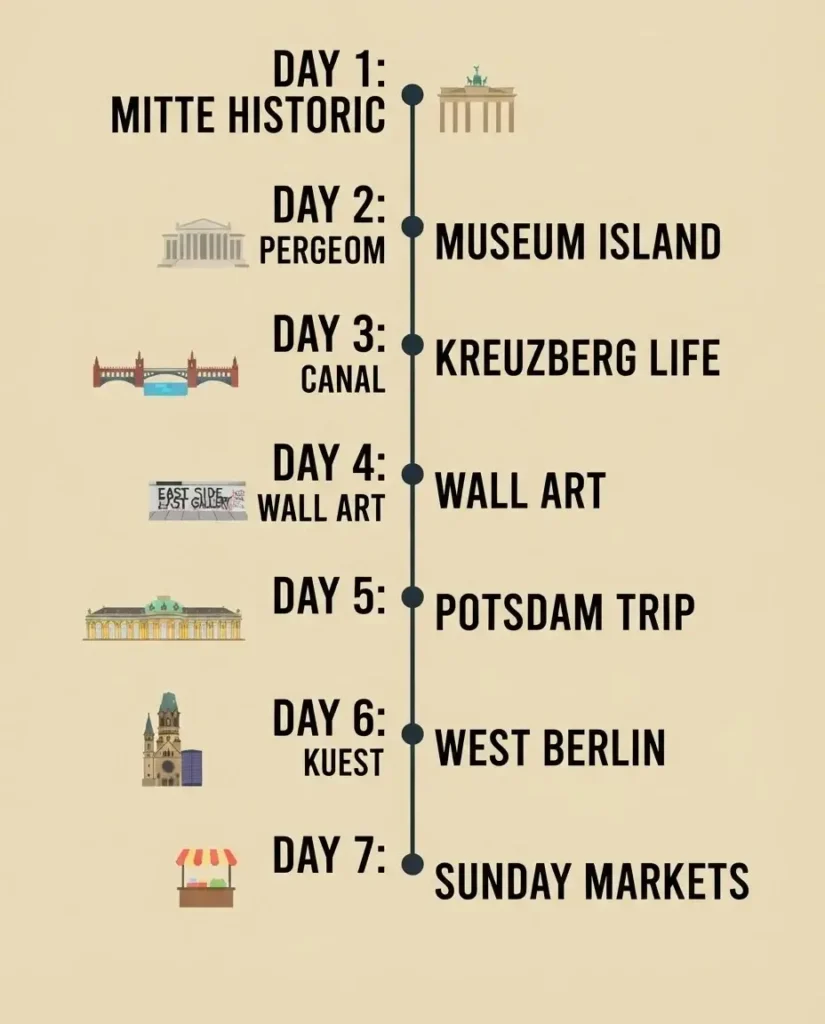
The Mistakes That Ruin a Week in Berlin (And How to Skip Them)
Before we look at the daily schedule, let’s talk about the major logistical traps that drain your energy and budget. Berlin does not have a single downtown area. It is a collection of distinct neighborhoods, each acting like its own mini-city.
Mistake 1: Staying in Mitte and Never Leaving It
Many first-time visitors book a hotel right next to Alexanderplatz or the Brandenburg Gate in the Mitte district. While Mitte is great for checking off major historical sights on day one, it lacks local soul. If you stay there all week, you will only see overpriced souvenir shops and generic restaurant chains. Instead, you want to base yourself in vibrant, residential areas like Prenzlauer Berg, Friedrichshain, or Kreuzberg to feel the true pulse of the city.
Mistake 2: Forgetting to Validate Your Train Ticket
Berlin does not have turnstiles or gates at its train stations. You buy a ticket from a machine on the platform, and you can just walk right onto the U-Bahn (underground subway) or S-Bahn (above-ground train). This setup tricks a lot of travelers into thinking rides are free, or that buying the paper ticket is enough.
Critical Transit Warning: You must insert your ticket into the small yellow or red stamping boxes on the platform before you step onto the train.
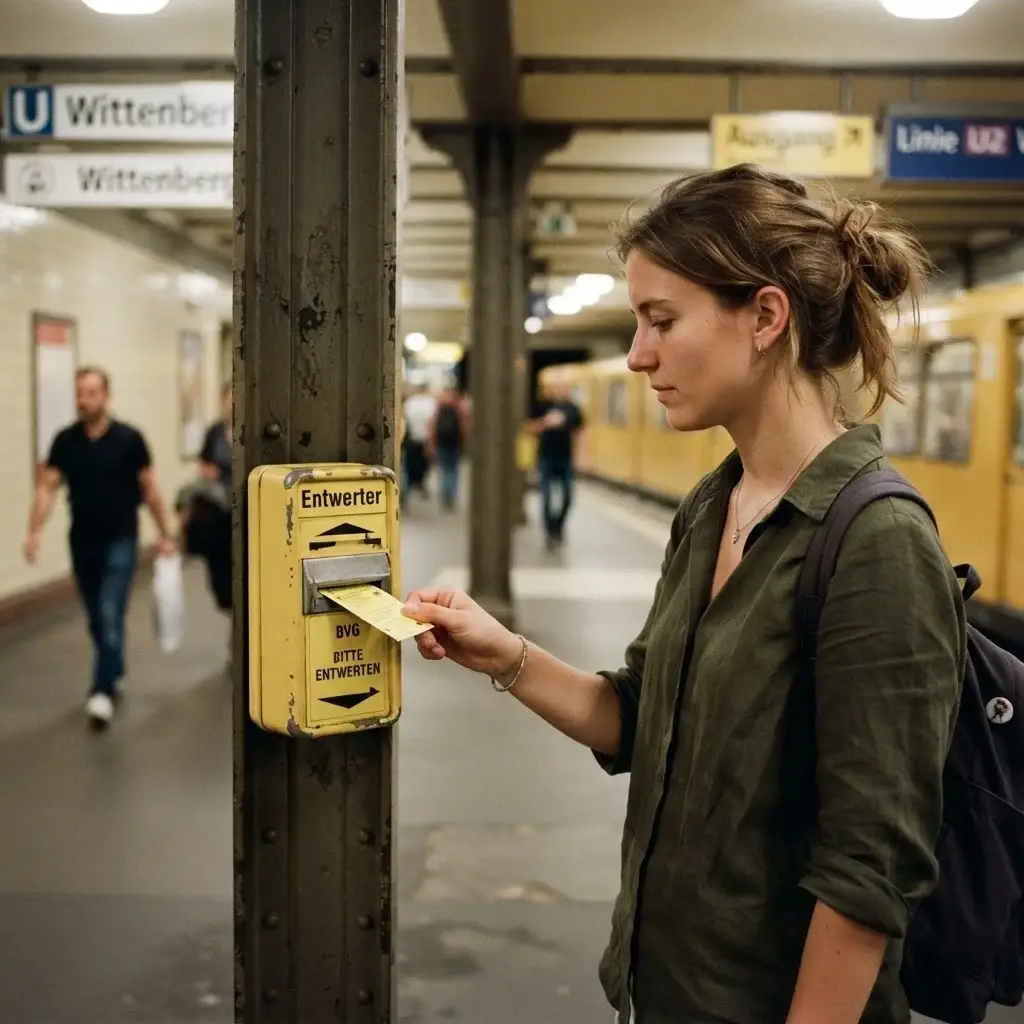
If you do not validate your ticket, plainclothes fare inspectors will board the train, lock the doors, and fine you 60 Euros on the spot. They do not care if you are an unknowledgeable tourist, and they will escort you to an ATM to pay.
Mistake 3: Relying Solely on Credit Cards
Even in 2026, Berlin remains a cash-loving society. I learned this the hard way when a tiny bakery worker yelled at me for trying to pay for a two-Euro pretzel with a credit card. Many local cafes, neighborhood bars (Kneipen), and flea market stalls only accept hard cash or German EC cards. Always keep at least 20 to 30 Euros in coins and small bills in your pocket every day.
Day 1: The Weight of History in Mitte
We will start your journey in the center of Berlin to get your bearings and confront the powerful, complex history that shapes the city today.
Morning: The Reichstag and Brandenburg Gate
Start your morning early at the Brandenburg Gate. Standing beneath this massive sandstone monument is a surreal experience, especially when you remember that it was trapped in the “no man’s land” behind the Berlin Wall for nearly three decades.
From the gate, walk five minutes north to the Reichstag Building, home of the German parliament. The glass dome on top symbolizes political transparency, and walking up its spiral ramp gives you a stunning 360-degree view of the city skyline.
- Insider Secret: Access to the Reichstag dome is completely free, but you must book your time slot weeks in advance online. If you just show up, security will turn you away.
- Navigation Tip: Take the U5 subway line directly to the “Bundestag” station. It drops you off right in front of the lawn.
Afternoon: The Memorial to the Murdered Jews of Europe
Walk south from the Brandenburg Gate to the Memorial to the Murdered Jews of Europe. This place consists of 2,711 gray concrete slabs of varying heights arranged in a grid. As you walk deeper into the narrow paths, the ground slopes downward, the city noises fade away, and the towering blocks create a heavy, disorienting feeling of isolation. It is a deeply moving space designed for quiet reflection.
- Culinary Tip: Skip the touristy cafes directly around the gate. Instead, walk three blocks east to Mamsell on Goltzstraße for a slice of traditional German apple cake (Apfelkuchen) and a strong coffee to fuel your afternoon.
Evening: Walk Unter den Linden to Alexanderplatz
End your day with a long walk down Unter den Linden, the historic royal boulevard. You will pass the Humboldt University and the beautifully rebuilt Berlin Palace. Keep walking east until you hit Alexanderplatz, dominated by the iconic, retro-futuristic TV Tower (Fernsehturm).
For dinner, head to Zur Letzten Instanz, Berlin’s oldest restaurant, operating since 1621. Sit on a wooden bench where Napoleon once sat and order the hearty Eisbein (braised pork knuckle) served with sauerkraut and peas.
Day 2: Museum Island and the Cold War Division
Today is all about diving deep into world-class art before exploring the physical scars left behind by the Cold War.
Morning: The Treasures of Museum Island
Museum Island is a unique complex of five world-renowned museums sitting on an island in the Spree River. If you only have time for one, choose the Pergamon Museum or the Neues Museum, which holds the famous, breathtaking bust of Egyptian Queen Nefertiti.
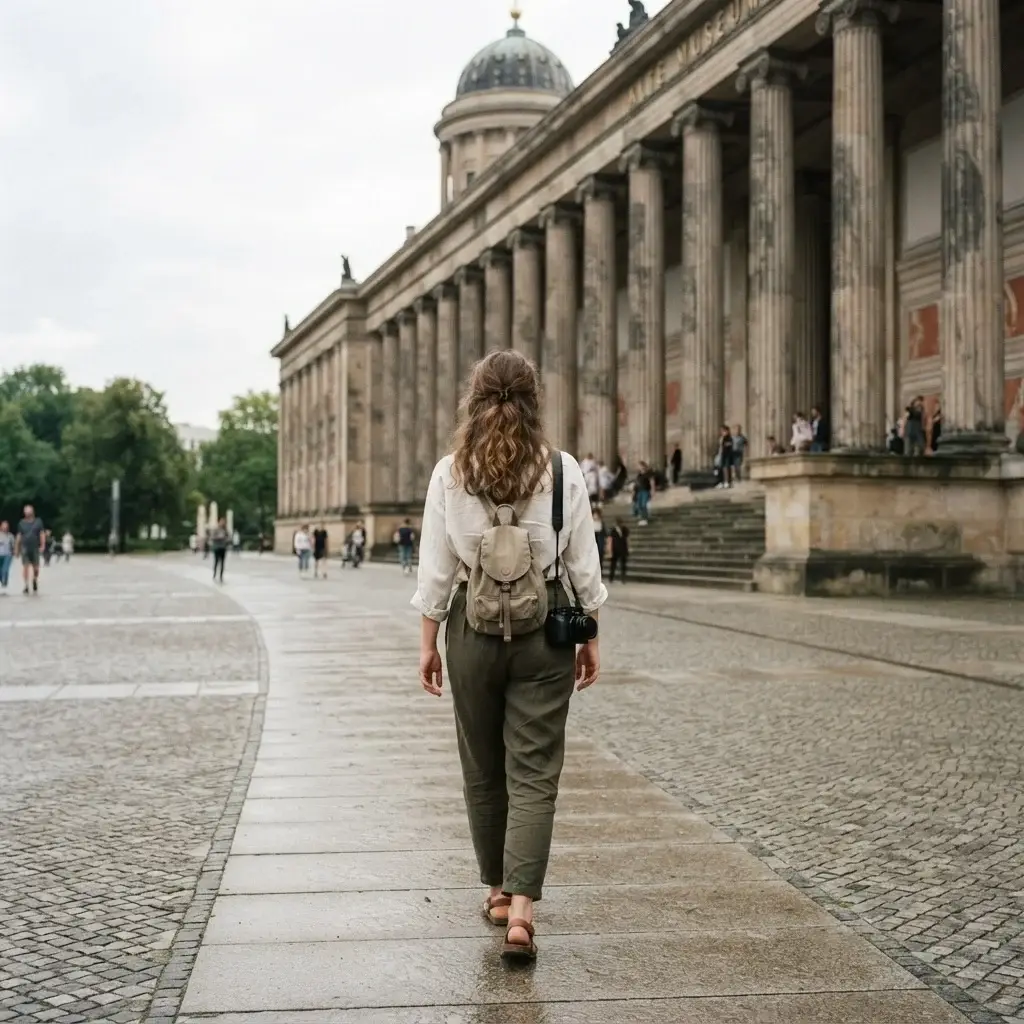
The historic architecture here is stunning, and the entire island complex is recognized globally for its cultural value.
To understand why this cluster of buildings is so special to world heritage, you can read the official history on the UNESCO World Heritage listing for Museum Island in Berlin to learn about its preservation and architectural design.
- Insider Secret: Buy a “Museum Island Day Ticket” instead of individual entries. It saves you over 15 Euros and lets you glide between the buildings at your own pace.
- Navigation Tip: The S-Bahn lines S3, S5, S7, and S9 all stop directly at “Hackescher Markt,” which is just a short, scenic five-minute walk across the river to the museums.
Afternoon: Checkpoint Charlie and the Topography of Terror
Walk south toward Checkpoint Charlie, the famous Cold War crossing point between the American and Soviet sectors.
Local Warning: Checkpoint Charlie is highly commercialized today. Avoid paying money to take photos with actors dressed as American soldiers. The real history lies a few blocks away at the Topography of Terror exhibition.
The Topography of Terror is an indoor and outdoor museum built on the exact site where the Nazi Gestapo and SS headquarters once stood. It features a long, preserved stretch of the Berlin Wall and a brutal, unflinching photographic timeline of how democracy fell in Germany. It is intense, educational, and absolutely necessary for understanding modern Berlin.
Evening: Dinner and Drinks in Hackescher Markt
Head back north to Hackescher Markt for the evening. Walk inside the Hackesche Höfe, a labyrinth of eight interconnected, beautifully restored courtyards filled with independent clothing boutiques, small art galleries, and theaters.
For dinner, grab a table at Yarok for incredible, authentic Syrian food. Order their mixed shawarma platter with fresh mint tea and homemade hummus. It is affordable, delicious, and highlights the beautiful Middle Eastern culinary influence in the city.
Day 3: The Vibrant Neighborhood Pulse of Kreuzberg
Now that you have seen the heavy historic sights, it is time to experience the counter-culture, street art, and neighborhood community that makes Berlin so famous among independent travelers.
Morning: Street Art and Canal Walks
Kreuzberg is the historic heart of Berlin’s punk, immigrant, and anarchist movements. Start your day at the Kottbusser Tor U-Bahn station. Don’t be deterred if it looks a bit gritty; this is the raw heart of the neighborhood. Walk down toward the Landwehr Canal, where locals sit on the grassy banks to drink cheap beers and watch swan families glide past.
Look up at the sides of the brick apartment buildings to spot massive street art murals painted by legendary international artists like Blu and ROA.
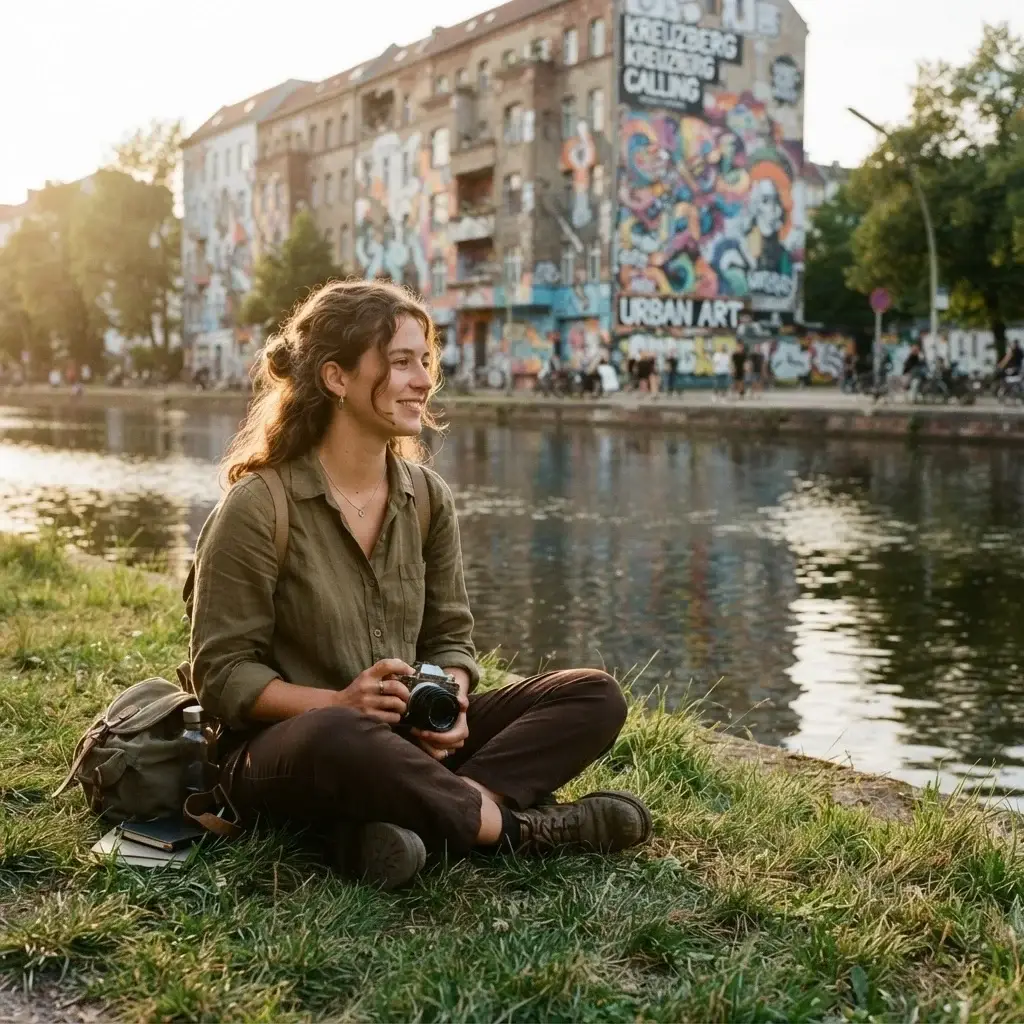
This neighborhood reminds me so much of the diverse, expressive communities I fell in love with while teaching English abroad and traveling solo through Europe’s creative capitals.
- Culinary Tip: Stop by Ankerklause right on the water for a traditional German breakfast of dark rye bread, sliced cheeses, soft-boiled eggs, and fresh cold cuts.
Afternoon: The Turkish Market and Görlitzer Park
If it is a Tuesday or Friday, walk along the Paul-Lincke-Ufer canal to experience the BiOriental Turkish Market. The air here fills with the smells of fresh coriander, roasted olives, and warm flatbread. Stallholders shout out prices in a mix of German and Turkish, and you can buy a massive container of homemade tzatziki and fresh figs for just a few Euros.
Afterward, stretch your legs in Görlitzer Park or check out the nearby Berlin Story Bunker to see how the neighborhood evolved through the war years.
- Safety Tip: Görlitzer Park is a known spot for open-air drug dealing. The dealers are generally non-aggressive if you simply ignore them and keep walking, but solo travelers should avoid walking through this park alone after dark. For general international safety tips, you can browse the US Department of State Travel advisory for Germany to check current safety ratings and regional alerts.
Evening: The Great Döner Kebab Debate
You cannot visit Kreuzberg without eating a Döner Kebab, the ultimate Berlin street food invented by Turkish immigrants in the 1970s. Thousands of tourists wait in line for over two hours at Mustafa’s Gemüse Kebab.
- Insider Secret: Skip the line at Mustafa’s. Walk ten minutes east to Imren Grill on Boppstraße instead. Imren uses real, high-quality marinated beef fat skewers rather than processed minced meat, and their fresh garlic sauce is unmatched. Eat it sitting on a plastic stool on the sidewalk while watching the neighborhood come alive.
Day 4: Remembering the Division at the Berlin Wall
Today we focus entirely on the physical wall that split families, friends, and ideologies for 28 years.
Morning: The East Side Gallery
Take the S-Bahn to Ostbahnhof and walk toward the Spree River to find the East Side Gallery. This is the longest remaining continuous section of the Berlin Wall, stretching for 1.3 kilometers. Immediately after the wall fell in 1989, 118 artists from 21 countries arrived to cover the concrete in bright, political murals.
[Ostbahnhof Station] ──(Start Walk)──► [East Side Gallery – 1.3 km of Art] ──► [Oberbaumbrücke]
You will see iconic images like the Soviet leader Leonid Brezhnev kissing East German leader Erich Honecker.
- Common Mistake to Avoid: Do not touch, draw on, or scratch your name into the artwork. Security guards patrol the strip, and damaging these historical murals can lead to heavy fines. Keep your camera ready but respect the preservation efforts.
Afternoon: The Oberbaumbrücke and Friedrichshain
At the end of the East Side Gallery, you will see the Oberbaumbrücke, a stunning, double-deck brick bridge with Gothic towers. During the Cold War, this was a strict border checkpoint for pedestrians crossing from West Berlin to East Berlin. Walk across the upper pedestrian deck into the Friedrichshain neighborhood.
Head straight to Simon-Dach-Straße, a lively street lined with hundreds of independent cafes, thrift stores, and bars.
- Culinary Tip: Grab lunch at Datscha, a cozy restaurant serving traditional Russian and Eastern European comfort food. Order the Pelmeni (savory dumplings stuffed with potato and mushroom) topped with plenty of fresh sour cream and dill.
Evening: Discovering the Alternative Side of RAW-Gelände
Just off Revaler Straße lies the RAW-Gelände, a former train repair yard that has been completely reclaimed by artists, skaters, and musicians. The industrial buildings are completely covered in thick layers of colorful graffiti and house indoor skate parks, climbing walls inside old brick towers, open-air bars, and live music venues.
It is rough around the edges, creative, and completely unpolished. Grab a local Berliner Kindl beer from a nearby convenience store (Späti), sit on an old bench, and soak in the alternative evening energy.
Day 5: Royal Palaces and Dark History in Potsdam
Let’s get out of the urban concrete for a day and take a short train trip to Potsdam, the historic residence of Prussian kings, located just outside the city borders.
Morning: The Terraced Gardens of Sanssouci Palace
Catch the S7 S-Bahn train from central Berlin heading west all the way to the end of the line at Potsdam Hauptbahnhof.
Important Ticket Alert: Potsdam is located in Transit Zone C. Your standard city AB ticket will not work here. You must purchase an “ABC Extension Ticket” for about two Euros and validate it on the platform before boarding, or you face the same 60-Euro fine.
From the Potsdam station, hop on Bus 695 to Sanssouci Palace. Built by King Frederick the Great as his summer escape, this bright yellow Rococo palace sits atop magnificent, cascading vineyard terraces.
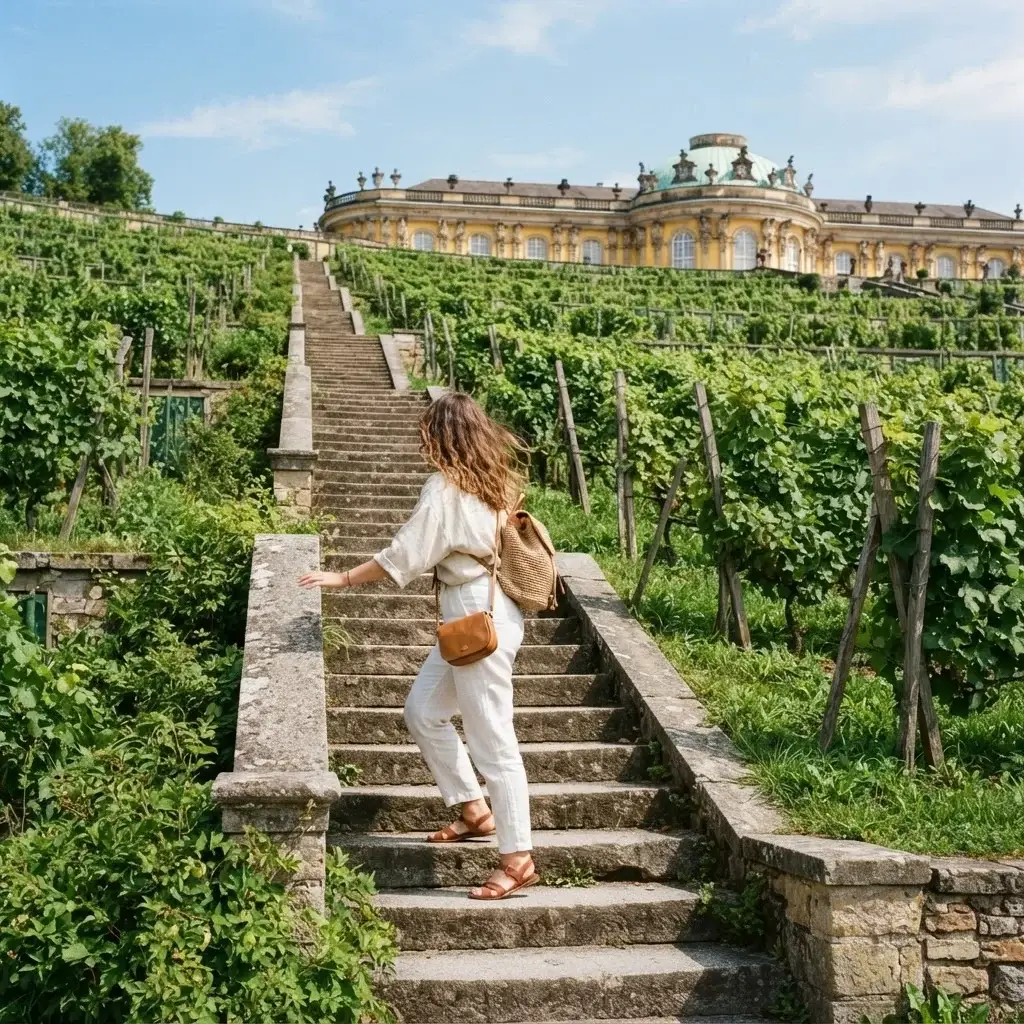
The name Sanssouci translates from French as “without worries,” and as you walk through the surrounding green parkways, you will see why.
Afternoon: The Historic Dutch Quarter
After exploring the palace grounds, walk back into the town center of Potsdam to explore the Holländisches Viertel (Dutch Quarter). This neighborhood consists of 134 red brick houses built in the mid-1700s for Dutch artisans. Today, the area is packed with quaint tea rooms, antique shops, and local bakeries.
- Culinary Tip: Stop at Café Guhl inside the Dutch Quarter for lunch. Try the traditional Kartoffelsuppe (creamy German potato soup with sliced sausages) served with fresh sourdough bread. It is warm, comforting, and incredibly authentic.
Evening: Returning via the Glienicke Bridge
On your way back to Berlin, take a slight detour to see the Glienicke Bridge, famously known as the “Bridge of Spies.” During the Cold War, this water border between East Germany and West Berlin was used by the US and the Soviet Union to exchange captured secret agents.
Once back in Berlin, keep your evening low-key. Head to a local neighborhood Späti, grab a bottle of Club-Mate (a highly caffeinated, carbonated herbal tea drink that fuels Berlin’s creative community), and relax like a true Berliner.
Day 6: West Berlin Charm, Green Parks, and Moving Memorials
Today we will explore the elegant, historic streets of former West Berlin, visit a sobering memorial site, and finish with a relaxing stroll through Berlin’s largest central park.
Morning: The Memorial and Museum Sachsenhausen
Before exploring the commercial west, we will take a morning journey north to the Memorial and Museum Sachsenhausen. Located in Oranienburg, this site served as a primary Nazi concentration camp between 1936 and 1945. Walking through the stark iron gates marked with the cynical phrase Arbeit macht frei is a sobering, heartbreaking experience.
The museum preserves the barracks, punishment cells, and pathology labs with deep historical accuracy and respect. It is an intense visit, but vital to understanding how deeply the scars of totalitarianism run through this region.
- Logistics Note: Like Potsdam, Oranienburg is in Zone C. Make sure you have a valid ABC train ticket for this journey. Give yourself at least three to four hours to walk the grounds respectfully.
- Health and Safety Travel Tip: If you are feeling overwhelmed or stressed by travel fatigue during intense historic tours, it is vital to stay hydrated and take care of your physical health. For general tips on managing your well-being on long walking tours, you can review the medical and food safety guidelines on the CDC Travelers’ Health destination pages to stay sharp, healthy, and energized on the road.
Afternoon: Kurfürstendamm and the Kaiser Wilhelm Memorial Church
Take the train back down to West Berlin and get off at Zoologischer Garten. Walk onto the Kurfürstendamm (known to locals as the Ku’damm), the elegant, tree-lined shopping boulevard of old West Berlin.
Right at the start of the street stands the Kaiser Wilhelm Memorial Church. The original 19th-century church spire was badly damaged during a World War II bombing raid in 1943. Instead of rebuilding it, Berliners chose to leave the jagged, scarred, hollow ruin standing as a permanent monument to peace and a warning against war. A modern, blue-glass chapel was built right beside it, creating a striking architectural contrast between past and present.
Evening: Sunset in the Tiergarten Park
Escape the busy shopping crowds by walking into the Tiergarten, a massive urban park that used to be the royal hunting grounds. It is Berlin’s version of Central Park, filled with hidden pathways, calm lakes, and lush lawns.
Walk through the center of the park to the Victory Column (Siegessäule), topped by a glowing golden statue of Victoria. For dinner, walk to Café am Neuen See, a beautiful beer garden nestled deep inside the park right on the edge of a lake. Sit beneath the leafy trees, order a giant, warm soft pretzel (Brezel) and a fresh draft beer, and watch the sun dip below the trees.
Day 7: Flea Markets and the Moving Wall Memorial
We will wrap up your week by joining Berliners in their favorite Sunday tradition: hunting for vintage treasures and listening to outdoor live music.
Morning: The Bernauer Straße Berlin Wall Memorial
Before hitting the busy markets, spend your morning at the Berlin Wall Memorial on Bernauer Straße. This is the most authentic, historically accurate outdoor wall memorial in the city. Unlike the East Side Gallery, which focuses on art, Bernauer Straße preserves an actual full-scale segment of the border strip, complete with the concrete wall, the sandy “death strip,” a watchtower, and electric fences.
The outdoor exhibition tells the heartbreaking stories of families who were split overnight, and shows the exact spots where people tried to escape by digging tunnels under the concrete or jumping out of apartment windows that faced the West.
- Insider Secret: Climb up to the viewing platform of the indoor documentation center across the street. Looking down from above gives you a clear, chilling view of the layout of the double-walled border system.
Afternoon: Mauerpark Flea Market and Outdoor Karaoke
Walk east from the memorial into the Prenzlauer Berg neighborhood to reach Mauerpark. Every Sunday, this former section of the death strip transforms into a massive, bustling flea market. Locals and independent creators sell everything from vintage leather jackets and antique cameras to handmade jewelry and retro furniture.
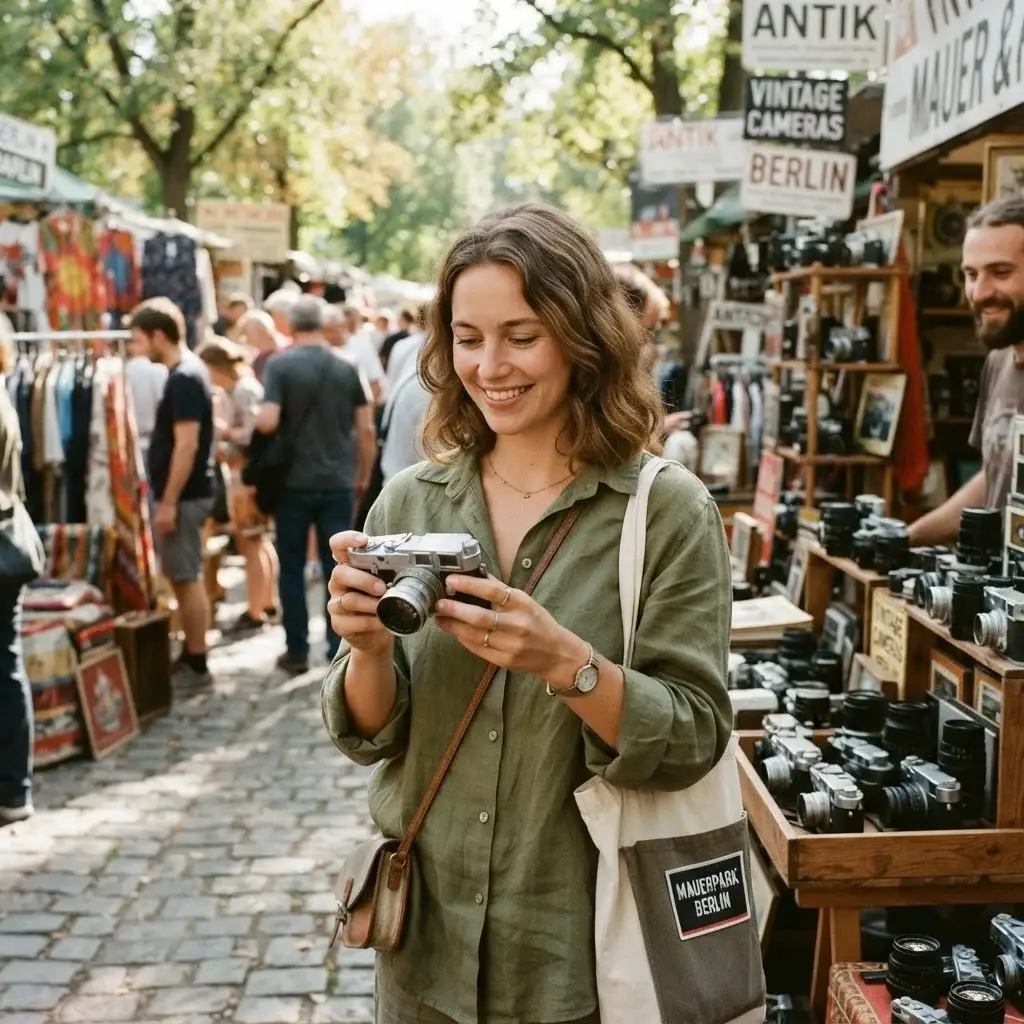
At 3:00 PM, head to the stone amphitheater in the center of the park for Bearpit Karaoke. Thousands of people crowd the stone steps while brave locals and travelers stand in the center to belt out classic songs on a portable sound system. The atmosphere is encouraging, joyful, inclusive, and completely addictive.
- Culinary Tip: Grab lunch from the food trucks inside the market. Look for a stall selling traditional Currywurst—a steamed, fried pork sausage sliced thin and smothered in a savory spiced curry ketchup, served with a side of crispy fries (Pommes). It is the ultimate classic Berlin fast food.
Evening: A Quiet Goodbye in Prenzlauer Berg
Spend your final evening walking through the peaceful, tree-lined streets of Prenzlauer Berg, particularly around Kollwitzplatz. This neighborhood is famous for its beautiful pre-war apartment buildings, independent bookshops, and cozy neighborhood cafes.
For your farewell dinner, reserve a table at Prater Biergarten, Berlin’s oldest operational beer garden, which has been serving travelers and locals since 1837. Order a plate of classic Schnitzel (crispy breaded pork cutlet) served with warm German potato salad, raise your glass, and toast to an unforgettable week of independent exploration.
Essential Berlin Trip Planning Logistics
To ensure your seven-day itinerary runs smoothly without unexpected surprises, keep these practical logistics close at hand.
When to Visit Berlin
Berlin changes completely depending on the seasons. Winters can be bitterly cold, gray, and dark, with the sun setting as early as 3:45 PM. If you enjoy cozy museums and festive Christmas markets, December is magical. However, the best time to visit is between May and September. During the summer, the city bursts into life; everyone lives outdoors, the parks host open-air cinemas, and beer gardens stay packed until midnight.
Navigating the Transit System
Skip the expensive taxis and download the official BVG Fahrinfo app on your smartphone before you arrive. Berlin’s public transit network is incredibly efficient, clean, and safe. A single standard ticket covers the U-Bahn, S-Bahn, buses, and trams.
If you plan to follow this itinerary exactly, buying a “7-Day Ticket” (7-Tage-Karte) is far cheaper than purchasing individual single tickets every day. Just remember my golden rule: stamp it once in the platform validation box on day one, and you are covered for the entire week!
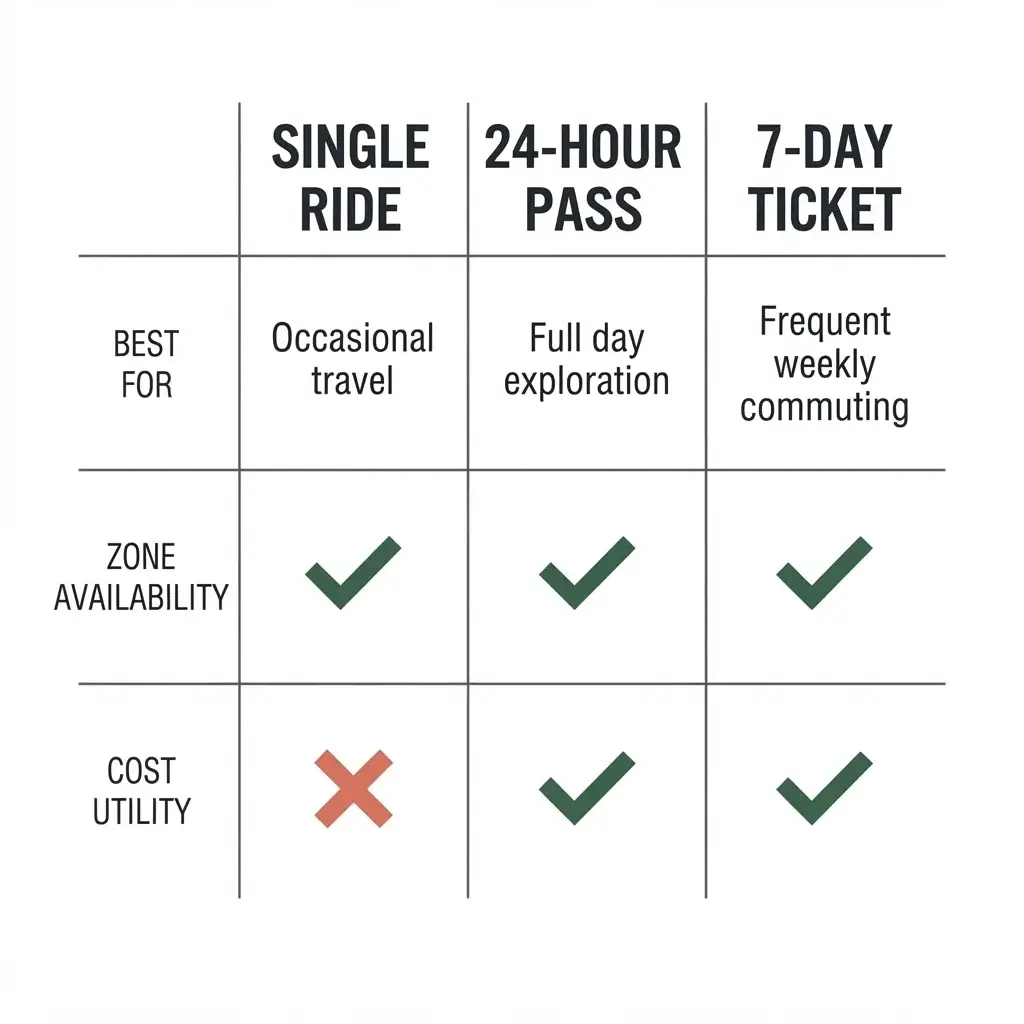
| Ticket Type | Best For | Zone Coverage |
| Single Ticket (Einzelfahrausweis) | A single, one-way journey up to 2 hours | AB or ABC options |
| 24-Hour Ticket (24-Stunden-Karte) | Making more than 3 trips in one day | AB or ABC options |
| 7-Day Ticket (7-Tage-Karte) | This exact one-week itinerary | AB covers all inner city |
Safety and Solo Travel Confidence
Berlin is generally a very safe city for solo travelers, women, and independent adventurers. However, like any major European transport hub, you need to use common sense. Keep a close eye on your bags and pockets at busy transit hubs like Alexanderplatz, Berlin Hauptbahnhof, and the Warschauer Straße station, where pickpockets operate in crowded spaces.
If you ever feel unsafe or require emergency travel assistance while on the road, it is a smart idea to have comprehensive backup plans. You can review the safety guides and plan coverage options on the World Nomads Travel Insurance explorer resources to ensure your health, gear, and transit connections are fully protected during unexpected events.
Moving Beyond the Fear: Your Berlin Adventure Awaits
Taking the first step toward planning a trip to a city with such a heavy, intense history can feel intimidating. When I first quit my office desk job, I worried that I would get lost, feel lonely, or fail to connect with the places I visited. But travel is not about achieving a flawless, picture-perfect vacation; it is about stepping out of your routine, staying curious, and building your self-confidence through real-world actions.
Berlin is a city that has been broken down, divided, and completely reborn. It is proof that beauty and creativity can emerge from dark, challenging times. As you wander through its diverse neighborhoods, taste its local street food, and stand before the remains of the Berlin Wall, you will realize that you are fully capable of navigating the world on your own terms. Stop waiting for the perfect moment. Pack your bags, buy your train ticket, and let Berlin teach you its incredible lessons.



