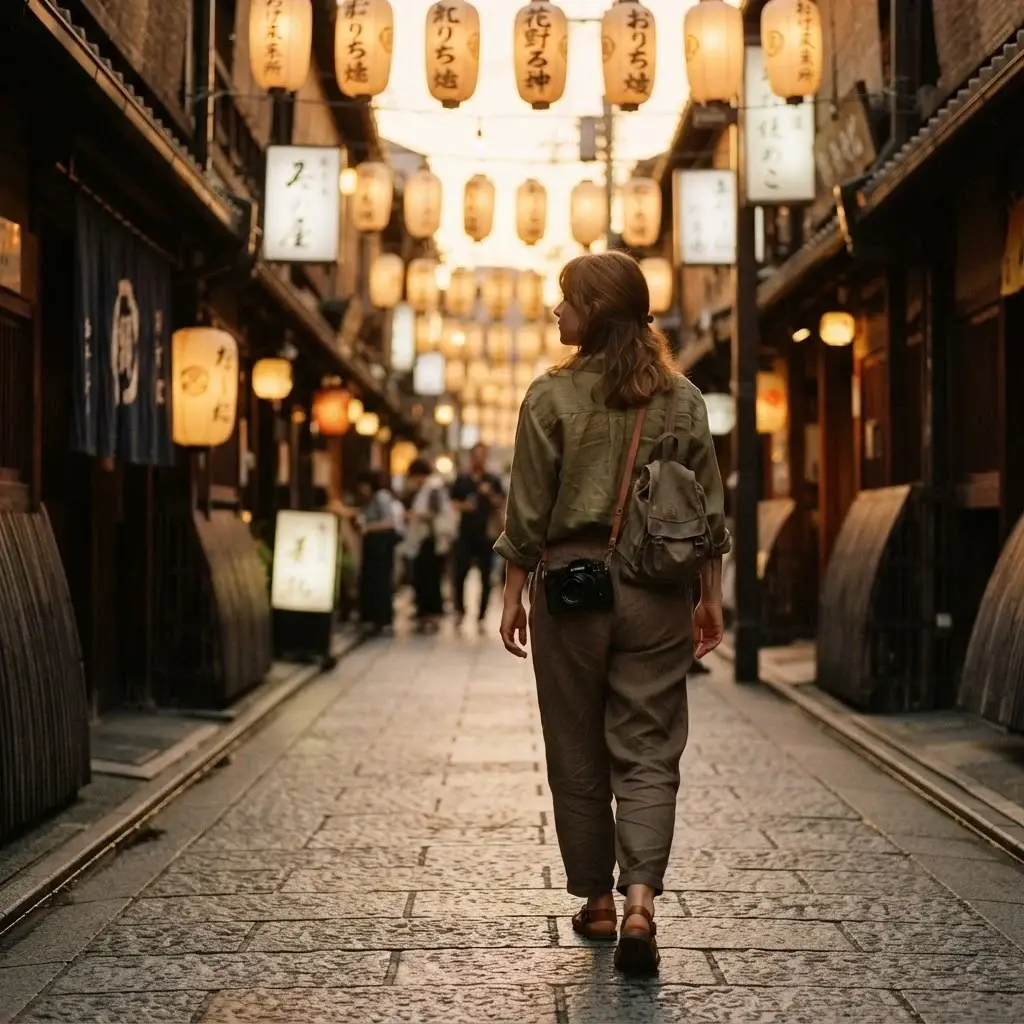
Best Places for Solo Travel: What No One Tells You First

There is a moment almost every solo traveler knows. You have finally decided you are going to do it. You are booking a solo trip. You open Google, type in “best destinations for solo travelers,” and then spend the next two hours clicking through lists that all say the same ten places in a different order, with zero explanation of what actually makes any of them right for you.
I have been there. Before I ever left my office job and built a life around travel, I spent months overthinking exactly this. And what I needed was not another ranked list. I needed someone to be honest with me about what each destination actually requires of a solo traveler, what it gives back, and which one matched where I was in my confidence journey at that moment.
That is what this article is. Not a ranking. Not a countdown. A real, practical guide to some of the best places in the world to travel solo right now, with the honest context you need to choose the one that is right for you.
The Question Before the Destination: What Kind of Solo Traveler Are You Right Now?
Before we talk destinations, I want to ask you something most travel articles skip entirely. Where are you in your solo travel experience?
This matters more than any destination ranking. A place that is genuinely wonderful and growth-giving for a seasoned solo traveler can be genuinely stressful and defeating for someone on their first trip. Choosing right means being honest with yourself. So let me give you two broad starting points.
If this is your first solo trip or you are still building confidence, you want a destination with strong solo travel infrastructure. That means an active hostel culture, easy public transportation, lots of other travelers around, wide English-language accessibility, low logistical complexity, and a low to moderate safety concern. You want a place that will challenge you in good ways without overwhelming you with everything at once.
If you have already done a trip or two alone and you are looking to go deeper, you want a destination with richer cultural complexity, more opportunities for genuine local connection, a slower pace, and more room to get off the beaten path. You are ready for the trip that changes how you see the world, not just how you navigate an airport.
Keep both of these in mind as we go through what follows.
Japan: The Solo Traveler’s Dream Infrastructure
If I could recommend one place to almost any solo traveler regardless of experience level, it would be Japan. Here is why it earns that spot.
Japan is one of the most logistically forgiving solo travel destinations on the planet. The public transportation network is precise, clean, and remarkably easy to use once you have an IC card (a rechargeable card called Suica or Pasmo that you tap on and off trains, buses, and even at convenience stores). You do not need to speak Japanese to navigate Tokyo or Kyoto. Signage in train stations is in English alongside Japanese, and the Japan National Tourism Organization planning hub covers everything from cultural etiquette to IC card setup in clear, practical English before you even land.
What makes Japan uniquely wonderful for solo travelers is the culture of respectful solitude. Eating alone is not considered sad or unusual. There are restaurants that are literally designed for solo dining, called “ichiran ramen shops,” where each person sits in an individual booth facing the wall, bowl of tonkotsu ramen in front of them, completely unbothered and utterly content. There is no pity in being alone in Japan. It is simply a normal state of being.
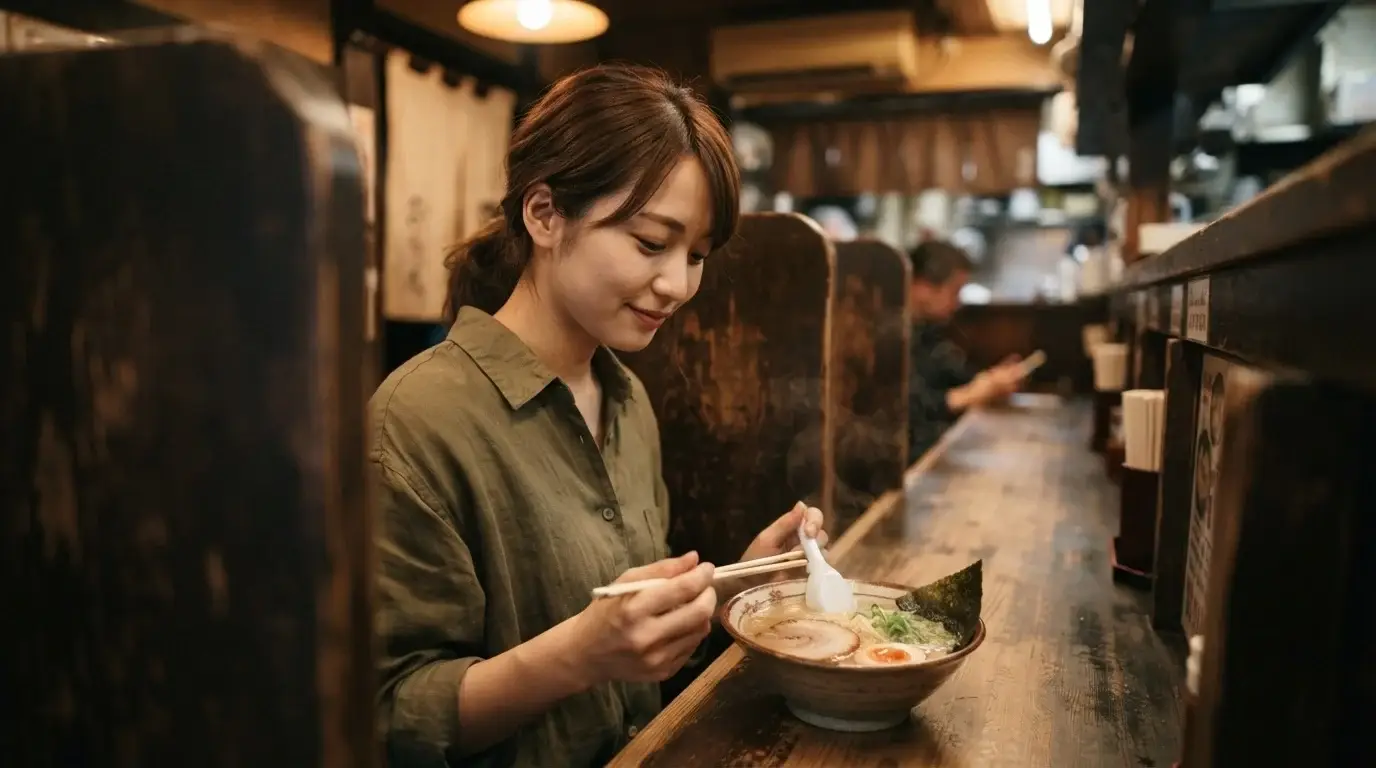
From what solo travelers consistently report, and based on everything I know about navigating new countries on your own, Japan also scores remarkably high on personal safety. Violent crime against tourists is extremely rare. Lost items are frequently returned. Locals are helpful even through a language barrier, often using Google Translate on their own phone to assist you. Japan saw a record 42.7 million international visitors in 2025 according to JNTO tourism statistics, and solo travelers are a significant and growing portion of that number.
Practically speaking: most nationalities enter Japan visa-free for up to 90 days. Budget around $60-90 USD per day for mid-range solo travel covering accommodation, food, and transport, though you can go lower if you stay in hostels and eat at convenience stores and local noodle shops. Tipping is not practiced and is actually considered rude, so do not worry about that calculation at every meal. The food alone is worth the trip: ramen, sushi, tempura, okonomiyaki, and the most astonishing convenience store snacks you have ever encountered.
The one honest caveat: Japan can feel slightly lonely if you are hoping to meet fellow travelers in a casual, spontaneous way. It is not a backpacker party circuit. But for solo travelers who want to be fully present, deeply curious, and completely absorbed in a culture unlike their own, there is nowhere quite like it.
Portugal: The Softest Entry Point in Europe
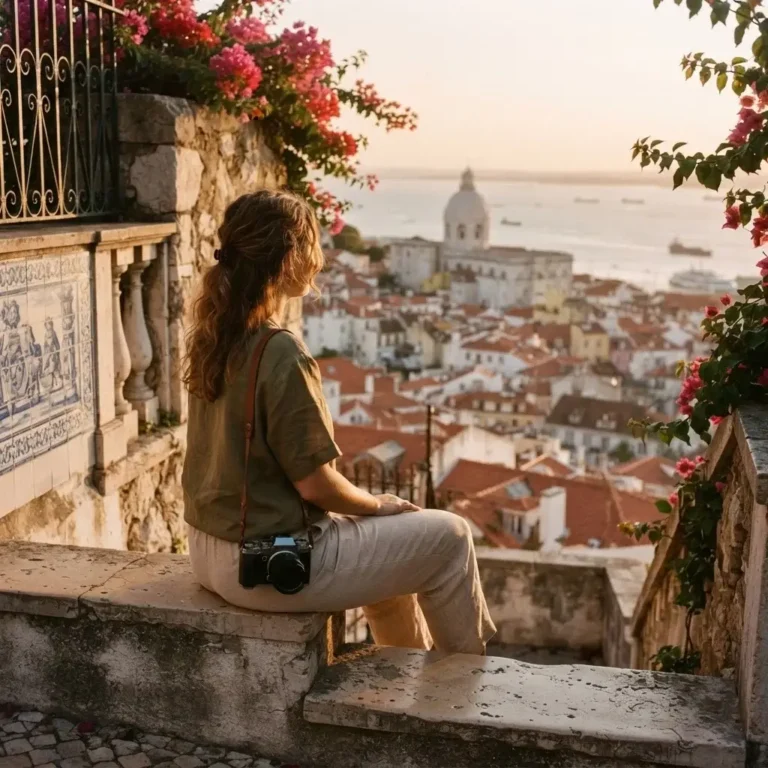
When I backpacked solo across Europe, the places that stayed with me longest were not the most famous ones. They were the ones that made me feel welcome as a single person wandering around without a plan. Portugal has that energy in abundance, and it has only gotten better.
Lisbon and Porto are both endlessly walkable, affordable by Western European standards, and warm in the social sense, not just the climate. The Portuguese people are consistently described by solo travelers as genuinely friendly rather than tourist-transactionally polite. You can sit at a small restaurant counter, order bacalhau com natas (salt cod with cream), and end up in a real conversation with the person next to you. That does not happen everywhere.
Portugal ranks 7th on the Global Peace Index 2025 according to the Institute for Economics and Peace, making it one of the most peaceful countries in the world. The U.S. State Department issues a Level 1 advisory for Portugal (Exercise Normal Precautions), which is the lowest possible advisory level. You can check their current advisory page at travel.state.gov before you go. Petty theft is a real thing in Lisbon’s tourist areas and on trams, particularly the famous Tram 28, so keep your bag in front of you and your phone in your pocket rather than in your hand. That is normal big-city awareness, not a reason to skip the destination.
Budget travelers can manage comfortably on $50-70 USD per day in Lisbon, covering a hostel bed, meals, wine, and public transport. Porto tends to be slightly cheaper. Pastéis de nata (custard tarts) from Pastéis de Belém in Lisbon will cost you about 1.40 euros each and will genuinely make you reconsider your life choices in the best possible way.
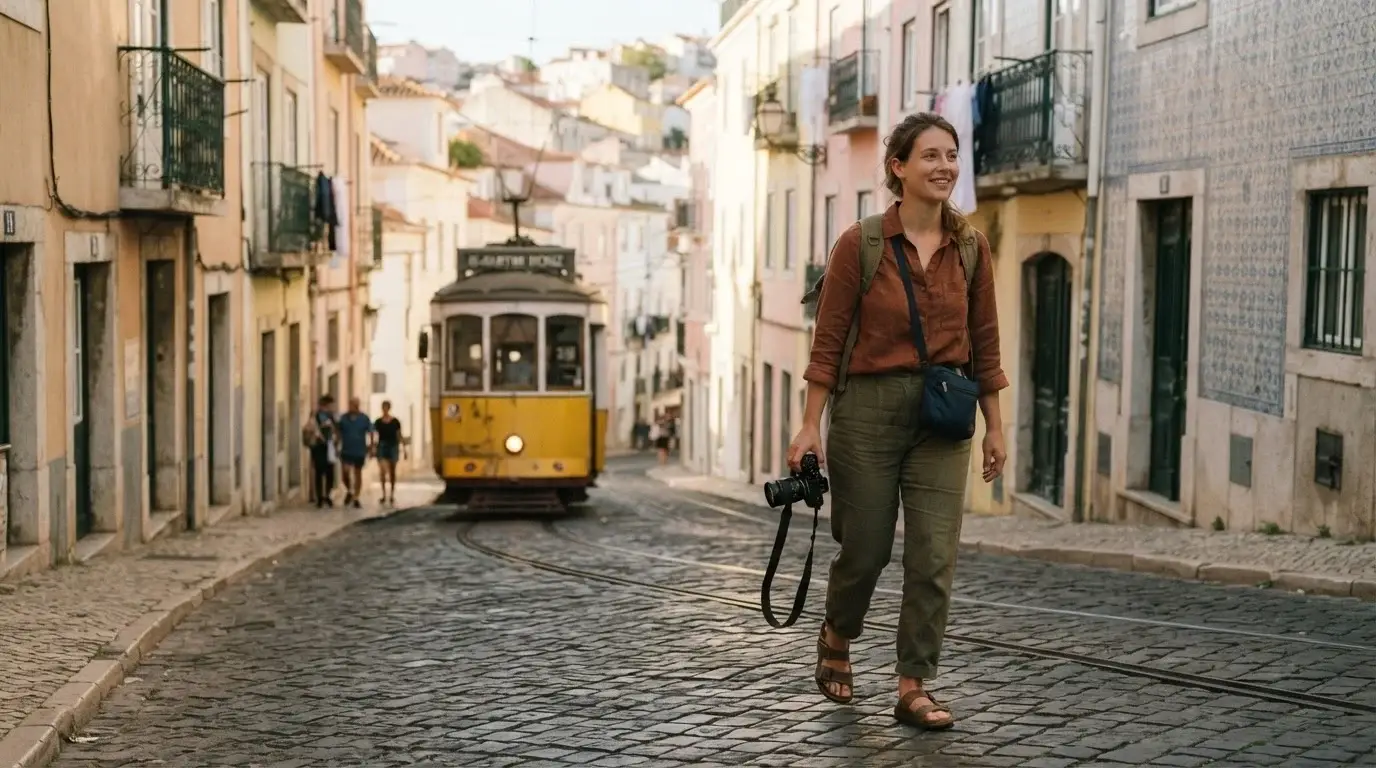
For newer solo travelers, Portugal offers something extremely practical: it is in the Schengen Zone, uses euros, and operates largely in English at the traveler-facing level, meaning the logistical learning curve is gentle. For more experienced solo travelers, the Douro Valley wine country, the medieval town of Sintra, and the underrated Alentejo region offer slower, more immersive experiences beyond the city circuits.
Thailand: Where First-Timers Find Their Footing
I taught English in Thailand, and I can tell you from real experience that this country does something to you. It teaches you to slow down. It teaches you to eat with strangers. It teaches you that kindness is a universal language that does not require words.
Thailand is arguably the most beginner-friendly solo travel destination in Southeast Asia, and possibly the world. The infrastructure for independent travelers is extraordinary: clear bus and train routes between cities, an abundance of hostels at every budget level, established tourist trails from Bangkok to Chiang Mai to the islands in the south, and an enormous network of other solo travelers you will meet almost immediately.
The Tourism Authority of Thailand’s official website is genuinely useful for planning routes and understanding regional differences before you go. Bangkok is a brilliant entry point but can feel chaotic at first, which is part of the fun. Chiang Mai in the north is where many solo travelers say they find their rhythm. The Old City is walkable, the night markets are incredible, the temples are staggering in number and beauty, and the atmosphere is relaxed and welcoming for people arriving alone. Hostel dorm beds in Chiang Mai run around $8-12 USD per night, and a full meal at a local market will cost you 50-80 baht, roughly $1.50 to $2.50 USD.
For food: eat the pad see ew from street stalls, not just pad thai (which is delicious but the tourist default). Try khao soi, the northern Thai coconut curry noodle soup, which is one of the most satisfying bowls of food I have ever encountered. In Bangkok, a bowl of boat noodles at a floating market along the canal costs about 20 baht. Eat everything.
One honest note about safety: Thailand is generally very safe for solo travelers, including solo women, but like anywhere, you need to use common sense. Watch your drink at bars, be cautious on rented motorbikes (the leading cause of tourist injuries), and book registered, reputable transport when moving between cities at night. These are normal precautions, not scary warnings. Millions of solo travelers visit Thailand every year and have wonderful, life-changing experiences.
George Town, Penang, Malaysia: The Underrated Cultural Deep-Dive
This one does not appear on enough solo travel lists, and that is a mistake I want to correct.
George Town, the capital of Penang island in Malaysia, is a UNESCO World Heritage Site officially listed alongside Melaka as one of the Historic Cities of the Straits of Malacca. What that means on the ground is a dense, walkable historic core of beautifully preserved shophouses, Chinese clan temples, colonial-era streets, Indian food stalls, and one of the most genuinely multicultural food cultures in the world.
The street food scene in George Town is consistently ranked among the best in all of Asia. Char kway teow (stir-fried flat rice noodles with prawn and Chinese sausage), asam laksa (a sour fish noodle soup unlike anything you have tasted), Hokkien mee, nasi kandar, and roti canai with dhal at 6am are not meals you forget. Budget travelers can eat like royalty here for under $15-20 USD per day on food alone.
For solo travelers, George Town offers something special. It is small enough to feel intimate and safe, with most of the main heritage zone genuinely walkable. The famous street art murals by Lithuanian artist Ernest Zacharevic are scattered across the old town and create a natural, self-guided walking tour that will take you hours if you let yourself wander slowly. There are art galleries, independent coffee shops, and a growing community of long-term solo travelers and digital nomads who find themselves staying far longer than planned.
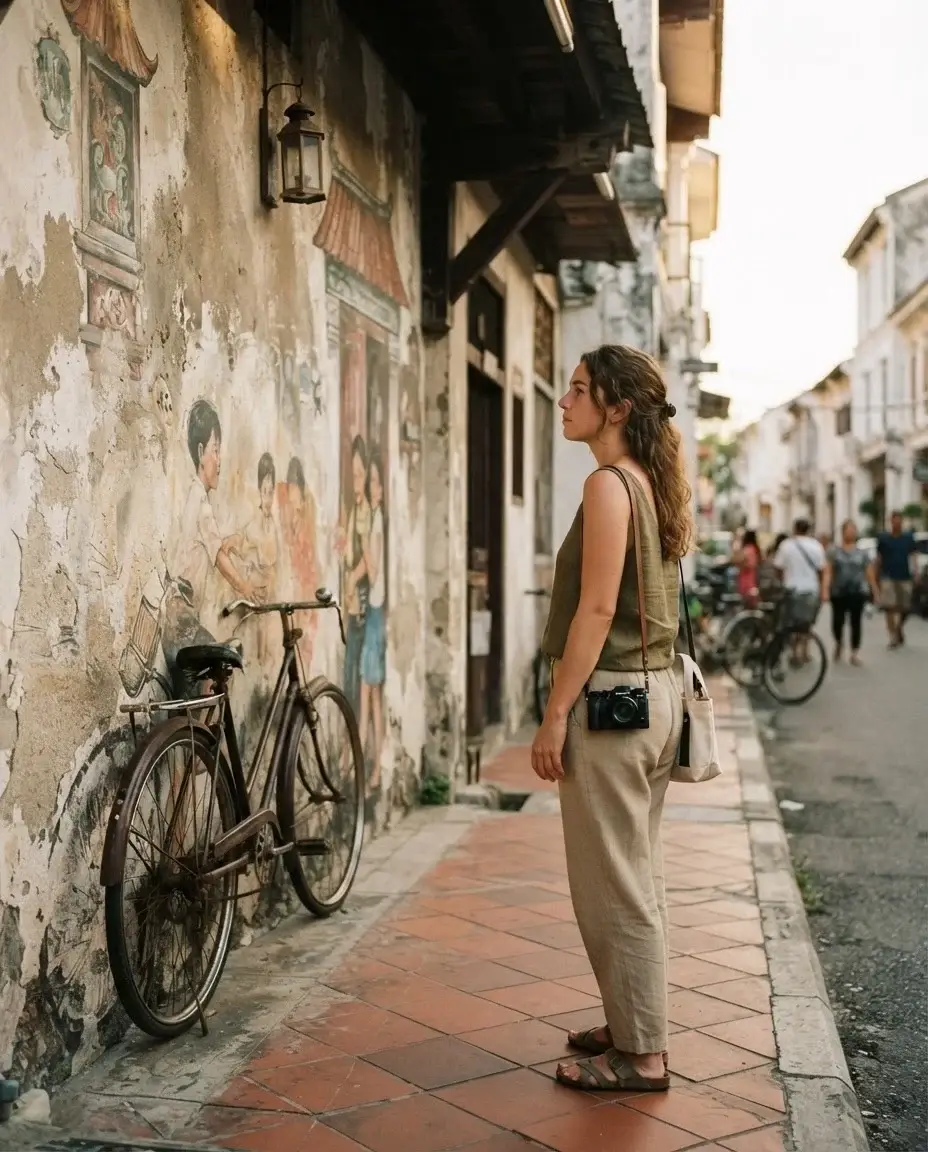
From what solo travelers consistently report, the city is very safe, locals are welcoming, and English is widely spoken. Malaysia does not require a visa for most nationalities for stays under 90 days. The affordable cost of living makes it especially appealing if you want to slow down and actually absorb a place rather than rushing through it.
New Zealand: For the Solo Traveler Ready for an Adventure That Challenges Them
New Zealand belongs in a slightly different category from the others above. It is not the cheapest. It is not the easiest culturally to navigate in the sense of arriving and immediately plugging into a social traveler scene. What it is, is one of the most staggeringly beautiful places on earth, with an infrastructure built for independent travelers and one of the highest safety standards anywhere.
From what solo travelers consistently report, New Zealand rewards people who are comfortable with their own company, enjoy outdoor adventure, and are willing to do some logistical planning. The country is relatively spread out, and while public buses and shuttles connect major points on both the North and South Islands, having a campervan or rental car significantly expands your options and is actually cost-effective for solo travelers who plan ahead.
On the visa front: most travelers from countries like the USA, UK, Canada, and Australia need to apply for an NZeTA (New Zealand Electronic Travel Authority) before arrival. It is a simple online application, not a full visa, and you can complete it in minutes. It is also not free: the NZeTA includes a $17 NZD International Visitor Conservation and Tourism Levy (IVL). Apply before you book your flights and you will not have to think about it again.
The Milford Sound, the Tongariro Alpine Crossing, the Marlborough wine region, the geothermal landscapes of Rotorua, Queenstown’s adventure sports scene, and the Maori cultural heritage woven throughout the country all offer experiences that are worth budgeting carefully to reach. Daily costs run roughly $80-130 NZD per day on a mid-range independent budget. It is not Thailand, but for solo travelers ready for the kind of trip that genuinely tests and expands them, New Zealand delivers.
The Loneliness Question: Let’s Just Address It Directly
Before this article ends, I want to spend a moment on the fear almost everyone has and almost no travel article talks about honestly. What if I get there and feel terribly lonely?
Here is what I actually think, built from everything I have experienced and every traveler I have spoken with over the years. Loneliness on a solo trip is real. It shows up, usually on day two or three, often at dinnertime, often when something funny or beautiful happens and you have no one to immediately share it with. And the honest answer is not “that never happens” because it does, sometimes.
But here is the fuller truth: that feeling, when you sit with it instead of running from it, is where some of the biggest growth in solo travel actually happens. It is in those moments that you figure out who you are outside of your usual social roles. It is when you get slightly uncomfortable that you push yourself to walk into that restaurant anyway, to speak to the person at the neighboring table, to join the hostel common room instead of staying in your bunk. And nearly every time, something good happens.
Solo travel does not require you to be fearless. It just requires you to decide that the experience is worth more than the comfort of staying home.
How to Actually Choose: A Simple Framework
Stop waiting for the “perfect” destination. Perfect does not exist. What exists is the right destination for where you are right now. Here is a simple way to choose.
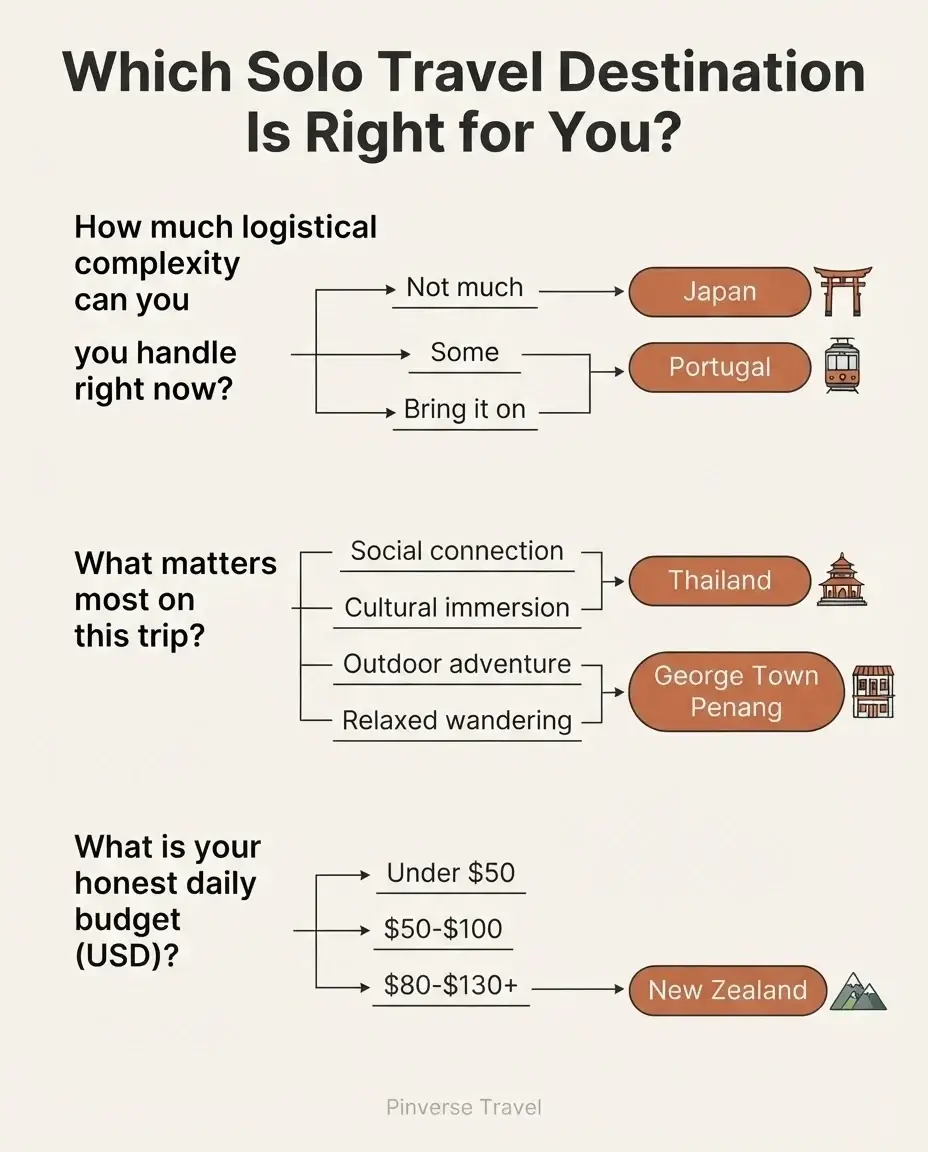
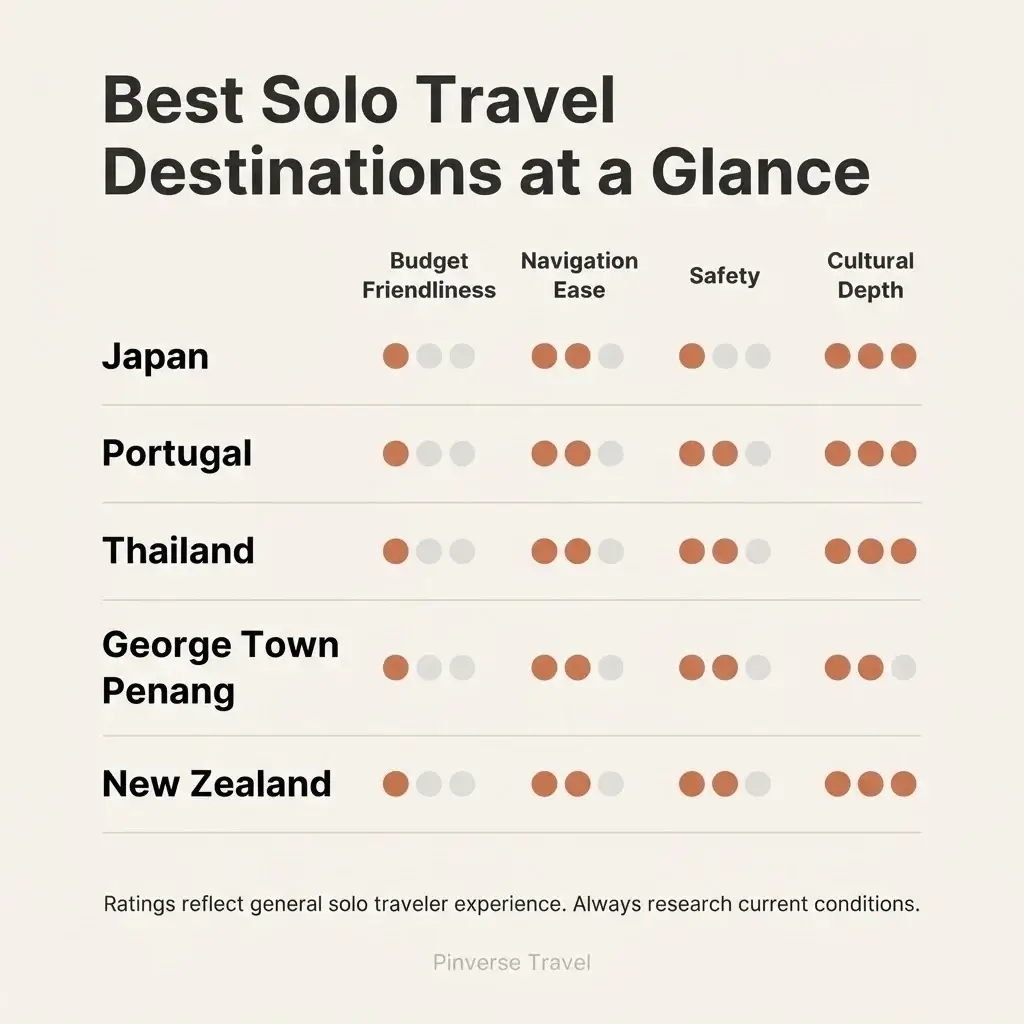
Ask yourself three honest questions. First, how much logistical complexity can you comfortably handle right now? If the answer is “not much,” choose Japan, Portugal, or Thailand. Second, what matters most to you on this trip: social connection with other travelers, deep cultural immersion, outdoor adventure, or relaxed exploration? Social connection points you toward Thailand and Portugal. Cultural immersion points to George Town or Japan. Outdoor adventure points to New Zealand. Third, what is your honest daily budget? Under $50 per day: Thailand and George Town. $50-100: Portugal and Japan. $80-130+ (NZD): New Zealand.
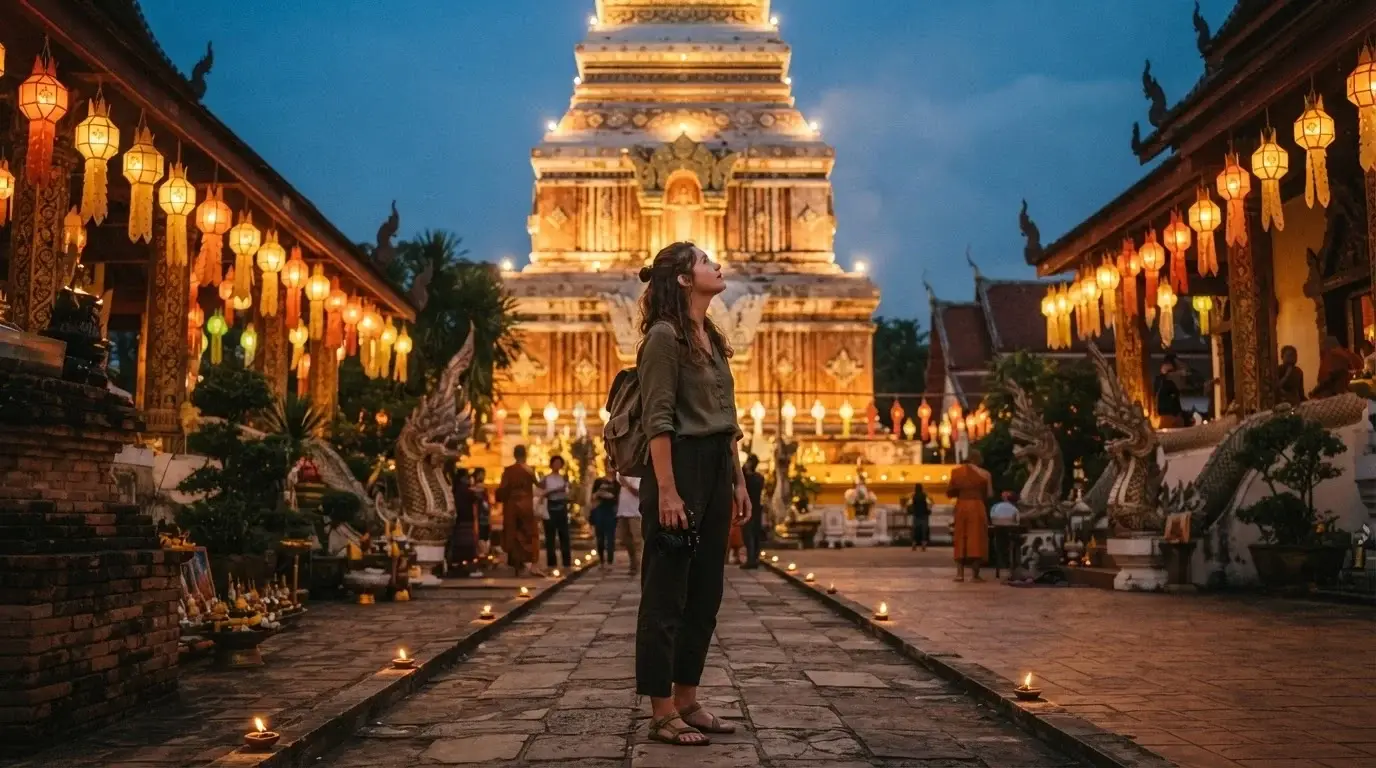
Then book it. Not next year. Not when everything lines up perfectly. Now, or as close to now as your real life allows.
The trip that changes you is the one you actually take.
Disclosure: This post contains affiliate links. If you purchase through them, I may earn a small commission at no extra cost to you. I only ever recommend products and services I genuinely use or trust.