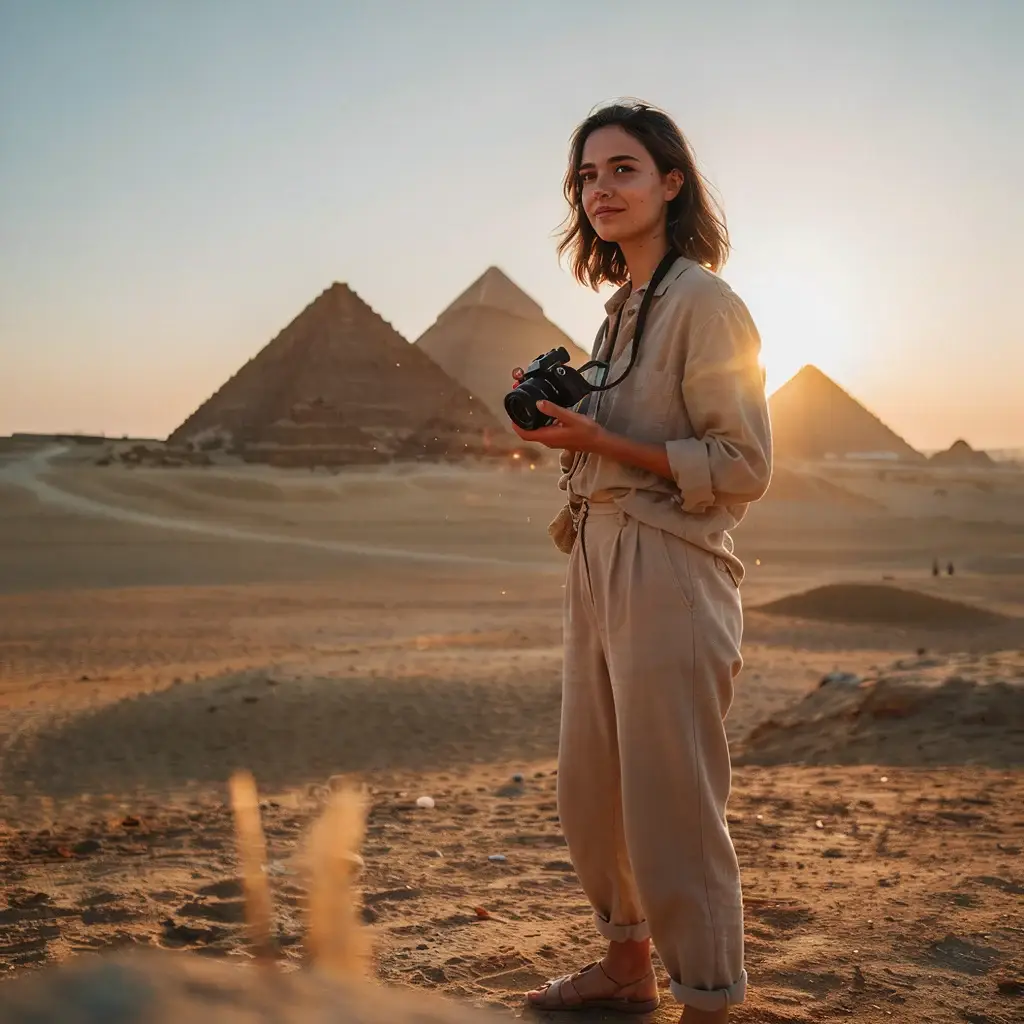
I used to think I understood busy cities. Before I started traveling the world, I worked as a sightseeing guide in New York City. I spent my days herding groups of tourists through Times Square and navigating the chaos of Manhattan traffic. I thought I had seen it all.
Then, I went to Cairo.
Cairo is a completely different world. It is loud, dusty, fast, and intensely beautiful. The traffic does not stop. The street vendors are persistent. The history is so ancient that it makes your head spin. When I first planned my trip, I was sitting at my old desk job, desperately wanting to see the Pyramids but feeling completely terrified of doing it alone. I almost let that fear stop me.
If you are reading this, you might be feeling that same fear right now. You want to see the wonders of Egypt, but you are worried about getting overwhelmed, getting scammed, or just feeling lost. I completely understand. But I promise you that you can do this. You do not need to be a fearless superhero to travel solo. You just need a good plan.
After spending time getting lost, making mistakes, and eating my body weight in local food, I figured out how to pace this massive city. I want to share exactly what worked for me. If you are looking for the absolute best way to explore Cairo in 4 days, this guide will give you the practical steps, the cultural tips, and the confidence to make it happen.
Preparing for the Chaos: What to Know Before You Go
Before you even step on the plane, you need to set your expectations. Cairo is not a city you can just walk through smoothly. It challenges you. When I was waitressing double shifts to save up money for my first big trip, I learned that preparation saves you from panic.
Mindset and Safety First, let’s talk about safety. Cairo is generally very safe for tourists when it comes to violent crime. The real challenges are the aggressive sales pitches and the traffic. You have to learn how to say a firm, polite “La shukran” (No, thank you) and keep walking. You also want to make sure your paperwork is perfectly in order. As a habit, I always check the latest entry requirements and safety alerts directly on the official U.S. Department of State website before booking any flights, because visa rules for Egypt can change quickly. Currently, most travelers can get a visa on arrival or an e-visa beforehand. I highly recommend the e-visa to skip the long lines at the airport.
Health and Stomach Issues You might have heard of the “Pharaoh’s Revenge.” It is real. Your stomach will be adjusting to new spices, oils, and water. Never drink the tap water in Egypt. Only drink bottled water, and use bottled water to brush your teeth. Avoid raw salads or fruits that you cannot peel yourself. Before I leave for any trip where the food and water are different, I like to review the travelers’ health guidelines from the CDC to see if I need to pack specific stomach medicines or update my routine shots. Bring an anti-diarrhea medicine from home just in case. It is better to have it and not need it.
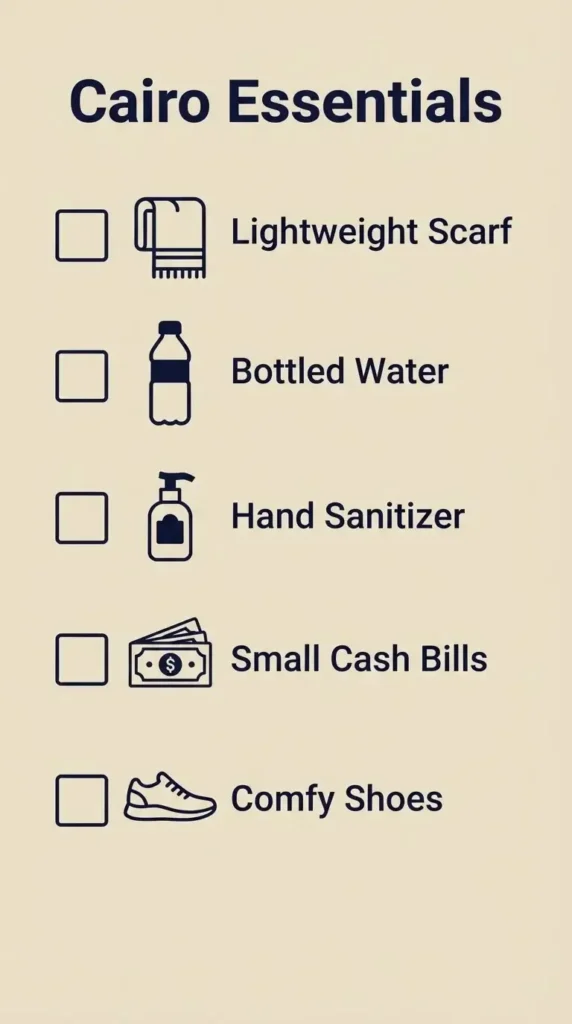
What to Wear Egypt is a conservative country. You need to dress respectfully. This means covering your shoulders, cleavage, and knees. I wore loose linen pants, long skirts, and airy cotton T-shirts. Bring a lightweight scarf everywhere you go. You can use it to cover your hair when entering mosques, block the sun, or wipe the dust off your face.
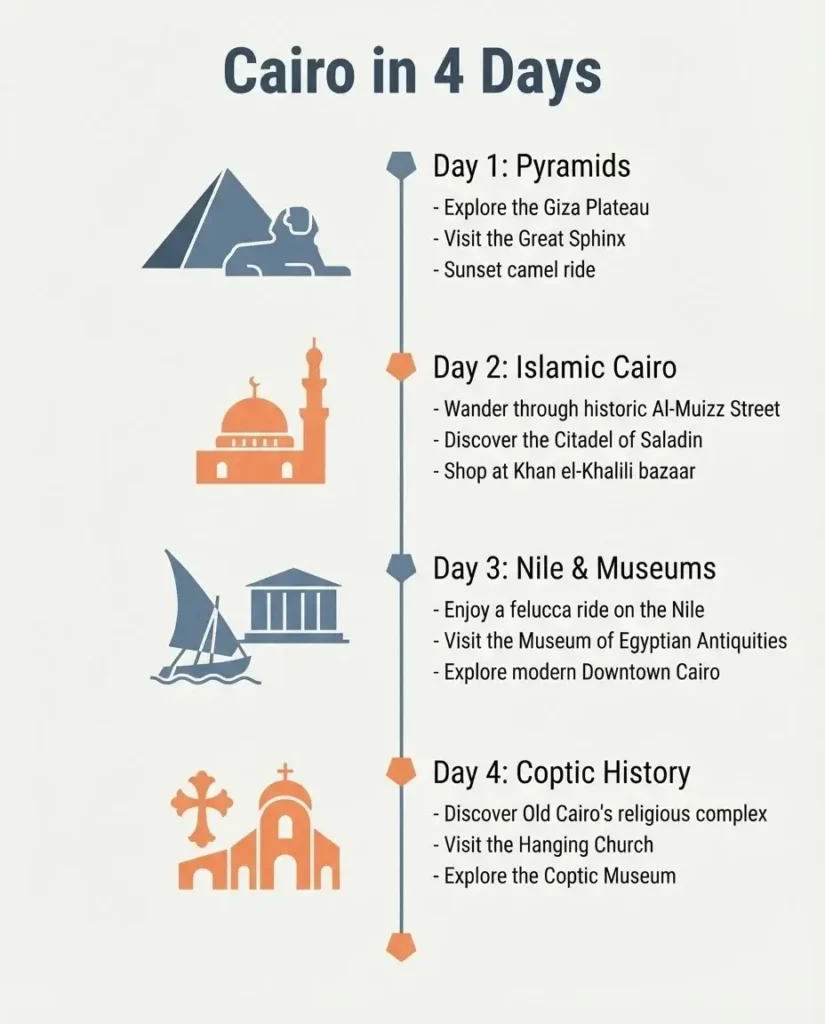
Day 1: Touching the Ancient World
You came to Egypt to see the Pyramids, so we are going to do that right away on your first morning. But we are going to do it the smart way.
Morning: The Giza Plateau
Wake up early. I mean really early. You want to be at the entrance gate of the Giza Plateau the exact minute it opens, usually around 8:00 AM. This helps you beat the worst of the brutal midday heat and the massive tour bus crowds.
When your Uber pulls up to the ticket gate, people will approach your car. They will tell you the gate is closed. They will tell you that you must ride a horse. They will tell you the ticket office moved. Ignore all of them. This is a common trick. Walk straight to the official stone building, buy your ticket, and walk through the metal detectors.
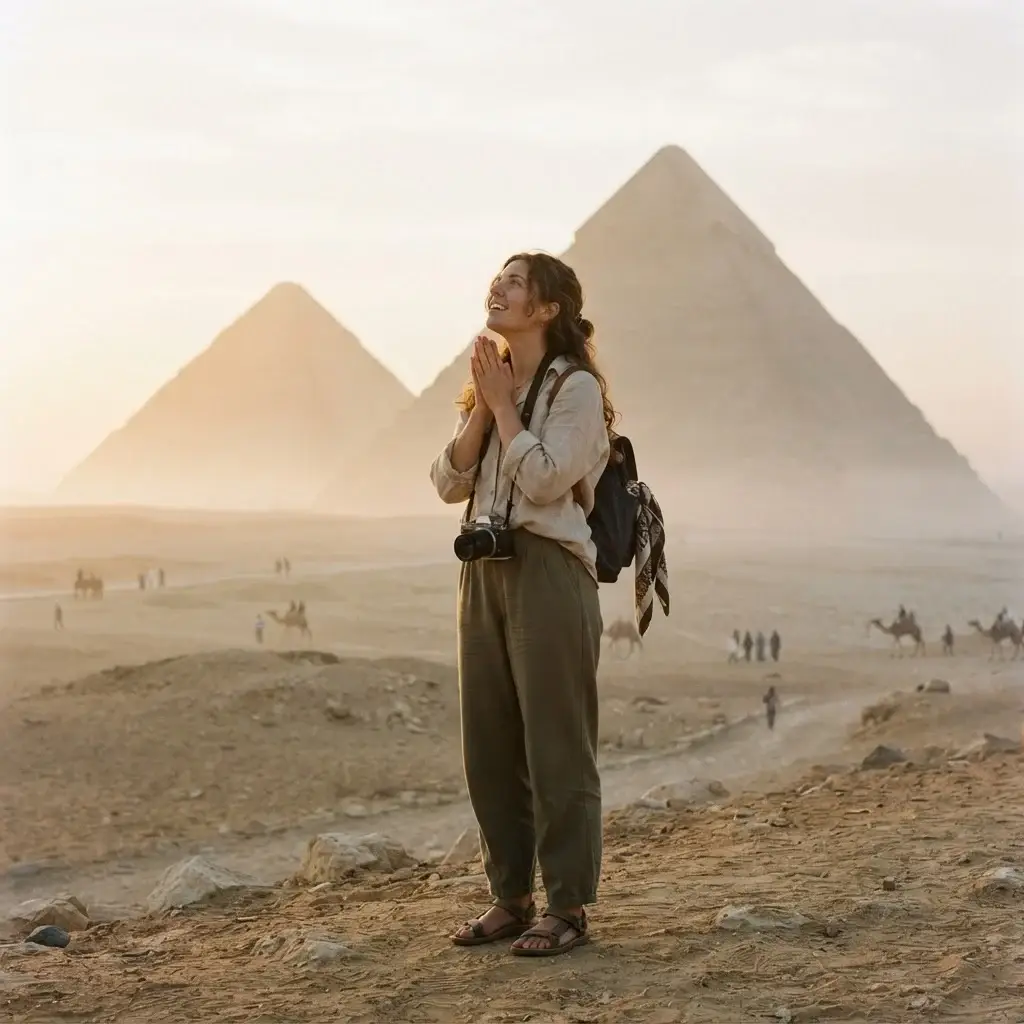
Standing in front of the Great Pyramid of Giza for the first time is a feeling I will never forget. You feel incredibly small. Take your time walking around the base. Look at the size of the stone blocks. If you want a quiet moment, skip the main paved areas and walk out into the sand toward the panoramic viewpoint. This entire area is an incredible UNESCO World Heritage site, and walking across the desert sand away from the crowds allows you to truly feel the history of the Memphis area and its necropolises without the noise of the city.
Insider Secret: Do you need to go inside the Great Pyramid? In my honest opinion, no. It costs extra, it is very hot, the air is thin, and it is completely empty inside. Save your money and your energy. The outside is the real show.
Lunch: Your First Taste of Koshary
After a few hours in the sun, you will be hungry. Leave the Pyramids and look for a local spot serving Koshary. This is Egypt’s national dish. It is a crazy, heavy, wonderful mix of rice, macaroni, lentils, and chickpeas, topped with a spicy tomato sauce and crispy fried onions. You add garlic vinegar to it yourself. It is very cheap, very filling, and entirely vegetarian. When I lived on a tight budget while teaching English in Thailand years ago, I learned that eating local street food is the best way to save money and connect with the culture. Koshary is the perfect example of this.
Afternoon: The Step Pyramid of Saqqara
Hire an Uber or a private driver for the afternoon and drive about 40 minutes south to Saqqara. Many tourists skip this, which is a huge mistake. Saqqara is home to the Step Pyramid of Djoser. It is older than the pyramids at Giza. The site is much quieter, less aggressive, and gives you a wonderful sense of peace. You can actually hear the desert wind here.
Day 2: The Heart of Islamic Cairo
Yesterday was about ancient kings. Today is about the living, breathing soul of the city.
Morning: The Citadel of Saladin
Start your morning at the Citadel, a massive stone fortress sitting on a hill above the city. Inside the walls, you will find the Mosque of Muhammad Ali. It is a stunning building made of glowing alabaster stone.
Before you step inside, you must take off your shoes. You can carry them or leave them on the racks outside. Women must cover their hair. When you step onto the thick, soft red carpets inside the mosque, look straight up. The massive domed ceilings are covered in gold and lights. Sit on the floor for a few minutes. Just rest. Listen to the quiet murmurs of the people inside. It is a beautiful contrast to the loud city outside.
When you leave the mosque, walk to the edge of the Citadel walls. You will get a sweeping, panoramic view of all of Cairo. On a clear day, you can see the Pyramids far off in the distance through the city smog.
Afternoon: Al-Muizz Street
Take a short taxi ride down the hill to Al-Muizz Street. This is one of the oldest streets in Cairo. It holds the greatest concentration of medieval architectural treasures in the Islamic world. As you walk down this pedestrian street, look at the carved wooden balconies above you. Look at the giant heavy brass doors of the ancient schools and hospitals.
Navigation Advice: You will get lost in this area. Accept it. That is part of the fun. Do not stare at your phone map the whole time. Follow the flow of the people. If you hit a dead end, just turn around.
Evening: Getting Lost in Khan el-Khalili
As the sun starts to set, Al-Muizz Street blends into the famous Khan el-Khalili bazaar. This market has been operating since the 14th century. It is a maze of narrow alleyways filled with colorful glass lamps, spices, leather bags, silver jewelry, and copper pots.
The vendors here are very loud and very good at their jobs. They will call out to you. “Where are you from?” “Looking is free!” “I have what you need!”
To handle this with confidence, keep a slight smile on your face and keep walking.
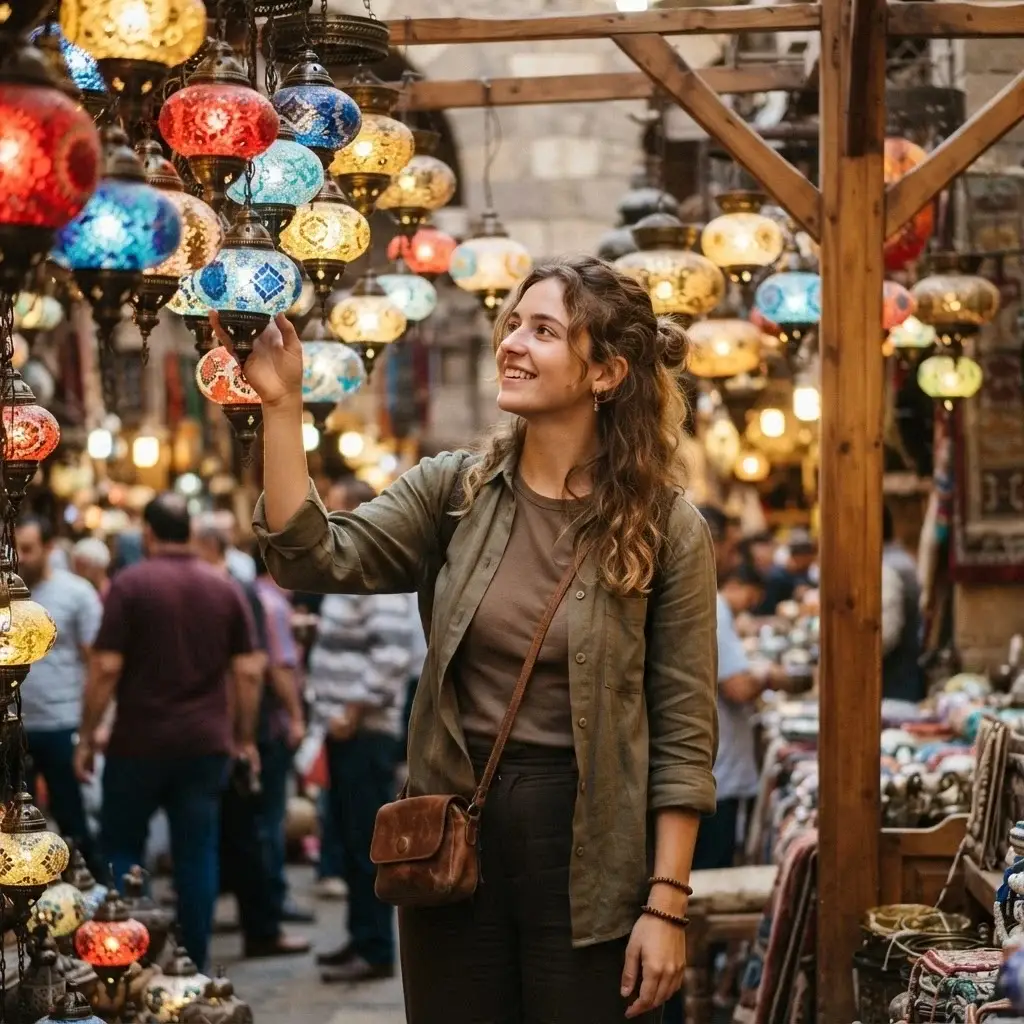
If you want to buy something, you must haggle. Never accept the first price. Offer half of what they ask, and slowly work your way to a middle ground. Keep it friendly. It is a game, not an argument.
What to eat and drink: Find El Fishawy cafe, the oldest cafe in the market. Sit on a small wooden chair in the alleyway. Order a hot mint tea heavily sweetened with sugar, and watch the people walk by. For dinner, grab a Hawawshi from a street cart or local shop. It is minced meat spiced with onions and pepper, stuffed inside pita bread, and baked in a wood oven until it is crispy and perfect.
Day 3: Egyptian Antiquities & The Nile’s Pulse
You have seen the monuments. Now you need to see the treasures that were found inside them.
Morning: The Museum
For decades, the dusty, pink building in Tahrir Square known as the Egyptian Museum held everything. Right now, Egypt is moving its treasures to the brand-new Grand Egyptian Museum (GEM) near the pyramids. Depending on exactly when you travel, you will either visit the old museum or the new one.
Whichever you visit, prepare to be overwhelmed. You will see solid gold masks, ancient chariots, and everyday items that people used thousands of years ago. I highly recommend hiring an official guide at the museum entrance for just two hours. Without a guide, you are just looking at old rocks. With a guide, those rocks become stories of kings, curses, and daily life. If you want to read up on the current status of the museums and get a great overview of the city’s modern layout before you go, the destination overview on Lonely Planet provides an excellent, up-to-date summary of Cairo’s neighborhoods.
Afternoon: Floating on a Felucca
After the heavy history of the morning, your brain will need a break. Walk down to the banks of the Nile River. Look for the small, traditional wooden sailboats with tall white sails. These are called feluccas.
You can rent a felucca for an hour for a few dollars. You do not need to book this in advance. Just walk up to a captain on the dock and negotiate a price. Gliding on the Nile River as the sun begins to lower is pure magic.
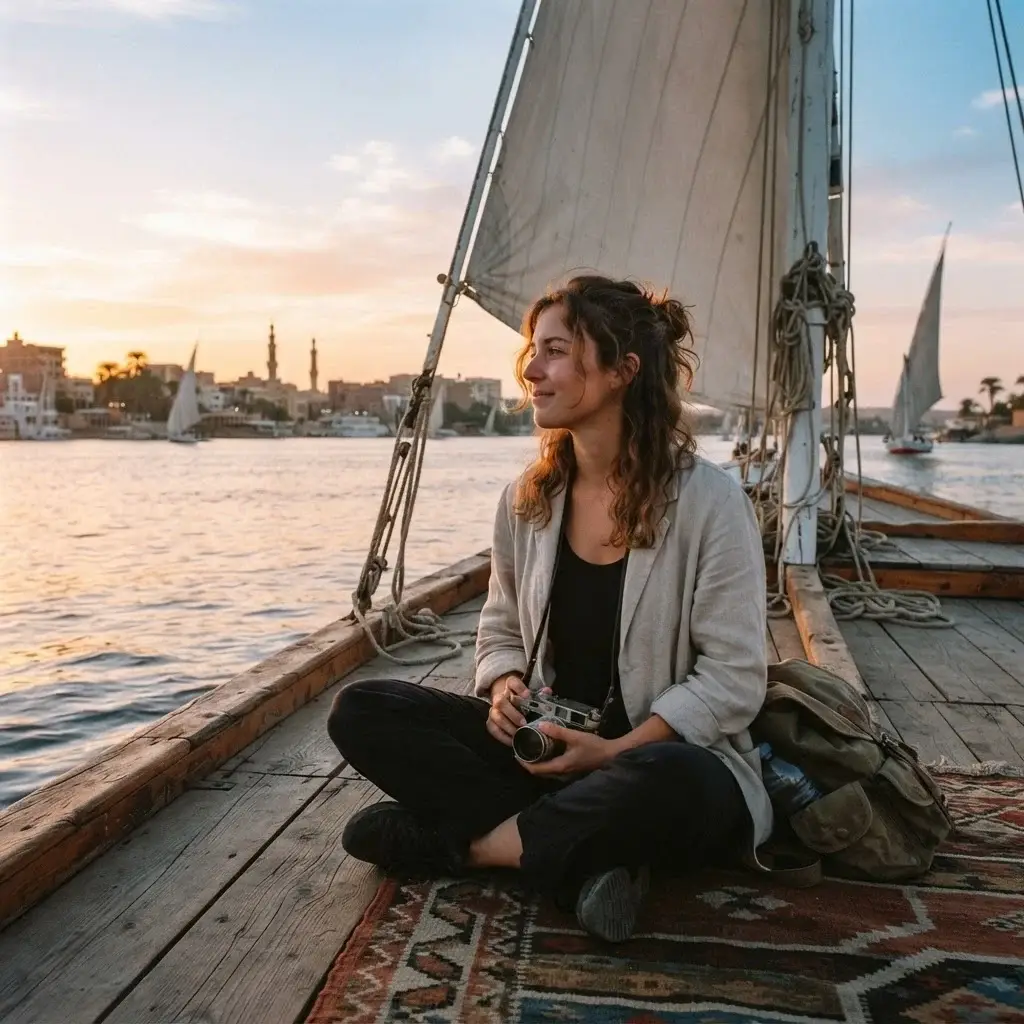
The loud noises of the car horns fade away. You just hear the water against the wood and the wind in the sail. It is the perfect moment to reflect on your trip so far.
Evening: Exploring Zamalek
Have your felucca drop you off on Gezira Island, in the neighborhood of Zamalek. This is the leafy, upscale, expat area of Cairo. It feels completely different from the dusty streets of Khan el-Khalili. The streets here are lined with trees, embassies, art galleries, and modern cafes.
This is a great place to walk around safely at night. For dinner, try Fatteh. It is a dish made of crispy bread, rice, meat, and a strong garlic-vinegar tomato sauce. It is usually served during big celebrations, but you can find it in traditional restaurants here.
Day 4: Coptic Cairo & Finding Your Calm
On your final day, we are going to slow down completely. Cairo can drain your energy, so the last day should be about peaceful discovery.
Morning: Coptic Cairo
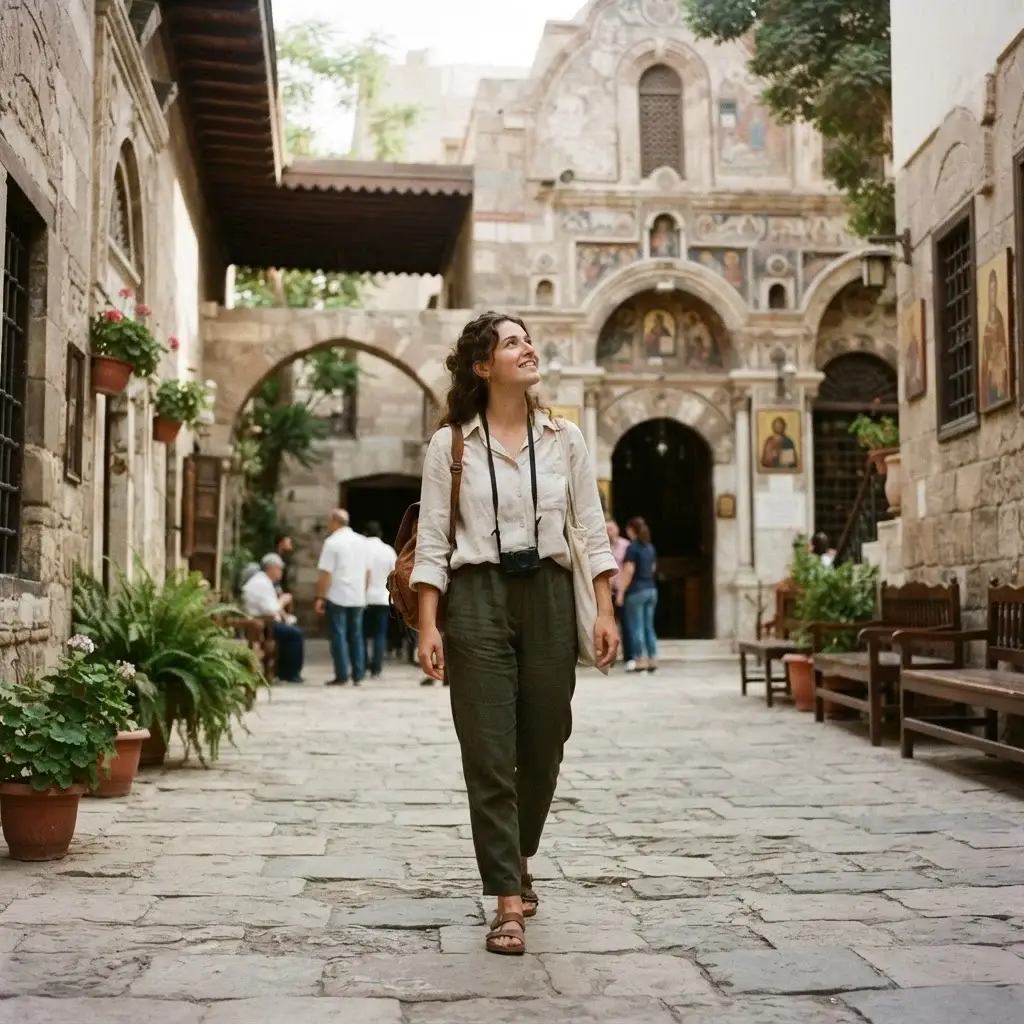
Take the metro (which is incredibly cheap, clean, and has women-only cars) to the Mar Girgis station. You will step out into Coptic Cairo, the ancient Christian heart of the city.
The energy here is totally different. The streets are narrow, quiet, and mostly pedestrian-only. Walk down the stone steps to the Hanging Church. It is called this because it was built on top of an ancient Roman water gate. The wooden ceiling inside is shaped like the inside of Noah’s Ark.
Next, walk a few minutes to the Ben Ezra Synagogue, a beautiful testament to the Jewish history of the city, and the Church of St. Sergius and Bacchus, where it is said the Holy Family hid when they fled to Egypt. The smell of incense in the air and the quiet courtyards make this my favorite place to just sit and breathe.
Afternoon: Al-Azhar Park
For your final afternoon, take a taxi to Al-Azhar Park. Cairo does not have many green spaces, so this park is a treasure. It was built on top of an old city dump and transformed into a stunning, rolling green garden with fountains and views of the Citadel.
Local families come here to picnic, kids run on the grass, and couples walk along the paths. It is the perfect place to watch the sun go down over the city. You will hear the call to prayer echo from thousands of mosques all at the exact same time. It is a sound that will vibrate in your chest.
Because medical emergencies or sudden trip cancellations can happen anywhere—especially when you are eating adventurous foods or navigating intense city traffic—I always make sure I am covered. I rely on the safety guides and travel insurance from World Nomads to give me peace of mind when I am far from home. Knowing you have a backup plan makes it so much easier to relax and actually enjoy the park.
Final Dinner: Fiteer
Before you pack your bags, you must eat Fiteer. It is often called Egyptian pizza. It is a flaky, buttery, layered pastry that can be stuffed with savory things like cheese, meats, and peppers, or sweet things like honey, cream, and nuts. Find a local bakery that makes it fresh. Watching the bakers spin and stretch the dough in the air is a show all on its own.
Practical Tips for Navigating Cairo Like a Pro
To make this four-day plan work, you need to know how the city actually operates on a street level. Leaving my safe office job to travel taught me that the little logistical details are what make or break a trip.
Getting Around: Use Uber Do not try to hail white taxis on the street. You will have to negotiate the fare in Arabic, the meters are rarely used, and you will likely be overcharged. Uber works perfectly in Cairo. It is cheap, safe, and the route is tracked on your phone. You also do not have to worry about the language barrier when explaining your destination.
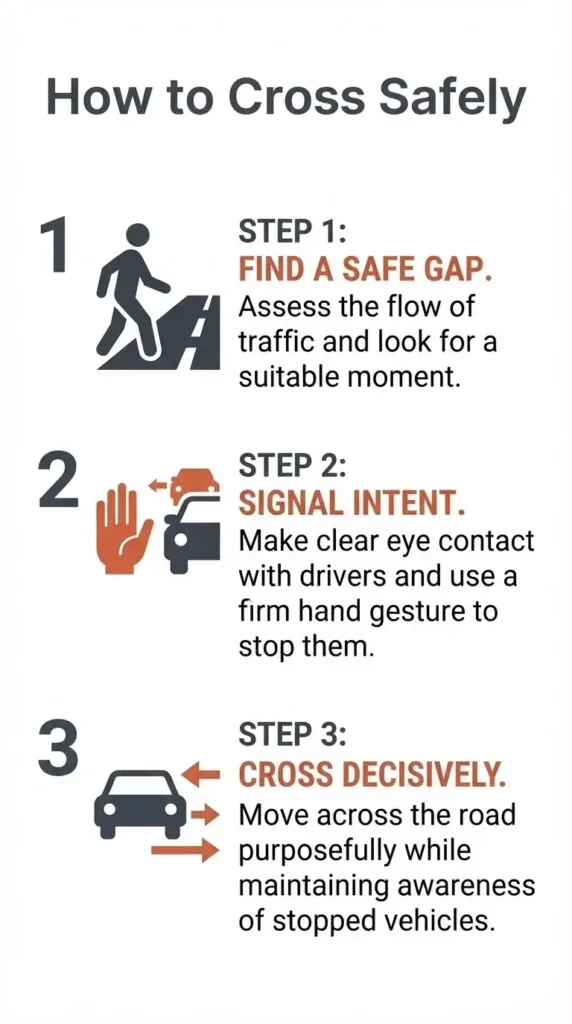
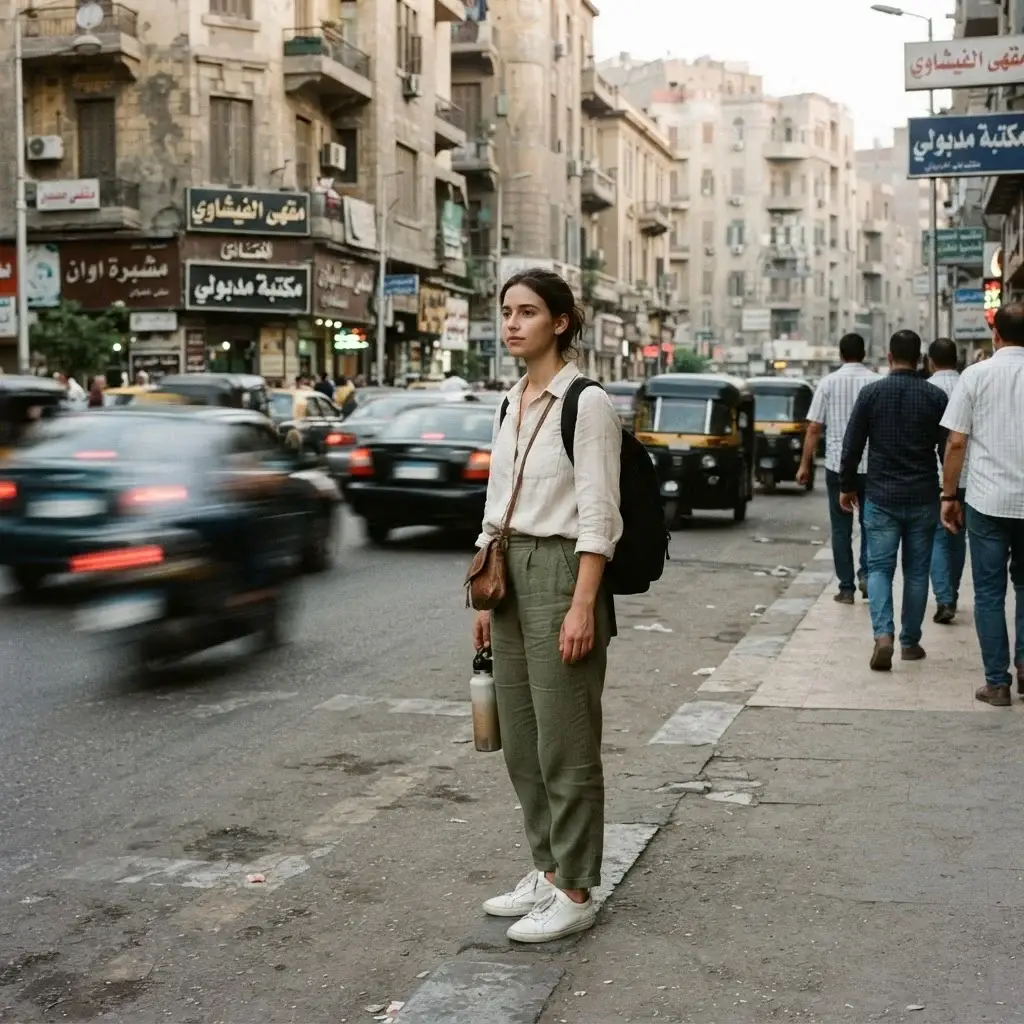
How to Cross the Street This is the most terrifying part of Cairo for new travelers. There are very few traffic lights or crosswalks. The cars do not stop. To cross a busy street, you have to wade into the traffic.
- The trick: Find a local person who is about to cross. Stand right next to them. When they walk, you walk. Keep them between you and the oncoming cars.
- If you have to cross alone, walk at a steady, predictable pace. Do not run. Do not stop suddenly. Hold your hand up toward the cars, make eye contact with the drivers, and keep moving smoothly. The cars will flow around you like water. It takes incredible courage the first time, but by day four, you will be doing it like a local.
Cash is King While large hotels and nice restaurants accept credit cards, Cairo runs on cash. You need small bills (Egyptian Pounds) for tipping, buying street food, paying for public toilets, and haggling in the markets. Break your large bills at your hotel front desk whenever you can. Getting a vendor to give you change for a large bill is nearly impossible.
Tipping (Baksheesh) In Egypt, a small tip is expected for almost every service. If someone hands you toilet paper in the restroom, tip them. If a guard points out a good spot for a photo, tip them. Keep small coins and small bills in a separate pocket so you can hand them out quickly without pulling out your whole wallet.
You Are Ready for This
Cairo is not a beginner-level city, but it is deeply rewarding if you face it with an open mind. When I left my corporate career to travel, I was terrified of making mistakes. I made plenty of them in Egypt. I got lost, I got overcharged for a taxi once, and I definitely got an upset stomach. But none of that ruined the trip. Those challenges just proved to me that I was capable of handling the unexpected.
The best way to explore Cairo in 4 days is to accept the chaos. Do not try to control the city. Let it be loud, let it be messy, and let it surprise you. Eat the street food, talk to the vendors, stand in awe of the massive ancient stones, and trust yourself.
You have the plan. You know what to expect. Now, all you have to do is book the ticket and take that first step. The world is waiting to teach you something amazing.