
Years ago, I sat in a gray office cubicle under buzzing lights, staring at a spreadsheet and daydreaming about the ocean. I was trapped in a corporate grind that drained all my energy. My biggest escape was planning trips I swore I would take “someday.”
Eventually, I stopped waiting for someday. I quit my job, worked flexible jobs like waitressing to save money, and built a life where travel was my reality.
One of the most life-changing places I have ever visited is Cape Town, South Africa. It is a city where raw, wild nature crashes right into city streets. Huge mountains drop off into deep blue oceans. The food is incredible, the history is deep, and the wildlife is right on your doorstep.
But planning a trip here can feel overwhelming. The city is very spread out. There are mountains to climb, coastlines to drive, and historical sites you cannot miss. If you are not careful, you will spend your whole trip exhausted in the back of a taxi.
When I worked as a sightseeing guide in New York City, I watched tourists ruin their vacations every single day. They tried to cram twenty things into one afternoon. They ran from spot to spot. By 4:00 PM, they were angry, tired, and not having fun. I do not want you to make that mistake.
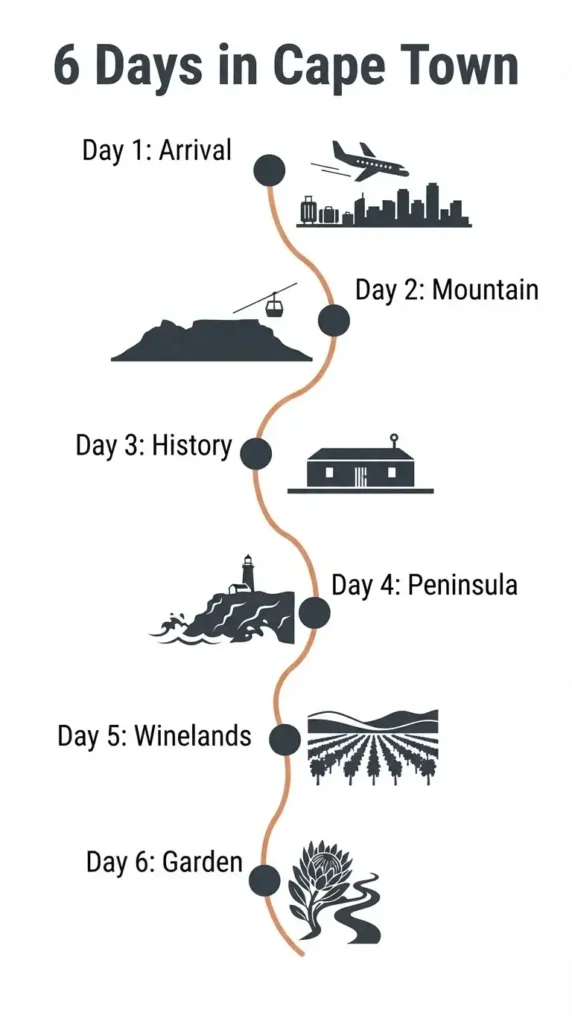
If you want to experience the magic of this city, you need a smart plan. You need to group things together geographically. That is why I built this perfect, slow-paced itinerary for Cape Town in 6 days. It covers all the amazing highlights, but it leaves you plenty of room to breathe, sip a coffee, and actually enjoy where you are.
Let’s get into exactly how to spend your time, how to stay safe, and what to eat every step of the way.
Before You Go: Cape Town Logistics and Safety
Before we look at the daily schedule, we need to talk about logistics. Getting around and staying safe are the top two worries I hear from solo travelers and first-time visitors.
Cape Town is beautiful, but it is a major city with real inequality and crime. You cannot walk around with your guard down, but you also do not need to be terrified. You just need to be smart.
How to Get Around
Do not try to use the local trains or shared minibus taxis. They are very confusing for tourists and not always safe.
Your best friend in Cape Town is Uber. It is incredibly cheap, fast, and safe. You track the driver, the app tracks your route, and you do not have to handle cash. I used Uber to go almost everywhere in the city.
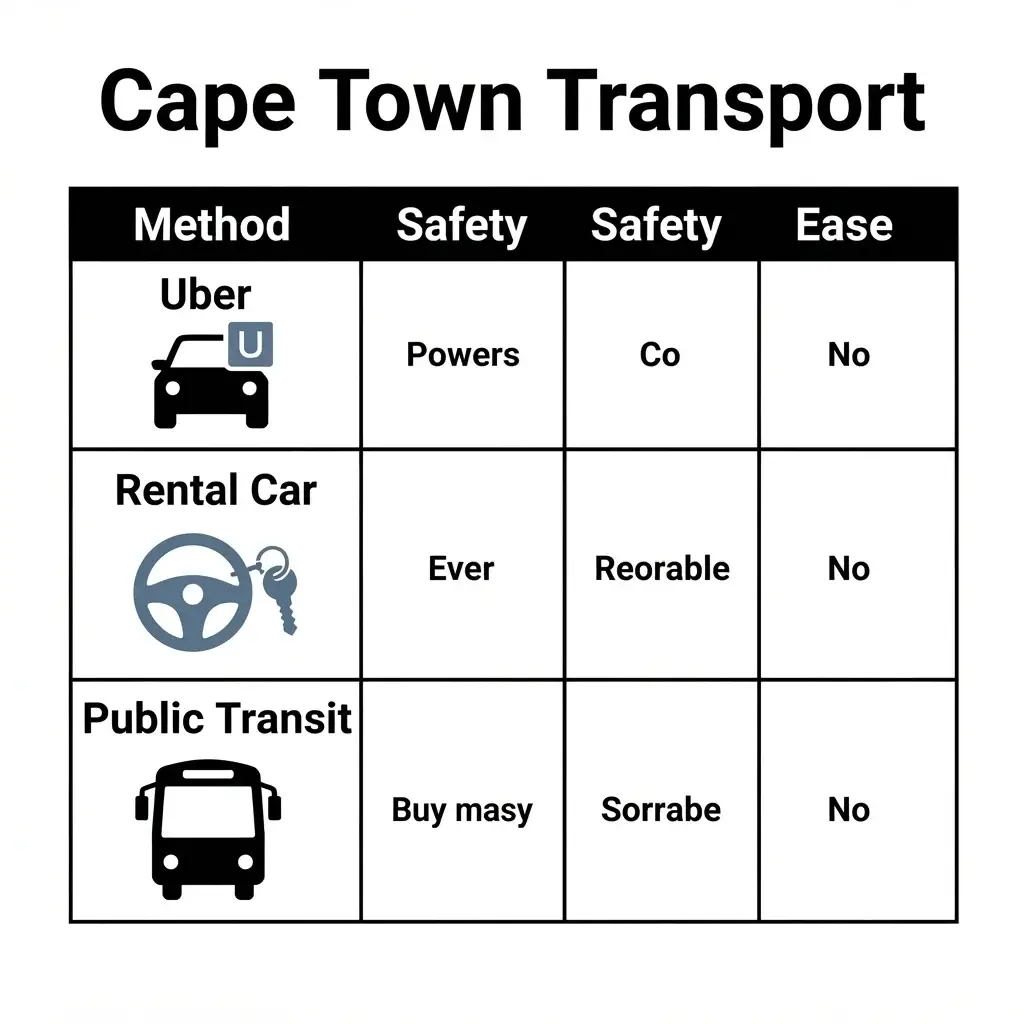
For longer day trips, you can rent a car. Driving is on the left side of the road. If the thought of driving on the left scares you, do not worry. You can book private drivers or small group tours for those days.
Staying Safe as a Solo Traveler
I travel alone a lot, and my golden rule in Cape Town is simple: do not walk around at night.
During the day, in busy tourist areas, you will be fine. Just keep your phone in your pocket, not in your hand. Do not wear flashy jewelry. When the sun goes down, even if your restaurant is just three blocks away, call an Uber. It costs just a few dollars and gives you total peace of mind.
It is also smart to look at the official travel safety updates and alerts on the US Department of State Travel page before you pack your bags, so you know exactly what the current advice is for tourists. I always check this before I fly anywhere new.
What to Pack
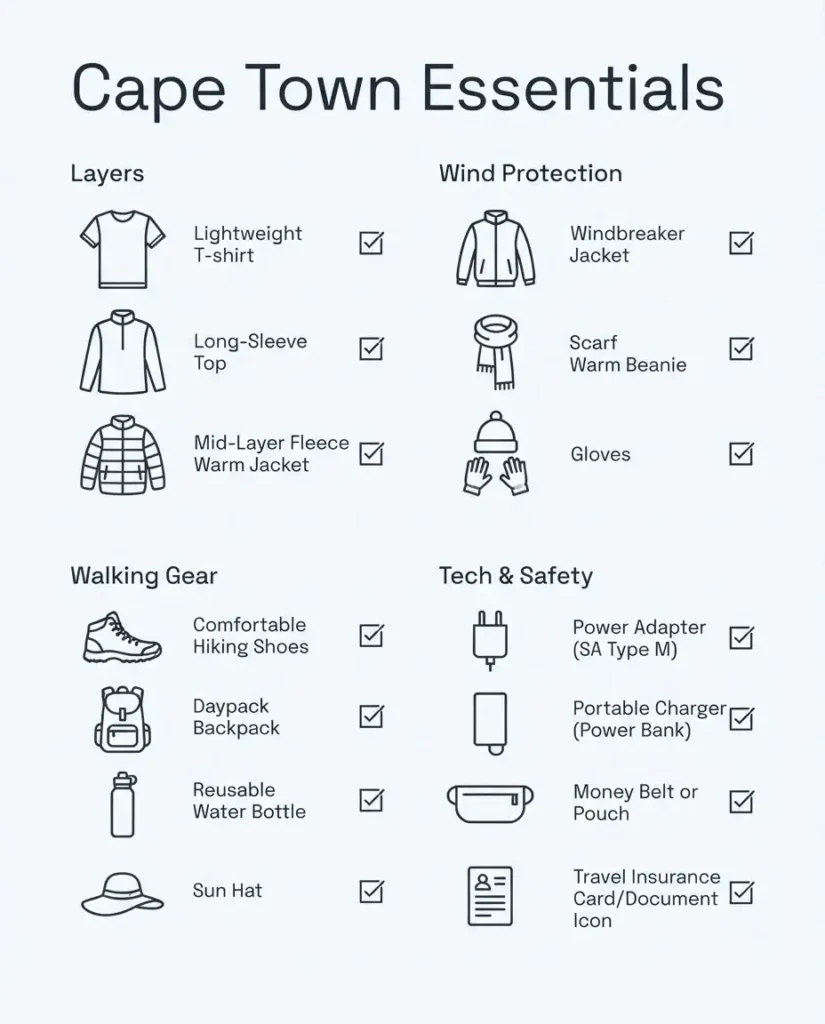
The weather here changes fast. They call it the “Cape Doctor” when the strong winds blow in. You can have bright sun at 10:00 AM and a cold, windy rainstorm by 2:00 PM. Always pack layers. Bring a light windbreaker jacket, good walking shoes, and strong sunscreen.
Now, let’s get into the day-by-day plan.
Day 1: Arrive and Explore the City Bowl
Your first day is all about getting your feet on the ground. Do not plan anything too heavy. You might be jet-lagged, so we are going to keep it easy, colorful, and right in the center of town.
Morning: Settle In and Visit the V&A Waterfront
When you arrive at the airport, grab an Uber to your hotel. I highly recommend staying in areas like Gardens, Tamboerskloof, or the V&A Waterfront. These areas are central, safe, and have lots of cafes.
Start your morning at the Victoria & Alfred (V&A) Waterfront. Yes, it is a tourist hub, but it is also a working harbor. You will see huge cargo ships, little fishing boats, and maybe even a few wild seals sleeping on the docks.
Walk around, get a coffee, and look up at Table Mountain. The view of the mountain from the water is incredible. This is also a great place to buy a local SIM card if you did not get an eSIM before you left home. Having data on your phone is critical for ordering your rides.
Insider Navigation Tip: The V&A Waterfront is huge. If you get lost, just look for the giant Ferris wheel. That is the center point.
Afternoon: The Bright Colors of Bo-Kaap
After lunch, take a short ride over to Bo-Kaap. This is the historic Cape Malay neighborhood, famous for its brightly colored houses and cobblestone streets.
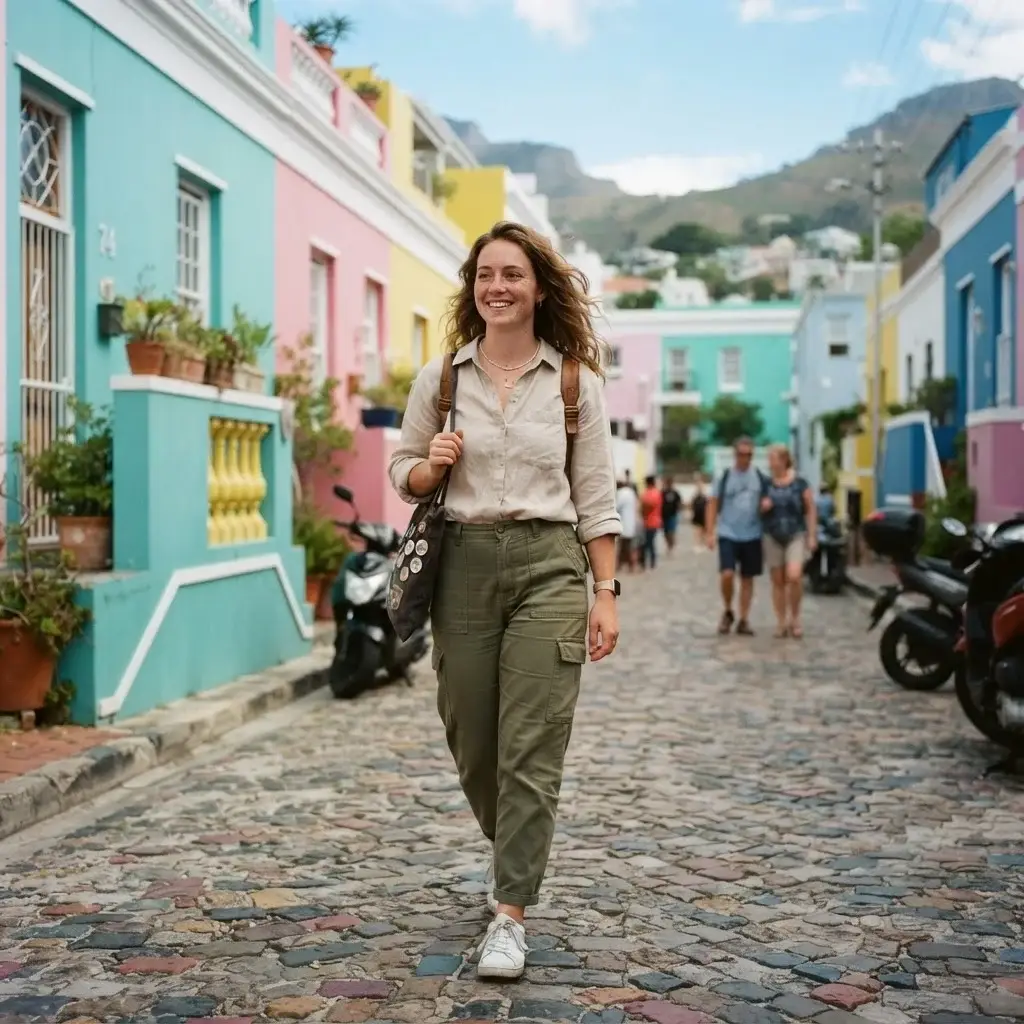
The history here is deep. Many of the people who live here are descendants of enslaved people brought from Malaysia and Indonesia by the Dutch. The houses were originally painted white. When the people finally won their freedom, they painted their houses bright colors to celebrate their freedom and individuality.
Walk slowly. Take photos, but remember that these are real people’s homes. Do not block their doors or look in their windows. It is a residential neighborhood, not just a photo background.
What to Eat: You absolutely must eat traditional Cape Malay food here. Find a local spot, like Biesmiellah, and order Bobotie. It is a sweet and savory baked meat dish with curry spices, raisins, and a creamy egg topping. It is served with yellow rice. It is the ultimate South African comfort food.
Evening: Bree Street Dinner
For dinner, head to Bree Street. This is the best food street in the city. If you ever want more background on the amazing food scene here, reading the city overview and restaurant highlights on Lonely Planet can give you great ideas for hidden cafes.
Take a walk down Bree Street (before it gets completely dark) and pick a place that smells good. Get to bed early. Tomorrow is a big day.
Day 2: The Mighty Table Mountain and Coastal Chill
When you build an itinerary for Cape Town in 6 days, you have to stay flexible with Table Mountain. The mountain makes its own weather. If you wake up and the sky is clear, drop everything and go to the mountain immediately.
Often, a thick layer of white clouds rolls over the top of the mountain. Locals call this the “Tablecloth.” If the Tablecloth is down, the cable car stops running because of the wind, and you will not see anything from the top anyway. So, if day two is cloudy, swap it with day three.
Morning: Summiting Table Mountain
There are two ways up: hiking or taking the aerial cableway.
When I was much younger, I used to hike everything. But Table Mountain is no joke. The most popular trail, Platteklip Gorge, is essentially two hours of climbing giant stone stairs straight up. If you are not very fit, it will ruin your legs for the rest of the trip.
There is zero shame in taking the cable car. The floor of the cable car actually rotates 360 degrees as you go up, so everyone gets a perfect view of the city getting smaller and smaller below.
Once you get to the top, it is completely flat—like a table. There are miles of walking paths up there. The air is cool and smells like wild herbs. You can look out over the city on one side, and the endless blue ocean on the other. Take at least two hours to just walk around the top.
Navigation Tip: Buy your cableway tickets online the night before if the weather looks good. The ticket line at the bottom can take an hour. The online ticket line takes five minutes.
If you do decide to hike it, make sure you know what your health coverage covers, which is why reading the adventure activity guides and safety tips on World Nomads Travel Insurance is a smart move before you start climbing rocky trails overseas.
Afternoon: Camps Bay and Clifton Beaches
After you come down from the mountain, you will be hungry and ready to relax. Catch a ride over the hill to Camps Bay.
This is the glamorous side of Cape Town. The beach has bright white sand, and the water is a shocking, clear blue. Behind the beach is the Twelve Apostles mountain range. It looks like a movie set.
Walk along the main road. The beach is beautiful, but a warning: the water is freezing. The ocean here comes straight from Antarctica. You will see people lying on the sand, but very few people actually swimming.
If you want a quieter beach, walk down the coastal path to the Clifton Beaches. They are numbered 1 through 4. Clifton 4th is usually the busiest, but they are all protected from the wind by giant boulders.
What to Eat: You are by the sea, so it is time for seafood. Find a spot along the Camps Bay strip and order fish and chips. South African fish and chips usually use hake, a white, flaky fish that is delicious. Get a cold drink, sit on the patio, and watch the ocean.
Evening: A Legendary Sunset
Do not leave Camps Bay until the sun goes down. The sunsets here are famous. The sky turns crazy shades of pink, purple, and orange. Watch it from the beach or from a rooftop bar. Then, grab your ride back to your hotel.
Day 3: History, Heartbreak, and Hope
You cannot visit South Africa without understanding its past. The history of Apartheid—a brutal system of forced racial segregation—is recent. It only officially ended in 1994. Today is about learning, listening, and respecting the struggle of the people who fought for freedom.
This day is heavy, but it is deeply important. Travel is not just about pretty views. It is about understanding the world.
Morning: Robben Island
Robben Island is the prison where Nelson Mandela and many other political prisoners were locked away for decades.
You take a ferry from the V&A Waterfront to the island. The boat ride takes about 45 minutes. When you arrive, you will take a bus tour of the island, and then walk through the prison block itself.
The most powerful part of this tour is the guides. The prison tours are led by former political prisoners. Hearing a man stand in a tiny, cold concrete cell and tell you exactly what he survived in that very room will change you. You will see Nelson Mandela’s cell, where he spent 18 years.
Because of its massive historical importance to the world, you can read the official historical designation details on the UNESCO World Heritage page, but seeing it with your own eyes is something else entirely.
Insider Tip: Book your Robben Island tickets weeks in advance. It sells out very quickly. Also, take motion sickness pills if you get seasick. The water between the city and the island can be very rough.
Afternoon: District Six Museum
When you get back to the mainland, grab a quick lunch and head to the District Six Museum.
District Six was once a vibrant, diverse neighborhood in the center of Cape Town. People of all races and religions lived together there. But during Apartheid, the government declared it a “white only” area. They sent bulldozers in, destroyed the homes, and forced over 60,000 people to move to barren camps far outside the city.
The museum is built inside an old church. It is not full of fancy technology. It is full of memories. You will see old street signs, family photographs, and handwritten notes from the people who lost their homes. It is a beautiful, heartbreaking tribute to a community that was torn apart.
What to Eat: After a heavy day of history, you need comfort food. Go find “Bunny Chow.” It is a famous South African street food. It has nothing to do with rabbits. It is a half-loaf of fresh, soft white bread. The inside is hollowed out and filled to the top with rich, spicy meat or bean curry. You eat it with your hands, tearing off pieces of the bread to dip in the curry. It is messy, cheap, and amazing.
Evening: Quiet Reflection
Take a quiet evening. When I travel solo and have an emotional day like this, I like to just grab takeout, go back to my room, and write in my journal. Give yourself time to process what you learned.
Day 4: The Wild Cape Peninsula Drive
Today is adventure day. We are leaving the city and heading south, all the way to the tip of the Cape Peninsula. This is one of the most beautiful coastal drives on the planet.
This is the one day I recommend renting a car if you feel confident. If not, book a full-day Peninsula group tour.
Morning: Chapman’s Peak Drive
Start early, right after breakfast. You want to drive south toward Hout Bay, and then get on Chapman’s Peak Drive.
This is a toll road carved right into the side of a massive cliff. The rock wall goes straight up on your left, and the ocean crashes onto the rocks hundreds of feet below on your right. There are dozens of pull-off spots to stop and take photos. Take your time. Drive slowly.
Mid-Day: Cape of Good Hope and Cape Point
Keep driving south until you reach the Cape of Good Hope Nature Reserve. This is a wild, protected park.
You will likely see ostriches walking near the beach, and baboons sitting on the side of the road.
Critical Baboon Warning: Do not feed the baboons. Do not roll your windows down if they are near the car. Do not walk around with food in your hands. They are wild animals, they have huge teeth, and they are not afraid of tourists. They will steal your lunch in one second.
Drive to Cape Point and walk up the steep path to the old lighthouse. The wind up here is intense. You are standing near the very bottom of the African continent, looking out at the ocean where the Atlantic and Indian oceans meet. It makes you feel very small in the best way possible.
Afternoon: The Penguins of Boulders Beach
Start driving back north, but take the other side of the peninsula. Stop in the town of Simon’s Town.
Here, you will find Boulders Beach, home to a massive colony of wild African Penguins. Yes, penguins in Africa! They live right on the beach, digging nests in the sand and swimming in the shallow water.
You pay a small fee to walk on wooden boardwalks that take you right out over the beach. You can watch them waddle, swim, and argue with each other.
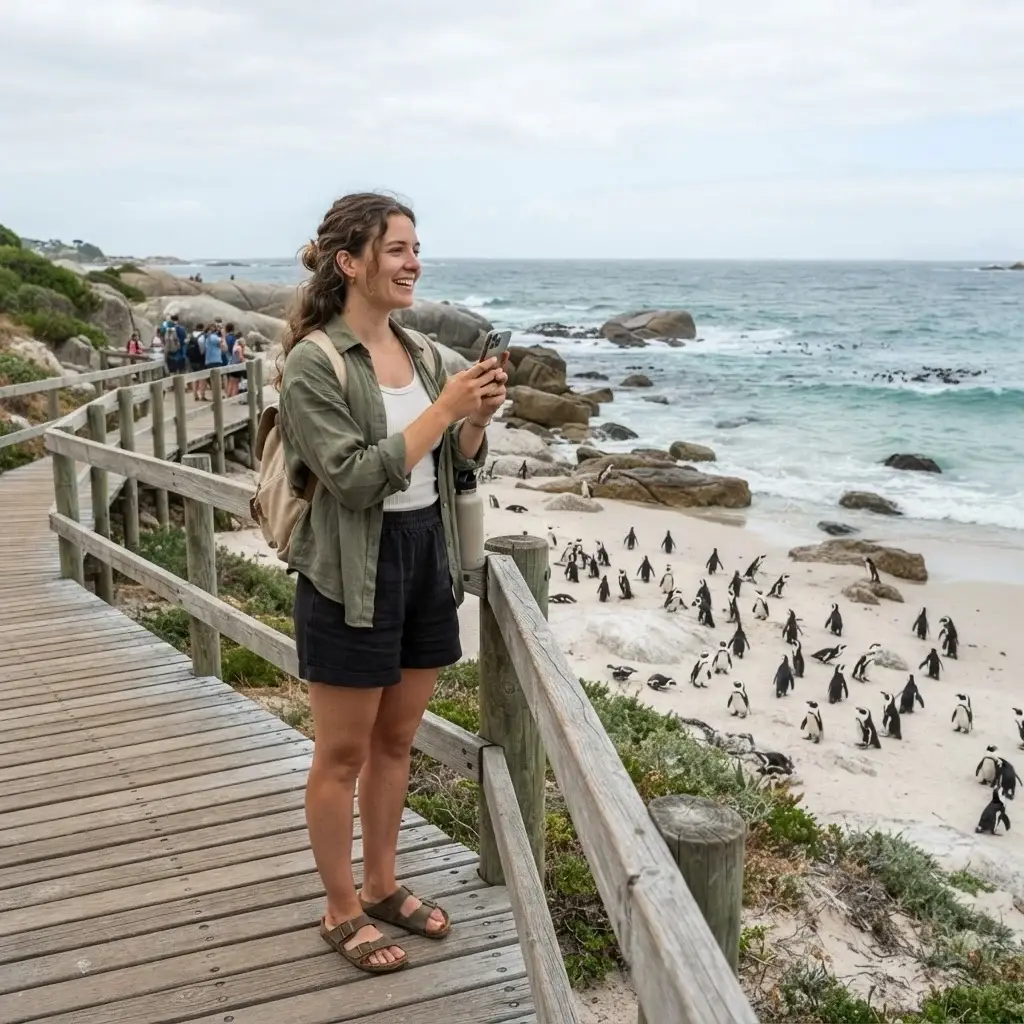
They sound like donkeys making loud braying noises. It is impossible not to smile while watching them.
What to Eat: Keep driving north to the tiny fishing village of Kalk Bay. Stop at Kalky’s. It is an old, simple fish and chips shop right on the working harbor. You sit on plastic chairs, fight off the seagulls, and eat the freshest seafood you will ever have, wrapped in paper.
Evening: Rest
Drive back into the city before it gets dark. You will be tired from the wind and the sun.
Day 5: Savoring the Cape Winelands
South Africa produces some of the best wine in the world. Even if you are not a huge wine drinker, the Winelands are worth visiting just for the scenery and the food.
The two most famous towns are Stellenbosch and Franschhoek. They are about an hour’s drive outside of Cape Town. For this itinerary for Cape Town in 6 days, we are going to focus on Franschhoek.
Morning: The Franschhoek Wine Tram
Do not drive today. You will be drinking wine. Book a private transfer, or use a shuttle service to get out to Franschhoek.
When you get there, buy a ticket for the Franschhoek Wine Tram. This is a brilliant hop-on, hop-off open-air tram and bus system that drives you through the valley. It stops at different historic wine farms.
The valley is surrounded by huge, jagged mountains. The vineyards stretch out in perfect green lines. It is so peaceful.
When I taught English in Thailand, I learned the value of “slow travel.” This day is all about slow travel. Do not try to visit six different farms. Pick three. Sit on the grass, order a tasting flight, and look at the mountains.
Afternoon: Wine and Biltong
At the wine farms, you will get to taste Chenin Blanc and Pinotage, which is South Africa’s signature red wine.
What to Eat: While you are drinking, you must order a platter of Biltong and Droëwors. This is traditional South African dried meat. It is similar to beef jerky, but much better. It is air-dried, seasoned with coriander and vinegar, and sliced thick. It pairs perfectly with a glass of red wine.
Most of the wine farms also have world-class restaurants. Instead of a quick lunch, book a table at one of the farms and have a long, two-hour lunch under the oak trees.
Evening: Back to the City
Take your shuttle back to Cape Town in the late afternoon. You will probably want to just have a light dinner near your hotel and sleep well.
Day 6: Kirstenbosch Gardens and A Slow Farewell
It is your last day. Most travel guides will tell you to run around and buy souvenirs today. I disagree. When I was a sightseeing guide, the last day was always the most stressful for people. Let’s do the opposite. Let’s finish your trip surrounded by nature.
Morning: Kirstenbosch Botanical Gardens
Grab an Uber to Kirstenbosch National Botanical Garden. It is located right on the eastern slopes of Table Mountain.
This is not a normal garden. It is considered one of the greatest botanical gardens in the world. It is dedicated entirely to indigenous South African plants. If you want to know why this specific plant life is protected on a global level, check the environmental facts on the UNESCO Cape Floral Region page to understand just how rare these flowers are.
Walk the famous Tree Canopy Walkway. It is a curved wooden bridge that takes you high up into the tops of the trees.

It is nicknamed the “Boomslang” (which means tree snake) because of how it winds through the branches.
Find a quiet patch of grass, lay down, and just look up at the mountain above you. Breathe the clean air. Think about everything you have seen over the last week.
Afternoon: Woodstock Street Art (or Neighbourgoods Market)
For your final afternoon, head over to the Woodstock neighborhood. This used to be an industrial area, but it has turned into a hub for artists and creatives.
Walk around and look at the incredible street art and massive murals painted on the sides of the old factories.
Navigation Tip: If your day six happens to fall on a Saturday, you must go to the Neighbourgoods Market at the Old Biscuit Mill in Woodstock. It is a massive outdoor food and craft market.
What to Eat: If you are at the market, eat everything. Try the local artisanal cheeses, the fresh flatbreads, and the craft ginger beer. It is the perfect place to buy a few small, handmade gifts to take home.
Evening: One Last Ocean View
For your final evening, head to the Sea Point Promenade. This is a long, flat, paved walkway that runs right along the ocean. It is full of locals walking their dogs, riding bikes, and pushing strollers.
Find a bench. Watch the waves crash against the sea wall. Watch the sun drop below the horizon one last time.
You did it. You explored a complex, beautiful, wild city by yourself. You did not rush. You learned the history, you ate the food, and you stood on top of the mountains. You built your confidence, and you proved to yourself that you can navigate the world on your own terms.
Have a safe flight home. Your next adventure is already waiting for you.