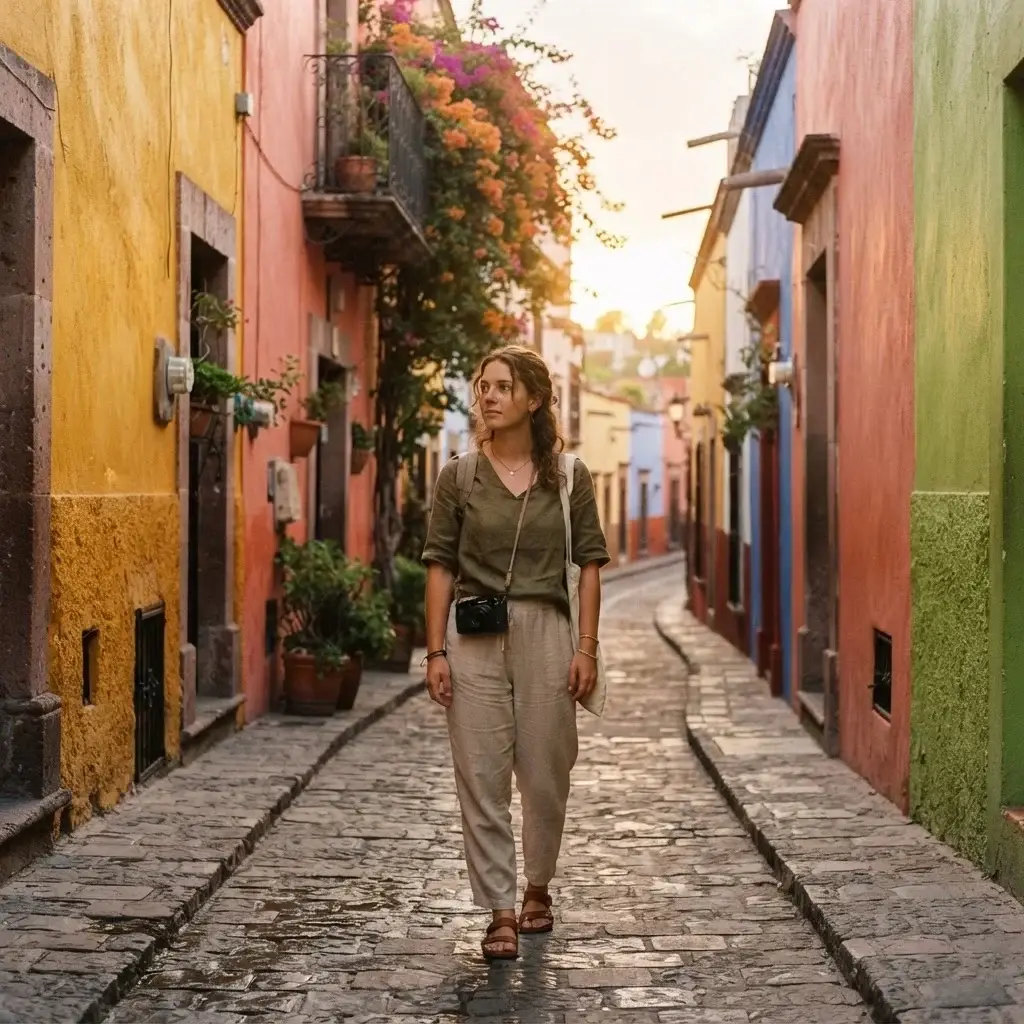
There is a moment that happens in certain places that no travel photo can fully prepare you for. You turn a corner, and the street in front of you is painted in a shade so bold, so unapologetically alive, that you stop walking. Not because you need to take a photo. Because your brain needs a second to catch up.
I had that feeling when I was backpacking solo across Europe, standing in front of a row of tilting painted houses, wondering why more people weren’t just standing there looking. Travel photography has a funny way of flattening that experience. Everything looks pretty online. Everything looks Instagrammable. The real question isn’t which towns are colorful. It’s which towns are worth it, and why.
That’s what this guide is about. Not a photo gallery disguised as a travel article. Not a list of places you’ve already seen on Pinterest. This is a genuine deep-dive into the most colorful towns across the Americas, from Mexico to Brazil to Canada, with honest information about what makes each place more than a backdrop.
Some of these are UNESCO World Heritage Sites. Some are so small you could walk the whole town before lunch. A couple might surprise you. All of them have a story that goes deeper than the paint on the walls.
Why Are So Many Towns in the Americas So Colorful?
Before we get into the list, it’s worth asking this question, because the answer makes each destination richer.
In many cases, the color has practical, historical roots. In Willemstad, Curacao, white lime exteriors were officially banned in 1817, reportedly because the glare was causing headaches for the governor. That’s how an entire architectural tradition was born. In Cartagena, Colombia, the vivid hues of the walled city blend African, Spanish, and Caribbean aesthetic traditions layered over centuries of trade and resistance. In Valparaiso, Chile, color became a form of identity for a working port city that didn’t have the money of Santiago but had no shortage of spirit.
In other towns, like Ouro Preto in Brazil, the colors are a byproduct of colonial wealth, the baroque exuberance of a city built on silver and gold. The paint wasn’t decoration. It was a declaration.
Understanding that shifts how you walk through these places. You stop seeing walls and start seeing stories.
Guanajuato, Mexico: The Town That Swallowed Its Own Streets
If there is one town on this list that consistently makes people say, “I can’t believe this is real,” it is Guanajuato. This small city in central Mexico sits in a narrow winding valley at 2,084 meters, and because the terrain never allowed for a traditional grid layout, it grew in the only directions it could: up the hillsides and underground.
Yes, underground. Guanajuato has a network of subterranean streets, former riverbeds and tunnels that now function as actual roads and pedestrian pathways beneath the city. You walk through them and emerge into a cobblestone callejon (alleyway) lined with houses painted in saffron, coral, sky blue, lime green, and terracotta. Every corner looks like someone turned the saturation dial to maximum and forgot to turn it back.
The color here is architectural exuberance born from silver money. Guanajuato was once the world’s largest silver-producing center, and the wealth showed. The Teatro Juarez, the Mercado Hidalgo, and the church of La Valenciana (completed in 1788 and considered a masterpiece of Mexican Baroque architecture) are all products of that era. The city’s historic center was recognized on the UNESCO World Heritage List in 1988 alongside its adjacent mines, a designation that reflects just how remarkable this cultural landscape really is.
From a solo travel perspective, Guanajuato is one of the more manageable and welcoming cities in Mexico. It’s a university town, which means it has a young, internationally comfortable energy. Getting lost on purpose is genuinely the best strategy. Skip the map for an hour. Follow whatever callejon looks most interesting. You will find something worth finding.
What to eat: Don’t leave without trying enchiladas mineras (Guanajuato’s regional variation, served with a spicy chile sauce and topped with carrots and potatoes) and gorditas de migajas. The Mercado Hidalgo on Juarez Avenue has stalls serving both.
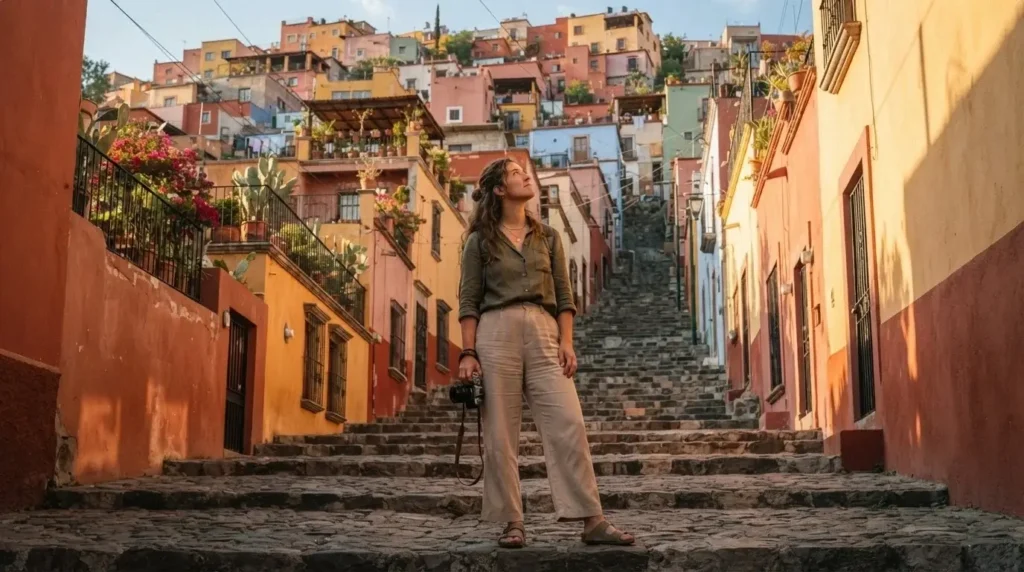
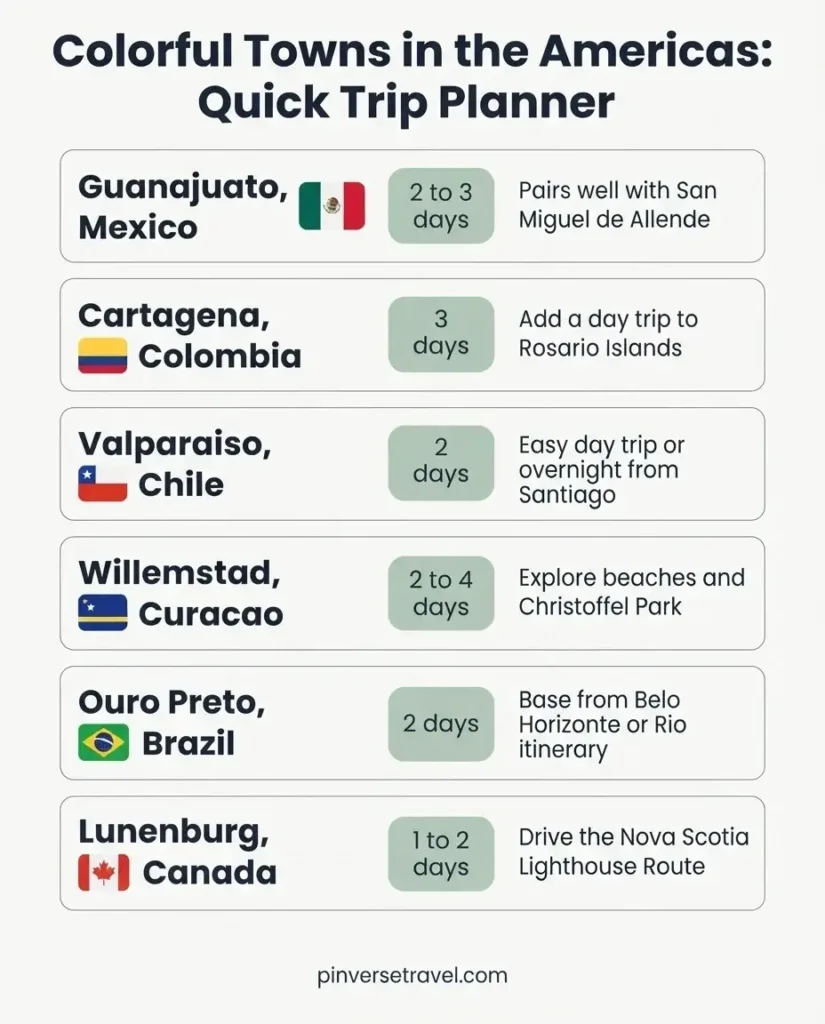
How long to spend: Two full days minimum. Three if you want to climb up to the Pipila monument for the city view and take a day trip to the nearby town of San Miguel de Allende.
Cartagena, Colombia: The Walled City That Earns Every Photo
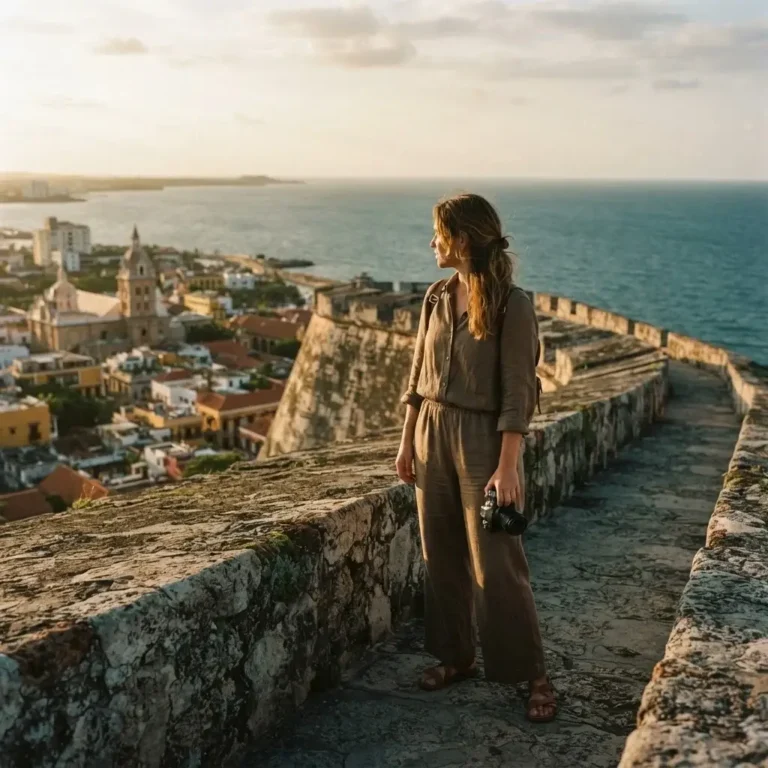
Cartagena is one of those cities that travel blogs have photographed to exhaustion, and yet it still manages to exceed expectations. The old walled city, known as the Ciudad Amurallada, is a living colonial fortress on Colombia’s Caribbean coast, ringed by thick stone ramparts and packed with streets of painted houses draped in bougainvillea. The colors here lean rich and warm: ochre, violet, rose pink, deep blue, burnt orange.
But here is what gets left out of most listicles: Cartagena has layers. The walled city is the postcard. The Getsemani neighborhood, just outside the walls, is where real life happens. Getsemani has undergone a transformation over the past decade from a rough district into one of South America’s most vibrant street art and mural neighborhoods, while retaining an authentic local character that the old city sometimes struggles to hold onto. Walking from the walled city into Getsemani is a five-minute stroll and a completely different atmosphere.
Colombia’s official tourism site describes Cartagena as a city offering something for all kinds of travelers, and for once, that’s not just marketing copy. The food scene alone justifies the trip. Look for bandeja paisa (a loaded plate of beans, rice, chicharron, egg, and plantain), arepas de choclo from street vendors, and ceviche from the casual spots near the clock tower. The seafood is Caribbean-fresh.
Safety note: Cartagena is genuinely safe for solo travelers within the walled city and Bocagrande. As with any major Latin American city, normal street-smart precautions apply: don’t flash expensive gear, stay aware at night, and stick to well-lit streets. It’s also worth checking the U.S. State Department’s Colombia travel advisory before you go, especially if you are planning to travel beyond the tourist areas.
What to eat: Coconut rice and fried fish from the palenqueras (street vendors in traditional dress) near Plaza de Bolivar, and fresh fruit from the market vendors. Costeño food is some of the most distinctive regional cooking in Colombia.
How long to spend: Three days lets you pace it well. One day in the walled city, one day in Getsemani and the nearby Rosario Islands (reachable by a 45-minute boat ride), and one day to breathe.
Valparaiso, Chile: Forty-Two Hills and a City That Refused to Be Ordinary
Valparaiso is unlike any other city in South America, and solo travelers consistently call it one of the most memorable places they’ve ever visited. Built across 42 cerros (hills) that drop straight down to the Pacific Ocean, the city is a cascade of painted tin and wood houses stacked on near-vertical slopes, connected by a series of historic funiculars called ascensores and endless outdoor staircases coated in murals.
The UNESCO World Heritage designation for Valparaiso, awarded in 2003, recognizes the city as an “extraordinary example of industrial-age heritage.” But that formal description doesn’t capture what it actually feels like to be there. Valparaiso feels like a city that built itself by accident, beautifully. Every hillside is different. Cerro Alegre and Cerro Concepcion are the most visited, with the densest concentration of street art, caf??s, and viewpoints. They’re worth the crowds. But climb to Cerro Panteón or Cerro Toro and the crowds thin out, the views open up, and you start to feel the city as it actually lives.
From what solo travelers consistently report, Valparaiso rewards slow movement more than almost any colorful city in the Americas. This is not a “tick the viewpoints and leave” place. The magic is in getting genuinely lost on the hills, finding a neighborhood mirador (lookout) that doesn’t appear on any map, and eating a completo (a Chilean hot dog loaded with avocado, tomato, and mayonnaise) from a stand that has no sign.
What to eat: Beyond the completo, look for empanadas de queso (cheese empanadas) and seafood at the Mercado Puerto. The fish here is extraordinary, pulled from the Pacific and served simply.
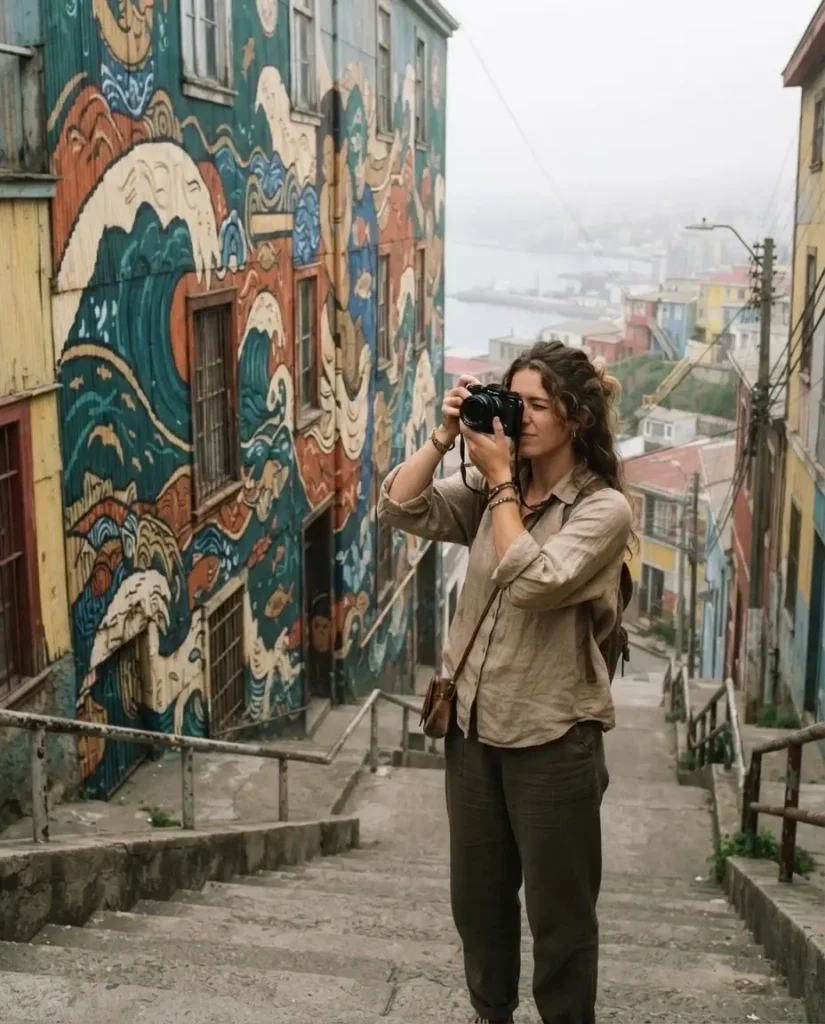
How long to spend: Two days is a good minimum. Valparaiso is only 75 miles from Santiago, so many travelers day-trip from the capital, but you will miss the best of the city if you don’t stay overnight.
Willemstad, Curacao: The Caribbean’s Most Architecturally Surprising Capital
Most people know Curacao for its beaches and its famous blue liqueur. Far fewer know that its capital, Willemstad, is one of the most visually striking cities in the entire Americas, and has been a UNESCO World Heritage Site since 1997.
The colors of Willemstad follow an unusually specific tradition. In 1817, the white lime exteriors that had defined the city were officially banned, and the town began painting its buildings in vivid hues that persist to this day. The UNESCO documentation for the Historic Area of Willemstad notes that the “predominant colours are red, blue, yellow ochre and various shades of green,” a palette derived not from any single cultural tradition but from the overlay of Dutch colonial architecture, Caribbean craft, and African cultural influence that defines Curacao’s identity.
The most photographed spot is the Handelskade, a row of Dutch-gabled townhouses along the Sint Anna Bay waterfront that looks so improbably perfect it registers as a film set until you realize people are actually living and working there. The Queen Emma pontoon bridge, which swings open to let ships pass, connects the Punda and Otrobanda districts and provides the best walking view of those houses.
For solo travelers, Willemstad functions as one of the most walkable and navigable small capitals in the Caribbean. Most of the historic city can be covered on foot in a single day, though the surrounding island of Curacao offers beaches, snorkeling, and a national park if you want to extend your stay.
What to eat: Keshi yena, a dish of stuffed cheese rind filled with spiced meat and raisins that reflects the island’s Dutch, African, and Caribbean layering. Also look for local stoba (a hearty stew) and fresh johnnycakes from street vendors.
How long to spend: Two days for Willemstad itself; three to four if you want to explore the rest of the island.
Ouro Preto, Brazil: A Colonial City Built on Gold and Baroque Ambition
Tucked into the Serra do Espinhaco mountains of Minas Gerais, Ouro Preto is one of South America’s most important colonial towns, and one of its most beautiful. Founded in the late 17th century during Brazil’s gold rush, the town’s full name means “Black Gold,” named after the oxidized iron that tinted the gold found in its hills.
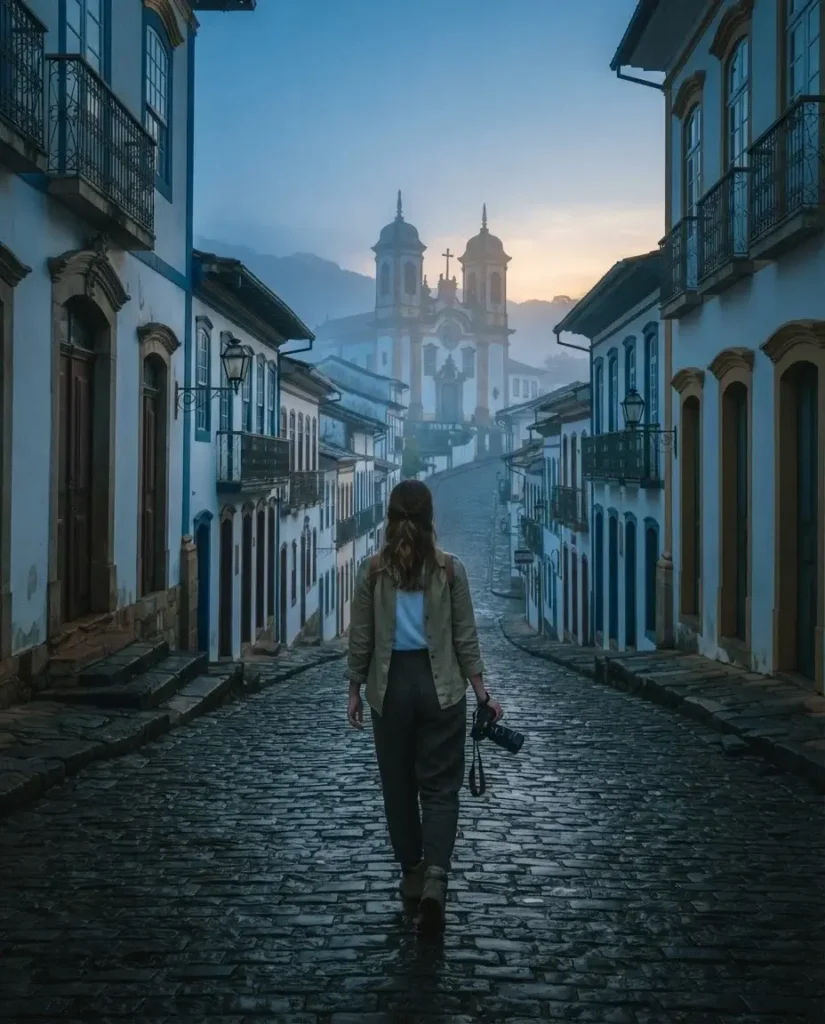
The streets of Ouro Preto roll steeply up and down the hillsides like waves, lined with whitewashed baroque churches and painted colonial houses in soft blues, yellows, and terra cottas. At its peak in the 18th century, this was one of the most populated cities in the Americas, and the architectural ambition from that era is everywhere. The UNESCO designation for the Historic Town of Ouro Preto, awarded in 1980, makes it one of Brazil’s first World Heritage Sites, and one of its most deserving.
What sets Ouro Preto apart from other colonial towns is the sheer density of Baroque churches packed into a small area. There are over a dozen, each with different architectural details and a different story of patronage and faith. The Igreja de Nossa Senhora do Carmo and the Igreja de São Francisco de Assis are considered among the finest examples of colonial Brazilian Baroque anywhere in the world.
From what solo travelers who visit consistently say, the experience of walking Ouro Preto at dawn, before the day-trippers from Belo Horizonte arrive, is something close to walking through a living museum. The cobblestones are uneven and steep (wear proper shoes), the air is cool at altitude, and the silence in the early morning is something you carry with you.
What to eat: Minas Gerais is the food region of Brazil. Try pão de queijo (warm cheese bread, eaten everywhere), tutu de feijão (a thick bean paste with collard greens and pork), and frango ao molho pardo (chicken in a dark gravy sauce). There are small casual restaurants called casas de cozinha mineira throughout the town that serve this food the way it should be.
How long to spend: Ouro Preto is about 100 km from Belo Horizonte by road. Two days is comfortable; one day is possible if you prioritize. The town is small enough to walk completely, but steep enough that your legs will remind you of it the next morning.
Lunenburg, Nova Scotia, Canada: The Colorful Town That Most People Forget Is in North America
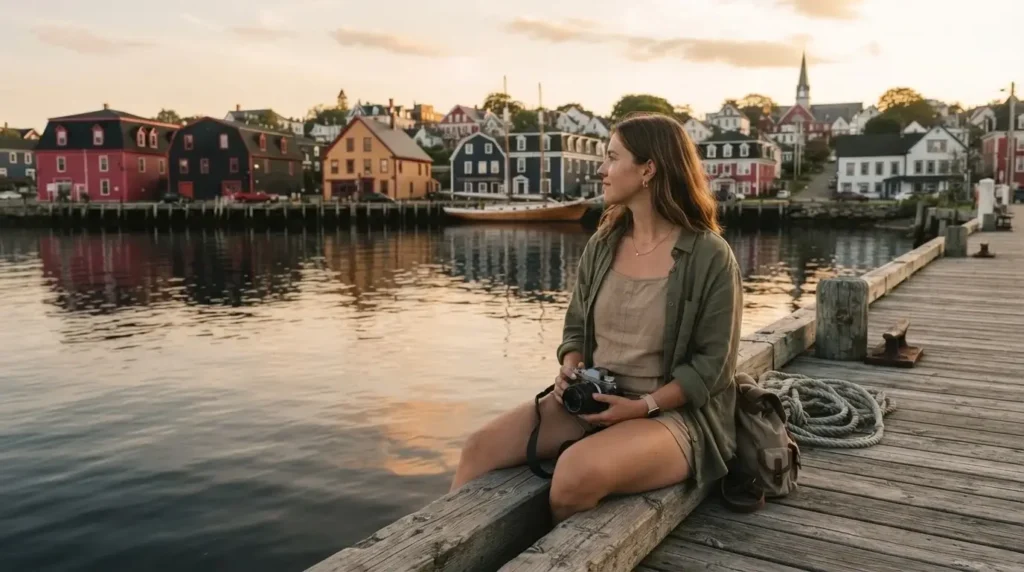
Lunenburg tends to get left off these lists because people don’t naturally think of Canada when they think “colorful town,” and that is exactly why it deserves a place here. The Town of Lunenburg is a UNESCO World Heritage Site, a National Historic District, and has been recognized as the most beautiful small town in Canada by Communities in Bloom. It earns all three.
Established in 1753 as a British colonial settlement, Lunenburg sits on a peninsula along Nova Scotia’s South Shore, and its waterfront is lined with heritage buildings in deep reds, yellows, blues, and blacks, many of them original 18th and 19th century structures that have simply been maintained and repainted over generations. The famous Fisheries Museum of the Atlantic and the harbor where the Bluenose II schooner docks are both central to the experience.
What makes Lunenburg different from the Latin American entries on this list isn’t just geography. It’s the pace. This is one of the few colorful towns in the Americas where you could come without a plan, walk the entire historic area in a single morning, eat the freshest lobster roll of your life for lunch, and spend the afternoon sitting on the waterfront watching wooden boats move in and out of the harbor. It is deeply, unhurriedly beautiful.
For solo travelers, Lunenburg is exceptionally welcoming. It’s small, English-speaking, and has an active community of artists, fishermen, and maritime historians who are genuinely glad to talk with visitors.
What to eat: Lunenburg sausage (a spiced pork sausage that is a local tradition), freshly caught fish and chips from any of the harbor restaurants, and lobster if you are visiting in season (May through June and November through December are peak).
How long to spend: One full day is enough to see the historic town. Two days lets you add a drive along the Lighthouse Route, one of the most scenic coastal roads in eastern Canada.
A Note on Putting These Together
One question that comes up whenever I talk about this kind of list is whether you can combine several of these destinations into a single trip. The honest answer is: some yes, some not naturally. Guanajuato and Cartagena are both in Latin America but require separate flights. Valparaiso pairs naturally with Santiago, Chile as a day or overnight trip. Ouro Preto pairs well with Belo Horizonte or a Rio de Janeiro itinerary. Lunenburg pairs naturally with a broader Nova Scotia road trip.
What they all share is something that goes beyond the colors.
Each of these towns has built its visual identity on something real: colonial history, trade, resistance, wealth, survival. When you know the story behind the paint, you stop just looking and start actually seeing. And that, more than any photo you take, is the thing you bring home.