The first time I understood what folklore really was, I was not in Europe at all. I was sitting on a packed-earth floor in Ghana, in the family home I lived in for a while, listening to an elder tell a story I had clearly heard a hundred times before, except I hadn’t, because it wasn’t mine. Everyone in the room knew the rhythm of it. They knew when to laugh, when to answer back, when to go quiet. I was the only one who didn’t, and instead of feeling left out, I felt let in. That night rewired how I travel. Folklore is not a costume or a photo op. It is a living thing a community carries together, and if you’re patient and respectful, sometimes they’ll let you sit inside it for a while.
That’s what this guide is really about. Not the fairytale-village postcards you’ve already scrolled past a hundred times, but how to find and take part in the real traditions still breathing all over Europe. I’ll show you how to tell the genuine article from the show put on for tourists, where to go, how to behave so you’re welcome, and how to do all of it solo and without a fat budget. If you’ve been quietly wondering whether “authentic” folklore even exists anymore or whether it’s all staged now, stick with me. It absolutely exists. You just have to know where to look and how to show up.
First, Let’s Be Clear About What Folklore Actually Is
Here’s the mistake I made for years, and I think a lot of first-time travelers make it too. I assumed folklore meant old stuff. Costumes in glass cases, dances performed on a stage, legends printed in a guidebook. Dead things, basically, kept behind rope for visitors to admire.
That’s backwards. The most powerful folklore in Europe is alive. It’s a grandmother still singing the song her grandmother taught her. It’s a whole town putting on masks in December because their ancestors did. The proper name for this is “living heritage,” and there’s a genuinely useful framework for understanding it. The people at UNESCO define intangible cultural heritage as the traditions, songs, rituals, and craft skills that communities inherit and keep passing on, and reading through how they explain living heritage completely changed how I choose what to seek out on a trip. Once you start looking for the living version instead of the museum version, a whole different Europe opens up.
So the real question isn’t “where can I see folklore.” It’s “where can I stand near a tradition that’s still being practiced by the people it belongs to.” Those are very different trips.
How to Tell Real Folklore From a Tourist Show
This is the part nobody explains, and it’s the thing you actually came here for. Not everything labeled “folklore” is the real deal. Some of it is a costume dance performed on a loop for cruise-ship crowds, which is fine, but it’s entertainment, not tradition. Here’s how I sort one from the other.
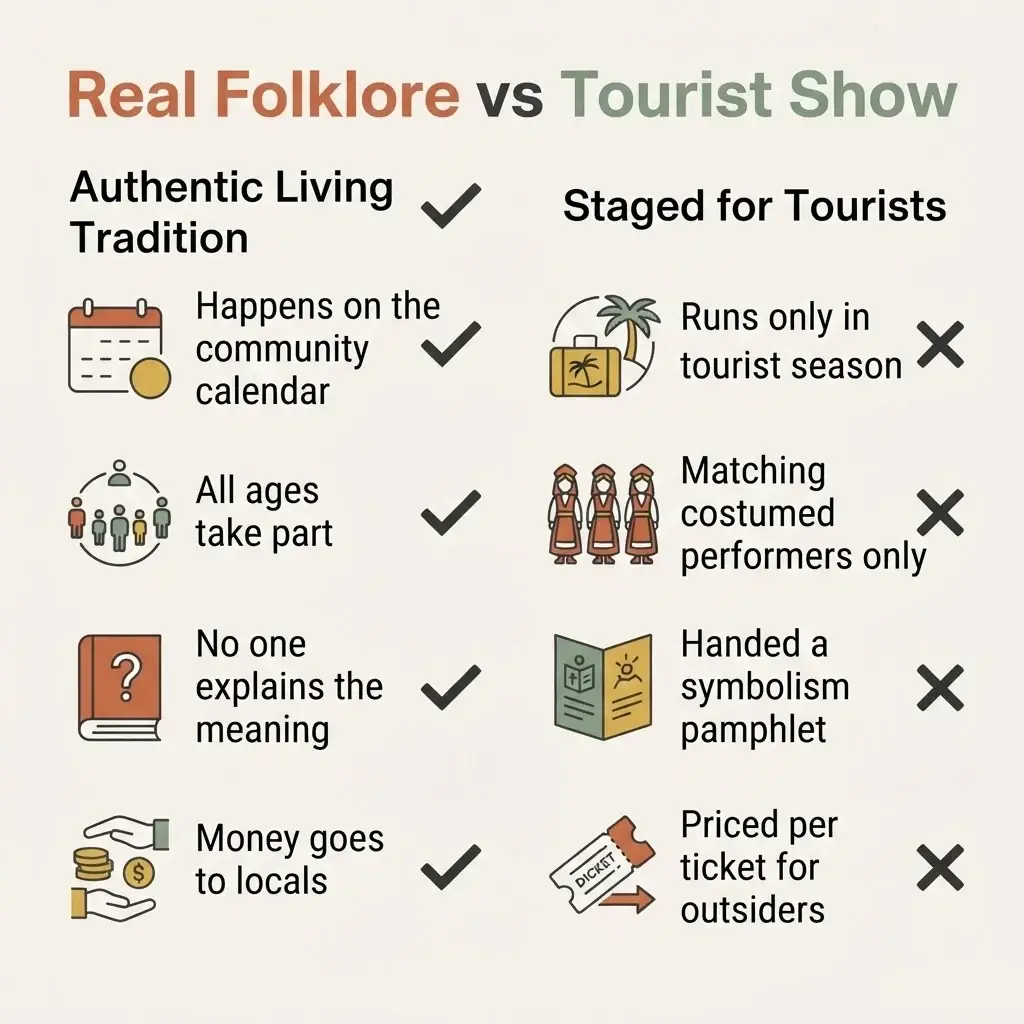
Ask who it’s for. Real folklore happens whether or not you show up. A village festival, a religious procession, a seasonal ritual, these run on the community’s calendar, not the tourist season. If an event only exists during peak travel months and is priced per ticket for outsiders, that’s a hint it was built for you, not for them.
Look at who’s taking part. In a genuine tradition, you’ll see all ages. Kids, teenagers rolling their eyes but showing up anyway, working adults, elders leading. When you only see performers of one age in matching outfits and everyone else is holding a phone, you’re at a show.
Notice whether anyone’s selling you the meaning. Authentic traditions rarely explain themselves. Nobody hands you a pamphlet decoding the symbolism, because the people there already know what it means. A little confusion on your part is actually a good sign.
None of this means shows are bad. A well-done folk performance can be a lovely introduction, especially your first night in a new place. Just know what you’re buying, and don’t mistake the appetizer for the meal.
Start at an Open-Air Folk Museum (Yes, Really)
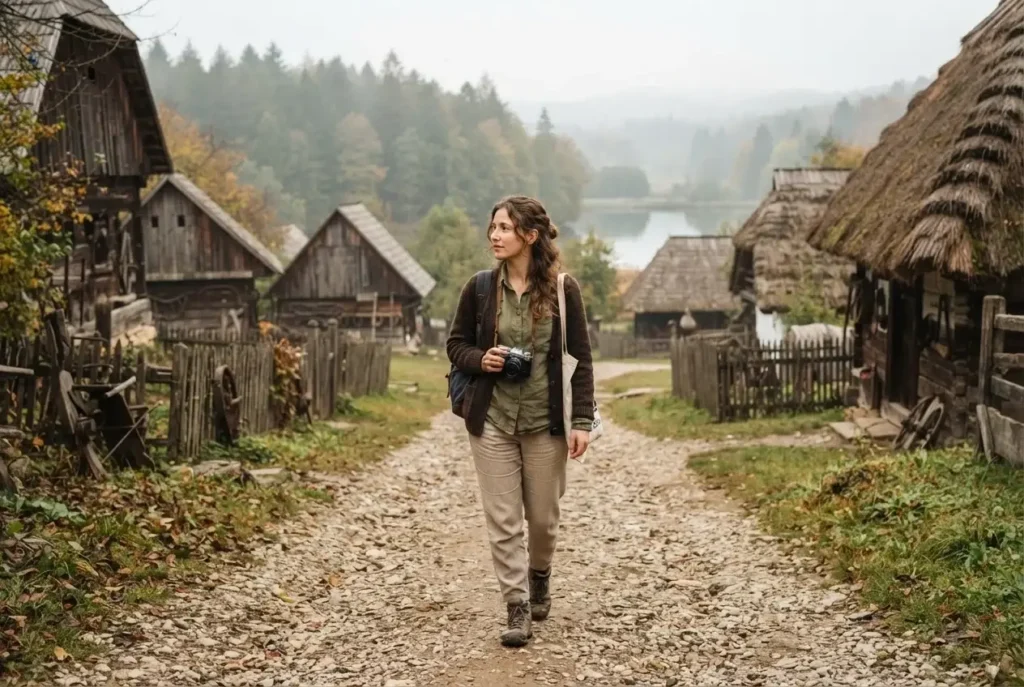
I know I just told you to chase the living version, so hear me out on museums. The open-air folk museum is the single best on-ramp for a nervous first-timer, and I recommend starting here before you throw yourself into a festival.
These aren’t buildings with paintings. They’re whole villages of real historic farmhouses, churches, and workshops, relocated and rebuilt, with people in them actually doing the old crafts, baking, weaving, blacksmithing. The travel writer Rick Steves has argued for years that these open-air folk museums teach a country’s living culture better than almost any other kind of museum, and having wandered a few of them myself, I completely agree. You learn with your hands and your nose, not just your eyes.
The one that started it all is Skansen in Stockholm, founded in 1891, the oldest open-air museum in the world. If you’re plotting a trip, it’s worth knowing that Skansen is open every single day of the year, with the main entrance generally running 10:00 to 18:00, and that it’s completely cashless now, so bring a card. I always tell people to go on a weekday morning if they can, before the school groups arrive, so you can actually talk to the craftspeople.
If you’re headed to Eastern Europe instead, the ASTRA Museum in Sibiu, Romania is staggering. It’s one of the largest open-air museums on the continent, with more than 400 traditional structures spread across a forest and lakeside setting, and the open-air section is open daily with very affordable admission, usually around 35 RON, which is a few euros. Give it half a day minimum. I’d honestly rather spend an afternoon there than in three cathedral queues.
A museum won’t give you the goosebumps of a real festival. But it gives you context, so that when you do stand in a crowd of thousands of singers later, you understand what you’re hearing.
The Living Traditions Worth Building a Trip Around
Once you’ve got your bearings, here’s where the magic actually lives. These are traditions still practiced by their own communities, and each one gives you a different flavor of Europe.
The Baltic Song and Dance Celebrations
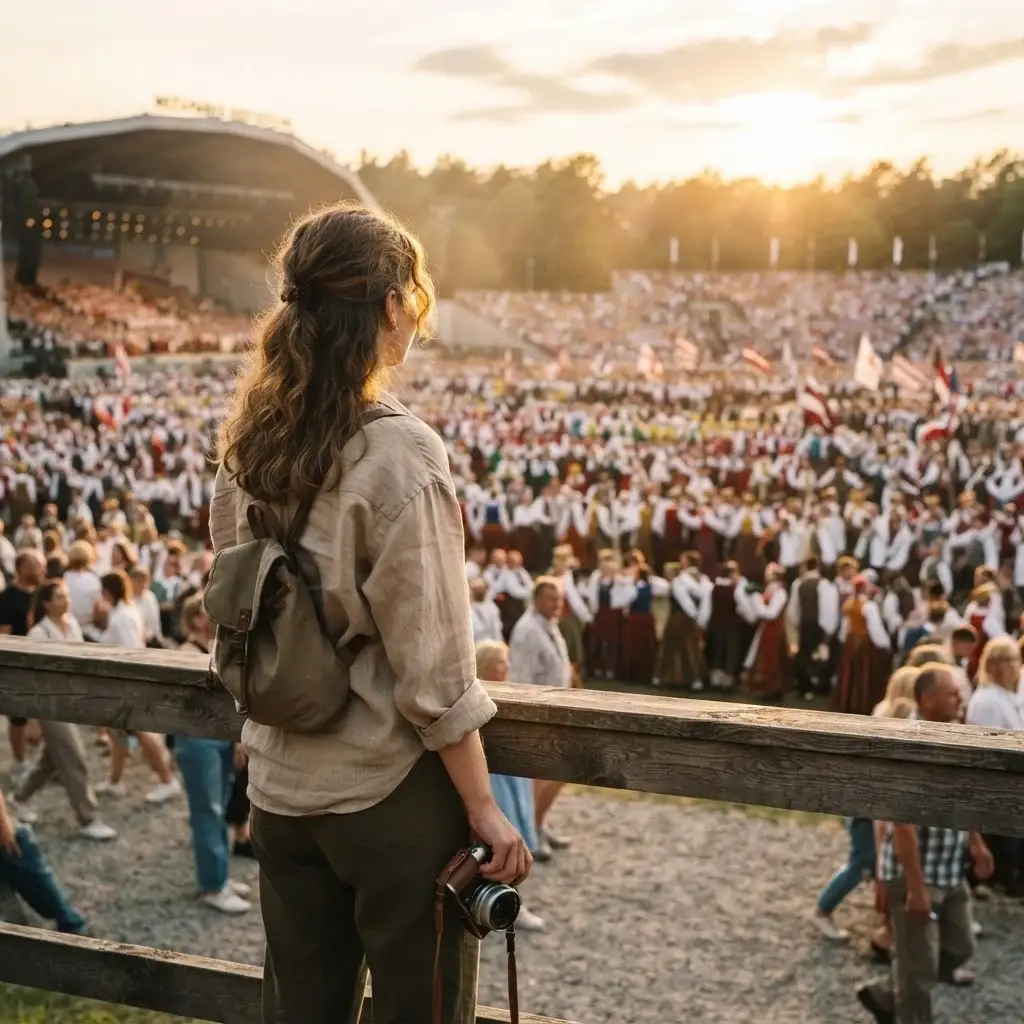
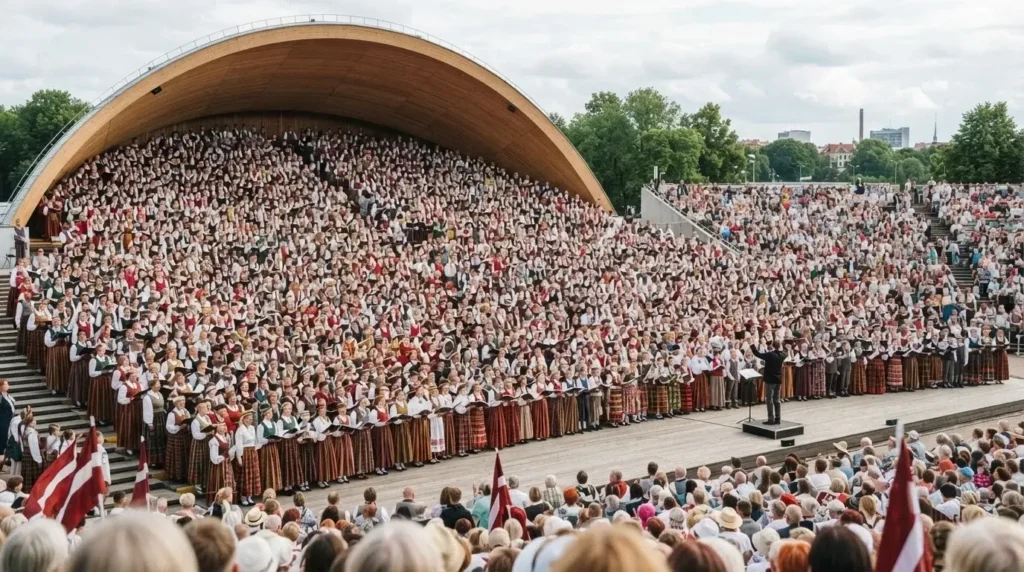
If you do one folklore experience in your life, make it this one. Estonia, Latvia, and Lithuania each hold a massive song and dance festival, and these gatherings are so significant they’re on the UNESCO Representative List of living heritage, drawing as many as 40,000 singers and dancers at once. Picture a stadium-sized choir, ordinary people, teachers and nurses and students, all singing in their own language, and a whole nation singing back. People describe weeping without quite knowing why. I haven’t stood in that crowd yet, but every traveler I’ve heard from describes it the same way, as one of the most moving things they’ve witnessed anywhere.
Here’s the catch you need to plan around: these full festivals only happen every few years. Latvia’s next big one, the XXVIII Nationwide Song and Dance Festival, runs June 30 to July 9, 2028, in Riga. Mark it now. Accommodation in the host city sells out far ahead, so if this speaks to you, book early and consider staying just outside the center and commuting in.
Seto Leelo, the Singing You’ve Never Heard
In the far southeast corner of Estonia, near the Russian border, lives a small community called the Seto, and they keep a polyphonic singing style called leelo that sounds like nothing else in Europe. A lead singer offers a line, then a choir folds in on the final syllables and lifts it. It’s ancient, strange, and beautiful, and UNESCO recognized the Seto leelo tradition as living heritage back in 2009. The Seto region, Setomaa, holds village days and a “Kingdom Day” in summer where the singing happens as part of community life, not as a paid performance. This is deep-cut, off-the-tourist-track travel. You’ll need to rent a car or plan careful bus connections, and that effort is exactly why so few tourists get there and why it stays real.
Alpine Krampus and Perchten Runs
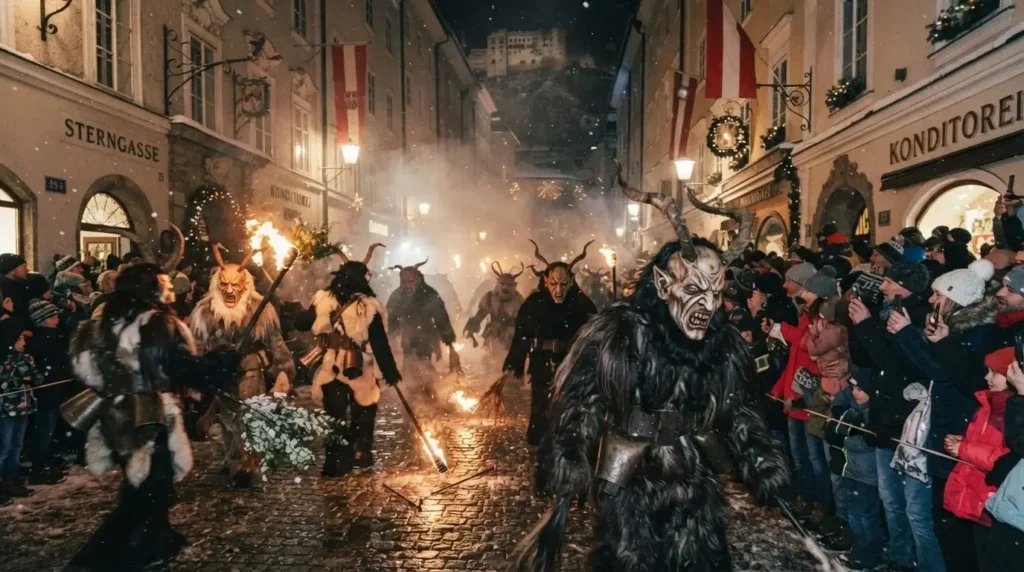
Now for something completely different. In the Alpine regions of Austria and Bavaria, early December brings the Krampus, horned, fur-covered, terrifying figures who parade through town to chase off winter and, traditionally, scare misbehaving kids. It is loud, it is smoky, it is genuinely a little frightening, and it is very, very real. This is a pre-Christian tradition the community has kept alive for centuries.
Salzburg is one of the best places to witness it. The official Salzburg tourism board explains that the Krampus and Perchten parades cluster around early December, especially the evenings of the 5th and 6th, winding through the Old Town, with participants in hand-carved wooden masks and heavy cowbells. A practical tip from what regulars consistently warn: stand back a bit, especially the first time. The Krampus can and do swat the crowd with switches, mostly playfully, but it’s not a front-row-with-a-toddler situation. Dress very warmly and expect crowds.
Fado in Lisbon
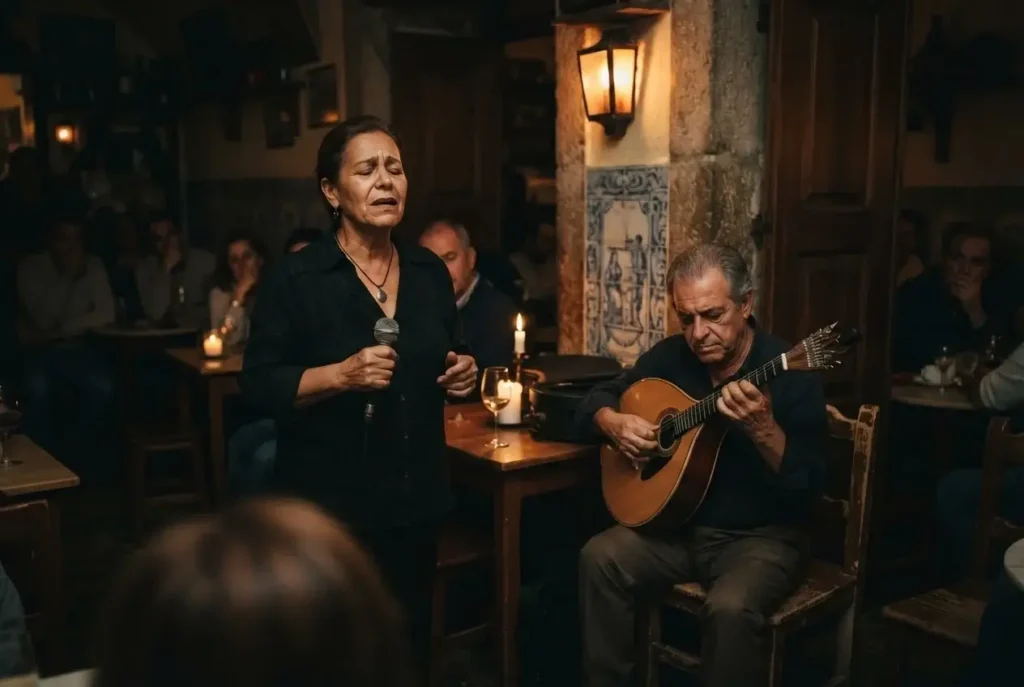
Not all folklore is a festival. Some of it lives in a tiny room after dark. Fado is Portugal’s soulful, melancholy urban song, usually one singer, a Portuguese guitar, and a room full of people who go quiet the second it starts. UNESCO recognized Fado as living heritage in 2011. The trick to hearing the real thing is to skip the big dinner-show houses in the touristy stretches and find a small “fado vadio” (amateur fado) spot in the Alfama or Mouraria neighborhoods, where locals themselves get up to sing. Go late, order simply, and do not talk or film while someone is singing. That silence is the whole point.
How to Actually Find These Experiences (Without a Tour Company)
You do not need to book an expensive cultural tour. Here’s how I dig up the real stuff on my own.
Start with the national tourism board’s own site, and specifically look for their events or seasonal calendar, not the top-ten-attractions page. Then cross-check against the UNESCO living heritage lists to see which traditions a country is actually known for. Between those two, you’ll have real dates and real place names.
Next, get hyper-local. Search the tradition’s name plus “village” or the local word for festival. Facebook groups and local cultural association pages, clunky as they are, are goldmines for small events that never make it into English-language travel media. Translate the page in your browser and go.
And here’s the low-tech secret that has never failed me: ask a human once you arrive. Back when I guided sightseers around New York, the best tips I gave were never the landmarks, they were the small neighborhood things tourists would never find alone. Every place has locals who feel that same pride. Ask your guesthouse host, a market vendor, the person pouring your coffee, “Is there anything traditional happening near here this week that locals actually go to?” Then follow the answer.
Folklore Etiquette: How to Be Welcome, Not an Intruder
This is the fear I hear most from readers, and I love that they feel it, because it means they care. You’re worried about barging into something sacred. Good. That instinct will keep you respectful. Here’s how to channel it.
Watch before you join. When I arrive anywhere new, I spend the first while just observing the rhythm, exactly like that night in Ghana when I didn’t know when to laugh. Take your cues from the people around you.
Ask before photographing people, always, especially elders and children, and especially during anything religious. A gesture toward your camera and a raised eyebrow works in any language. If they hesitate, put it away and just be present. Honestly, some of my most vivid travel memories are the ones I never photographed.
Learn five words. Hello, please, thank you, beautiful, and the name of the tradition itself. It costs you an afternoon and it changes how you’re received completely.
Spend your money locally. Buy the handmade thing from the person who made it. Eat at the family-run place. Tip the musicians. Living traditions survive partly because they can still support the people who carry them, and respectful travelers are part of keeping them alive rather than hollowing them out.
Don’t treat it as content. You can take a photo. Just don’t reduce a centuries-old ritual to a backdrop for yourself. There’s a difference between witnessing and consuming, and people can feel which one you’re doing.
What to Eat, Because Food Is Folklore Too
Never separate the food from the tradition, because the food often is the tradition. Seasonal festivals almost always come with dishes made only at that time of year, and eating them is one of the easiest ways in.
At Baltic celebrations, look for rye bread, curd snacks, and cold beetroot soup in summer. In Alpine December, warm yourself with Glühwein (mulled wine), roasted chestnuts, and hearty dumplings from the market stalls around the Krampus route. In Romania near ASTRA, try sarmale (cabbage rolls) and a shot of the local plum brandy if someone offers, which they will. In Lisbon after fado, it’s grilled sardines in summer or a bowl of caldo verde any time. My rule is simple: eat whatever the grandmothers are making, wherever the line is longest with locals, and say yes when a stranger offers you a taste. That yes has led to more real memories than any itinerary I’ve ever written.
Doing It Solo, Safely, and on a Budget
Almost everything in this guide is better solo, not despite being alone but because of it. When you travel with a group, you stay in your bubble. Alone, you’re forced outward, and locals are far more likely to fold a single curious traveler into the group. I backpacked across Europe by myself and the invitations only ever came when I was on my own.
On safety, folklore events are generally very family-friendly and public, which makes them some of the safest, most joyful crowds you’ll find. Use normal crowd sense: watch your bag in dense parades, keep a charged phone, know your way back to your accommodation, and at night events like fado or Krampus runs, plan your transport home before you go out.
On budget, this style of travel is a gift, because the real stuff is often free. Village festivals, church processions, public song celebrations, and street parades usually cost nothing to attend. Your money goes to getting there, sleeping cheap, and eating well. I funded years of this by working flexible jobs between trips and spending on experiences instead of hotels. You do not need to be rich to stand in a crowd of 40,000 singers. You need a plane ticket, a hostel bed, and the nerve to go.
The Real Reason to Do This
Chasing authentic folklore will teach you something no landmark ever will. It teaches you that you are a guest in someone else’s living story, and that being welcomed into it, even for one night, is a gift you did nothing to earn except show up with an open heart. That feeling, of being the outsider who was let in, is the thing I keep going back for. It made me braver, humbler, and a lot less certain that my own way of doing things is the only way. And that, more than any photo, is what you bring home.
So pick one tradition from this guide. Just one. Put its date in your calendar, even if it’s years out like that 2028 festival in Riga. The perfect moment to go won’t arrive on its own. You build it, one brave decision at a time, and I promise the crowd is waiting to make room for you.