How to Experience Latin American Cities Like a Local

There is a version of Latin America that most visitors never see.
It is not hidden, exactly. It does not require a secret handshake or a well-connected local friend. But it is completely invisible to anyone who spends their trip moving between air-conditioned tour buses, recommended-by-the-guidebook restaurants, and neighborhoods that look suspiciously clean and curated.
I know this because I have spent years studying what it actually means to move through a city the way residents do, not as a consumer of experiences, but as a participant in daily life. When I was backpacking solo through Europe, the moments that changed me were never inside the famous churches or the ticketed museums. They were in the covered markets before the tourists woke up, in the cafes where no one spoke English, on the slow buses where I had to figure out the fare system through gestures and guesswork. Those trips taught me something that applies everywhere, including across Latin America: a city reveals itself differently depending on how you choose to move through it.
Latin America is one of the most culturally layered, wildly varied, and genuinely exciting regions on earth. From Mexico City’s 20-million-person energy to Buenos Aires’ European-flavored elegance to Medellin’s improbable transformation, these cities have personalities so distinct from one another that lumping them into one guide almost feels like a disservice. But the approach to experiencing any of them authentically? That crosses borders.
This is your guide to that approach.
Start With the Right Neighborhood, Not Just the Right Hotel
Where you sleep shapes everything about how you experience a city. And the most famous, most Instagrammed neighborhoods are often the least useful for actually understanding where you are.
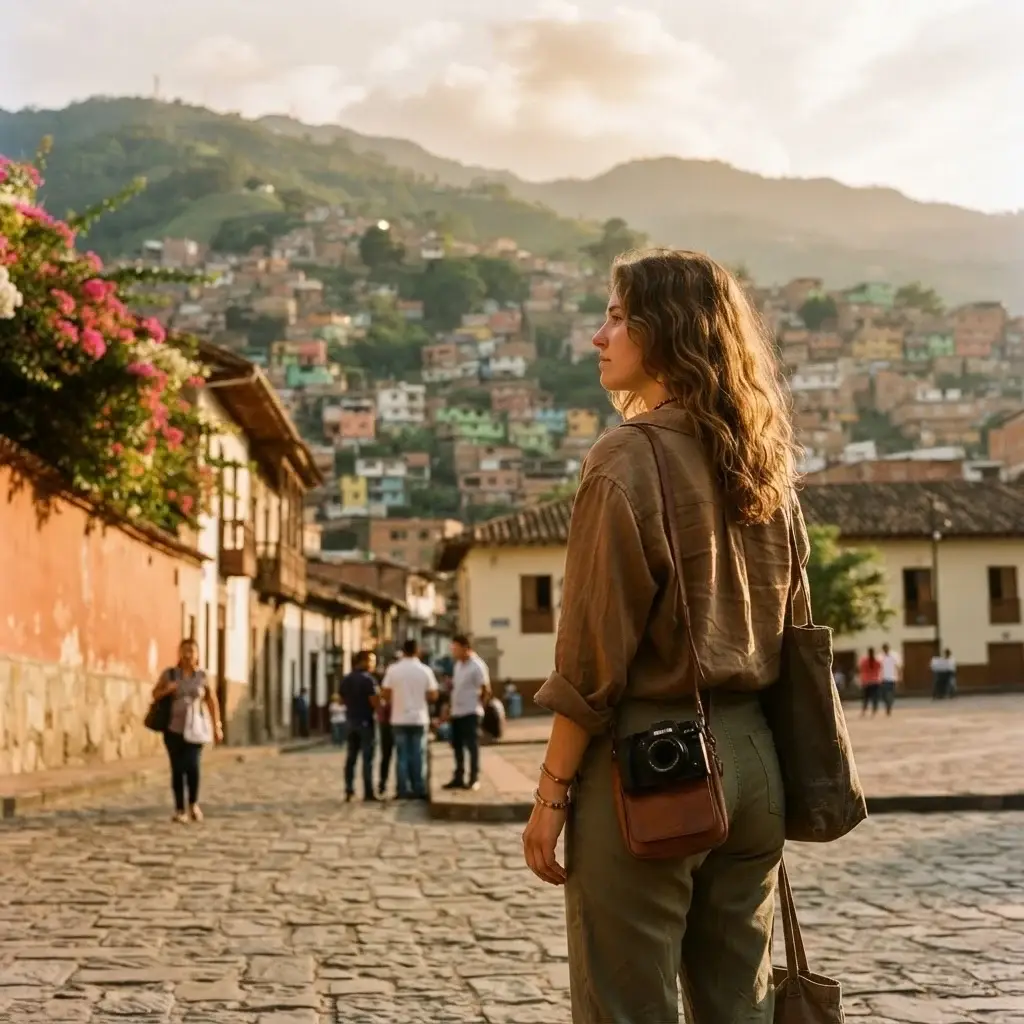
In Mexico City, for example, tourists tend to cluster in Polanco (upscale, manicured, expensive) or the Centro Histórico (impressive, but heaving with day-trippers). These places are worth visiting, absolutely, but they are not where the daily rhythm of the city lives. The barrios that tend to reveal more are Coyoacán, Roma Norte, and Condesa for their street-level energy, cafe culture, and markets. Coyoacán in particular feels like a small town absorbed by a metropolis: cobblestone streets, a central plaza where families gather on Sundays, street vendors selling tostadas and agua fresca, and the Mercado de Coyoacán where you can eat some of the most honest Mexican food in the city without ever sitting in a restaurant. The official Mexico tourism site provides a starting point for regional planning, but the real education happens by choosing accommodation inside working neighborhoods rather than tourist corridors.
In Medellin, Colombia, the tourist infrastructure is heaviest in El Poblado, which has great cafes and is very safe, but also feels almost entirely separated from the city’s real social fabric. If you want to understand how Medellín actually works and why locals are so proud of it, spend time in Laureles, Envigado, or even ride the cable car into the hillside barrios. Context matters enormously here.
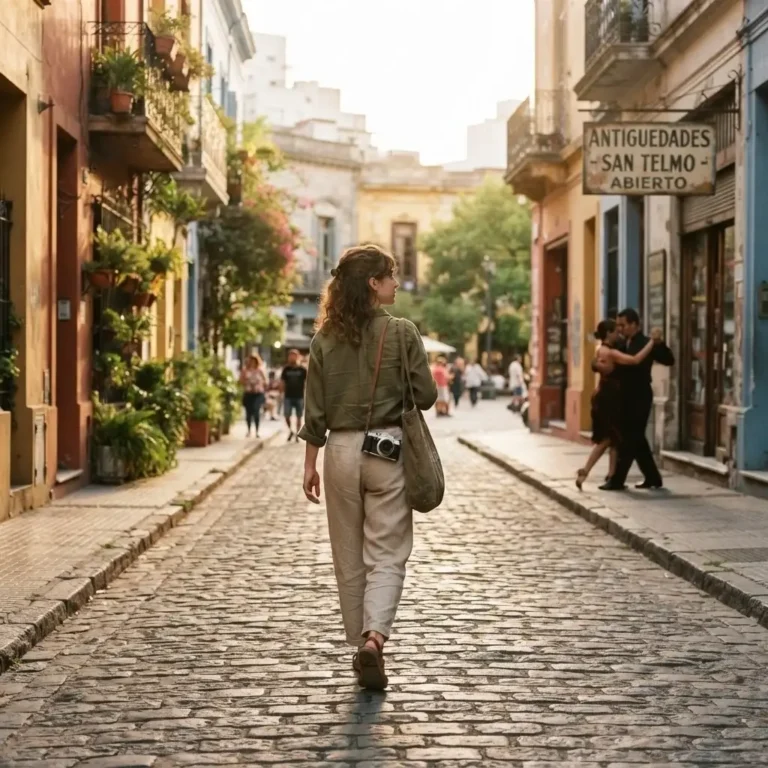
In Buenos Aires, the San Telmo and Palermo neighborhoods are worth your time and are genuinely beloved by Porteños (as residents call themselves), but try to stay long enough to notice the difference between the parts that cater to visitors and the streets just two blocks away where life is plainly, quietly local.
The rule of thumb I have come to trust: book accommodation in a neighborhood where you see laundry hanging from windows and corner shops selling things no tourist would need.
That is where the city actually breathes.
Learn How Locals Actually Get Around
This is one of the biggest and most rewarding shifts you can make. In most Latin American cities, locals do not take taxis or rideshare apps for every journey. They use integrated public transit systems that are often cheaper, faster, and more revealing than anything else you will experience.
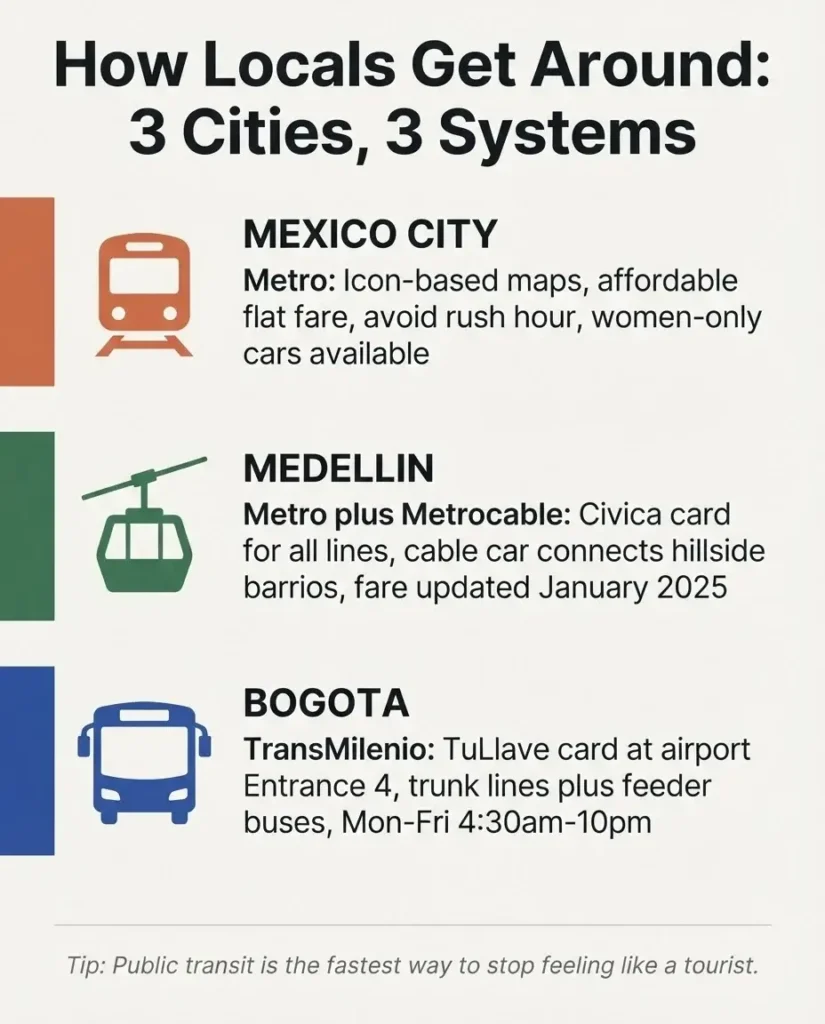
Mexico City Metro is one of the largest and busiest metro systems in the world, with 12 lines spanning the entire city. Fares are very affordable, and the system uses icons alongside text at stations, which makes it surprisingly accessible even if your Spanish is limited. Avoid it during morning and evening rush hours if you have a choice, keep your bag in front of you, and know that there are women-only and children-only cars during peak hours. Riding the metro is not just logistically useful, it is genuinely one of the most democratic social experiences the city offers.
Medellin’s Metro system is a point of enormous civic pride. The city invested heavily in public transit as part of its broader transformation, and the Metro is clean, reliable, and integrated with cable cars (Metrocable) that climb into the hillside comunas. The Civica card is what you need to ride, and as of January 2025, fares were adjusted. You can get full details directly from the Metro de Medellín official site, which clearly explains how the card system works and which routes connect to the cable lines. The Metrocable is not just transport, it is a 20-minute aerial journey over some of the most densely inhabited hills in the Americas, and it is one of the most extraordinary urban experiences you can have without paying anything extra beyond your transit fare.
Bogota’s TransMilenio is the city’s bus rapid transit system, a grid of dedicated lanes used by millions of commuters every day. It can feel overwhelming at first, but the city government has published a practical guide specifically for first-time visitors that walks you through how to use the TransMilenio system from the airport and around the city. You buy a TuLlave card at El Dorado Airport or at any major station, and that card covers all transit including feeder buses. Once you figure out the trunk lines, you can move across the entire city for less than the cost of a coffee.
Using public transit is one of the most immediate ways to stop being a tourist and start being a participant.
You stand next to office workers, students, market vendors, and grandmothers. You figure out the social code of who gives up a seat for whom. You watch the city slide past a window at street level. It is irreplaceable.
Go to the Markets First
If there is one single practice that unlocks a Latin American city faster than anything else, it is spending real time in its local markets. Not a visit. Time.
Most Latin American cities have a clear hierarchy of markets. There are the famous tourist markets selling crafts and trinkets, and there are the working mercados where residents buy their produce, their spices, their cuts of meat, and their lunch. The second type is where you want to go.
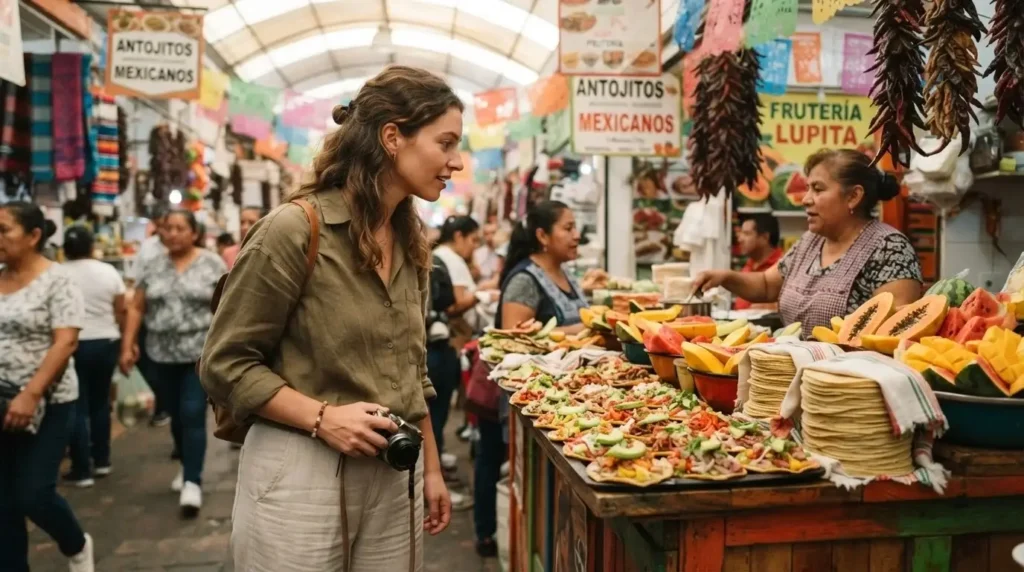
Mexico City’s Mercado de Coyoacán is a wonderful entry point: busy, loud, full of color, and selling food that locals are actually eating. Tostadas, memelas, tamales, and tlayudas sit alongside fresh fruit pyramids and flower stalls. Go mid-morning on a weekday if you want to avoid the larger weekend crowds. Budget roughly $5 to $10 USD for a full meal including fresh juice, and pay attention to which stalls have the longest lines from locals. That is your quality signal.
In Bogota, Paloquemao market is an early-morning experience that feels completely removed from the tourist city. Flowers, exotic Colombian fruits, arepas, and fresh juice are sold from before dawn. Arrive by 7am to see it at full energy.
In Buenos Aires, the San Telmo market is both tourist-friendly and genuinely interesting, but walk deeper into the Sunday Feria (street fair) that spills out along Defensa Street and you will find vintage goods, handmade leather, local artisans, and a neighborhood showing off its best self without being performative about it.
Latin America’s markets are not just places to shop. They are living archives of regional food culture, agricultural tradition, and social gathering. Spending time in them teaches you more about a city than any museum admission ever will.
Eat When Locals Eat
Meal timing is one of the most overlooked pieces of traveling like a local in Latin America, and getting it wrong means either eating alone in an empty restaurant or paying tourist prices at the wrong hours.
The big rule: lunch is the main meal of the day. Across most of Latin America, the midday meal (almuerzo or comida corrida) eaten roughly between noon and 2:30pm is the culturally significant one. It is often several courses, it is often the cheapest time to eat well in a restaurant, and it is when the neighborhood comedor (a small, family-run lunch spot) is at peak energy. A comida corrida in Mexico City typically runs 60 to 100 pesos and includes soup, a main dish, a drink, and sometimes a small dessert. In Colombia, an almuerzo corriente at a local place rarely costs more than $3 to $5 USD and comes with soup, protein, rice, beans, salad, and a fresh juice.
Dinner runs late. In Buenos Aires especially, locals rarely eat dinner before 9pm, and restaurants do not fill up until 10pm. If you show up at a nice restaurant at 7pm, you will be eating alone. Show up at 9:30pm and the place will feel alive.
Street food, when approached well, is one of the great pleasures of Latin America. The general guidance that experienced travelers follow: go where the line has multiple local customers, look for stalls where the food is cooked quickly and to order on high heat, choose places with visible turnover of ingredients, and trust your instincts. A stall full of office workers eating quickly on their lunch break is an extremely reliable signal. You can find more detailed guidance on navigating street food safely on the Legal Nomads comprehensive street food guide, which is one of the most thorough resources on the topic from a decade of research and travel eating.
Let the Sunday Rituals Find You
Sunday in Latin American cities is a special social institution, and experiencing it is one of the easiest and most rewarding ways to see how residents actually spend their leisure time.
In Bogota, the Ciclovía is one of the most remarkable weekly events in any city on earth. Every Sunday, the city closes more than 75 miles of main roads to car traffic, and residents pour out onto bicycles, roller skates, and on foot. Families ride with children strapped to cargo bikes. Abuelitas walk the center lane. Street food carts set up along the route. It runs from 7am to 2pm and is completely free. You can rent a bicycle easily near the route if you do not have one. This is not a tourist event, it is a deep civic tradition that Bogotanos genuinely cherish. The official Visit Bogotá tourism portal lists current routes and seasonal programming for it.
In Mexico City, Sundays in Coyoacán’s central plaza bring live music, street performers, families with ice cream, and a slower, more communal pace than any other day of the week. In Buenos Aires, Sunday is when the San Telmo flea market fully blooms and tango dancers sometimes perform spontaneously in the streets.
Wherever you are, pay attention to what the city does when it rests. That is often when it is most itself.

Go Deeper: City-Specific Experiences That Most Visitors Miss
Every city in Latin America has its own version of the experience that separates a curious visitor from a forgettable one.
Mexico City: Visit the Frida Kahlo Museum (La Casa Azul) in Coyoacán, but book tickets weeks in advance and go when it opens. Walk Coyoacán’s streets at 8am before the crowds arrive. Take the city’s light rail to Xochimilco and ride the trajineras (flat-bottomed boats) early on a Sunday morning, when it is still mostly locals celebrating birthdays and family gatherings rather than tour groups. Mexico has more UNESCO World Heritage Sites than any other country in Latin America, and several of them, including the Historic Centre of Mexico City and Xochimilco, are listed on the UNESCO World Heritage official page, which is worth bookmarking if cultural heritage sites are part of your travel interest.
Medellin: Take Metrocable Line J from Acevedo station up into the barrio of Santo Domingo Savio, and then transfer to Line L for the continuation up into Parque Arví, a cloud forest nature reserve above the city. This journey costs the price of a metro fare and takes you through some of the most visually arresting urban landscape in South America.
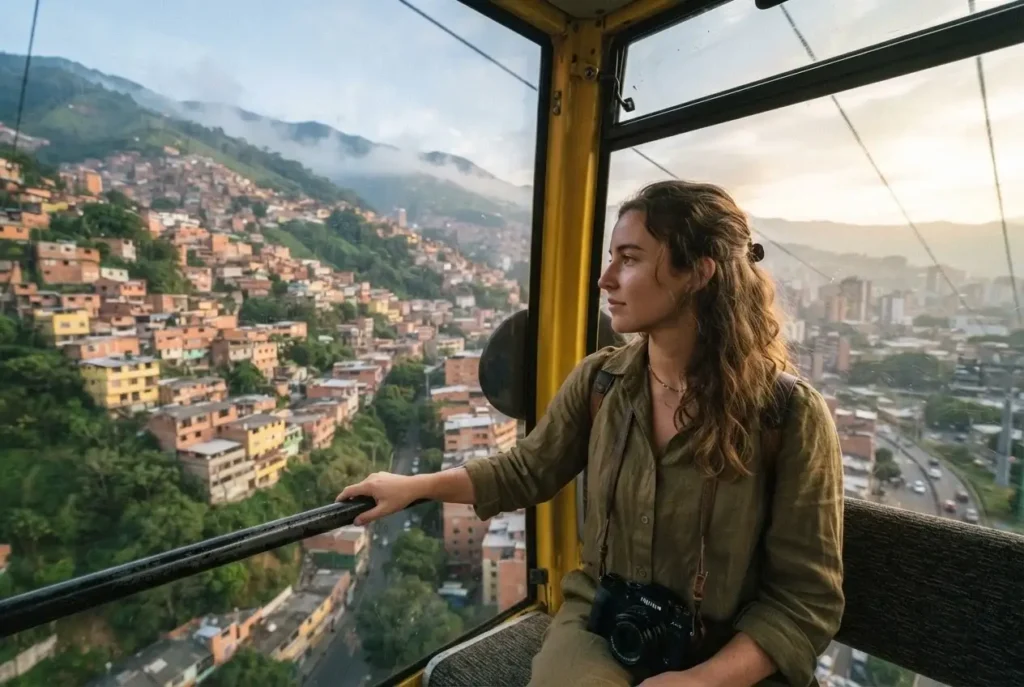
Real City Tours Medellin has written a detailed practical guide to Medellin’s cable car routes that covers exactly which lines go where and what to expect at each stop, which I found genuinely useful in understanding the system before diving in.
Bogota: Visit the Gold Museum (Museo del Oro) in La Candelaria, which houses one of the most significant pre-Columbian gold collections in the world. Then walk through the Chorro de Quevedo plaza, where street musicians play and people sit on steps to watch the afternoon light fall on the colonial architecture. Skip the expensive organized tours and simply walk. Bogota’s historic center is dense with murals, churches, and small coffee shops that are absolutely worth an unhurried morning. The ProColombia official Bogota tourism page gives a well-organized overview of cultural districts and events that are worth checking before your trip.
Buenos Aires: Tango is not a performance you watch passively. The real tango lives in the milongas, which are the social dance halls where Porteños gather to dance for themselves, not for tourists. Venues like La Viruta and El Beso host milongas several nights a week. Many milongas offer a beginner’s lesson in the first hour before the social dancing begins. Going to a milonga, even just to sit at a table, order a glass of wine, and watch, is one of the most culturally honest experiences Buenos Aires offers. The local app “Milonga Hoy” lists current events by neighborhood and night.
The Language Question (Honest Answer)
You do not need to be fluent in Spanish to travel well in Latin America. But you do need to care enough to try.
Locals in every city I have researched respond very differently to someone who makes an honest attempt at Spanish versus someone who simply speaks English loudly and waits to be understood. The effort is interpreted as respect. Even a simple “Buenos días, ¿cómo está?” (Good morning, how are you?) when entering a shop changes the entire tone of an interaction.
The phrases that matter most are not the ones on language app flashcard decks. They are the social lubricants: greetings when entering any room or shop, “permiso” when you need to pass through a crowd, “¿me puede ayudar?” (can you help me?) delivered with a smile, and the willingness to laugh at yourself when you say something wrong.
One cultural note: in many Latin American countries, the formal “usted” form of address is used with strangers, elders, and in service situations. Defaulting to it rather than the casual “tú” form signals awareness and respect. You can always relax into informality once the other person does.

A Mindset Note Before You Go
The biggest mistake travelers make in Latin American cities is not the transportation they take or the restaurant they choose. It is the posture they arrive with.
Arriving with urgency, trying to see everything, and treating the city as a content opportunity to be consumed guarantees a surface-level experience no matter how good your itinerary is. The cities that have shaped people I know, and the travel philosophy I have built my life around, tend to be the ones where the traveler slows down enough to be changed by a place.
Sit in a plaza long enough to see who walks through it and when. Order something you cannot identify and figure it out when it arrives. Take a bus to a neighborhood you read nothing about. Get mildly lost and pay attention to what you find. This is not romantic advice, it is a practical instruction. You learn a city by being inside it, not by completing it.
When I was living with a family in Ghana, the most educational moments had nothing to do with my itinerary. They were the early mornings at the market, the hours spent watching how a household organized itself, the slow adjustment to a different pace of time. Travel teaches you things when you stop trying to extract from it and start being present inside it.
Latin America will reward exactly that kind of attention.